
How to Create a Pique Assiette Effect with AI — Magic Eraser
Transform any photo into a broken-china mosaic masterpiece using AI. Step-by-step guide to creating the pique assiette effect with realistic shard fragmentation, grout lines, and glazed ceramic textures.

Product Marketing
Reviewed by Magic Eraser Editorial ·
Table of Contents
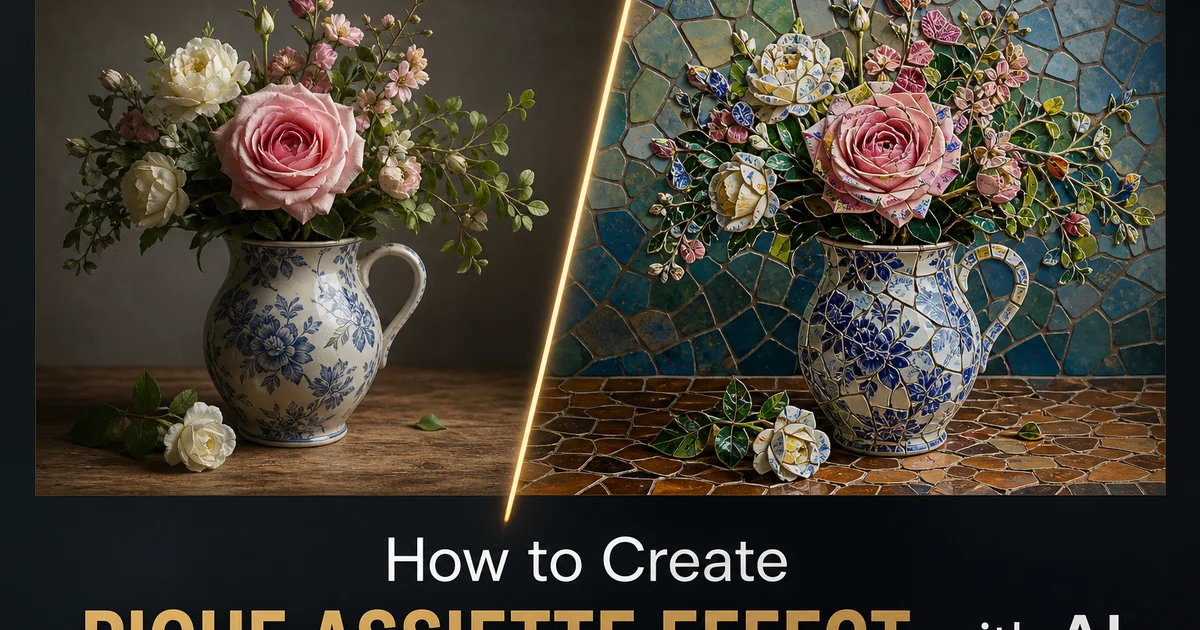
Pique assiette — French for 'stolen from the plate' — is a mosaic art form that uses broken pieces of china, pottery, tiles, and other ceramic fragments to create decorative surfaces on furniture, garden ornaments, walls, and sculptural objects. Unlike traditional mosaic art that uses uniformly cut tesserae, pique assiette celebrates the randomness of broken pieces: irregular shapes, mismatched patterns, fragments from different dinnerware sets with clashing designs, all unified by the grout that fills the spaces between shards. The aesthetic is at once chaotic and harmonious, combining the refined beauty of fine china with the raw energy of deliberate destruction. Now AI photo editing makes it possible to apply this distinctive visual effect to any photograph, transforming ordinary images into compositions that look like they have been reassembled from the fragments of a hundred shattered plates.
The appeal of pique assiette as a photographic effect lies in how the fragmentation interacts with the underlying image content. When a portrait is broken into irregular shards, the face becomes a mosaic of ceramic-like pieces that preserves recognizability while adding a layer of artistic abstraction. The eyes might span two or three shards separated by grout lines, creating a visual tension between the organic continuity of the face and the mechanical fragmentation of the medium. Landscape photographs gain a handcrafted folk-art quality, as if someone collected china pieces painted with fragments of sky, trees, and water and assembled them into a scene. The effect works because pique assiette exists in the real world as a beloved decorative art. Viewers immediately understand the visual metaphor and appreciate the change.
Creating a convincing pique assiette effect manually in Photoshop requires painstaking work. Drawing hundreds of irregular shard boundaries, adding dimensional grout between each piece, applying ceramic surface textures to every fragment, and ensuring the overall composition reads as a coherent mosaic rather than a randomly sliced image. AI-powered tools automate this process by analyzing the photograph's content, generating organic shard patterns that follow the image's natural contour lines, rendering realistic grout with variable width and shadow depth, and applying glazed ceramic surface qualities to each fragment. This guide walks through the complete workflow for creating expert-quality pique assiette effects that capture the handcrafted charm of real broken-china mosaics.
- AI fragmentation generates organically irregular shard shapes that mimic hand-broken china, with boundaries following the photograph's natural color transitions and contour lines.
- Variable-width grout rendering creates realistic mortar lines that are wider at acute shard angles and narrower along straight edges, matching real pique assiette construction.
- Glazed ceramic surface enhancement adds convex curvature, crazing patterns, and light reflections to each shard, transforming flat photo regions into convincing pottery fragments.
- Shard density controls let you choose between large statement-piece fragments for bold compositions and finely crushed patterns for intricate, detailed mosaic effects.
- Before-and-after export options create compelling portfolio pieces that demonstrate the creative transformation from ordinary photograph to broken-china mosaic art.
Understanding pique assiette aesthetics for authentic digital recreation
Authentic pique assiette has visual traits that distinguish it from other mosaic styles. Understanding these qualities is key for creating a convincing digital effect. The most fundamental is the irregularity of the shard shapes. Real broken china fractures along stress lines in the ceramic body, producing pieces with a mix of sharp angular breaks and curved edges that follow the original form of the plate or cup. No two pieces are alike, and the size variation within a single composition can range from fingernail-sized fragments to palm-sized sections that preserve distinct patterns from the original dinnerware. The AI replicates this by generating fracture patterns based on ceramic fracture mechanics rather than simple geometric subdivision, producing shard shapes that look physically plausible rather than algorithmically generated.
The grout in pique assiette serves both structural and aesthetic functions that the digital effect must replicate. Structurally, grout fills the gaps between irregularly shaped pieces that never fit together perfectly, so the grout width varies constantly across the composition. Wide where two convex edges create a large gap, narrow where a concave edge nests against a straight edge. Aesthetically, grout creates the visual grid that separates individual shards and gives the mosaic its trait textured look. The grout surface is often slightly recessed below the shard surfaces, creating subtle shadows along the edges of each piece that give the mosaic its three-dimensional character. Digital recreation needs to capture all of these qualities: variable width, right color, surface recession, and edge shadowing.
The ceramic surface quality of real pique assiette pieces adds a material dimension that elevates the effect beyond simple image fragmentation. Glazed china and pottery pieces have a glossy or semi-glossy surface with specific light-interaction properties. Specular highlights that follow the curvature of each shard, a depth of color that comes from light passing through the transparent glaze layer and reflecting off the opaque ceramic body beneath, and often fine networks of crazing where the glaze has developed micro-cracks over time. The most prized pieces in pique assiette come from vintage and antique china with rich, deep glazes and decorative patterns like florals, gilt borders, and transferware scenes. The AI effect applies these ceramic surface properties to each photographic shard, making the underlying image look like it has been printed onto real dinnerware before being broken and reassembled.
- Ceramic fracture mechanics produce irregular shard shapes mixing angular breaks with curved edges, which the AI replicates for physically plausible fragmentation patterns.
- Grout width varies naturally based on shard edge geometry — wider at convex-to-convex gaps, narrower where concave edges nest against straight edges.
- Surface recession of grout below shard faces creates edge shadows that give the mosaic its dimensional character in both real and digital pique assiette.
- Glazed ceramic properties including specular highlights, glaze depth, and crazing patterns transform flat photo regions into convincing china and pottery fragments.
Choosing source photographs that produce compelling pique assiette effects
The strength of a pique assiette effect depends heavily on the source photograph's traits. Certain image qualities translate into greatly more strong results than others. The most important factor is color contrast. Images with distinct regions of different colors produce shards that are one by one interesting because each piece contains a distinct color identity. A vibrant garden photograph with red flowers, green foliage, blue sky. Brown earth creates shards that each carry a clear color association, and the overall mosaic preserves the scene's palette in a fragmented but readable way. Monochromatic or low-contrast images tend to produce shards that all look similar, losing the visual variety that makes pique assiette engaging.
Subject matter with strong geometric structure translates well because the shard boundaries interact with the image's built-in lines and shapes in visually interesting ways. Architectural photographs with windows, doors, rooflines, and columns create mosaic compositions where some shards align with structural elements while others cut across them, producing tension between the image's geometry and the mosaic's randomness. Portraits work exceptionally well because faces are both highly distinct and visually complex. Viewers can still read the face through the fragmentation, which creates the uncanny quality that makes mosaic portraiture so strong in the fine art world. The AI's ability to partially align shard boundaries with facial features like eye contours and lip lines enhances this recognition while maintaining the broken-china randomness.
Scale and detail level in the source photograph also affect the final result. Wide landscape shots with distant subjects produce pique assiette effects that read as decorative pattern rather than fragmented imagery. Works well for abstract or ornamental applications. Close-up photographs with large, detailed subjects create effects where individual shards contain enough image detail to be interesting on their own. A close-up flower portrait might produce shards where individual petals or stamens are visible within single fragments, adding a layer of micro-interest beneath the macro mosaic pattern. Medium-distance compositions with clearly defined subjects against contrasting backgrounds tend to produce the most balanced results, with the subject distinct in mosaic form and the background providing color contrast that varies the shard palette.
- High color contrast creates individually distinct shards — vibrant scenes with multiple color regions produce the visual variety that makes pique assiette engaging.
- Geometric subjects like architecture create tension between structural lines and random shard boundaries, producing dynamic interactions in the mosaic composition.
- Portraits work exceptionally well because faces remain recognizable through fragmentation, and AI partially aligns shard edges with facial contour lines.
- Close-up subjects provide micro-detail within individual shards, adding a layer of interest beneath the overall mosaic pattern that rewards close viewing.
Fine-tuning shard density, grout style, and ceramic surface properties
Shard density — the number and average size of fragments in the mosaic — is the most impactful parameter for controlling the visual character of the pique assiette effect. Low shard density produces large pieces that preserve major portions of the original image within each fragment, creating a mosaic that reads clearly as a photograph assembled from broken pieces. This approach works well for images where subject recognition is important, such as portraits or product photography where the viewer should still understand what the original image depicted. High shard density creates a finely crushed look where individual shards are too small to contain distinct image content. The overall effect reads more as abstract mosaic texture than as a fragmented photograph. The sweet spot for most applications falls in the medium range. Shards are large enough to carry meaningful image content but many enough to create a convincing mosaic density.
Grout styling options control the character of the mortar lines that define the mosaic grid. Width range sets the minimum and maximum grout thickness. Wider grout creates a bolder graphic effect with more separation between shards, while narrow grout produces a tighter composition that preserves more of the image content. Grout color is in the past gray or off-white for classic pique assiette. Creative applications benefit from colored grout: dark grout creates dramatic contrast and makes each shard pop as an individual element, while grout tinted to match the dominant image color creates a more unified, subtle effect. The three-dimensional depth of the grout. How far it appears recessed below the shard surfaces — controls the tactile impression of the mosaic, with deeper recession creating more dramatic shadows and a more sculptural look.
Ceramic surface properties add the final layer of material realism to the pique assiette effect. Glaze glossiness ranges from matte to high-gloss, affecting how specular highlights appear on each shard. Matte finishes create a soft, handmade aesthetic reminiscent of artisan pottery. High-gloss finishes produce sharp reflections that emphasize the three-dimensional curvature of each fragment. Crazing intensity controls the fine crackle pattern in the glaze surface. Subtle crazing adds vintage character without obscuring the image content, while heavy crazing creates an antique look that can partially mask the underlying photograph. Edge chipping introduces small irregularities along shard perimeters where the ceramic body is exposed beneath the glaze, adding the worn realism of vintage china. Together, these surface parameters determine whether the final effect looks like new porcelain or well-loved antique dinnerware.
- Low shard density preserves subject recognition within large fragments, while high density creates abstract mosaic texture — medium density balances both qualities.
- Grout width, color, and recession depth work together to control the visual weight and dimensional impression of the mortar lines between shards.
- Glaze glossiness ranges from soft matte pottery aesthetics to high-gloss porcelain with sharp specular highlights that emphasize three-dimensional shard curvature.
- Crazing and edge chipping parameters add vintage character to the ceramic surface, ranging from pristine new porcelain to authentically worn antique china.
Creative applications: wall art, social media content, and mixed-media projects
Pique assiette effects create mainly striking large-format wall art because the mosaic structure adds visual complexity that rewards close viewing while maintaining impact at a distance. At gallery scale — prints of 24 by 36 inches or larger — viewers can appreciate the individual shard details, the grout texture. The glazed ceramic surface qualities that make the effect feel like a real mosaic rather than a filtered photograph. Canvas prints work well because the texture of the canvas substrate complements the handcrafted aesthetic of pique assiette. Metal prints add another dimension by allowing the metallic substrate to influence how light interacts with the glazed shard surfaces, creating a luminous quality that enhances the ceramic illusion. For clients commissioning custom art, offering a source photograph transformed into pique assiette provides a unique, personalized piece that combines the emotional content of their image with the decorative beauty of mosaic art.
Social media content benefits from the pique assiette effect's combination of immediate visual impact and detailed craftsmanship that encourages viewers to zoom in and explore. Instagram carousel posts work exceptionally well. The first slide shows the full mosaic composition for scroll-stopping impact, subsequent slides zoom into detail sections that showcase the shard textures and grout work, and a final slide presents the original photograph alongside the finished effect for dramatic before-and-after comparison. The effect always generates strong engagement because it transforms familiar subjects into something unexpected and artistically complex. TikTok and Reels content can show the change process in time-lapse, revealing the original photo gradually fragmenting into mosaic pieces. A visually satisfying process that performs well with short-form video audiences.
Mixed-media digital projects combine pique assiette effects with other design elements for applications like event invitations, book covers, album art, and branded content. A wedding invitation might feature a floral arrangement photographed and transformed into pique assiette, referencing the tradition of mosaic tiles in Mediterranean architecture while including the specific flowers from the couple's event design. Album art benefits from the texture and dimensionality that pique assiette adds to portrait and conceptual photography. Brand campaigns can use the effect to share themes of beautiful imperfection, creative reconstruction, and the value of broken things reassembled. Powerful metaphors that resonate across creative industries. The AI effect integrates smoothly into standard design workflows, outputting layered files that designers can composite with typography, borders, and other graphic elements.
- Large-format prints on canvas or metal showcase the mosaic structure at scale, with canvas texture complementing the handcrafted aesthetic and metal enhancing glazed reflections.
- Instagram carousels combine full-composition impact with detail crops and before-and-after reveals, consistently generating strong engagement with the unexpected transformation.
- Time-lapse videos of the fragmentation process create satisfying TikTok and Reels content showing photographs gradually breaking into mosaic pieces.
- Mixed-media applications in invitations, album art, and branded content leverage pique assiette's metaphors of beautiful imperfection and creative reconstruction.
How to do it
- 1
Select a source photo with strong shapes and contrasting color regions
Choose a photograph with clearly defined subjects, bold outlines, and distinct color regions that will translate well into the fragmented mosaic look of pique assiette. Portraits with strong facial features, architectural shots with geometric lines, and still life compositions with colorful objects all work well. Avoid images with subtle gradients or monochromatic tones, as the broken-shard effect relies on visible color transitions between adjacent mosaic pieces. High-resolution photos give better results because the AI has more pixel data to work with when generating convincing shard boundaries and grout lines.
- 2
Apply the mosaic fragmentation effect to break the image into irregular shard patterns
Use the AI effect tools to fragment your image into irregular, organic shapes that mimic hand-broken china and pottery pieces. Unlike geometric tile mosaics with uniform grid patterns, pique assiette is characterized by randomly shaped shards that vary greatly in size and shape. Some triangular, some curved, some long and narrow, some nearly square. The AI generates these irregular boundaries by analyzing the color and edge information in your photo, placing shard breaks along natural contour lines where colors shift. Adjust the shard density parameter to control whether the result looks like large statement pieces or finely crushed fragments.
- 3
Add realistic grout lines and dimensional depth between mosaic shards
Apply grout line rendering between the fragmented shards to create the signature look of pique assiette where pieces are set into cement or adhesive mortar. Real pique assiette grout varies in width because the irregular shard shapes create different gap sizes. The AI generates variable-width grout lines that are wider at acute angles where shards meet and narrower along straight edges. Choose a grout color that complements your image. Traditional gray or white for classic looks, black for dramatic contrast, or colored grout for creative effects. The grout adds dimensional depth with subtle shadowing that makes each shard appear to sit slightly above the surface.
- 4
Enhance shard textures with glazed ceramic surface qualities using AI Enhance
Apply AI Enhance to add glazed ceramic surface traits to each shard, transforming flat photographic regions into convincing china and pottery fragments. Real pique assiette pieces have a distinctive surface quality. A slight convex curve where the glaze is thickest at the center of each shard, fine crackle patterns in the glaze surface called crazing, and subtle light reflections that follow the curvature of each piece. AI Enhance adds these ceramic material properties while keeping the original photograph's colors and content within each shard, creating the illusion that a real image has been transferred onto broken dinnerware and reassembled into mosaic art.
- 5
Export the finished pique assiette effect for prints, social media, or digital art portfolios
Save your completed pique assiette composition at full resolution for printing on canvas, metal, or ceramic tile where the mosaic effect has maximum visual impact. The dimensional quality of the grout lines and glazed shard surfaces translates especially well to large-format prints where viewers can appreciate the textural detail. For social media, export at platform-specific dimensions and consider creating a detail crop that shows a small section at higher magnification alongside the full composition. Digital art portfolios benefit from before-and-after pairings that show the original photograph alongside the pique assiette change, showing the creative range of AI photo effects.
Sources
- Pique Assiette: The Art of Broken China Mosaics — Smithsonian Magazine
- The History and Techniques of Mosaic Art — The Metropolitan Museum of Art
- Digital Art Filters and Mosaic Effects in Modern Photography — Adobe Creative Cloud Photography Guide