
How to Create a Nambu Ironware Effect with AI Photo Editing
Transform photos into Japanese Nambu tekki cast ironware effects using AI style transfer. Step-by-step guide covering arare hailstone pattern, itome thread texture, relief casting, and sand-cast surface with authentic oxide patina depth.

SEO & Growth
Reviewed by Magic Eraser Editorial ·
Table of Contents
- How AI cast iron rendering differs from standard darkening and texture approaches
- Nambu surface traditions: arare, itome, relief casting, and plain tetsubin
- Iron oxide patina: chemistry, color progression, and seasoning simulation
- Creative applications: product photography, hospitality branding, and wabi-sabi design
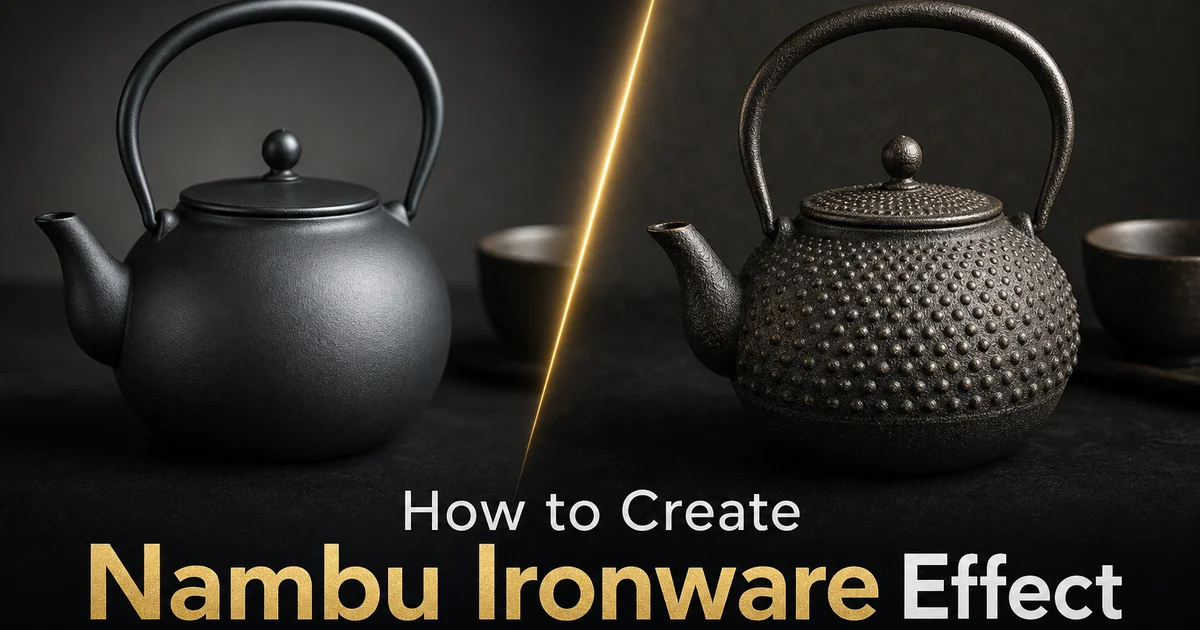
Nambu tekki — the cast ironware tradition of Iwate Prefecture in northern Japan — occupies a distinctive position in Japanese craft culture as an art form defined equally by its material weight and visual restraint. Where lacquerware gleams and ceramics display the movement of glaze, Nambu ironware communicates through gravity and stillness: the dense, matte, dark surfaces of cast iron that absorb light rather than reflecting it, creating objects that feel anchored to their surroundings. The tradition dates to the early seventeenth century when the Nambu clan lords of Morioka brought tea ceremony masters and master casters together, establishing a production center that would define Japanese ironware aesthetics for four hundred years. Today Nambu tekki — centered in both Morioka and Mizusawa — holds official designation as a Traditional Craft of Japan.
Digitally replicating Nambu ironware presents a distinctive challenge because the visual identity of cast iron is defined largely by what it does not do with light. Most digital material effects work by adding visual complexity — reflections, refractions, color variations, surface sheen. Cast iron's visual character comes from its absorption of light, its matte diffuse reflectance. Its subtle sand-cast micro-texture scatters reflected light into a soft, directionless glow rather than the focused highlights that characterize polished or glazed surfaces. Creating a convincing iron effect requires suppressing the photographic surface qualities of the source image and replacing them with the quiet, absorptive visual behavior of oxidized cast metal.
AI-powered style transfer addresses this challenge by learning from thousands of photographs of genuine Nambu tekki how cast iron surfaces actually appear across different lighting conditions and patina states. How the matte surface scatters light uniformly rather than creating directional reflections, how the sand-cast texture provides a fine-grained surface irregularity distinct from machined or hammered metal, how arare dots and relief patterns cast subtle shadows that give depth to the surface without breaking its overall absorptive character, and how the iron oxide patina develops from raw casting gray through seasoned dark gray to the deep near-black of a tetsubin used daily for decades. This guide covers the complete workflow for creating Nambu ironware effects using AI Filter and AI Enhance.
- AI replicates the distinctive matte absorptive quality of cast iron — diffuse light scattering, minimal specular reflection, and the quiet visual weight that defines Nambu tekki aesthetics.
- Multiple surface presets cover arare hailstone dots, itome thread pattern, nature-motif relief casting, and plain sand-cast tetsubin texture with authentic dimensional depth.
- Sand-cast texture simulation captures the fine-grained surface irregularity transferred from clay and sand molds during the iron pouring process, distinct from machined or hammered metal.
- Iron oxide patina progression from raw silver-gray through seasoned dark gray to deeply patinated near-black is physically calibrated to actual cast iron oxidation chemistry.
- AI Enhance sharpens relief pattern depth and the weight-communicating visual solidity that distinguishes Nambu ironware from lighter materials and digital flat-color approximations.
How AI cast iron rendering differs from standard darkening and texture approaches
The most common digital iron effect darkens an image, desaturates the color, and applies a rough texture overlay to approximate the look of dark metal. This approach captures the superficial darkness of iron but misses its distinctive optical behavior. Real cast iron is not simply dark and rough. It is a material with specific reflectance properties: very low specular reflection, high diffuse scattering from the micro-textured surface, and a narrow color range (from silver-gray to warm black) determined by the chemical composition of the surface oxide layer. A darkened, textured photograph still reads as a photograph with a dark filter rather than as an iron surface, because the underlying photographic reflectance behavior — bright highlights, color variation, and surface sheen — shows through the overlay.
AI Nambu iron rendering begins with the fundamental change of replacing photographic reflectance with iron reflectance. This means suppressing specular highlights and replacing them with the uniform diffuse glow of matte cast metal, narrowing the color gamut to the iron oxide range while keeping tonal variation within that range. It also means replacing smooth photographic surfaces with the specific micro-texture of sand-cast iron. The sand-cast texture is critically important because it is the physical mechanism by which cast iron achieves its matte look. The thousands of tiny surface irregularities left by the sand mold scatter light in all directions, preventing the formation of focused reflections.
The dimensional quality of Nambu surface patterns is rendered as relief — three-dimensional forms rising from or receding into the iron surface — rather than as printed or painted decoration. Each arare dot is a hemisphere rising from the surface, casting a tiny shadow on one side and catching light on the opposite side. This shadow-and-highlight pattern gives the surface its tactile quality, the sense that you could run your fingers across it and feel the bumps. The AI models these patterns as three-dimensional relief features with physically correct shadow and highlight placement based on the configured light direction, creating dimensional realism that flat pattern overlays cannot achieve.
- Standard darkening approaches miss cast iron's specific optical behavior — extremely low specular reflection and high diffuse scattering from micro-textured surfaces.
- AI replaces photographic reflectance with iron reflectance, suppressing specular highlights and narrowing the color gamut to the iron oxide range while preserving tonal variation.
- Sand-cast surface texture is modeled as the physical mechanism of matte appearance — thousands of mold-transferred micro-irregularities that scatter light omnidirectionally.
- Surface patterns like arare dots are rendered as three-dimensional relief with physically correct shadow-and-highlight placement rather than flat decorative overlays.
Nambu surface traditions: arare, itome, relief casting, and plain tetsubin
Arare — the hailstone pattern — is the most distinct Nambu tekki surface treatment, covering the exterior of tetsubin kettles and teapots with rows of small hemispherical dots raised from the iron surface. The pattern originated as a functional feature: the raised dots increase the exterior surface area of a kettle, improving heat distribution and providing a tactile grip. But arare has transcended its functional origin to become the defining visual signature of Nambu ironware, with variations in dot size, spacing, and arrangement creating distinct sub-styles. Standard arare uses uniform medium dots in straight rows, while ama-arare (rain hailstone) varies the dot sizes for a more organic look. The spacing between dots ranges from nearly touching to widely separated depending on the artisan's aesthetic judgment.
Itome — thread pattern — creates a surface covered with fine linear ridges that flow across the iron surface like the texture of woven cloth. The pattern is created in the casting mold by pressing thread or cord into the sand surface before pouring, transferring its linear texture to the cast iron. The result is a surface with a subtle directionality. Light catching the ridges differently depending on viewing angle — that softens the visual weight of the iron without the pronounced dimensionality of arare. Itome is often used on smaller objects like tea canisters and incense burners where the finer texture is proportionally right. Its textile association connects ironware to the broader tradition of Japanese craft across materials.
Relief casting in Nambu tekki includes nature motifs — cherry blossoms, pine branches, bamboo leaves, flowing water, and seasonal scenes — as raised or recessed decorative elements on the iron surface. Unlike the repeated regularity of arare, relief patterns are pictorial, telling a visual story that connects the functional object to the natural world. The motifs are carved into the casting mold and transfer to the iron with the full three-dimensional depth that the casting process allows. Plain tetsubin — kettles with no decorative pattern — showcase the sand-cast texture itself as the aesthetic surface, relying on the subtle grain, the quality of the iron, and the development of the oxide patina over years of use to create visual interest through material realism alone.
- Arare hailstone dots originated functionally for heat distribution and grip but became the defining visual signature of Nambu tekki, with variations in size, spacing, and arrangement.
- Itome thread pattern transfers textile-like linear ridges from cord pressed into casting molds, creating directional texture that softens iron's visual weight.
- Relief casting incorporates nature motifs — cherry blossoms, pine, bamboo, water — as three-dimensional pictorial elements connecting functional ironware to the natural world.
- Plain tetsubin showcases sand-cast texture and oxide patina development as the sole aesthetic, relying on material authenticity rather than decorative pattern.
Iron oxide patina: chemistry, color progression, and seasoning simulation
The surface of Nambu tekki is not bare iron but a layer of iron oxide that develops through controlled processes during and after manufacture. Newly cast iron is silver-gray with a slightly rough surface texture. During the traditional finishing process called kamasabi, the interior of a tetsubin is treated by boiling tea in it, depositing a layer of tannin-iron compounds that prevents rust while gradually darkening the surface. The exterior oxidizes through exposure to heat during use, developing from gray through warm charcoal to the deep near-black of a well-seasoned piece. This patina progression takes years of regular use, and the specific color at any point in the process reflects the chemistry of oxidation states. From magnetite (Fe3O4, black) to hematite (Fe2O3, reddish-brown) to various hydrated oxides depending on moisture exposure.
The AI mimics this patina progression as a physical process with configurable seasoning state. At the freshly cast end of the spectrum, the surface shows the silver-gray color of raw iron with the full texture of the sand mold clearly visible. At the lightly seasoned stage, a thin oxide layer adds warmth and begins to darken the surface, with slightly higher saturation in recessed areas where heat and moisture concentrate. At the fully seasoned stage, the surface achieves the deep near-black that Nambu tekki collectors prize. The oxide layer is thick enough to completely mask the underlying gray iron and produce a warm, almost velvety dark surface that absorbs light with particular softness.
The patina distribution is not uniform — it varies according to how the object is used. On a tetsubin, the areas exposed to flame (the bottom and lower sides) develop patina fastest, while the upper body seasons more slowly. The handle, rarely exposed to direct heat, may remain at an earlier patina stage. Areas touched by hands develop a polished quality as skin oils interact with the oxide surface. The AI models this non-uniform patina development based on the configurable use pattern of the vessel type, placing darker, more developed patina where heat exposure and handling would naturally accelerate oxidation, creating the authentic look of an object that has been used rather than simply aged.
- Iron oxide patina progresses from silver-gray raw casting through warm charcoal to deep near-black, with chemistry spanning magnetite, hematite, and hydrated oxide states.
- Traditional kamasabi finishing with boiled tea deposits tannin-iron compounds that prevent rust while initiating the darkening patina process on interior surfaces.
- AI configures patina state from freshly cast to fully seasoned, with oxide thickness affecting color depth, surface warmth, and the degree to which sand-cast texture remains visible.
- Non-uniform patina distribution based on use patterns — faster development near flame exposure, polished quality from hand contact — creates the authentic appearance of a used object.
Creative applications: product photography, hospitality branding, and wabi-sabi design
Product photographers and e-commerce sellers specializing in Japanese kitchenware and tea sets use Nambu ironware effects to create imagery that communicates material realism, craft heritage, and the visual weight that distinguishes quality cast iron from lightweight options. A tea set photographed with arare-textured iron effects right away signals Japanese artisanal quality to audiences familiar with the Nambu tradition. The quiet matte darkness of the iron aesthetic provides a grounding visual anchor for lifestyle photography featuring food, tea, or domestic scenes. These transformed images perform especially well among design-conscious consumers who value wabi-sabi aesthetics. The beauty of imperfection, age, and natural material.
Hospitality and restaurant branding increasingly draws on the visual language of Nambu ironware to communicate realism, groundedness, and connection to traditional material culture. The matte dark surfaces and tactile textures of cast iron evoke a specific sensory world. The weight of a tetsubin in the hand, the sound of water heating in iron, the mineral taste that iron imparts to boiled water. Brand designers translate this sensory association into visual identity through iron-textured backgrounds, relief-pattern decorative elements, and the restrained dark color palette that Nambu ironware defines. Izakaya restaurants, specialty tea houses, Japanese inn (ryokan) branding, and artisanal food packaging all benefit from these associations.
Modern designers working with wabi-sabi and minimalist Japanese aesthetics use the Nambu iron effect to create visual compositions that embody the principle of finding beauty in quiet, simple, imperfect things. The matte absorptive surface of iron — which takes in light rather than throwing it back — provides a visual counterpoint to the glossy, reflective, attention-demanding surfaces that dominate modern design. Using Nambu iron effects on backgrounds, product photography, and brand materials creates a visual setting of restraint and depth that allows other elements to be seen more clearly. The iron surface becomes not a focal point but a grounding presence that establishes mood and material context for the overall composition.
- Product photographers communicate material authenticity and craft heritage through iron-textured imagery that signals quality to audiences valuing wabi-sabi aesthetics.
- Hospitality branding translates the sensory associations of Nambu ironware — weight, warmth, mineral quality — into visual identity for restaurants, tea houses, and ryokan.
- Wabi-sabi design applications use iron's light-absorptive matte surface as a visual counterpoint to the glossy reflective surfaces that dominate contemporary design.
- The quiet grounding presence of Nambu iron textures in backgrounds and brand materials establishes mood and material context without demanding visual attention.
How to do it
- 1
Upload your photo and evaluate its suitability for cast iron aesthetics
Open your image in AI Filter and assess how the composition translates to the visual language of Nambu tekki ironware. Nambu ironware — produced in the Morioka and Mizusawa areas of Iwate Prefecture since the seventeenth century — is characterized by its heavy, grounded presence, matte dark surfaces with subtle texture. Its distinctive arare (hailstone) dot pattern has become iconic in Japanese ironware design. Images with strong tonal contrast, weighty subjects, and compositions that evoke the quiet domesticity of Japanese tea culture translate best into the Nambu iron vocabulary.
- 2
Select a Nambu ironware surface style and configure texture parameters
Choose from presets that simulate the major Nambu surface traditions. Arare (hailstone) featuring rows of raised hemispherical dots that cover the exterior surface in a pattern both decorative and functional (increasing surface area for heat distribution), itome (thread pattern) with fine linear ridges flowing across the surface like fabric texture, sakura (cherry blossom) and other nature-motif relief casting, and plain tetsubin with smooth sand-cast texture showing only the grain of the casting mold. Each preset configures relief depth, pattern density, surface roughness, and the matte-to-satin reflectance range characteristic of seasoned iron.
- 3
Adjust surface roughness, oxide layer appearance, and casting texture details
Fine-tune the simulation of how cast iron interacts with light. Nambu tekki has a distinctive matte quality that results from the combination of sand-casting surface texture and the iron oxide layer that develops through use. Unlike polished metal, the surface absorbs most incident light and reflects it diffusely, creating a soft, non-directional look with minimal specular highlights. The AI replicates this with sliders for surface roughness (controlling the ratio of diffuse to specular reflection), oxide layer thickness (affecting whether the iron appears raw silver-gray, seasoned dark gray, or deeply patinated near-black). The controls also preserve the fine sand-grain texture transferred from the clay and sand casting mold during the pouring process.
- 4
Use AI Enhance to refine casting texture, relief pattern depth, and oxide patina transitions
Run AI Enhance to sharpen the three-dimensional quality of the cast iron surface, emphasizing the depth of arare dots or relief patterns, the fine grain of the sand-cast texture between the pattern elements, and the subtle color variations within the oxide layer that reveal the casting history and use patterns of the piece. Enhancement also accentuates the weight and solidity that are key to Nambu iron's visual identity: the sense that the object is heavy, grounded, and substantial in a way that lighter materials cannot convey.
- 5
Export and compare against documented examples of traditional Nambu tekki
Save the completed image at full resolution and compare it with photographs of recognized Nambu tekki from the Iwate Prefectural Museum, the Morioka History and Culture Museum, and documented works by certified Nambu tekki artisans. Verify that the surface texture matches the traits of sand-cast iron rather than machined or forged metal, that the arare or relief patterns have the dimensional quality of cast ornament rather than applied decoration, and that the oxide patina falls within the color range of traditionally seasoned iron, from the blue-gray of newly cast pieces through the warm dark gray of lightly seasoned ware to the deep black of extensively used tetsubin.
Sources
- Nambu Tekki: The Living Tradition of Morioka and Mizusawa Ironware — Nambu Tekki Cooperative Association
- Traditional Japanese Iron Casting: Materials, Molds, and Cultural Significance — Agency for Cultural Affairs, Government of Japan
- Physically-Based Rendering of Cast Iron Surfaces with Oxidation Patina — Computer Graphics Forum — Eurographics