
How to Create a Hagi Glaze Effect with AI Photo Editing
Transform photos into Japanese Hagi pottery glaze effects using AI style transfer. Step-by-step guide to pale translucent glazes, crazing networks, tea-stain patina, and the soft wabi-sabi ceramic aesthetic.

Product Marketing
Reviewed by Magic Eraser Editorial ·
Table of Contents
- How AI Hagi rendering differs from white overlays and generic crackle textures
- The seven changes of Hagi: simulating decades of tea-stain patina development
- Clay body character: Hagi's distinctive porous stoneware and foot ring exposure
- Creative applications: tea culture, wellness branding, and contemplative interior design
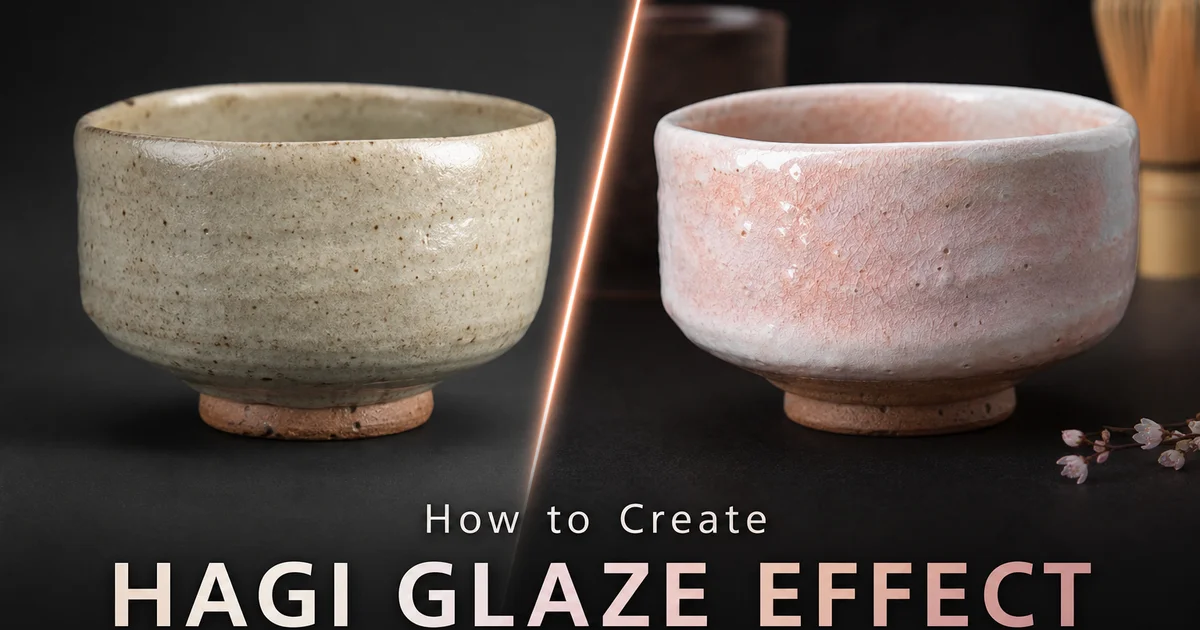
Hagi ware — the soft-glazed ceramic tradition from Yamaguchi Prefecture that ranks second only to Raku in the historic hierarchy of Japanese tea ceremony ceramics — embodies a concept of beauty that unfolds gradually over time. Unlike ceramic traditions that are complete when they leave the kiln, Hagi ware is designed to change with use. Its defining trait is a pale, translucent straw-ash glaze applied over a coarse porous clay body, with an intentional crazing pattern. A network of fine cracks in the glaze surface — that allows tea to slowly penetrate and stain the crack network over years and decades of ceremonial use. This gradual change, known as the seven changes of Hagi, turns a simple pale-glazed tea bowl into a unique artifact whose surface records its entire history of use in an intricate web of amber-stained craze lines that grow more beautiful with each passing year.
Digital replication of the Hagi aesthetic is challenging precisely because its beauty is so subtle. Where other ceramic traditions express themselves through bold color, dramatic surface effects, or elaborate decoration, Hagi ware speaks in whispers. Soft pale tones, barely-there translucency, and the quiet pattern of craze lines that requires close attention to appreciate. A simple white color filter captures none of this subtlety: it misses the translucent quality where the glaze thins and the warm clay shows through, the soft optical depth created by the straw-ash glaze chemistry, the precise character of the crazing network that differs from simple crackle textures. The critical tea-stain patina that transforms the piece from a freshly-fired white vessel into a living document of ceremonial practice.
AI-powered style transfer addresses these challenges by learning from thousands of photographs of authentic Hagi ware what the straw-ash glaze actually looks like as a physical material on a porous clay surface. The AI understands that the glaze is semi-translucent rather than opaque, allowing the warm iron-rich clay body to glow faintly through the white coating. It understands that the crazing pattern follows the stress geometry of the glaze shrinkage rather than forming a random crackle texture. It understands that the tea-stain patina penetrates selectively through the craze lines, staining some cracks deeply while leaving others lighter depending on their width and connectivity to the glaze surface. This guide walks through every step of creating authentic Hagi effects using AI Filter and AI Enhance, from selecting the glaze variant and age to configuring the crazing, translucency. Material details that distinguish genuine ceramic simulation from flat texture overlay.
- AI replicates the semi-translucent quality of Hagi straw-ash glaze, allowing the warm iron-rich clay body to glow faintly through the pale coating rather than applying an opaque white mask.
- Crazing pattern generation follows the stress geometry of glaze shrinkage on clay, producing physically plausible crack networks rather than random decorative crackle textures.
- Tea-stain patina simulation models selective penetration through craze lines, staining wider connected cracks deeply while leaving narrower isolated lines lighter, matching decades of ceremonial use.
- Glaze variant presets cover classic white Hagi, coarse-textured Oni-Hagi, pink-tinged Hime-Hagi, and aged Hagi with progressive levels of tea-stain character development.
- AI Enhance sharpens individual craze lines against the pale glaze while preserving the overall soft-focus quality that distinguishes Hagi from harder-edged ceramic traditions.
How AI Hagi rendering differs from white overlays and generic crackle textures
The simplest digital approximation of a Hagi-like effect applies a white or off-white overlay to the image with a crackle texture superimposed to suggest aged ceramic. This approach treats the Hagi surface as a color and a pattern rather than as a physical material system where a semi-translucent glaze interacts optically with the clay body beneath it. The result looks like a photograph viewed through frosted glass with crack-shaped lines drawn on top. There is no depth to the glaze, no warmth from the underlying clay, no variation in translucency, and no distinction between the craze lines that define Hagi ware and a generic decorative crackle pattern that could represent anything from old paint to dried mud.
AI Hagi rendering begins with the optical behavior of the straw-ash glaze itself. This glaze is not simply white. It is a semi-transparent coating that scatters light internally, similar to how opal or milk glass diffuses transmitted light. Where the glaze is thick, it appears more opaque and white. Where it thins on ridges, edges, and the rim of the vessel, the warm reddish-brown iron-rich clay body shows through with a faint pink or peach glow. This thickness-dependent translucency creates the optical depth that gives Hagi ware its trait soft luminous quality, as if the surface is lit from within. The AI maps image luminosity to glaze thickness, creating this translucency variation across the surface rather than applying a flat white layer of uniform opacity.
The crazing pattern is equally specific and physically determined. Glaze crazing occurs because the glaze and clay body have different coefficients of thermal expansion. As the piece cools after firing, the glaze contracts more than the clay, and the resulting tensile stress in the glaze surface relieves itself through a network of cracks. The geometry of this crack network is not random but follows physical principles: cracks propagate perpendicular to the direction of maximum tensile stress, they branch at trait angles. Their spacing is determined by the magnitude of the strain and the mechanical properties of the glaze layer. The AI generates crazing patterns that follow these physical constraints, producing networks that are right away distinguishable from random crackle textures by their regularity, branching angles. The relationship between crack density and local glaze thickness.
- White overlays with crackle textures treat Hagi as a color-and-pattern combination, missing the semi-translucent glaze depth, clay-body warmth, and physically determined crazing geometry.
- Straw-ash glaze scatters light internally like opal or milk glass, with thickness-dependent translucency that allows warm clay to glow through thin areas. Creating luminous depth impossible with flat white layers.
- Crazing follows physical stress geometry — cracks propagate perpendicular to maximum tensile stress with trait branching angles and density-to-thickness relationships that distinguish them from random crackle.
- AI maps image luminosity to glaze thickness to create authentic translucency variation, then generates physically constrained crazing patterns specific to straw-ash glaze on porous stoneware.
The seven changes of Hagi: simulating decades of tea-stain patina development
The concept of the seven changes of Hagi. Nanabake in Japanese — refers to the progressive change of a Hagi tea bowl's look over years of use in the tea ceremony. When freshly fired, a Hagi bowl presents a clean pale surface with barely visible craze lines. As the bowl is used for preparing and drinking matcha tea, the liquid gradually penetrates the fine crazing network, carrying dissolved tannins and other organic compounds into the cracks where they deposit and accumulate. Over months and years, individual craze lines darken from barely visible to warm amber to deep brown, creating an increasingly pronounced network of stained lines against the pale glaze background. This patina is not uniform — wider cracks that connect directly to the glaze surface stain faster and deeper than fine closed cracks deeper in the network, creating a hierarchy of staining intensity that reflects the physical connectivity of each crack.
The AI mimics this aging process with a steady slider that moves from freshly fired through seven conceptual stages of patina development. At the fresh end, craze lines are visible only as faint interruptions in the glaze surface sheen, with no discoloration. At moderate aging, the primary crack network shows warm amber staining while secondary branches remain pale. At the most aged setting, the full hierarchical staining pattern is developed. Primary cracks are deep brown, secondary branches are amber, and the finest tertiary lines show pale tan staining that indicates decades of tea exposure. The spatial distribution of staining also varies with age, being more intense around the interior of the bowl where tea contact was most frequent and lighter on the exterior and foot ring where tea exposure was incidental.
The cultural significance of this aging process cannot be overstated in the context of Japanese tea ceremony. A well-aged Hagi bowl whose nanabake has developed over generations of use is prized not merely for its visual beauty but for the history it embodies. Each stained craze line records an instance of tea preparation, each variation in stain depth reflects the frequency and manner of use, and the overall patina tells the story of the bowl's relationship with the successive tea practitioners who used it. The AI effect captures this cultural meaning by producing patina patterns that are visually plausible as records of genuine ceremonial use rather than arbitrary brown lines overlaid on a white surface, honoring the tradition by mimicking it with material accuracy.
- Fresh Hagi ware shows barely visible craze lines, while decades of tea ceremony use stains the crack network progressively from faint lines through warm amber to deep brown hierarchical patterns.
- Staining intensity follows physical crack connectivity. Wider primary cracks reaching the surface darken first and deepest, while fine tertiary branches develop pale staining only after extended exposure.
- Spatial distribution varies with use patterns — interior surfaces where tea contact was frequent show deeper staining than exterior surfaces where exposure was incidental.
- The AI aging slider produces culturally accurate patina that reads as a genuine record of ceremonial use rather than arbitrary brown lines, honoring the nanabake tradition with material precision.
Clay body character: Hagi's distinctive porous stoneware and foot ring exposure
The clay body of Hagi ware is as key to its aesthetic identity as the glaze that covers most of its surface. Hagi potters in the past use two types of local clay. Daido clay, a coarse sandy stoneware body with high porosity, and Mishima clay, a finer whiter body that fires to a lighter tone. Both clays are iron-bearing, producing warm reddish-brown to orange tones when fired. Both have the high porosity that is key to the Hagi tradition because it allows tea to penetrate through the crazing network into the clay body itself, contributing to the progressive color change that characterizes well-used pieces. The coarse texture of the clay is visible on unglazed surfaces, mainly the foot ring where the potter on purpose leaves the base unglazed to reveal the raw clay character.
The foot ring — the circular base that supports the bowl — is a critical aesthetic element in Hagi ware that carries more visual weight than in most ceramic traditions. Hagi potters often cut or carve the foot ring in distinctive styles that serve as identifying marks of individual workshops and lineages. The unglazed foot reveals the raw clay color, texture. Any fire effects from contact with the kiln shelf or wadding used to prevent sticking during firing. Where the glaze terminates at the edge of the foot ring, a slight thickening of the glaze creates a bead-like roll at the boundary that catches light and defines the transition between the glazed body and the raw clay base. The AI renders this foot ring detail with right attention to its visual significance in the Hagi tradition.
The porosity of Hagi clay has visual consequences beyond the tea-staining of craze lines. Over time, tea and handling oils penetrate the porous clay body itself, gradually shifting its color from the original firing tone toward a darker, richer brown that is most visible on the unglazed foot. The glaze surface also changes subtly as the clay body beneath it absorbs moisture and organic compounds, with the translucent areas where thin glaze allows the clay color to show through gradually warming in tone as the underlying clay darkens. This whole-body aging — affecting clay and glaze together as an integrated material system — is what makes the most aged Hagi pieces so different in look from freshly fired examples. The AI mimics this integrated aging when the patina slider is advanced to its most extreme settings.
- Iron-bearing Daido and Mishima clays produce warm reddish-brown tones with high porosity essential for tea penetration through the crazing network into the clay body over years of use.
- The unglazed foot ring reveals raw clay character and potter-specific carving styles, with glaze termination creating a distinctive bead-like roll at the boundary between glazed body and exposed base.
- Whole-body aging affects the integrated clay-and-glaze system. Porous clay darkens from absorbed tea and oils, shifting the translucent glaze areas toward warmer tones as the underlying body color changes.
- AI renders the foot ring with appropriate visual weight for the Hagi tradition, where the base carries more aesthetic significance than in most ceramic styles.
Creative applications: tea culture, wellness branding, and contemplative interior design
Tea ceremony practitioners and teaware retailers use the Hagi effect to create marketing and educational content that shares the quiet beauty of the tradition to audiences who may be unfamiliar with Japanese tea ceramics. The soft, pale, luminous quality of Hagi ware translates exceptionally well to visual platforms where its understated elegance provides a calming counterpoint to the saturated high-contrast imagery that dominates most social media feeds. Photographs of tea settings, seasonal arrangements, and mindful daily rituals transformed into Hagi-style imagery convey the contemplative spirit of the tea ceremony, attracting audiences drawn to wabi-sabi philosophy, mindfulness practices, and the Japanese aesthetic tradition of finding profound beauty in simple, imperfect, transient things.
Wellness brands, mindfulness applications, and meditation-focused businesses adopt the Hagi aesthetic for its associations with calm, contemplation, and the appreciation of subtle beauty. The soft palette, gentle translucency, and quiet surface pattern of Hagi ware align perfectly with the visual language of the wellness industry, and transforming product photography and brand imagery into Hagi-style effects creates an immediate association with the mindful attention and patient appreciation that the tea ceremony embodies. The aged patina variant is mainly effective for brands emphasizing realism and the value of time-developed quality, suggesting that their products or practices improve and deepen with sustained engagement rather than offering instant gratification.
Interior designers specializing in contemplative spaces. Meditation rooms, tea rooms, spa treatment areas, and quiet residential retreats — use Hagi changes to visualize how the ceramic aesthetic integrates with calming interior palettes. The warm neutrals, soft whites, and muted earth tones of Hagi ware complement natural material schemes of unfinished wood, handmade paper, linen textiles, and stone surfaces. Transforming photographs of actual interior spaces into Hagi-style renderings previews the mood quality that authentic Hagi ceramic elements would bring to the room, helping clients understand not just the visual look but the emotional character of the design direction. The effect is mainly convincing because the Hagi palette naturally harmonizes with the muted material palettes that dominate modern Japanese-inspired interior design.
- Tea ceremony practitioners create content where Hagi ware's understated elegance provides calming contrast to the saturated high-contrast imagery dominating most social media platforms.
- Wellness and mindfulness brands adopt the Hagi aesthetic for its associations with contemplation, patience, and the appreciation of subtle beauty that improves with sustained attention.
- Interior designers visualize how Hagi ceramic elements integrate with contemplative spaces using warm neutrals and soft whites that harmonize with Japanese-inspired material palettes.
- The aged patina variant shares realism and time-developed quality for brands emphasizing that their products or practices deepen with sustained engagement rather than offering instant results.
How to do it
- 1
Upload your photo and evaluate its suitability for Hagi glaze transformation
Open your image in AI Filter and assess how well the composition translates to the soft, understated aesthetic of Hagi ware. Hagi ceramics are defined by their pale translucent glazes. Often in soft whites, pale pinks, and warm cream tones — applied over a coarse porous clay body, with a distinctive crazing pattern that develops character over years of use as tea gradually stains the crack network. Photographs with subtle tonal range, soft lighting. Subjects that complement the wabi-sabi philosophy of quiet beauty and aging convert most well, as the Hagi aesthetic values gentleness and restraint over bold color or dramatic contrast.
- 2
Select the Hagi glaze variant and configure surface translucency and coverage
Choose from presets that simulate the major Hagi glaze traditions. Classic white Hagi with its milky opaque straw-ash glaze, Oni-Hagi with a coarse textured surface and thicker glaze application, Hime-Hagi featuring delicate pink-tinged glazes produced by controlled kiln atmosphere, and aged Hagi showing the trait tea-stain patina that collectors prize in well-used pieces. Configure the glaze thickness and translucency, controlling how much of the warm clay body shows through the semi-opaque glaze coating and the degree of visible surface texture beneath the glaze layer.
- 3
Adjust crazing pattern density, stain penetration, and the characteristic soft-focus glaze surface
Control the crazing network — the fine crack pattern in the glaze surface — that is Hagi ware's most distinctive visual feature using density and aging sliders. Fresh Hagi ware displays fine crazing lines barely visible against the white glaze. Decades-old pieces show a pronounced network where tea has penetrated the cracks and stained them warm amber and brown, creating an intricate web of dark lines against the pale glaze that grows more beautiful with use. The AI mimics the progressive staining process, allowing you to select the apparent age of the piece from freshly fired through moderately used to deeply aged with pronounced tea-stain character.
- 4
Use AI Enhance to sharpen crazing detail, glaze surface quality, and clay body texture
Run AI Enhance to refine the details that define Hagi ware's visual character. The individual craze lines visible as fine dark threads against the pale glaze, the soft translucent quality of the glaze surface where it catches light with a gentle sheen rather than a hard gloss, and the coarse granular texture of the clay body visible where the glaze is thin or absent at the foot ring. Boost sharpens the contrast between the craze network and the surrounding glaze while keeping the overall soft-focus quality that distinguishes Hagi from harder-edged ceramic traditions.
- 5
Export and compare against photographs of prized Hagi tea ceremony vessels
Save the completed image at full resolution and compare it with photographs of notable Hagi pieces. The tea bowls by Miwa Kyusetsu lineage potters designated as Living National Treasures, the historic Hagi ware in the Yamaguchi Prefectural Museum collection, and the well-aged pieces whose tea-stain patina has developed over generations of ceremonial use. Verify that the glaze tonality falls within the soft pale range trait of authentic Hagi straw-ash glazes, that the crazing pattern shows the right density and stain penetration for the selected age. That the overall aesthetic shares the quiet contemplative beauty that has placed Hagi second only to Raku in the traditional ranking of Japanese tea ceremony ceramics.
Sources
- Hagi Ware: Tradition and Innovation in Japanese Tea Ceramics — The Metropolitan Museum of Art
- The Seven Transformations of Hagi: How Tea Staining Changes Ceramic Surfaces Over Time — Encyclopaedia Britannica
- Glaze Chemistry and Crazing Behavior in Traditional Japanese Stoneware — Ceramics Monthly — The American Ceramic Society