
How to Create a Bizen Pottery Effect with AI Photo Editing — Magic Eraser
Transform photos into Japanese Bizen unglazed stoneware effects using AI style transfer. Step-by-step guide to hidasuki fire marks, goma ash deposits, sangiri reduction coloring, and authentic clay textures.
SEO & Growth
Reviewed by Magic Eraser Editorial ·
Table of Contents
- How AI Bizen rendering differs from simple earth-tone filters and texture overlays
- The four major Bizen firing effects: hidasuki, goma, sangiri, and yohen
- Clay body texture and the wabi-sabi aesthetic of imperfect surfaces
- Creative applications: tea culture, ceramics marketing, and Japanese interior design
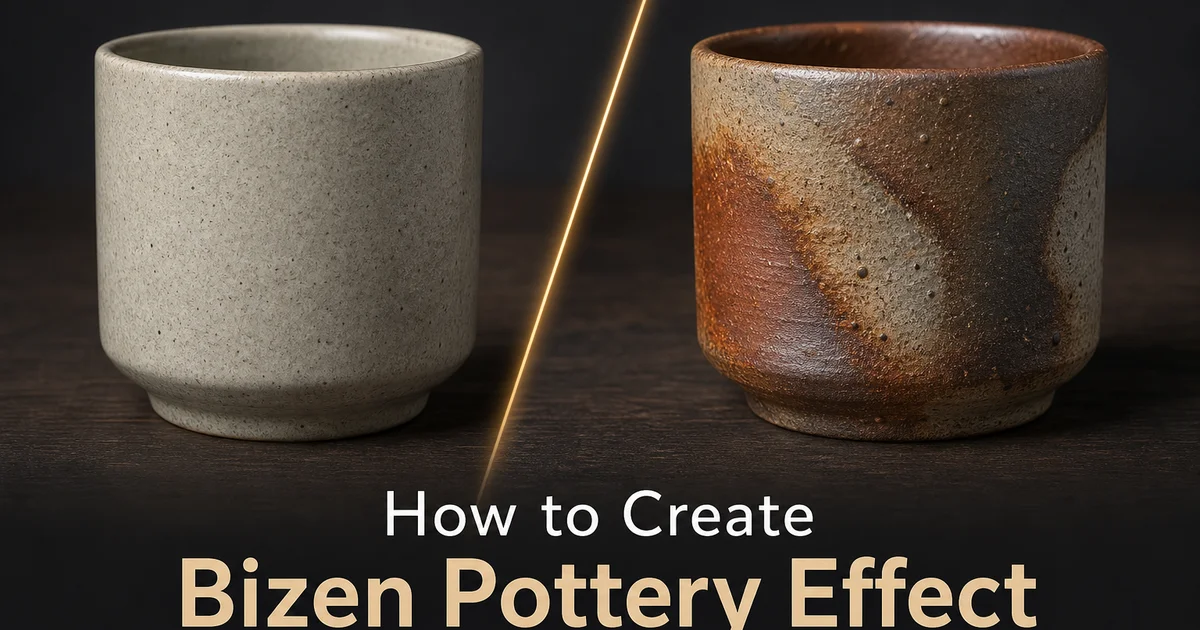
Bizen ware — one of the Six Ancient Kilns of Japan and among the most revered ceramic traditions in the world — achieves its extraordinary beauty through the radical simplicity of unglazed stoneware fired in wood-burning kilns for periods of one to two weeks. Unlike virtually every other major ceramic tradition, Bizen pottery uses no glaze, no painted decoration, and no applied color of any kind. Every visual effect on the surface — the warm earth tones, the dramatic fire marks, the scattered ash deposits, the patches of blue-gray reduction coloring — is created entirely by the interaction between clay, flame, wood ash, and kiln atmosphere during the extended firing process. This means that no two Bizen pieces are identical. Each one carries a unique record of its position in the kiln, the path of flames around its surface, and the precise atmospheric conditions it experienced during the firing cycle.
Digital replication of the Bizen aesthetic has proven exceptionally difficult precisely because its beauty derives from physical processes rather than applied decoration. A green-glazed Oribe pot or a blue-and-white Delft tile can be approximated by applying color to a surface, but Bizen effects are the visible traces of fire on clay — they are records of physical events, not design choices. A hidasuki mark is not a decorative red line; it is the oxidation scar where rice straw wrapped around the pot burned away during firing, leaving an iron-rich deposit that turned red in the kiln atmosphere. A goma spot is not a painted gold fleck; it is a particle of wood ash that landed on the surface, melted in the extreme heat, and fused to the clay as a glassy sesame-seed-shaped deposit. Replicating these effects digitally requires understanding them as physical phenomena and mimicking the processes that create them.
AI-powered style transfer solves these challenges by learning from thousands of photographs of authentic Bizen ware what each firing effect actually looks like as a physical mark on an unglazed clay surface. The AI understands that hidasuki marks follow the paths where rice straw contacted the clay, that goma deposits cluster on surfaces that faced the firebox where wood ash was most abundant, that sangiri coloring appears where pieces were partially buried in ember beds creating localized reduction atmospheres, and that the clay body itself varies in color and texture based on iron content, firing temperature, and oxygen availability. This guide covers every step of creating authentic Bizen effects using AI Filter and AI Enhance, from selecting the firing effect type to configuring clay texture, ash deposits, and the material details that distinguish genuine ceramic simulation from flat texture overlays.
- AI mimics the physical processes of Bizen wood firing — flame paths, ash deposition, and atmospheric variation — rather than applying decorative patterns to create the distinctive surface effects of unglazed stoneware.
- Hidasuki preset replicates the red-orange oxidation scars where rice straw burned against clay, with marks that follow realistic wrapping patterns and show proper iron-rich deposit coloration.
- Goma preset generates individual melted ash deposits with the glassy, sesame-seed-like look of wood ash particles that landed on surfaces facing the firebox and fused to clay at extreme temperatures.
- Sangiri preset creates dramatic blue-gray reduction patches against warm oxidized brown, replicating the atmospheric effects of partial burial in ember beds during extended firing cycles.
- AI Enhance sharpens the granular clay texture that gives Bizen ware its tactile visual quality, distinguishing the effect from smooth digital renderings that lack the surface character of hand-formed stoneware.
How AI Bizen rendering differs from simple earth-tone filters and texture overlays
The simplest digital approach to a Bizen-like effect applies a warm earth-tone color filter to the image, perhaps with a grainy or rough texture overlaid to suggest unglazed ceramic. This captures the general color temperature of Bizen ware — warm browns and tans — but none of the specific surface effects that define the tradition and make each piece unique.
AI Bizen rendering begins by analyzing the image as a three-dimensional surface and mimicking how flame, ash, and atmospheric conditions would affect different areas based on their geometry and orientation. Surfaces facing the virtual firebox receive heavier ash deposits and more intense flame-marking, while surfaces in the lee of the form receive less ash but may show the blue-gray coloring of oxygen-deprived reduction atmospheres.
The clay body itself is rendered as a physical material with specific properties rather than a flat colored surface. Bizen clay is iron-rich, coarse-grained, and shows the marks of every forming process — the spiral ridges from wheel throwing, the faceted planes from paddle shaping, the smooth compression marks from hand burnishing.
- Earth-tone filters apply uniform warm coloring that contradicts Bizen's fundamental character, where every surface area tells a different story based on its unique encounter with flame and ash.
- AI analyzes image geometry to simulate positionally-aware firing effects — heavier ash deposits on firebox-facing surfaces, reduction coloring in sheltered zones, flame marks on exposed areas.
- Clay body is rendered with physical forming marks — throwing ridges, paddle facets, and burnishing marks — that interact with overlaid firing effects as they would on genuine hand-formed stoneware.
- Material layering of clay texture, firing effects, and ash deposits creates the multi-dimensional surface character that distinguishes ceramic simulation from flat filter applications.
The four major Bizen firing effects: hidasuki, goma, sangiri, and yohen
Hidasuki — literally translated as fire cord — is perhaps the most iconic Bizen surface effect. It is created by wrapping rice straw around the unfired pot before loading it into the kiln. During the long firing, the straw burns away, and the iron and silica compounds in the rice straw react with the clay surface at the contact points, leaving distinctive red-orange linear marks that follow the paths where the straw lay against the clay.
Goma, meaning sesame seed, describes the scattered deposits of melted wood ash that land on Bizen pottery surfaces during the extended firing. As the kiln burns through enormous quantities of red pine wood over one to two weeks, fine ash particles are carried by the flame and updraft currents through the kiln chamber, settling on any exposed surface.
Sangiri creates the most dramatically varied surfaces in the Bizen tradition. It occurs when pieces are partially buried in the ember bed at the base of the kiln as the burning wood collapses into a thick layer of coals. Yohen, meaning kiln change, describes the rarest effects produced by extreme and unpredictable kiln conditions — iridescent surfaces, metallic sheens, and multicolored patches that even master potters cannot reliably produce.
- Hidasuki rice-straw wrapping creates red-orange linear marks from iron and silica reactions, with pale tan background clay protected from direct flame exposure creating high-contrast compositions.
- Goma deposits form when airborne wood ash melts on clay surfaces at extreme temperatures, creating scattered glassy spots from pale gold to dark olive-brown in constellation-like patterns.
- Sangiri produces dramatic dual-colored surfaces from partial ember burial — warm reddish-brown in oxidized zones transitioning through gradients to cool blue-gray in reduction zones.
- Yohen represents the rarest kiln transformations — iridescent surfaces, metallic sheens, and unpredictable multicolored effects that even master potters cannot deliberately produce.
Clay body texture and the wabi-sabi aesthetic of imperfect surfaces
The unglazed surface of Bizen ware reveals the clay body in a way that glazed ceramics never do, making the character of the clay itself a primary aesthetic element. Bizen clay — traditionally sourced from rice paddy subsoil in the Imbe district of Okayama Prefecture — is iron-rich, coarse-textured, and contains fine sand particles and organic material from its alluvial origin.
The wabi-sabi aesthetic that governs the appreciation of Bizen ware values precisely the qualities that conventional photography editing tries to eliminate: surface irregularity, color variation, and the visible traces of handwork. In wabi-sabi philosophy, beauty is found in imperfection, impermanence, and incompleteness.
Surface marks from the forming process are preserved and emphasized in the Bizen effect rather than smoothed away. The spiral ridges left by the potter's fingers during wheel throwing create a rhythmic pattern that catches light differently than the surrounding surface.
- Iron-rich Bizen clay reveals granular texture with visible sand grains and stone inclusions on unglazed surfaces, creating tactile visual quality impossible to achieve with smooth digital rendering.
- Wabi-sabi philosophy values surface irregularity, color variation, and handwork traces — the AI introduces controlled imperfections that authenticate the handmade character of each virtual piece.
- Throwing ridges, trimming marks, and paddle facets from forming processes are preserved and emphasized as records of making that connect finished pieces to the potter's hands.
- Subtle warping from extended firing at extreme temperatures is simulated to complete the material authenticity of hand-formed objects that endured two weeks of kiln conditions.
Creative applications: tea culture, ceramics marketing, and Japanese interior design
Tea ceremony practitioners and teaware collectors use the Bizen effect to create visual content that communicates the austere beauty of the tradition to audiences who may be unfamiliar with Japanese ceramics. A still life of a tea setting transformed into Bizen-style imagery conveys the wabi-sabi spirit of the ceremony in a way that standard photography cannot.
Ceramicists working in the Bizen tradition use the effect to create pre-production visualizations that show potential clients and gallery curators what finished pieces might look like. Because Bizen firing effects are inherently unpredictable, potters can only predict the general character of their results rather than the specific look of individual pieces.
Japanese interior designers and architects apply Bizen transformations to visualize how unglazed ceramic elements would integrate with residential and hospitality spaces. The warm earth tones and tactile surface quality of Bizen ware complement natural material palettes featuring wood, stone, and linen.
- Tea ceremony practitioners transform still-life settings into Bizen-style imagery that conveys wabi-sabi spirit through earth tones, clay texture, and the accidental beauty of simulated kiln effects.
- Ceramicists create pre-production visualizations showing multiple possible firing outcomes for the same form, helping clients understand the unpredictable range of results inherent in Bizen tradition.
- Interior designers preview unglazed ceramic accent pieces and wall installations within actual space photographs, testing how Bizen's warm earth tones complement natural material palettes.
- Japanese cuisine restaurants use Bizen-style imagery for marketing that evokes the ceramic tradition most closely associated with kaiseki dining, communicating cultural authenticity to discerning audiences.
How to do it
- 1
Upload your photo and evaluate its suitability for Bizen unglazed stoneware transformation
Open your image in AI Filter and assess how well the composition translates to the austere, earth-toned aesthetic of Bizen pottery. Bizen ware is defined by its complete absence of glaze, with surface effects created entirely by the interaction of flame, wood ash, and clay during extended wood firings that last one to two weeks. Photographs with warm tonal palettes, strong textural elements, and subjects that complement the wabi-sabi philosophy of imperfect natural beauty convert most successfully. The Bizen aesthetic favors subdued earth tones over vivid color, organic form over geometric precision, and the accidental beauty of kiln effects over deliberate decoration.
- 2
Select the Bizen firing effect type and configure surface treatment
Choose from presets that simulate the major categories of Bizen surface effects: hidasuki with its signature red-orange fire-cord marks against a pale clay body, goma with scattered golden-brown sesame-seed-like ash deposits, sangiri with dramatic patches of blue-gray reduction coloring against warm oxidized brown, and yohen with the rarest and most prized multicolored effects produced by extreme kiln temperature variations. Configure the intensity and distribution of each effect across the image, controlling where flame marks, ash accumulations, and color transitions appear on the virtual clay surface.
- 3
Adjust clay body texture, fire color gradients, and ash deposit characteristics
Control the specific material qualities of the Bizen clay surface using texture and coloration sliders. Authentic Bizen clay — sourced from rice paddies around Imbe in Okayama Prefecture — has a distinctive iron-rich reddish-brown color that ranges from pale tan in oxidized areas to deep chocolate brown in reduction zones, with the granular texture of coarse stoneware visible at close inspection. The AI mimics the characteristic unglazed surface that shows every mark of the making process: finger impressions from throwing, tool marks from trimming, and the slight irregularities of hand-formed rather than industrially produced ceramic.
- 4
Use AI Enhance to sharpen fire marks, ash textures, and clay body grain detail
Run AI Enhance to refine the kiln effects that define Bizen ware's visual character: the crisp edges of hidasuki cord marks where rice straw burned against the clay surface, the individual ash deposits of the goma effect where each melted fleck catches light differently, and the subtle transitions between oxidized and reduced zones in sangiri coloring. AI Enhance sharpens the granular clay texture that gives Bizen ware its tactile visual quality, ensuring that the surface reads as hand-formed stoneware rather than a smooth digital rendering.
- 5
Export and compare against photographs of authenticated Bizen masterworks
Save the completed image at full resolution and compare it with photographs of major Bizen pieces: the National Treasure water jars and flower vases in Japanese museum collections, modern works by designated Living National Treasures such as the Isezaki and Fujiwara lineages, and the medieval Bizen pieces prized by tea ceremony practitioners. Verify that the earth-tone palette falls within the range produced by authentic Bizen clay and wood-firing conditions, that the surface effects are distributed in patterns consistent with actual kiln placement, and that the overall aesthetic shares the wabi-sabi appreciation of imperfect natural beauty that defines the tradition.
Sources
- Bizen Ware: The Art of Earth and Fire in Japanese Ceramics — Encyclopaedia Britannica
- The Six Ancient Kilns of Japan: Bizen and the Tradition of Unglazed Stoneware — The Metropolitan Museum of Art
- Wood-Fired Ceramics: Surface Effects and Kiln Atmosphere Dynamics — Ceramics Monthly — The American Ceramic Society