
AI Photo Editing for Personal Chefs — Magic Eraser
How personal chefs and caterers use AI photo editing for food photography, menu visuals, social media content, and client proposals. Practical guide to building an expert culinary portfolio with AI tools.

Product Marketing
Reviewed by Magic Eraser Editorial ·
Table of Contents
- Why food photography quality directly determines personal chef bookings
- Overcoming the client-kitchen photography challenge with AI background tools
- Color correction for food that looks as appetizing as it tastes
- Creating a content pipeline from daily cooking to weekly marketing output
- Using food portfolio images in client proposals and printed menus
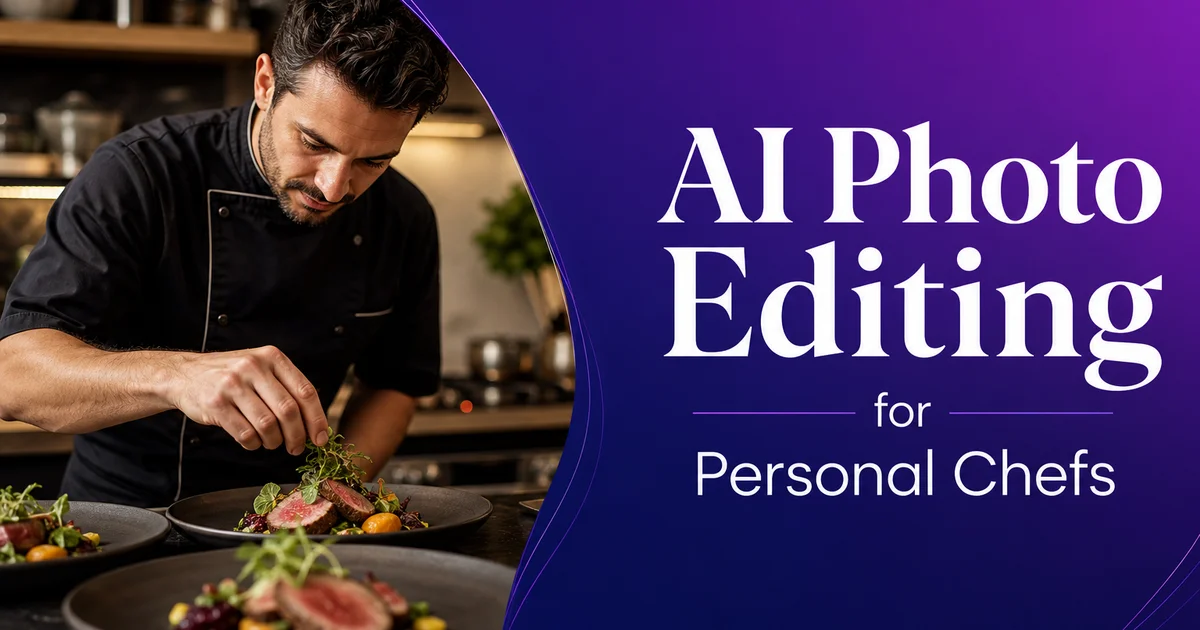
Personal chefs and private caterers operate in a uniquely visual market where prospective clients make hiring decisions based almost fully on the food they see in a portfolio. Unlike restaurant chefs whose establishments have built-in foot traffic and review platform visibility, personal chefs must generate every client through their own marketing. And that marketing is overwhelmingly visual. A personal chef's website, Instagram profile, and proposal documents are gallery-first experiences where the quality of food photography directly determines whether a prospect requests a tasting consultation or clicks away to the next provider. The challenge is that personal chefs work in client kitchens with uncontrolled lighting, inconsistent backgrounds. Zero time for elaborate food styling because the dish needs to be served while it is hot.
AI photo editing tools transform the raw captures from chaotic client-kitchen conditions into polished, expert food photography without requiring a dedicated photo shoot, studio lighting equipment, or hours of manual retouching. Background replacement eliminates the visual inconsistency of working in different kitchens every day by placing every dish on the same clean surface. Color correction restores the warm, appetizing tones that smartphone cameras flatten under mixed indoor lighting. Detail boost makes textures — the crust on seared protein, the gloss on a reduction, the individual grains in a risotto — visually crisp and appealing. Object removal cleans up the minor plating imperfections that are invisible when the dish is served but become prominent in a photograph examined at close range.
This guide covers the complete AI-assisted food photography workflow for personal chefs and caterers, from capturing dishes during real service through editing to creating optimized images for every marketing channel. Client proposals, printed menus, social media platforms, and website galleries. The techniques are designed for experts who cannot pause service to set up a photo shoot and need to produce portfolio-quality images as a natural byproduct of their regular cooking workflow rather than a separate time-consuming production process.
- Personal chefs rely on visual portfolios because prospective clients evaluate culinary skill and aesthetic almost entirely from food photography before requesting a consultation.
- AI background replacement creates brand consistency across portfolios despite the visual chaos of working in different client kitchens with varying decor, surfaces, and lighting every day.
- Color correction under mixed kitchen lighting restores the warm appetizing tones that smartphone cameras flatten — particularly critical for seared proteins, fresh herbs, and sauce glossiness.
- Object removal cleans minor plating imperfections — sauce drips, stray fragments, plate smudges — that are invisible during service but become prominent in examined photographs.
- Descriptive image filenames like pan-seared-salmon-citrus-beurre-blanc.webp improve both personal organization and search engine image discoverability for culinary queries.
Why food photography quality directly determines personal chef bookings
The personal chef market has shifted decisively to visual-first discovery. Clients searching for personal chefs in their area encounter multiple providers whose credentials, experience descriptions. Service offerings sound similar in text. The differentiator is almost always the food photography. A personal chef whose portfolio features sharp, well-lit, color-accurate images of beautifully plated dishes shares competence and aesthetic sensibility through the work itself. A personal chef whose portfolio contains dark, blurry phone snapshots with cluttered backgrounds shares the opposite. Regardless of whether their actual cooking is superior. This visual judgment is not superficial. Research on consumer decision-making confirms that perceived quality of visual display directly correlates with expected quality of the product or service being presented.
The visual quality gap is mainly acute in client proposals. When a personal chef submits a proposal for a dinner party, anniversary celebration, or ongoing meal service, the proposal document often includes a proposed menu with accompanying photographs of representative dishes. If those photographs look expert, the proposal feels premium and justifies premium pricing. If those photographs look like casual phone snapshots, the entire proposal feels casual and the client mentally anchors to a lower price range. The same menu described in text and illustrated with expert versus amateur photography can generate price-point perceptions that differ by thirty to fifty percent. Investing time in food photography quality is not vanity — it is pricing strategy.
Social media platforms amplify this effect because their algorithms surface content based partly on engagement metrics that correlate with visual quality. An Instagram post of a beautifully photographed and edited dish generates more saves, shares. Comments than the same dish poorly photographed. Higher engagement triggers the algorithm to show the post to more people. Over time, always high-quality food photography creates a compounding advantage where the algorithm increasingly favors your content, expanding your reach to new potential clients organically. Personal chefs who invest in food photography quality build audience faster and sustain visibility longer than those who post unedited snapshots, even if they post with equal frequency.
- Visual portfolio quality is the primary differentiator when multiple personal chefs present similar credentials, experience, and service descriptions in text.
- Professional food photography in client proposals creates premium perception that supports higher pricing — the visual quality gap can shift price-point expectations by thirty to fifty percent.
- Social media algorithms surface content based on engagement metrics that correlate with visual quality, creating a compounding visibility advantage for well-photographed food content.
- Investing in food photography quality is pricing strategy, not vanity — clients anchor their value perception to the production quality of the visual materials they evaluate.
Overcoming the client-kitchen photography challenge with AI background tools
The fundamental challenge of food photography for personal chefs is that you do not control your shooting setting. Restaurant chefs can invest in a signature table setting, consistent tableware, and fixed lighting. Personal chefs walk into a different kitchen every day. Sometimes a modern renovated kitchen with granite countertops and abundant natural light, sometimes a dated galley kitchen with dim overhead fluorescents and laminate surfaces. The visual setting changes completely with every client. Means raw food photos from different sessions have wildly inconsistent backgrounds that make a portfolio look scattered and unprofessional when viewed together.
AI background removal and replacement solves this problem by decoupling the food from its setting. After capturing a dish in whatever kitchen you happen to be working in, the background removal tool isolates the plate and its immediate surface from the surrounding setting. You then place the dish on a consistent replacement background. A warm walnut wood surface, a clean white marble counter, a neutral gray linen, or whatever surface aesthetic defines your brand. The replacement happens in seconds and produces a clean, expert result that would take twenty minutes to achieve manually by masking the complex contours of a plated dish with garnishes, sauce drizzles. Items extending beyond the plate edge.
Choosing the right replacement background is a branding decision that deserves intentional thought. The background sets the mood for your entire portfolio. Warm wood surfaces convey rustic, farm-to-table, or comfort food aesthetics. White marble or light stone reads as modern, clean, and upscale. Dark slate or black surfaces create dramatic contrast that makes colorful dishes pop. Mainly effective for vibrant Asian cuisines, colorful salads, and desserts. Neutral linen or cloth textures add warmth without competing with the food. Pick one or two surfaces that align with your culinary specialty and client base, and use them always. A portfolio where every image sits on the same warm oak surface tells a cohesive brand story that a portfolio with random kitchen backgrounds cannot match.
- Personal chefs work in different client kitchens daily, producing raw photos with wildly inconsistent backgrounds that make portfolios look scattered when viewed together.
- AI background removal isolates plated dishes from their surroundings in seconds, handling complex contours around garnishes, sauce drizzles, and items extending past plate edges.
- Background surface choice is a branding decision — warm wood for rustic aesthetics, white marble for modern upscale, dark slate for dramatic colorful contrast, neutral linen for approachable warmth.
- Using one or two consistent replacement backgrounds across all portfolio images creates brand cohesion that clients perceive as professional intentionality rather than random documentation.
Color correction for food that looks as appetizing as it tastes
The human brain processes food attractiveness through color before any other visual attribute. Research on visual appetite response shows that warm tones. Golden browns, vibrant greens, rich reds, and warm yellows — trigger appetite and positive food assessment, while cool-shifted or desaturated colors signal staleness, unripeness, or poor quality. Smartphone cameras working under artificial kitchen lighting frequently produce images where warm food tones have shifted cool. A perfectly seared steak that appeared rich mahogany brown in person photographs as grayish brown under fluorescent light. Fresh basil that was vivid green on the plate appears muted olive in the image. A golden-brown pastry crust photographs as dull tan. Each of these color shifts makes the food look less appetizing than it actually was.
AI color correction specifically addresses the lighting-induced color shifts that plague kitchen photography. The tool analyzes the image for reference points. The known white of a plate, the expected skin tone of a hand holding a dish, neutral gray shadows — and calculates what color temperature and tint adjustments would produce accurate rendering under neutral daylight conditions. This is more sophisticated than applying a warm filter. Would shift all colors uniformly including elements that are already correctly rendered. The AI correction is contextual — it warms the seared protein back to its true brown while not over-warming the white plate. It restores the green of herbs while not shifting the blue of a decorative plate pattern.
For personal chefs, the most critical color correction scenarios involve mixed lighting. Client kitchens frequently have warm incandescent under-cabinet lights, cool fluorescent overheads, and natural window light all present at once. This mix produces images with inconsistent color casts. The side of the dish near the window looks different from the side lit by the overhead, and the garnish lit by the under-cabinet light is warmer than the same herb on the opposite side. AI color correction normalizes these regional color variations so the entire dish appears always lit, producing a natural-looking result that matches the ideal viewing condition: diffused natural daylight.
- Warm food tones — golden browns, vibrant greens, rich reds — trigger appetite response while cool-shifted or desaturated colors subconsciously signal staleness or poor quality.
- Smartphone cameras under artificial kitchen lighting systematically cool-shift warm food tones, making seared proteins gray, fresh herbs olive, and golden crusts dull tan.
- AI correction calculates lighting-specific adjustments from plate white and shadow references rather than applying uniform warm filters that distort already-correct elements.
- Mixed lighting in client kitchens creates regional color casts within a single dish image — AI correction normalizes these variations to simulate consistent natural daylight.
Creating a content pipeline from daily cooking to weekly marketing output
Personal chefs who treat content creation as a separate activity from cooking in time fail to maintain consistent output. The workflow breaks down because after a long day of prep, cooking, service. Kitchen cleanup at multiple client locations, the last thing anyone wants to do is spend an hour editing photos and writing social media captions. The sustainable approach integrates photo capture into the cooking workflow itself. It becomes as automatic as plating the dish — and batches the editing and publishing tasks into a single weekly session rather than daily effort that competes with actual cooking work.
The capture phase adds under two minutes to each client service. After final plating and before serving, take three to five photos of the completed dish: one overhead, one at a forty-five-degree angle. One close-up detail of the most visually interesting element. Use your phone's burst mode if the dish includes steam, a sauce pour, or any time-sensitive visual element. Then serve the food. Do not attempt to style, edit, or evaluate the photos during service — that is batch processing work. At the end of each service, spend thirty seconds reviewing the captures and starring the best two or three for later editing. This light curation prevents the editing session from being overwhelmed with hundreds of mediocre images accumulated over a week.
The editing and publishing session happens once weekly — often a quieter day or a dedicated thirty-minute block. Open the starred images from the week's client sessions in Magic Eraser and batch-process them: remove backgrounds, apply your standard background replacement, correct colors, enhance details, and export in all required sizes. From five client sessions with three starred images each, you have fifteen edited portfolio images per week. Schedule seven for daily Instagram posts, select the five best for Pinterest, upload three to your website gallery. Save the strongest two or three for inclusion in your next client proposal deck. This single weekly session produces more content than most personal chefs create in a month of ad-hoc effort.
- Integrating photo capture into the cooking workflow — three to five shots per dish, under two minutes — makes content creation automatic rather than a separate dreaded task.
- Starring the best two or three photos per client session immediately after service prevents the weekly editing session from being overwhelmed by hundreds of unculled images.
- A single thirty-minute weekly batch editing session using AI tools produces fifteen-plus portfolio-quality images — more content than most personal chefs create in a month of ad-hoc effort.
- Distributing edited images across Instagram daily posts, Pinterest pins, website gallery updates, and proposal decks maximizes the return on each two-minute capture investment.
Using food portfolio images in client proposals and printed menus
Client proposals are the highest-stakes application of food photography for personal chefs because each proposal directly represents potential revenue. A proposal for a recurring weekly meal service might represent twenty thousand dollars or more in annual revenue. A proposal for a private dinner party might represent a single event fee plus referrals to the host's network. In both cases, the food photographs included in the proposal do more persuasive work than the text describing the menu. Clients scanning a proposal spend the majority of their attention on the images, using the text primarily to identify dishes and pricing. The photographs must therefore share quality, creativity, and the specific aesthetic that matches the client's expectations.
For printed menu cards used at private dinner events, food photography quality directly affects the dining experience perception. A beautifully printed menu card with expert food photography primes guests to perceive the upcoming meal as a premium experience before the first course arrives. This priming effect is well-documented in hospitality research. Visual display of what is to come shapes the subjective experience of the meal itself. AI-edited food photography gives personal chefs the visual assets to produce printed materials that rival those of high-end restaurants, reinforcing the premium positioning that justifies personal chef pricing. The menu card becomes a tangible artifact of the experience that guests photograph and share, extending your marketing reach organically.
Organizing your AI-edited food portfolio for proposal use requires categorizing images by cuisine type, course. Dietary style so you can quickly assemble a visually relevant proposal for any client request. Create folders for proteins, vegetables and sides, desserts, appetizers and canapés, and full table settings. Within each folder, maintain images across your cuisine specialties. When a proposal request comes in for a Mediterranean dinner party, you pull the relevant Mediterranean-style images. When a client wants plant-based weekly meals, you pull from the plant-based subfolder. This organized library transforms proposal creation from a scramble to find decent photos into a quick assembly of proven visual assets that you know photograph well and represent your capabilities accurately.
- Food photographs do more persuasive work than menu text in client proposals — prospects spend the majority of their attention on images and use text primarily to identify dishes and pricing.
- Professional food photography on printed menu cards primes dinner guests to perceive the meal as a premium experience, reinforcing the pricing that justifies personal chef services.
- Menu cards with high-quality photography become shareable artifacts that guests photograph and post, extending marketing reach organically beyond the original event.
- Organizing portfolio images by cuisine type, course, and dietary style enables rapid assembly of visually relevant proposals rather than scrambling to find decent photos.
How to do it
- 1
Photograph dishes with intentional lighting and composition before cleanup begins
Capture each plated dish right away after final garnish placement while the food is at peak visual quality. Sauces are glossy, herbs are vibrant, steam is visible on hot dishes, and nothing has begun to wilt or congeal. Use natural window light whenever possible because it produces the warm, diffused illumination that makes food look appetizing. Position the dish near a large window with the light coming from the side or slightly behind the food to create depth through gentle shadows. Shoot from two angles: a forty-five-degree overhead for plated entrées that shows both the surface composition and the plate rim. A direct overhead flat lay for spreads, boards, and multi-dish layouts. Take at least three shots per angle to ensure you capture one frame where every element is sharp.
- 2
Remove distracting background elements and replace with clean surfaces
Open the image in Magic Eraser and remove any background elements that distract from the food. Visible kitchen equipment, other prep containers, a cluttered countertop, or a client's dining room setting that does not match your brand aesthetic. Personal chefs work in client kitchens that vary greatly in style and condition. The backgrounds of your raw photos are inherently inconsistent. Use the background replacement tool to place every dish on a consistent surface. A warm wood texture, a clean marble counter, or a neutral linen backdrop — that you use across your entire portfolio. This creates brand consistency regardless of where the actual cooking took place.
- 3
Enhance color vibrancy and correct white balance for accurate food tones
Apply AI color boost to restore the vibrancy that smartphone cameras often flatten in food photography. Fresh vegetables should appear vivid green, seared proteins should show rich Maillard browning, citrus garnishes should glow. White plates should read as clean white rather than the bluish or yellowish tint that mixed indoor lighting produces. Use the white balance correction tool to neutralize color casts from overhead kitchen lighting. Be careful not to over-saturate — food that looks unnaturally vivid triggers a subconscious uncanny valley response where viewers sense something is wrong even if they cannot identify what. The goal is accurate color that matches what the dish looked like in person under good light.
- 4
Clean up plating imperfections and surface blemishes without altering the dish
Use the AI object removal tool to clean minor plating imperfections. A sauce drip on the plate rim, a stray herb fragment, a fingerprint smudge on the edge of a dark plate, or a small spill on the surface beneath. These small imperfections are invisible when the dish is in front of a client but become prominent in photographs where viewers study the image closely. Remove only genuine imperfections, not integral elements of the dish's display. The goal is to make the photo match the idealized version of the plate. What it would look like if plated perfectly on the first attempt — rather than to fabricate a dish that never existed. Realism in food photography builds trust, while obvious manipulation erodes it.
- 5
Export optimized images for proposals, menus, social media, and website galleries
Create multiple exports sized for each use case from the single edited master image. For client proposals and printed menus, export at full resolution in JPEG or PNG format at three hundred DPI for print quality. For Instagram feed posts, export a square crop at 1080 by 1080 pixels that frames the dish with minimal negative space. For website gallery pages, export at 1600 pixels wide in WebP format for fast loading. For Pinterest, export at a two-to-three vertical ratio. Always save the full-resolution edited master separately from the platform-specific exports so you can re-crop for future uses. Name each file descriptively — pan-seared-salmon-citrus-beurre-blanc.webp shares the dish identity for both your own organization and for image search discoverability.
Sources
- Visual Hunger: How Food Styling Influences Appetite and Consumer Behavior — Food Quality and Preference
- The Role of Photography in Restaurant Marketing and Menu Design — International Journal of Contemporary Hospitality Management
- Digital Marketing Strategies for Independent Food Service Professionals — Journal of Foodservice Business Research