Skip to content
AIトレンド7 分で読めます

The Ethics of AI Object Removal: When Erasing Is Fine and When It Misleads

A practical ethics framework for AI photo editing. When removing an object from a photo is harmless cleanup, when it crosses into deception, and how disclosure, provenance, and consent draw the line.

Maya Rodriguez

Content Lead

レビュー担当 Magic Eraser Editorial ·
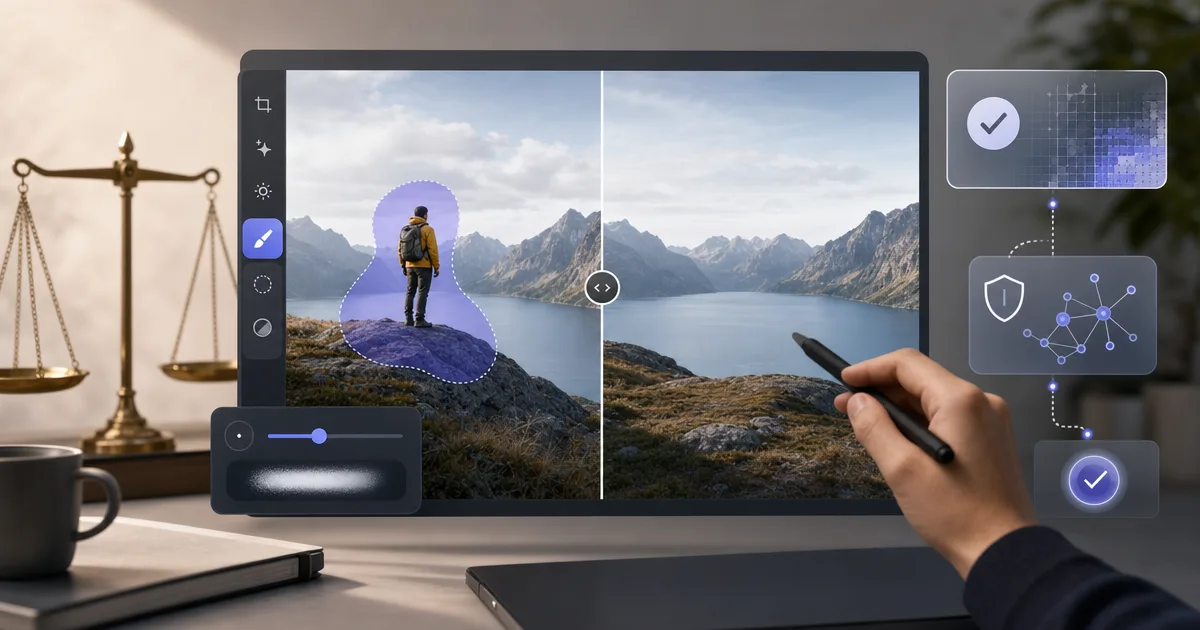
The Ethics of AI Object Removal: When Erasing Is Fine and When It Misleads

AI object removal makes it trivial to delete anything from a photo — a stranger in the background, a logo on a shirt, a power line across a sunset, or a person who was standing right next to you. The technical question ("can I remove it?") is now always yes. The harder question is the one the tool can't answer for you: should you? This article lays out a practical framework for deciding, built around three tests — context, consent, and disclosure — rather than a blanket rule.

The framework is not about guilt. Most edits people make are completely fine, and saying so plainly matters as much as flagging the edits that aren't. The goal is to give creators, sellers, journalists, and everyday users a way to reason about the edge cases before they post, rather than after someone calls the image misleading.

  • Removing an object is ethical cleanup when it changes how a photo looks but not what it truthfully claims — the test is whether the edit alters a material fact a viewer relies on.
  • Three questions decide most cases: What is the photo claiming? Whose likeness or property is affected? Does the context demand disclosure?
  • Some contexts (journalism, legal evidence, insurance, dating profiles, marketplace listings of the actual item) raise the bar sharply — here even cosmetic removals can mislead.
  • Consent matters when you remove or alter a person; provenance standards like C2PA let you edit and stay honest by recording what changed.
  • Disclosure is cheap insurance: a short "edited with AI" note resolves most ambiguity and is increasingly expected (EU AI Act, platform labels).

The Core Test: Does the Edit Change a Material Fact?

The single most useful question is this: after the edit, does the photo still truthfully represent the thing a viewer would reasonably rely on it for? Removing a trash can from a landscape shot changes the composition, not the claim — nobody looks at a sunset photo to learn the location of municipal bins. Removing a crack from a phone you're selling as "mint condition" changes a material fact the buyer is relying on. Same tool, same one-tap action; entirely different ethics, because the photo's implicit claim is different.

This reframes the question away from "is editing allowed" (almost always yes) toward "what is this image promising?" A travel photo promises an aesthetic impression. A real-estate listing promises an accurate depiction of the property. A news photo promises that the scene happened as shown. A product photo promises the item you'll receive. The stronger the factual promise, the less you can remove without crossing into deception.

  • Aesthetic edits (distracting objects, litter, photobombers in a personal photo) rarely touch a material fact.
  • Transactional and evidentiary images (listings, claims, news, IDs) carry strong factual promises — edits there can mislead even when small.
  • Ask: "If the viewer knew exactly what I removed, would they feel deceived?" If yes, don't remove it silently.

Removing an object is different from removing or altering a person. People have an interest in their own likeness, and editing them out of a shared moment — or worse, editing someone into or out of a context that changes its meaning — raises consent questions a power line never will. Cleaning a random stranger out of your vacation background is generally fine; they were incidental and unidentifiable. Editing an identifiable person out of a group photo to rewrite who "was there," or removing someone from a photo used to make a claim about an event, is a different act.

The sharpest line is non-consensual alteration of someone's body or appearance. Tools that strip clothing or sexualize images of real people without consent are abuse, not editing, and responsible products refuse to build for that use case. (Magic Eraser's own keyword and content policy explicitly excludes that intent.) For ordinary retouching of friends and family, the practical rule is simple: if the edit would embarrass or misrepresent the person if they saw it, ask them first.

  • Incidental, unidentifiable strangers in the background: low consent concern.
  • Identifiable people, especially in photos that make a claim about an event or relationship: get consent before editing them in or out.
  • Non-consensual body alteration is abuse, not editing — no framework excuses it.

Context Raises or Lowers the Bar

The same edit can be fine in one context and unacceptable in another, because different contexts carry different truth expectations. Journalism and documentary photography hold the highest bar: news organizations like Reuters and the Associated Press prohibit removing or adding content to news images precisely because the photo's value is its fidelity to what happened. Legal evidence, insurance claims, and identity documents are similarly strict — altering them can be fraud, not just bad form.

Commerce sits in the middle and is where most people stumble. A marketplace listing photo is allowed to look its best — clean background, good lighting — but it must depict the actual item honestly. Removing a scratch, a missing part, or signs of wear crosses from presentation into misrepresentation. Dating profiles are a softer version of the same issue: a flattering edit is expected, but removing or altering features to the point that you're not recognizable in person breaks the implicit promise. Personal and artistic photos sit at the permissive end — here the photo claims an impression, not a fact, and broad creative latitude is normal and fine.

  • High bar (fidelity is the point): journalism, documentary, legal evidence, insurance, ID photos.
  • Medium bar (best-but-honest): e-commerce listings, real-estate photos, dating profiles.
  • Low bar (impression, not fact): personal photos, social posts, art and design composites.

Disclosure and Provenance: How to Edit and Stay Honest

When an edit sits in a gray zone, disclosure resolves it almost for free. A short note — "this image was edited with AI" or "background cleaned up; product is unretouched" — converts a potentially misleading image into an honest one, because the viewer now knows what they're looking at. Disclosure is increasingly not just courtesy but expectation: the EU AI Act introduces transparency obligations for synthetic and manipulated media, and major platforms have rolled out AI-content labels.

Provenance standards make this durable. The C2PA specification, backed by Adobe, Microsoft, Google, Intel, and the BBC, attaches a cryptographic record to an image describing what tool edited it and how. Rather than asking viewers to trust a caption, provenance lets the edit history travel with the file. The practical takeaway for creators: you don't have to choose between editing and honesty. Edit freely for legitimate purposes, disclose when context calls for it, and prefer tools and platforms that support provenance so your honest edits are verifiable.

  • A one-line disclosure resolves most gray-zone edits — cheap, fast, and expected in regulated and commercial contexts.
  • C2PA provenance records the edit history in the file itself, so honesty is verifiable, not just asserted.
  • Default posture: edit for legitimate goals, disclose where the context carries a factual promise.

A Quick Decision Checklist

Before you publish an edited photo, run it through five questions. They take ten seconds and catch nearly every case that would later be called misleading. If all five clear, edit freely. If any one trips, either don't make the edit or disclose it.

This checklist is deliberately conservative in exactly the places that matter — money, people, and public claims — and permissive everywhere else, which is where most editing actually happens. The point of an ethics framework is not to make people anxious about deleting a trash can; it's to make the genuinely consequential cases easy to spot.

  • 1. What is this photo claiming — an impression, or a fact someone will rely on?
  • 2. Does the edit change that material fact (condition, presence, identity, event)?
  • 3. Does it remove or alter an identifiable person without their consent?
  • 4. Is the context high-bar (news, legal, insurance, listings, ID)?
  • 5. If a viewer knew exactly what I changed, would they feel deceived? If yes — disclose or don't edit.

What This Means for Everyday Editing

The vast majority of AI object removal is harmless and useful: tidying a distracting background, removing a stranger from a holiday photo, cleaning litter out of a landscape, erasing a date stamp from a personal snapshot. None of these touch a material fact or anyone's consent, and treating them as ethically fraught helps no one. The framework exists to isolate the small set of cases that genuinely matter — selling a damaged item as flawless, editing a news scene, altering a person without consent, faking evidence — so they're easy to recognize against the harmless background.

The honest summary: the tool is neutral, the context isn't. Erasing changes how a photo looks; whether it deceives depends entirely on what the photo was claiming and who it affects. Keep the three tests — material fact, consent, context — in mind, lean on disclosure and provenance when in doubt, and the ethics of AI object removal stop being mysterious and become a quick, routine judgment.

参考資料

  1. Copyright and Artificial Intelligence (policy guidance) U.S. Copyright Office
  2. C2PA Technical Specification: Content Provenance and Authenticity Coalition for Content Provenance and Authenticity
  3. EU Artificial Intelligence Act — transparency obligations European Union
  4. Manipulation Policy: Altered or synthetic media Reuters

Do it now

写真からオブジェクトを削除

Skip the manual editing — try it free in your browser in a few seconds.

写真からオブジェクトを削除

関連ツールを見る

関連するユースケースを見る

不動産写真の不要オブジェクトをAIで数秒で除去売れる商品写真をかんたんに作成Instagram・TikTok・SNS向け写真をAIで編集AIで完璧なパスポート写真を作成写真からテキスト、キャプション、日付スタンプ、オーバーレイを削除デザイナーに頼んだような販促ビジュアルを自分でSNS向けの魅力的なAIアートを数秒で作成AI で結婚式の写真編集を高速化AI ツールを使用した卒業アルバムの写真編集ディーラーおよび販売者向けの車の写真編集AI編集による料理写真のクリーンアッププロの顔写真編集が簡単にAIツールを使ったペットの写真編集AIによる仮想ステージングレストランのメニュー写真編集クリエイターのための YouTube サムネイル編集旅行の総括や思い出の本用に旅行写真を編集ブロガー、クリエイター、小規模ブランド向けの Pinterest ピン デザインオンラインコースクリエイター写真ワークフロー: 販売ページから最後のレッスンまでポッドキャスター写真のワークフロー: カバーアート、ゲストグラフィック、シーズンごとの更新自費出版の著者写真ワークフロー: 表紙、顔写真、BookTok、シリーズニュースレターのライター写真のワークフロー: ヒーロー画像、インライン画像、メモ、著者の写真歯科医院の写真編集: 臨床症例、チームの顔写真、患者のマーケティング保険金請求写真の強化: より明確な損害記録、より迅速な和解博物館とアーカイブの写真デジタル化: 歴史的コレクションの復元、強化、共有ファッションインフルエンサーコンテンツ: 背景の交換、美的なフィード、ブランドに対応した写真インテリアデザインのポートフォリオ:きれいな部屋、正しい照明、構図の拡張卒業アルバムの写真制作: 一貫したポートレート、より良いイベント写真、クリーンな率直な写真非営利募金活動のビジュアル: 寄付者の呼びかけ、イベントの写真、キャンペーンのグラフィックスフィットネス トレーナーの変身写真: クライアントを変える一貫したビフォーアフタータトゥー アーティストのポートフォリオ: シャープなインクのディテール、きれいな背景、正確な色ヴィンテージカーレストアのドキュメント: 進行状況の写真、詳細キャプチャ、販売準備中のショット建設進捗状況の写真: クライアント、貸し手、マーケティング向けのより明確な文書ジュエリーの写真: きれいな背景、宝石の詳細、カタログの一貫性植物苗床カタログ: トゥルーカラーの葉、きれいな背景、一貫したリスト家系図の写真の修復: 色あせて破損した写真から家族の歴史を救い出すイベントカメラマンのワークフロー: カンファレンス、祝賀会、企業イベントおよび社交イベント不動産管理の写真: 賃貸物件、検査、メンテナンス文書アートの複製と印刷の販売: アートワークを印刷用に高級化、拡張、準備しますスポーツ写真: アクションショット、チーム写真、アスリートのポートレート獣医診療の写真: クリニックのマーケティング、患者ギャラリー、ソーシャル メディアアンティーク ディーラーのカタログ写真: 在庫、オークション、オンライン販売保育園と学校の写真: 保護者とのコミュニケーション、マーケティング、入学ヘアサロンのポートフォリオ: スタイリスト、カラーリスト、理髪店造園請負業者のポートフォリオ: ハードスケープ、デザイン、芝生管理プロジェクトオンライン デートの写真: Tinder、ヒンジ、バンブルなどのより良いプロフィール写真葬儀と追悼の写真: 死亡記事、追悼、追悼のポートレートリサイクルと再販の写真: Poshmark、Depop、Mercari、eBay の出品クラフト & ハンドメイド製品の写真: Etsy、クラフト フェア、メーカー マーケットバンドとミュージシャンのプロモーション: EPK、ソーシャル メディア、ギグ ポスター、グッズ

関連する比較

関連記事