
AI写真編集で民藝風エフェクトを作る方法
AIスタイル変換で写真を日本の民藝美学に近づける手順。侘びの簡素さ、無名の職人仕事、農村の陶器や手織り布にある温かな不完全さを、AI FilterとAI Enhanceで表現します。

Product Marketing
レビュー担当 Magic Eraser Editorial ·
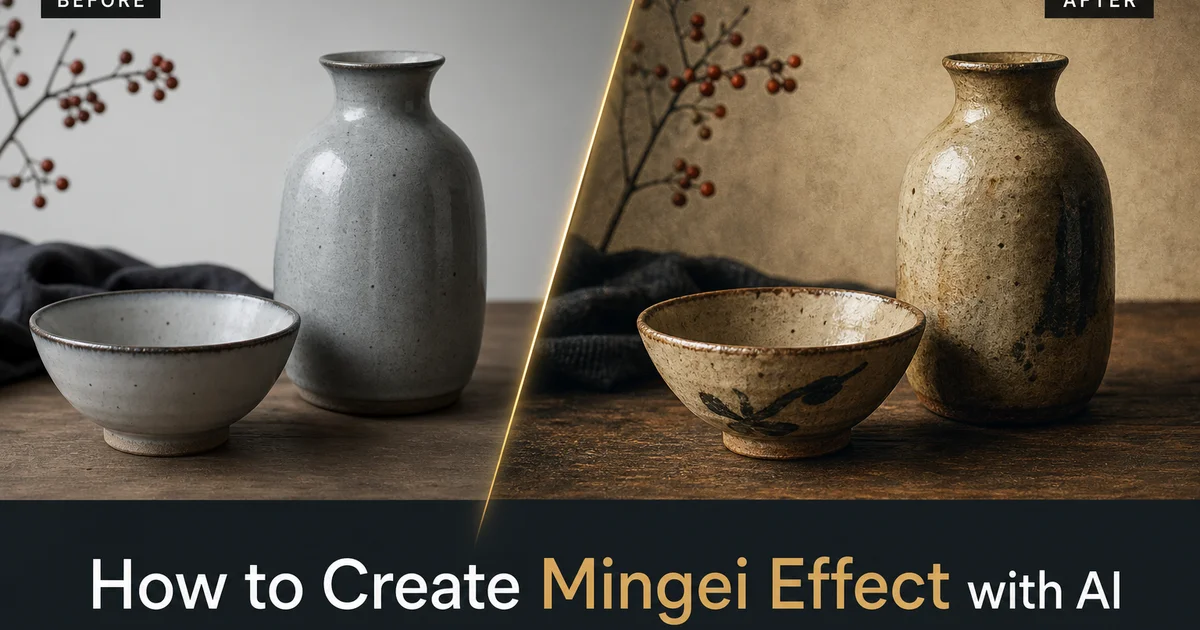
民藝は、思想家・美学者の柳宗悦が1920年代後半に提唱した日本の民衆的工芸運動です。名のある芸術家の洗練された作品ではなく、無名の職人が日常の用途のために作った素朴な器、布、木工、手漉き紙の中に美を見いだす考え方に基づいています。民藝という言葉は「民衆的工芸」の略であり、工業化によって手仕事が急速に失われつつあった時代に、その無心の美を認め、守るための枠組みとして広まりました。
民藝の美学は、多くの写真補正とは逆の方向を向いています。一般的な編集がシャープさや鮮やかさを強めるのに対し、民藝風の処理は輪郭をやわらげ、色を土や木や藍のような自然素材の色へ寄せ、手仕事の揺らぎを温かさとして残します。説得力のある民藝エフェクトには、単なる彩度低下やぼかしではなく、機能、素材、制作工程から生まれる美しさへの理解が必要です。
AIによる民藝変換は、益子焼や小鹿田焼、沖縄の紅型、鳥取の民藝家具、柳が評価した韓国の甕器など、複数の民藝・民衆工芸の視覚的特徴を参照します。AI FilterとAI Enhanceを使うと、温かなアースカラー、やわらかな有機形、手仕事らしい不規則さ、使い込まれた道具の艶を写真に重ねられます。このガイドでは、伝統プリセットの選び方、侘びの簡素さ、手作りの揺らぎ、そして素朴な美と雑な劣化を分ける境界を説明します。
- AIは実際の民藝品に見られる温かな色調、やわらかな形、手仕事の跡、使用による艶を写真に適用します。
- 陶器、手織り布、漆、木工などのプリセットで、素材ごとの質感と色の関係を再現します。
- 侘びの簡素さの調整では、細部を少し抑え、色を自然素材のトーンへ寄せ、使い込まれた道具の温度感を加えます。
- 手作りの不規則さは、釉薬の流れ、織りのリズム、木目の方向など、工程に沿った変化として加えることが重要です。
- AI Enhanceは、表面の質感を単なるノイズではなく、触れたくなる工芸素材として読めるように整えます。
柳宗悦の「無名の美」と視覚表現
柳宗悦の中心的な考えは、作り手の過度な自己意識がかえって美を弱めることがある、というものでした。無名の職人が日々の器を繰り返し作るとき、用途、素材、伝統の積み重ねが手を導き、意図して飾らない美が生まれます。柳はこのような美を、作り手の ego を超えた力から生じるものとして捉えました。
民藝品の見た目には、必ず材料や工程に由来する理由があります。登り窯で灰釉が重力に従って流れるために釉薬の景色が生まれ、手紡ぎ糸と天然染料の吸収差が布の色むらを作り、木の器の丸みは長年の使用で育ちます。こうした因果関係があるからこそ、民藝の不完全さは壊れた印象ではなく、正しさと温かさとして感じられます。
AIで民藝風に変換するときも、この工程の論理を守る必要があります。陶器の揺らぎは轆轤や釉薬の動きに、織物の揺らぎは織機や糸のリズムに、木工の変化は木目に沿っていなければなりません。ランダムなノイズや歪みでは、手仕事ではなくデジタルな破損に見えてしまいます。
- 民藝の核心は、芸術家の自己主張ではなく、伝統、素材、機能から自然に生まれる美です。
- 釉薬、染色、木目などの視覚的特徴は、すべて材料や制作工程に根を持ちます。
- AI処理では表面だけでなく、工芸の工程に沿った変化を再現することが重要です。
- 人の目は、意味のある手仕事の揺らぎと無作為なノイズを敏感に見分けます。
陶器、布、漆、木工の民藝プリセット
陶器プリセットは、農村の陶器に見られる厚い釉薬、鉄分を含む土の温かな色、轆轤で生まれるわずかな歪みを再現します。益子焼の流れる釉薬や、小鹿田焼の刷毛目・飛び鉋のような装飾は、写真に素朴で機能的な存在感を与えます。
布のプリセットでは、手織りのわずかな不均一さ、藍や柿渋、紅花など天然染料の落ち着いた色、手紡ぎ糸の柔らかい表情を加えます。絣、刺し子、沖縄の紅型など、地域ごとの技法を意識すると、単なる和風フィルターではない説得力が出ます。
漆のプリセットは、漆器特有の深く温かな光沢を作ります。合成的なツヤではなく、表面の下に奥行きがあるような赤褐色から黒への揺らぎを加えるのがポイントです。木工プリセットでは、鉋の跡、木目の方向、長く使われて丸くなった縁を強調します。
- 陶器は、益子の厚い流釉、小鹿田の装飾、薪窯の土味を参考にします。
- 布は、手織りの揺らぎ、天然染料、絣・刺し子・紅型などの技法を反映します。
- 漆は、深さのある光沢と手塗りのわずかな起伏を再現します。
- 木工は、鉋跡、木目、使い込まれた縁の丸みを加えると自然です。
侘びの簡素さとやりすぎない写真効果
民藝における侘びは、茶の湯の洗練だけでなく、素朴で飾らない直接性を指します。AI Filterでは、彩度を自然素材の色へ抑え、細部を少しやわらげ、古い民家の光のような温かいトーンを加えることで、この感覚を作れます。
ただし、効果を強くしすぎると、民藝らしさではなく単なる劣化に見えます。色が濁りすぎる、形が曖昧になる、重要なディテールが消える場合は戻してください。理想は、写真そのものが長く使われた手仕事の品のように、静かに温まり、落ち着いて見える状態です。
色調は特に重要です。赤は柿や錆へ、青は藍へ、緑は苔や茶へ、白は生成りや藁の色へ寄せると、自然素材から生まれたような調和が出ます。鮮やかな合成色を残しすぎると、民藝の落ち着きから離れてしまいます。
- 侘びの調整は、粗さではなく、控えめで飾らない温かさを目指します。
- 強すぎるぼかしや濁りは、民藝ではなく劣化に見えるため避けます。
- 色は柿、藍、苔、生成りなど自然素材の範囲へ寄せます。
- AIの強度は、元写真の主題が読める範囲に保つと実用的です。
写真、ブランディング、文化的配慮での使い方
民藝エフェクトは、陶芸、布、木工、紙など手仕事の商品写真と相性が良い表現です。量産品のような冷たさではなく、手で作られた温度、素材感、使うための形を伝えられるため、作品紹介やSNS投稿、ショップ写真に向いています。
ブランド表現でも、民藝風の色、質感、やわらかな形を一貫して使うと、クラフト、自然派商品、茶や食のブランドに落ち着いた世界観を作れます。包装写真、Webサイト、SNSのビジュアルを同じ方向へそろえると、言葉を読む前に価値観が伝わります。
一方で、民藝は日本の近代化と手仕事の喪失という具体的な歴史から生まれた考え方です。どの文化にも民衆工芸はありますが、日本的な民藝の語彙を無関係な題材に装飾として重ねると、表面的に見えることがあります。実際の工芸、手作りの物、文化的な文脈に合う場面で使うのが最も敬意ある使い方です。
- 手仕事の商品写真では、温かさ、素材感、人の手の跡を伝えやすくなります。
- クラフト系ブランドや自然派ブランドは、民藝風の一貫したビジュアルで信頼感を作れます。
- 民藝の日本的な語彙は、文化的文脈に合う題材へ慎重に使います。
- 最も自然な使い方は、実際の工芸や日用品の美しさを引き立てることです。
How to do it
- 1
Upload your photo and evaluate its compatibility with the mingei folk craft aesthetic
Open your image in AI Filter and consider whether its subject matter and composition align with the mingei philosophy of finding beauty in ordinary functional objects made by anonymous craftspeople. The mingei aesthetic prizes simplicity, features, and the honest marks of hand production over refinement and polish. Photographs of everyday objects — ceramic bowls, woven textiles, wooden utensils, handmade paper — translate most naturally because these are the traditional subjects of mingei appreciation. Portraits, landscapes, and still life compositions also work well when they embody the unpretentious warmth that Yanagi Sōetsu identified as the key quality of folk craft beauty. Highly polished, glamorous, or technically perfect images may resist the mingei change because the aesthetic specifically celebrates imperfection and humble utility.
- 2
Select the mingei style preset and configure the folk craft parameters
Choose from mingei presets that simulate different Japanese folk craft traditions. Rural pottery with irregular glazes and visible throwing marks, hand-woven textiles with the subtle irregularity of handloom weaving, lacquerware with the depth and warmth of urushi finish, or woodwork with the tool marks and grain character of hand-planed surfaces. AI Filter analyzes the image content and applies the visual traits of the selected craft tradition. Muted earth-tone color palettes, soft rounded forms, visible handmade irregularity, and the warm patina of well-used functional objects. Adjust the intensity slider to control how strongly the folk craft aesthetic transforms the image, from a subtle warming and softening that suggests mingei sensibility to a full change that makes the photograph resemble a traditional folk craft object.
- 3
Adjust wabi simplicity and handmade irregularity parameters
Control the degree of deliberate imperfection and rustic simplicity that characterizes authentic mingei objects. The wabi simplicity slider reduces visual complexity by softening fine details, muting bright colors toward earth tones. Adding a gentle overall warmth that suggests the patina of age and use. The handmade irregularity parameter introduces subtle organic variations. Slightly uneven edges, gentle warping of straight lines, minor tonal inconsistencies — that replicate the natural variation produced by hand craftsmanship rather than machine precision. These two controls work together to move the image away from photographic perfection toward the humble, unpretentious beauty that Yanagi championed as the highest expression of craft aesthetics.
- 4
Use AI Enhance to refine texture quality and material authenticity
After the initial mingei conversion, apply AI Enhance to ensure that surface textures read as authentic craft materials rather than digital effects. The boost step adds tactile quality to simulated ceramic glazes, textile weaves, wood grain. Paper fiber that makes the viewer want to touch the surface. Pay special attention to the quality of simulated irregularity. Authentic handmade imperfection follows patterns that reflect the physical process of making, while random digital noise looks arbitrary and unconvincing. The AI refines irregularities to follow plausible craft logic: glaze runs follow gravity, weaving irregularities follow the rhythm of shuttle passes, and wood texture follows grain direction.
- 5
Export the finished mingei image and evaluate against folk craft references
Save the completed image at full resolution and compare it against photographs of actual mingei objects in museum collections. The Japan Folk Crafts Museum in Tokyo, the Kurashiki Folk Art Museum, and the Brooklyn Museum's mingei collection all provide excellent reference material. Authentic mingei objects share certain qualities: they feel warm rather than cold, simple rather than complex, honest rather than pretentious, and functional rather than decorative. Check that your result embodies these qualities without crossing into carelessness or crudeness. Mingei celebrates unselfconscious beauty in humble objects, not the deliberate cultivation of roughness. The best mingei-inspired images make the viewer feel the quiet satisfaction of a well-made, well-used everyday object.
参考資料
- The Unknown Craftsman: A Japanese Insight into Beauty — Kodansha International — Sōetsu Yanagi
- Mingei: Japanese Folk Art from the Brooklyn Museum Collection — Brooklyn Museum
- Neural Style Transfer for Non-Photorealistic Rendering of Folk Art — arXiv — IEEE Transactions on Visualization and Computer Graphics