
タトゥー除去クリニック向けAI写真編集:ビフォーアフターマーケティングと患者追跡
タトゥー除去クリニックがAI写真編集でプロのビフォーアフター記録を作成、説得力のあるマーケティングギャラリーを構築、セッション間の患者治療進捗を追跡する方法。

Product Marketing
レビュー担当 Magic Eraser Editorial ·
目次
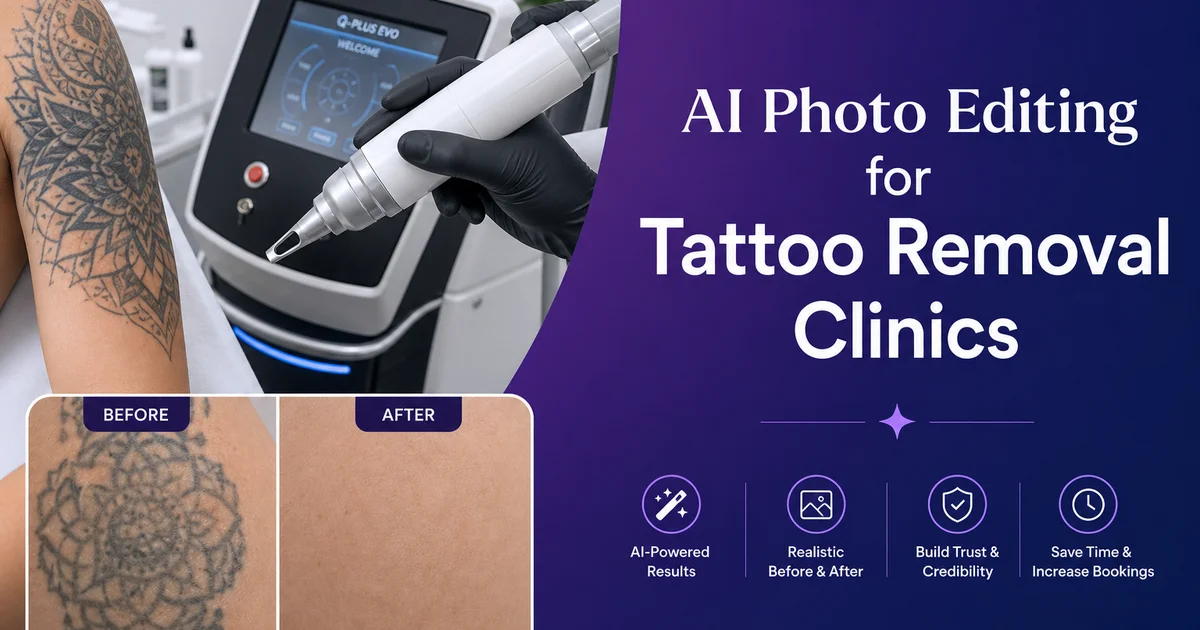
タトゥー除去は視覚的なビジネスです。あらゆるカウンセリングは、見込み患者が同じ質問をするところから始まります。私の結果はどう見えるのか、と。最も説得力のある答えは、レーザー技術がインク粒子をどう分解するかという口頭の説明ではありません。それは実際の肌に実際の結果を示すビフォーアフター写真のギャラリーです。強力な視覚記録を持つクリニックは、より多くのカウンセリングを治療プランへと転換します。記録された経過を見られる患者は、施術コースを最後まで完了する可能性が高くなります。
課題は、臨床写真がクリニック品質であることはまれだという点です。写真は予約の合間にスマートフォンで、一貫性のない照明の下、散らかった背景を背に、角度もまちまちで撮影され、本当の経過を撮影上の違いと見分けるのが難しくなっています。その結果生まれるポートフォリオは、本来築くべき信頼性そのものを損ないます。見込み患者は不揃いな照明を見て、目にしている色あせが本物なのか、それともカメラのトリックにすぎないのかと疑問に思うのです。
AI写真編集は、臨床の現実と視覚的提示との間のこのギャップに対処します。Magic Eraserは背景を整え、不要な要素を取り除きます。AI Enhanceは治療部位のディテールを鮮明にし、セッション間の照明差を均一化します。その結果、専門のカメラマンやスタジオ設備を必要とせずに、治療成果を正確に表現する専門家水準の記録が得られます。
- 一貫したビフォーアフター写真は、タトゥー除去クリニックにとって最も転換率の高いマーケティング資産です。
- Magic Eraserは、臨床的な雑然さ、識別情報、セッション写真間の視覚的不一致を取り除きます。
- AI Enhanceは色あせのディテールを鮮明にし、照明を均一化して治療経過を正確に撮影します。
- プロフェッショナルな記録は、カウンセリングの転換率と治療プランの完了率を高めます。
- 患者の同意は、ウェブサイト、ソーシャルメディア、ディレクトリ掲載といった各利用チャネルごとに確認しなければなりません。
ビフォーアフター写真がタトゥー除去予約を促進する理由
タトゥー除去は治療期間が長い選択的施術です。ほとんどの患者は六から十二回のセッションを六から八週間間隔で必要とし、総投資額は数千ドルに上ります。つまり、すべての新規患者は、施術が効くという信頼に大きく基づいて重大な決断を下しているのです。臨床研究や技術説明も役立ちますが、似たタトゥー、似た肌色、似たインク色を持つ過去の患者の記録された結果を見ること以上に信頼のギャップを埋めるものはありません。
データもこれを裏付けています。ビフォーアフターギャラリーをウェブサイトで目立つように掲載するクリニックは、サイト訪問からカウンセリング予約への転換率が高いと報告しています。カウンセリングから治療プラン承諾への転換率も高いのです。理由は単純です。前腕に大きな黒いトライバルタトゥーを入れた見込み患者がギャラリーを見て、似た事例を見つけられる。六回の治療が何をもたらしたかを正確に見られる。その視覚的証拠は、いかなる証言や技術説明よりも説得力があります。
逆もまた真なりです。視覚記録の貧弱なクリニック、つまりぼやけた写真、一貫性のない背景、比較を不可能にするまちまちの角度を持つクリニックは、実際に信頼性を損ないます。見込み患者は、ずさんな撮影をずさんな臨床実務の指標と解釈します。クリニックが一貫した写真を撮る手間さえ惜しむなら、治療そのもののディテールに本当に注意を払っているのか、と考えるのです。公正かどうかは別として、結果の視覚的提示は臨床品質の代理指標となります。
- タトゥー除去は数か月にわたり六から十二回のセッションを要します。患者には施術が効くという視覚的証拠が必要です。
- ビフォーアフターギャラリーは、サイト訪問からカウンセリングへ、カウンセリングから治療プランへの転換率を高めます。
- 見込み患者は、自分のタトゥーの種類、サイズ、肌色、インク色に合致する事例を探します。
- 貧弱な記録は信頼性を損ないます。ずさんな写真は、見込み患者にずさんな臨床実務を示唆します。
セッション間で一貫した撮影ワークフローを構築する
有用なビフォーアフター記録の基盤は一貫性です。患者のセッション1の写真が、白い壁を背に温かい頭上照明の下、腕を伸ばした距離で撮影されていたとします。セッション6の写真が緑のカーテンを背に冷たい蛍光灯の下でクローズアップ撮影されると、何が治療経過で何が撮影上の変動なのか誰にも判別できません。解決策は単純ですが規律を要します。固定の撮影ステーションを設け、すべての患者のすべてのセッションで使うのです。
専用の撮影ステーションは高価である必要はありません。45度の角度に配置した二つのソフトボックスライトは、きつい影をなくし一貫した色温度を提供します。マットグレーまたはマットブルーの背景は、白い背景の白飛びのまぶしさや臨床の壁の雑然とした模様を避けられます。患者とカメラマンの床位置に印を付け、距離と角度を一定に保ちます。すべての写真に同じカメラまたはスマートフォンを使います。ホワイトバランスはオートのままにせず固定設定にロックします。オートではセッション間で色がずれてしまいます。
一貫した設定でも、わずかな変動は紛れ込みます。患者の肌色は季節とともに変化します。治療部位はセッション直後にはやや赤くなったり腫れたりするのに対し、次の治療前写真では完全に治癒していることもあります。こうした自然な変動は想定内で正当なものですが、不要な背景要素は違います。動いた椅子、背景の壁に新しく貼られたポスター、床に見える別のケーブルなどです。ここでAI編集が、良い記録を専門家水準の記録へと変えるのです。
- 一貫性のない撮影は、本当の治療経過を照明や角度の変化と区別できなくします。
- 二つのソフトボックスライト、マットな背景、印を付けた床位置で十分な一貫性が生まれます。
- ホワイトバランスを固定設定にロックし、セッション間の色温度のずれを防ぎます。
- AI編集は、一貫した設定でも紛れ込むわずかな環境変動を補正します。
プロのプレゼンテーションのための臨床写真の整理
Magic Eraserは生の臨床写真をギャラリー対応の画像へと変えます。まず背景から始めます。見える医療機器、備品カート、電源ケーブル、ペーパータオルディスペンサー、バイオハザード容器を取り除きます。専門スタジオではなく臨床的な環境を示すその他あらゆるものも同様です。背景幕があっても、フレームの端の物や隙間から見える物はよくあります。それらを片付け、見る人の視線が治療部位と記録される経過に完全に集中するようにします。
次に、治療シリーズ内での患者プライバシーと視覚的一貫性に対処します。セッション間で変わり視覚的不連続を生む宝飾品、腕時計、ヘアゴム、アクセサリーを取り除きます。患者がタトゥーの表示には同意しても顔やその他の識別特徴には同意していない場合、Magic Eraserでそれらの部分を整えます。患者が公に見せたくない特徴的なほくろや傷跡の近くのタトゥーについても、同様に取り除きます。目標は、シリーズの写真間で唯一の変数が治療経過そのものとなる、清潔で焦点の定まった画像です。
治療部位とその周囲の肌を撮影する施設では、AI Enhanceがセッションをまたいで肌色の表現を均一化します。季節的な日焼け、治療後の赤み、午前の予約と午後遅い予約との自然な変動はすべて、ビフォーアフター比較を混乱させかねないわずかな色差を生みます。AI boostはこれらの差を均し、写真間で肌色が変わるのではなくインクの色あせに見る人が集中できるようにします。
- 治療写真の背景から、医療機器、備品カート、臨床的な雑然さを取り除きます。
- セッション間で変わったり患者のプライバシーを損なったりするアクセサリーや識別特徴を消去します。
- 季節的な日焼け、治療後の赤み、照明の変化による肌色の変動を均一化します。
- 目標は、写真間で見える唯一の変数が治療経過となるシリーズです。
マーケティングとコンサルテーションのための治療ギャラリーの活用
よく整理された治療ギャラリーは、異なるアプローチを要する二つの明確な機能を果たします。ウェブサイトやソーシャルメディアでは、ギャラリーは見込み患者を引き付け転換するためのマーケティングツールです。ここでは、最も強い結果を、治療の効果をすぐに伝えるビフォーアフターの組や経過シーケンスとともに、清潔で専門的な形式で提示したいところです。患者層の多様性を代表する事例を選びます。さまざまなタトゥーのサイズ、色、部位、肌色、インクの種類です。そうすれば、すべての見込み患者が自分に似た事例を見つけられます。
カウンセリングルームでは、ギャラリーは現実的な期待を設定するための臨床ツールになります。このバージョンには、部分的な結果や進行中の治療を含め、より多くの事例を含めるべきです。カウンセリングを受ける患者は、自分の具体的な経過がどう見えるかを理解する必要があります。多色タトゥーの見込み患者は、青や緑のインクが黒とは異なる色あせ方をすることを見る必要があります。四回目のセッションでの自分の結果が、純粋な黒タトゥーの患者の四回目の結果とは違って見えるかもしれないことも。誠実な記録は信頼を築き、非現実的な期待から生じる治療途中の離脱を減らします。
どちらのバージョンも同じAI編集ワークフローから恩恵を受けます。一貫した背景、強化されたディテール、均一化された照明により、どこに表示されてもギャラリーは専門的に見えます。新しい事例写真を撮影のたびに編集する投資。一枚あたり数分が、何か月、何年と積み重なって、体系的な記録のない競合がかなわない完全な視覚的ポートフォリオになります。
- ウェブサイトギャラリーは、多様な事例にわたり最も強い結果を示し、見込み患者を引き付け転換します。
- カウンセリングギャラリーは、現実的な期待設定のため部分的な結果や進行中の事例を含めます。
- 多様な代表性、つまりタトゥーのサイズ、色、肌色、インクの種類が、患者が共感できる事例を見つける助けになります。
- 新しい写真を一枚ずつ体系的にAI編集することで、時間をかけて包括的なポートフォリオが築かれます。
How to do it
- 1
Establish a consistent photography setup for patient documentation
Set up a dedicated photo station with fixed lighting, a neutral background. A marked floor position so every patient photo is taken from the same angle and distance. Consistency is critical for before/after records because prospective patients. And the patients themselves — need to trust that the visible changes come from the treatment, not from different lighting or camera angles. A simple setup with two softbox lights and a gray backdrop works better than an expensive camera with inconsistent positioning.
- 2
Remove identifying details and background distractions with Magic Eraser
Use Magic Eraser to remove any identifying features the patient has not consented to show. Jewelry, distinctive birthmarks, or clothing logos. Clean up the background to remove clinical equipment, cables, chairs, paper towel dispensers. Other medical office clutter that makes photos look unprofessional. For arm and leg tattoo removal photos, erase unwanted elements like watches, bracelets. Hair ties that shift between sessions and create visual inconsistency in the progress series.
- 3
Enhance skin detail and treatment visibility with AI Enhance
Apply AI Enhance to sharpen the treatment area so prospective patients can clearly see the fading progress. Clinical photos are often taken under fluorescent lighting that washes out subtle color differences between partially faded ink and surrounding skin. AI boost recovers these tonal differences, making the treatment progress visible in the photo the way it appears in person. This is mainly important for light-colored tattoos where fading progress is real but hard to photograph.
- 4
Create side-by-side comparison layouts for marketing materials
Arrange before, mid-treatment, and after photos in a consistent grid format for your website gallery, consultation displays, and social media posts. Maintain the same crop, the same boost level, and the same background treatment across all images in a series. Label each image with the session number or timeframe. This systematic display shows both the treatment timeline and the professionalism of your practice.
- 5
Export for website galleries, social media, and consultation decks
Save high-resolution versions for your website portfolio and consultation iPad. Export cropped, optimized versions for Instagram and Facebook where before/after content drives engagement and inquiries. Create a separate set with extra privacy measures. Tighter crops, more background cleanup — for Google Business Profile and directory listings where you have less control over display context. Always verify patient consent covers each specific usage channel before posting.
参考資料
- Tattoo Removal Market Size and Growth Trends 2025-2030 — Grand View Research
- Before and After Photography in Medical Aesthetics: Best Practices — Aesthetics Business Journal
- Patient Consent and Medical Photography Standards — American Academy of Dermatology