
軟体動物学者向けAI写真編集 — Magic Eraser
軟体動物学者がAI写真編集を軟体動物標本記録、貝殻写真撮影、分類学出版にどう活用するか。背景をクリーンに、細部を強化し、出版対応の図版プレートを作成。

Content Lead
レビュー担当 Magic Eraser Editorial ·
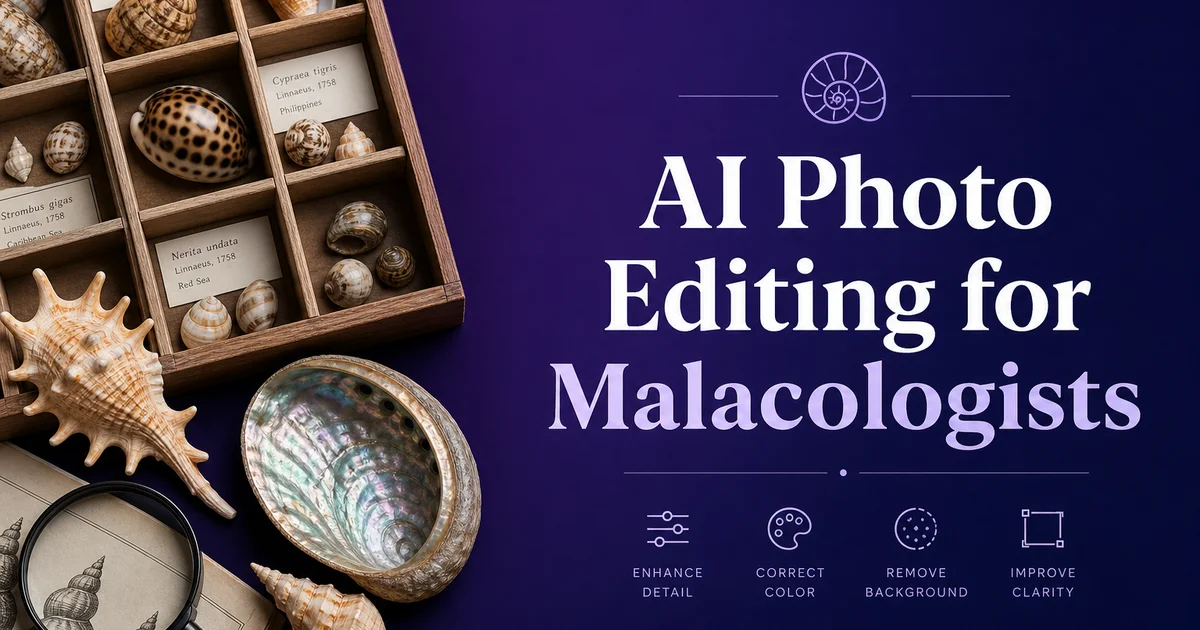
軟体動物学 — 軟体動物を研究する学問 — は、野外採集から標本の同定、分類学的記載、出版に至るまで、研究のあらゆる段階で視覚的記録に大きく依存しています。野外で採集したばかりのウミウシを撮影する場合でも、博物館コレクションのタイプ標本の殻口形態を記録する場合でも、Journal of Molluscan Studies の種記載のために図版を準備する場合でも、標本撮影の品質は研究の科学的価値と再現性に直接影響します。質の低い画像は診断形質を不明瞭にし、種の同定に曖昧さを生み、公表された記載の有用性を損ないます。
軟体動物学における撮影上の課題は大きく、かつ特有です。軟体動物の殻はサブミリの微小な巻貝から1メートルに及ぶ巨大なシャコガイまで多岐にわたり、まったく異なる撮影設定を必要とします。殻の表面はしばしば強く光を反射するか半透明であり、鏡面ハイライトや露出の問題を引き起こします。同定に欠かせない色彩模様 — 螺旋状の帯、軸方向の火炎模様、殻皮の着色 — は非常に微妙な場合があります。野外撮影は厳しい環境で行われます。干潮時の潮間帯の岩場、深海調査船、まだら状の光が差す熱帯林、あるいは混合した人工照明の下にある博物館の収蔵引き出しなどです。
AI写真編集ツールは、生の標本写真と出版品質の画像との間にある時間のかかる後処理の工程を自動化することで、これらの課題に対処します。背景除去は雑然とした野外や実験室の環境から標本を切り離します。ディテール強調はカメラが捉えにくい微細な彫刻状の形質を回復させます。色補正は大きく異なる照明条件で撮影された画像を標準化します。一度の採集や博物館訪問で何百もの標本を撮影することがある軟体動物学者にとって、AIのバッチ処理は、かつて何日もかかったPhotoshop作業を、効率的で標準化された出力を生む数時間の作業へと変えます。
- 背景除去は、野外採集地、実験台、博物館の引き出しから軟体動物標本を切り離し、出版用のクリーンな画像を実現します。
- AI強調は、種の同定に欠かせない微細な螺肋、軸方向の彫刻、成長線、色帯模様を回復させます。
- Magic Eraser は、もろい標本に物理的損傷の危険を与えることなく、付着した堆積物、付着生物、標本作製の痕跡を除去します。
- 標準化されたバッチ処理は、採集時に撮影された何百もの標本にわたって一貫した画質を保証します。
- 埋め込みカラープロファイル付きの300 DPI出版対応エクスポートは、分類学的記載に対する学術誌の投稿基準を満たします。
野外写真撮影の課題とAI支援ソリューション
野外での軟体動物学は、画質にとって過酷な条件下での撮影を要求します。潮間帯での採集は、速度が鍵となる短い干潮の時間帯に行われます。潮が満ちつつあり、採集前に標本を記録しなければならないとき、手の込んだ照明装置を設置する時間はありません。深海標本はさまざまな保存状態で甲板に届き、しばしば堆積物、他の生物、船の機材に囲まれています。熱帯林での陸生巻貝の調査は、まだら状の光やレンズを曇らせる高湿度に対処します。落葉、樹皮、コケなど視覚的に複雑な基質の上にいる標本は、動物を視覚的に切り離すことをほぼ不可能にします。
AIによる背景除去は、これらの困難な野外写真を使える科学的記録へと変えます。色鮮やかなサンゴ礁の上で撮影されたウミウシは、礁の背景からきれいに切り離すことができ、種記載に不向きにする視覚的ノイズを取り除きながら、動物の色彩模様と体形を保持できます。地衣類に覆われた樹皮の上で撮影された陸生巻貝は、殻の彫刻と殻皮をそのままに基質から分離できます。AIは複雑な縁 — ウミウシのひだ状の鰓状突起、巻貝の殻口の薄い縁、半透明の殻縁 — を処理します。これらは手作業による入念なマスキングを必要とするものです。
色補正は野外画像にとっても同様に重要です。同じ種でも水深2メートルと10メートルで撮影すると、水による光の波長の選択的吸収のためまったく違って見えます。水深10メートルの赤いウミウシは人工光なしでは灰褐色に見えます。AI色補正は、水中での色のずれ、博物館コレクションでの混合照明を補正できます。野外撮影の変動するホワイトバランスを補正し、異なる条件下で撮影された標本間で意味のある比較を可能にする標準化された色記録を生み出します。
- 潮間帯、深海、熱帯林の環境は、AIの後処理が効率的に解決する照明と背景の課題を生み出します。
- 背景除去は、ウミウシの鰓状突起、薄い殻口の縁、半透明の殻縁といった複雑な有機的な縁 — 大がかりな手作業マスキングを要するもの — を処理します。
- 水中色補正は、標本の色を本来の見え方からずらす、水深に依存した光の吸収を補正します。
- 標準化された色処理は、大きく異なる野外条件で撮影された標本間での意味のある比較を可能にします。
分類学作業のための診断特徴の強化
軟体動物の分類学的な同定と記載は、しばしば微妙で撮影が難しい視覚的形質に依存します。巻貝の殻は、螺肋の数と間隔、特定の螺層における軸肋の有無、軸唇の質感、あるいは水管溝の形状によって区別されることがあります。二枚貝の同定には、鉸歯、外套湾入の形状、外部彫刻の明瞭な記録が必要です。頭足類の分類は、腕の吸盤配列、色素胞模様、軟甲の形状に依存します。これらの形質の多くはミリの何分の一かで測定され、十分に記録するには鮮明で適正露出のマクロ撮影を必要とします。
AI強調ツールは、元の写真が捉えたものの、通常の観察倍率では平坦または不明瞭に見えるディテールを回復させます。光沢のある殻表面の微細な螺糸は、過度なシャープ化なしに局所コントラストを高めると見えるようになります。二枚貝の殻の成長線模様。年齢推定や個体群研究に不可欠 — それが滑らかに見えた表面から浮かび上がります。巻貝の発生様式を区別する原殻(幼生殻)上の微細彫刻が読み取れるようになります。これらの強調機能は、元の画像になかった情報を加えるものではありません。捉えられた既存のディテールをより見やすく、写真として有用にするものです。
画像が種の永続的な視覚的基準となるタイプ標本の記録では、強調の品質が特に重要です。タイプ写真は出版後何十年にもわたり世界中の研究者に参照されます。本文に記載された診断形質を明確に示す強調された画像は、将来の研究者が標本の物理的検査のためにタイプ標本の収蔵庫まで赴く必要性を減らします。これは、繰り返しの取り扱いに耐えられないもろい、あるいは劣化しつつあるタイプ標本資料にとって特に価値があります。国際的な研究者がアクセスしにくい遠隔地の機関に収蔵されたタイプ標本にとっても同様です。
- AI強調は、種の同定と記載に欠かせない微細な螺肋、軸肋、鉸歯、微細彫刻を明らかにします。
- 二枚貝の殻の成長線模様が一見滑らかな表面から浮かび上がり、年齢推定と個体群研究を支えます。
- 幼生の発生様式を区別する原殻の微細彫刻が、出版倍率で読み取れるようになります。
- 高品質なタイプ標本画像は、研究者がもろい資料の物理的検査のために収蔵庫へ赴く必要性を減らします。
出版用プレートの準備とデジタルアーカイブ基準
分類学の学術誌には、AI編集ツールが軟体動物学者に効率的に満たすことを助ける図版の具体的な要件があります。Journal of Molluscan Studies、Zootaxa、The Veliger。Malacologia はそれぞれ解像度要件、ファイル形式、最大寸法、図の配置ガイドラインを規定しています。典型的な種記載の図版には、背側、腹側。標準化された倍率での側面からの殻像、殻口や原殻などの診断形質の接写、そしてスケールバーが含まれます。かつてこれらの図版の準備には、画像編集ソフトでの慎重なトリミング、リサイズ、配置に何時間も費やしました。
AIバッチ処理は、一貫した背景除去、強調を適用することで図版準備を効率化します。標本一連にわたるサイズ調整。新種を記録する際、軟体動物学者はホロタイプを6つの角度から、5つのパラタイプをそれぞれ3つの角度から、そして歯舌、蓋、軟体部の解剖のディテール写真を撮影することがあります。すべて同一の処理を必要とする40から50枚の個別画像に容易に達します。AIツールは同じ背景、コントラストを適用します。色処理をバッチ全体に施し、科学的に有益な標本間の個体差を保ちながら、図版全体の視覚的一貫性を確保します。
自然史コレクションのデジタルアーカイブ基準は、従来の標本保存と並行して、標準化された撮影をますます求めるようになっています。スミソニアン、ロンドン自然史博物館のような機関。パリの Museum National d'Histoire Naturelle は、軟体動物コレクションの完全なデジタルデータベースを構築しています。AI編集ツールは、何百万もの標本を含むコレクションをデジタル化するために必要な高スループット処理を可能にし、常に書式が整い、適正露出の画像を生み出します。採集地、日付、目録番号を含む埋め込みメタデータが付された画像です。
- AIバッチ処理は、学術誌の図版のために、多角度の標本撮影一連にわたって一貫した背景、強調、サイズ調整を適用します。
- 40から50枚の画像を含む種記載の図版は、科学的に有益な個々の標本差を保ちながら、視覚的一貫性を達成します。
- 自然史コレクションの標準化されたデジタルアーカイブには、AIツールが機関規模で可能にする高スループット処理が必要です。
- 採集地、日付、目録番号を含む埋め込みメタデータは、長期的なアクセス性のために機関のデータベースシステムと統合されます。
市民科学とアウトリーチ写真
軟体動物学は、iNaturalist のような市民科学プラットフォームにますます依存しています。アマチュアの博物学者は、専門の研究者が分布図作成、生物季節学の研究、侵入種の監視に用いる何百万もの軟体動物の観察を提供します。市民科学の写真の品質は、観察を種レベルまで同定できるかどうかを直接左右します。葉の上の巻貝のぼやけた、照明の悪い画像はほとんど科学的価値をもたらしませんが、主要な診断形質を示す明瞭で構図のよい写真は専門家によって検証され、研究データセットに組み込むことができます。AI写真編集ツールは、専門的な撮影技術を必要とせずに市民科学者が貢献を向上させるのを助けます。
軟体動物学の普及と教育において、AIで強調された写真は、本来なら貝やナメクジを面白くないと感じるかもしれない人々に対して、軟体動物の多様性を視覚的に魅力的なものにします。イモガイの精巧な色彩模様やアワビの真珠層の虹色の輝きを、きれいに整え、ディテールを強調した画像で示す博物館の展示パネルは、生の野外写真よりもはるかにうまく軟体動物の美しさと多様性を伝えます。科学コミュニケーション資料、教育用ポスター、ソーシャルメディアのコンテンツはすべて、世界第二の動物門のしばしば見過ごされがちな美的特質を捉えた専門家品質の画像から恩恵を受けます。
侵入種の監視は特に重要な応用例です。研究者が侵入性の軟体動物の姿を迅速に記録し共有する必要があるとき。アフリカマイマイ、ニュージーランドコモチカワツボ、あるいはタイワンシジミのような — 明瞭で標準化された同定写真は検出と対応を加速します。AIツールは、現場の作業員、税関検査官のために、きれいでよく強調された参照画像を素早く作成できます。市民科学者は、侵入種の同定を確認または却下するために、自身の観察と照合できます。
- AI写真編集は、専門的な研究データセットに貢献する iNaturalist のようなプラットフォーム上で、市民科学者が同定可能な観察を生み出すのを助けます。
- ディテールを強調した軟体動物の写真は、博物館の展示や科学コミュニケーションのために、生物多様性と美的特質を効果的に伝えます。
- 侵入種の監視は、AIツールが野外同定ガイドのために迅速に生成する、明瞭で標準化された参照写真に依存します。
- 殻の模様、真珠層の虹色、色彩の多様性を際立たせる普及用写真は、軟体動物学研究への一般市民の関心を高めます。
How to do it
- 1
Photograph mollusk specimens with standardized lighting and scale references
Set up a consistent photography station with diffused overhead lighting and a neutral gray or black background. Include a millimeter scale bar in every frame for size reference. Photograph each specimen from dorsal, ventral, and lateral views to document shell morphology comprehensively. Use a macro lens or extension tubes for small gastropods and bivalves to capture aperture details, sculpture patterns, and periostracum texture.
- 2
Remove field backgrounds and isolate specimens for publication
Use Background Eraser to isolate mollusk specimens from field collection backgrounds. Sandy beaches, rocky intertidal zones, leaf litter, or lab benches. Place specimens on a clean, uniform background that meets journal publication standards. This is mainly important for type specimen records where the background must not distract from diagnostic morphological features.
- 3
Enhance fine sculptural details and color patterns on shells
Use AI Enhance to bring out the fine spiral ribs, axial sculpture, growth lines. Color banding patterns that are critical for species identification. Many shell features are subtle — thin spiral threads, microscopic pustules, or faint color bands — and standard photography often fails to capture them with enough clarity. Enhanced detail makes these diagnostic features visible in both digital archives and printed publications.
- 4
Remove unwanted debris and specimen preparation artifacts
Use Magic Eraser to remove adhering sediment, epibionts, barnacles, or preparation residue that obscures shell surface features without physically cleaning the specimen and risking damage. This is mainly valuable for fragile or historically major specimens where physical cleaning could destroy periostracum or original surface coloration that carries taxonomic information.
- 5
Prepare standardized image plates for journal submission and digital archives
Arrange multiple specimen views into publication-ready figure plates with consistent sizing, spacing, and labeling. Export at the resolution required by target journals. Often 300 DPI at print size — with embedded color profiles for accurate reproduction. Archive originals alongside edited versions in institutional databases to maintain a complete records chain from field collection through publication.
参考資料
- Best Practices for Photographing Mollusk Specimens — Smithsonian National Museum of Natural History
- Standards for Digital Imaging of Biological Specimens — Biodiversity Information Standards (TDWG)
- Shell Photography Techniques for Taxonomic Documentation — Journal of Molluscan Studies