
地衣類学者向けAI写真編集:地衣類の記録とバイオモニタリング — Magic Eraser
地衣類学者と環境科学者のための専門的な地衣類写真編集。葉状体記録、子器ディテール、標本庫デジタル化、大気質バイオモニタリングのためのAIツール。
SEO & Growth
レビュー担当 Magic Eraser Editorial ·
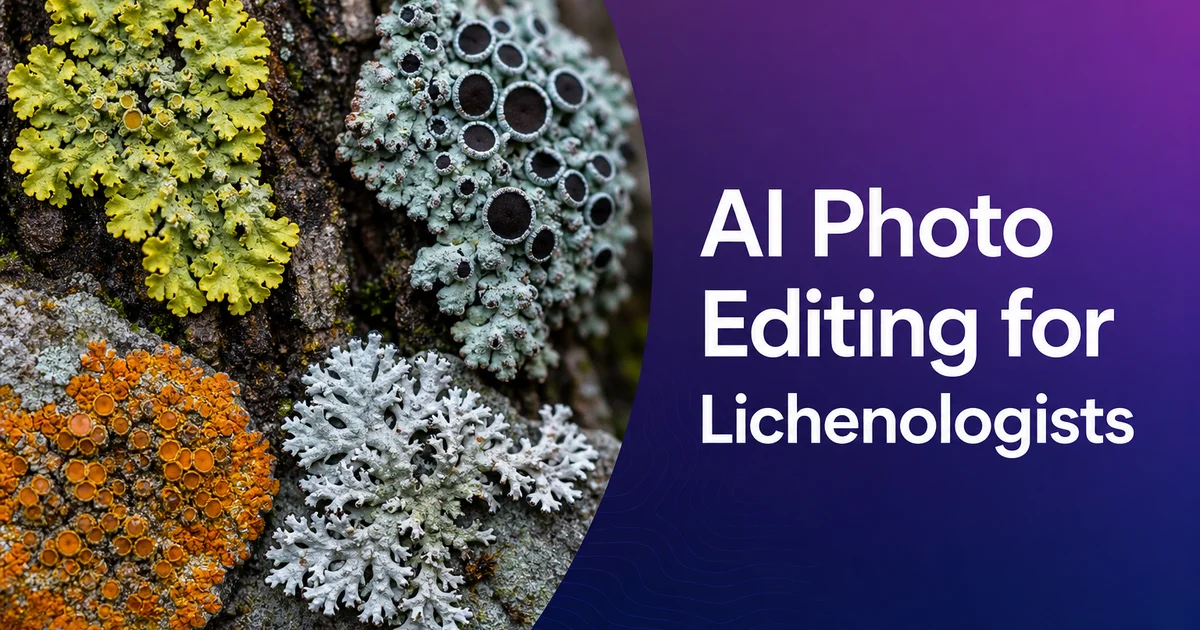
地衣類学——菌類と光合成パートナーから成る注目すべき共生生物である地衣類を研究する学問——は、種の同定や生態学的モニタリングのための視覚的記録を根幹としています。分類学研究を支える標本記録もそうです。地衣類は形態的形質と化学的スポットテストの組み合わせによって同定されます。近年ではDNA解析も増えていますが、同定の第一かつ最も手軽な段階は視覚的なものです。すなわち葉状体の生長形、上表面の色と質感、生殖器官の構造、そして基質上での生物の全体的な習性です。これらの形質は、肉眼で見える特徴の範囲にわたります。地衣類が痂状か葉状か樹枝状か、その全体的な色から、切片作製と複合顕微鏡を要する胞子構造や皮層解剖の微細な詳細に至るまでです。写真撮影は、野外記録からマクロ詳細、記録保管に至るまで、この同定ワークフローの全範囲に役立ちます。
地衣類学者が直面する写真撮影上の課題は独特で困難です。地衣類は小さく、多くの種は葉状体がセンチメートル単位で、診断的特徴はミリメートルのごく一部の単位で測られます。地衣類は視覚的に複雑で、標本と見る者の注意を競い合う表面に生えています。独自の質感と色の変化を持つ粗い樹皮、鉱物の粒状模様を持つ岩肌、モルタル目地と風化染みのある古い壁。コケや落ち葉、他の生物のある土壌表面。地衣類自体もしばしば微妙な色合いです。基質と対比するよりも溶け込む灰緑色、オリーブ色、褐色の色調です。そして最も重要な診断的特徴。子器盤の色、粉芽の質感、裂芽の形、皮層表面の構造——こそが、まさにスマートフォンのカメラが解像に苦労する特徴です。なぜならそれらは、センサーの画素サイズ、レンズの回折、オートフォーカスの精度がすべて制限要因となる尺度に存在するからです。
AI写真編集ツールは、あらゆる尺度の標本記録のために設計されたワークフローを通じて、これらの地衣類学的課題に対処します。Background Eraserは地衣類を基質の視覚的ノイズから分離し、押し葉標本の明瞭さで葉状体の形と縁の輪郭を提示するクリーンな画像を作成しつつ、地衣類を押し葉にすることが時とともに破壊してしまう三次元構造を保持します。そもそも基質から剥がせればの話ですが。AI Enhanceは、スマートフォンのカメラが特徴のない斑点に平坦化してしまう子器、粉芽、裂芽、表面質感の診断的詳細を復元します。Magic Eraserは環境的な汚れを除去します。記録目的の野外写真を損なう水膜、落下した破片、競合する生物などです。本ガイドは、野外撮影技術から同定・保管目的の編集、標本データベース・生物モニタリング報告・出版物への書き出しまで、地衣類学者向けの完全なワークフローを扱います。
- Background Eraserは、地衣類標本を視覚的に複雑な基質——樹皮、岩、モルタル、土壌——から分離し、三次元の葉状体形態を保持する標本品質の記録を作成します。
- AI Enhanceは、子器盤の色、粉芽の質感、裂芽の形を復元します。センチメートル単位で測られ、ミリメートルのごく一部の特徴を持つ生物において、スマートフォンのカメラでは解像できない皮層表面の詳細もです。
- Magic Eraserは、葉状体の見かけの色を変える水膜、落下した破片、競合する生物、そして周囲の基質に付いた不要な化学スポットテストの染みを除去します。
- 地衣類群集調査全体にわたる一貫した編集は、大気質の生物モニタリング報告や長期的な生態学的モニタリング計画のための標準化された記録品質を保証します。
- 一括書き出しは、単一の編集済みマスター写真から、標本データベース、対話型同定キー、生物モニタリング記録、地衣類学雑誌への掲載に適したサイズの画像を作成します。
自然基質上の地衣類記録のための野外写真撮影技法
地衣類の写真撮影は、生物の生長習性、小ささ、基質との視覚的な類似性から生じる独特の課題を提示します。対比的な背景に対して撮影者が分離できるほとんどの生物とは異なり、地衣類は定着した表面と密接に結合しています。痂状地衣類は文字通り基質に埋め込まれ上皮層だけが見え、葉状地衣類は樹皮や岩の表面をつかむ仮根で付着し、樹枝状地衣類でさえ分枝する葉状体が伸びる単一の点で付着しています。これは、標本を採集してスタジオに持ち込まない限り、写真に基質が含まれざるを得ないことを意味します。基質は標本と注意を競い合う視覚的複雑さをもたらします。樹皮は独自の色、質感、模様を持ち、灰緑色の痂状地衣類の微妙な色調を圧倒しかねません。岩の表面は鉱物の粒や風化模様を持ち、標本の周囲や下に視覚的ノイズを生み出します。この基質との競合を管理することが、地衣類の野外撮影の最大の課題です。
地衣類撮影の照明は、起伏が非常に低い生物の詳細を覆い隠す厳しい影を作らずに、表面の質感を明らかにしなければなりません。痂状地衣類は基質の上にミリメートル未満しか突き出ていないこともあり、地衣類自体が落とす影は非常に短く、基質自体の影模様の中に容易に埋もれてしまいます。葉状地衣類はより三次元的な構造を持ちますが、その診断的特徴。上皮層の質感、皮層の切れ目から見える髄層の色、ソラリアと裂芽の構造——は、直射日光が作る鏡面ハイライトや深い影を避ける、柔らかく均一な光によって最もよく現れます。携帯用ディフューザー——太陽と標本の間にかざした一枚の白い紙でさえ——は、厳しい直射光を、それを隠す対比なしに地衣類の表面の詳細を明らかにする柔らかな照明へと変えることができます。
標本は数ミリメートルの小さな痂状の斑点から、三十センチメートル以上に及ぶ大きな葉状体まで幅があるため、地衣類撮影では縮尺の記録が鍵となります。大きさ自体が一部の種群にとって診断的形質です。写真の標本の横に置かれた小さな定規や縮尺カードは、後で見る者が子器、ソラリア、その他の診断的特徴の絶対的な寸法を判断できる大きさの基準を提供します。生物モニタリング調査のために地衣類を撮影する際、縮尺の配置に対する一貫した手法は、異なる調査日や異なる調査者による標本写真が直接比較可能であることを保証します。これは、経時的な大気質の変化を示す地衣類群集組成の変化を検出する上で鍵となります。
- 基質に埋め込まれた痂状地衣類や仮根で付着する葉状地衣類は、撮影のために分離できません。基質は常に画像の一部であり、診断的特徴と視覚的に競合します。
- 柔らかな拡散光は、ミリメートル未満の起伏を持つ生物の表面質感を明らかにし、診断的な皮層や粉芽の詳細を覆い隠す厳しい影や鏡面ハイライトを避けます。
- 標本の横の縮尺指標は、長期的な生物モニタリング計画における子器の測定や調査間の比較に必要な絶対的な大きさの基準を提供します。
- 調査日や調査者をまたぐ一貫した撮影手法は、地衣類群集組成の変化を通じて大気質の変化を検出するための、直接比較可能な記録を保証します。
複雑な自然基質からの背景除去と標本分離
写真の中で地衣類を基質から分離することは技術的に難しいものです。生物と基質の境界が、鋭いというより漸進的であることが多いからです。とりわけ痂状地衣類は基質と完全に一体化しているため、葉状体の縁。地衣類と裸の基質や隣接する生物との境界——は、物理的な縁ではなく微妙な色の変化によってのみ定義されることがあります。葉状地衣類は、裂片の先端が基質からわずかに浮き上がり、AIのエッジ検出が追える狭い影の線を作るため、より明確な縁を持ちます。樹枝状地衣類は、その分枝構造が基質から離れて立つため、最も明瞭な境界を持ちます。同時に、細かい分枝を伴う最も複雑な輪郭を持ち、診断的な分枝パターンと裂片の形態を保持するために正確なエッジの追跡を要します。
Background Eraserは、地衣類組織を一般的な基質から区別する学習済みのパターン認識と色差検出を組み合わせることで、こうしたさまざまな程度の境界の明瞭さに対処します。AIは樹皮上の地衣類、岩上の地衣類の視覚的特徴で訓練されています。土壌上の地衣類の組み合わせもです。これにより、地衣類と基質の対比が低い場合でも、葉状体の縁を示す微妙な色や質感の移り変わりを識別できます。境界が本当に曖昧な痂状種では、エッジ検出は感度を調整することで導けます。境界域の取り込みを優先する(一部の基質を含む代償として完全な葉状体を保持)か、除外する(葉状体の縁を切り取る危険を冒してより清潔な切り抜きを作る)かです。
基質の背景を中間色に置き換えることで、標本データベースの記録、同定キーの図版に適した標本画像が作成されます。異なる基質や産地の標本を並べての比較もです。この標準化は地衣類学において特に有用です。なぜなら同じ種でも異なる基質の上では著しく異なって見えることがあるからです。淡い樺の樹皮に生える地衣類は、暗い樫の樹皮に生える同じ種よりも暗く見えます。知覚される色が周囲の基質の色調との同時対比に影響されるためです。同一の中間色背景に標本を分離することで、この基質依存の色の歪みが取り除かれ、異なる樹木、岩、その他の表面から採集された標本どうしで実際の葉状体の色を直接比較できるようになります。
- 微妙な色の変化のみによって定義される痂状地衣類の縁は、物理的な縁が存在しない境界を識別するために、地衣類と基質の組み合わせで訓練されたAIのパターン認識を必要とします。
- 葉状の裂片の先端は、エッジ検出が追える狭い影の線を作りますが、樹枝状の分枝構造は、診断的な分枝パターンと形態を保持するために正確な追跡を必要とします。
- 感度の調整は、生物と基質の境界が本当に曖昧な標本において、完全な葉状体の取り込みと清潔な縁の定義との釣り合いを取ります。
- 中間色背景の標準化は、淡い樺の樹皮と暗い樫の樹皮とで同一種が異なる色に見える、基質依存の同時対比を取り除きます。
診断特徴の強化:子器、粉芽、裂芽、化学スポットテスト
子器——地衣類の胞子を作る杯状または盤状の子実体——は、種レベルの同定にとって最も重要な診断的特徴の一つです。その微細な構造の詳細こそ、AIによる強調が野外写真から最もよく復元するものです。子器盤の色(種によって黒から褐色、橙、桃。赤、淡い黄褐色まで幅があります)、子器の縁の構造(葉状体の色と一致してレカノラ型を示すか、盤と同じ色でレキデア型を示すか)、葉状体上の子器の分布と密度——これらはすべて、経験豊富な地衣類学者が良い写真から一目で読み取る同定形質を提供します。しかし、ほとんどの地衣類が生育する陰になった生息地でスマートフォンのカメラがしばしば生み出す、露出不足で低解像度の野外画像からは抽出できません。
栄養生殖構造——粉芽と裂芽——は、しばしば子器より小さく、その診断的価値が色や分布だけでなく形と表面質感にあるため、さらに高い実効解像度を必要とします。粉芽は藻類細胞を菌糸が包んだ粉状の顆粒で、点状、線状、唇状、または葉状体表面に拡散したソラリアと呼ばれる構造で作られます。裂芽は、分散のために折れ落ちる、指状、円柱状、またはサンゴ状の葉状体表面の突起物です。粉芽と裂芽の区別。そしてそれぞれの異なる型の区別——は、Parmelia、Usnea、Cladoniaのような大きな属における第一の同定形質です。AI Enhanceは、スマートフォンのマクロレンズの解像限界で撮影された写真において、粉芽の粒状の表面と裂芽の滑らかな皮層に覆われた表面との質感の違いを見えるようにする微小対比を高めます。
化学的スポットテストは、特定の写真記録の必要性を生み出す地衣類同定の独特な特徴です。地衣類学者は化学試薬を滴下します。水酸化カリウム(K)、次亜塩素酸ナトリウム(C)、パラフェニレンジアミン(PまたはPD)——を葉状体の表面に直接施し、結果として生じる呈色反応を観察します。これは分類学的に診断的な特定の地衣類二次代謝産物の存在を示します。これらの呈色反応を写真で記録するには、標本を同定できるだけ十分な周囲の葉状体を示しつつ、試薬を施した小さな領域でしばしば一時的に生じる色の変化を捉える必要があります。AI Enhanceは微妙な呈色反応の視認性を高めることができます。Magic Eraserは、葉状体自体の反応領域に影響を与えずに、周囲の基質に広がった試薬を取り除くことができます。
- 子器盤の色、縁の構造(レカノラ型対レキデア型)。分布パターンは、露出不足の野外画像をAIで強調することで復元できる第一の同定形質を提供します。
- 粉芽と裂芽の区別——粒状対皮層に覆われた表面質感——は、主要な属における第一の同定形質であり、スマートフォンのマクロ画像から解像するには微小対比の強調を必要とします。
- 化学的スポットテストの記録は、葉状体表面上の分類学的に診断的な二次代謝産物を示す、K、C、PD試薬による一時的な呈色反応を捉えます。
- Magic Eraserは、葉状体上の診断的な呈色反応を保ちつつ、周囲の基質に広がった試薬を取り除き、形態的・化学的の両方の同定形質の記録を組み合わせます。
バイオモニタリング、生態調査、保全のための地衣類写真
分類学的記録を超えて、地衣類学者はますます、地衣類が大気質と環境の健全性の生物指標として機能する生態学的モニタリング計画に写真を活用しています。地衣類は大気汚染物質に対して極めて敏感です。主に二酸化硫黄と窒素化合物——維管束植物を守る保護的なクチクラなしに、表面から直接水と溶存ガスを吸収するためです。標準化された調査対象の樹木や岩における地衣類群集組成の変化は、経時的な大気質の変化を反映し、地衣類モニタリングを機器による大気質測定の費用対効果の高い補完手段にします。調査区画の写真記録は、当初の調査から何年も経った後に地衣類群集組成を再評価し検証できる恒久的な視覚的記録を提供し、大気質評価が必要とする長期的なモニタリング計画を支えます。
標準化された調査撮影は、複数の調査者、調査日にわたる一貫性を必要とします。傾向検出を支える比較可能な記録を生み出すための環境条件もです。AI編集ツールは、野外セッション間で異なる変数を正規化することで、この標準化を実用的にします。照明条件は天候や季節で変わり、カメラ機材は調査者間で異なり、基質の湿度は訪問ごとに地衣類の色を変え、調査区画に蓄積する落ち葉や無脊椎動物の往来はセッションごとに異なります。背景の整理、強調による露出の正規化、一時的な環境要素の除去は、唯一の違いが撮影条件の偶発的なばらつきではなく地衣類群集の真の変化を反映する一連の調査写真を作り出します。
地衣類写真の保全への応用には、保全状況評価のための希少種・絶滅危惧種の記録、種の同定訓練のための参照画像ライブラリの作成が含まれます。地衣類の多様性と、しばしば見過ごされるこれらの生物が果たす環境モニタリングの役割について、一般の人々の関心を引く視覚資料を制作することもです。多くの国家的・地域的な地衣類保全計画は、科学的参照と一般への普及の両方の目的に役立つ写真データベースを維持しています。提供される写真の品質は、同定のためのデータベースの有用性と、一般向け普及資料の効果の両方に直接影響します。AI編集により、野外撮影者は、スタジオ照明、マクロ撮影機材を必要とせずに、データベースの品質基準を満たす画像を提供できるようになります。専門家品質の地衣類写真がかつて要求した後処理の専門知識もです。
- 地衣類による生物モニタリングは、標準化された調査区画における群集組成の変化を用いて大気質の傾向を検出し、写真記録が長期的な評価のための恒久的で検証可能な記録を提供します。
- AI編集は、調査セッション間の照明、露出、環境のばらつきを正規化し、地衣類群集の真の変化だけが。撮影上の違いではなく——経時的な比較に現れるようにします。
- 保全写真は、状況評価のために希少種を記録し、同定訓練のための参照画像ライブラリを構築し、地衣類への認識を高めるための一般向けの関心喚起資料を作成します。
- 野外撮影者からのデータベース品質の貢献は、野外のスマートフォンのカメラと専門家のスタジオでのマクロ撮影との間の機材と専門知識の差をAI編集が補うとき、実用的になります。
How to do it
- 1
Photograph lichen specimens with lighting that reveals thallus morphology, apothecia, and surface chemistry indicators
Set up your lichen photography to capture the diagnostic characters used for spotting and classification. The thallus growth form (crustose, foliose, or fruticose), the color and surface texture of the upper cortex, the structure and distribution of reproductive apothecia or soralia, and the color reactions that indicate chemical composition. Lichen photography in the field is challenging because specimens grow on substrates that compete visually. Tree bark, rock surfaces, soil, old walls — and the diagnostic features are often small, subtly colored, and distributed across a surface with minimal depth variation that makes them difficult to distinguish from their background.
- 2
Remove substrate clutter and competing organisms for clean specimen documentation
Use Background Eraser to isolate lichen specimens from the visual complexity of their substrate. Bark texture, rock grain, moss patches, other lichen species growing in contact, and the accumulated environmental material that makes field photographs difficult to interpret for spotting or publication. For herbarium-style records, replace the background with a standardized neutral tone. For ecological monitoring, selectively remove only the elements that obscure the target specimen while keeping enough substrate context to document the lichen's microhabitat preference.
- 3
Enhance diagnostic features including apothecia, soredia, isidia, and cortex texture with AI Enhance
Apply AI Enhance to recover the fine morphological detail that determines lichen spotting at the species level. Apothecial disc color, margin structure, and distribution pattern distinguish closely related species within many genera. Soredia and isidia — the vegetative reproductive structures — have diagnostic shapes and arrangements that require resolving structures smaller than one millimeter. Cortex surface texture, rhizine morphology on the lower surface of foliose species. The pseudocyphellae or cyphellae that serve as gas exchange structures all provide spotting characters that benefit from AI boost of field photographs.
- 4
Clean up field artifacts including water effects, debris, and competing organisms with Magic Eraser
Use Magic Eraser to remove the incidental elements that compromise lichen records photographs. Water droplets or films that alter the apparent color of the thallus, fallen leaf fragments or pine needles resting on the specimen surface, invertebrates traversing the lichen, and patches of algae or moss that overgrow the thallus margins and obscure the specimen boundary. For spot-test records, remove the colored reagent stains from surrounding substrate while keeping the color reaction on the thallus itself.
- 5
Export lichen images for herbarium records, identification keys, air quality monitoring reports, and lichenological journals
Save edited lichen photographs at maximum resolution for archival records, then create versions sized for interactive spotting keys, air quality biomonitoring reports, and journal publication. Herbarium records require consistent backgrounds and scale indicators. Biomonitoring reports need standardized photographs showing lichen community composition on survey trees or rocks. Journal publications require both habit photographs showing the lichen in situ and detail images of diagnostic features at macro scale. Batch processing ensures consistency across the large specimen sets that lichen survey work generates.
参考資料
- Lichen Biology and Identification: Field and Laboratory Methods — British Lichen Society
- Digital Imaging Standards for Cryptogamic Herbarium Specimens — Global Biodiversity Information Facility (GBIF)
- Lichens as Bioindicators of Air Quality: Monitoring Protocols and Photographic Documentation — United States Environmental Protection Agency