
爬虫両生類学者向けAI写真編集 — Magic Eraser
爬虫両生類学者がAI写真編集を爬虫類・両生類の記録、分類写真撮影、生物多様性研究にどう活用するか。鱗パターンを強化し、背景を除去し、出版対応の図版プレートを作成します。

Content Lead
レビュー担当 Magic Eraser Editorial ·
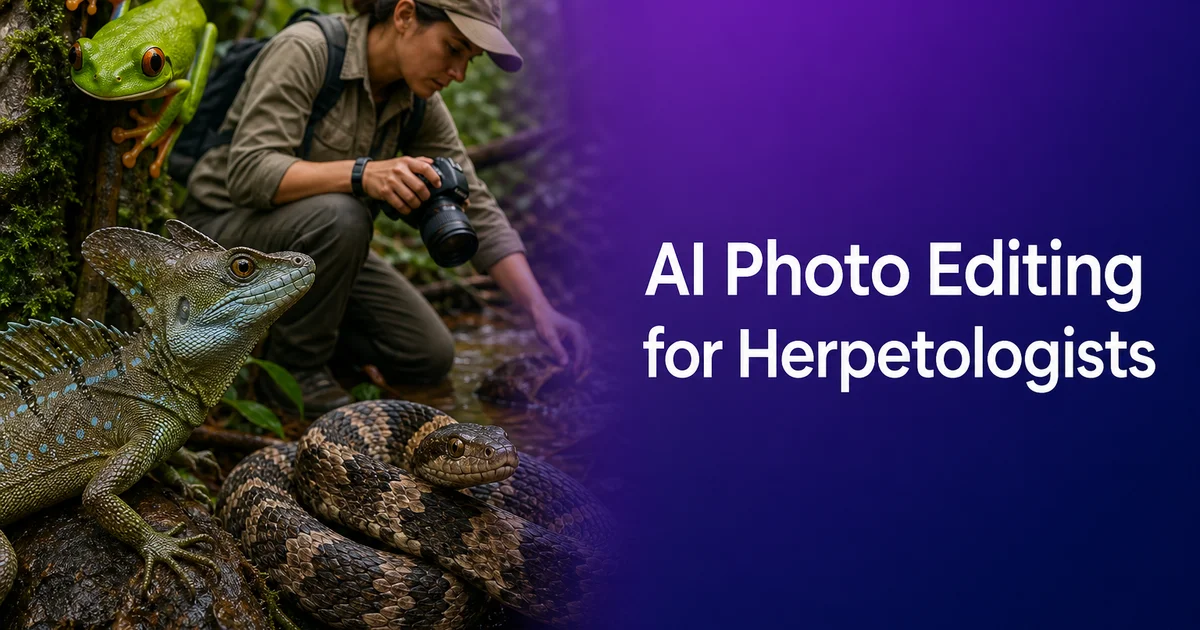
爬虫両生類学 — 爬虫類と両生類を研究する科学 — は、種の識別、分類学的記載、個体群モニタリング、保全評価のために写真記録に大きく依存しています。約12,000種の既知の爬虫類と8,500種を超える両生類が存在します。毎年数百の新種が記載される中、高品質な標本写真への需要は、ほとんどの研究者やフィールドチームが従来の手作業による後処理手法で生み出せる量をはるかに上回っています。すべての種の記載には詳細な図版が必要であり、すべての個体群研究は色彩模様の照合による個体識別に依存しています。すべての保全評価は、生息環境の状態と個体群の健康状態に関する視覚記録から恩恵を受けています。
爬虫両生類学における写真撮影の課題は主に複雑です。爬虫類は反射する光沢のある鱗を持ち、模様の細部を覆い隠す鏡面ハイライトを生み出します。両生類は湿って粘液で覆われた皮膚を持ち、光を予測不能に反射し、生体と保存状態の間で見た目が大きく変化します。多くの種は隠蔽色を持ち、自然の基質に対して見つけにくいように特異的に進化しています。落葉、樹皮、岩肌、水生植生です。フィールド条件には雨、泥、低照度の森林下層が加わります。根本的な課題は、被写体が動き、逃げ、噛みつき、場合によっては撮影者に本当の危険をもたらす生きた動物であることです。
AI写真編集ツールは、生のフィールド撮影と出版品質の画像との間に立ちはだかる労力のかかる後処理ステップを自動化することで、これらの爬虫両生類学的記録の課題に対処します。背景除去は、自然の基質に対してほとんど見えない隠蔽色の動物を明らかにします。ディテール強化は、識別を促す鱗模様、皮膚の質感、色のグラデーションを復元します。バッチ処理は、さまざまな条件下で数週間にわたるフィールドワークで撮影された画像を正規化します。教育や助成金申請と並行して毎シーズン数千枚のフィールド写真を管理する爬虫両生類学者にとって、効率的な画像処理は生産的な研究のための重要な基盤です。標本のキュレーションも同様です。
- 背景除去は、カモフラージュが体の輪郭と模様の細部を覆い隠す自然の基質から、隠蔽色の爬虫類と両生類を分離します。
- AI強化は、信頼性の高い種の識別のために、診断上重要な特徴 — 頭部鱗、背側の帯、趾下板、腹側の色のグラデーション — を鮮明にします。
- Magic Eraserは、標本の形態を変えることなく、フィールドのアーティファクト — 泥、水滴、取り扱い機材、レンズの汚れ — を除去します。
- バッチ処理は、撮影セッション間で照明、機材、天候条件が異なる数週間のフィールド調査からの画像セットを標準化します。
- 300 DPIでの出版対応エクスポートは、分類学的記載、改訂モノグラフ、識別ガイド図版に対する学術誌の基準を満たします。
爬虫類の鱗と両生類の皮膚写真撮影の課題を克服する
爬虫類の鱗は、最も重要な診断的特徴であると同時に、鮮明に捉えるのが技術的に最も困難な撮影面を提供します。クサリヘビや多くのトカゲのキール鱗は複雑な三次元の質感を生み出し、各鱗の形を見えるように描出するには制御された指向性照明が必要です。ナミヘビやスキンクの滑らかな鱗は小さな鏡のように光を反射し、下にある色と模様を飛ばす鏡面ハイライトを生み出します。一部のヘビやトカゲの虹色の構造色です。レインボーボア、サンビームスネーク、多くのAnolis種は — 視角と光の方向によって変化し、完全に記録するには複数の露出が必要です。AI boostは、ハイライトで飛んだ領域から模様の細部を復元し、鱗野全体の局所コントラストを高めて個々の鱗の形と境界を見えるようにすることで役立ちます。
両生類の皮膚は、まったく異なるが同様に難しい特性を示します。カエルとサンショウウオは湿った粘液で覆われた皮膚を持ち、体表面全体に拡散反射と湿ったハイライトを生み出します。この水分層は生物学的に重要です。両生類は皮膚を通して部分的に呼吸するため — 動物を傷つけずに撮影のために取り除くことはできません。保存標本では水分は失われていますが、皮膚はしばしば生体状態から色と質感が変化しており、保存標本写真は生体記録の代替としては不十分です。AI色補正は、異なる水分状態で撮影された標本の見た目を正規化するのに役立ち、ホルマリンやエタノールでの保存中に生じる色の変化を部分的に補正できます。
フィールド撮影は、これらの表面的な課題に環境要因を加えます。爬虫両生類学のフィールドワークは、厚い林冠の陰と斑模様の日光が厳しく不均一な照明を生み出す熱帯林でしばしば行われます。夜間調査 — 多くのカエル種が最も活発で見えやすいとき — には、被写体の後ろに厳しい影を伴う平坦な前面照明の画像を生み出すフラッシュ撮影が必要です。熱帯雨林の湿気はレンズとハウジングを曇らせ、湿った環境からの基質の飛沫が画像にアーティファクトを加えます。AI後処理は不均一なフィールド照明を補正し、環境アーティファクトを除去します。大きく異なる条件下で撮影された画像を、比較分析と出版に適した一貫した視覚基準に正規化します。
- キール鱗を持つ爬虫類の鱗は三次元描出のために指向性照明を必要とします。滑らかな鱗は鏡のように反射し、診断的模様を飛ばします。
- 両生類の粘液層は、動物を傷つけずに取り除くことのできない拡散反射を生み出します — AI強化は湿ったハイライトの下の細部を復元します。
- 夜間フラッシュ撮影は、厳しい影を伴う平坦な前面照明の画像を生み出し、AI照明補正はそれを自然な見た目の記録のために正規化します。
- 熱帯のフィールド条件は、湿気の霧、雨の飛沫、斑模様の林冠光をもたらし、AIバッチ処理はそれらを調査画像セット全体で標準化します。
種の同定と記載のための診断形態学の強化
頭部鱗は多くの爬虫類グループにとって主要な識別ツールです。ヘビの識別は、頭部の鱗の配置を数えて記述することにしばしば依存します。上唇鱗と下唇鱗の数、吻端鱗とおとがい鱗の形、肛板の有無や分割、そして前眼鱗、後眼鱗、側頭鱗を含む眼の周りの鱗の配置です。これらの形質は単一鱗のレベルで測定されます。種間の違いは、単一の分割された鱗か分割されていない鱗かであることがあります。写真は、信頼性の高い計数のために個々の鱗を十分に鮮明に解像する必要があります。AI boostは鱗野全体の局所コントラストを高め、照明や解像度によって曖昧になった画像で個々の鱗の境界を見えるようにします。
爬虫両生類学における色彩模様の記録は、分類学的および生態学的の両方の機能を果たします。背側の帯模様、側方の縞の構成、腹側の色彩です。Anolisトカゲの喉袋とデュラップの特定の色素沈着は、種間で、時には同じ種の個体群間で異なる診断形質です。色彩模様の照合は、標識再捕個体群研究における個体識別にも使用されます。多くのサンショウウオ、カメ、トカゲは、自然の識別標として機能する個体ごとに固有の腹側模様を持っています。AI boostと色の正規化は、異なる照明条件下で撮影された画像全体で模様の特徴が常に描出されることを保証し、異なる日に、または異なるフィールドチームによって撮影された個体間の信頼性の高い比較を可能にします。
趾下板の形態は、多くのヤモリやアマガエルの属を識別するために不可欠です。趾下板 — 指の裏側にある薄く重なり合う板 — は数と幅が異なります。種間の配置であり、主要な診断形質です。これらの微小な構造を生きた動物で撮影することは非常に困難です。なぜなら、動物を足を透明な面に押し付けて拘束する必要があるからです。趾下板は趾盤全体でピントが合っていなければなりません。AI detail boostは、両生類の趾盤の湿った表面やヤモリの趾盤の微視的な鱗の質感によって部分的にぼやけたり隠れたりした趾下板の構造を復元し、写真記録からの計数をより信頼できるものにします。
- ヘビの頭部鱗の識別はしばしば単一鱗の違いに依存します — AI強化は、信頼性の高い計数のために個々の鱗の境界を十分に鮮明にします。
- 照明条件全体での色彩模様の正規化により、標識再捕個体群研究における信頼性の高い個体識別が可能になります。
- ヤモリやアマガエルの趾下板は主要な診断形質であり、AIディテール強化が部分的にぼやけたマクロ撮影から復元します。
- Anolisトカゲのデュラップと喉袋の色彩は、AIホワイトバランスとキャリブレーションツールが提供する正確な色再現を必要とします。
保存標本の処理と博物館コレクションのデジタル化
世界中の自然史博物館コレクションは、エタノールまたはホルマリンで保存された数百万点の爬虫類および両生類標本を保有しています。これらのコレクションのデジタル化は、生物多様性情報学における主要な進行中の取り組みです。コレクションのデジタル化のための標本撮影には、コレクション訪問ごとに数百から数千枚の画像を処理することが含まれ、しばしば限られた機材で時間的制約の下で行われます。照明は機関によって異なり、標本の状態は良好なものから著しく劣化したものまで多岐にわたります。膨大な量の資料により、自動化ツールなしでは個々の画像の改善は非現実的です。AIバッチ処理 — 背景正規化、色補正、アーティファクト除去。画像セット全体に常に適用されるディテール強化 — は、世界の生物多様性記録が要求する規模でコレクションのデジタル化を実用的にします。
保存された両生類標本は、主に深刻な色彩記録の課題を示します。ホルマリン固定とその後のエタノール保存は、ほとんどの両生類種で進行性の退色を引き起こします。生きたアマガエル、ヤドクガエル、イモリの鮮やかな緑、青、赤は、保存後数ヶ月から数年以内に茶色や灰色に退色します。元の色は標本から復元できませんが、採集時に撮影された写真です。しばしばフィールドで、最適とは言えない条件下で — 唯一の色彩記録である場合があります。AI boostは、残った色素範囲の彩度と局所コントラストを高めることで、これらのフィールド写真の色情報を最大化します。色の正規化ツールは、異なるカメラと照明設定で撮影された画像全体で色の表現を標準化するのに役立ちます。
タイプ標本 — 種名が正式に基づく個々の動物 — は最高の記録基準を要求します。多くの爬虫両生類学のタイプ標本は、現代の保存技術と写真記録に先立ち、数十年または数世紀前に採集され保存されました。これらの歴史的に重要な標本の現代的で高解像度の写真セットを作成することは、分類学界の優先事項です。AI boostは、退色、脱水、または物理的に損傷している可能性のある標本の形態的特徴の視認性を最大化し、一方Magic Eraserは保存のアーティファクトを除去します。ピンの跡、ラベルの接着剤の残り、流体表面のゆがみ — 標本に残る診断形質の明確な記録を妨げるものです。
- 博物館コレクションのデジタル化には、訪問ごとに数百点の標本のバッチ処理が必要です — AI自動化により、世界の生物多様性記録の規模でこれが実用的になります。
- ホルマリンとエタノールは両生類の色彩を徐々に破壊します。AI強化は初期のフィールド写真に残る色情報を最大化します。
- タイプ標本撮影は、退色または損傷している可能性のある歴史的に保存された標本の特徴の視認性を最大化するAI強化から恩恵を受けます。
- 機関全体での一貫した背景正規化と色補正は、分散したコレクションデータベースのための統一された視覚基準を作り出します。
保全モニタリング、市民科学、一般啓発
世界中の両生類個体群は深刻な減少にあります。IUCNは、両生類種の40パーセント以上が絶滅の危機に瀕しており、最も脅かされている脊椎動物クラスであると報告しています。写真記録による視覚的モニタリングは、個体群の状態を追跡し、ツボカビ症などの病気の兆候を記録するための重要なツールです。気候変動と生息地の喪失に応じた分布域の変化を記録します。両生類個体群をモニタリングする爬虫両生類学者は、豊度、体の状態、病気の蔓延を追跡するために調査ごとに数百個体を撮影します。AIバッチ処理はこれらの調査画像を定量分析のために標準化し、一方ディテール強化はツボカビ感染の初期兆候を明らかにします。皮膚の変色、過度の脱皮、姿勢の異常 — 未処理のフィールド写真では明らかでない場合があります。
iNaturalist、HerpMapper、地域のアトラス化プロジェクトを含む市民科学プラットフォームは、どの研究チームが調査できるよりもはるかに広い地理的範囲にわたって種の出現を記録することで、爬虫両生類学の知識に多大な貢献をしています。市民科学写真の品質は大きく異なります。逃げるヘビのスマートフォンスナップから、経験豊富な博物学者による丁寧に構図されたマクロポートレートまでです。AI写真編集ツールは、貢献者と、識別を確認する専門の検証者の両方を支援します。背景除去は雑然とした環境から動物を分離し、ディテール強化は識別に必要な鱗模様と色彩特徴を引き出します。色の正規化は、市民科学写真の極めて変動の大きい照明条件を補正します。
爬虫両生類学の保全における市民参加は根本的な課題に直面しています。多くの人々が爬虫類と両生類を恐れたり嫌ったりしています。ヘビは主に恐怖反応を引き起こし、保全メッセージングを困難にします。爬虫類の鱗の美しさ、熱帯のカエルの鮮やかな色を明らかにする高品質な写真です。ハナトガリヤモリやガラスガエルのような種の驚くべき魅力は、世間の認識を変えるための最も効果的なツールの一つです。虹色の鱗の色を引き出し、頭部鱗模様の複雑な幾何学を鮮明にするAI強化画像です。きれいな背景に対して動物を提示することは、博物館展示、保全募金、環境教育、ソーシャルメディアの啓発プログラムのための強力な視覚コンテンツを生み出します。
- 両生類の保全モニタリングは、写真調査を使用して、ツボカビの兆候を含む個体群の豊度、体の状態、病気の蔓延を追跡します。
- 市民科学プラットフォームは数百万の爬虫両生類学的観察を生み出します — AI強化と背景除去は専門家の検証精度を向上させます。
- 市民参加は、これらの動物を恐れたり嫌ったりする傾向のある聴衆に爬虫類と両生類の美しさを明らかにする高品質な写真から恩恵を受けます。
- AI処理された画像は二重の機能を果たします — 厳密な科学的記録と、保全のコミュニケーションと募金のための説得力のある視覚コンテンツです。
How to do it
- 1
Photograph reptile and amphibian specimens with standardized field and lab protocols
Set up consistent lighting with diffused flash or LED panels to minimize specular reflections on glossy scales and wet amphibian skin. Include a color calibration card and millimeter scale bar in every frame. For live specimens, photograph dorsal, lateral, and ventral views at minimum. Capture close-ups of diagnostically important features. Head scalation patterns, toe pad morphology, ventral coloration, iris color, and any distinctive markings like temporal stripes or dorsolateral folds. Use fast shutter speeds for live animals that may move unpredictably.
- 2
Remove distracting backgrounds and isolate specimens for scientific documentation
Use Background Eraser to separate reptiles and amphibians from field substrates. Leaf litter, rock faces, pond margins, and terrarium setups — that camouflage the animals and obscure body outlines. Many herpetological species rely on cryptic coloration that makes them nearly invisible against their natural substrate. Is precisely why background removal is key for clear records. Clean background removal reveals the full body outline, limb proportions. Color pattern that field photographs against natural substrates partially conceal.
- 3
Enhance scale patterns, skin textures, and color details for identification
Use AI Enhance to sharpen the fine morphological structures that drive reptile and amphibian spotting. Individual scale counts and shapes on the head, dorsal patterning and banding, ventral coloration gradients, toe pad lamellae in geckos, skin texture differences between granular and smooth regions on amphibians, and the subtle color variations in throat fans and dewlaps. Many species pairs are distinguished only by differences in scale counts or slight color pattern variations that require maximum image clarity to document reliably.
- 4
Remove field artifacts and handling marks from specimen images
Use Magic Eraser to clean up mud, substrate debris, water droplets on lenses, handling glove reflections, and field equipment visible in the frame. Snake hooks, tongs, headlamps, and measuring equipment — without altering the specimen's morphological features. For preserved specimens, remove pin marks, label shadows, fluid surface reflections. Jar edge distortions that interfere with clear records of the animal's form and coloration.
- 5
Prepare figure plates and identification resources for publication
Compile standardized multi-view image sets into publication-ready figure plates with consistent background color, magnification ratios, and labeling. Export at 300 DPI for journal submissions to herpetological journals. For field spotting guides and citizen science platforms, prepare web-optimized versions with key diagnostic features annotated. Head scale patterns, color morph variants, and distinguishing marks between frequently confused species pairs.
参考資料
- Standards for Photographic Documentation in Herpetological Research — Society for the Study of Amphibians and Reptiles
- Photography Protocols for Reptile and Amphibian Biodiversity Surveys — IUCN Amphibian Specialist Group
- Colour Pattern Analysis in Herpetology: Methods and Applications — Biological Reviews