Skip to content
AI 트렌드7 분 소요

The Ethics of AI Object Removal: When Erasing Is Fine and When It Misleads

A practical ethics framework for AI photo editing. When removing an object from a photo is harmless cleanup, when it crosses into deception, and how disclosure, provenance, and consent draw the line.

Maya Rodriguez

Content Lead

검토자 Magic Eraser Editorial ·
The Ethics of AI Object Removal: When Erasing Is Fine and When It Misleads

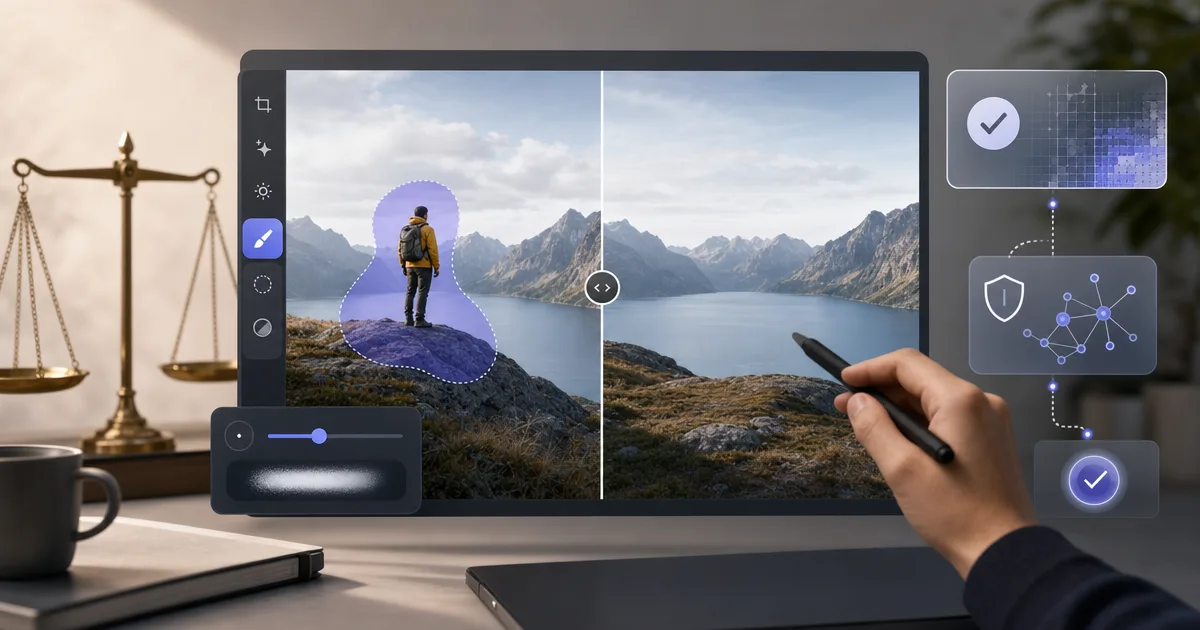
AI object removal makes it trivial to delete anything from a photo — a stranger in the background, a logo on a shirt, a power line across a sunset, or a person who was standing right next to you. The technical question ("can I remove it?") is now always yes. The harder question is the one the tool can't answer for you: should you? This article lays out a practical framework for deciding, built around three tests — context, consent, and disclosure — rather than a blanket rule.

The framework is not about guilt. Most edits people make are completely fine, and saying so plainly matters as much as flagging the edits that aren't. The goal is to give creators, sellers, journalists, and everyday users a way to reason about the edge cases before they post, rather than after someone calls the image misleading.

  • Removing an object is ethical cleanup when it changes how a photo looks but not what it truthfully claims — the test is whether the edit alters a material fact a viewer relies on.
  • Three questions decide most cases: What is the photo claiming? Whose likeness or property is affected? Does the context demand disclosure?
  • Some contexts (journalism, legal evidence, insurance, dating profiles, marketplace listings of the actual item) raise the bar sharply — here even cosmetic removals can mislead.
  • Consent matters when you remove or alter a person; provenance standards like C2PA let you edit and stay honest by recording what changed.
  • Disclosure is cheap insurance: a short "edited with AI" note resolves most ambiguity and is increasingly expected (EU AI Act, platform labels).

The Core Test: Does the Edit Change a Material Fact?

The single most useful question is this: after the edit, does the photo still truthfully represent the thing a viewer would reasonably rely on it for? Removing a trash can from a landscape shot changes the composition, not the claim — nobody looks at a sunset photo to learn the location of municipal bins. Removing a crack from a phone you're selling as "mint condition" changes a material fact the buyer is relying on. Same tool, same one-tap action; entirely different ethics, because the photo's implicit claim is different.

This reframes the question away from "is editing allowed" (almost always yes) toward "what is this image promising?" A travel photo promises an aesthetic impression. A real-estate listing promises an accurate depiction of the property. A news photo promises that the scene happened as shown. A product photo promises the item you'll receive. The stronger the factual promise, the less you can remove without crossing into deception.

  • Aesthetic edits (distracting objects, litter, photobombers in a personal photo) rarely touch a material fact.
  • Transactional and evidentiary images (listings, claims, news, IDs) carry strong factual promises — edits there can mislead even when small.
  • Ask: "If the viewer knew exactly what I removed, would they feel deceived?" If yes, don't remove it silently.

Removing an object is different from removing or altering a person. People have an interest in their own likeness, and editing them out of a shared moment — or worse, editing someone into or out of a context that changes its meaning — raises consent questions a power line never will. Cleaning a random stranger out of your vacation background is generally fine; they were incidental and unidentifiable. Editing an identifiable person out of a group photo to rewrite who "was there," or removing someone from a photo used to make a claim about an event, is a different act.

The sharpest line is non-consensual alteration of someone's body or appearance. Tools that strip clothing or sexualize images of real people without consent are abuse, not editing, and responsible products refuse to build for that use case. (Magic Eraser's own keyword and content policy explicitly excludes that intent.) For ordinary retouching of friends and family, the practical rule is simple: if the edit would embarrass or misrepresent the person if they saw it, ask them first.

  • Incidental, unidentifiable strangers in the background: low consent concern.
  • Identifiable people, especially in photos that make a claim about an event or relationship: get consent before editing them in or out.
  • Non-consensual body alteration is abuse, not editing — no framework excuses it.

Context Raises or Lowers the Bar

The same edit can be fine in one context and unacceptable in another, because different contexts carry different truth expectations. Journalism and documentary photography hold the highest bar: news organizations like Reuters and the Associated Press prohibit removing or adding content to news images precisely because the photo's value is its fidelity to what happened. Legal evidence, insurance claims, and identity documents are similarly strict — altering them can be fraud, not just bad form.

Commerce sits in the middle and is where most people stumble. A marketplace listing photo is allowed to look its best — clean background, good lighting — but it must depict the actual item honestly. Removing a scratch, a missing part, or signs of wear crosses from presentation into misrepresentation. Dating profiles are a softer version of the same issue: a flattering edit is expected, but removing or altering features to the point that you're not recognizable in person breaks the implicit promise. Personal and artistic photos sit at the permissive end — here the photo claims an impression, not a fact, and broad creative latitude is normal and fine.

  • High bar (fidelity is the point): journalism, documentary, legal evidence, insurance, ID photos.
  • Medium bar (best-but-honest): e-commerce listings, real-estate photos, dating profiles.
  • Low bar (impression, not fact): personal photos, social posts, art and design composites.

Disclosure and Provenance: How to Edit and Stay Honest

When an edit sits in a gray zone, disclosure resolves it almost for free. A short note — "this image was edited with AI" or "background cleaned up; product is unretouched" — converts a potentially misleading image into an honest one, because the viewer now knows what they're looking at. Disclosure is increasingly not just courtesy but expectation: the EU AI Act introduces transparency obligations for synthetic and manipulated media, and major platforms have rolled out AI-content labels.

Provenance standards make this durable. The C2PA specification, backed by Adobe, Microsoft, Google, Intel, and the BBC, attaches a cryptographic record to an image describing what tool edited it and how. Rather than asking viewers to trust a caption, provenance lets the edit history travel with the file. The practical takeaway for creators: you don't have to choose between editing and honesty. Edit freely for legitimate purposes, disclose when context calls for it, and prefer tools and platforms that support provenance so your honest edits are verifiable.

  • A one-line disclosure resolves most gray-zone edits — cheap, fast, and expected in regulated and commercial contexts.
  • C2PA provenance records the edit history in the file itself, so honesty is verifiable, not just asserted.
  • Default posture: edit for legitimate goals, disclose where the context carries a factual promise.

A Quick Decision Checklist

Before you publish an edited photo, run it through five questions. They take ten seconds and catch nearly every case that would later be called misleading. If all five clear, edit freely. If any one trips, either don't make the edit or disclose it.

This checklist is deliberately conservative in exactly the places that matter — money, people, and public claims — and permissive everywhere else, which is where most editing actually happens. The point of an ethics framework is not to make people anxious about deleting a trash can; it's to make the genuinely consequential cases easy to spot.

  • 1. What is this photo claiming — an impression, or a fact someone will rely on?
  • 2. Does the edit change that material fact (condition, presence, identity, event)?
  • 3. Does it remove or alter an identifiable person without their consent?
  • 4. Is the context high-bar (news, legal, insurance, listings, ID)?
  • 5. If a viewer knew exactly what I changed, would they feel deceived? If yes — disclose or don't edit.

What This Means for Everyday Editing

The vast majority of AI object removal is harmless and useful: tidying a distracting background, removing a stranger from a holiday photo, cleaning litter out of a landscape, erasing a date stamp from a personal snapshot. None of these touch a material fact or anyone's consent, and treating them as ethically fraught helps no one. The framework exists to isolate the small set of cases that genuinely matter — selling a damaged item as flawless, editing a news scene, altering a person without consent, faking evidence — so they're easy to recognize against the harmless background.

The honest summary: the tool is neutral, the context isn't. Erasing changes how a photo looks; whether it deceives depends entirely on what the photo was claiming and who it affects. Keep the three tests — material fact, consent, context — in mind, lean on disclosure and provenance when in doubt, and the ethics of AI object removal stop being mysterious and become a quick, routine judgment.

출처

  1. Copyright and Artificial Intelligence (policy guidance) U.S. Copyright Office
  2. C2PA Technical Specification: Content Provenance and Authenticity Coalition for Content Provenance and Authenticity
  3. EU Artificial Intelligence Act — transparency obligations European Union
  4. Manipulation Policy: Altered or synthetic media Reuters

Do it now

사진에서 물체 제거하기

Skip the manual editing — try it free in your browser in a few seconds.

사진에서 물체 제거하기

관련 도구 보기

관련 사용 사례 보기

부동산 사진의 불필요한 물체를 몇 초 만에 제거하세요진짜 팔리는 깔끔한 상품 사진 만들기인스타그램, 틱톡 & SNS 사진을 AI로 편집하세요AI 배경 제거로 완벽한 여권사진 만들기사진에서 텍스트, 캡션, 날짜 스탬프, 오버레이를 제거하세요디자이너 없이도 프로급 마케팅 비주얼 완성SNS용 멋진 AI 아트를 몇 초 만에 만드세요AI로 더욱 빨라진 웨딩 사진 편집AI 도구를 사용한 졸업 앨범 사진 편집대리점 및 판매자를 위한 자동차 사진 편집AI 편집으로 음식 사진 정리전문적인 얼굴 사진 편집이 간편해졌습니다AI 도구를 사용한 애완동물 사진 편집AI를 활용한 가상 스테이징레스토랑 메뉴 사진 편집크리에이터를 위한 YouTube 썸네일 편집여행 요약 및 추억 책을 위한 여행 사진 편집블로거, 크리에이터, 소규모 브랜드를 위한 Pinterest 핀 디자인온라인 코스 작성자 사진 워크플로: 판매 페이지부터 마지막 ​​강의까지팟캐스터 사진 작업 흐름: 표지 아트, 게스트 그래픽, 시즌별 새로 고침자가 출판 작가 사진 작업 흐름: 표지, 얼굴 사진, BookTok, 시리즈뉴스레터 작성자 사진 워크플로우: 히어로 이미지, 인라인 이미지, 메모, 작성자 사진치과 진료 사진 편집: 임상 사례, 팀 얼굴 사진 및 환자 마케팅보험금 청구 사진 향상: 더욱 명확한 손해 기록, 신속한 합의박물관 및 기록 보관소 사진 디지털화: 역사적 컬렉션 복원, 강화 및 공유패션 인플루언서 콘텐츠: 배경 교체, 피드 미적 및 브랜드 준비 사진인테리어 디자인 포트폴리오: 깔끔한 공간, 정확한 조명 및 확장된 구도학교 앨범 사진 제작: 일관된 인물 사진, 더 나은 행사 사진 및 깔끔한 솔직한 사진비영리 모금 행사 영상: 기부자 항소, 이벤트 사진 및 캠페인 그래픽피트니스 트레이너 변신 사진: 고객을 전환시키는 일관된 전후문신 아티스트 포트폴리오: 선명한 잉크 디테일, 깨끗한 배경 및 정확한 색상빈티지 자동차 복원 문서: 진행 사진, 세부 정보 캡처 및 판매 준비 사진건설 진행 사진: 고객, 대출 기관 및 마케팅을 위한 더욱 명확한 문서주얼리 사진: 깔끔한 배경, 원석 디테일 및 카탈로그 일관성식물 종묘장 카탈로그: 트루 컬러 단풍, 깨끗한 배경 및 일관된 목록계보 사진 복원: 빛바랜 손상된 사진에서 가족 역사 구출이벤트 사진작가 워크플로우: 컨퍼런스, 갈라, 기업 및 사교 행사부동산 관리 사진: 임대 목록, 검사 및 유지 관리 문서미술품 복제 및 인쇄 판매: 인쇄용 작품의 고급화, 확장 및 준비스포츠 사진: 액션 사진, 팀 사진 및 선수 초상화수의학 실습 사진: 클리닉 마케팅, 환자 갤러리 및 소셜 미디어골동품 딜러 카탈로그 사진: 재고, 경매 및 온라인 판매어린이집 및 학교 사진: 학부모 커뮤니케이션, 마케팅 및 등록헤어 살롱 포트폴리오: 스타일리스트, 컬러리스트, 이발소조경 시공업체 포트폴리오: Hardscape, 디자인 및 잔디 관리 프로젝트온라인 데이트 사진: Tinder, Hinge, Bumble 등에 대한 더 나은 프로필 사진장례식 및 추모 사진: 부고 초상화, 추모 및 추모중고품 및 재판매 사진: Poshmark, Depop, Mercari 및 eBay 목록공예품 및 수제 제품 사진: Etsy, 공예품 박람회 및 메이커 시장밴드 및 뮤지션 프로모션: EPK, 소셜 미디어, 공연 포스터 및 상품

관련 비교

관련 기사