Skip to content
Trend IA7 min di lettura

The Ethics of AI Object Removal: When Erasing Is Fine and When It Misleads

A practical ethics framework for AI photo editing. When removing an object from a photo is harmless cleanup, when it crosses into deception, and how disclosure, provenance, and consent draw the line.

Maya Rodriguez

Content Lead

Revisionato da Magic Eraser Editorial ·

The Ethics of AI Object Removal: When Erasing Is Fine and When It Misleads

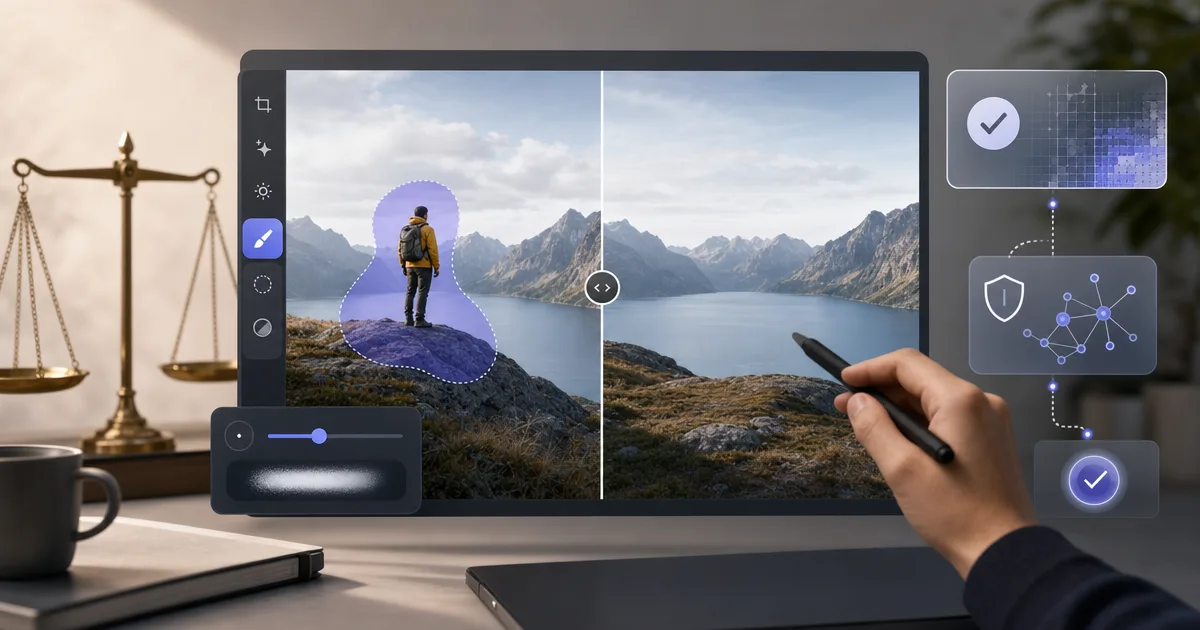
AI object removal makes it trivial to delete anything from a photo — a stranger in the background, a logo on a shirt, a power line across a sunset, or a person who was standing right next to you. The technical question ("can I remove it?") is now always yes. The harder question is the one the tool can't answer for you: should you? This article lays out a practical framework for deciding, built around three tests — context, consent, and disclosure — rather than a blanket rule.

The framework is not about guilt. Most edits people make are completely fine, and saying so plainly matters as much as flagging the edits that aren't. The goal is to give creators, sellers, journalists, and everyday users a way to reason about the edge cases before they post, rather than after someone calls the image misleading.

  • Removing an object is ethical cleanup when it changes how a photo looks but not what it truthfully claims — the test is whether the edit alters a material fact a viewer relies on.
  • Three questions decide most cases: What is the photo claiming? Whose likeness or property is affected? Does the context demand disclosure?
  • Some contexts (journalism, legal evidence, insurance, dating profiles, marketplace listings of the actual item) raise the bar sharply — here even cosmetic removals can mislead.
  • Consent matters when you remove or alter a person; provenance standards like C2PA let you edit and stay honest by recording what changed.
  • Disclosure is cheap insurance: a short "edited with AI" note resolves most ambiguity and is increasingly expected (EU AI Act, platform labels).

The Core Test: Does the Edit Change a Material Fact?

The single most useful question is this: after the edit, does the photo still truthfully represent the thing a viewer would reasonably rely on it for? Removing a trash can from a landscape shot changes the composition, not the claim — nobody looks at a sunset photo to learn the location of municipal bins. Removing a crack from a phone you're selling as "mint condition" changes a material fact the buyer is relying on. Same tool, same one-tap action; entirely different ethics, because the photo's implicit claim is different.

This reframes the question away from "is editing allowed" (almost always yes) toward "what is this image promising?" A travel photo promises an aesthetic impression. A real-estate listing promises an accurate depiction of the property. A news photo promises that the scene happened as shown. A product photo promises the item you'll receive. The stronger the factual promise, the less you can remove without crossing into deception.

  • Aesthetic edits (distracting objects, litter, photobombers in a personal photo) rarely touch a material fact.
  • Transactional and evidentiary images (listings, claims, news, IDs) carry strong factual promises — edits there can mislead even when small.
  • Ask: "If the viewer knew exactly what I removed, would they feel deceived?" If yes, don't remove it silently.

Removing an object is different from removing or altering a person. People have an interest in their own likeness, and editing them out of a shared moment — or worse, editing someone into or out of a context that changes its meaning — raises consent questions a power line never will. Cleaning a random stranger out of your vacation background is generally fine; they were incidental and unidentifiable. Editing an identifiable person out of a group photo to rewrite who "was there," or removing someone from a photo used to make a claim about an event, is a different act.

The sharpest line is non-consensual alteration of someone's body or appearance. Tools that strip clothing or sexualize images of real people without consent are abuse, not editing, and responsible products refuse to build for that use case. (Magic Eraser's own keyword and content policy explicitly excludes that intent.) For ordinary retouching of friends and family, the practical rule is simple: if the edit would embarrass or misrepresent the person if they saw it, ask them first.

  • Incidental, unidentifiable strangers in the background: low consent concern.
  • Identifiable people, especially in photos that make a claim about an event or relationship: get consent before editing them in or out.
  • Non-consensual body alteration is abuse, not editing — no framework excuses it.

Context Raises or Lowers the Bar

The same edit can be fine in one context and unacceptable in another, because different contexts carry different truth expectations. Journalism and documentary photography hold the highest bar: news organizations like Reuters and the Associated Press prohibit removing or adding content to news images precisely because the photo's value is its fidelity to what happened. Legal evidence, insurance claims, and identity documents are similarly strict — altering them can be fraud, not just bad form.

Commerce sits in the middle and is where most people stumble. A marketplace listing photo is allowed to look its best — clean background, good lighting — but it must depict the actual item honestly. Removing a scratch, a missing part, or signs of wear crosses from presentation into misrepresentation. Dating profiles are a softer version of the same issue: a flattering edit is expected, but removing or altering features to the point that you're not recognizable in person breaks the implicit promise. Personal and artistic photos sit at the permissive end — here the photo claims an impression, not a fact, and broad creative latitude is normal and fine.

  • High bar (fidelity is the point): journalism, documentary, legal evidence, insurance, ID photos.
  • Medium bar (best-but-honest): e-commerce listings, real-estate photos, dating profiles.
  • Low bar (impression, not fact): personal photos, social posts, art and design composites.

Disclosure and Provenance: How to Edit and Stay Honest

When an edit sits in a gray zone, disclosure resolves it almost for free. A short note — "this image was edited with AI" or "background cleaned up; product is unretouched" — converts a potentially misleading image into an honest one, because the viewer now knows what they're looking at. Disclosure is increasingly not just courtesy but expectation: the EU AI Act introduces transparency obligations for synthetic and manipulated media, and major platforms have rolled out AI-content labels.

Provenance standards make this durable. The C2PA specification, backed by Adobe, Microsoft, Google, Intel, and the BBC, attaches a cryptographic record to an image describing what tool edited it and how. Rather than asking viewers to trust a caption, provenance lets the edit history travel with the file. The practical takeaway for creators: you don't have to choose between editing and honesty. Edit freely for legitimate purposes, disclose when context calls for it, and prefer tools and platforms that support provenance so your honest edits are verifiable.

  • A one-line disclosure resolves most gray-zone edits — cheap, fast, and expected in regulated and commercial contexts.
  • C2PA provenance records the edit history in the file itself, so honesty is verifiable, not just asserted.
  • Default posture: edit for legitimate goals, disclose where the context carries a factual promise.

A Quick Decision Checklist

Before you publish an edited photo, run it through five questions. They take ten seconds and catch nearly every case that would later be called misleading. If all five clear, edit freely. If any one trips, either don't make the edit or disclose it.

This checklist is deliberately conservative in exactly the places that matter — money, people, and public claims — and permissive everywhere else, which is where most editing actually happens. The point of an ethics framework is not to make people anxious about deleting a trash can; it's to make the genuinely consequential cases easy to spot.

  • 1. What is this photo claiming — an impression, or a fact someone will rely on?
  • 2. Does the edit change that material fact (condition, presence, identity, event)?
  • 3. Does it remove or alter an identifiable person without their consent?
  • 4. Is the context high-bar (news, legal, insurance, listings, ID)?
  • 5. If a viewer knew exactly what I changed, would they feel deceived? If yes — disclose or don't edit.

What This Means for Everyday Editing

The vast majority of AI object removal is harmless and useful: tidying a distracting background, removing a stranger from a holiday photo, cleaning litter out of a landscape, erasing a date stamp from a personal snapshot. None of these touch a material fact or anyone's consent, and treating them as ethically fraught helps no one. The framework exists to isolate the small set of cases that genuinely matter — selling a damaged item as flawless, editing a news scene, altering a person without consent, faking evidence — so they're easy to recognize against the harmless background.

The honest summary: the tool is neutral, the context isn't. Erasing changes how a photo looks; whether it deceives depends entirely on what the photo was claiming and who it affects. Keep the three tests — material fact, consent, context — in mind, lean on disclosure and provenance when in doubt, and the ethics of AI object removal stop being mysterious and become a quick, routine judgment.

Fonti

  1. Copyright and Artificial Intelligence (policy guidance) U.S. Copyright Office
  2. C2PA Technical Specification: Content Provenance and Authenticity Coalition for Content Provenance and Authenticity
  3. EU Artificial Intelligence Act — transparency obligations European Union
  4. Manipulation Policy: Altered or synthetic media Reuters

Do it now

Rimuovere un oggetto da una foto

Skip the manual editing — try it free in your browser in a few seconds.

Rimuovere un oggetto da una foto

Esplora strumenti correlati

Esplora casi d'uso correlati

Rimuovi oggetti indesiderati dalle foto immobiliari in pochi secondiFoto Prodotto Pulite Che Vendono DavveroModifica le Foto per Instagram, TikTok e Social Media con l'IACrea Fototessere Perfette con la Rimozione Sfondo AIRimuovi testo, didascalie, date e sovrapposizioni da qualsiasi fotoVisual Marketing Come Se Avessi un DesignerCrea Arte IA Straordinaria per i Social Media in Pochi SecondiIl fotoritocco di matrimoni è reso più veloce con l'intelligenza artificialeModifica foto annuario con strumenti AIFotoritocco per auto per concessionari e venditoriPulizia della fotografia di cibo con l'editing AIL'editing professionale dei ritratti reso sempliceModifica foto di animali domestici con strumenti AIStaging virtuale con intelligenza artificialeModifica foto del menu del ristoranteModifica delle miniature di YouTube per i creatoriFotoritocco di viaggio per riassunti di viaggio e libri di ricordiPin Design di Pinterest per blogger, creatori e piccoli brandFlusso di lavoro fotografico per il creatore di corsi online: dalla pagina di vendita all'ultima lezioneFlusso di lavoro fotografico per Podcaster: copertina, grafica per gli ospiti, aggiornamento stagionaleFlusso di lavoro delle foto d'autore autopubblicate: copertine, primi piani, BookTok, serieFlusso di lavoro fotografico per lo scrittore di newsletter: immagini eroiche, immagini in linea, note, foto dell'autoreEditing fotografico di studi dentistici: casi clinici, ritratti di team e marketing dei pazientiMiglioramento delle foto delle richieste di indennizzo assicurativo: documentazione dei danni più chiara, liquidazioni più rapideDigitalizzazione di foto di musei e archivi: restaura, migliora e condividi collezioni storicheContenuti per influencer della moda: scambi di sfondi, estetica del feed e foto pronte per il marchioPortfolio di interior design: stanze pulite, illuminazione corretta e composizioni esteseProduzione fotografica per annuari scolastici: ritratti coerenti, foto di eventi migliori e candidati pulitiImmagini per raccolte fondi senza scopo di lucro: appelli dei donatori, foto di eventi e grafica della campagnaFoto di trasformazione del fitness trainer: prima e dopo coerenti che convertono i clientiPortfolio dei tatuatori: dettagli nitidi dell'inchiostro, sfondi puliti e colori accuratiDocumentazione sul restauro di auto d'epoca: foto di avanzamento, acquisizioni di dettagli e scatti pronti per la venditaFoto dello stato di avanzamento della costruzione: documentazione più chiara per clienti, istituti di credito e marketingFotografia di gioielli: sfondi puliti, dettagli delle pietre preziose e coerenza del catalogoCatalogo dei vivai: fogliame dai colori realistici, sfondi puliti ed elenchi coerentiRestauro di foto genealogiche: salva la storia familiare da fotografie sbiadite e danneggiateFlusso di lavoro del fotografo di eventi: conferenze, gala, eventi aziendali e socialiFoto di gestione della proprietà: elenchi di affitti, ispezioni e documentazione di manutenzioneRiproduzione d'arte e vendita di stampe: upscale, espansione e preparazione di opere d'arte per la stampaFotografia sportiva: scatti d'azione, foto di squadre e ritratti di atletiFoto di studi veterinari: marketing clinico, gallerie di pazienti e social mediaFoto del catalogo di antiquari: inventario, aste e vendite onlineFoto di asili nido e scuole: comunicazione, marketing e iscrizione con i genitoriPortfolio parrucchieri: stilisti, coloristi e barbieriPortfolio di appaltatori paesaggistici: progetti di paesaggistica, progettazione e cura del pratoFoto di incontri in linea: Migliori immagini del profilo per Tinder, Hinge, Bumble e altroFoto funebri e commemorative: ritratti di necrologi, tributi e ricordiFoto dell'usato e della rivendita: Poshmark, Depop, Mercari e inserzioni eBayFoto di prodotti artigianali e fatti a mano: Etsy, fiere dell'artigianato e mercati dei produttoriPromo di band e musicisti: EPK, social media, poster di concerti e merchandising

Confronti correlati

Articoli correlati