
KI-Fotobearbeitung für Koleopterologen — Magic Eraser
Wie Koleopterologen KI-Fotobearbeitung für Käferpräparat-Dokumentation, taxonomische Fotografie und Forschungspublikationen nutzen. Verbessern Sie morphologische Details, entfernen Sie Hintergründe und erstellen Sie publikationsfertige Bildtafeln für die artenreichste Insektenordnung der Welt.

SEO & Growth
Geprüft von Magic Eraser Editorial ·
Inhaltsverzeichnis
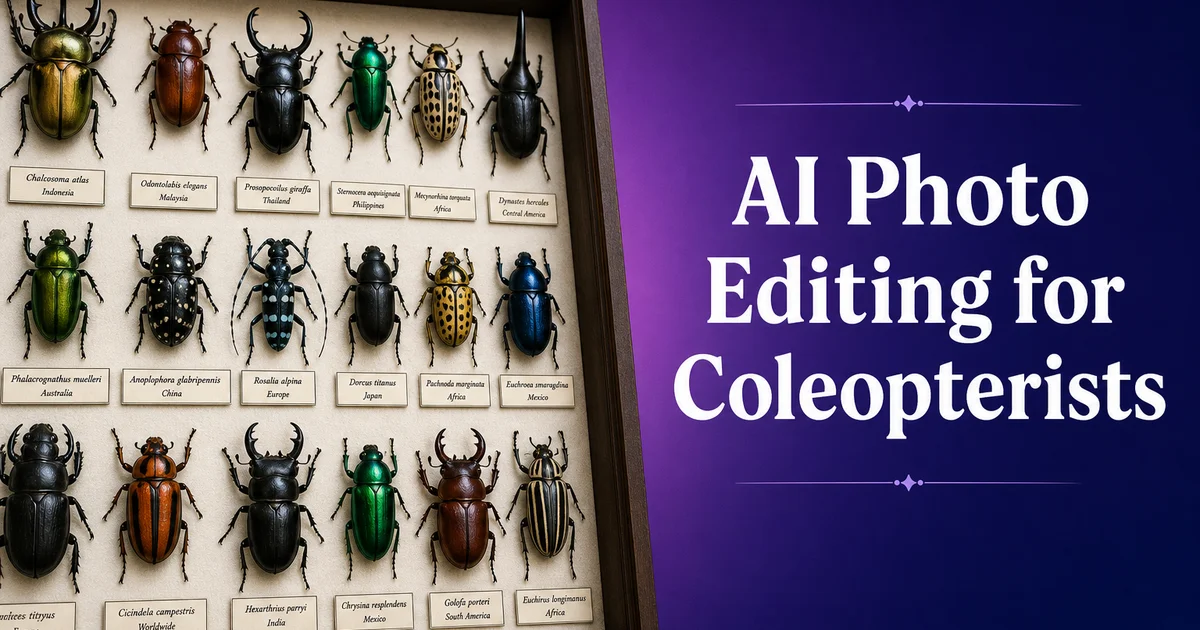
Coleoptera — Käfer — bilden die artenreichste Ordnung aller Organismen auf der Erde, mit über 400.000 beschriebenen Arten und konservativen Schätzungen, die darauf hindeuten, dass die tatsächliche Gesamtzahl 1,5 Millionen übersteigen könnte, wenn unbeschriebene tropische Arten einbezogen werden. Diese außergewöhnliche Vielfalt bedeutet, dass Koleopterologen vor einer Dokumentationsherausforderung stehen, die in keiner anderen biologischen Disziplin ihresgleichen findet: Jede neue Artbeschreibung erfordert detaillierte Bildtafeln, die diagnostische morphologische Merkmale zeigen, und jede Revisionsstudie umfasst die erneute Untersuchung und Neufotografie von Dutzenden bis Hunderten von Exemplaren aus Museumssammlungen weltweit. Das schiere Volumen unbeschriebenen Materials in tropischen Sammlungen bedeutet, dass eine effiziente Bildproduktion unmittelbar das Tempo bestimmt, in dem die globale Käferdiversität formal dokumentiert werden kann.
Die fotografischen Anforderungen der Käfertaxonomie sind anspruchsvoll. Käfer reichen in ihrer Größe von Federflüglern (Ptiliidae) mit 0,3 Millimetern bis zu Titankäfern (Titanus giganteus) mit über 160 Millimetern, doch die Mehrheit der taxonomisch problematischen Arten ist klein — unter zehn Millimetern Körperlänge — und erfordert Makrofotografie mit erheblicher Vergrößerung. Die konvexe dreidimensionale Körperform der meisten Käfer bedeutet, dass die Dorsalfotografie stets Schärfentiefe-Probleme mit sich bringt: Entweder sind der Pronotalapex und der Elytralapex scharf, während die Seitenränder unscharf sind, oder umgekehrt. Die Oberflächenskulptur — Punktierung, Streifung, Mikroskulptur und Behaarung, die primäre Bestimmungsmerkmale darstellen — erfordert sorgfältige Beleuchtung, die die Textur sichtbar macht, ohne die Spiegelreflexionen zu erzeugen, die das chitinöse Integument leicht hervorbringt.
KI-Fotobearbeitungswerkzeuge adressieren diese Herausforderungen direkt, indem sie die arbeitsintensive Nachbearbeitung automatisieren, die die Käferpräparat-Fotografie erfordert. Die Hintergrundentfernung isoliert Exemplare von Nadeln, Montagebühnen und Aufbewahrungsmaterialien. Die Detailverbesserung stellt feine morphologische Merkmale wieder her — Elytralskulptur, Antennenmorphologie, Tarsalstruktur und Genitalienmerkmale —, die auf jeder taxonomischen Ebene die Bestimmung ermöglichen. Die Stapelverarbeitung standardisiert Bilder von mehrwöchigen Museumsbesuchen, bei denen Lichtverhältnisse, Kamerapositionen und Mikroskopeinstellungen zwischen den Sitzungen variierten. Für Koleopterologen, die daran arbeiten, die artenreichste Insektenordnung der Welt zu beschreiben, ist eine effiziente Bildverarbeitung keine optionale Annehmlichkeit, sondern eine Voraussetzung für produktive Forschung.
- Die Hintergrundentfernung isoliert Käferpräparate von Insektennadeln, Montagebühnen, Einheitstabletts und Museums-Aufbewahrungsmaterialien für saubere Publikationsbilder.
- AI Boost schärft diagnostisch kritische Strukturen — Elytralpunktierung, Pronotalmikroskulptur, Antennenkeulen-Morphologie und männliche Aedeagus-Geometrie — bei den von der Taxonomie geforderten Vergrößerungen.
- Magic Eraser entfernt Nadelkorrosionsflecken, Montageklebstoff und Grünspan-Ablagerungen von historischen Exemplaren, ohne das unersetzliche Typenmaterial physisch zu beschädigen.
- Die Stapelverarbeitung standardisiert Bilder von ausgedehnten Museumsbesuchen, bei denen Ausrüstung, Beleuchtung und Mikroskopeinstellungen über Dutzende von Fotositzungen hinweg variierten.
- Publikationsfertige Exporte mit 300 DPI erfüllen die Anforderungen taxonomischer Fachzeitschriften für Artbeschreibungen, Revisionsmonografien und Bestimmungsschlüssel.
Fokusstapelung und KI-gestützte Nachbearbeitung für konvexe Körperformen
Die konvexe Körperform der meisten Käfer ist die grundlegende Herausforderung der koleopterologischen Fotografie. Ein typischer Laufkäfer (Carabidae), fotografiert aus dorsaler Perspektive, zeigt eine gewölbte Oberfläche, bei der die Mitte des Pronotums und der Elytren mehrere Millimeter näher an der Kamera liegt als die Seitenränder. Bei der Makrovergrößerung, die nötig ist, um einen zehn Millimeter großen Käfer formatfüllend aufzunehmen, beträgt die Schärfentiefe oft weniger als einen Millimeter — was bedeutet, dass eine einzelne Aufnahme entweder die Mittellinie oder die Seitenränder scharf auflösen kann, aber nicht beides. Die Fokusstapelung löst dies, indem dreißig bis achtzig Aufnahmen, die auf schrittweise unterschiedliche Ebenen fokussiert sind, zu einem einzigen durchgehend scharfen Komposit kombiniert werden. Der Prozess erzeugt Stapelungsartefakte und erfordert erhebliche Nachbearbeitungszeit.
Die KI-Nachbearbeitung fügt sich natürlich in den Fokusstapelungs-Workflow ein. Nachdem das gestapelte Komposit erzeugt wurde, schärft AI Boost zusätzlich Strukturen, die der Stapelungsalgorithmus nicht vollständig aufgelöst hat — hauptsächlich an den Rändern, wo die Krümmung des Exemplars den steilsten Fokusgradienten erzeugt. Die Hintergrundentfernung ist für gestapelte Käferbilder außerordentlich wertvoll, da die Fokusstapelung häufig Halos und Doppelkanten erzeugt, wo die Ausrichtung an der Exemplargrenze ungenau war. Die Nadel oder der Montageträger hinter dem Exemplar ist oft teilweise in einigen der Quellbilder fokussiert. Die KI-Hintergrundentfernung beseitigt diese Artefakte sauber und erzeugt eine scharfe Exemplarsilhouette vor einem einheitlichen Hintergrund.
Für sehr kleine Käfer — die Staphylinoiden, Cryptophagiden und Ptiliiden, die einen großen Teil der unbeschriebenen tropischen Diversität ausmachen — wechselt die Fotografie häufig von Makroobjektiven zu Stereomikroskop- oder Durchlichtmikroskop-Kameraadaptern. Bei diesen Vergrößerungen schrumpft die Schärfentiefe weiter, und die Fokusstapelung kann über hundert Quellbilder erfordern, um einen nur zwei Millimeter langen Käfer aufzulösen. Die KI-Nachbearbeitung bewältigt die erhöhte Artefaktdichte, die aus der Stapelung so vieler Einzelbilder resultiert. Die Detailverbesserung kompensiert die Auflösungsbeschränkungen mikroskopischer optischer Systeme, die für visuelle Beobachtung und nicht für fotografische Dokumentation konzipiert wurden.
- Konvexe Käferkörperformen erzeugen Schärfentiefe-Probleme, bei denen Makrofotografie entweder die medianen oder die lateralen Strukturen scharf auflösen kann, aber nicht beides gleichzeitig.
- Die Fokusstapelung kombiniert dreißig bis achtzig Aufnahmen pro Ansicht; die KI eliminiert die Halos, Doppelkanten und teilweise fokussierten Hintergrundelemente, die die Stapelung einführt.
- Die KI-Verbesserung schärft zusätzlich Strukturen an den Exemplarrändern, wo die steile Krümmung den stärksten Fokusgradienten erzeugt und die Stapelungsauflösung am schwächsten ist.
- Sehr kleine Käfer unter zwei Millimetern erfordern mikroskopbasierte Stapelung mit über hundert Einzelbildern; die KI bewältigt die erhöhte Artefaktdichte, die diese extremen Stapelungen erzeugen.
Verbesserung diagnostischer Merkmale über alle taxonomischen Ebenen der Käfer
Die Käferbestimmung arbeitet mit einer Hierarchie morphologischer Merkmale, die von der auf einen Blick sichtbaren Gesamtkörperkontur bis zu mikroskopischen Strukturen reichen, die eine Untersuchung unter dem Durchlichtmikroskop erfordern. Auf Familienebene liefern Körperform, Antennenform, Tarsalformel (die Anzahl der Segmente an jedem Fuß) und die Konfiguration der Thoraxsklerite primäre diagnostische Merkmale. Auf Gattungsebene werden Elytralskulptur (das Muster von Punkten, Streifen und Interstrialflachen), Pronotalform und -randung sowie Mundwerkzeugstruktur entscheidend. Auf Artebene sind männliche Genitalienmerkmale — vor allem die Form des Aedeagus und seiner zugehörigen Innensack-Strukturen — oft das definitive Bestimmungsinstrument. AI Boost muss all diesen Maßstäben gerecht werden.
Der männliche Aedeagus ist für die Käfertaxonomie das, was das Palpalorgan für die Spinnentaxonomie ist: die einzelne Struktur, die am häufigsten für die Bestimmung auf Artebene benötigt wird. Durch Dissektion aus dem Abdomen des Käfers extrahiert, ist der Aedeagus oft eine komplexe dreidimensionale sklerotisierte Struktur von weniger als einem Millimeter Länge bei den meisten Käfergruppen. Seine Form — die Krümmung des Medianlobus, die Form der Parameren und die Konfiguration der Innensack-Armatur — muss aus mehreren Winkeln mit maximaler Klarheit dokumentiert werden. AI Boost stellt feine Kanten, Oberflächentextur und die Formen einzelner Sklerite in Fotografien wieder her, bei denen diese Sub-Millimeter-Strukturen die Auflösungsgrenzen der verfügbaren optischen Systeme strapazieren.
Elytralskulptur — das Muster von Punkten, Streifen und der Fläche dazwischen — gehört zu den am häufigsten verwendeten Bestimmungsmerkmalen in der gesamten Coleoptera, da sie an intakten Exemplaren ohne Dissektion sichtbar ist. Doch Elytralskulptur kann sehr fein sein: Mikroskulpturmuster, die bestimmen, ob eine Oberfläche matt oder glänzend erscheint, werden von Liniennetzwerken gebildet, die nur in Mikrometern messbar sind. Irisierende und metallische Strukturfarben bei Käferfamilien wie Chrysomelidae, Buprestidae und Cerambycidae entstehen durch Dünnschichtinterferenz in der Kutikula und verändern ihr Erscheinungsbild mit dem Beleuchtungswinkel. AI Boost und kontrollierte Beleuchtungssimulation helfen, die Dokumentation dieser winkel- und maßstabsabhängigen Oberflächenmerkmale über Bilder hinweg zu standardisieren, die unter unterschiedlichen Bedingungen aufgenommen wurden.
- Bestimmungsmerkmale reichen von der Gesamtkörperkontur bis zur mikroskopischen Aedeagus-Geometrie und erfordern eine KI-Verbesserung, die jede taxonomische Ebene effektiv bedient.
- Die Dokumentation des männlichen Aedeagus erfordert Mehrwinkel-Fotografie von Sub-Millimeter-Strukturen, wobei die KI feine Skleritkanten und Innensack-Armatur-Konfigurationen wiederherstellt.
- Elytrale Mikroskulpturmuster, gemessen in Mikrometern, bestimmen das Oberflächenerscheinungsbild und werden durch KI-Verbesserung und Beleuchtungsnormalisierung über Bilder hinweg standardisiert.
- Strukturfarben durch Dünnschicht-Kutikulainterferenz bei metallischen Käfern sind winkelabhängig; die KI hilft, die Dokumentation bei variierenden Lichtverhältnissen zu standardisieren.
Digitalisierung von Museumssammlungen und Fotografie historischer Exemplare
Die naturhistorischen Museen der Welt beherbergen geschätzt eine Milliarde Insektenexemplare, von denen Käfer den größten Anteil ausmachen. Die Digitalisierung dieser Sammlungen — die Erstellung hochauflösender Fotografien, die mit Datenbankeinträgen verknüpft sind — ist eine globale Priorität für die Biodiversitätsforschung, doch das Ausmaß ist überwältigend. Ein großes Museum kann zwei Millionen Käferexemplare aus 50.000 Arten beherbergen. Selbst einen repräsentativen Bruchteil in der für taxonomische Arbeit erforderlichen Qualität zu fotografieren, ist ein Projekt über mehrere Jahrzehnte. KI-gestützte Verarbeitung beschleunigt diese Arbeit erheblich, indem sie die Hintergrundentfernung, Farbkorrektur und Verbesserungsschritte automatisiert, die andernfalls für jedes einzelne Exemplarbild individuelle manuelle Bearbeitung erfordern würden.
Historische Exemplare stellen besondere Herausforderungen dar. Käfer, die im achtzehnten und neunzehnten Jahrhundert gesammelt wurden, wurden oft mit Methoden präpariert, die moderne Forscher vermeiden würden: dicker Montageklebstoff, der ventrale Merkmale verdeckt, Kupferlegierungsnadeln, die korrodieren und das Integument mit grünem Grünspan färben, sowie Naphthalin- oder arsenbasierte Schädlingsbekämpfungsmittel, die sichtbare Rückstände hinterlassen. Magic Eraser entfernt diese Artefakte digital ohne jeglichen physischen Kontakt mit dem Exemplar und bewahrt die diagnostischen Merkmale, während das visuelle Rauschen veralteter Präparationstechniken eliminiert wird. Dies ist besonders kritisch für Typenexemplare — die einzelnen Käfer, auf denen Artnamen ursprünglich basieren —, die niemals ersetzt werden können und keiner physischen Reinigung unterzogen werden dürfen, die Beschädigungen riskiert.
Stapelverarbeitungsfähigkeiten transformieren die Wirtschaftlichkeit der Sammlungsdigitalisierung. Anstatt jedes der Tausenden von Exemplarbildern einzeln zu bearbeiten, wenden KI-Werkzeuge konsistente Hintergrundentfernung, Belichtungsnormalisierung und Verbesserungsparameter auf gesamte Bildserien an. Ein einzelner Fototag im Museum — bei dem möglicherweise drei- bis fünfhundert Exemplarbilder entstehen — kann über Nacht nachbearbeitet werden, anstatt Tage manueller Bearbeitung zu erfordern. Diese Beschleunigung macht eine vollständige Sammlungsdigitalisierung innerhalb institutioneller Budget- und Personalvorgaben erreichbar und macht letztlich die Käferdiversität der Welt für Forscher zugänglich, die nicht jedes Museum physisch besuchen können, in dem relevantes Material aufbewahrt wird.
- Naturhistorische Museen weltweit beherbergen geschätzt eine Milliarde Insektenexemplare; Käfer bilden den größten Anteil, der systematische Digitalisierungsfotografie erfordert.
- Die KI entfernt Grünspan-Flecken, Montageklebstoff und Präparationsrückstände von historischen Exemplaren digital und vermeidet physischen Kontakt mit unersetzlichem Typenmaterial.
- Die Stapelverarbeitung transformiert die Wirtschaftlichkeit der Digitalisierung — drei- bis fünfhundert tägliche Exemplarbilder werden über Nacht nachbearbeitet, anstatt Tage manueller Bearbeitung zu erfordern.
- Eine umfassende Sammlungsdigitalisierung macht die Käferdiversität weltweit für Forscher zugänglich, ohne physische Besuche in jedem Museum zu erfordern, das relevantes Material beherbergt.
Bürgerwissenschaft, Feldbestimmung und Biodiversitätsmonitoring
Das Monitoring der Käferdiversität stützt sich zunehmend auf Beiträge aus der Bürgerwissenschaft, doch die Bestimmungsherausforderung ist enorm. Mit über 400.000 beschriebenen Arten — mehr als die Gesamtartenzahl aller Wirbeltiere zusammen — spezialisieren sich selbst erfahrene Koleopterologen auf wenige Familien und können Käfer nicht über die gesamte Ordnung hinweg bestimmen. Bürgerwissenschaftliche Fotos, die auf Plattformen wie iNaturalist und BugGuide eingereicht werden, sind oft mit Smartphones oder einfachen Kameras aufgenommen und zeigen den Käfer häufig nur aus einem einzelnen dorsalen Winkel, ohne die ventralen, lateralen und Detailansichten, die eine formale Bestimmung erfordert. AI Boost dieser Feldfotos maximiert die Sichtbarkeit der makroskopischen Merkmale, die die Bestimmung eingrenzen können: Körperform, Farbmuster, bei mäßiger Vergrößerung sichtbare Elytralskulptur und Antennenform.
Für strukturierte Biodiversitätsmonitoring-Programme — landwirtschaftliche Schädlingserhebungen, Waldgesundheitsbewertungen und Naturschutzinventare — ermöglicht standardisierte Käferfotografie quantitative Vergleiche über Standorte und Jahreszeiten hinweg. Bodenfallenprobenergebnisse können Hunderte von Käfern pro Falle und Woche enthalten. Jedes Einzeltier mit Laborpräzision zu fotografieren ist unpraktisch. Die KI-Stapelverarbeitung von Feldfotos — Korrektur variabler Beleuchtung, Entfernung von Verunreinigungen, Verbesserung von Oberflächendetails — erzeugt Bilder, die konsistent genug für eine zuverlässige Bestimmung auf Familien- oder Gattungsebene sind, selbst aus unvollkommenem Ausgangsmaterial. Dies nähert sich der Bestimmungsgenauigkeit einer Untersuchung mit dem Exemplar in der Hand für viele häufige Gruppen, bei einem Bruchteil der Zeit.
Das öffentliche Engagement für die Käferdiversität profitiert von hochwertiger Fotografie, die die außergewöhnliche Bandbreite an Form, Farbe und Anpassung innerhalb der Coleoptera sichtbar macht. Prachtkäfer (Buprestidae) mit ihren metallischen Strukturfarben, Bockkäfer (Cerambycidae) mit ihren aufwendigen Antennen und Nashornkäfer (Dynastinae) mit ihren spektakulären Hörnern sind visuell eindrucksvolle Motive, die öffentliche Aufmerksamkeit erregen und Unterstützung für den Wirbellosenschutz aufbauen. AI Boost, der die irisierenden Details der metallischen Kutikula, die feine Textur der Hornoberflächen und die präzise Gliederung vielgliedriger Antennen hervorhebt, verwandelt Forschungsfotos in visuellen Content, der für Museumsausstellungen, populärwissenschaftliche Publikationen und wissenschaftliche Kommunikation in sozialen Medien geeignet ist.
- Mit über 400.000 beschriebenen Arten profitiert die Käferbestimmung anhand bürgerwissenschaftlicher Fotos von der KI-Verbesserung makroskopischer Merkmale, die in Feldbildern sichtbar sind.
- Die Stapelverarbeitung von Bodenfallenproben standardisiert Hunderte von Feldfotos für das Biodiversitätsmonitoring auf Familien- und Gattungsbestimmungsebene.
- Strukturierte Monitoringprogramme erreichen eine zuverlässige Bestimmung aus unvollkommenem Ausgangsmaterial durch KI-Farbkorrektur, Verunreinigungsentfernung und Oberflächendetailverbesserung.
- Das öffentliche Engagement nutzt KI-verbesserte Fotos von metallischen Prachtkäfern, aufwendig gehörnten Dynastinen und langantennigen Cerambyciden für Naturschutz-Befürwortung und Wissenschaftskommunikation.
How to do it
- 1
Photograph beetle specimens with standardized macro and microscopy setups
Set up a macro photography station with diffused lighting from at least two angles to minimize harsh shadows in the sculpted elytral surface and pronotal recesses of beetle specimens. Include a millimeter scale bar in every frame. Photograph each specimen from dorsal, ventral, lateral, and frontal views at minimum. For taxonomically critical features, add close-ups of the antennae, mouthparts, tarsal formula, male genitalia (aedeagus). Any specialized structures like horns, carinae, or stridulatory organs. Use focus stacking for all but the smallest specimens to achieve full-depth sharpness across the convex body form.
- 2
Remove distracting backgrounds and isolate specimens for publication
Use Background Eraser to isolate beetle specimens from pinning stages, unit trays, cotton padding. The cork or plastazote that backs insect drawers. Beetles photographed on natural substrates — bark, leaves, flowers, or soil — can be cleanly separated from these backgrounds for publication-standard images. This is critical for taxonomic descriptions where the background must not interfere with assessment of body outline, pronotal shape, elytral sculpture, and overall color pattern. All of which are primary diagnostic characters across Coleoptera.
- 3
Enhance fine morphological details critical for beetle identification
Use AI Enhance to sharpen the fine structural details that drive beetle spotting. Elytral punctation and striation patterns, pronotal microsculpture, antennal segment ratios and club morphology, tarsal pad structure, and the complex three-dimensional geometry of the male aedeagus. Many beetle families rely on aedeagus shape as the definitive species-level character, and this structure. Often less than a millimeter in total length — requires maximum image clarity for its diagnostic value to be usable in taxonomic keys and species descriptions.
- 4
Clean up preparation artifacts and pinning damage
Use Magic Eraser to remove insect pins, minuten nadeln (micro-pins), card-point mounting adhesive, relaxing fluid residue. Minor specimen damage from images without altering diagnostic morphological features. This is mainly valuable for historical museum specimens where nineteenth-century preparation techniques left adhesive residues, pin corrosion stains. Verdigris deposits from copper-alloy pins that obscure the integumental surface. Cleaning these artifacts digitally avoids the physical manipulation that risks breaking legs, antennae. Other fragile appendages on irreplaceable type specimens.
- 5
Prepare multi-view figure plates and diagnostic image assemblies
Arrange standardized dorsal, ventral, lateral, and detail views into publication-ready figure plates with consistent magnification, spacing, and labeling. Export at 300 DPI minimum for journal submission. For spotting guides and citizen science platforms, prepare extra web-optimized versions highlighting the macroscopic characters. Body shape, color pattern, elytral sculpture visible at hand-lens magnification — that enable field spotting without requiring the specimen-in-hand examination that formal taxonomy demands.
Quellen
- Photographic Standards for Coleoptera Taxonomy and Collection Digitization — The Coleopterists Society
- Best Practices for Insect Specimen Photography in Natural History Collections — Smithsonian National Museum of Natural History
- Focus Stacking and Automontage Techniques for Beetle Morphological Documentation — ZooKeys — Pensoft Publishers