
كيفية إنشاء تأثير لاكر ياماناكا بتحرير الصور بالذكاء الاصطناعي
حوّل الصور إلى مظهر لاكر ياماناكا الياباني باستخدام AI Filter وAI Enhance، مع عروق الخشب المخروطة وtame-nuri وkiji-tame وkasane-nuri وزخرفة maki-e.

Product Marketing
مراجعة بواسطة Magic Eraser Editorial ·
جدول المحتويات
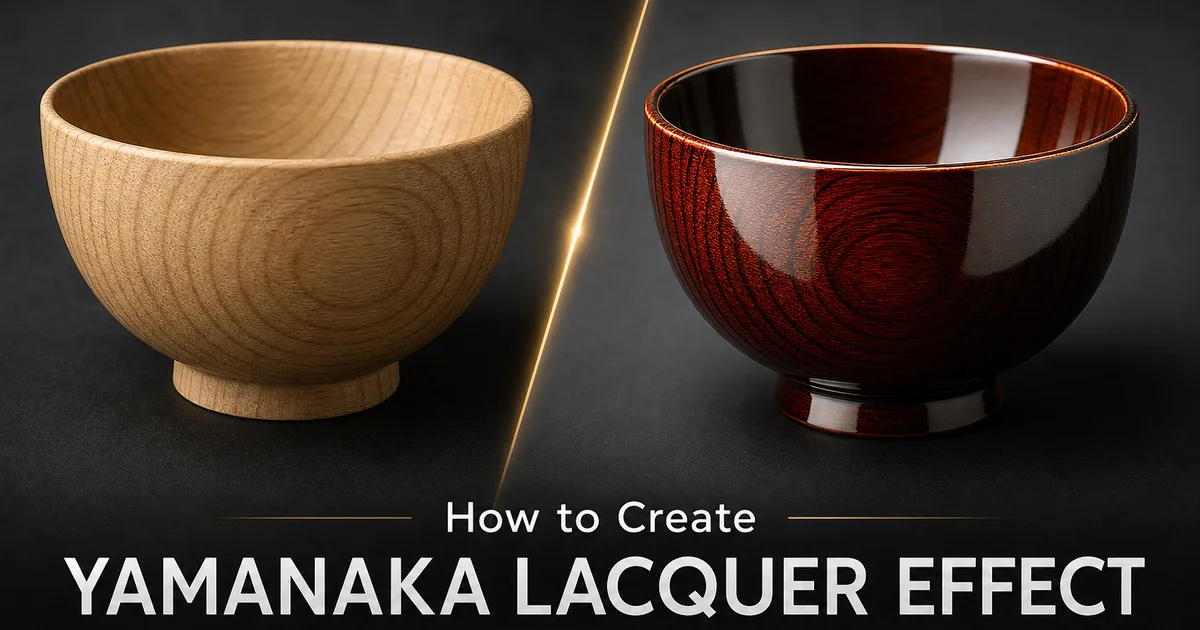
يتميّز لاكر ياماناكا من منطقة كاغا في محافظة إيشيكاوا بإظهار الخشب المخروط بدلاً من إخفائه. الجمال يأتي من تفاعل عروق الخشب والمنحنيات وطبقات اليوروشي الشفافة.
يساعد AI Filter على محاكاة التفاف العروق حول الأوعية والأكواب والأسطح المنحنية، لذلك يبدو التأثير أعمق من مجرد نسيج خشب لامع فوق الصورة.
ابدأ بصورة ذات أشكال منحنية، اختر معالجة tame-nuri أو kiji-tame أو kasane-nuri أو maki-e، ثم استخدم AI Enhance لتحسين وضوح العروق وعمق اللاكر واللمعان الدافئ.
- AI keeps the Yamanaka focus on visible turned wood grain beneath translucent lacquer.
- Presets cover tame-nuri, kiji-tame, kasane-nuri, and maki-e decoration on curved forms.
- Grain behavior follows rounded surfaces instead of sitting as a flat texture overlay.
- Wood options reference zelkova, cherry, horse chestnut, and castor aralia characteristics.
- AI Enhance refines grain clarity, lacquer depth, warm gloss, and final export detail.
الفرق عن تراكب نسيج الخشب
A flat wood overlay repeats a pattern on top of the image. The Yamanaka workflow asks the AI to treat grain, curved form, and translucent urushi as one material system, so the surface keeps believable depth.
- Use photos with clear form and avoid busy backgrounds.
- Keep lacquer transparent enough for the grain to remain visible.
اختيار تشطيب ياماناكا
Use tame-nuri for clear amber depth, kiji-tame for a restrained raw-wood look, kasane-nuri for tinted translucent color, and maki-e when gold or silver decoration should follow the curve.
- Match the finish to the subject shape.
- Avoid over-polishing until the image loses wood character.
أنواع الخشب ورسم العروق
Zelkova gives bold contrast, cherry gives quieter warmth, horse chestnut can show a shimmering figure, and castor aralia offers lighter linear grain. These choices guide how strongly the AI should render texture and color.
- Increase grain only where the form can support it.
- Use AI Enhance after the style pass, not before.
الاستخدامات الإبداعية والمراجعة النهائية
The effect works for product mockups, interior mood boards, craft education, and cultural visual experiments. Compare the export with documented Yamanaka examples so the result remains inspired by the craft rather than a generic glossy wood filter.
- Check that curved surfaces and highlights agree.
- Export at full resolution for comparison and iteration.
How to do it
- 1
Upload your photo and assess its suitability for woodturning lacquer aesthetics
Open your image in AI Filter and evaluate how its composition maps to the visual language of Yamanaka lacquerware. Yamanaka — one of the three great lacquer production centers of the Kaga region in Ishikawa Prefecture — is uniquely distinguished among Japanese lacquer traditions by its emphasis on woodturning (rokuro) as the primary shaping technique, producing elegant curved forms that celebrate the beauty of turned wood grain beneath translucent lacquer coatings. Images with flowing curves, organic shapes, and subjects that translate naturally into the vocabulary of turned vessels work most well with the Yamanaka aesthetic.
- 2
Select a Yamanaka woodturning style and configure grain visibility parameters
Choose from presets mimicking the major Yamanaka finishing traditions. Tame-nuri (transparent lacquer revealing the full beauty of the turned wood grain), kasane-nuri (layered colored lacquer with grain partially visible through translucent upper layers), kiji-tame (wood-base transparent finish that maximizes the raw turned-wood aesthetic with minimal lacquer intervention), and maki-e decorated styles where gold or silver powder designs are applied over the lacquered turned surface. Each preset configures lacquer transparency, grain visibility, surface curvature emphasis, and the distinctive lathe marks that identify woodturned forms.
- 3
Adjust grain rendering, lacquer translucency, and curved surface behavior
Fine-tune the simulation of how wood grain, lacquer coating, and turned-surface geometry interact optically. Yamanaka lacquerware's distinctive character arises from the dialogue between the organic patterns of wood grain. Annual growth rings, medullary rays, figure and chatoyance — and the refined curved forms created by the woodturner's lathe. The AI renders this interaction with sliders for grain prominence, lacquer translucency depth, the way light wraps around curved turned surfaces. The subtle tool marks where the turner's chisel shaped the rotating wood blank on the lathe.
- 4
Use AI Enhance to refine wood grain clarity, lacquer depth, and turning marks
Run AI Enhance to sharpen the visual dialogue between wood grain pattern and lacquered surface form. For tame-nuri and kiji-tame transparent styles, the boost accentuates the three-dimensional quality of the grain as it follows the curvature of the turned vessel. The way annual rings appear to curve and compress around the shoulder of a bowl or expand across the interior surface. For decorated styles, the boost brings out the contrast between flat maki-e gold patterns and the curved lacquered ground beneath, reproducing the visual tension between two-dimensional design and three-dimensional form.
- 5
Export and compare against documented examples of Yamanaka lacquerware
Save the completed image at full resolution and compare it with photographs of documented Yamanaka lacquerware from the Yamanaka Lacquerware Museum, the Ishikawa Prefectural Museum of Art, and the Japan Folk Crafts Museum. Verify that the wood grain rendering is consistent with species actually used in Yamanaka production. Zelkova, cherry, horse chestnut, and castor aralia — that the turned forms follow the conventions of functional lacquerware vessels, and that the lacquer coating behavior respects the physical properties of urushi on curved wooden surfaces.
المصادر
- Yamanaka Lacquerware: The Art of Woodturning and Urushi in Kaga — Yamanaka Lacquerware Cooperative Association
- Wood Grain and Lacquer: Material Interaction in Japanese Turned Lacquerware — Studies in Conservation — International Institute for Conservation
- Traditional Woodturning Techniques of the Kaga Region — Association for the Promotion of Traditional Craft Industries