
تحرير الصور بالذكاء الاصطناعي لعلماء الرخويات — Magic Eraser
كيف يستخدم علماء الرخويات تحرير الصور بالذكاء الاصطناعي لسجلات عينات الرخويات وتصوير الأصداف والمنشورات التصنيفية. نظّف الخلفيات وحسّن التفاصيل الدقيقة وأنشئ لوحات صور جاهزة للنشر.

Content Lead
مراجعة بواسطة Magic Eraser Editorial ·
جدول المحتويات
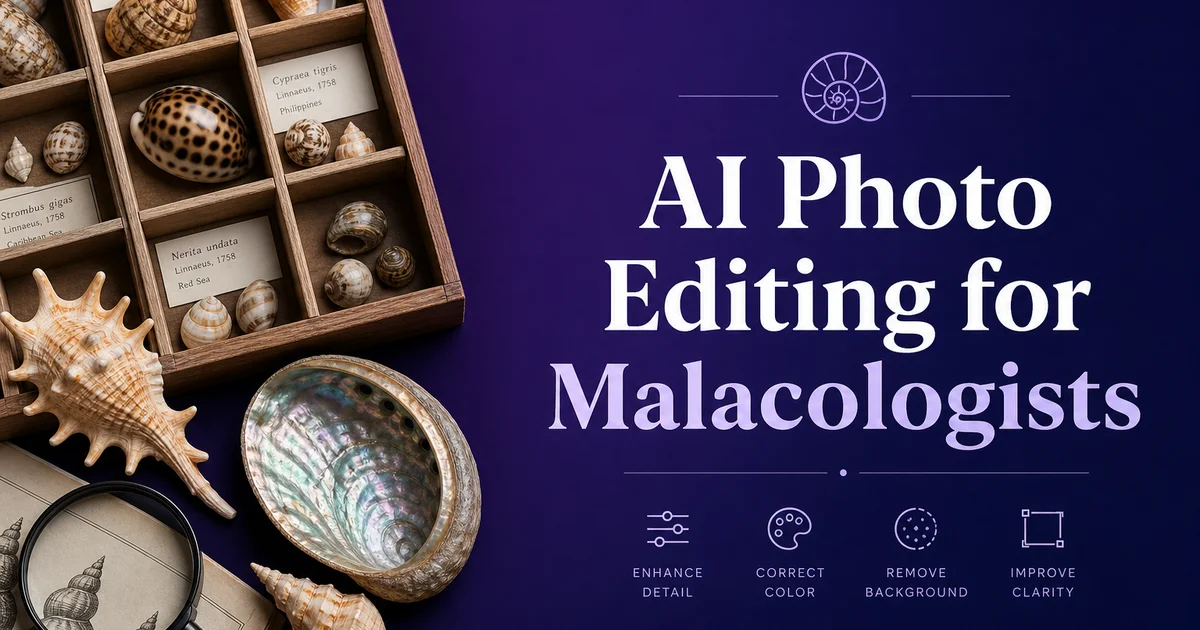
يعتمد علم الرخويات — دراسة الرخويات — اعتمادًا كبيرًا على السجلات البصرية في كل مرحلة من مراحل البحث، من الجمع الميداني إلى تحديد العينات والوصف التصنيفي والنشر. وسواء كان تصوير بزاقة بحرية جُمعت حديثًا في الميدان، أو توثيق شكل فتحة صدفة عينة نمطية في مجموعة متحفية، أو إعداد لوحات أشكال لوصف نوع في Journal of Molluscan Studies، فإن جودة تصوير العينات تؤثر مباشرة في القيمة العلمية للعمل وقابلية تكراره. فالصور الرديئة تحجب السمات التشخيصية، وتخلق غموضًا في تحديد الأنواع، وتقوّض فائدة الأوصاف المنشورة.
التحديات التصويرية في علم الرخويات كبيرة ونوعية. تتراوح أصداف الرخويات من حلزونات دقيقة دون المليمتر إلى محار عملاق بطول متر، مما يستلزم إعدادات تصوير شديدة الاختلاف. غالبًا ما تكون أسطح الأصداف شديدة الانعكاس أو شبه شفافة، مما يخلق وهجًا مرآويًا ومشكلات في التعريض. والأنماط اللونية البالغة الأهمية للتحديد — الأشرطة الحلزونية، الألسنة المحورية، تلوّن الطبقة القرنية — قد تكون شديدة الدقة. ويحدث التصوير الميداني في بيئات صعبة: صخور المد والجزر عند انخفاض المد، سفن البحث في أعماق البحار، الغابات المدارية ذات الضوء المرقّط، أو أدراج المجموعات المتحفية تحت إضاءة اصطناعية مختلطة.
تعالج أدوات تحرير الصور بالذكاء الاصطناعي هذه التحديات بأتمتة خطوات المعالجة اللاحقة المستهلكة للوقت التي تقف بين صور العينات الخام والصور بجودة النشر. فإزالة الخلفية تعزل العينات عن البيئات الميدانية والمختبرية المزدحمة. وتعزيز التفاصيل يستعيد السمات النحتية الدقيقة التي تكافح الكاميرات لالتقاطها. وتصحيح الألوان يوحّد الصور المُلتقطة تحت ظروف إضاءة شديدة التباين. وبالنسبة لعلماء الرخويات الذين قد يصورون مئات العينات خلال جمعة واحدة أو زيارة متحفية، تحوّل المعالجة الدُّفعية بالذكاء الاصطناعي ما كان سابقًا أيامًا من العمل على Photoshop إلى ساعات من الإخراج الكفء والموحّد.
- تعزل إزالة الخلفية عينات الرخويات عن مواقع الجمع الميداني وطاولات المختبر وأدراج المتاحف للحصول على صور نشر نظيفة.
- يستعيد التعزيز بالذكاء الاصطناعي الأضلاع الحلزونية الدقيقة والنحت المحوري وخطوط النمو وأنماط الأشرطة اللونية البالغة الأهمية لتحديد الأنواع.
- يزيل Magic Eraser الرواسب الملتصقة والكائنات المتطفّلة وآثار التحضير دون المخاطرة بإلحاق ضرر مادي بالعينات الهشة.
- تضمن المعالجة الدُّفعية الموحّدة جودة صورة متسقة عبر مئات العينات المصورة خلال حملات الجمع.
- تلبي صادرات الجاهزة للنشر بدقة 300 نقطة لكل بوصة مع ملفات تعريف ألوان مضمَّنة معايير التقديم للمجلات للأوصاف التصنيفية.
تحديات التصوير الميداني والحلول المدعومة بالذكاء الاصطناعي
يتطلب علم الرخويات الميداني التصوير في ظروف معادية لجودة الصورة. يحدث الجمع في منطقة المد والجزر خلال نوافذ ضيقة من انخفاض المد تكون فيها السرعة هي المفتاح. ولا يوجد وقت لإعداد منظومات إضاءة معقدة عندما يرتفع المد ويجب توثيق العينات قبل جمعها. وتصل عينات أعماق البحار إلى سطح السفينة بحالات حفظ متفاوتة، محاطة غالبًا بالرواسب والكائنات الأخرى ومعدات السفينة. وتتعامل مسوحات الحلزونات البرية في الغابات المدارية مع الضوء المرقّط والرطوبة العالية التي تضبّب العدسات. عينات على ركائز معقّدة بصريًا مثل فُتات الأوراق واللحاء والطحالب تجعل عزل الكائن بصريًا شبه مستحيل.
تحوّل إزالة الخلفية بالذكاء الاصطناعي هذه الصور الميدانية الصعبة إلى سجلات علمية قابلة للاستخدام. فالبزاقة البحرية المصورة على شعاب مرجانية زاهية يمكن عزلها بنظافة عن خلفية الشعاب، مع الحفاظ على النمط اللوني وشكل جسم الكائن وإزالة الضوضاء البصرية التي تجعل الصورة غير صالحة لوصف نوع. والحلزون البري المصور على لحاء مغطى بالأشنة يمكن فصله عن الركيزة مع بقاء نحت الصدفة والطبقة القرنية سليمَين. ويتعامل الذكاء الاصطناعي مع الحواف المعقدة — السرّاتا المهدّبة للبزاقات البحرية، الشفة الرقيقة لفتحة بطنية القدم، حواف الأصداف شبه الشفافة — التي تستلزم تقنيعًا يدويًا شاقًا.
يكتسي تصحيح الألوان أهمية مماثلة للصور الميدانية. فالنوع نفسه المصوَّر على عمق مترين مقابل عشرة أمتار سيبدو مختلفًا تمامًا بسبب الامتصاص الانتقائي لأطوال موجات الضوء بواسطة الماء. وتبدو البزاقة البحرية الحمراء على عمق عشرة أمتار رمادية بنّية دون ضوء اصطناعي. ويستطيع تصحيح الألوان بالذكاء الاصطناعي تعويض انزياحات اللون تحت الماء، والإضاءة المختلطة في المجموعات المتحفية. وتوازن اللون الأبيض المتغير للتصوير الميداني، منتجًا سجلات لونية موحّدة تتيح مقارنة ذات معنى بين العينات المصورة تحت ظروف مختلفة.
- تخلق بيئات منطقة المد والجزر والأعماق البحرية والغابات المدارية تحديات في الإضاءة والخلفية تحلها المعالجة اللاحقة بالذكاء الاصطناعي بكفاءة.
- تتعامل إزالة الخلفية مع الحواف العضوية المعقدة — سرّاتا البزاقات البحرية، شفاه الفتحة الرقيقة، وحواف الأصداف شبه الشفافة — التي تستلزم تقنيعًا يدويًا واسعًا.
- يعوّض تصحيح الألوان تحت الماء امتصاص الضوء المعتمد على العمق الذي يبعد ألوان العينات عن مظهرها الحقيقي.
- تتيح معالجة الألوان الموحّدة مقارنات ذات معنى بين العينات المصورة تحت ظروف ميدانية شديدة التباين.
تحسين السمات التشخيصية للعمل التصنيفي
يعتمد التحديد والوصف التصنيفي للرخويات على سمات بصرية كثيرًا ما تكون دقيقة وصعبة التصوير. فقد تتميّز أصداف بطنية القدم بعدد الحبال الحلزونية والمسافات بينها، ووجود أو غياب الأضلاع المحورية في لفّات محددة، وملمس الشفة العمودية، أو شكل القناة السيفونية. ويتطلب تحديد ذوات المصراعين سجلات واضحة لأسنان المفصل وشكل الجيب الردائي والنحت الخارجي. وتعتمد تصنيفية رأسيات القدم على ترتيب ممصّات الأذرع وأنماط الخلايا الصبغية وشكل القلم. ويُقاس كثير من هذه السمات بأجزاء من المليمتر ويتطلب تصويرًا ماكرويًا حادًا وجيد التعريض لتوثيقه بشكل كافٍ.
تستعيد أدوات التعزيز بالذكاء الاصطناعي التفاصيل التي التقطتها الصورة الأصلية لكنها تبدو مسطحة أو غير واضحة عند تكبير المشاهدة العادي. فالخيوط الحلزونية الدقيقة على سطح صدفة لامعة تصبح مرئية حين يُعزَّز التباين المحلي دون إفراط في الحدّة. وأنماط خطوط النمو على أصداف ذوات المصراعين. البالغة الأهمية لتقدير العمر ودراسات التجمعات — تبرز مما بدا سطحًا أملس. والنحت المجهري على الصدفة الأولية (الصدفة اليرقية) الذي يميّز أنماط التطور في بطنية القدم يصبح قابلًا للقراءة. وهذه القدرات على التعزيز لا تضيف معلومات لم تكن في الصورة الأصلية. بل تجعل التفصيل الملتقَط أصلًا أكثر وضوحًا وأكثر فائدة تصويريًا.
بالنسبة لسجلات العينات النمطية، حيث تصبح الصور المرجع البصري الدائم لنوع ما، تكتسي جودة التعزيز أهمية خاصة. فصور العينات النمطية يرجع إليها باحثون من شتى أنحاء العالم لعقود بعد النشر. والصورة المعزَّزة التي تُظهر بوضوح السمات التشخيصية الموصوفة في النص تقلل من حاجة الباحثين المستقبليين إلى السفر إلى مستودع النمط لفحص العينة فحصًا ماديًا. وهذا قيّم بوجه خاص للمادة النمطية الهشة أو المتدهورة التي لا تتحمل المناولة المتكررة. وللعينات النمطية المحفوظة في مؤسسات نائية يصعب على الباحثين الدوليين الوصول إليها.
- يكشف التعزيز بالذكاء الاصطناعي الحبال الحلزونية الدقيقة والأضلاع المحورية وأسنان المفصل والنحت المجهري البالغة الأهمية لتحديد الأنواع ووصفها.
- تبرز أنماط خطوط النمو على أصداف ذوات المصراعين من أسطح تبدو ملساء، مما يدعم تقدير العمر ودراسات التجمعات.
- يصبح النحت المجهري للصدفة الأولية الذي يميّز أنماط التطور اليرقي قابلًا للقراءة عند تكبير النشر.
- تقلل صور العينات النمطية عالية الجودة من حاجة الباحثين إلى السفر إلى المستودعات لفحص المادة الهشة فحصًا ماديًا.
إعداد لوحات النشر ومعايير الأرشيف الرقمي
للمجلات التصنيفية متطلبات محددة للوحات الأشكال تساعد أدوات التحرير بالذكاء الاصطناعي علماء الرخويات على تلبيتها بكفاءة. فمجلة Journal of Molluscan Studies وZootaxa وThe Veliger. وMalacologia تحدد كل منها متطلبات الدقة وصيغ الملفات والأبعاد القصوى وإرشادات ترتيب الأشكال. وتتضمن لوحة وصف النوع النموذجية مناظر ظهرية وبطنية. ومنظرًا جانبيًا للصدفة بتكبير موحّد، ولقطات مقرّبة لسمات تشخيصية مثل الفتحة والصدفة الأولية، وشريط قياس. وكان إعداد هذه اللوحات في الماضي يستلزم ساعات من القص والتحجيم والترتيب الدقيق في برامج تحرير الصور.
تبسّط المعالجة الدُّفعية بالذكاء الاصطناعي إعداد اللوحات بتطبيق إزالة خلفية وتعزيز متسقين. والتحجيم عبر جميع الصور في سلسلة عينة. فعند توثيق نوع جديد، قد يصوّر عالم الرخويات النمط الكلي من ست زوايا، وخمسة نماذج مساعدة من ثلاث زوايا لكل منها، ولقطات تفصيلية للمبرد والغطاء والتشريح الرخو. وهي بسهولة أربعون إلى خمسون صورة منفردة تحتاج جميعها إلى معالجة متطابقة. وتطبق أدوات الذكاء الاصطناعي المعالجة نفسها للخلفية والتباين. واللون على الدُّفعة بأكملها، مما يضمن اتساقًا بصريًا عبر اللوحة مع الحفاظ على التباين الفردي بين العينات المفيد علميًا.
تتطلب معايير الأرشفة الرقمية لمجموعات التاريخ الطبيعي على نحو متزايد تصويرًا موحّدًا إلى جانب الحفظ التقليدي للعينات. فمؤسسات مثل سميثسونيان ومتحف التاريخ الطبيعي بلندن. ومتحف Museum National d'Histoire Naturelle بباريس تبني قواعد بيانات رقمية كاملة لمجموعاتها من الرخويات. وتتيح أدوات التحرير بالذكاء الاصطناعي المعالجة عالية الإنتاجية اللازمة لرقمنة مجموعات تحوي ملايين العينات، منتجةً صورًا منسّقة ومعرّضة بشكل صحيح دائمًا. مع بيانات وصفية مضمَّنة تشمل موقع الجمع والتاريخ وأرقام الفهرسة.
- تطبق المعالجة الدُّفعية بالذكاء الاصطناعي خلفيات وتعزيزًا وتحجيمًا متسقًا عبر سلاسل تصوير العينات متعددة الزوايا للوحات المجلات.
- تحقق لوحات وصف الأنواع التي تضم أربعين إلى خمسين صورة اتساقًا بصريًا مع الحفاظ على التباين الفردي للعينات المفيد علميًا.
- تتطلب الأرشفة الرقمية الموحّدة لمجموعات التاريخ الطبيعي المعالجة عالية الإنتاجية التي تتيحها أدوات الذكاء الاصطناعي على النطاق المؤسسي.
- تتكامل البيانات الوصفية المضمَّنة التي تشمل موقع الجمع والتاريخ وأرقام الفهرسة مع أنظمة قواعد البيانات المؤسسية لإتاحة الوصول على المدى الطويل.
العلم المواطني والتصوير التوعوي
يعتمد علم الرخويات على نحو متزايد على منصات العلوم التشاركية مثل iNaturalist. فالطبيعيون الهواة يسهمون بملايين الملاحظات عن الرخويات التي يستخدمها الباحثون الخبراء لرسم خرائط التوزيع ودراسات الفينولوجيا ورصد الأنواع الغازية. وتحدد جودة صور العلوم التشاركية مباشرة ما إذا كان يمكن تحديد الملاحظات إلى مستوى النوع. فالصورة الضبابية رديئة الإضاءة لحلزون على ورقة تضيف قيمة علمية ضئيلة، في حين أن صورة واضحة جيدة التكوين تُظهر السمات التشخيصية الرئيسية يمكن أن يتحقق منها الخبراء وتُدمَج في مجموعات بيانات البحث. وتساعد أدوات تحرير الصور بالذكاء الاصطناعي العلماء المواطنين على تحسين مساهماتهم دون الحاجة إلى مهارات تصوير احترافية.
بالنسبة للتوعية والتثقيف في علم الرخويات، يجعل التصوير المعزَّز بالذكاء الاصطناعي تنوع الرخويات جذابًا بصريًا لجمهور قد يجد الأصداف والبزاقات غير مثيرة للاهتمام لولا ذلك. فلوحة عرض متحفية تُظهر صورة منظّفة ومعزّزة التفاصيل للنمط اللوني المعقّد لصدفة مخروطية أو لطبقة الصدف القزحية لأذن البحر تنقل جمال الرخويات وتنوعها بفعالية تفوق كثيرًا صورة ميدانية خام. وتستفيد مواد التواصل العلمي والملصقات التعليمية ومحتوى وسائل التواصل الاجتماعي جميعها من صور بجودة احترافية تلتقط الصفات الجمالية المغفلة غالبًا لثاني أكبر شُعَب الحيوان في العالم.
يمثّل رصد الأنواع الغازية تطبيقًا بالغ الأهمية على نحو خاص. فحين يحتاج الباحثون إلى توثيق ومشاركة مظهر رخوي غازٍ بسرعة. مثل الحلزون الأفريقي العملاق، أو حلزون الطين النيوزيلندي، أو المحار الآسيوي — تسرّع صور التحديد الواضحة الموحّدة الكشف والاستجابة. وتستطيع أدوات الذكاء الاصطناعي أن تنتج بسرعة صورًا مرجعية نظيفة وجيدة التعزيز يمكن للعاملين الميدانيين ومفتشي الجمارك. والعلماء المواطنين مقارنتها بملاحظاتهم الخاصة لتأكيد تحديد نوع غازٍ أو نفيه.
- يساعد تحرير الصور بالذكاء الاصطناعي العلماء المواطنين على إنتاج ملاحظات قابلة للتحديد على منصات مثل iNaturalist تسهم في مجموعات بيانات البحث الاحترافية.
- ينقل تصوير الرخويات المعزَّز التفاصيل التنوع الأحيائي والصفات الجمالية بفعالية للمعارض المتحفية والتواصل العلمي.
- يعتمد رصد الأنواع الغازية على صور مرجعية واضحة وموحّدة تنتجها أدوات الذكاء الاصطناعي بسرعة لأدلة التحديد الميدانية.
- يبني تصوير التوعية الذي يبرز أنماط الأصداف وقزحية الصدف وتنوع الألوان تفاعل الجمهور مع أبحاث علم الرخويات.
How to do it
- 1
Photograph mollusk specimens with standardized lighting and scale references
Set up a consistent photography station with diffused overhead lighting and a neutral gray or black background. Include a millimeter scale bar in every frame for size reference. Photograph each specimen from dorsal, ventral, and lateral views to document shell morphology comprehensively. Use a macro lens or extension tubes for small gastropods and bivalves to capture aperture details, sculpture patterns, and periostracum texture.
- 2
Remove field backgrounds and isolate specimens for publication
Use Background Eraser to isolate mollusk specimens from field collection backgrounds. Sandy beaches, rocky intertidal zones, leaf litter, or lab benches. Place specimens on a clean, uniform background that meets journal publication standards. This is mainly important for type specimen records where the background must not distract from diagnostic morphological features.
- 3
Enhance fine sculptural details and color patterns on shells
Use AI Enhance to bring out the fine spiral ribs, axial sculpture, growth lines. Color banding patterns that are critical for species identification. Many shell features are subtle — thin spiral threads, microscopic pustules, or faint color bands — and standard photography often fails to capture them with enough clarity. Enhanced detail makes these diagnostic features visible in both digital archives and printed publications.
- 4
Remove unwanted debris and specimen preparation artifacts
Use Magic Eraser to remove adhering sediment, epibionts, barnacles, or preparation residue that obscures shell surface features without physically cleaning the specimen and risking damage. This is mainly valuable for fragile or historically major specimens where physical cleaning could destroy periostracum or original surface coloration that carries taxonomic information.
- 5
Prepare standardized image plates for journal submission and digital archives
Arrange multiple specimen views into publication-ready figure plates with consistent sizing, spacing, and labeling. Export at the resolution required by target journals. Often 300 DPI at print size — with embedded color profiles for accurate reproduction. Archive originals alongside edited versions in institutional databases to maintain a complete records chain from field collection through publication.
المصادر
- Best Practices for Photographing Mollusk Specimens — Smithsonian National Museum of Natural History
- Standards for Digital Imaging of Biological Specimens — Biodiversity Information Standards (TDWG)
- Shell Photography Techniques for Taxonomic Documentation — Journal of Molluscan Studies