
Edición de fotos con IA para lepidopterólogos — Magic Eraser
Cómo los lepidopterólogos usan la edición de fotos con IA para registros de especímenes de mariposas y polillas, análisis de patrones de alas y publicaciones de investigación. Mejore detalles de escamas, elimine fondos y cree láminas de figuras listas para publicación para trabajo taxonómico.

Content Lead
Revisado por Magic Eraser Editorial ·
Índice
- Fotografía de patrones de alas y el doble desafío del color pigmentario y estructural
- Mejorar elementos de patrón diagnósticamente críticos para la identificación
- Digitalización de colecciones y documentación de biodiversidad a gran escala
- Ciencia ciudadana, guías de campo y participación pública en lepidopterología
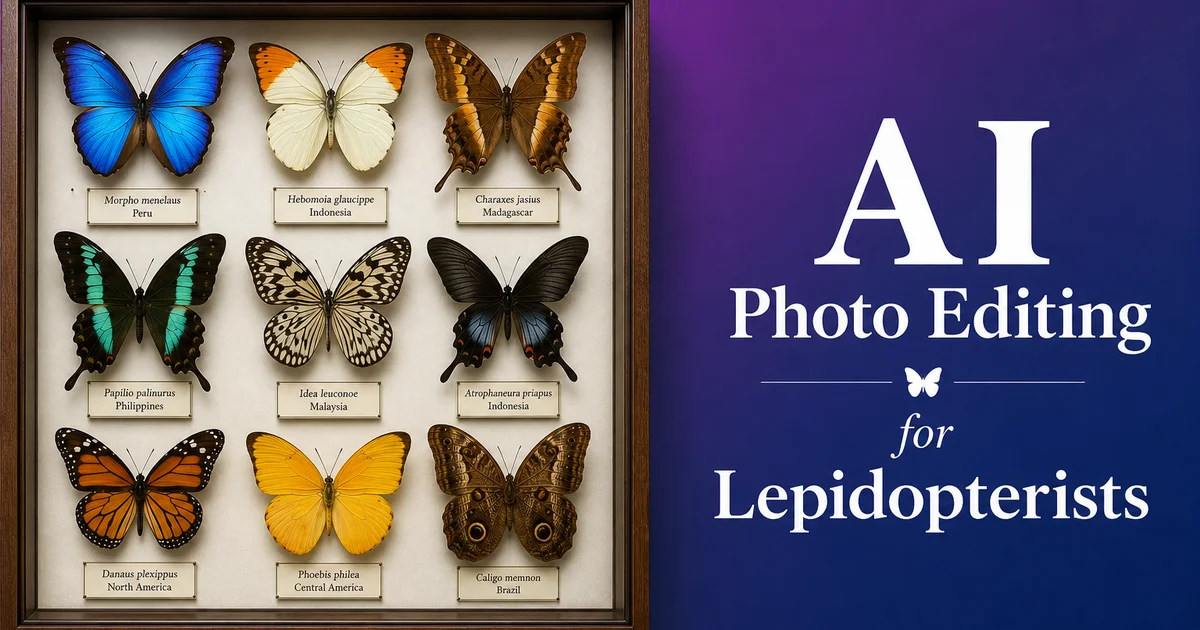
La lepidopterología — el estudio de las mariposas y polillas, el orden de insectos Lepidoptera que comprende más de 180.000 especies descritas — depende de fotografía de especímenes de alta calidad para la taxonomía, la genética de poblaciones, la investigación del mimetismo y el monitoreo ecológico. También la enorme comunidad de ciencia ciudadana que aporta millones de observaciones anuales a las bases de datos de biodiversidad de todo el mundo. Los patrones alares son la principal característica visual usada para la identificación de especies en la mayoría de las familias de lepidópteros. Estos patrones codifican información sobre genética, ecología, relaciones de mimetismo e historia evolutiva que los investigadores extraen tanto mediante inspección visual como, cada vez más, mediante análisis computacional de imágenes.
Los desafíos fotográficos en lepidopterología se centran en las propiedades ópticas únicas de las alas de mariposas y polillas. El color de las alas surge de dos mecanismos esencialmente distintos. El color pigmentario procedente de compuestos químicos absorbidos en escamas individuales, y el color estructural procedente de estructuras físicas a escala nanométrica que interfieren con las longitudes de onda de la luz para producir azules, verdes iridiscentes y señales ultravioletas. Estos dos sistemas de color se comportan de forma diferente bajo distintas condiciones de iluminación. Captar ambos con precisión en una sola fotografía exige un control cuidadoso del ángulo de iluminación, la difusión y la exposición. Además, el detalle fino de los patrones alares. Donde las escamas individuales suelen medir de cincuenta a doscientos micrómetros de ancho — exige macrofotografía con enfoque preciso y suficiente profundidad de campo para cubrir la superficie alar ligeramente curvada.
Las herramientas de edición fotográfica con IA abordan estos desafíos automatizando los pasos de posprocesamiento que transforman las fotografías de especímenes en bruto en imágenes científicamente utilizables. La eliminación de fondo aísla los especímenes de los materiales de preparación y los entornos de campo para un análisis limpio. La mejora del detalle recupera la estructura fina de las escamas y los límites del patrón que guían la identificación y la clasificación. El procesamiento por lotes estandariza imágenes a lo largo de grandes proyectos de digitalización de colecciones donde miles de especímenes deben fotografiarse bajo condiciones variables. Para los lepidopterólogos que equilibran trabajo de campo, curaduría, análisis molecular y plazos de publicación, el procesamiento eficiente de imágenes es una infraestructura clave para una investigación productiva.
- La eliminación de fondo aísla los especímenes de los tableros de alfilerado, los bloques de extensión y la vegetación de campo para un análisis limpio del patrón alar y una clasificación computacional.
- AI Enhance afina el detalle fino del patrón — filas de escamas individuales, límites de los anillos de los ocelos e iridiscencia del color estructural — crucial para la identificación de especies.
- Magic Eraser elimina alfileres entomológicos, etiquetas de datos y materiales de preparación sin alterar los patrones alares ni la morfología corporal importantes para el diagnóstico.
- El procesamiento por lotes estandariza imágenes a lo largo de proyectos de digitalización de colecciones donde miles de especímenes se fotografiaron bajo condiciones de iluminación variables.
- Las exportaciones listas para publicación a 300 DPI con orientación y escala coherentes cumplen los requisitos de las revistas para descripciones taxonómicas y láminas comparativas.
Fotografía de patrones de alas y el doble desafío del color pigmentario y estructural
La complejidad visual de los patrones alares de los lepidópteros surge de la interacción de dos mecanismos de producción de color esencialmente distintos que operan a la escala de las escamas alares individuales. Los colores pigmentarios — los rojos, naranjas, amarillos, marrones. Los negros producidos por melaninas, omocromos, pterinas y flavonoides incorporados químicamente en las escamas — se comportan de forma predecible bajo luz difusa y se captan de manera fiable mediante técnicas fotográficas estándar. Los colores estructurales — los azules, verdes brillantes. Los efectos iridiscentes producidos por estructuras de cristal fotónico a escala nanométrica, la interferencia de capas finas multicapa y las rejillas de difracción dentro de la arquitectura de la escama — dependen del ángulo de visión y pueden verse muy distintos bajo diferentes geometrías de iluminación.
Este sistema de color doble crea un dilema práctico para los fotógrafos de especímenes. La luz difusa que ilumina uniformemente los colores pigmentarios puede desvanecer los colores estructurales al promediar su dependencia angular. La luz direccional que capta todo el brillo del azul Morpho o el lustre metálico de una polilla del atardecer puede crear una iluminación desigual sobre los elementos del patrón pigmentario. La configuración óptima usa una combinación de luz difusa y direccional controlada. Ni siquiera la mejor iluminación física puede mostrar simultáneamente todos los ángulos de visión de una superficie de color estructural. AI Enhance aborda esto procesando selectivamente diferentes regiones de color. Realza las zonas iridiscentes para mostrar su máximo brillo mientras mantiene una reproducción fiel de los elementos pigmentarios en la misma superficie alar.
Para el trabajo taxonómico, la reproducción fiel del color no es meramente estética sino diagnósticamente crucial. Especies estrechamente emparentadas pueden diferir solo en el matiz de naranja del ala posterior, el ancho de un borde melánico o el tono preciso de la iridiscencia estructural del ala anterior dorsal. La corrección de color por IA, calibrada respecto a la tarjeta de referencia incluida en cada fotografía, garantiza que estas sutiles diferencias de color se conserven con fidelidad entre imágenes tomadas bajo distintas configuraciones de iluminación, en distintas instituciones o en distintos días durante una larga campaña de digitalización. Esta coherencia es clave al comparar especímenes de distintas colecciones para evaluar la variación geográfica o resolver cuestiones taxonómicas.
- Los colores pigmentarios procedentes de melaninas y pterinas se comportan de forma predecible bajo luz difusa, mientras que los colores estructurales procedentes de cristales fotónicos a escala nanométrica dependen del ángulo de iluminación.
- La IA realza de forma selectiva las regiones iridiscentes y pigmentarias de manera diferente, mostrando el brillo del color estructural mientras mantiene una reproducción pigmentaria fiel en la misma ala.
- La identificación taxonómica puede depender de sutiles diferencias de color — un matiz de naranja, un ancho de borde — que exigen una reproducción calibrada y coherente entre sesiones de captura de imágenes.
- La calibración mediante tarjeta de referencia con IA garantiza la precisión diagnóstica del color entre especímenes fotografiados en distintas instituciones con distintos equipos de iluminación.
Mejorar elementos de patrón diagnósticamente críticos para la identificación
La identificación de mariposas y polillas depende de elementos específicos del patrón alar que deben ser claramente visibles en las fotografías para que el trabajo tenga valor científico. Los ocelos — los patrones de anillos concéntricos presentes en muchas mariposas ninfálidas — son estructuras complejas donde el número de anillos, sus anchos relativos, los colores de cada anillo. La presencia o ausencia de una pupila central son todos informativos taxonómicamente. En muchas mariposas satirinas, la identificación a nivel de especie depende del número, el tamaño. La disposición de los ocelos ventrales del ala posterior, y las sutiles diferencias en estos parámetros separan especies que de otro modo son muy similares. AI Enhance, que aumenta el contraste local y la nitidez en estos finos elementos del patrón, hace posible la identificación a partir de fotografías que, sin procesar, exigirían un examen físico del espécimen bajo aumento.
Los genitales de los lepidópteros son el árbitro último de la identidad de la especie en muchos grupos taxonómicamente difíciles. La disección de los genitales es destructiva y consume tiempo. Los elementos del patrón alar que se correlacionan con la identidad de la especie. Incluyendo la forma y extensión de las manchas androconiales en los machos, el patrón de la venación alar visible a través de zonas alares transparentes o ligeramente escamadas, y la geometría precisa de los límites de los elementos del patrón — aportan evidencia de identificación no destructiva cuando se captan con suficiente resolución y claridad. AI Enhance recupera estos rasgos a partir de macrofotografías estándar, reduciendo la necesidad de disección destructiva de genitales en el trabajo rutinario de identificación y preservando los especímenes para futura extracción de ADN.
Para la identificación de polillas, los desafíos se multiplican porque muchas familias de polillas contienen miles de especies con patrones alares superficialmente similares donde la identificación depende de combinaciones de rasgos sutiles. El ángulo exacto de una línea transversal sobre el ala anterior, la presencia de una diminuta mancha discal o el patrón festoneado del margen del ala posterior. Las polillas recolectadas de noche y fotografiadas en trampas de luz pueden estar parcialmente desgastadas, cubiertas de rocío o polvo, o posicionadas en ángulos subóptimos. AI Enhance y las herramientas de corrección de perspectiva ayudan a recuperar rasgos diagnósticos de estas fotografías de campo imperfectas, ampliando la utilidad de identificación de imágenes que de otro modo solo servirían para registros de presencia sin determinación a nivel de especie.
- Los parámetros de los ocelos — número de anillos, anchos, colores y presencia de pupila — separan especies en muchas mariposas satirinas y exigen mayor claridad para la identificación fotográfica.
- La identificación no destructiva mediante rasgos alares realzados reduce la necesidad de disección de genitales y preserva los especímenes para futuro análisis de ADN.
- La identificación de polillas depende de combinaciones de rasgos sutiles — ángulos de líneas, manchas diminutas, festoneado del margen — que AI Enhance recupera de fotografías de campo imperfectas.
- El realce amplía la utilidad de identificación de las fotografías de trampas de luz, de registros de presencia a determinaciones a nivel de especie útiles en inventarios de biodiversidad.
Digitalización de colecciones y documentación de biodiversidad a gran escala
Los museos de historia natural de todo el mundo albergan una cifra estimada de cientos de millones de especímenes de lepidópteros, y el esfuerzo continuo por digitalizar estas colecciones. La creación de fotografías de alta resolución y registros de datos asociados para acceso en línea — representa uno de los mayores proyectos de documentación de la ciencia de la biodiversidad. Los flujos de trabajo de digitalización deben procesar de cientos a miles de especímenes por día para avanzar de manera significativa por colecciones acumuladas durante siglos. Cada fotografía de espécimen debe aislar el espécimen de su contexto de almacenamiento, captar los rasgos diagnósticos con suficiente resolución. Incluir metadatos que vinculen la imagen con los datos de colecta del espécimen — localidad, fecha, colector e identificación.
Las herramientas de IA aceleran enormemente los flujos de trabajo de digitalización automatizando los pasos de posprocesamiento que más tiempo consumen. La eliminación de fondo suprime el desorden visual de las bandejas, los interiores de los cajones. Los especímenes adyacentes que aparecen en montajes de fotografía de alto rendimiento donde los especímenes se fotografían in situ en lugar de retirarse y montarse uno a uno. La normalización de color y exposición compensa la deriva gradual de las condiciones de iluminación a lo largo de largas sesiones de fotografía y las diferencias entre estaciones fotográficas de distintas instituciones que participan en redes colaborativas de digitalización. La mejora del detalle garantiza que incluso las imágenes captadas rápidamente ofrezcan suficiente resolución para la identificación, reduciendo el número de especímenes que deben volver a fotografiarse.
La escala de estos esfuerzos de digitalización exige un procesamiento por lotes robusto. Un solo armario de museo puede contener dos mil especímenes, una colección puede comprender millones. Las iniciativas globales de digitalización agregan decenas de colecciones en bases de datos unificadas. La coherencia a esta escala — fondos uniformes, reproducción de color estandarizada. Calidad de detalle coherente — es lo que transforma un montón de fotografías individuales en una base de datos científica utilizable donde los investigadores pueden comparar de forma fiable especímenes entre colecciones, geografías y periodos. El procesamiento por lotes con IA es la herramienta práctica que hace alcanzable esta coherencia a los ritmos de rendimiento que exigen los cronogramas de digitalización.
- Las colecciones de museos albergan cientos de millones de especímenes de lepidópteros que requieren flujos de trabajo de digitalización de alto rendimiento capaces de procesar miles de especímenes por día.
- La eliminación de fondo por IA suprime el desorden del contexto de almacenamiento de la fotografía in situ de alto rendimiento, evitando el cuello de botella de montar individualmente cada espécimen.
- La normalización de color y exposición compensa la deriva de iluminación a lo largo de largas sesiones y las diferencias entre estaciones fotográficas de instituciones colaboradoras.
- La coherencia del procesamiento por lotes transforma fotografías individuales en bases de datos científicas utilizables donde los especímenes son comparables de forma fiable entre colecciones y geografías.
Ciencia ciudadana, guías de campo y participación pública en lepidopterología
La lepidopterología se beneficia de una de las comunidades de ciencia ciudadana más grandes y activas de la investigación en biodiversidad. Plataformas como iNaturalist, eButterfly y el proyecto británico Butterflies for the New Millennium reciben millones de observaciones de mariposas y polillas al año, muchas con fotografías que aportan datos científicos genuinos sobre distribuciones de especies, periodos de vuelo y tendencias poblacionales. La calidad de las fotografías de ciencia ciudadana determina directamente su utilidad científica. Una fotografía nítida y bien iluminada de una mariposa con detalles visibles del patrón alar puede identificarse hasta la especie y aporta un punto de datos validado, mientras que una imagen borrosa y mal iluminada de una mariposa lejana puede identificarse solo a nivel de familia, limitando su valor analítico.
Las herramientas de edición fotográfica con IA sirven tanto a los científicos ciudadanos que captan estas imágenes como a los verificadores expertos que las revisan. Para los fotógrafos que usan teléfonos inteligentes con capacidad macro limitada, AI Enhance puede afinar los detalles del patrón alar que de otro modo serían demasiado pequeños para leerse en la imagen captada. La eliminación de fondo aísla la mariposa de fondos naturales abarrotados donde los patrones ventrales crípticos se confunden con la vegetación o la corteza, haciendo visible el patrón alar completo para la identificación. Para los verificadores expertos que revisan cientos de observaciones al día, las imágenes siempre procesadas con fondos limpios y detalle realzado aumentan enormemente la velocidad y precisión de la identificación, reduciendo el cuello de botella de verificación que limita el rendimiento de los flujos de datos de ciencia ciudadana.
Las guías de campo publicadas representan otra aplicación crucial donde el procesamiento de imágenes por IA permite una calidad visual coherente a lo largo de los cientos de especies ilustradas en una guía regional. Una guía de campo completa de mariposas para un país europeo puede ilustrar cuatrocientas o más especies, cada una mostrada desde perspectivas dorsal y ventral con aumento coherente y sobre fondos uniformes. Las fotografías fuente de estas ilustraciones provienen de decenas de colaboradores que usan distintas cámaras, iluminación y fondos. El procesamiento por lotes con IA — eliminación de fondo, normalización de color, ajuste de exposición. Mejora del detalle — transforma esta colección heterogénea en el conjunto de imágenes visualmente coherente y de alta calidad que hace funcionar una guía de campo como herramienta de identificación comparativa.
- Las plataformas de ciencia ciudadana reciben millones de observaciones de lepidópteros al año donde AI Enhance y la eliminación de fondo mejoran la precisión de identificación y la utilidad científica.
- Los verificadores expertos que revisan cientos de observaciones diarias trabajan más rápido y con mayor precisión cuando las imágenes tienen fondos limpios coherentes y detalle diagnóstico realzado.
- Las guías de campo que ilustran cientos de especies requieren procesamiento por lotes con IA para transformar las fotografías heterogéneas de los colaboradores en conjuntos de imágenes comparativas visualmente coherentes.
- Las imágenes procesadas con IA sirven tanto a la documentación científica como a la divulgación pública, haciendo accesible la lepidopterología a la creciente comunidad de aficionados a las mariposas y polillas.
How to do it
- 1
Photograph specimens with standardized dorsal and ventral wing spreads
Set up a copy stand or macro photography station with diffused, even lighting from at least two opposing angles to eliminate shadows across the wing surface. Photograph each specimen from directly above in both dorsal (upper wing surface) and ventral (underside) positions using a calibrated color reference card and millimeter scale bar in every frame. For pinned museum specimens, ensure the wings are properly spread and symmetrical according to institutional standards. For field photography of live butterflies, capture dorsal and ventral views separately. Dorsals when the wings are open, ventrals when perched with wings closed.
- 2
Remove distracting backgrounds and isolate specimens for analysis
Use Background Eraser to isolate butterfly and moth specimens from pinning boards, spreading blocks, storage unit interiors. Field backgrounds like vegetation and bark. Clean background removal is key for wing pattern analysis because the algorithms and machine learning classifiers used to quantify pattern elements. Eyespots, bands, marginal spots, and discal markings — require the specimen to be isolated against a uniform background. For field photographs, background removal also eliminates the camouflage effect where cryptic ventral wing patterns blend into natural substrates, making the full pattern visible for records.
- 3
Enhance wing scale detail and structural color phenomena
Use AI Enhance to sharpen the fine-scale detail of wing patterns. Individual scale rows, the boundaries between color fields, the microstructure of eyespot rings, and the iridescent structural coloration produced by nanoscale photonic crystal structures in scales of Morpho butterflies and similar taxa. Boost is mainly valuable for worn field specimens where scale loss has partially obscured the wing pattern, making the remaining scales sharper and more readable for spotting and records purposes.
- 4
Clean up preparation artifacts and specimen damage
Use Magic Eraser to remove insect pins, data labels, spreading strips. Other preparation materials from specimen photographs without altering the wing pattern, body morphology, or antenna structure. For field photographs, remove unwanted elements like vegetation crossing the wings, other insects in the frame, and photographer shadows. For specimens with minor physical damage. Small tears, scale patches rubbed off during handling, or frass marks — carefully remove the damage artifacts to create a clean records image while noting any such changes in image metadata.
- 5
Prepare figure plates and comparative image arrays for publication
Arrange processed dorsal and ventral views into standardized figure plates with consistent magnification, orientation, and spacing for journal publication. Create comparative arrays showing sexual dimorphism, seasonal polyphenism, geographic variation, or mimicry ring members side by side at identical scale. Export at 300 DPI minimum for print publication and prepare extra web-optimized versions for online databases, citizen science platforms. Spotting guides where consistent image quality across thousands of species entries is key for usability.
Fuentes
- Photography Standards for Lepidoptera Wing Pattern Documentation — Butterflies of America Foundation
- High-Resolution Imaging Techniques for Scale Microstructure in Lepidoptera — Journal of the Royal Society Interface
- Digital Imaging Best Practices for Natural History Collections — iDigBio — Integrated Digitized Biocollections