
Edición de fotos con IA para lapidarios: Muestra gemas cortadas — Magic Eraser
Cómo los lapidarios usan la edición de fotos con IA para mostrar gemas cortadas. Mejora el brillo de las facetas, la dispersión del fuego y la saturación del color mientras limpias fondos de taller para listados de gemas profesionales.

Content Lead
Revisado por Magic Eraser Editorial ·
Índice
- Por qué la fotografía de gemas es el mayor desafío comercial del lapidario
- Capturar y mejorar las propiedades ópticas que definen la calidad del corte
- Eliminación de fondo y presentación profesional para venta de gemas
- Construir un flujo de trabajo de fotografía de gemas para negocios lapidarios en crecimiento
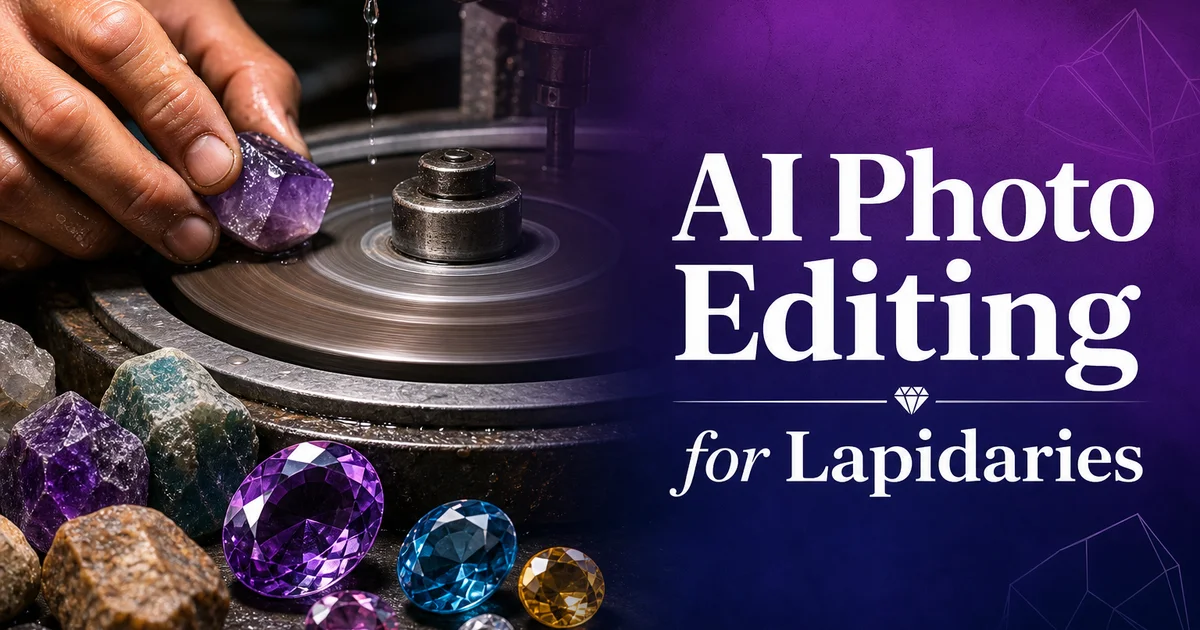
La lapidaria es un oficio donde el producto final está definido casi por completo por sus propiedades ópticas. La forma en que una gema tallada maneja la luz determina su valor, su belleza y su identidad. Un zafiro bien tallado capta la atención por su color de cuerpo azul profundo, por reflejos de facetas nítidos que muestran un tallado de precisión. Destellos de fuego espectral que prueban que las proporciones están optimizadas para el índice de refracción del material. Estas cualidades ópticas son por lo que pagan los compradores y lo que evalúan los coleccionistas. Lo que distingue el trabajo de un tallador maestro de las piezas de práctica de un aficionado. También son precisamente las cualidades más difíciles de capturar en una fotografía, porque el rango dinámico, la profundidad de color. El comportamiento angular de la luz de una gema superan con creces lo que cualquier sensor de cámara puede registrar en una sola exposición.
La mayoría de los lapidarios trabajan en talleres compactos dominados por máquinas de facetado, sierras de corte, ruedas de esmerilado y estaciones de pulido. Entornos optimizados para el tallado de precisión más que para la fotografía. Cuando un tallador termina una piedra y necesita fotografiarla para la venta o el registro de portafolio, el proceso típico consiste en equilibrar la piedra sobre un trozo de masilla, sosteniendo la cámara del teléfono lo más firme posible. Tratando de encontrar un ángulo donde la piedra muestre algo de vida bajo cualquier fuente de luz que esté más cerca. Las fotografías resultantes rara vez transmiten la calidad del tallado. El fuego está o bien quemado a blanco o completamente ausente según el ángulo de luz, el color de cuerpo aparece descolorido o turbio, y el fondo de equipo lapidario transmite el taller en lugar del valor del producto terminado.
Las herramientas de edición de fotos con IA abordan los desafíos ópticos y de presentación específicos de la fotografía de gemas sin exigir que el lapidario invierta en un estudio fotográfico profesional ni domine equipos de iluminación complejos. La eliminación de fondo aísla las piedras del desorden del taller. El Boost recupera el brillo, el fuego y la saturación de color que comprimen los sensores de cámara. La eliminación de artefactos limpia el polvo y los reflejos que la macrofotografía hace prominentes. Juntas, estas herramientas transforman las instantáneas de taller en imágenes profesionales de gemas que transmiten con precisión la calidad del tallado y la belleza óptica de cada piedra, ya sea que el lapidario venda a través de mercados en línea, construya un portafolio o documente piedras para certificación.
- La eliminación de fondo aísla las gemas terminadas de las máquinas de facetado, los palillos de dop y el desorden del taller para presentaciones limpias de mercado.
- La mejora con IA recupera todo el rango dinámico de las piedras facetadas — reflejos de brillo nítidos, dispersión de fuego prismática y saturación profunda de color de cuerpo que comprimen las cámaras de teléfono.
- Magic Eraser elimina partículas de polvo, reflejos fotográficos y artefactos de superficie mientras preserva las inclusiones naturales que son características identificativas de la piedra.
- Una calidad de imagen consistente en anuncios de mercado, páginas de portafolio y redes sociales presenta al lapidario como un profesional cuya calidad de tallado iguala su calidad de presentación.
- El procesamiento por lotes maneja eficientemente múltiples vistas de cada piedra — frontal, perfil y detalle macro — para anuncios de mercado completos.
Por qué la fotografía de gemas es el mayor desafío comercial del lapidario
Las gemas se encuentran entre los objetos ópticamente más complejos que alguien podría intentar fotografiar. Una piedra transparente facetada es a la vez una lente, un prisma y un espejo. Refracta la luz a través de su cuerpo, la dispersa en colores espectrales en los límites de las facetas y la refleja desde superficies pulidas en patrones que cambian enormemente con cada fracción de grado de ángulo de visión. El ojo humano procesa este comportamiento óptico dinámico sin esfuerzo, integrando el brillo y el fuego cambiantes a medida que inclinamos y rotamos naturalmente una piedra entre nuestros dedos. Una cámara captura un único instante congelado de este espectáculo de luz en constante cambio. Ese único fotograma puede representar la piedra magníficamente o terriblemente según el ángulo preciso, la iluminación y la exposición en el momento de la captura.
La importancia comercial de la fotografía de gemas se ha intensificado enormemente a medida que el mercado de gemas se ha trasladado a internet. Hace veinte años, los lapidarios vendían principalmente a través de ferias físicas de gemas donde los compradores podían manipular las piedras en persona, evaluando la calidad del tallado mediante la observación directa. Hoy, la mayoría de las ventas de gemas. Principalmente para talladores independientes que venden piedras talladas con precisión de forma individual — ocurren a través de mercados en línea donde la fotografía es el producto en lo que respecta al comprador. Una piedra mal fotografiada se venderá por una fracción de su valor o no se venderá en absoluto, sin importar lo bien tallada que esté. Una piedra fotografiada con pericia atraerá a compradores premium y justificará precios que reflejen la calidad real del trabajo. Para muchos lapidarios, la habilidad fotográfica determina directamente los ingresos.
El desafío fotográfico se ve agravado por la variedad de tipos de gemas y estilos de tallado, cada uno requiriendo enfoques diferentes. Las piedras transparentes facetadas como los zafiros y las turmalinas necesitan iluminación que active el fuego y el brillo a la vez. Los tallados en cabujón de zafiros estrella y crisoberilo ojo de gato necesitan iluminación de fuente puntual precisa para mostrar sus fenómenos ópticos. Las piedras opacas como la turquesa y el lapislázuli necesitan iluminación uniforme que revele la saturación de color y el pulido de superficie sin reflejos deslumbrantes. Los lotes comerciales calibrados necesitan iluminación de documentación estandarizada. Un lapidario que talla múltiples tipos de piedras necesita múltiples enfoques fotográficos. La mayoría carece del equipo, el espacio o la formación para ejecutar cualquiera de ellos a un nivel profesional.
- Las gemas son simultáneamente lentes, prismas y espejos — su complejidad óptica supera con creces la capacidad de cualquier fotografía individual de capturar su pleno comportamiento dinámico.
- El cambio hacia la venta de gemas en línea significa que la calidad fotográfica determina directamente los precios de venta y si las piedras talladas con precisión encuentran compradores en absoluto.
- Diferentes tipos de piedras y estilos de tallado requieren cada uno enfoques de iluminación diferentes — la transparencia facetada, los fenómenos del cabujón y la calidad de superficie opaca exigen todos configuraciones distintas.
- La mayoría de los lapidarios carecen de espacio y equipo fotográfico dedicado, creando una brecha entre la calidad de su tallado y la calidad de sus imágenes.
Capturar y mejorar las propiedades ópticas que definen la calidad del corte
El rendimiento óptico de una gema facetada transmite la habilidad del tallado a través de tres propiedades distintas: brillo, fuego y centelleo. El brillo es la totalidad de la luz blanca devuelta al ojo desde el interior de la piedra. Le dice al observador que los ángulos del pabellón están correctamente calculados para el índice de refracción del material, devolviendo la luz a través de la corona en lugar de dejarla escapar por el fondo. El fuego es la dispersión espectral de la luz blanca en colores prismáticos en los límites de las facetas. Visible como destellos de color que bailan por la piedra cuando se mueve. El centelleo es el patrón de reflejos de facetas claros y oscuros que crea el destello visual y revela la simetría del facetado. El Boost de IA aborda las tres recuperando la separación tonal entre los reflejos de facetas brillantes y las facetas de retorno oscuras, restaurando el color espectral en los destellos de fuego que las cámaras desaturan. Afilando la definición de los límites de las facetas para enfatizar la claridad del patrón de centelleo.
El color de cuerpo es igualmente crítico e igualmente difícil de fotografiar con precisión. Un fino zafiro azul aparece como un azul medio-oscuro rico y saturado con un sutil cambio de color hacia el violeta bajo ciertos ángulos. Esta apariencia de color específica es lo que impulsa la enorme diferencia de precio entre una piedra azul oscura común y un fino zafiro azul aciano. Las cámaras de teléfono tergiversan rutinariamente el color de cuerpo desplazando el tono, comprimiendo la saturación, y oscureciendo o descoloriendo el tono. El Boost de color de IA analiza el perfil de color de la imagen y restaura la saturación natural y la profundidad tonal sin llevar el color a un territorio irrealista. El objetivo no es hacer que la piedra se vea mejor de lo que es. La fotografía ética de gemas exige precisión — sino revertir la distorsión de la cámara y presentar el color tal como aparece realmente al ojo humano.
La visibilidad de las inclusiones requiere un manejo cuidadoso en la fotografía de gemas. Las inclusiones naturales — seda, agujas de rutilo, inclusiones de huella dactilar, zonificación de crecimiento — son rasgos identificativos que los compradores experimentados usan para evaluar el origen natural y el historial de tratamiento de una piedra. Eliminarlas de las fotografías tergiversaría la piedra. Sin embargo, la macrofotografía a menudo hace que las inclusiones aparezcan más prominentes de lo que son en persona. La ampliación revela detalles invisibles al ojo desnudo. El Boost de IA puede ajustar el equilibrio entre la visibilidad de las inclusiones y el rendimiento óptico general, presentando las inclusiones con aproximadamente la prominencia que tienen cuando la piedra se examina sin ampliación. Visibles pero no dominantes, representadas con precisión pero no exageradas por el proceso fotográfico.
- La mejora con IA recupera las tres propiedades ópticas distintas que definen la calidad del tallado — brillo, dispersión de fuego y patrón de centelleo — restaurando el rango dinámico que comprimen las cámaras.
- La restauración del color de cuerpo corrige los cambios de tono, la compresión de saturación y la distorsión tonal, presentando el color real de la piedra en lugar de la interpretación inexacta de la cámara.
- El manejo de inclusiones preserva los rasgos identificativos naturales con la prominencia que tienen a distancia de visión normal, evitando tanto la tergiversación por eliminación como la exageración por ampliación macro.
- El afilado de los límites de las facetas enfatiza la precisión del tallado, haciendo visible en las fotografías la simetría y la alineación que distinguen el tallado maestro.
Eliminación de fondo y presentación profesional para venta de gemas
Fondos de taller que contienen máquinas de facetado, estaciones de cera de dop. Las bandejas de clasificación de gemas en bruto transmiten el proceso de tallado en lugar del producto terminado, y socavan la percepción de valor que la fotografía de gemas necesita establecer. Un zafiro tallado con precisión de 5.000 $ fotografiado junto a un palillo de dop de 30 $ sobre un banco de trabajo rayado no se lee como una piedra de 5.000 $. Background Eraser aísla la piedra de su contexto de taller, manejando los bordes ópticamente complejos que presentan las gemas. La luz refractada en el cinturón que crea franjas de color, los destellos de fuego que se extienden más allá del límite físico de la piedra, y las áreas transparentes o semitransparentes que muestran lo que sea que esté detrás de la piedra a través de su cuerpo.
La selección del fondo para las gemas sigue reglas diferentes a las de la mayoría de los productos porque el color del fondo afecta directamente el color aparente de la piedra. Una gema transparente sobre un fondo blanco aparece más clara y menos saturada que la misma piedra sobre un fondo negro. La luz blanca que pasa a través de la piedra desde atrás reduce la profundidad de color de cuerpo percibida. Los fotógrafos profesionales de gemas usan fondos gris oscuro o negro para las piedras transparentes facetadas a fin de maximizar la saturación y profundidad de color aparentes, fondos blancos para registros de medición calibrados donde la representación del color es secundaria a la claridad dimensional. Gris neutro para la fotografía comparativa donde importan las condiciones consistentes. AI Fill genera fondos adecuados para cada contexto, manteniendo una presentación consistente en todo el inventario de un lapidario.
Múltiples vistas de cada piedra son estándar para la venta profesional de gemas. Frontal para mostrar el patrón de rendimiento óptico, una inclinación de 10 a 15 grados para mostrar la activación del fuego, una vista de perfil para mostrar la profundidad del pabellón y los ángulos de la corona, y un detalle macro del área de la faceta de mesa. Cada vista requiere el mismo tratamiento de fondo para la consistencia, y Background Eraser procesa todas las vistas con resultados coincidentes. Para los lapidarios que venden a través de mercados en línea que exigen fondos blancos, AI Fill puede colocar la piedra fotografiada sobre fondo oscuro sobre una superficie blanca mientras mantiene la información de sombra que evita que la piedra parezca un recorte digital flotante.
- Background Eraser maneja los bordes ópticamente complejos de las gemas, incluyendo las franjas de luz refractada, los destellos de fuego que se extienden más allá de los límites físicos y las áreas transparentes.
- El color del fondo afecta directamente el color aparente de la piedra — los fondos oscuros maximizan la saturación de color de cuerpo para las imágenes de venta mientras que los fondos blancos sirven para fines de documentación.
- Múltiples vistas estándar — frontal, vista de fuego inclinada, perfil y detalle macro — reciben todas un tratamiento de fondo consistente en un anuncio de mercado completo.
- AI Fill coloca las piedras sobre los fondos blancos de mercado requeridos mientras preserva la información de sombra que evita una apariencia plana de recorte digital.
Construir un flujo de trabajo de fotografía de gemas para negocios lapidarios en crecimiento
Un flujo de trabajo fotográfico sistemático se vuelve clave a medida que el volumen de producción de un lapidario crece más allá de unas pocas piedras al mes. Los talladores de gemas de precisión que producen piedras con regularidad necesitan un proceso repetible que ofrezca calidad consistente sin consumir un tiempo desproporcionado. El enfoque más eficiente agrupa la fotografía por tipo de piedra. Todas las piedras transparentes facetadas en una sesión usando la misma configuración de iluminación y fondo, todos los cabujones en otra sesión con iluminación ajustada para los fenómenos ópticos, y todos los lotes comerciales calibrados en una sesión de documentación estandarizada. Cada lote pasa luego por el procesamiento de IA como grupo: eliminación de fondo primero, Boost segundo. Limpieza de artefactos tercero, con parámetros consistentes aplicados a todo el lote.
Una presentación visual consistente en todos los canales de venta genera confianza en el comprador y reconocimiento de marca. Cuando un comprador examina el inventario de un lapidario en un mercado de gemas, visita el portafolio de su sitio web y revisa su feed de Instagram, una calidad y un estilo fotográficos consistentes transmiten profesionalismo y atención al detalle. Las mismas cualidades que los compradores asocian con el tallado de precisión. La inconsistencia en el estilo fotográfico sugiere inconsistencia en otros aspectos del negocio, incluso si la calidad del tallado es uniformemente excelente. Las herramientas de edición con IA imponen consistencia aplicando los mismos parámetros de Boost, el mismo tratamiento de fondo. El perfil de color en cada piedra del inventario, creando un catálogo visual cohesivo que eleva la calidad percibida de toda la colección.
La fotografía de documentación para la certificación de gemas y los informes de gradación tiene necesidades técnicas específicas distintas de la fotografía de marketing. Los laboratorios de gradación y los servicios de certificación necesitan imágenes tomadas en condiciones estandarizadas que muestren la piedra contra colores de fondo específicos a ampliaciones específicas. Aunque la edición con IA puede limpiar artefactos fotográficos y normalizar fondos para cumplir estos estándares, los lapidarios deben tener cautela con el Boost que podría alterar el color aparente o el grado de claridad de una piedra en las imágenes de certificación. Las mismas herramientas que mejoran legítimamente la fotografía de marketing podrían tergiversar inadvertidamente el grado de una piedra si se aplican a imágenes de documentación. Mantener perfiles de procesamiento separados — uno para marketing, uno para documentación — garantiza que cada tipo de imagen reciba el tratamiento adecuado.
- La fotografía por lotes por tipo de piedra — facetada, cabujón y lotes calibrados — usa configuraciones de iluminación consistentes que luego fluyen a través del procesamiento de IA por lotes con parámetros coincidentes.
- Una presentación visual consistente en el mercado, el portafolio y las redes sociales genera confianza en el comprador y reconocimiento de marca que refuerza la calidad del tallado en sí.
- Los perfiles de procesamiento separados para la fotografía de marketing y certificación garantizan que la mejora optimice la presentación sin tergiversar inadvertidamente los grados de color o claridad.
- Los flujos de trabajo sistemáticos evitan que la fotografía consuma un tiempo desproporcionado a medida que crece el volumen de producción, manteniendo el enfoque en el tallado en lugar de la posproducción.
How to do it
- 1
Photograph cut gemstones with controlled lighting to capture brilliance and fire
Set up a dedicated gemstone photography setting using a light tent or diffused overhead lighting rig that controls specular reflections while still allowing the stone's natural brilliance to show. Position a single directional light source at a low angle to activate fire dispersion in faceted stones, the prismatic color flashes that are the primary selling point of well-cut gems. Shoot transparent stones against a neutral dark background to show depth and internal character, and use white backgrounds for calibrated measurement records. Capture the face-up view, a profile showing the pavilion depth, and macro close-ups of individual facet junctions.
- 2
Remove workbench backgrounds for clean gemstone presentation
Use Background Eraser to isolate cut stones from the cluttered lapidary workshop setting: dop sticks, grinding wheels, polishing compounds, calipers, and faceting machine components that dominate most cutting studios. Replace the busy background with a clean gradient or solid color that lets the gemstone itself command full attention. Dark backgrounds work best for transparent faceted stones because they allow internal light play to show. Medium-gray backgrounds work well for cabochons and opaque stones where surface polish and color saturation are the primary qualities to share.
- 3
Enhance facet brilliance, fire dispersion, and color saturation
Apply AI Enhance to recover the optical qualities that define a well-cut gemstone. The sharp facet reflections that show cutting precision, the prismatic fire flashes that reveal proper proportions, and the depth of body color that indicates material quality. Phone cameras compress the dynamic range of gemstones greatly, turning brilliant fire into white blowouts and deep color into undifferentiated dark patches. Boost recovers this lost range, presenting facets with the crisp reflections visible to the naked eye and color with the saturation and depth that attracted the cutter to the rough material.
- 4
Remove inclusions, surface marks, and photography artifacts with precision
Use Magic Eraser to clean up the minor imperfections that macro photography reveals in finished stones. Dust particles that settled on facets during the photography session, tiny polish marks near girdle facets that are invisible to the naked eye but prominent at 10x magnification, and light reflections from the photography setup that create confusing bright spots within the stone. Be selective about inclusion removal — visible natural inclusions are spotting features that buyers expect to see in photographs of natural stones, and removing them misrepresents the gem. Only remove photography artifacts, not traits of the stone itself.
- 5
Export images for marketplace listings, certification documents, and social media
Save edited gemstone photographs at full resolution for your expert portfolio and gemstone certification records, then create sized versions for each sales and marketing channel. Online gemstone marketplaces require specific image dimensions and white-background standards. Instagram favors square crops that showcase the stone's face-up pattern and fire. Macro detail shots at high resolution serve buyers who examine images closely before purchasing. Maintain maximum quality for these primary selling images. Batch export multiple views of each stone. Face-up, profile, and macro detail — as a consistent set for each listing.
Fuentes
- Gemstone Photography: Techniques for Capturing Brilliance and Fire — Gemological Institute of America — Gems & Gemology
- E-Commerce Product Photography for Jewelry and Gemstones — Etsy Seller Handbook
- Standardized Photography Protocols for Gemstone Documentation — American Gem Society