
How to remove reflection from glasses in photos
A window, a softbox, or an overhead light bounces off eyeglass lenses and turns the eyes into bright white patches — the one detail a portrait can't afford to lose. Magic Eraser's AI clears the glare off the lenses and reconstructs the eyes underneath, so the subject looks straight back at the camera again.
Last updated
Clear lens glare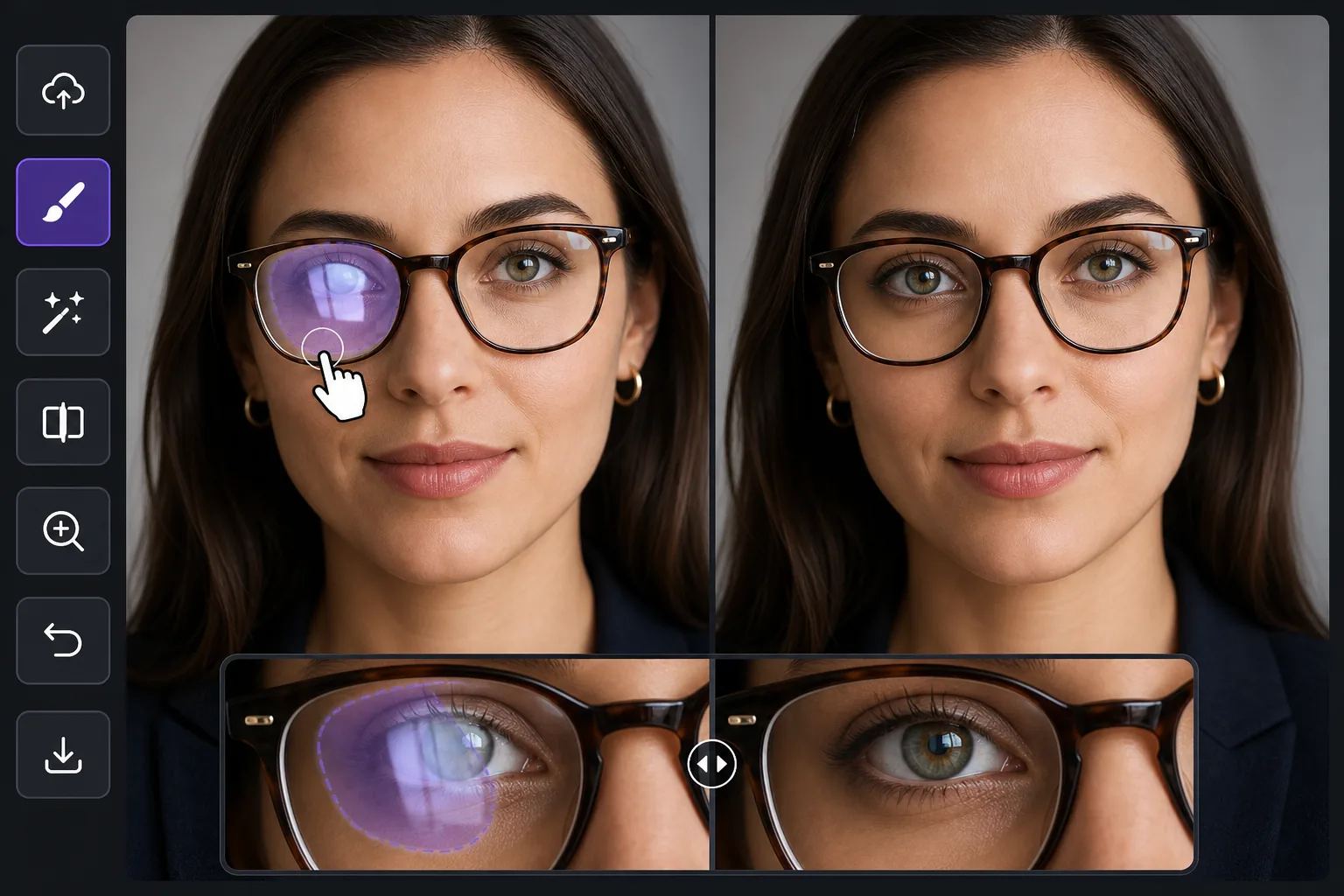
Why glasses glare is harder than ordinary reflection removal
Most reflection cleanup happens over a mirror, a window, or a glossy product surface — areas the AI can rebuild as flat, predictable texture. Glasses glare is different because the bright patch sits directly on top of the eyes, the single most important feature in a portrait. Wipe the reflection without care and you flatten the iris, lose a catchlight, or leave one eye looking different from the other. The goal here is not just to remove the white hotspot but to put a believable eye back where the glare was: matching iris color, eyelid line, lashes, and the natural asymmetry of a real face. Magic Eraser synthesizes a plausible reconstruction of the hidden eye from the rest of the face — the visible eye, skin tone, and lighting direction — rather than recovering literal pixels the glare destroyed. That distinction matters: it works beautifully when one eye is clear and only the other is blown out, because the model has a real reference to draw from, and it works on partial glare where part of the eye still shows through the lens.
Before you start
Clear glasses glare in three steps
Start with upload the portrait. The result preview above and tips below use this guide's existing content; no separate before-and-after proof is assumed.
- 1
Upload the portrait
Open Magic Eraser on web, iOS, or Android and add the portrait where light is reflecting off the lenses. JPEG, PNG, HEIC, and WebP are supported. Headshots, group photos, and selfies all work — anywhere a window or lamp has turned the glasses into bright patches.
- 2
Brush only the glare, not the eye
Paint over the bright reflection sitting on the lens — the white or blue hotspot and its soft halo. Stay just inside the lens rim and avoid brushing the eyebrow or the frame itself. If one eye is clear, leave it untouched so the AI can use it as a reference for rebuilding the covered eye.
- 3
Fill and check both eyes
Tap to erase. The AI removes the glare and reconstructs the eye underneath. Zoom in and compare the two eyes: iris color, gaze direction, and catchlight should match. If the rebuilt eye looks soft or mismatched, undo, brush a slightly smaller area, and run it again — a tighter selection keeps more of the real eye.
Best for
- Headshots and LinkedIn portraits where one lens catches a window and washes out an eye
- Family and group photos where overhead light glares off several pairs of glasses at once
- Selfies and video-call screenshots where the screen or phone reflects in the lenses
- Wedding and event portraits shot under bright venue lighting that hits eyeglass lenses
- Profile and dating-app photos where lens glare hides the subject's eyes and expression
Tips for natural-looking eyes
Work one eye at a time when both lenses are blown out — clear the lighter side first so the AI has a freshly clean eye to reference for the harder one. Keep your brush inside the lens; painting over the frame or eyebrow gives the model less facial structure to anchor the reconstruction. For mild glare where the iris still shows faintly through the reflection, a tight selection over just the hotspot often preserves the real eye and only fills the bright spot. Remember the result is a synthesized, plausible eye, not the exact eye hidden under the glare, so on important portraits zoom to 100% and confirm the gaze and catchlight read naturally before exporting. If a rebuilt eye looks too symmetrical or glassy, a second pass with a smaller brush usually restores a more natural, slightly imperfect look. When you can, prevent it at capture time by tilting the head down a few degrees or moving the light off-axis — but when the shot is already taken, this is the fastest fix.
Frequently asked questions
- Can it rebuild an eye that's completely hidden by glare?
- Often, yes. If the other eye is clear, the AI uses it as a reference and synthesizes a plausible matching eye where the glare was — iris, lid line, and lashes included. Results are strongest when at least one eye is visible; if both lenses are fully blown out with no eye showing anywhere, the reconstruction is a believable guess rather than a recovery of the real eyes, so check it closely on important shots.
- Will the fixed eyes look fake or mismatched?
- On most portraits they read naturally, because the AI matches iris color, lighting, and gaze to the rest of the face. The places it can slip are gaze direction and the catchlight in the eye. Zoom in to compare both eyes, and if one looks off, undo and brush a smaller area so more of the real eye is kept.
- Is removing glasses reflection free?
- Yes. Magic Eraser's free tier includes the brush and AI fill for clearing lens glare, with daily usage limits and no watermark. Upload your portrait, brush the reflection, and export the clean result. Premium removes the daily limits and adds higher-resolution exports for print and professional headshots.