
Edit Foto AI Untuk Teknisi Kembang Api: Tampilkan Pertunjukan Kembang Api — Magic Eraser
Pengeditan fotografi kembang api ahli untuk piroteknis dan perusahaan pertunjukan. Alat AI untuk peningkatan warna ledakan, penghapusan asap, catatan pertunjukan, catatan keselamatan, dan komposit pertunjukan klien.

Content Lead
Ditinjau oleh Magic Eraser Editorial ·
Daftar isi
- Memotret kembang api: eksposur, waktu, dan posisi untuk dokumentasi profesional
- Penghapusan asap dan pembersihan lingkungan untuk dokumentasi pertunjukan bersih
- Peningkatan warna dan definisi ledakan untuk gambar portofolio dan pemasaran
- Gambar komposit pertunjukan, dokumentasi keselamatan, dan alur kerja proposal klien
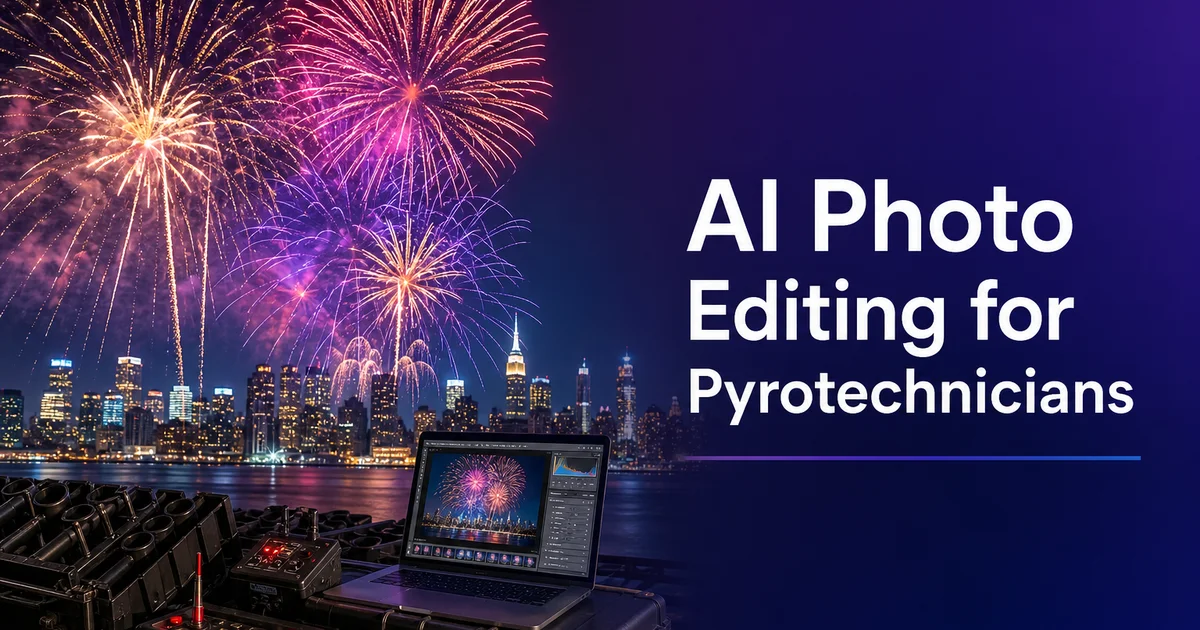
Pirotekni profesional adalah bisnis yang dibangun di atas tontonan. Dampak visual dari sebuah pertunjukan kembang api adalah produknya, dan fotografi adalah cara para pirotekniknya mendokumentasikan karya mereka, menjual pertunjukan mendatang, dan menyimpan catatan keselamatan yang diwajibkan oleh peraturan federal maupun negara bagian. Pertunjukan yang difoto dengan baik menunjukkan kemampuan teknis kepada calon klien jauh lebih efektif daripada deskripsi tertulis mana pun, memperlihatkan palet warna, ragam efek, presisi waktu. Skala pelaksanaan yang menentukan tingkat keterampilan seorang pirotek. Namun fotografi kembang api termasuk salah satu spesialisasi paling menantang secara teknis di bidang ini, menuntut pencahayaan panjang dalam kondisi yang berubah cepat dan rentang dinamis ekstrem antara ledakan terang dan langit gelap. Kemampuan menangkap momen sekejap yang tak dapat diulang atau ditiru.
Tantangan khas fotografi piroteknik menumpuk dengan cepat sepanjang sebuah pertunjukan. Mortir pertama terfoto bersih dengan latar langit gelap, tetapi seiring pertunjukan berlanjut, asap yang menumpuk dari muatan yang terbakar membentuk kabut yang meredupkan warna dan mengaburkan bentuk ledakan. Ia menciptakan latar yang makin keruh bagi efek finale yang sering kali merupakan bagian paling memukau dari pertunjukan. Pencahayaan panjang menangkap jejak ledakan yang indah tetapi juga merekam setiap percikan liar, jejak puing, dan selongsong jatuh dalam bingkai. Cahaya sekitar dari kawasan terbangun di sekeliling, lampu peringatan pesawat. Lautan layar ponsel yang menyala di antara penonton semuanya menyusup ke dalam apa yang seharusnya menjadi kanvas gelap. Ini bukan masalah keterampilan fotografer, melainkan melekat pada medium perekaman pertunjukan kembang api langsung.
Alat penyuntingan foto AI mengatasi setiap tantangan fotografi khas pirotekni ini. Magic Eraser menghapus asap yang menumpuk, puing liar, dan polusi cahaya sekitar yang menurunkan kualitas gambar sepanjang pertunjukan. AI Enhance memulihkan warna kimiawi yang cerah. Merah stronsium, hijau barium, biru tembaga, yang oleh kamera terekspos kurang akibat kontras ekstrem antara ledakan terang dan langit gelap. Background Eraser memungkinkan gambar pertunjukan komposit yang menjadi standar dalam pemasaran pirotekni profesional, menggabungkan beberapa ledakan ke dalam satu bingkai yang mewakili keseluruhan cakupan pertunjukan. Panduan ini mencakup alur kerja lengkap dari pengambilan hingga penyuntingan bagi pirotek yang membutuhkan baik akurasi dokumenter untuk catatan keselamatan maupun dampak visual untuk pemasaran klien.
- Magic Eraser menghapus asap menumpuk yang terbentuk sepanjang pertunjukan kembang api, memulihkan latar langit gelap yang bersih bagi mortir berikutnya yang jika tidak akan tampak melalui kabut keruh.
- AI Enhance memulihkan warna khas masing-masing senyawa kimia yang menentukan pirotekni profesional — merah stronsium, hijau barium, biru tembaga, dan emas arang-besi — yang sering terekspos kurang oleh kamera.
- Background Eraser mengisolasi ledakan individu untuk gambar pertunjukan komposit yang menggabungkan efek permukaan, mortir ketinggian menengah, dan finale ledakan tinggi ke dalam bingkai presentasi klien yang menyeluruh.
- Penyuntingan dokumentasi keselamatan mempertahankan akurasi dokumenter penempatan mortir, jarak aman, dan catatan zona jatuh, sekaligus meningkatkan kejernihan gambar untuk berkas kepatuhan regulasi.
- Gambar proposal klien memadukan dokumentasi pertunjukan yang telah dibersihkan dengan warna dan definisi ledakan yang ditingkatkan untuk menjual pemesanan pertunjukan mendatang dengan dampak visual maksimal.
Memotret kembang api: eksposur, waktu, dan posisi untuk dokumentasi profesional
Fotografi kembang api menuntut kontrol pencahayaan manual, karena sistem pengukuran otomatis tak mampu menangani rentang dinamis ekstrem dari ledakan cahaya terang dengan latar langit nyaris hitam. Pendekatan standarnya adalah mode manual dengan bukaan yang cukup sempit. F/8 hingga f/11 — pada ISO dasar kamera, dengan kecepatan rana antara 2 dan 8 detik tergantung jenis ledakan yang ditangkap. Pencahayaan lebih singkat 2 hingga 3 detik menangkap pola ledakan individu dengan titik bintang tajam dan jejak bersih. Pencahayaan lebih panjang 5 hingga 8 detik menumpuk beberapa ledakan dalam satu bingkai, menciptakan komposisi padat dan dramatis yang cocok untuk gambar pemasaran tetapi bisa menjadi kacau jika terlalu banyak efek bertumpang tindih. Mode bulb dengan pelepas rana jarak jauh memberi kendali terbesar, memungkinkan fotografer membuka rana tepat sebelum mortir meledak dan menutupnya setelah ledakan mencapai pemekaran penuh.
Posisi pengambilan adalah keputusan strategis untuk dokumentasi piroteknik. Posisi tegak lurus terhadap garis tembak dan pada jarak yang cukup untuk membingkai keseluruhan cakupan vertikal pertunjukan. Dari semburan dan set piece di permukaan hingga mortir tertinggi — memberikan dokumentasi paling lengkap atas cakupan pertunjukan. Untuk foto catatan keselamatan, posisi yang memperlihatkan ladang mortir dan perimeter keamanan sangatlah penting. Medan sekeliling penting untuk berkas regulasi. Untuk karya portofolio artistik, posisi yang mencakup elemen latar depan seperti pantulan air, siluet kota, atau bangunan ikonik menambahkan konteks dan skala. Pirotek profesional kian banyak mengambil gambar dari beberapa posisi menggunakan kamera jarak jauh untuk menangkap sudut dokumenter dan artistik sekaligus.
Akurasi warna terutama penting dalam fotografi piroteknik karena warna kembang api dihasilkan oleh senyawa kimia tertentu. Kemampuan seorang pirotek menghasilkan warna yang bersih dan cerah adalah faktor pembeda keterampilan yang utama. Senyawa stronsium menghasilkan merah, barium klorat menghasilkan hijau, tembaga klorida menghasilkan biru yang terkenal sulit, senyawa natrium menghasilkan kuning, dan magnesium atau aluminium menghasilkan putih. Ketika klien meninjau foto pertunjukan, ia sedang menilai kemurnian dan kecerahan warna. Merah-jingga keruh di tempat yang dimaksudkan merah bersih, atau hijau pucat di tempat yang ditentukan zamrud cerah, mengisyaratkan masalah kendali mutu meski pertunjukan sebenarnya benar secara kimiawi. Memastikan kamera dan penyuntingan lanjutan mempertahankan reproduksi warna yang akurat dan cerah melindungi reputasi profesional pirotek.
- Pencahayaan manual pada f/8 hingga f/11, ISO dasar, dengan kecepatan rana 2 hingga 8 detik menangkap detail ledakan tanpa overekspos akibat rentang dinamis ekstrem kembang api dengan latar langit gelap.
- Mode bulb dengan pelepas jarak jauh memberi kendali maksimal, membuka rana sebelum mortir meledak dan menutupnya setelah pemekaran penuh ledakan untuk mendokumentasikan efek individu dengan pewaktuan presisi.
- Dokumentasi keselamatan menuntut posisi pengambilan yang memperlihatkan ladang mortir, perimeter keamanan, dan medan sekeliling untuk berkas kepatuhan regulasi.
- Akurasi warna melindungi reputasi profesional karena klien menilai kemurnian merah stronsium, hijau barium, dan biru tembaga sebagai bukti kendali mutu kimiawi.
Penghapusan asap dan pembersihan lingkungan untuk dokumentasi pertunjukan bersih
Penumpukan asap adalah masalah kualitas gambar tunggal terbesar dalam fotografi kembang api. Setiap mortir yang ditembakkan menghasilkan awan produk pembakaran. Muatan pelontar mesiu hitam, muatan ledak, dan susunan bintang kimiawi semuanya menghasilkan asap yang menggantung di udara di atas lokasi tembak. Pada malam tenang berangin lemah, asap ini menumpuk dengan cepat. Menjelang pertengahan pertunjukan, efek berikutnya menembak melalui kabut tebal yang meredupkan warnanya, mengaburkan bentuknya, dan menciptakan tampilan keruh menyeluruh dalam foto. Grand finale — sering kali segmen paling memukau dan paling banyak difoto dari setiap pertunjukan — kerap menderita gangguan asap terparah karena ia datang setelah penumpukan maksimal dari semua efek sebelumnya.
Magic Eraser mengatasi penumpukan asap dengan menghapus secara selektif lapisan kabut yang menutupi kejernihan ledakan. Kerjakan area gambar individu alih-alih menerapkan penghilangan kabut global yang juga akan memengaruhi warna ledakan dan jejak cahaya. Sasarkan ruang antar-ledakan tempat asap tampak sebagai tabir abu-abu atau kecokelatan pada apa yang seharusnya langit hitam, memulihkan kontras latar gelap yang membuat warna kembang api menonjol. Untuk gambar yang asapnya sebagian menutupi ledakan, kerja penghapus yang cermat di sepanjang batas asap dapat memulihkan bentuk ledakan bersih di bawahnya. Tujuannya bukan menghapus setiap jejak asap. Beberapa untaian tipis menambahkan atmosfer dan mengisyaratkan realitas penuh energi dari pertunjukan langsung — melainkan menghapus penumpukan berat yang menurunkan gambar sebagai dokumen mutu pirotekni.
Selain asap, foto kembang api menumpuk sejumlah gangguan lingkungan lain selama pencahayaan panjang. Percikan liar dan puing dari selongsong mortir menciptakan goresan terang acak yang melintasi komposisi yang seharusnya bersih. Lampu peringatan pesawat pada menara dan gedung mencetak titik merah berdenyut dalam pencahayaan panjang. Ponsel di antara penonton menciptakan lautan persegi panjang terang kecil di bagian bawah bingkai. Cahaya sekitar dari penerangan jalan, papan iklan komersial. Kawasan permukiman menciptakan pendar umum yang menaikkan titik hitam langit. Magic Eraser menangani masing-masing secara selektif. Menghapus titik terang, goresan, dan zona pendar tertentu yang mengganggu pertunjukan kembang api tanpa memengaruhi efek piroteknik yang menjadi subjek foto.
- Asap pembakaran menumpuk dari muatan pelontar, muatan ledak, dan susunan bintang terbentuk sepanjang pertunjukan, dengan grand finale menderita penghalangan terparah dari efek sebelumnya.
- Penghapusan asap selektif dengan Magic Eraser menyasar kabut antar-ledakan sembari mempertahankan untaian tipis atmosferik yang mengisyaratkan realitas penuh energi dari kembang api langsung.
- Artefak pencahayaan panjang, termasuk goresan puing, denyut lampu peringatan pesawat, persegi panjang layar ponsel, dan pendar cahaya sekitar, dihapus satu per satu tanpa memengaruhi pertunjukan.
- Pemulihan langit gelap setelah penghapusan asap mengembalikan latar berkontras tinggi yang esensial bagi reproduksi warna kembang api yang cerah, baik dalam dokumentasi maupun gambar pemasaran.
Peningkatan warna dan definisi ledakan untuk gambar portofolio dan pemasaran
Warna kembang api profesional dihasilkan oleh formulasi kimia presisi yang dikembangkan dan disempurnakan para pirotek sebagai kompetensi inti. Warna-warna itu layak mendapat representasi yang akurat dan cerah dalam fotografi. AI Enhance memulihkan kedalaman warna yang hilang dari kamera di hadapan tantangan pencahayaan kembang api. Underekspos yang meredupkan warna cerah ketika pengukuran didominasi langit gelap, pergeseran warna yang terjadi ketika pencahayaan panjang mendorong respons sensor ke wilayah nonlinier, dan kehilangan saturasi akibat kontaminasi asap bahkan setelah pembersihan. Peningkatan harus mengintensifkan warna menuju target yang benar secara kimiawi: stronsium menghasilkan merah tua kirmizi, barium hijau zamrud cerah, tembaga biru pekat, natrium kuning keemasan hangat. Paduan titanium-magnesium menghasilkan putih menyilaukan dengan rona kebiruan.
Definisi ledakan — ketajaman dan kejernihan titik bintang individu beserta jejaknya — sama pentingnya untuk tujuan artistik maupun dokumenter. Mortir yang dibuat baik menghasilkan bintang yang terbakar merata dari ledakan hingga padam, menciptakan jejak halus dan seragam yang memancar dari pusat ledakan dalam pola simetris. Kesimetrian, kerapatan, dan keseragaman jejak bintang ini adalah bukti visual mutu pembuatan, dan harus tajam serta terdefinisi baik dalam foto untuk mendokumentasikan keterampilan pirotek. AI Enhance menajamkan titik bintang dan jejak tanpa memasukkan artefak ke latar langit gelap, memulihkan definisi tajam yang membedakan mortir buatan ahli dari produk konsumen. Untuk mortir jenis peoni, ini berarti jejak bintang individu yang jelas. Untuk mortir krisan, berarti titik bintang tajam yang mempertahankan kecemerlangan titiknya hingga ujung jejak.
Peningkatan spesifik per efek menuntut pendekatan berbeda untuk kategori kembang api berbeda. Mortir udara — peoni, krisan, dahlia, willow, dan brokat — membutuhkan kejernihan jejak bintang dan kecerahan warna. Efek permukaan seperti semburan, air mancur, dan air terjun membutuhkan definisi tekstur dan aliran dalam pancaran percik yang ajeg. Set piece — bingkai berbentuk yang dipasang pada tiang yang menciptakan bentuk khas seperti bendera, logo, atau teks — membutuhkan definisi tepi dan konsistensi warna di sepanjang titik lancework-nya. Efek crossette dan ekor kuda yang menghasilkan jejak panjang menjuntai membutuhkan rentang dinamis yang diperluas untuk memperlihatkan baik titik ledakan terang maupun ujung jejak yang redup. Menangani setiap jenis efek dengan peningkatan yang tepat memastikan portofolio mewakili keseluruhan rentang kemampuan piroteknik secara akurat.
- AI Enhance memulihkan warna yang akurat secara kimiawi — kirmizi stronsium, zamrud barium, biru tembaga, emas natrium — yang hilang dari kamera akibat underekspos, nonlinearitas sensor, dan kontaminasi asap.
- Ketajaman jejak bintang mendokumentasikan mutu pembuatan, memperlihatkan kesimetrian, kerapatan, dan keseragaman yang membedakan mortir profesional dari produk konsumen.
- Efek permukaan seperti semburan dan air mancur membutuhkan peningkatan definisi tekstur dan aliran, sementara set piece membutuhkan definisi tepi di sepanjang titik lancework-nya.
- Efek crossette dan ekor kuda menuntut peningkatan rentang dinamis yang diperluas untuk memperlihatkan baik titik ledakan terang maupun ujung jejak redup dalam satu gambar yang terekspos baik.
Gambar komposit pertunjukan, dokumentasi keselamatan, dan alur kerja proposal klien
Gambar pertunjukan komposit adalah format standar pemasaran pirotekni profesional karena tak ada satu foto pun yang mampu menangkap keseluruhan cakupan pertunjukan yang berlangsung selama 10 hingga 30 menit. Prosesnya dimulai dengan memilih gambar ledakan individu terbaik dari seluruh pertunjukan. Mortir udara terbersih, kombinasi finale paling dramatis, efek permukaan paling efektif — dan mengisolasinya dari latar langit aslinya menggunakan Background Eraser. Ledakan terisolasi ini kemudian ditumpuk menjadi satu komposisi yang mewakili palet warna lengkap, ragam efek, dan skala pertunjukan. Komposit harus ditata sedemikian rupa untuk mengisyaratkan hubungan spasial yang realistis. Efek permukaan di bawah, mortir ketinggian menengah di tengah, dan finale ledakan tinggi di atas — meski elemen individunya ditangkap pada momen berbeda.
Catatan keselamatan memiliki kebutuhan penyuntingan yang sepenuhnya berbeda dari gambar pemasaran. Peraturan federal dan negara bagian di bawah NFPA 1123 dan NFPA 1126 mewajibkan pirotek mendokumentasikan lokasi tembak, penempatan mortir, jarak aman, dan zona jatuh. Foto dokumenter ini harus merepresentasikan realitas fisik lokasi secara akurat dan tak boleh disunting dengan cara yang mengubah jarak, menghapus fitur terkait keselamatan, atau menyalahgambarkan kondisi pertunjukan. Penyuntingan AI untuk catatan keselamatan terbatas pada peningkatan kejernihan. Menaikkan kecerahan dan kontras gambar agar posisi mortir, penanda jarak, dan fitur medan tampak jelas pada foto yang sering diambil dalam kondisi minim cahaya. Magic Eraser tidak boleh digunakan pada gambar catatan keselamatan, kecuali untuk menghapus anotasi teks bertumpang tindih yang perlu diganti dengan informasi terkoreksi.
Alur kerja proposal klien memadukan pendekatan dokumenter dan pemasaran. Proposal untuk pertunjukan mendatang sering memuat gambar dokumenter dari pertunjukan terdahulu yang memperlihatkan mutu pelaksanaan dan keandalan, gambar portofolio yang ditingkatkan yang memperlihatkan rentang efek tersedia dan kemampuan warna. Visualisasi spesifik-lokasi yang memperlihatkan tampilan pertunjukan usulan dari area pandang klien. Penyuntingan AI memungkinkan komponen visualisasi dengan mengomposisikan elemen pertunjukan terdahulu ke dalam foto lokasi usulan, memberi klien pratinjau bagaimana kembang api acara mereka akan tampak dengan latar siluet kota dan lingkungan khas mereka. Kemampuan visualisasi ini telah menjadi keunggulan kompetitif utama bagi perusahaan pirotekni, mengubah proposal abstrak menjadi pratinjau visual konkret yang membantu klien berkomitmen pada pemesanan.
- Gambar pertunjukan komposit menumpuk ledakan individu terbaik dari seluruh pertunjukan ke dalam satu bingkai yang mewakili palet warna lengkap dan ragam efek untuk pemasaran klien.
- Dokumentasi keselamatan di bawah NFPA 1123 dan 1126 menuntut akurasi tanpa manipulasi untuk penempatan mortir, jarak aman, dan catatan zona jatuh — penyuntingan terbatas pada peningkatan kejernihan.
- Proposal klien memadukan bukti dokumenter pelaksanaan terdahulu dengan gambar portofolio yang ditingkatkan dan visualisasi spesifik-lokasi dari pertunjukan usulan.
- Komposit visualisasi pertunjukan menumpuk elemen pertunjukan terdahulu pada foto lokasi klien, menyediakan pratinjau visual konkret yang mengubah proposal abstrak menjadi pemesanan yang dikomitmenkan.
How to do it
- 1
Photograph fireworks shows with settings optimized for burst detail and color accuracy
Capture fireworks displays using long exposure settings. Often 2 to 8 seconds — to record the full arc of each burst from shell break to fade. Fireworks photography presents unique challenges because each burst is a rapidly evolving light source against a dark sky. The colors produced by different chemical compositions need accurate color reproduction to serve as reliable show records. Photograph from a position that captures the full spread of the display site, including ground-level effects and any set pieces. Keeping mortar positions in the lower frame for reference when documenting firing sequences.
- 2
Remove unwanted smoke, debris, and background distractions from display images
Use Magic Eraser to clean up the smoke accumulation that builds through a fireworks show, obscuring later bursts behind a hazy veil left by earlier shells. Remove stray sparks, debris trails, and the ghost images of spent shells falling through the frame during long exposures. For client display images, also remove background distractions like cell phone screens in the audience, aircraft warning lights on nearby structures. The glow of ambient light pollution that washes out the dark sky background key to vivid fireworks photography.
- 3
Enhance burst color saturation and star definition for portfolio and client imagery
Apply AI Enhance to intensify the specific colors produced by different pyrotechnic compositions. The deep red of strontium compounds, vivid green of barium chlorate, brilliant blue of copper chloride, and warm gold of charcoal-iron stars. Phone cameras and even DSLRs often underexpose fireworks colors because automatic metering is confused by the extreme contrast between bright bursts and dark sky. Boost recovers the color depth and star-point definition that makes expert fireworks photography strong for both artistic display and technical records.
- 4
Create composite images showing complete show sequences for client presentations
Use Background Eraser to isolate individual bursts from their sky backgrounds, then composite multiple bursts into a single image that represents the full scope of a fireworks show. This technique is standard in expert pyrotechnic records because no single frame captures the variety of effects in a complete display. Layer ground effects, low-level set pieces, mid-altitude shells. High-break finales into a composite that shows the client the complete palette of effects that were deployed, enabling informed discussion about which effects to retain, modify, or replace in future shows.
- 5
Export documentation images for safety records, client proposals, and social media
Save edited fireworks images at full resolution for expert portfolios and client archives, then create platform-specific versions for different uses. Safety and compliance records needs clear, unmanipulated images that accurately record mortar placement, safety distances, and fallout zones. Marketing images for social media and website galleries benefit from the enhanced color and cleaned-up smoke that create maximum visual impact. Client proposal decks need both — documentary evidence of past show execution alongside the visually polished display images that sell future bookings.
Sumber
- Fireworks Safety and Regulations: NFPA 1123 Code for Fireworks Display — National Fire Protection Association
- The Chemistry and Physics of Fireworks Color Production — American Chemical Society
- Professional Photography Techniques for Night Events and Long Exposure — Adobe Creative Cloud Photography Guide