
मोबाइल फोटो एडिटिंग क्यों मायने रखती है
समझें कि मोबाइल फोटो एडिटिंग कैसे एक व्यवहार्य पेशेवर विकल्प बन गई है और यह आधुनिक रचनात्मक वर्कफ़्लो में कैसे फिट होती है।
Lesson context before the long read
Review the result preview above, then scan the learning objectives below before reading the full lesson. Updated 2026-05-17.
Example visual uses an existing public asset: /content-images/mobile-photo-editing-advantages-academy.webp.
Learning Objectives
- 1समर्पित कैमरों की तुलना में आधुनिक फोन कैमरों की क्षमताओं और सीमाओं को पहचानें
- 2समझें कि AI-संचालित मोबाइल एडिटिंग टूल फोन और डेस्कटॉप एडिटिंग के बीच गुणवत्ता के अंतर को कैसे कम करते हैं
- 3एक ही डिवाइस पर कैप्चर और एडिट करने के वर्कफ़्लो लाभों को पहचानें
मोबाइल एडिटिंग आधुनिक वर्कफ़्लो में क्यों फिट होती है
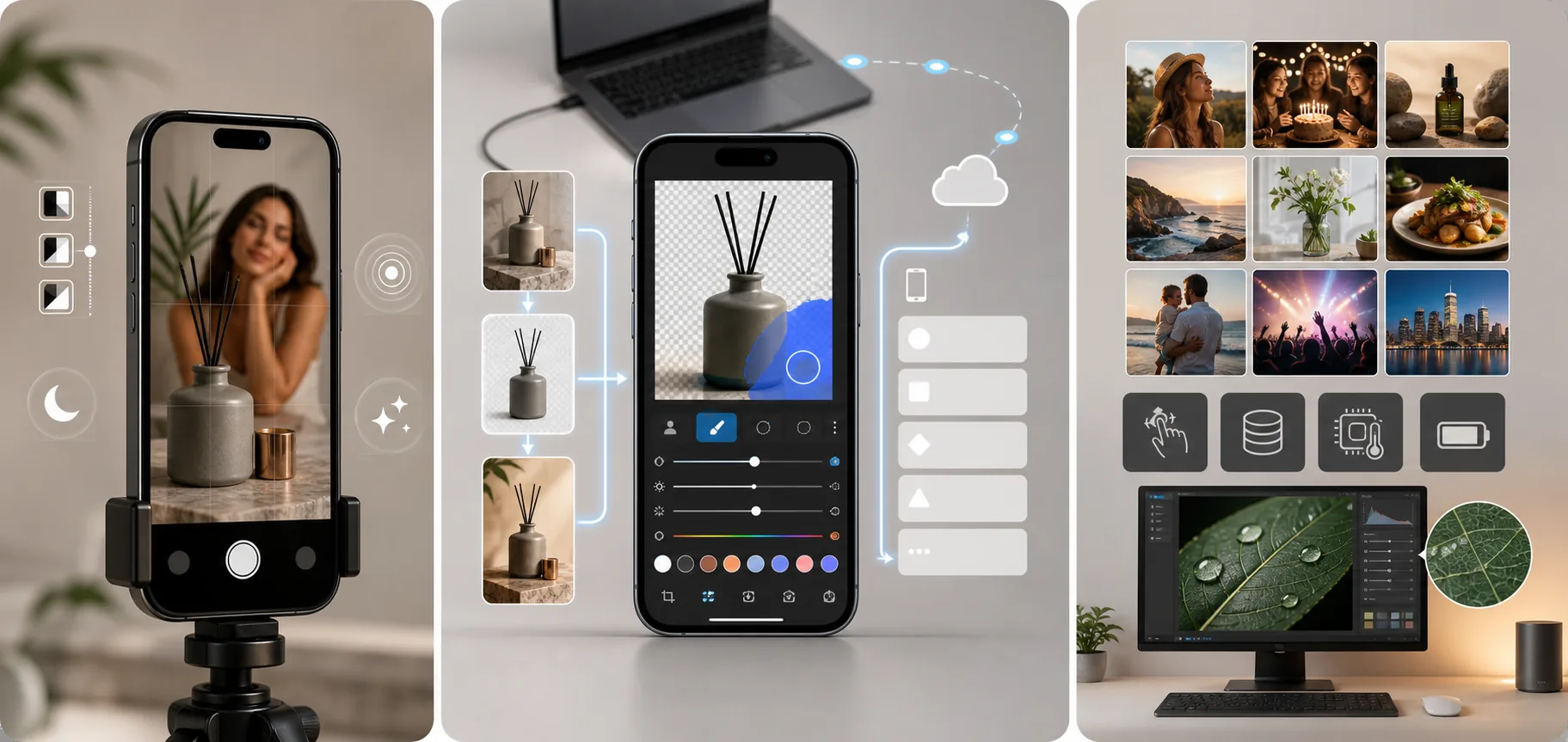
पिछले पाँच वर्षों में मोबाइल फोन कैमरों में क्रांति आई है। कम्प्यूटेशनल फोटोग्राफी, जहाँ सॉफ़्टवेयर प्रोसेसिंग कच्चे सेंसर कैप्चर को बेहतर बनाती है, ने फोन कैमरों को ऐसी इमेज बनाने में सक्षम बनाया है जो कई रोज़मर्रा के परिदृश्यों में समर्पित कैमरों की बराबरी करती हैं। स्वचालित HDR, नाइट मोड, और पोर्ट्रेट डेप्थ सिमुलेशन जैसी सुविधाएँ सभी फोन के प्रोसेसर पर चलने वाले AI एल्गोरिदम द्वारा संचालित होती हैं। यह समझना कि आपका फोन कैमरा स्वचालित रूप से क्या करता है, आपको यह बेहतर निर्णय लेने में मदद करता है कि मैनुअल सेटिंग्स के साथ कब हस्तक्षेप करना है और कब कम्प्यूटेशनल पाइपलाइन पर भरोसा करना है।
अपने फोन पर एडिटिंग के गति लाभ
मोबाइल एडिटिंग का सबसे बड़ा लाभ तत्परता है। आप एक फोटो कैप्चर करते हैं और फाइलों को कंप्यूटर में स्थानांतरित किए बिना कुछ ही मिनटों में उसे एडिट, परिष्कृत और शेयर कर सकते हैं। सोशल मीडिया कंटेंट, इवेंट कवरेज, त्वरित प्रोडक्ट फोटोग्राफी, और व्यक्तिगत दस्तावेज़ीकरण के लिए, यह गति डेस्कटॉप वर्कफ़्लो के मामूली गुणवत्ता सुधार से अधिक मूल्यवान है। Magic Eraser जैसे AI-संचालित एडिटिंग टूल मोबाइल डिवाइस पर कुशलता से चलते हैं, इसलिए आपके पास सीधे अपने फोन पर बैकग्राउंड हटाने, ऑब्जेक्ट मिटाने, AI Enhance, और कलर करेक्शन तक पहुँच होती है।
मोबाइल कब पर्याप्त है बनाम कब आपको डेस्कटॉप की आवश्यकता है
मोबाइल एडिटिंग की कुछ सीमाएँ हैं जिन्हें समझना महत्वपूर्ण है। छोटी स्क्रीन सटीक चयन और बारीक विवरण कार्य को डेस्कटॉप मॉनिटर की तुलना में कठिन बनाती है। स्टोरेज और प्रोसेसिंग पावर एक ही सत्र में आपके द्वारा काम की जा सकने वाली फाइलों के आकार और संख्या को सीमित करती है। लंबे एडिटिंग सत्रों के दौरान बैटरी जीवन एक व्यावहारिक बाधा है। हालाँकि, 90% सामान्य एडिटिंग कार्यों के लिए, आधुनिक फोन बिना समझौता किए कार्यभार संभालते हैं, और यह जानना कि कब किसी कार्य के लिए वास्तव में डेस्कटॉप की आवश्यकता होती है बनाम कब मोबाइल पर्याप्त होता है, कुशल एडिटिंग के लिए एक महत्वपूर्ण कौशल है।
Key Takeaways
- ✓आधुनिक फोन कैमरे समर्पित कैमरों के बराबर परिणाम देने के लिए कम्प्यूटेशनल फोटोग्राफी का उपयोग करते हैं
- ✓अधिकांश रोज़मर्रा के उपयोग मामलों के लिए मोबाइल एडिटिंग की कैप्चर-टू-शेयर गति डेस्कटॉप गुणवत्ता लाभों से अधिक भारी पड़ती है
- ✓स्क्रीन आकार और प्रोसेसिंग पावर जैसी मोबाइल सीमाओं को समझें ताकि पता चले कि डेस्कटॉप एडिटिंग कब आवश्यक है