
Supprimer les fissures des photos
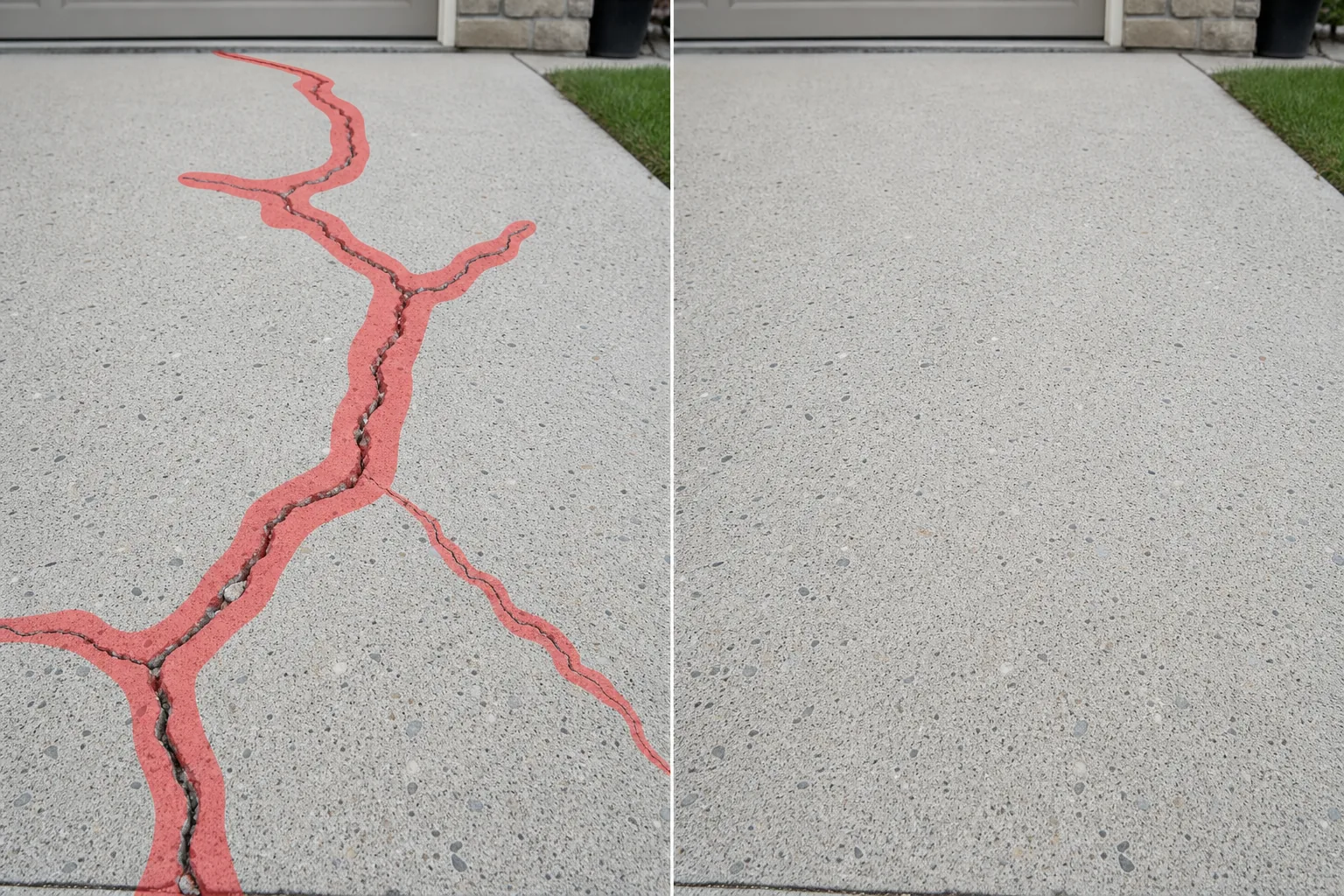
Effacez les fissures dans les murs, le trottoir, les allées, le verre et le béton qui donnent l'impression qu'une propriété ou une scène est négligée. Magic Eraser élimine la fissure et reconstruit le matériau de surface – plâtre, brique, asphalte, carrelage ou verre – avec une texture et une couleur assorties afin que la surface semble intacte et bien entretenue.
Dernière mise à jour
Pourquoi les fissures visibles nuisent aux photos de propriétés et aux travaux architecturaux
Les fissures sont l’un des éléments visuels les plus chargés psychologiquement dans la photographie immobilière et architecturale. Une petite fissure dans un mur suggère des problèmes de fondation. Une allée fissurée signale un entretien différé. Une fenêtre fissurée implique des dommages et de la négligence. Même lorsque les fissures sont esthétiques et structurellement insignifiantes (affaissement normal dans une maison vieille de 20 ans, dilatation thermique du béton, craquelure de la surface du vieux plâtre), elles déclenchent l'hésitation de l'acheteur et diminuent la valeur perçue de la propriété dans les photos de l'annonce. Pour les portfolios architecturaux, les fissures sur des surfaces par ailleurs immaculées compromettent le récit de qualité que le photographe tente de construire. La retouche manuelle des fissures est minutieuse car elles suivent des chemins irréguliers et ramifiés sur des surfaces texturées, et chaque segment traverse des tons de matériaux légèrement différents. L'IA de Magic Eraser trace le chemin de la fissure et le remplit avec une texture de surface assortie (grain de plâtre continu, lignes de mortier alignées dans la brique, motif d'agrégat cohérent dans le béton ou verre lisse) produisant une surface qui semble entretenue plutôt qu'endommagée.
Supprimer les fissures en trois étapes
- 1
Téléchargez votre photo
Ouvrez Magic Eraser sur le Web, iOS ou Android et téléchargez la photo montrant la surface fissurée. JPEG, PNG, HEIC et WebP sont pris en charge. Utilisez la version la plus haute résolution pour que l'IA puisse faire correspondre les textures de surface fines comme le grain du plâtre, les joints de mortier et les motifs d'agrégats.
- 2
Brossez le long de la fissure
Tracez la fissure d'un bout à l'autre, en suivant son chemin, y compris les éventuelles branches et fourches. Utilisez une largeur de pinceau légèrement plus large que la fissure elle-même - cela donne à l'IA une texture de surface propre des deux côtés comme référence pour le remplissage. Pour les motifs de fissures en forme de toile d'araignée (courants dans le verre et le vieux plâtre), appliquez un pinceau sur toute la zone affectée plutôt que de tracer chaque ligne individuelle.
- 3
Effacer et réviser
Appuyez sur Effacer et Magic Eraser remplit la fissure avec un matériau de surface correspondant. Vérifiez le résultat avec un zoom de 100 % : vérifiez que les lignes de mortier dans la brique sont continues, que la texture du plâtre est cohérente et qu'il n'y a aucun artefact de changement de couleur le long de l'ancien chemin de fissure. Exécutez une deuxième passe sur toutes les branches ou extensions capillaires qui ont été manquées, puis exportez en pleine résolution.
Idéal pour
- Photos d'annonces immobilières où des fissures dans l'allée, le trottoir ou les murs signalent un entretien différé
- Travaux de portfolio architectural où les imperfections de surface sapent le récit de la conception
- Documentation de gestion immobilière qui doit montrer l'état après réparation pour les dossiers d'assurance ou de locataire
- Photographie de design d'intérieur où un mur ou un plafond fissuré détourne l'attention de l'espace stylé
- Commercialisation de propriétés commerciales où des parkings ou des sols de halls fissurés réduisent la qualité perçue
- Photographie de bâtiments historiques où les fissures de surface et les fissures du plâtre obscurcissent l'architecture d'origine
- Annonces de locations de vacances où des fissures esthétiques sur les terrasses de piscine, les patios ou les sols carrelés dissuadent les réservations
Conseils pour éliminer les fissures d’apparence naturelle
Les fissures suivent des chemins irréguliers et organiques, et l’IA les remplit mieux lorsqu’on lui donne un coup de pinceau continu plutôt que plusieurs touches courtes. Tracez la fissure d'un seul mouvement fluide d'un bout à l'autre, en suivant les branches au fur et à mesure que vous les rencontrez. Pour les fissures larges où des débris ou une décoloration se sont accumulés à l’intérieur de l’espace, faites en sorte que votre pinceau soit suffisamment large pour couvrir l’intérieur sombre et les bords ébréchés plus clairs des deux côtés – laisser les bords ébréchés crée une couture visible même après la disparition de la ligne sombre. Sur les murs de briques, faites attention à l'alignement des joints de mortier : l'IA reconstruit les lignes de mortier en fonction du motif environnant, et les fissures qui traversent plusieurs joints nécessitent que le chemin complet soit masqué afin que l'IA puisse réaligner la grille. Pour les fissures de verre (fenêtres, miroirs, dessus de table), l’IA gère à la fois les lignes de fissures et les artefacts de réfraction de la lumière qu’elles créent – incluent le halo complet de distorsion autour de la fissure, et pas seulement la ligne de fissure elle-même. Note d'information importante pour l'immobilier : la suppression des fissures dans les photos de la liste est une retouche cosmétique. Si la fissure indique un défaut matériel (fondation, structure), les obligations de divulgation en vertu de la réglementation immobilière locale s'appliquent toujours, quelle que soit la retouche photo.
Questions fréquemment posées
- Est-il gratuit de supprimer les fissures d'une photo ?
- Oui. Le niveau gratuit de Magic Eraser gère l'élimination des fissures avec des limites d'utilisation quotidienne. Premium (29,99 $/an) supprime les limites et débloque des exportations à plus haute résolution pour les listes MLS, les portefeuilles architecturaux et les documents imprimés.
- Peut-il éliminer les fissures en forme de toile d'araignée dans le verre ?
- Oui. Les fissures en toile d'araignée dans les fenêtres, les pare-brise et les dessus de table en verre créent des motifs radiaux complexes avec des halos de réfraction de la lumière. Badigeonnez toute la zone fissurée, y compris la zone de distorsion autour de chaque ligne. L'IA supprime les lignes de fissures, élimine les artefacts de réfraction et reconstruit le verre transparent avec la scène ou l'intérieur visible à travers lui.
- Est-ce que cela réparera une allée fissurée dans laquelle poussent des mauvaises herbes ?
- Oui, bien qu’il s’agisse d’une suppression à deux éléments. Brossez à la fois la fissure et les mauvaises herbes qui y poussent dans le même passage. L'IA remplit la zone avec une texture de chaussée assortie : motif d'asphalte, de béton ou de pavé. Pour les fissures très longues dans l’allée, tracez toute la longueur d’un seul coup de pinceau pour un remplissage plus uniforme.
- La suppression des fissures sur une photo d'annonce viole-t-elle les règles immobilières ?
- La retouche photo esthétique (suppression des imperfections de surface, réglage de l'éclairage) est une pratique courante dans la photographie immobilière. Cependant, si une fissure indique un défaut matériel (affaissement des fondations, dommages structurels, intrusion d'eau), vous avez des obligations de divulgation en vertu de la réglementation immobilière locale, indépendamment de ce que montre la photo de l'annonce. Utilisez l’élimination des fissures pour les imperfections cosmétiques de la surface, et non pour masquer les problèmes structurels connus.
- Peut-il gérer de grandes fissures avec des morceaux de matériau manquants ?
- Oui. Lorsque le matériau s'est écaillé ou écaillé, brossez toute la zone endommagée, y compris les morceaux manquants et les lignes de fissures. L'IA reconstruit la surface comme si elle était intacte, en faisant correspondre le motif de plâtre, de béton ou de brique environnant. Pour les très grandes zones écaillées, un deuxième passage peut améliorer la consistance de la texture.