
Comment enlever les plis des vetements sur les photos — Magic Eraser
Lissez les plis et faux plis des vetements sur les photos de produits et de mode grace a l'IA. Guide pas a pas pour les vendeurs e-commerce, les photographes de mode et toute personne ayant besoin d'images de vetements sans faux plis, sans repassage ni nettoyage a la vapeur.
SEO & Growth
Vérifié par Magic Eraser Editorial ·
Sommaire
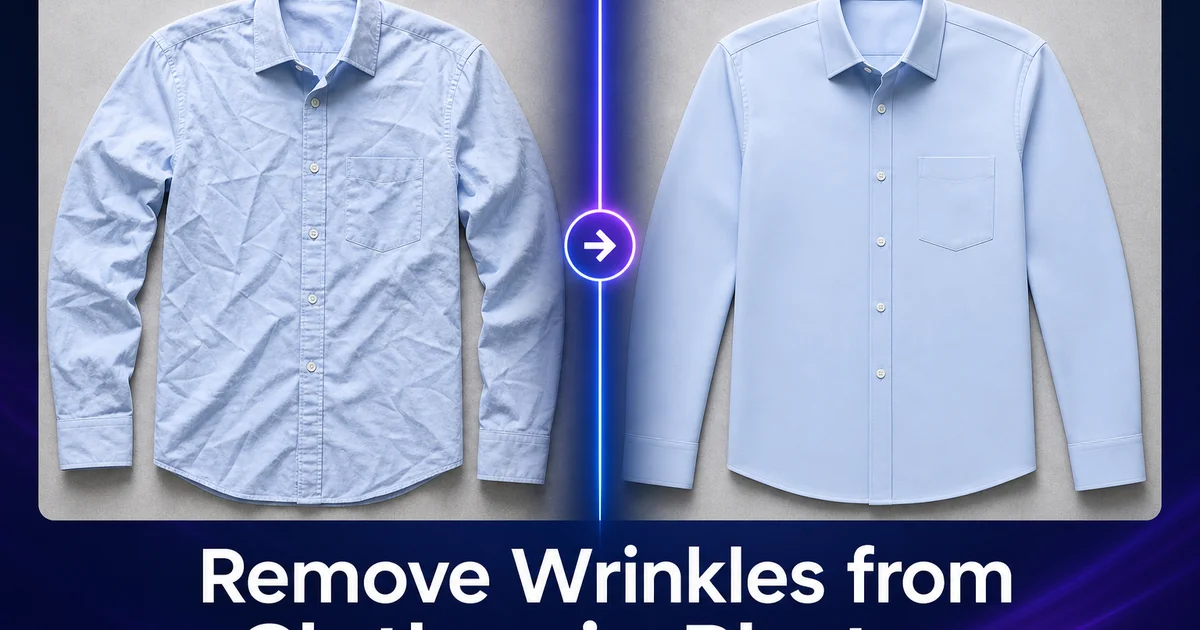
Les plis sur les tissus sont le probleme le plus courant en photographie de vetements et l'un des plus faciles a prevenir lors de la prise de vue. Pourtant, ils apparaissent dans un pourcentage important de fiches produits, d'images de lookbooks et de posts de mode sur les reseaux sociaux. La raison est pratique : repasser ou defroisser correctement chaque vetement avant chaque photo prend du temps, et les effets de la vapeur sont temporaires dans un environnement humide. Certains tissus se froissent a nouveau en quelques minutes des qu'on les manipule pour les positionner sur un mannequin ou un modele. Le lin se froisse presque immediatement apres le repassage. Les mailles en jersey developpent des marques de pliage au moindre contact. Meme les chemises en coton bien coupees presentent des plis aux coudes des que le modele plie le bras. Pour les vendeurs qui photographient des dizaines d'articles par jour, le temps necessaire pour garder chaque vetement parfaitement repasse consommerait plus de main-d'oeuvre que la photographie elle-meme.
La suppression des plis par IA resout ce probleme en phase de post-production. La technologie a atteint un niveau de sophistication qui rend la correction pratiquement indetectable. Les algorithmes d'inpainting modernes ne se contentent pas de flouter le pli. Ils analysent le motif du tissage, la direction des fils, la couleur et la texture de surface du tissu, puis reconstruisent une surface lisse qui conserve toutes ces proprietes. Le resultat est un vetement qui semble fraichement repasse tout en restant un tissu authentique, avec une texture visible et un tombé naturel. Ce type de variation subtile prouve que l'image n'a pas ete remplacee par un remplissage de couleur unie. Ce resultat est sensiblement different des anciennes techniques de clone-stamp et de healing-brush, qui produisaient souvent des artefacts de repetition visibles ou lissaient la texture du tissu de maniere contre-nature.
Ce guide couvre le flux de travail complet pour supprimer les plis des vetements sur les photos a l'aide de Magic Eraser. Nous abordons les plis a supprimer et ceux a conserver. Un lissage excessif detruit les indices visuels qui communiquent la qualite du tissu et sa forme tridimensionnelle. Nous expliquons la technique du pinceau pour differents types de plis : les faux plis superficiels d'emballage, les plis profonds et les plis d'usure au niveau des articulations. Nous abordons les considerations specifiques aux tissus, car l'approche qui fonctionne sur la soie lisse donne de mauvais resultats sur le lin texture. Et nous expliquons comment finaliser l'image pour que les zones traitees s'integrent parfaitement au reste du vetement.
- La suppression des plis par IA analyse le motif du tissage, la direction des fils et la texture de surface pour reconstruire des surfaces lisses qui conservent l'aspect naturel du materiau — sans se contenter de flouter les plis.
- Distinguer les plis supprimables (faux plis d'expedition, plis de rangement, marques d'usure) des elements structurels (coutures, plis intentionnels, pinces) qui definissent la forme tridimensionnelle du vetement.
- La technique du pinceau est importante : utilisez des traits qui suivent la direction du pli, legerement plus larges que le faux pli, et effectuez un second passage sur les plis profonds qui creent des ombres distinctes.
- Les tissus texturés comme le lin, le tweed et le jean necessitent plus d'attention car l'IA doit maintenir un motif de tissage continu sur la zone reconstruite.
- L'utilisation d'AI Enhance apres la suppression des plis unifie la qualite tonale et affine la texture du tissu sur les zones editees et non editees pour un resultat final homogene.
Quels plis supprimer et lesquels conserver
L'erreur la plus courante en retouche photo de vetements est de supprimer trop de plis, ce qui produit une image qui semble irréelle. Le vetement a l'air d'etre sous vide sur le mannequin, sans aucun signe qu'il est fait d'un tissu flexible plutot que de plastique rigide. Un vetement reel a des plis, un tombe et des ondulations douces qui communiquent le poids, la flexibilite et la qualite du tissu. Un pull en cachemire doit sembler doux et legerement drapé. Un blazer structure doit montrer des lignes nettes avec un minimum de plis souples. Un chemisier fluide en soie doit avoir un mouvement gracieux en cascade. Ces caracteristiques sont transmises par le comportement naturel du tissu. Supprimer toute trace de ce comportement prive le vetement des qualites qui donnent envie aux clients de l'acheter.
Les plis que vous voulez supprimer sont ceux qui resultent de la manipulation, de l'emballage ou du stockage, et non du tombe naturel du vetement. Les lignes de pliage horizontales provenant du pliage dans un carton d'expedition sont les cibles les plus evidentes. Elles creent des faux plis geometriques durs qui n'existeraient pas sur un vetement presente en magasin. Les plis concentres aux aisselles d'une chemise pliee bras croises creent un aspect froisse desagreable. Les faux plis diagonaux marques sur une jambe de pantalon provenant de l'emballage donnent au vetement un aspect usage plutot que neuf. Ces plis ne renseignent en rien sur la qualite du tissu et nuisent activement a l'aspect du produit.
Les elements structurels qui ne doivent jamais etre supprimes incluent les coutures, qui definissent la construction et la coupe du vetement. Les pinces a la taille d'une robe ajustee creent la forme qui donne au vetement l'air d'avoir ete concu pour un corps humain. Les plis intentionnels d'une jupe sont un element de design, pas un defaut. Les fronces au niveau d'un encolure ou d'une ceinture sont un rempli structurel qui definit la silhouette du vetement. Meme les plis doux la ou le tissu tombe sur une hanche ou depuis une epaule font partie de l'aspect du vetement porte. Les supprimer reviendrait a deformer le produit. La regle generale est la suivante : si le pli serait la lorsque le vetement est porte dans des conditions ideales, laissez-le.
- Supprimez les faux plis d'expedition, les marques de pliage d'emballage, les plis de rangement et les marques de manipulation qui creent des lignes geometriques dures que le vetement n'aurait pas en magasin.
- Conservez les coutures, les pinces, les plis intentionnels, les fronces et les plis de tombe naturels qui definissent la construction, la silhouette et le caractere du tissu du vetement.
- Un lissage excessif produit un aspect irréel sous vide qui efface les qualites du tissu — poids, douceur, flexibilite — qui donnent envie aux clients d'acheter le vetement.
- La regle generale : si le pli existerait lorsque le vetement est porte ou presente dans des conditions ideales, c'est une caracteristique plutot qu'un defaut.
Technique du pinceau pour differents types de plis et poids de tissus
Les plis superficiels de surface — ceux crees par une manipulation legere ou un bref contact avec une autre surface — sont les plus faciles a supprimer car ils produisent une profondeur d'ombre minimale et ne deforment pas beaucoup la texture du tissu. Un seul passage avec un pinceau legerement plus large que le pli suffit generalement. L'IA interprete le pli comme une perturbation mineure de la surface et le comble avec le motif du tissu environnant de maniere homogene. Ces plis sont courants sur les tissus lisses de poids moyen comme le coton popeline, les melanges polyester et la rayonne, ou la memoire du tissu est faible et les faux plis sont des indentations superficielles plutot que des lignes de pliage dures.
Les faux plis profonds — les lignes dures creees par un emballage serre, un stockage prolonge ou des pliages repetes — sont plus difficiles a traiter car ils impliquent a la fois une ligne visible et un decalage tonal. Le pli lui-meme est une ligne d'ombre dure la ou le tissu se plie nettement. De chaque cote du pli, le tissu peut etre legerement surélevé, creant un motif subtil ombre-lumiere-ombre. Supprimer uniquement la ligne sombre laisse une bande claire contre-nature la ou les zones surélevées subsistent. La technique la plus efficace consiste a faire un trait de pinceau legerement plus large qui couvre le pli et ses rehauts immediats, permettant a l'IA de reconstruire toute la zone affectee comme une seule region lisse. Sur les tissus lourds comme le jean, la toile ou la laine epaisse, les plis profonds peuvent necessiter deux ou trois passages car la profondeur d'ombre depasse ce qu'un seul passage d'inpainting peut neutraliser.
Les plis courbes au niveau des articulations et des points de tombé — le coude d'une manche, le pli d'une jambe de pantalon sur le genou d'un mannequin, la taille d'un vetement sur un mannequin de couture — necessitent un jugement attentif car ils se situent a la frontiere entre le tombé structurel et le faux pli indesirable. Une manche qui froisse au coude sur un modele pose a des plis qui temoignent du comportement reel du tissu. Les supprimer donnerait au bras un aspect rigide et inhumain. Mais si le froissement est extreme — trop de plis serres dans une petite zone — supprimer selectivement un pli sur deux reduit l'encombrement visuel tout en conservant l'impression naturelle du tissu qui se plie au niveau d'une articulation. Utilisez un pinceau plus petit pour une suppression selective et travaillez avec des traits courts et precis plutot que de longs passages amples.
- Les plis superficiels dus a une manipulation legere necessitent un seul passage avec un pinceau legerement plus large que le pli — l'IA les comble de maniere homogene sur les tissus lisses.
- Les faux plis profonds necessitent un pinceau plus large qui couvre a la fois la ligne d'ombre et ses rehauts lateraux, necessitant souvent deux ou trois passages sur les tissus lourds comme le jean.
- Les plis courbes au niveau des articulations doivent etre affines selectivement plutot que supprimes completement — eliminez un pli sur deux pour reduire l'encombrement tout en preservant le tombe naturel du tissu.
- Tracez toujours dans la direction du pli, pas perpendiculairement, afin que l'IA recoive un contexte directionnel sur la geometrie de surface du tissu.
Considerations specifiques aux tissus pour des resultats naturels
Les tissus lisses et serres comme le charmeuse de soie, le satin et le beau tissu fin sont les plus indulgents pour la suppression des plis car leur texture de surface uniforme donne a l'IA un motif coherent a reproduire. La zone reconstruite se fond de maniere invisible car il y a une variation de texture minimale dans le tissu environnant. Cependant, ces tissus sont aussi les plus impitoyables en cas de sur-edition. La soie et le satin ont des reflets lumineux subtils qui se deplacent sur la surface avec la forme tridimensionnelle du tissu, et si vous supprimez trop de plis, les reflets restants peuvent ne plus avoir de sens physique. Un chemisier en soie dont les reflets suggerent des courbes mais dont la surface du tissu est parfaitement plate a un aspect faux, difficile a exprimer mais facile a ressentir.
Les tissus texturés — lin, tweed, maille cablee, velours cotele, jean, bouclette — presentent le defi inverse. Leur texture de surface est complexe et non repetee, ce qui signifie que l'IA doit travailler davantage pour generer un remplissage de texture convaincant pour la zone supprimee. Le lin est particulierement difficile car sa texture froissée caractéristique est a la fois la qualite visuelle definissant le tissu et ce que vous essayez de reduire. L'objectif avec le lin n'est pas de le rendre parfaitement lisse — cela lui donnerait l'aspect d'un tissu completement different — mais de supprimer les pires faux plis d'expedition tout en conservant le froissement doux et organique qui fait que le lin ressemble a du lin. Utilisez une touche plus legere avec des traits de pinceau plus petits et acceptez qu'une certaine variation de texture subsiste.
Les tissus a motifs — rayures, carreaux, imprimés, fleuris — necessitent que l'IA maintienne la continuite du motif sur la zone reparationee. Une rayure qui se courbe au niveau d'un pli doit se redresser lorsque le pli est supprime. La largeur et l'espacement de la rayure doivent rester constants. Les algorithmes d'inpainting modernes gerent cela remarquablement bien pour les motifs geometriques simples comme les rayures et les carreaux. Les imprimés complexes avec de grands motifs peuvent occasionnellement produire des artefacts visibles la ou l'IA a du inventer un contenu de motif. Pour les motifs complexes, travaillez par petites sections et verifiez chaque reparation en zoomant avant de passer au pli suivant. Si l'IA genere un remplissage de motif evidentment incorrect, annulez et reessayez avec un chemin de pinceau legerement different. La nature stochastique de l'inpainting fait qu'une seconde tentative donne souvent un meilleur resultat.
- Les tissus lisses comme la soie et le satin se fondent parfaitement mais sont impitoyables en cas de sur-edition — les reflets lumineux de surface doivent toujours avoir un sens physique apres la suppression des plis.
- Le lin doit conserver son froissement organique caractéristique — supprimez uniquement les pires faux plis d'expedition et preservez la texture douce qui definit l'identite du tissu.
- Les tissus a motifs necessitent une continuite du motif sur les zones reparationees. Les rayures doivent se redresser et l'espacement doit rester constant, ce qui fonctionne bien pour les motifs geometriques mais peut necessiter plusieurs tentatives pour les imprimés complexes.
- Lorsque l'IA genere des remplissages de motif incorrects, annulez et reessayez avec un chemin de pinceau legerement different — le processus stochastique d'inpainting produit souvent de meilleurs resultats a la seconde tentative.
Normes e-commerce et marketplace pour la photographie de vetements
Amazon, Shopify, Etsy et autres grandes places de marche ont des exigences specifiques en matiere d'images qui influencent comment et avec quelle agressivite vous devez editer les plis des vetements. Les directives de photographie de produits d'Amazon stipulent explicitement que les images doivent representer le produit avec precision, ce qui signifie qu'une suppression extreme des plis donnant a une chemise en lin naturellement froissée l'air d'avoir ete sculptee dans le marbre pourrait theoriquement violer leurs conditions. Dans la pratique, supprimer les dommages d'emballage et les faux plis d'expedition pour montrer le vetement tel qu'il apparaitrait fraichement défroissé en magasin est universellement accepté. Vous montrez le produit sous son meilleur jour, sans le deformer. La limite se situe au niveau de la suppression des caracteristiques inherentes du tissu que le client rencontrerait en recevant le produit.
La coherence dans tout un catalogue de produits est plus importante que la perfection sur une image isolee. Si votre fiche produit montre douze articles et que onze presentent des plis visibles tandis qu'un est parfaitement lisse, ce dernier semble artificiellement edité plutot que bien photographié. A l'inverse, si vous editez chaque image selon le meme standard — supprimer les faux plis d'expedition tout en conservant le tombé naturel — le catalogue a l'air d'avoir ete pris par un professionnel meme s'il a ete photographié au telephone et retouché. Construire un flux de travail coherent signifie appliquer le meme jugement sur les plis a conserver et a supprimer pour chaque vetement, en utilisant AI Enhance avec les memes reglages pour chaque image afin que la qualite tonale soit uniforme.
Le taux de retour est la mesure ultime pour savoir si votre edition des plis sert bien l'entreprise. Si les clients recoivent des vetements nettement plus froissés que sur les photos, les retours augmentent et les avis en patissent. L'objectif est de montrer le vetement tel qu'il apparait lorsqu'il est bien entretenu — défroissé, suspendu correctement et photographié sous un éclairage flatteur — et non tel qu'il est sorti du carton d'emballage. C'est un standard raisonnable et defendable qui aligne l'interet commercial pour des photos attrayantes avec l'attente du client de recevoir le produit presente. Si un vetement est naturellement froissé — certains lins et gazes froissées sont concus ainsi — montrer une partie de cette texture sur les photos definit des attentes correctes et reduit en fait les retours.
- Supprimez les faux plis d'expedition et d'emballage pour montrer le vetement tel qu'il apparaitrait fraichement défroissé en magasin — c'est universellement accepté sur toutes les grandes places de marche.
- La coherence du catalogue est plus importante que la perfection d'une image isolee — appliquez le meme standard d'edition a chaque produit pour que la collection ait l'air professionnelle.
- La sur-edition qui supprime les caracteristiques inherentes du tissu augmente les taux de retour car les clients recoivent des vetements qui semblent differents des photos.
- Les tissus intentionnellement froissés comme le lin et la gaze froissée doivent montrer une certaine texture sur les photos pour definir des attentes correctes et reduire la deception des clients.
How to do it
- 1
Photograph the garment with even lighting to minimize hard shadow lines in wrinkles
Soft, diffused lighting reduces the visual intensity of fabric wrinkles at capture. Means the AI has less severe creases to correct and produces more natural results. Shoot near a large window with a sheer curtain, or use a softbox or umbrella light if working in a studio. Avoid direct flash and hard point-source lights. Create deep shadows in every fold and crease that look like permanent fabric defects. Photograph the garment on a mannequin, dress form, or flat-lay surface to minimize the gravity-induced sagging wrinkles that occur on hangers.
- 2
Open the image in Magic Eraser and identify the wrinkles to remove
Zoom in to the garment at full resolution and distinguish between wrinkles that should be removed and those that define the garment's structure. Seam lines, intentional pleats, darts, and gathering are structural features that make the clothing look three-dimensional. Removing them would make the garment look like a flat color swatch. Target shipping creases, packaging folds, wear wrinkles at elbows and knees. Horizontal fold lines from storage that the garment would not have when worn or properly displayed.
- 3
Brush over unwanted wrinkles with the eraser tool
Use a brush size slightly wider than the wrinkle you are removing. Paint over the crease in a single smooth stroke following the wrinkle's direction. The AI analyzes the surrounding fabric texture, weave pattern. Color, then reconstructs a smooth surface that maintains the fabric's natural look. For deep creases that cast shadows, you may need to make two passes. One to remove the dark shadow line and a second to blend the reconstructed area with the surrounding fabric tone.
- 4
Run AI Enhance to restore consistent fabric texture across edited areas
After removing wrinkles, run the image through AI Enhance to unify the tonal quality across the garment. The boost evens out subtle brightness differences between the original fabric areas and the AI-reconstructed areas, corrects any slight color shifts introduced by the inpainting. Sharpens the fabric weave texture so the edited garment looks always crisp across its entire surface. This step is mainly important for textured fabrics like linen, tweed, or denim where the weave pattern must read as steady.
- 5
Export at the resolution required by your marketplace or website platform
For Amazon, Shopify, and most e-commerce platforms, export as a high-quality JPEG at a minimum of 1600 pixels on the longest edge. For fashion lookbooks and catalog printing, export as a lossless PNG or TIFF at 300 DPI. For social media, crop to the platform's recommended aspect ratio before exporting to prevent automatic cropping that might cut off parts of the garment. Save the edited file alongside the original so you can re-edit if the listing needs change.
Sources
- E-Commerce Product Photography Standards and Consumer Expectations — Shopify
- Fashion Photography Retouching: Industry Standards and Ethics — American Society of Media Photographers
- Image Inpainting with Deep Learning: A Survey — arXiv