
Comment creer un effet laque Yamanaka avec la retouche photo AI
Transformez vos photos en effets de laque Yamanaka japonaise grace au transfert de style AI. Guide pas a pas couvrant la finition transparente tame-nuri sur bois tourne, l'esthetique bois brut kiji-tame, la couleur en couches kasane-nuri et la decoration maki-e sur formes tournees.

Product Marketing
Vérifié par Magic Eraser Editorial ·
Sommaire
- En quoi le rendu AI du fil a travers la laque differe de la superposition de texture de bois
- Traditions de finition Yamanaka: tame-nuri, kiji-tame, kasane-nuri et maki-e
- Selection des essences de bois et rendu du fil specifique a l'espece
- Applications creatives: photographie de produit, design d'interieur et education a l'artisanat
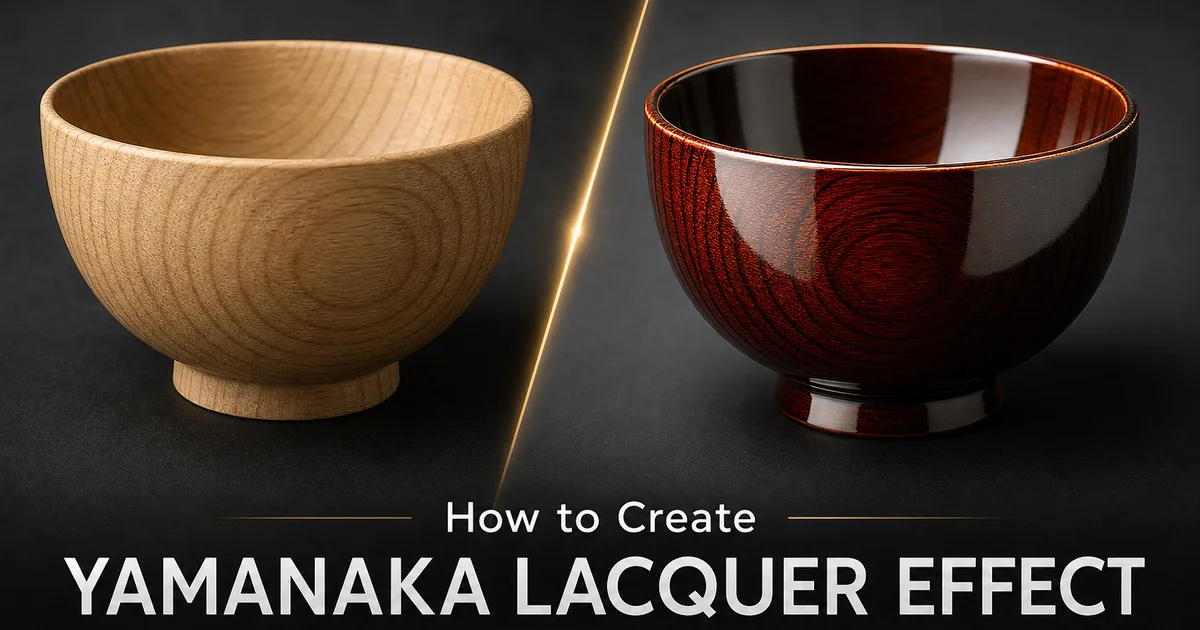
La laque Yamanaka — produite dans le district de Yamanaka Onsen a Kaga, prefecture d'Ishikawa, depuis plus de quatre cents ans — occupe une position singuliere parmi les traditions de laque japonaises car elle eleve le tournage sur bois d'une etape de faconnage preparatoire a l'expression artistique centrale de l'artisanat. Alors que les autres centres de laque traitent le substrat de bois comme une fondation a couvrir et dissimuler par la laque, les artisans de Yamanaka celebrent le bois tourne lui-meme, utilisant des revetements de laque transparents et translucides qui revelent et rehaussent la beaute du fil du bois lorsqu'il suit les courbes elegantes creees sur le tour. L'interaction entre le motif organique du fil du bois et la forme geometrique raffinee est l'esthetique definissant Yamanaka, la distinguant de l'accent sur la decoration de surface de Wajima ou de l'orientation vers la profondeur polie d'Echizen.
La tradition s'est developpee a partir du seizieme siecle lorsque des tourneurs sur bois se sont installes pres des forets abondantes et des sources chaudes de la region de Yamanaka, produisant initialement des recipients en bois tourne non finis qui etaient ensuite envoyes a d'autres centres de laque de Kaga pour le revetement. Au fil du temps, les artisans de Yamanaka ont developpe leurs propres techniques de laquage specialement concues pour complementer plutot que dissimuler leur travail de tournage de plus en plus sophistique. Il en resulte une tradition ou le tourneur et le laqueur collaborent. Ou sont souvent la meme personne — pour creer des objets dont l'impact visuel depend du dialogue entre les deux processus. Un bol Yamanaka n'est pas simplement une forme en bois avec de la laque par-dessus. C'est une composition ou les courbes tournees, le motif du fil du bois et la translucidite de la laque sont concus comme un systeme visuel integre.
Le transfert de style AI peut simuler les proprietes optiques complexes de la laque Yamanaka en apprenant a partir de photographies de pieces authentiques comment le fil du bois tourne, les surfaces courbes et les revetements de laque translucide interagissent. Le defi est de rendre la qualite tridimensionnelle de la maniere dont le fil du bois enveloppe les courbes tournees. Les lignes de fil qui paraissent droites sur une planche plate se compriment, se dilatent et se courbent en suivant le profil d'un bol, d'un vase ou d'une tasse — et comment la laque transparente ajoute profondeur et chaleur a cette surface deja complexe. Ce guide couvre le flux de travail complet pour creer des effets de laque Yamanaka en utilisant AI Filter et AI Enhance, de la selection de la tradition de finition appropriee a la configuration de l'interaction fil-surface en passant par le raffinement des details materiaux qui rendent la simulation convaincante.
- AI rend le dialogue caracteristique de Yamanaka entre la forme tournee et le revetement de laque translucide — le fil revele et rehausse plutot que dissimule sous la surface.
- De multiples prereglages de traditions de finition couvrent l'affichage transparent du fil tame-nuri, l'intervention minimale de laque kiji-tame, la superposition de couleur translucide kasane-nuri et la decoration doree maki-e.
- L'interaction fil-courbure simule comment les cernes annuels se compriment autour des epaules du recipient et se dilatent sur les surfaces interieures en suivant le profile tourne tridimensionnel.
- Le rendu des essences de bois inclut le grain dramatique et audacieux du zelkova, la figure subtile et chaude du cerisier, la texture pale et uniforme du marronnier et les lignes delicates et legeres du harigiri.
- AI Enhance refine la tension visuelle entre les motifs organiques du fil du bois et les courbes geometriques precises des formes tournees qui definit l'esthetique Yamanaka.
En quoi le rendu AI du fil a travers la laque differe de la superposition de texture de bois
L'approche numerique la plus courante pour creer un effet bois-et-laque consiste a plaquer une texture de fil du bois sur la surface de l'image et a appliquer une superposition brillante pour simuler un revetement de laque. Cela traite le fil du bois comme un motif decoratif plat et la laque comme un brillant de surface. Manquant la relation tridimensionnelle fondamentale entre le motif du fil et la forme de l'objet qui definit la laque Yamanaka. Sur un bol tourne, le fil du bois n'est pas un motif plat repetitif. C'est la section transversale visible a travers la structure des cernes de croissance d'un arbre specifique, coupee a un angle specifique par la selection et l'orientation de l'ebauche de bois sur le tour par le tourneur. Le motif du fil se courbe, se comprime et se dilate en suivant le profile du recipient parce que les cernes de croissance sont des structures cylindriques tridimensionnelles intersectees par les surfaces courbes interieures et exterieures du bol.
Le rendu Yamanaka par AI modelise le fil du bois comme un volume tridimensionnel. Des cernes de croissance concentriques avec un espacement, une variation de densite et des traits de figure specifiques a l'espece — intersectes par la forme du recipient tourne pour produire le motif du fil visible sur la surface. A l'exterieur d'un bol, les lignes de fil se courbent vers le bas depuis le bord et se compriment en approchant du pied ou le diametre du recipient se retrecit. A l'interieur, les memes cernes de croissance produisent un motif different car la surface interieure intersecte la structure des cernes a des angles differents. L'AI genere ces motifs en modelisant l'intersection geometrique des volumes de cernes de croissance avec les formes de surface tournees, produisant un fil physiquement correct plutot qu'applique decorativement.
Le rendu de la laque ajoute la dimension de profondeur translucide qui transforme le fil du bois brut en esthetique Yamanaka. L'urushi transparent applique sur le bois tourne ne rend pas simplement la surface brillante. Il penetre legerement les fibres du bois, assombrissant et enrichissant la couleur naturelle du bois tout en ajoutant une couche translucide au-dessus qui cree profondeur et chaleur. L'effet est similaire a la maniere dont l'humidification d'une pierre revele des couleurs et des motifs invisibles a l'etat sec. Avec la dimension supplementaire de la chaleur du polymere organique de la laque. L'AI imite ce comportement de penetration-plus-revetement, produisant un rendu ou le fil apparait vu a travers un milieu transparent chaud et lumineux plutot que sous une surface brillante plate.
- Les superpositions de texture de bois plaquent des motifs de fil plats, manquant la relation tridimensionnelle ou les sections transversales des cernes suivent le profile courbe du recipient tourne.
- L'AI modelise le fil comme des volumes de cernes de croissance concentriques intersectes par la forme tournee, produisant des motifs qui se compriment autour des profils etroits et se dilatent sur les surfaces larges.
- Les surfaces interieures et exterieures du meme bol tourne montrent des motifs de fil differents car elles intersectent la structure des cernes a des angles geometriques differents.
- Le rendu de laque simule l'amelioration de profondeur par penetration dans le bois de l'urushi plutot que d'appliquer une superposition brillante plate, produisant chaleur et translucidite fideles au materiau.
Traditions de finition Yamanaka: tame-nuri, kiji-tame, kasane-nuri et maki-e
Le tame-nuri — finition laque transparente — est la technique signature de Yamanaka et l'expression la plus complete de la philosophie de la tradition selon laquelle la beaute du fil du bois doit etre revelee plutot que dissimulee. De multiples couches d'urushi clair ou legerement teinte ambre sont appliquees sur la surface de bois soigneusement tournee et lissee, chaque couche accumulant profondeur et protection tout en rehaussant la couleur naturelle et le contraste du fil. La teinte ambre de l'urushi naturel s'assombrit avec le temps par la reticulation polymere continue, ce qui signifie que les pieces tame-nuri Yamanaka developpent un aspect de fil plus riche et plus chaud au fil des decennies d'utilisation. Le vieillissement ameliore plutot qu'il ne degrade l'effet visuel. L'AI modelise cette chaleur ambre et l'effet d'accumulation de profondeur des multiples couches transparentes sur le motif de fil specifique a l'espece du bois.
Le kiji-tame represente l'intervention de laque la plus minimale dans la tradition Yamanaka. Un mince revetement de laque transparente applique principalement pour la protection plutot que pour l'amelioration visuelle. Le fil du bois apparait presque comme dans un etat non fini mais avec le subtil approfondissement chaleureux que meme une seule couche d'urushi procure. Ce style est privilegie pour les bois a la figure naturelle principalement dramatique. Zelkova fortement figure, erable œil-de-perdrix ou sections ronceuses — ou une profondeur de laque supplementaire entrerait en competition avec la complexite visuelle inherente du bois plutot que la completer. Le kasane-nuri adopte l'approche opposee, accumulant des couches de laque coloree finement teintee sur le fil de sorte que le motif du bois transparait a travers la couleur. Une teinte rouge ou verte qui ajoute une dimension de couleur artificielle tout en maintenant la structure organique du fil visible en dessous.
La decoration maki-e sur la laque Yamanaka cree une tension visuelle distinctive absente dans le travail maki-e plat. Lorsque des motifs en poudre d'or ou d'argent. Paysages, fleurs, motifs geometriques — sont appliques sur une surface tournee courbe, le design bidimensionnel doit s'adapter a la forme tridimensionnelle. Une branche de pin dessinee sur l'epaule d'un bol se courbe avec la surface, ses proportions se comprimant et se dilatant a mesure que le profil de surface change. Les artistes maki-e Yamanaka habiless exploitent cette interaction, concevant des motifs qui gagnent un interet visuel grace a leur adaptation a la surface courbee plutot que d'etre deformes par elle. L'AI rend cette interaction design-sur-courbe, placant des elements decoratifs qui suivent la geometrie de la surface tournee avec les choix compositionnels deliberes qui distinguent le maki-e habiless de l'application mecanique de motifs.
- La finition transparente tame-nuri s'approfondit et se rechauffe sur des decennies a mesure que le polymere d'urushi continue la reticulation, ce qui signifie que les pieces Yamanaka agees developpent un aspect de fil plus riche que les nouvelles.
- La laque minimale kiji-tame preserve la figure naturelle dramatique dans les bois fortement grainers ou une profondeur supplementaire entrerait en competition avec la complexite visuelle inherente du bois.
- Les couches translucides teintees kasane-nuri ajoutent de la couleur — rouge, vert ou ambre — tout en maintenant la structure du fil visible, creant un effet visuel de verre colore sur bois.
- Le maki-e sur surfaces tournees cree une interaction design-sur-courbe ou les motifs bidimensionnels gagnent un interet visuel grace a leur adaptation aux formes de recipients tridimensionnelles.
Selection des essences de bois et rendu du fil specifique a l'espece
Les artisans Yamanaka selectionnent les essences de bois non pas pour l'uniformite mais pour le caractere visuel distinctif que chaque essence apporte a la piece finie. L'AI doit rendre ces proprietes de fil specifiques a l'espece avec precision pour que la simulation soit convaincante. Le zelkova (keyaki) — le bois Yamanaka le plus prise — produit un fil dramatique et audacieux avec un fort contraste entre le bois initial et le bois final dans chaque cerne de croissance, creant des motifs en forme de flamme lorsque la bille est coupee et tournee. Le fil a une qualite tridimensionnelle sur le zelkova car les grands pores du bois initial creent de legeres depressions de surface qui captent la lumiere differemment des bandes denses de bois final, un effet que la laque transparente amplifie grandement.
Le cerisier (sakura) produit un fil chaud et subtil avec des transitions tonales douces entre les cernes de croissance et une texture fine et uniforme qui complemente les courbes lisses des formes tournees. L'attrait du cerisier pour le travail Yamanaka reside dans sa subtilite. Le fil rehausse la forme du recipient sans entrer en competition pour l'attention visuelle, ce qui en fait le choix privilegie pour les pieces ou la forme tournee elle-meme est l'enonce esthetique principal. Le marronnier (tochinoki) offre un bois pale, presque blanc, avec un motif ondule distinctif qui semble scintiller et se deplacer a mesure que l'angle de vue change. Cet effet chatoyant — cause par un fil entrecroise ou les faisceaux de fibres adjacents s'inclinent dans des directions opposees — est l'un des effets de bois les plus dramatiques visuellement dans la nature et est prise par les tourneurs Yamanaka pour les pieces d'exposition speciales.
Le harigiri fournit un bois leger avec des lignes de fil claires et bien definies qui sont moins dramatiques que le zelkova mais plus definies que le cerisier, occupant un juste milieu qui le rend polyvalent pour les articles de table quotidiens et les pieces d'exposition. L'AI rend chaque essence avec ses proprietes de fil caracteristiques. Le contraste audacieux du zelkova, la subtilite chaude du cerisier, le scintillement chatoyant du marronnier et la clarte lineaire propre du harigiri — et ajuste comment la laque transparente interagit avec chacune, puisque l'urushi penetre et ameliore differentes densites de bois et structures de pores de manieres specifiques a l'espece. Les grands pores du zelkova absorbent plus d'urushi, creant une couleur plus profonde dans les bandes de bois initial. Les pores fins du cerisier produisent un enrichissement de couleur plus uniforme a travers le fil.
- Le zelkova produit un fil dramatique en forme de flamme avec un fort contraste bois initial-bois final que la laque transparente amplifie en penetrant la structure de grands pores du bois initial.
- Le cerisier offre un fil chaud et subtil qui rehausse plutot qu'il ne compete avec les formes tournees, privilegie lorsque la forme du recipient elle-meme est l'enonce esthetique principal.
- Le fil entrecroise du marronnier produit un scintillement chatoyant qui se deplace avec l'angle de vue, l'un des effets visuels les plus dramatiques du bois naturel.
- L'interaction laque specifique a l'espece est modelisee — l'urushi penetre profondement les grands pores du zelkova tout en produisant un enrichissement de couleur plus uniforme sur la texture fine du cerisier.
Applications creatives: photographie de produit, design d'interieur et education a l'artisanat
Les photographes de produit et les marques de style de vie de luxe utilisent les effets de laque Yamanaka pour creer des images qui partagent la chaleur organique et le raffinement artisanal de l'artisanat japonais base sur le bois. L'esthetique Yamanaka — ou la beaute du materiau naturel et la competence humaine sont inseparables — resonne avec les valeurs modernes des consommateurs autour de la durabilite, de l'authenticite et de la qualite artisanale. La photographie culinaire transformee avec l'effet de fil transparent tame-nuri suggere la chaleur d'un bol en bois tourne a la main. L'imagerie de produit pour les cosmetiques, la papeterie ou les accessoires de mode rendue avec de la laque teintee kasane-nuri sur du fil du bois cree une identite visuelle sophistiquee de luxe naturel qui se connecte a des siecles d'heritage artisanal japonais.
Les designers d'interieur et les architectes travaillant avec des concepts de design d'influence japonaise ou de materiau naturel utilisent les modifications de laque Yamanaka pour creer des planches d'ambiance et des documents de visualisation qui partagent la qualite du fil du bois visible a travers la finition laque. Ceci est principalement utile pour specifier des travaux de laque personnalises pour des projets d'hotellerie. Hotels, restaurants et spas — ou le designer doit montrer aux clients comment differentes essences de bois et traitements de laque apparaîtraient dans l'espace avant de commander la production artisanale reelle. L'AI permet aux designers d'appliquer des effets Yamanaka sur des photographies de surfaces, d'espaces ou d'objets existants, creant des apercus convaincants de comment le travail de laque fini s'integrerait dans le schema de design d'interieur plus large.
Les educateurs en artisanat et les organisations culturelles utilisent la simulation comme outil pedagogique pour comprendre la relation entre les decisions de tournage sur bois, la selection du bois et le traitement de laque dans la tradition Yamanaka. Les etudiants peuvent explorer comment differentes essences de bois, profils de tournage et finitions de laque interagissent visuellement sans consommer les materiaux couteux et les semaines de temps de production que l'experimentation physique necessite. Pour les expositions museales sur les arts de la laque japonaise, la simulation cree des experiences interactives ou les visiteurs peuvent voir comment la meme forme tournee apparait dans differentes essences de bois et traitements de laque, developpant l'appreciation pour l'expertise decisionnelle que les artisans Yamanaka apportent a chaque piece.
- La photographie de produit de luxe utilise les effets Yamanaka pour communiquer la chaleur organique et le raffinement artisanal qui resonne avec les valeurs contemporaines des consommateurs de materiaux naturels.
- Les designers d'interieur previsualisent les combinaisons d'essences de bois et de traitements de laque pour les travaux de laque d'hotellerie personnalises avant de commander la production aupres des ateliers artisanaux.
- Les educateurs en artisanat permettent aux etudiants d'explorer visuellement les interactions entre tournage, selection du bois et laque sans consommer de materiaux couteux ni de semaines de temps de production.
- Les expositions museales creent des experiences interactives montrant comment la meme forme tournee apparait dans differentes essences et finitions, developpant l'appreciation pour l'expertise des artisans Yamanaka.
How to do it
- 1
Upload your photo and assess its suitability for woodturning lacquer aesthetics
Open your image in AI Filter and evaluate how its composition maps to the visual language of Yamanaka lacquerware. Yamanaka — one of the three great lacquer production centers of the Kaga region in Ishikawa Prefecture — is uniquely distinguished among Japanese lacquer traditions by its emphasis on woodturning (rokuro) as the primary shaping technique, producing elegant curved forms that celebrate the beauty of turned wood grain beneath translucent lacquer coatings. Images with flowing curves, organic shapes, and subjects that translate naturally into the vocabulary of turned vessels work most well with the Yamanaka aesthetic.
- 2
Select a Yamanaka woodturning style and configure grain visibility parameters
Choose from presets mimicking the major Yamanaka finishing traditions. Tame-nuri (transparent lacquer revealing the full beauty of the turned wood grain), kasane-nuri (layered colored lacquer with grain partially visible through translucent upper layers), kiji-tame (wood-base transparent finish that maximizes the raw turned-wood aesthetic with minimal lacquer intervention), and maki-e decorated styles where gold or silver powder designs are applied over the lacquered turned surface. Each preset configures lacquer transparency, grain visibility, surface curvature emphasis, and the distinctive lathe marks that identify woodturned forms.
- 3
Adjust grain rendering, lacquer translucency, and curved surface behavior
Fine-tune the simulation of how wood grain, lacquer coating, and turned-surface geometry interact optically. Yamanaka lacquerware's distinctive character arises from the dialogue between the organic patterns of wood grain. Annual growth rings, medullary rays, figure and chatoyance — and the refined curved forms created by the woodturner's lathe. The AI renders this interaction with sliders for grain prominence, lacquer translucency depth, the way light wraps around curved turned surfaces. The subtle tool marks where the turner's chisel shaped the rotating wood blank on the lathe.
- 4
Use AI Enhance to refine wood grain clarity, lacquer depth, and turning marks
Run AI Enhance to sharpen the visual dialogue between wood grain pattern and lacquered surface form. For tame-nuri and kiji-tame transparent styles, the boost accentuates the three-dimensional quality of the grain as it follows the curvature of the turned vessel. The way annual rings appear to curve and compress around the shoulder of a bowl or expand across the interior surface. For decorated styles, the boost brings out the contrast between flat maki-e gold patterns and the curved lacquered ground beneath, reproducing the visual tension between two-dimensional design and three-dimensional form.
- 5
Export and compare against documented examples of Yamanaka lacquerware
Save the completed image at full resolution and compare it with photographs of documented Yamanaka lacquerware from the Yamanaka Lacquerware Museum, the Ishikawa Prefectural Museum of Art, and the Japan Folk Crafts Museum. Verify that the wood grain rendering is consistent with species actually used in Yamanaka production. Zelkova, cherry, horse chestnut, and castor aralia — that the turned forms follow the conventions of functional lacquerware vessels, and that the lacquer coating behavior respects the physical properties of urushi on curved wooden surfaces.
Sources
- Yamanaka Lacquerware: The Art of Woodturning and Urushi in Kaga — Yamanaka Lacquerware Cooperative Association
- Wood Grain and Lacquer: Material Interaction in Japanese Turned Lacquerware — Studies in Conservation — International Institute for Conservation
- Traditional Woodturning Techniques of the Kaga Region — Association for the Promotion of Traditional Craft Industries