
Comment créer un effet laque urushi avec l’IA
Transformez une photo en effet laque japonaise avec AI Filter et AI Enhance : maki-e, roiro noir miroir, negoro, shunkei et profondeur de surface.
SEO & Growth
Vérifié par Magic Eraser Editorial ·
Sommaire
- En quoi le rendu urushi par IA differe des approches simples de brillance et de superposition de couleurs
- Decoration a l'or et a l'argent maki-e : de la poudre plate au relief tridimensionnel
- Negoro, shunkei et les traditions regionales de laque au-dela du noir et du rouge
- Applications creatives : image de marque luxueuse, visualisation interieure et art numerique
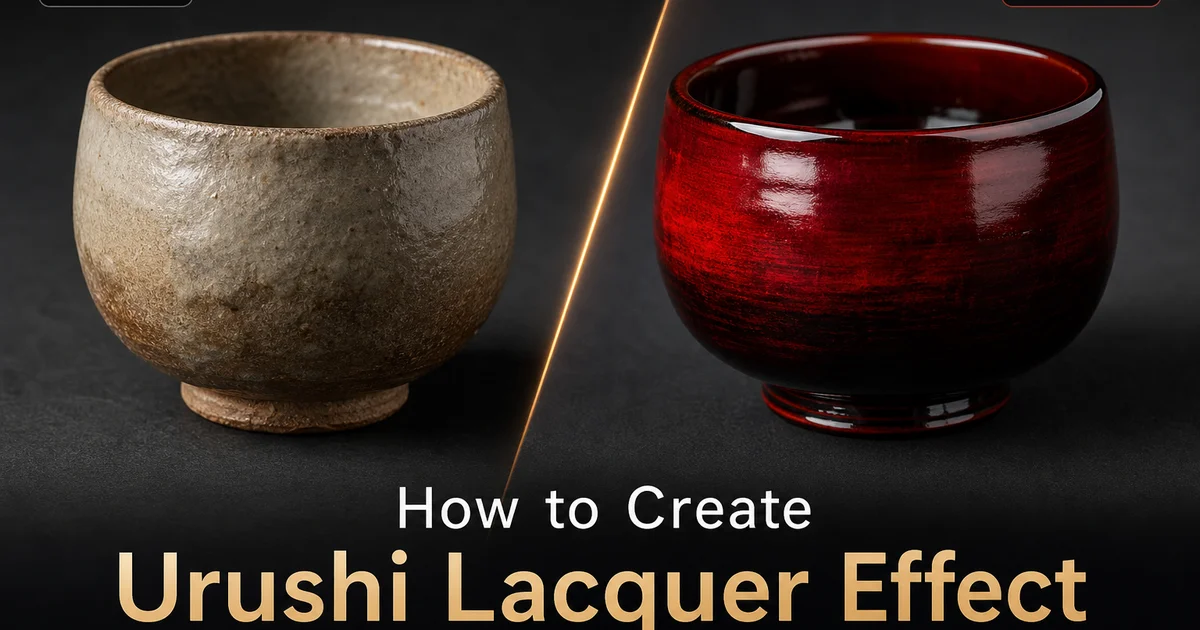
L'urushi — la seve raffinee de l'arbre Toxicodendron vernicifluum qui sert de materiau de revetement supreme en Asie de l'Est depuis plus de neuf mille ans — produit une finition de surface incomparable avec les peintures synthetiques, vernis ou revetements polymeres. La profondeur et la luminosite extraordinaires de la laque urushi polie resultant d'une chimie de durcissement unique : contrairement aux peintures qui sechent par evaporation de solvant, l'urushi polymerise par un processus d'oxydation catalyse par des enzymes necessitant des conditions specifiques de temperature et d'humidite, produisant une structure moleculaire reticulee d'une clarte optique approchant le verre. Chacune des vingt a trente couches appliquees lors de la production traditionnelle de laque ajoute une couche supplementaire de couleur translucide, et l'effet cumulatif est une surface qui semble contenir la lumiere dans sa profondeur plutot que de simplement la reflechir depuis le dessus. La qualite que l'esthetique japonaise decrit comme urushi no tsuya, le lustre distinctif de la laque.
La reproduction numerique de l'esthetique urushi a historiquement echoue car la propriete visuelle definitive du materiau — sa profondeur extraordinaire — ne peut etre capturee par une manipulation des couleurs en surface. Appliquer une finition brillante sur une surface rouge ou noire produit quelque chose qui ressemble a du plastique ou de la peinture automobile, qui partage la reflectivite de l'urushi mais manque de sa profondeur et de sa chaleur. Les irregularites organiques d'un materiau naturel poli a la main. La maniere specifique dont l'urushi traite la lumiere reflechie est subtilement mais crucialement differente des materiaux synthetiques : les reflets dans l'urushi sont legerement plus chauds en temperature de couleur, plus doux sur leurs bords, modules par les couches translucides inferieures qui donnent a la surface ce sens caracteristique de contenir de la profondeur plutot que de presenter un miroir plat.
Le transfert de style par IA surmonte ces limitations en apprenant a partir de milliers de photographies de veritables laques urushi ce a quoi ce materiau ressemble reellement sous divers eclairages. Comment les reflets se deplacent sur les surfaces courbes avec la qualite de bords doux d'un poli organique plutot que la qualite de bords durs d'un vernis synthetique, comment les couches translucides inferieures creent des changements de couleur aux angles de vue extremes ou la lumiere traverse plus de laque avant de reflechir, et comment les diverses techniques decoratives — poudre d'or maki-e, incrustation de nacre raden, feuille d'or incisee chinkin — interagissent avec la surface de laque qui les entoure. Ce guide couvre chaque etape de la creation d'effets de laque urushi avec AI Filter et AI Enhance, de la selection du style de laque de base a la configuration des techniques decoratives et de la profondeur optique qui definit ce materiau extraordinaire.
- L'IA reproduit la profondeur translucide multicouche de l'urushi. Des dizaines de couches polies a la main visibles sous la surface — ce qui distingue la laque de la reflectivite plate des peintures synthetiques et des vernis.
- De multiples prereglages techniques couvrent les principales traditions urushi : le poli miroir noir roiro, l'usure en couches rouge-sur-noir negoro, l'ambre transparent sur bois shunkei et la decoration elaboree a la poudre d'or maki-e.
- Le rendu de surface de laque capture la qualite de reflet organique chaud de l'urushi naturelle qui differe des reflets neutres froids des revetements synthetiques en temperature de couleur et en douceur des bords.
- AI Enhance affine les details en or maki-e — particules de poudre individuelles, elements de design en relief et lignes de feuille d'or incisees — avec la reflectivite metallique specifique de l'or et de l'argent dans la laque.
- La simulation de profondeur optique cree le sens caracteristique de lumiere contenue dans la surface de laque plutot que reflechie depuis son sommet, la qualite que l'esthetique japonaise appelle urushi no tsuya.
En quoi le rendu urushi par IA differe des approches simples de brillance et de superposition de couleurs
L'effet de laque numerique le plus courant applique une couche speculaire haute brillance sur un remplissage de couleur rouge ou noir uni, produisant une surface qui ressemble a du plastique, de la peinture humide ou un vernis automobile plutot qu'a de la laque naturelle. Cette approche capture la reflectivite de l'urushi mais manque toutes les autres proprietes optiques qui definissent le materiau. La veritable laque urushi n'est pas une seule couche opaque avec un dessus brillant. C'est un empilement de vingt a trente couches translucides appliquees une par une, sechees une par une et polies une par une, chacune ajoutant de la profondeur et modifiant la perception des couleurs des couches inferieures. Le noir du roiro-nuri urushi n'est pas un noir opaque plat mais un noir profond et lumineux cree par de multiples couches sombres translucides sur une fondation qui peut inclure des sous-couches rouges visibles aux angles extremes.
Le rendu urushi par IA commence par cette translucidite en couches comme fondation plutot que de traiter la surface comme un plan reflechissant unique. L'IA genere un empilement de couches virtuelles adapte a la technique selectionnee. Le roiro-nuri profond recoit de nombreuses couches sombres translucides construisant une profondeur apparente de plusieurs millimetres, tandis que le negoro-nuri recoit des couches rouges sur noir avec des motifs d'usure calcules qui exposent les couches inferieures de maniere realiste. L'interaction lumineuse est calculee a travers cet empilement virtuel, produisant les changements de couleur aux angles de vue extremes, la sensation de profondeur contenue aux angles de vue normaux, la qualite tonale chaude de la lumiere qui a traverse un materiau organique avant de reflechir vers le spectateur.
La qualite de reflexion elle-meme est modelisee sur le poli organique plutot que sur le vernis synthetique. L'urushi est polie a la main jusqu'a sa finition miroir en utilisant des abrasifs progressivement plus fins : poudre de charbon, poudre de corne de cerf, et enfin l'huile de paume humaine appliquee a la main lors de l'etape finale de polissage migaki. Cela produit une surface extraordinairement lisse mais subtilement differente des surfaces synthetiques polies a la machine : les reflets ont des bords legerement plus doux, la surface montre des ondulations imperceptibles du travail manuel qui modulent les reflets sur les formes courbes. Le materiau organique lui-meme ajoute une chaleur caracteristique a la lumiere reflechie qui le distingue des reflets neutres froids du verre ou du polymere synthetique. L'IA capture ces differences grace a un rendu physiquement base qui modelise les proprietes optiques specifiques de l'urushi polymerisee.
- Les approches simples de brillance sur couleur produisent des surfaces en plastique ou peinture automobile car elles traitent l'urushi comme une seule couche reflechissante plutot qu'un empilement translucide de plus de vingt couches individuelles.
- Le rendu par IA genere un empilement de couches virtuelles avec profondeur translucide, calculant l'interaction lumineuse a travers de multiples couches pour produire la sensation caracteristique de luminosite contenue de l'urushi.
- La simulation de poli organique capture les reflets aux bords doux et les ondulations subtiles de surface du materiau naturel poli a la main qui distinguent l'urushi du vernis synthetique poli a la machine.
- Les changements de couleur aux angles de vue extremes resultent de la lumiere traversant plus de laque translucide avant de reflechir — un effet optique physique que les surfaces reflechissantes plates ne peuvent pas produire.
Decoration a l'or et a l'argent maki-e : de la poudre plate au relief tridimensionnel
Le maki-e — litteralement « image saupoudree » — est la technique decorative supreme de la laque japonaise, dans laquelle les motifs sont crees en saupoudrant de l'or, de l'argent ou des poudres metalliques colorees dans la laque humide, puis en finissant la surface par diverses methodes qui produisent des effets visuels tres differents. Les trois principales techniques maki-e — togidashi, hiramaki-e, takamaki-e — representent une progression de la decoration plate a tridimensionnelle que l'IA doit rendre avec des traits visuels distincts. Dans le togidashi maki-e, le metal saupoudre est recouvert de couches de laque supplementaires puis poli jusqu'a ce que le motif affleure la surface environnante, produisant un effet subtil et lisse ou l'imagerie en or semble integree dans la profondeur de la laque plutot que de reposer dessus.
Le hiramaki-e laisse le motif saupoudre legerement eleve au-dessus de la surface de laque environnante. L'or ou l'argent forme un fin relief qui capte la lumiere differemment de la base noire ou rouge environnante, creant de subtils bords d'ombre autour des elements du motif et un contraste textural entre le fond de laque lisse et la surface metallique legerement granuleuse. Le takamaki-e construit le motif en relief tridimensionnel en utilisant de la laque melangee a de la poudre de charbon ou de l'argile comme fondation, creant des elements substantiellement eleves pouvant s'elever de plusieurs millimetres au-dessus de la surface environnante. La poudre d'or appliquee sur ces fondations elevees produit des motifs avec une veritable presence sculpturale : grues aux ailes levees, branches de pin s'avançant vers le spectateur, vagues aux cretes dimensionnelles — qui projettent de veritables ombres sur la surface de laque.
L'IA rend chaque technique maki-e avec la profondeur, la reflectivite metallique et l'interaction de surface appropriees. Le togidashi maki-e apparait comme une surface parfaitement affleurante ou les elements de design en or et le fond de laque partagent un seul plan poli, avec le metal visible a travers la couche de laque transparente superieure qui le recouvre. Le hiramaki-e montre un relief subtil avec la lumiere directionnelle captant les bords eleves des elements en or. Le takamaki-e cree des formes tridimensionnelles prononcees avec un ombrage clair et l'interaction lumineuse complexe des surfaces metalliques courbes s'elevant d'un champ de laque brillant. La poudre metallique elle-meme est rendue avec la qualite particulaire specifique des differents alliages d'or et tailles de particules. La poudre grossiere fun-nashi cree un effet scintillant et granuleux tandis que la keshi-fun ultrafine produit une surface d'or satinee lisse.
- Le togidashi maki-e apparait affleurant a la surface de laque, avec l'imagerie en or integree dans la profondeur et polie sur un plan partage — la technique maki-e la plus subtile et raffinee.
- Le hiramaki-e cree des motifs metalliques legerement eleves avec des accroches de lumiere directionnelle et des bords d'ombre qui offrent un contraste textural avec le fond de laque lisse.
- Le takamaki-e construit un relief tridimensionnel en utilisant des materiaux de fondation sous la poudre d'or, produisant des elements sculpturaux qui projettent de veritables ombres sur la surface de laque.
- Le rendu de la poudre metallique distingue la granularite scintillante du fun-nashi grossier des surfaces satinees lisses du keshi-fun ultrafin en utilisant des modeles de reflexion a l'echelle particulaire appropries.
Negoro, shunkei et les traditions regionales de laque au-dela du noir et du rouge
Bien que les surfaces noires brillantes et rouges de la laque maki-e formelle dominent l'imagination populaire, la tradition urushi englobe une gamme bien plus large de techniques et d'esthetiques que l'IA supporte via des prereglages dedies. Le negoro-nuri, originaire du temple Negoro-ji dans la prefecture de Wakayama, applique de la laque rouge sur une base noire et permet a l'usure naturelle d'exposer la couche sombre sous-jacente, creant des objets dont la beaute augmente avec l'usage a mesure que le rouge revele progressivement le noir dans les zones de contact. Cette technique incarne l'esthetique wabi-sabi de la maniere la plus directe : le passage du temps et l'evidence de l'usage humain deviennent les elements decoratifs, chaque objet negoro developpant un motif d'usure unique refletant son histoire particuliere de manipulation.
Le shunkei-nuri, originaire de Hida-Takayama, applique de l'urushi ambre transparent ou legerement teinte sur des surfaces en bois naturel, permettant au motif du grain et a la couleur du substrat de bois de rester visibles a travers le revetement de laque. Cette technique celebre la beaute du materiau sous-jacent — souvent du cypres hinoki ou du bois de kiri paulownia — tout en offrant la durabilite protectrice de l'urushi. La laque transparente approfondit et enrichit la couleur du bois sans l'obscurcir, creant une surface ambre-doree chaude qui change de caractere selon le motif du grain de la piece de bois specifique en dessous. L'IA rend les effets shunkei en calculant l'interaction entre la surcouche de laque transparente et la texture du grain du bois visible en dessous.
Les traditions regionales de laque a travers le Japon, la Chine, la Coree, le Vietnam, la Thailande, le Myanmar ont chacune des techniques et esthetiques distinctives qui elargissent la palette urushi bien au-dela de la laque formelle japonaise. La laque sculptee chinoise — tsuishu en terminologie japonaise — accumule des centaines de couches de laque puis sculpte des motifs tridimensionnels elabores a travers l'empilement, revelant differentes couleurs a differentes profondeurs. La laque najeon coreenne integre des motifs d'incrustation de nacre complexes dans la surface de laque. La laque son mai vietnamienne inclut des fragments de coquille d'oeuf, creant une texture de mosaique dans la profondeur de la laque. Chaque tradition offre des possibilites visuelles uniques pour le transfert de style par IA. L'IA fournit des prereglages calibres selon les caracteristiques materielles specifiques de chaque approche regionale.
- Le negoro-nuri incarne le wabi-sabi en permettant a l'usure naturelle de la laque rouge de surface de reveler la couche de base noire, creant la beaute par l'evidence de l'usage et le passage du temps.
- Le shunkei-nuri applique de l'urushi ambre transparent sur du bois naturel, preservant la visibilite du grain tout en enrichissant la couleur — l'IA calcule l'interaction de la laque transparente avec la texture du substrat.
- La laque sculptee tsuishu chinoise revele differentes couleurs a differentes profondeurs a travers des centaines de couches accumulees, tandis que le najeon coreen integre des incrustations complexes de nacre.
- Les traditions urushi regionales a travers l'Asie de l'Est et du Sud-Est offrent chacune des possibilites visuelles distinctives avec des prereglages IA calibres selon leurs caracteristiques materielles specifiques.
Applications creatives : image de marque luxueuse, visualisation interieure et art numerique
Les marques de luxe et les designers de produits haut de gamme utilisent les effets de laque urushi pour creer des visuels marketing qui transmettent le savoir-faire raffine et l'exclusivite materielle associes a la laque japonaise. L'esthetique urushi porte des connotations culturelles specifiques : des siecles de mecenat aristocratique, l'intensite extreme du travail de la production traditionnelle et le materiau naturel irreplaceable dont l'approvisionnement est limite par la croissance lente de l'arbre a laque — qui se transferent aux produits et marques presentes a travers ce langage visuel. Appliquer des effets urushi a la photographie de produits, au design d'emballage et aux supports de marque signale un positionnement premium avec une specificite que les textures de luxe generiques ne peuvent egaler, car le public reconnait la laque comme un materiau ayant un veritable prestige historique.
Les architectes d'interieur et les architectes utilisent les effets urushi pour creer des visualisations conceptuelles pour des espaces comprenant des surfaces laquees : interieurs de restaurants avec murs en finition laque, halls d'hotel avec panneaux decores maki-e, espaces residentiels avec meubles et accessoires laques. Convertir des photographies d'interieur en rendus urushi montre aux clients comment la profondeur et la luminosite extraordinaires des surfaces laquees transformeraient le caractere visuel d'un espace, fournissant des images d'approbation de design qui capturent la qualite specifique de la laque plutot que de se fier a un rendu generique de surface brillante. Ceci est particulierement precieux car l'impact visuel de l'urushi est difficile a communiquer par des echantillons de materiau seuls. Son effet est cumulatif et environnemental, mieux apprecie a l'echelle d'une surface entierement laquee dans un contexte architectural.
Les artistes numeriques integrent les effets de surface urushi dans des oeuvres qui explorent l'intersection de la culture materielle traditionnelle d'Asie de l'Est et de l'esthetique numerique moderne. La combinaison des surfaces organiques profondes de l'urushi avec des images photographiques ou generees numeriquement cree une tension visuelle entre l'artisanal et le technologique, l'ancien et le moderne, qui resonne fortement dans les galeries et les plateformes d'art numerique explorant l'identite asiatique post-traditionnelle. Les techniques d'or maki-e appliquees a des sujets modernes : paysages urbains rendus en poudre d'or sur laque noire, portraits emergent de surfaces de laque rouge profond — produisent des images avec une profondeur historico-artistique qui positionnent l'oeuvre dans une tradition materielle de neuf mille ans tout en etant incontestablement modernes dans le sujet et la composition.
- Les marques de luxe utilisent les effets urushi pour communiquer l'exclusivite materielle et l'heritage aristocratique que des siecles de tradition laqueere portent comme connotation culturelle.
- Les architectes d'interieur visualisent les surfaces architecturales laquees a l'echelle environnementale, montrant aux clients l'impact visuel cumulatif que les echantillons de materiau seuls ne peuvent communiquer.
- Les artistes numeriques explorent la tension entre le materiau artisanal ancien et l'esthetique numerique contemporaine, positionnant l'oeuvre dans une tradition de neuf mille ans avec des sujets modernes.
- La specificite de l'urushi — sa profondeur optique unique, ses associations culturelles et son materiau naturel irreplaceable — en fait un signifiant de luxe plus efficace que les traitements de surface brillants generiques.
How to do it
- 1
Upload your photo and evaluate its suitability for urushi lacquer transformation
Open your image in AI Filter and assess how well the composition translates to the visual language of Japanese lacquerwork. Urushi lacquer is characterized by its extraordinary depth and luminosity. A mirror-like gloss that appears to contain infinite layers of translucent color beneath the surface, built up through dozens of hand-applied coats of refined tree sap. Images with strong compositional structure, clear subject separation, and subjects that complement the refined aesthetic of lacquer art. Botanical motifs, landscapes, birds, cranes, waves, and geometric patterns — convert most well.
- 2
Select the lacquer technique and configure base color and decorative style
Choose from presets that simulate different urushi traditions and decorative techniques. Negoro-nuri with its red over black layered surface showing wear, roiro-nuri with its deep mirror-black polished finish, shunkei-nuri with its transparent amber lacquer over natural wood grain, or the elaborate maki-e technique with gold and silver powder sprinkled into wet lacquer to create luminous pictorial designs. Configure the base lacquer color — in the past black, red, or transparent amber — and the level of decorative elaboration from austere minimalism to densely ornamented surfaces.
- 3
Adjust the gloss depth, layering translucency, and surface perfection of the lacquer finish
Control the optical properties that distinguish urushi from all other coating materials. Genuine urushi develops its extraordinary gloss through a polymerization process unique to this material. The lacquer hardens through enzyme-catalyzed oxidation rather than evaporation, producing a surface with optical clarity approaching glass. The AI mimics this depth by rendering multiple translucent color layers visible beneath the surface, the trait soft-edged reflections of a polished organic coating. The subtle warmth that urushi imparts to reflected light compared to the cool neutral reflections of synthetic lacquers.
- 4
Use AI Enhance to refine maki-e gold details and sharpen decorative elements
Run AI Enhance to sharpen the fine decorative details of maki-e and other embellishment techniques. The individual gold powder particles visible in togidashi maki-e where the lacquer surface is polished flush with the sprinkled metal, the raised three-dimensional quality of taka maki-e where gold design elements stand above the lacquer surface, and the delicate incised lines of chinkin-bori where gold leaf is pressed into carved grooves. Boost also refines the transition between lacquered and decorated areas where the base surface meets the metallic embellishment.
- 5
Export and compare against photographs of museum-quality urushi lacquerware
Save the completed image at full resolution and compare it with photographs of celebrated urushi objects. Momoyama period maki-e writing boxes, Edo period inro medicine containers, and modern Living National Treasure works. Verify that the gloss depth appears physically plausible for hand-polished lacquer, that the gold and silver maki-e effects match the reflective quality of actual metallic powder in lacquer. That the overall surface reads as organic coating material rather than plastic or synthetic paint.
Sources
- Urushi: The Technology of Japanese Lacquer — The Metropolitan Museum of Art — Heilbrunn Timeline of Art History
- Japanese Lacquerware: Material Science and Conservation — Getty Conservation Institute
- Maki-e: The Art of Japanese Decorated Lacquer — Victoria and Albert Museum