
Comment creer un effet laque Tsugaru avec l'edition photo par AI
Transformez vos photos en effets de laque Tsugaru-nuri japonaise grace au transfert de style par AI. Guide pas a pas couvrant les motifs de graines kara-nuri, les points d'oeufs de poisson nanako-nuri, les designs au pochoir monsha-nuri et la simulation de couleurs multicouches revelees de type nishiki-nuri.
SEO & Growth
Vérifié par Magic Eraser Editorial ·
Sommaire
- En quoi la simulation de couches revelees par AI differe du placage de motif de surface
- Les techniques Tsugaru-nuri : kara-nuri, nanako-nuri, monsha-nuri et nishiki-nuri
- Sequencement des couches de couleur et physique de la revelation par polissage
- Applications creatives : design de produit, inspiration textile et exploration de materiaux
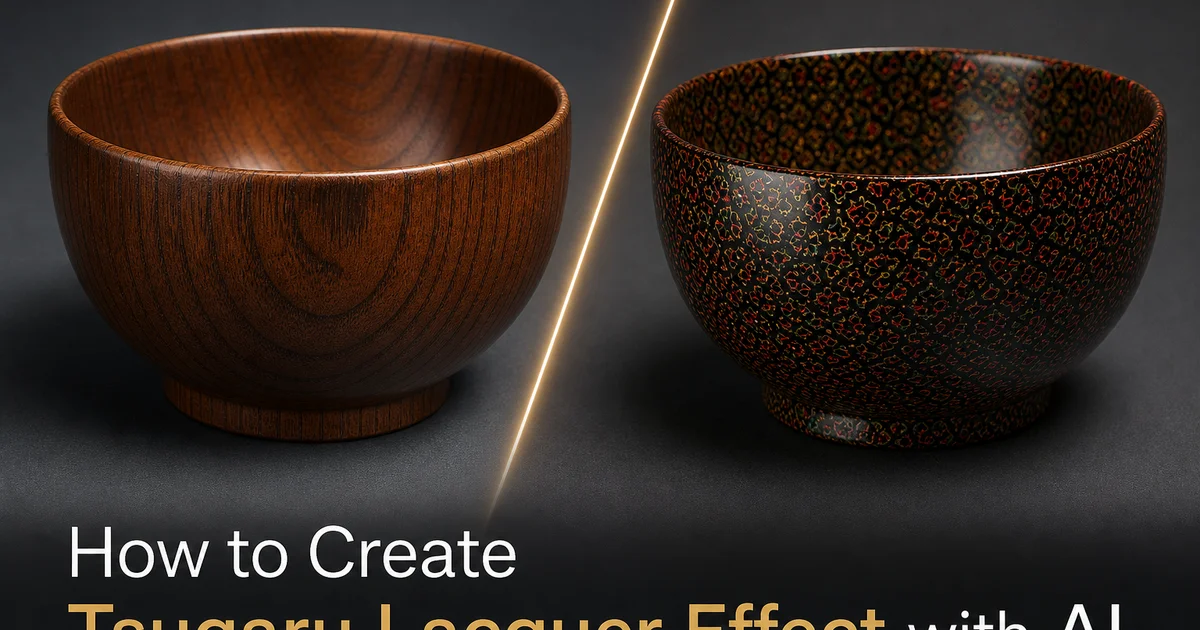
Le Tsugaru-nuri, tradition de laque de la region de Tsugaru dans la prefecture d'Aomori, a l'extreme nord de Honshu au Japon, occupe une position unique parmi les arts de la laque japonais car son caractere visuel emerge d'un processus de dissimulation et de revelation plutot que d'une application en surface. Alors que la plupart des traditions de laque construisent la beaute sur la surface la plus externe par polissage, peinture ou techniques decoratives comme le maki-e et le chinkin, le Tsugaru-nuri accumule des dizaines de couches de laque dans des couleurs soigneusement sequencees sur des substrats textures, puis meule et polit a travers les couches superieures pour reveler la structure chromatique cachee en dessous. Les motifs resultants ne sont ni peints ni sculptes — ils existent au sein du materiau lui-meme, exposes par un enlevement controle de matiere.
Cette technique a ete developpee vers 1680 lorsque le quatrieme seigneur du domaine de Tsugaru, Tsugaru Nobumasa, a invite des artisans laqueurs a developper une laque regionale distinctive pouvant servir a la fois de vaisselle fonctionnelle pour le climat nordique rigoureux et de source de prestige economique pour le domaine. Les artisans ont experimente la construction de multiples couches de laque coloree sur des textures imprimees de graines et ont decouvert que le polissage a travers ces couches accumulees revelait des motifs organiques complexes ou la texture sous-jacente determinait quelles couleurs apparaissaient a la surface polie. Chaque piece devenait authentiquement unique car l'interaction entre le placement aleatoire des graines et la profondeur de polissage produisait des motifs qui ne pouvaient etre ni predits ni reproduits avec precision.
Le transfert de style par AI fait face a un defi particulier avec le Tsugaru-nuri car l'effet visuel est fondamentalement tridimensionnel. Le motif resulte de la coupe transversale a travers une structure chromatique stratifiee, et non de marques appliquees a une surface. Imiter cela necessite que l'AI modelise non seulement un aspect de surface mais un volume de matiere coloree et le resultat de l'intersection de ce volume avec un plan de polissage a des profondeurs variables. Ce guide couvre le workflow complet pour creer des effets Tsugaru-nuri en utilisant AI Filter et AI Enhance, de la selection de la technique appropriee a la configuration de la structure chromatique stratifiee en passant par le raffinement de la simulation de polissage qui revele le motif cache.
- L'AI simule l'esthetique unique de couches revelees du Tsugaru-nuri en modelisant un volume de couches de laque coloree intersectees par un polissage a profondeurs variables, et non en appliquant simplement des motifs de surface.
- Quatre prereglages de technique couvrent les motifs de graines kara-nuri, les points d'oeufs de poisson nanako-nuri, les designs de pochoir monsha-nuri et les effets de brocart metallique nishiki-nuri.
- La simulation de profondeur de polissage controle le nombre de couches de couleur sous-jacentes exposees, la variation sur toute la surface produisant les motifs semi-aleatoires organiques caracteristiques du veritable Tsugaru-nuri.
- Le sequencement des couches de couleur suit des combinaisons historiquement attestees — vermillon sur noir sur vert, ou poudre d'or entre les couches colorees — pour maintenir l'authenticite du motif revele.
- AI Enhance affine les transitions entre les zones de couleur revelees et la micro-texture des impressions de graines qui determinent le motif d'ecoulement des couleurs de laque contrastantes.
En quoi la simulation de couches revelees par AI differe du placage de motif de surface
L'approche numerique la plus courante pour creer des effets de laque a motifs applique un motif marbre ou abstrait comme texture de surface. A son cœur, il s'agit de peindre un motif colore sur la surface de l'image. Cette approche peut produire des resultats visuellement attrayants mais, fondamentalement, elle represente mal la facon dont les motifs Tsugaru-nuri sont formes. Un veritable motif Tsugaru-nuri n'est pas applique a la surface. Il est revele de l'interieur du materiau par l'intersection d'un plan de polissage avec un volume chromatique stratifie. Le motif en tout point de la surface est determine par deux facteurs : la profondeur de polissage a ce point et l'agencement tridimensionnel des couches de couleur sous la surface a ce point.
La simulation Tsugaru-nuri par AI construit un volume chromatique stratifie virtuel, puis l'intersecte avec une surface de polissage pour generer le motif. Les couches inferieures pourraient etre de l'urushi noir, suivies de vermillon, puis de vert, puis de jaune, avec des impressions de graines creant des bosses qui poussent certaines couches plus haut a certains endroits. Lorsque la surface superieure est polie a plat, les zones ou les graines ont cree des bosses ont subi un enlevement de matiere plus important, exposant des couches plus profondes (et donc de couleur differente) que les zones environnantes. L'AI modelise cette interaction tridimensionnelle, produisant des motifs ou les frontieres de couleur suivent la logique de l'enlevement de matiere d'une structure stratifiee plutot que les formes arbitraires d'un motif peint.
Cette approche volumetrique produit plusieurs traits visuels qui la distinguent des motifs appliques en surface. Les frontieres entre les zones de couleur dans le veritable Tsugaru-nuri suivent des contours lisses et fluides determines par la topologie des graines et la pression de polissage. Elles ne sont ni parfaitement regulieres ni completement aleatoires mais possedent une qualite organique distinctive, comme des courbes de niveau sur une carte topographique. L'AI reproduit ces frontieres semblables a des courbes de niveau, et la couleur dans chaque zone transitionne progressivement la ou la profondeur de polissage change, plutot que de basculer brusquement comme le ferait un motif peint. Le resultat se lit comme une coupe transversale a travers un materiau physique plutot qu'un traitement decoratif de surface.
- Les placages de motif de surface peignent la couleur sur l'image, representant fondamentalement mal le processus du Tsugaru-nuri ou les motifs sont reveles de l'interieur d'un volume chromatique stratifie.
- L'AI construit une structure chromatique multicouche virtuelle avec une topologie de texture de graines, puis l'intersecte avec un plan de polissage pour generer des motifs reveles physiquement precis.
- Les frontieres des zones de couleur suivent des contours organiques lisses determines par la topologie des graines et la profondeur de polissage, ressemblant a des courbes de niveau plutot qu'a des formes peintes arbitraires.
- Les transitions de couleur progressives dans les zones refletent le changement de profondeur de polissage a travers le materiau stratifie, une qualite visuelle que les motifs appliques en surface ne peuvent reproduire.
Les techniques Tsugaru-nuri : kara-nuri, nanako-nuri, monsha-nuri et nishiki-nuri
Le kara-nuri, technique fondamentale du Tsugaru-nuri, cree sa texture en pressant des graines de colza, de sesame ou des grains de riz dans la laque humide pour laisser des marques d'empreinte, puis en accumulant des couches alternees de laque coloree sur cette base texturee et en polissant pour reveler la structure chromatique cachee. Les empreintes de graines creent des bosses surelevees dans la laque qui, apres l'application des couches subsequentes et le polissage a plat de la surface, apparaissent comme des taches de couleur revelee plus profonde entourees par la couche de couleur superieure. Le placement aleatoire et la taille variable des empreintes de graines signifient que chaque piece kara-nuri possede un motif unique impossible a reproduire, faisant de chaque objet une creation unique. L'AI imite ce caractere aleatoire en generant des distributions de graines avec les proprietes statistiques de vraies graines dispersees a la main — groupees, d'espacement variable et organiquement irregulieres.
Le nanako-nuri — litteralement « motif d'oeufs de poisson » — utilise une application beaucoup plus dense de graines de colza pour creer une texture de points fins et tres rapproches sur toute la surface. Le motif poli resultant est un champ de petits points de couleur ronds qui, collectivement, creent une surface riche en texture avec une profondeur visuelle et une complexite qui defient la simplicite de la technique sous-jacente. Le nanako-nuri est souvent considere comme le style Tsugaru-nuri le plus distinctif visuellement car le motif dense et uniforme de points cree une qualite presque textile. La surface semble tissee de points colores plutot que peinte ou laquee. L'AI rend ce champ de points dense avec une variation naturelle de la taille des points, de l'espacement et de la profondeur de couleur revelee dans chaque point.
Le monsha-nuri ajoute un element de design delibere au processus de couches revelees en utilisant des pochoirs en papier ou en metal comme materiaux de reserve pendant certaines etapes du processus de construction des couches. Les zones pochoirisees recoivent des sequences de couleurs differentes de celles du fond environnant. Lorsque la surface est polie, le motif de design apparait comme une zone de couleurs revelees differentes au sein du motif de fond. Le nishiki-nuri — la technique Tsugaru-nuri la plus elaboree — inclut des poudres metalliques (or, argent ou etain) entre les couches de laque coloree. La surface polie revele des eclats de metal precieux entremeles au motif de laque coloree, creant une richesse de brocart qui justifie le nom de la technique (« nishiki » signifiant brocart).
- Les empreintes de graines kara-nuri creent des motifs aleatoires uniques ou le placement de graines dispersees a la main rend impossible l'identite de deux pieces — l'AI simule ce caractere aleatoire statistique.
- Les points denses de graines de colza nanako-nuri produisent un champ textile de petites taches de couleur qui creent une complexite de surface extraordinaire a partir d'une technique fondamentalement simple.
- La reserve au pochoir monsha-nuri ajoute des motifs de design deliberes qui apparaissent comme des zones de couleur differentes au sein du motif de fond de couches revelees.
- Les couches de poudre metallique nishiki-nuri revelent des eclats d'or ou d'argent parmi la laque coloree lors du polissage, creant une richesse de brocart a partir de la coupe transversale du materiau.
Sequencement des couches de couleur et physique de la revelation par polissage
La palette de couleurs du Tsugaru-nuri est determinee non par la peinture de surface mais par la sequence des couches de laque coloree appliquees pendant le processus de construction. Les sequences traditionnelles suivent des combinaisons etablies au cours de trois siecles de pratique. Le rouge sur noir produit le contraste classique de taches vermillon dans un champ noir, tandis que les sequences vert-jaune-rouge-noir creent des motifs multicolores d'une complexite extraordinaire a mesure que la profondeur de polissage varie sur la surface. L'AI configure ces sequences de couleurs sur la base de palettes Tsugaru-nuri documentees historiquement, garantissant que les relations chromatiques dans la simulation refletent des combinaisons materiellement realisables avec les pigments d'urushi traditionnels plutot que des choix de couleurs numeriques arbitraires.
La physique du processus de revelation par polissage determine le caractere visuel des frontieres entre les zones de couleur. Lorsqu'une pierre a meuler plate est trainee sur la surface de laque accumulee, le taux d'enlevement de matiere depend de la pression, du grain abrasif et de la durete locale de la laque. Mais de maniere cruciale, l'urushi completement durci est assez uniforme en durete quel que soit le pigment, donc le polissage tend a produire des variations de profondeur lisses et fluides plutot que des discontinuites abruptes. L'AI modelise ce comportement de polissage lisse, produisant des frontieres de zones de couleur qui coulent et se fondent progressivement plutot que de basculer brusquement. La seule exception est la ou les empreintes de graines creent une forte discontinuite de hauteur dans la texture sous-jacente. Ici, le polissage revele une frontiere de couleur abrupte correspondante lorsqu'il traverse la bosse de la graine.
La qualite finale de la surface apres polissage varie egalement selon les traditions Tsugaru-nuri. Certaines pieces sont polies a un brillant miroir eleve qui fait flotter le motif de couleur revele sous une surface vitreuse. D'autres conservent une finition satinee plus douce qui permet a la micro-texture des marques de polissage de rester visible. La finition satinee souligne la physicalite du processus de polissage — les rayures paralleles des pierres a meuler et les marques circulaires du polissage a la main avec de l'huile et de la poudre — et de nombreux collectionneurs preferent cette finition car elle partage visuellement le processus laborieux par lequel le motif a ete revele. L'AI offre cette gamme du miroir au satin avec les textures de marques de polissage appropriees a chaque niveau.
- Les sequences de couleurs suivent des palettes Tsugaru-nuri documentees historiquement — rouge sur noir, vert-jaune-rouge-noir — garantissant l'authenticite materielle plutot que des choix de couleurs numeriques arbitraires.
- La physique du polissage lisse produit des frontieres de zones de couleur fluides, avec des transitions abruptes se produisant uniquement aux discontinuites de hauteur des impressions de graines dans la texture sous-jacente.
- La qualite finale de surface va du brillant miroir ou les motifs flottent sous une surface vitreuse a la finition satinee qui revele les marques de polissage physiques et le processus de travail.
- L'AI configure les couleurs des pigments d'urushi — vermillon cinabre, noir d'oxyde de fer, jaune orpiment, vert vert-de-gris — pour correspondre aux contraintes materielles de la chimie traditionnelle de la laque.
Applications creatives : design de produit, inspiration textile et exploration de materiaux
Les designers de produits travaillant avec le motif de surface et l'esthetique des materiaux trouvent les effets Tsugaru-nuri particulierement precieux car le concept de couches revelees se traduit a travers les medias et les echelles. Les motifs organiques semblables a des courbes de niveau de la laque polie inspirent des traitements de surface pour la ceramique, les textiles, les panneaux architecturaux et les objets de design industriel ou un effet similaire pourrait etre obtenu par stratification et meulage physiques, par ablation laser de couches imprimees, ou par impression numerique du motif simule. En generant des variations Tsugaru-nuri a partir de differentes images sources, les designers peuvent explorer un espace virtuellement infini de motifs de couches revelees tout en maintenant la logique visuelle et le realisme materiel de la tradition artisanale originale.
Les designers de mode et de textile se sont directement inspires des motifs Tsugaru-nuri, traduisant l'esthetique de couches revelees en tissus imprimes, structures tissee et textiles teints. La simulation AI permet aux designers de generer des motifs Tsugaru-nuri a l'echelle et la resolution necessaires pour les unites de repetition textile, explorant comment differentes sequences de couleurs et densites de graines se traduisent de l'echelle intime de la laque a l'echelle plus large des vetements et des tissus d'interieur. La qualite organique du motif de couches revelees — ni geometrique ni libre mais regie par la physique de l'intersection des materiaux — produit des designs qui semblent naturels et complexes d'une maniere difficile a atteindre par les methodes conventionnelles de conception de motifs.
Les scientifiques des materiaux et les chercheurs en artisanat utilisent la simulation comme outil analytique pour comprendre comment les parametres de processus affectent les resultats visuels dans la tradition Tsugaru-nuri. En faisant varier systematiquement le nombre de couches, la sequence de couleurs, la densite de graines et la profondeur de polissage dans la simulation, les chercheurs peuvent cartographier la relation entre les parametres de production et les resultats visuels de maniere plus comprehensive que ce qui est realisable avec l'experimentation physique, ou chaque variation necessite des semaines d'application et de sechage de la laque. Cette exploration computationnelle complete le savoir-faire artisanal pratique, aidant les artisans et les chercheurs a comprendre pourquoi certaines combinaisons de parametres produisent des effets visuels surtout frappants tandis que d'autres donnent des surfaces troubles ou visuellement confuses.
- Les designers de produit traduisent les concepts de couches revelees Tsugaru-nuri a travers les medias — ceramique, textiles, panneaux architecturaux — en utilisant les motifs generes par AI comme points de depart pour l'exploration physique.
- Les designers de mode generent des motifs Tsugaru-nuri a des echelles appropriees pour le textile, explorant comment les sequences de couleurs de laque et les densites de graines se traduisent en tissus pour vetements et interieur.
- Les chercheurs en materiaux utilisent la variation systematique de parametres dans la simulation pour cartographier les relations processus-resultat de maniere plus comprehensive que ne le permet l'experimentation physique.
- La qualite organique des motifs de couches revelees — regie par la physique de l'intersection des materiaux — produit des designs qui semblent naturels d'une maniere que les methodes conventionnelles de motif peinent a atteindre.
How to do it
- 1
Upload your photo and evaluate its suitability for Tsugaru-nuri patterning
Open your image in AI Filter and assess how its composition translates to the visual language of Tsugaru lacquerware. Tsugaru-nuri — developed in the Tsugaru region of present-day Aomori Prefecture during the late seventeenth century — is uniquely defined by its multi-layered patterning technique where dozens of lacquer coats in contrasting colors are built up over a textured substrate and then polished back to reveal the underlying color layers in complex, semi-random patterns. Images with broad, smooth surfaces and strong compositional shapes translate most well because the intricate revealed-layer patterns need visual space to display their full complexity.
- 2
Select a Tsugaru-nuri technique preset and configure layer parameters
Choose from presets mimicking the four designated Tsugaru-nuri techniques. Kara-nuri (pattern created by applying seed or rapeseed impressions in wet lacquer, then building layers and polishing back to reveal the texture), nanako-nuri (fish-roe pattern created by pressing rapeseed into wet lacquer to create dense dot textures), monsha-nuri (stenciled pattern technique using resist materials to create design motifs within the polished layers), and nishiki-nuri (brocade pattern combining multiple color layers with metallic powder and complex polishing). Each preset configures layer count, color sequence, texture density, and the depth to which the polishing reveals underlying layers.
- 3
Adjust polishing depth, color layer visibility, and surface sheen parameters
Fine-tune the simulation of the hallmark Tsugaru-nuri process — the controlled polishing that reveals the hidden color layers. The visual magic of Tsugaru-nuri lies in the fact that the pattern is not painted on the surface but exists within the lacquer structure itself, revealed by grinding and polishing through the topmost layers to expose the contrasting colors beneath. Sliders control polishing depth (how many layers are revealed), polishing uniformity (the variation in revealed depth across the surface), the sharpness of boundaries between exposed color zones. The final surface sheen from matte to mirror polish.
- 4
Use AI Enhance to refine color layer boundaries and surface detail
Run AI Enhance to sharpen the transitions between revealed color layers, the micro-texture of the polishing marks. The depth illusion created by the layered color structure. For nanako-nuri and kara-nuri patterns, the boost accentuates the organic irregularity of the seed-impressed textures and the way different lacquer colors flow around and between the impressed marks. For nishiki-nuri, the boost brings out the interaction between metallic powder layers and the surrounding colored lacquer, reproducing the way gold or silver particles catch light differently than the organic lacquer matrix.
- 5
Export and compare against museum examples of authenticated Tsugaru-nuri
Save the completed image at full resolution and compare it with photographs of documented Tsugaru-nuri from the Tsugaru-nuri Traditional Craft Museum, the Aomori Prefectural Museum, and the Japan Folk Crafts Museum. Verify that the revealed-layer patterns exhibit the semi-random organic quality of genuine polished-back lacquer rather than regular repeating patterns, that the color layer sequence follows historically attested combinations. That the surface sheen and polish marks are consistent with the flatbed stone-grinding and hand-polishing techniques used in traditional Tsugaru-nuri production.
Sources
- Tsugaru-nuri: Traditional Lacquerware of Aomori Prefecture — Tsugaru-nuri Traditional Craft Cooperative
- The Science of Urushi: Biochemistry and Material Properties of Asian Lacquer — Progress in Organic Coatings — Elsevier
- Japanese Traditional Crafts: Designated by the Minister of Economy, Trade and Industry — Association for the Promotion of Traditional Craft Industries