
Comment creer un effet de gravure Tsuba avec la retouche photo AI
Transformez vos photos en effets de gravure de garde de sabre japonais grace au transfert de style AI. Guide pas a pas couvrant le tsuba en fer avec incrustation d'or, la patine shakudo, les motifs en claire-voie sukashi et l'esthetique de la metallurgie de l'epoque Edo.

Product Marketing
Vérifié par Magic Eraser Editorial ·
Sommaire
- En quoi le rendu AI du tsuba differe des filtres de gaufrage metallique generiques
- Comprendre les alliages metalliques et la chimie des patines pour un rendu authentique des surfaces du tsuba
- Techniques de gravure : incrustation, ciselure en relief et claire-voie dans leur contexte historique et AI
- Composer dans le format circulaire et respecter les conventions de conception du tsuba
- Applications creatives : image de marque pour arts martiaux, hommages a l'art japonais et maquettes de metallurgie personnalisees
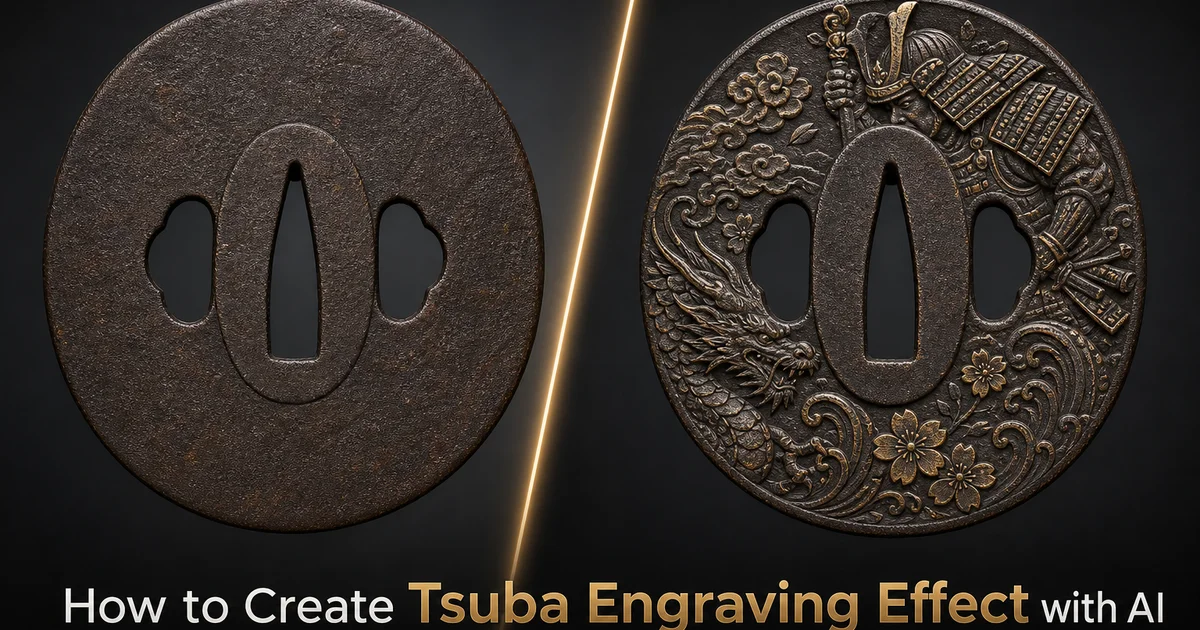
Le tsuba — la garde de la main du sabre japonais — a evolue pendant six siecles, passant d'un simple protecteur fonctionnel a l'une des formes d'art miniature les plus raffinees au monde, une toile a peine plus grande qu'une paume humaine sur laquelle des maitres metallurgistes ont cree des compositions d'une virtuosite technique extraordinaire et d'une sophistication esthetique. Travaillant le fer, les alliages de cuivre, l'or et l'argent, les artisans du tsuba ont developpe un vocabulaire de techniques de gravure, d'incrustation, de ciselure en relief et de claire-voie qui ont transforme une simple garniture de sabre utilitaire en une galerie portative d'art japonais. Les plus beaux tsuba de l'epoque Muromachi jusqu'a la fin de l'epoque Edo sont tenus dans la meme estime que les lames elles-memes, collectionnes par des connaisseurs qui apprecient le travail miniature du fil d'or incruste dans le fer martele, la riche patine bleu-noir de l'alliage shakudo et les motifs audacieux en creux de la decoupe en claire-voie sukashi.
Repliquer numeriquement l'esthetique de la gravure sur tsuba a ete exceptionnellement difficile car l'effet depend de proprietes materielles que les filtres d'image plats ne peuvent pas simuler de maniere convaincante. Un tsuba est un objet metallique tridimensionnel dont le caractere visuel provient de l'interaction de differents metaux avec differentes finitions de surface a une echelle miniature. Du fil d'or brillant encastre dans du fer patine sombre, du cuivre poli emergeant d'un fond texture, et la lumiere traversant des silhouettes decoupees en claire-voie. Ces interactions materielles impliquent la reflectivite, la texture de surface, la chimie de la patine et la maniere dont la lumiere balaye les surfaces en relief pour creer des lumieres et des ombres. Les approximations numeriques precedentes utilisant des filtres de gaufrage ou des revetements de texture metallique produisaient des resultats ressemblant a de l'etain embouti plutot qu'a des garnitures de sabre faites a la main.
Le transfert de style AI-powered change cela en profondeur en comprenant les proprietes materielles et les techniques artisanales de la metallurgie du tsuba avant d'appliquer quelque modification que ce soit. L'AI rend differents alliages metalliques avec leurs caracteristiques de surface correctes — la texture granuleuse sombre du fer forge, la reflectivite miroir de l'incrustation d'or, la profondeur subtile bleu-noir de la patine shakudo — et imite les techniques de gravure specifiques qui ont defini les differentes eccles de fabrication de tsuba et les periodes historiques. Ce guide vous accompagne dans la creation d'effets de gravure tsuba avec AI Filter et AI Enhance, couvrant la selection d'alliages metalliques, la configuration de la patine, la simulation de techniques de gravure et le vocabulaire de conception qui relie ces effets numeriques a six siecles de tradition metallurgique japonaise.
- L'AI rend differents alliages metalliques avec des caracteristiques de surface physiquement correctes — texture granuleuse du fer forge, reflectivite miroir de l'incrustation d'or et profondeur de la patine bleu-noir du shakudo — plutot que d'appliquer des revetements metalliques uniformes.
- De multiples techniques de gravure incluant l'incrustation a plat (zogan), la ciselure en relief (takabori) et la claire-voie (sukashi) produisent chacune des effets visuels distincts adaptes a differents sujets d'image et approches compositionnelles.
- Les prereglages d'ecole historique reproduisent les styles caracteristiques des grandes traditions de fabrication de tsuba, du fer austere de Kamakura aux pieces de presentation richement incrustees d'or de l'epoque Edo.
- AI Enhance ajoute des details de surface microscopiques — marques de marteau, traces de lime et tourbillons de polissage — qui temoignent d'un travail artisanal et distinguent l'effet des filtres de texture metallique generiques.
- Le format circulaire du tsuba et l'echelle miniature sont preserves comme contraintes compositionnelles, garantissant que les designs se lisent comme des decorations plausibles de garde de sabre plutot que comme des images arbitraires a texture metallique.
En quoi le rendu AI du tsuba differe des filtres de gaufrage metallique generiques
Les filtres de gaufrage generiques dans les editeurs de photos appliquent un angle d'eclairage simule uniforme a l'image entiere, relevant les zones claires et abaissant les zones sombres pour creer un effet de relief qui s'approche du metal embouti ou presse. Bien que cela produise un aspect tridimensionnel superficiel, cela n'a aucune comprehension des techniques de metallurgie, des proprietes des alliages ou du langage visuel specifique de la gravure de tsuba japonaise. L'effet de gaufrage traite chaque limite de pixel comme un bord de relief potentiel avec des proprietes materielles identiques, produisant des resultats qui ressemblent a de l'aluminium embouti a la machine plutot qu'aux compositions multi-metaux sculptees a la main du veritable tsuba. Il n'y a pas de distinction entre les elements decoratifs en relief et la plaque de fond, pas de contraste entre differents types de metal et pas de simulation de la chimie de la patine qui donne aux tsuba historiques leur caractere de surface distinctif.
Le rendu AI du tsuba commence par identifier le contenu semantique de l'image et le mapper au vocabulaire de conception de la decoration de garde de sabre japonais. Les sujets sont classes et se voient attribuer un traitement approprie : un oiseau devient un element en relief en or poli sur un fond en fer textur, une branche fleurie devient un fil d'argente incruste dessinant des tiges delicates avec des petales en feuille d'or, un paysage devient une composition en couches avec des elements proches en haut relief et des elements lointains en gravure peu profonde. Chaque element recoit des proprietes materielles adaptees a son role dans la composition, l'AI puisant dans sa comprehension de la maniere dont les artisans du tsuba utilisaient des metaux et des techniques contrastees pour creer une hierarchie visuelle dans le format circulaire minuscule.
La plaque de fond elle-meme recoit un traitement qu'aucun filtre generique ne fournit : la texture du fer forge avec son grain de surface caracteristique produit par des chauffages et martelages repetes, les ondulations subtiles des surfaces finies a la main qui distinguent le travail artisanal du metal industriel plat mecanique, et la patine naturelle qui se developpe sur des decennies ou des siecles d'exposition aux huiles de la peau et a l'humidite de l'air. Ces textures de fond interagissent avec les elements decoratifs pour creer le contraste materiel qui definit l'esthetique du tsuba : incrustation de metal precieux brillant sur du fer patine sombre, relief poli lisse sur un fond a texture rugueuse, et le jeu de la lumiere sur des surfaces situees a differentes hauteurs et angles par rapport au spectateur.
- Les filtres de gaufrage generiques appliquent un eclairage uniforme a tous les bords de maniere identique, produisant un aspect d'aluminium embouti a la machine sans distinction entre les elements decoratifs et la plaque de fond.
- L'AI classifie les sujets de l'image et attribue un traitement de metallurgie approprie — relief en or pour les elements focaux, fil d'argent pour les details lineaires, profondeur en couches pour la hierarchie compositionnelle.
- Les textures de la plaque de fond incluent le grain du fer forge, les ondulations de surface finies a la main et la patine naturelle due au vieillissement atmospherique que les revetements metalliques generiques ne peuvent pas reproduire.
- Le contraste materiel entre l'incrustation de metal precieux brillant et le fond en fer patine sombre cree la hierarchie visuelle qui definit l'esthetique authentique du tsuba et distingue l'effet des filtres plats.
Comprendre les alliages metalliques et la chimie des patines pour un rendu authentique des surfaces du tsuba
Les metallurgistes japonais ont developpe une gamme sophistiquee d'alliages specifiquement pour les garnitures de sabre decoratives, chacun apprecie pour sa couleur unique, ses proprietes de travail et son potentiel de patine. Le fer — le materiau de tsuba le plus traditionnel — va du fer forge doux avec des lignes de grain visibles a l'acier forge dur avec une structure fine et dense. Son oxydation naturelle produit la patine brun-noir chaleureuse que les collectionneurs prisent pour sa profondeur et sa variation. Le shakudo, un alliage de cuivre contenant environ trois a cinq pour cent d'or, developpe une patine distinctive bleu-noir profond lorsqu'il est traite avec un bain chimique traditionnel appele niiro-eki, produisant l'une des surfaces les plus frappantes visuellement de tout le travail du metal decoratif. Le shibuichi, un alliage cuivre-argent dans divers ratios, produit des patines gris a gris-violet qui creent un fond subtil et raffine pour la decoration en or par-dessus.
L'AI reproduit les caracteristiques de surface de chaque alliage avec une precision chimique. Les surfaces en fer montrent le grain directionnel produit par le soudage a la forge de couches de metal ensemble, la couleur de la patine variant du brun chaleureux dans les zones recemment oxydees au bleu-noir profond dans les surfaces avec des siecles de produits de corrosion accumules. Le shakudo recoit sa couleur distinctive pourpre-noir profond avec de subtiles nuances bleues, obtenue par un rendu minutieux de la maniere dont la patine niiro interagit avec la teneur en or pour produire une surface qui semble presque laquee par sa profondeur et son uniformite. Les surfaces en shibuichi montrent leur teinte gris-violet caracteristique avec la variation mouchetee subtile causee par une distribution inegale de l'argent dans la matrice de cuivre, creant une texture visuelle qui, meme a distance, se lit comme un alliage specifique identifiable plutot qu'un metal gris generique.
Les elements d'incrustation en or et en argent contrastent avec ces fonds patines sombres par leurs propres proprietes reflectives specifiques. L'incrustation d'or dans le travail du tsuba va de l'or vert-pale (alliage a bas carat) au jaune chaud et riche (alliage a haut carat), l'AI ajustant la temperature de couleur en fonction de la periode historique selectionnee. Les tsuba plus anciens ont tendance a utiliser de l'or plus pale tandis que les pieces de presentation de la fin de l'epoque Edo favorisent un jaune profond et riche. L'incrustation d'argent developpe sa propre patine subtile avec le temps, passant du blanc brillant au gris chaleureux. L'AI offre des options d'argent frais et d'argente vieilli. Le contraste entre le metal precieux brillant et l'alliage de base patine sombre est la dynamique visuelle fondamentale du tsuba decore, et un rendu precis des deux materiaux est la cle d'un effet convaincant.
- Les surfaces de tsuba en fer montrent un grain directionnel de soudure a la forge avec une patine allant du brun chaleureux au bleu-noir profond selon l'age et le traitement que l'AI simule.
- L'alliage shakudo recoit sa couleur distinctive pourpre-noir profond avec des nuances bleues du procede de patination chimique traditionnel niiro, rendue avec une profondeur et une uniformite semblables a de la laque.
- La patine gris-violet du shibuichi montre la variation mouchetee subtile due a une distribution inegale de l'argent dans la matrice de cuivre, se lisant comme un alliage specifique identifiable plutot qu'un metal gris generique.
- La couleur de l'incrustation d'or va du vert-pale bas carat au jaune chaud riche haut carat, ajustee par periode historique pour correspondre aux conventions des differentes traditions de fabrication de tsuba.
Techniques de gravure : incrustation, ciselure en relief et claire-voie dans leur contexte historique et AI
L'incrustation a plat, connue sous le nom de zogan, est peut-etre la technique de decoration de tsuba la plus distincte et celle qui se traduit le plus directement en changement photographique. Dans le travail traditionnel du zogan, l'artisan creuse des canaux etroits ou des zones en creux dans la plaque de fer a l'aide de ciseaux specialises, puis martele du fil ou de la feuille de metal contrastant — or, argent ou cuivre — dans ces cavites preparees, limant la surface pour que l'incrustation affleure le fer environnant. Le design resultant apparait comme un dessin en metal brillant sur un fond sombre, la precision du travail des canaux determinant si les lignes sont rugueuses et audacieuses ou fines comme des cheveux et delicates. L'AI imite cela en convertissant les contours de l'image en lignes d'incrustation, la luminosite et l'importance de chaque element determinant s'il recoit un traitement en or, en argent ou en cuivre.
La ciselure en relief, ou takabori, cree des elements sculpturaux tridimensionnels qui s'elevent au-dessus de la surface de la plaque de tsuba. Cette technique va du bas-relief peu profond ou les motifs sont seulement legerement souleves au haut-relief ou les figures se projettent considerablement du fond avec une forme tridimensionnelle entierement arrondie. Les tsuba en relief les plus ambitieux presentent des dragons, des tigres ou des figures mythologiques qui semblent jaillir de la surface de fer, avec des contre-depouilles profondes creant des ombres dramatiques et un sentiment de mouvement dynamique. L'AI rend la ciselure en relief avec une modelisation precise des ombres qui repond a la direction d'eclairage implicite, creant l'illusion de profondeur qui rend les tsuba en relief si puissants visuellement. Des lumieres sur les sommets surleves des elements sculpturaux, des ombres profondes dans les contre-depouilles et des transitions en gradient sur les surfaces courbes qui communiquent la forme tridimensionnelle.
La claire-voie, ou sukashi, est la technique de tsuba la plus differente car elle retire entierement le metal plutot que de l'ajouter ou de le faconner. L'artisan coupe a travers toute l'epaisseur de la plaque de fer a l'aide de scies, de ciseaux et de limes pour creer des motifs en silhouette ou le creux — les zones decoupees — fait partie integrante de la composition. Le sukashi positif presente des motifs eleves sur un fond ouvert, le sukashi negatif entoure le motif de zones ouvertes qui l'encadrent. L'interaction entre le metal solide et le vide, entre le bord de fer sombre et la lumiere traversant les decoupes, cree une dynamique visuelle unique a cette technique. L'AI rend le sukashi en convertissant le contenu de l'image en une composition equilibree de plein et de vide, les bords de coupe montrant les profils de limage propres qui distinguent la claire-voie de qualite de la coupe grossiere.
- L'incrustation a plat (zogan) convertit les contours de l'image en fil et feuille de metal brillant encastres dans le fer sombre, l'importance de l'element determinant l'attribution du materiau or, argent ou cuivre.
- La ciselure en relief (takabori) cree des elements sculpturaux tridimensionnels avec une modelisation des ombres qui repond a la direction de l'eclairage, du bas-relief subtil aux figures dramatiques en haut-relief.
- La claire-voie (sukashi) retire entierement le metal pour creer des motifs en silhouette ou le creux est integral a la composition, les bords de coupe propres distinguant la decoupe de qualite.
- Chaque technique produit une relation fondamentalement differente entre le plein et le creux, le contraste des materiaux et la profondeur tridimensionnelle dans le format circulaire compact.
Composer dans le format circulaire et respecter les conventions de conception du tsuba
Le format circulaire ou lobe compact du tsuba impose des contraintes compositionnelles qui le distinguent de toute autre surface artistique. Le design doit fonctionner dans un disque d'environ sept a huit centimetres de diametre, avec une fente rectangulaire centrale pour la lame du sabre (nakago-ana) et deux trous plus petits pour le couteau utilitaire et la brochette (kozuka-ana et kogai-ana) qui interrompent la zone de composition. Ces ouvertures fonctionnelles ne sont pas des obstacles a contourner mais des elements integraux du design que les artistes du tsuba habiles incorporaient dans leurs compositions — une riviere coule a travers le nakago-ana, le corps d'un dragon s'enroule autour, ou un paysage utilise l'ouverture comme une rupture naturelle entre les elements de premier plan et d'arriere-plan.
L'AI adapte les photographies sources a ce format circulaire en identifiant les elements compositionnels les plus forts et en les disposant dans le disque tout en tenant compte des ouvertures fonctionnelles. La fente centrale de la lame est positionnee pour s'aligner avec les elements verticaux ou horizontaux de l'image — un tronc d'arbre, un bord architectural, l'axe d'une personne debout — de sorte qu'elle se lise comme un element de conception intentionnel plutot qu'une interruption arbitraire. La composition des bords est soigneusement controlee pour que les elements de conception se terminent naturellement au bord du tsuba ou s'y etendent d'une maniere qui suggere une continuation au-dela du disque visible, suivant le principe esthetique japonais du ma — l'utilisation significative de l'espace vide — qui impreregne la conception du tsuba.
La composition asymetrique, qui domine les plus beaux designs de tsuba a travers toutes les periodes historiques, est appliquee par l'AI pour eviter les dispositions centrees statiques qui caracterisent le travail amateur. L'element de design le plus fort est souvent positionne decentre avec un espace negatif equilibrant du cote oppose, creant une tension visuelle et un flux directionnel dans le cadre circulaire. Cette asymetrie fait echo aux principes esthetiques japonais plus larges visibles dans l'ikebana, la conception de jardins et la peinture a l'encre, ou l'equilibre asymetrique cree des compositions plus dynamiques et engageantes que la symetrie mecanique. L'AI identifie l'equilibre asymetrique naturel de la photographie source et le renforce dans le format circulaire, produisant des compositions qui semblent authentiques a la tradition de conception meme lorsque le sujet est moderne.
- La fente centrale de la lame (nakago-ana) est positionnee pour s'aligner avec les elements verticaux ou horizontaux naturels de l'image, se lisant comme un element de conception intentionnel plutot qu'une interruption.
- La composition des bords suit le principe japonais du ma — l'espace vide significatif — les elements se terminant naturellement au bord ou suggerant une continuation au-dela du disque visible.
- L'equilibre asymetrique place l'element de design le plus fort decentre avec un espace negatif contrebalancant, creant la tension visuelle dynamique qui caracterise les plus beaux tsuba historiques.
- L'AI renforce l'asymetrie naturelle de la photographie source dans le format circulaire, produisant des compositions authentiques a la tradition de conception de six siecles meme avec des sujets contemporains.
Applications creatives : image de marque pour arts martiaux, hommages a l'art japonais et maquettes de metallurgie personnalisees
Les ecoles d'arts martiaux, les marchands de sabres et les organisations culturelles japonaises utilisent les transformations de style tsuba pour creer du materiel de marque qui relie leur identite a la tradition esthetique raffinee du sabre japonais. Un logo d'ecole rendu comme un tsuba en fer avec incrustation d'or communique le patrimoine, le savoir-faire et l'intersection de la discipline martiale avec la culture artistique. Une fiche produit d'un marchand de sabres rehaussee d'un traitement de bordure style tsuba contextualise chaque lame dans la tradition complete des garnitures de sabre. Ces applications de marque fonctionnent parce que l'esthetique du tsuba porte une reconnaissance culturelle immediate : les spectateurs familiers des arts martiaux ou des arts decoratifs japonais comprennent immediatement la reference visuelle, tandis que ceux qui ne la connaissent pas sont attires par le contraste materiel frappant du metal brillant sur le fer patine sombre.
Les artistes et designers creant des travaux inspires par les traditions de metallurgie japonaises utilisent l'effet tsuba a la fois comme outil creatif et comme aide a la visualisation en phase de conception. Convertir une photographie en rendu tsuba revele comment le contenu de l'image se traduit dans le langage visuel de la metallurgie japonaise : quels elements fonctionnent comme incrustation, lesquels ont la forme audacieuse necessaire pour la ciselure en relief, et quelles compositions conviennent a l'equilibre dramatique plein-creux de la claire-voie. Cette visualisation aide les artistes a planifier des projets de metallurgie physiques en previsualisant l'apparence de leurs concepts de design une fois executes dans du metal reel, economisant le temps et le cout materiel considerables de decouvrir les problemes de composition seulement apres que la decoupe et la gravure ont commence.
La visualisation de maquettes de metallurgie personnalisees sert un marche croissant de collectionneurs qui commandent des tsuba modernes aupres d'artisans contemporains travaillant avec des techniques traditionnelles. Ces collectionneurs ont souvent du mal a communiquer leurs souhaits de conception par le biais de descriptions verbales ou de croquis approximatifs, mais une source photographique transformee en rendu tsuba fournit a l'artisan une cible visuelle claire montrant la selection du metal, le ton de la patine, la technique de gravure et la disposition compositionnelle dans un format que les deux parties peuvent evaluer et affiner avant que les mois de travail specialise ne commencent. Plusieurs fabricants de tsuba modernes ont publiquement attribue aux outils de maquette AI l'amelioration de la communication avec les clients et la reduction du nombre de revisions de conception necessaires pendant le processus de fabrication.
- Les ecoles d'arts martiaux et les marchands de sabres utilisent l'image de marque tsuba pour relier leur identite visuelle a la tradition esthetique raffinee des garnitures de sabre et de la metallurgie decorative japonaise.
- Les artistes utilisent les transformations tsuba comme visualisation de phase de conception pour previsualiser comment les compositions d'image se traduisent en techniques de metallurgie specifiques avant de s'engager dans la fabrication physique.
- Les maquettes de commande personnalisees offrent aux collectionneurs et aux artisans une reference visuelle partagee montrant le metal, la patine, la technique et la disposition qui remplace les descriptions verbales imprecises.
- L'esthetique tsuba porte une reconnaissance culturelle immediate pour les publics des arts martiaux et de l'art japonais tout en attirant les spectateurs non familiers par le contraste materiel frappant de l'incrustation brillante sur le fer sombre.
How to do it
- 1
Upload your photo and assess its suitability for tsuba engraving transformation
Open your image in AI Filter and evaluate how the composition translates to the visual language of Japanese sword guard engraving. Tsuba are small circular or lobed iron or soft-metal guards designed to protect the hand between blade and grip. Their decoration draws from a rich vocabulary of natural subjects, mythological scenes, and geometric patterns compressed into a compact circular format. Images with strong central subjects, clear figure-ground separation, and moderate compositional complexity convert most well. Nature subjects — birds, fish, flowers, dragons, landscapes — align directly with the traditional tsuba design vocabulary. Portraits and geometric abstractions can produce striking results with the right style settings.
- 2
Select the tsuba engraving style and configure base metal and patina
Choose from presets that simulate different historical tsuba-making schools and techniques. Iron plate with hammered texture and natural rust patina characteristic of early Kamakura-period guards, shakudo alloy with rich blue-black patina prized by Edo-period artisans, shibuichi silver-copper alloy with subtle gray-violet surface tone, or solid gold overlay in the elaborate style of daimyo-class display swords. Each preset establishes the base metal look and patina color that forms the background of the engraved composition. The AI renders the metal surface with the right grain structure, forging marks, and oxidation patterns that distinguish each alloy type from a simple flat color fill.
- 3
Configure engraving technique: inlay, relief carving, or openwork sukashi
Select the primary decorative technique the AI will simulate for your composition. Flat inlay (zogan) embeds contrasting metal. Often gold or silver wire and sheet — into channels carved in the iron base, creating designs that shine against the dark patina. Relief carving (takabori) raises the design elements above the background surface in three-dimensional sculptural form. Openwork (sukashi) cuts completely through the iron plate to create silhouetted designs where negative space forms part of the pattern. Each technique produces a radically different aesthetic. The AI previews how your specific image content works with each approach before you commit to a final style.
- 4
Apply AI Enhance to refine metal texture, inlay detail, and edge precision
Run AI Enhance to sharpen the fine details that distinguish masterwork tsuba craftsmanship from generic metal texture overlays. For inlay work, the boost tightens the boundaries between gold wire and iron base, adding the precise channel edges that indicate expert chisel work. For relief carving, it deepens the shadow definition between raised and recessed areas, creating convincing three-dimensional form. For openwork, it refines the cut edges to show the clean precise profiles that skilled metalworkers achieved through patient filing and finishing. The boost also adds the microscopic surface variations. Tiny hammer marks, file scratches, and polishing swirls — that indicate hand craftsmanship rather than machine fabrication.
- 5
Export the finished tsuba rendering and verify against museum reference examples
Save the completed image at full resolution and compare it with photographs of genuine tsuba from major collections like the Metropolitan Museum of Art, the Tokyo National Museum, or the Walters Art Museum. Verify that the metal patina color is consistent with the selected alloy type, that inlay metals show appropriate reflective properties, that the engraving technique is rendered with structural plausibility, and that the overall composition respects the circular format and design conventions of historical tsuba. Check that the level of detail is appropriate to the scale. Tsuba are often only seven to eight centimeters in diameter, so designs should read as miniature metalwork rather than large-scale sculpture.
Sources
- Japanese Sword Guards: The Collection of the Metropolitan Museum of Art — The Metropolitan Museum of Art
- Image Style Transfer Using Convolutional Neural Networks — IEEE Conference on Computer Vision and Pattern Recognition
- The Art of the Japanese Sword Guard: Techniques, History, and Aesthetics — JSTOR — Journal of Japanese Studies