
Comment creer un effet Trompe-l'oeil avec la retouche photo AI
Transformez vos photos en illusions d'optique trompe-l'oeil photorealistes grace a l'AI. Guide pas a pas couvrant la perspective forcee, la deception architecturale et les effets de personnage s'echappant du cadre. Les techniques d'ombres portees qui creent des illusions tridimensionnelles sur des surfaces planes.

Product Marketing
Vérifié par Magic Eraser Editorial ·
Sommaire
- La physique de la tromperie visuelle : comment le trompe-l'oeil exploite les indices de perception de la profondeur
- Trompe-l'oeil architectural : creer de la fausse profondeur, des niches et des espaces voutes
- Effets de personnage s'echappant : sujets qui brisent le plan de l'image
- Tromperie de nature morte : objets qui semblent exister sur des surfaces reelles
- Applications creatives : murales, cadres numeriques, realite augmentee et medias sociaux
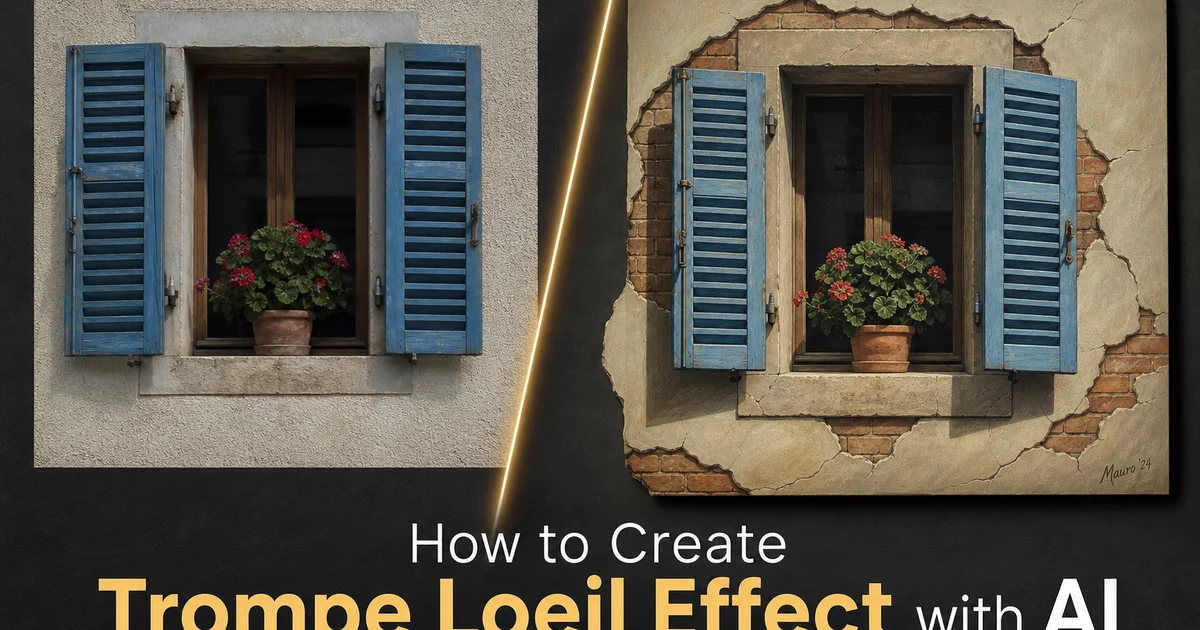
Le trompe-l'oeil — l'art de tromper l'oeil en faisant percevoir une surface peinte plane comme une realite tridimensionnelle — fascine les artistes et les spectateurs depuis plus de deux mille ans, du legendaire peintre grec antique Zeuxis dont les raisins peints auraient trompe les oiseaux jusqu'aux muralistes modernes qui transforment les facades d'immeubles vierges en fantasies architecturales elaborees. La technique exige une maitrise extraordinaire de la perspective, de l'eclairage, des ombres et de la texture de surface, car l'illusion depend d'une precision photorealiste absolue : toute incoherence dans la maniere dont la lumiere tombe sur un objet peint par rapport a la maniere dont elle tombe sur les objets reels dans le meme espace brise instantanement le sortilege. Un trompe-l'oeil representant une bibliotheque doit rendre chaque ombre a l'angle exact que produirait la source lumineuse reelle de la piece, chaque surface doit reflechir la lumiere avec la bonne intensite et la bonne couleur, chaque bord doit s'aligner avec la perspective du spectateur depuis la position d'observation prevue. Cette precision obsessive est ce qui distingue le trompe-l'oeil de la peinture realiste ordinaire. Il ne se contente pas de representer la realite, il tente de la remplacer.
L'histoire du trompe-l'oeil s'etend a travers de nombreuses traditions distinctes, chacune exploitant differents aspects de la perception visuelle pour creer differents types d'illusion spatiale. Les peintres muraux romains creaient l'illusion de fenetres s'ouvrant sur des paysages imaginaires, agrandissant de petites pieces en vastes panoramas. Les peintres de plafond de la Renaissance comme Andrea Mantegna et Andrea Pozzo transformaient les plafonds d'eglise plats en domes architecturaux imposants remplis de figures ascensionnelles, utilisant un raccourci de perspective extreme calcule pour une seule position d'observation optimale sur le sol en contrebas. Les peintres du Siecle d'or neerlandais creaient des illusions intimistes de chevalet : casiers a lettres, portes d'armoire ouvertes et objets de nature morte semblant occuper un espace reel. La Fuite de la Critique de Pere Borrell del Caso representait un garcon sortant de son propre cadre, une image si convaincante qu'elle aurait pousse les spectateurs a tendre la main pour l'aider. Chaque tradition a developpe des techniques specifiques pour rendre son type d'illusion particulier credible.
La conversion trompe-l'oeil AI-powered rend ces techniques illusionnistes accessibles aux photographes et artistes numeriques qui ne possedent pas les annees de formation specialisee requises pour la peinture trompe-l'oeil traditionnelle. L'AI comprend la physique de la lumiere, la geometrie de la perspective et les indices perceptifs que le systeme visuel humain utilise pour juger de la profondeur et de la tridimensionalite. Elle applique cette comprehension pour transformer des photographies ordinaires en images qui semblent briser les limites de leur surface plane. Ce guide explique comment utiliser AI Filter et AI Enhance pour creer des effets trompe-l'oeil dans trois grandes traditions : l'illusion architecturale qui cree une fausse profondeur et un faux espace, les effets de personnage s'echappant ou les sujets semblent se projeter vers l'avant depuis le plan de l'image, et la tromperie de nature morte ou les objets semblent exister physiquement sur une surface reelle. Ces techniques reposent sur un ombrage precis, une coherence de perspective et une integration de surface que l'AI calcule automatiquement en fonction du contenu spatial de chaque photographie.
- L'AI calcule les positions d'ombres physiquement precises en fonction de l'angle lumineux implicite et de la distance de projection, garantissant que chaque indice d'ombre renforce, plutot qu'il ne contredit, l'illusion spatiale tridimensionnelle.
- De multiples prereglages de traditions trompe-l'oeil simulent les illusions classiques de profondeur architecturale, les effets de sortie de cadre par les personnages et les techniques de tromperie de surface de nature morte du Siecle d'or neerlandais.
- La coherence de perspective garantit que tous les elements illusionnistes s'alignent sur un seul point de fuite et une seule position de spectateur, maintenant la precision geometrique requise par l'illusion.
- Les controles d'integration de surface fusionnent l'illusion peinte avec son contexte environnant grace a une temperature d'eclairage assortie, des fissures de raccordement et des effets d'ombres superposees.
- AI Enhance nettoie les zones de transition critiques ou les objets peints semblent passer entre le plan de l'image et l'espace du spectateur — les frontieres exactes ou l'illusion reussit ou echoue.
La physique de la tromperie visuelle : comment le trompe-l'oeil exploite les indices de perception de la profondeur
La perception humaine de la profondeur repose sur une hierarchie d'indices visuels que le cerveau traite automatiquement et involontairement. Le trompe-l'oeil fonctionne en reproduisant ces indices sur une surface plane avec une precision suffisante pour declencher le systeme d'interpretation de la profondeur du cerveau avant que l'analyse consciente ne puisse le remplacer. L'indice de profondeur monoculaire le plus puissant est l'ombre portee. Un objet flottant au-dessus d'une surface projette une ombre qui revele a la fois sa hauteur et la direction de la source lumineuse, et cette information d'ombre est traitee si rapidement et reflexivement qu'une ombre peinte de maniere convaincante fera percevoir au cerveau une projection tridimensionnelle meme lorsque le spectateur sait intellectuellement que la surface est plane. Les peintres de trompe-l'oeil ont compris intuitivement ce principe pendant des siecles. L'AI le rend explicitement computationnel en calculant la geometrie des ombres a partir de la reconstruction tridimensionnelle de la scene.
L'occlusion — lorsqu'un objet en masque partiellement un autre — est le deuxieme indice de profondeur critique exploite par le trompe-l'oeil. Lorsque la main d'un personnage peint semble chevaucher le cadre du tableau, le cerveau interprete automatiquement la main comme etant plus proche que le cadre, creant la perception que le personnage s'etend vers l'avant dans l'espace du spectateur. C'est le principe derriere La Fuite de la Critique de Pere Borrell del Caso et d'innombrables autres compositions trompe-l'oeil brisant le cadre. L'AI cree ces effets d'occlusion en identifiant les elements de la photographie qui devraient sembler depasser la limite de l'image et en rendant une geometrie de cadre que le corps du sujet chevauche, avec des ombres coherentes qui renforcent la relation spatiale entre l'element saillant et le cadre environnant.
Le gradient de texture et la perspective atmospherique fournissent des indices de profondeur supplementaires que le trompe-l'oeil architectural exploite pour creer l'illusion d'un espace en retrait. Les surfaces qui s'eloignent dans la distance montrent des details de texture progressivement plus fins. Les objets lointains apparaissent legerement plus bleus et moins contrastes en raison de la diffusion atmospherique. Les peintres de plafond de la Renaissance comme Andrea Pozzo utilisaient ces principes pour transformer des plafonds d'eglise plats en domes architecturaux apparemment vastes, peignant l'architecture en retrait avec des details progressivement plus doux et des couleurs plus froides qui imitaient precisement la maniere dont l'oeil percevrait un espace architectural reel s'elevant vers le haut. L'AI applique ces memes indices de perspective atmospherique et texturale lors de la creation d'effets trompe-l'oeil architecturaux, garantissant que l'espace illusionniste en retrait suit les courbes de degradation optique correctes.
- L'ombre portee est l'indice de profondeur monoculaire le plus puissant. Le cerveau traite la geometrie des ombres si rapidement qu'une ombre peinte de maniere convaincante declenche une perception tridimensionnelle avant toute intervention consciente.
- L'occlusion cree des effets de bris de cadre ou les elements qui chevauchent la limite de l'image sont automatiquement percus comme se projetant vers l'avant dans l'espace du spectateur.
- Le gradient de texture et la perspective atmospherique rendent les espaces architecturaux en retrait convaincants en montrant des details progressivement plus fins et des couleurs plus froides avec l'augmentation de la profondeur illusionniste.
- L'AI calcule tous les indices de profondeur a partir de la reconstruction tridimensionnelle de la scene, garantissant une coherence mathematique que le trompe-l'oeil peint a la main doit atteindre par le seul jugement artistique.
Trompe-l'oeil architectural : creer de la fausse profondeur, des niches et des espaces voutes
Le trompe-l'oeil architectural est la forme la plus ancienne et la plus ambitieuse de tromperie visuelle, remontant aux extensions architecturales peintes sur les murs des villas pompeiennes ou les pieces semblaient s'ouvrir sur des cours a colonnades et des paysages lointains qui n'existaient qu'en peinture. Le principe fondamental consiste a etendre l'espace architectural reel dans un espace peint illusionniste en faisant correspondre la perspective, l'eclairage et la qualite des materiaux de la piece reelle si precisement que l'architecture peinte est percue comme une continuation seamless du cadre physique. L'AI cree cet effet en analysant la structure spatiale et les conditions d'eclairage visibles dans votre photographie, puis en generant des extensions architecturales — couloirs en retrait, plafonds en berceau, arcades a colonnades, ouvertures de fenetres sur des paysages — qui sont geometriquement coherentes avec l'espace existant.
La precision requise pour le trompe-l'oeil architectural est impitoyable car les formes architecturales ont une geometrie reguliere que l'oeil verifie automatiquement par rapport aux attentes apprises. Une colonne qui s'effile incorrectement, une courbe de voute qui ne suit pas la bonne section conique, ou des carreaux de sol qui convergent vers le mauvais point de fuite seront percus comme errone meme par les spectateurs incapables d'expliquer pourquoi. L'AI construit les illusions architecturales en utilisant une projection en perspective mathematiquement precise a partir d'un point de vue specifie, garantissant que chaque ligne converge correctement et que chaque proportion diminue au bon rythme avec la distance. Le controle de position du spectateur vous permet de specifier ou le spectateur prevu se tiendra, car un plafond trompe-l'oeil calcule pour un spectateur directement en dessous du centre apparaitra deforme depuis toute autre position — une contrainte que les peintres de plafond de la Renaissance comprenaient et que l'AI gere par le calcul parametrique de la perspective.
La simulation de materiaux est le troisieme pilier d'un trompe-l'oeil architectural convaincant, aux cotes de la geometrie de perspective et de l'eclairage. Le marbre peint doit ressembler au meme marbre utilise dans la piece reelle, les moulures peintes doivent montrer le meme motif d'accumulation de poussiere que les vraies moulures, et les fenetres peintes doivent reflechir la lumiere avec la meme intensite que le verre reel. L'AI atteint cette continuite materielle en analysant les surfaces visibles dans la photographie source — identifiant les types de pierre, les motifs de grain de bois, les textures de platre et les finitions metalliques — et en etendant ces materiaux dans l'espace illusionniste avec un vieillissement, des motifs de salete et une reponse a la lumiere coherents. Cette attention a la continuite materielle est ce qui distingue le trompe-l'oeil convaincant de la decoration peinte evidente.
- Le trompe-l'oeil architectural etend l'espace reel dans un espace peint illusionniste en faisant correspondre precisement la perspective, l'eclairage et la qualite des materiaux de l'environnement physique reel.
- L'AI construit la geometrie de perspective a partir d'un point de vue mathematiquement specifie, garantissant une convergence correcte des lignes et une diminution des proportions que l'oeil du spectateur verifie automatiquement.
- La simulation de materiaux analyse les surfaces existantes dans la photographie et etend leurs types de pierre, grains de bois et motifs de vieillissement dans l'espace illusionniste avec une reponse lumineuse coherente.
- La specification de la position du spectateur reconnait que le trompe-l'oeil architectural est optimise pour un seul point de vue — une contrainte que l'AI gere par le calcul parametrique de la perspective.
Effets de personnage s'echappant : sujets qui brisent le plan de l'image
La tradition du personnage s'echappant dans le trompe-l'oeil cree l'illusion surprenante qu'un sujet emerge physiquement du cadre, passe a travers ou en sort — une rupture playful du quatrieme mur entre l'oeuvre d'art et le spectateur qui ravit le public depuis la Renaissance. L'exemple le plus celebre, La Fuite de la Critique de Pere Borrell del Caso (1874), represente un garcon pieds nus en train d'enjamber le bord inferieur d'un cadre dore avec une jambe deja par-dessus la rebord et ses mains agrippant la moulure superieure du cadre. Le tableau est si precisement execute que le corps du garcon projette des ombres sur le cadre lui-meme, ses doigts s'enroulent autour du profil tridimensionnel du cadre, et les parties de son corps qui s'etendent au-dela du cadre apparaissent contre le mur nu plutot que sur un fond peint. Chaque indice spatial renforce l'illusion qu'une personne reelle sort d'un cadre reel.
L'AI cree les effets de personnage s'echappant en effectuant d'abord une estimation de profondeur sur la photographie source pour identifier les elements qui devraient se projeter vers l'avant et ceux qui devraient rester dans le plan de l'image. Elle genere ensuite un cadre qui correspond a la position spatiale du sujet. Le cadre apparait derriere les elements saillants et devant l'arriere-plan, creant les relations d'occlusion qui conduisent l'illusion de profondeur. Le travail de detail critique se produit aux frontieres : la main du sujet doit s'enrouler de maniere convaincante autour du bord du cadre avec l'ombre des doigts correcte sur la surface du cadre, les vetements ou cheveux qui tombent sur le cadre doivent montrer le comportement de pli correct la ou le tissu entre en contact avec un bord dur, et l'ombre que le sujet saillant projette sur le mur a l'exterieur du cadre doit etre geometriquement coherente avec l'eclairage a l'interieur du tableau.
L'effet de personnage s'echappant fonctionne mieux avec des sujets ayant une forme tridimensionnelle claire et des gestes naturels d'atteinte ou d'extension. Un portrait ou le sujet se penche en avant, tend la main ou se tourne a angle fournit la geometrie corporelle necessaire a l'illusion de passage a travers le cadre. Les photographies en pied de personnes dans des poses dynamiques — grimpant, se penchant, sautant — offrent des possibilites plus dramatiques ou la figure entiere semble briser le plan de l'image. L'AI peut egalement appliquer cet effet a des sujets non humains : un oiseau semblant s'envoler de son cadre, un chat passant une patte par-dessus le bord, ou un objet comme une balle qui semble avoir roule d'une etagere peinte et tombe sur la surface reelle en dessous de l'image.
- Les effets de personnage s'echappant font apparaitre les sujets comme emergent physiquement du cadre, utilisant les ombres portees sur la surface du cadre et des relations d'occlusion correctes pour rendre la tromperie spatiale credible.
- L'estimation de profondeur identifie les elements qui se projettent vers l'avant, puis genere une geometrie de cadre qui apparait derriere les parties du corps saillantes et devant l'arriere-plan peint.
- Les details aux frontieres sont critiques — ombre des doigts sur les bords du cadre, drapage du tissu sur les surfaces dures et eclairage geometriquement coherent entre la scene interieure et la projection exterieure.
- Les poses dynamiques avec des gestes d'atteinte, de penchement ou d'escalade fournissent la geometrie corporelle naturelle la mieux adaptee aux illusions de bris de cadre convaincantes pour les sujets humains et animaux.
Tromperie de nature morte : objets qui semblent exister sur des surfaces reelles
Le trompe-l'oeil de nature morte cree l'illusion plus discreete mais tout aussi fascinante que des objets ordinaires — lettres, cartes postales, ciseaux, cles, plumes, rubans — existent physiquement sur la surface ou le tableau est accroche. Le Siecle d'or neerlandais a produit des chefs-d'oeuvre dans cette tradition : les tableaux de casiers a lettres simulaient des planches avec des rubans entrecroises retenant des lettres et des cartes glissees, les tableaux quodlibet representaient des arrangements de bouts de papier, d'estampes et de peignes epingles sur une planche, et les tableaux de cabinets de curiosites montraient des portes ouvertes revelant des etageres d'objets collectionnes. L'illusion fonctionne car les objets representes sont rendus en taille reelle sur une surface verticale ou de tels objets pourraient plausiblement exister, et la faible profondeur de champ signifie que le spectateur n'a pas besoin de reconcilier une perspective profonde. Les objets semblent simplement etre la, epingles ou poses sur le mur reel.
L'AI cree le trompe-l'oeil de nature morte en extrayant les objets de votre photographie et en les re-rendant comme s'ils etaient physiquement attaches a une surface plane — un mur peint, une planche de bois ou un tableau d'affichage en liege. Chaque objet recoit une ombre portee calculee en fonction de la distance a laquelle il semble se projeter de la surface. La douceur de l'ombre augmente avec la distance de projection d'une maniere physiquement precise. Les objets plats contre la surface projettent des ombres de contact nettes, tandis que les objets inclines — comme le coin d'une lettre qui se recourbe ou le manche de ciseaux pointant vers le spectateur — projettent des ombres progressivement plus douces a mesure que l'ecart entre l'objet et la surface augmente. Ces relations d'ombre graduees constituent l'indice de profondeur principal dans le trompe-l'oeil de nature morte. L'AI les gere avec la precision du lancer de rayons optique.
La correspondance des materiaux de surface est essentielle pour le trompe-l'oeil de nature morte car les objets representes doivent sembler reposer sur une surface reelle. Si l'arriere-plan est un grain de bois simule, chaque ombre d'objet doit assombrir le grain de bois de maniere coherente. Tout bord d'objet chevauchant le bois doit montrer l'interaction de couleur correcte la ou la peinture rencontree le bois teinte. L'AI analyse la texture de surface et genere des ombres d'objets teintees par la couleur de surface et modifiees par sa reflectivite. Les ombres sur le platre mat sont plus sombres et plus neutres, tandis que les ombres sur le bois poli sont plus claires et prennent l'ambre chaud de la surface du bois. Ce rendu d'ombre reactif a la surface est une subtilite qui distingue le trompe-l'oeil convaincant du compositage evidemment collage.
- Le trompe-l'oeil de nature morte represente des objets ordinaires en taille reelle sur des surfaces verticales ou ils pourraient plausiblement exister, exploitant la faible profondeur qui rend l'illusion plus facile a maintenir qu'une perspective profonde.
- Les relations d'ombre graduees fournissent l'indice de profondeur principal. Les objets plats contre la surface projettent des ombres de contact nettes, tandis que les elements saillants montrent des ombres progressivement plus douces proportionnelles a leur distance.
- Le rendu d'ombre reactif a la surface teinte les ombres avec la couleur de surface de l'arriere-plan et ajuste l'obscurite en fonction de la reflectivite du materiau, correspondant au comportement physique de la lumiere sur les materiaux reels.
- Les traditions du casier a lettres, du quodlibet et du cabinet de curiosites fournissent des cadres compositionnels pour organiser plusieurs petits objets en compositions trompe-l'oeil de nature morte coherentes.
Applications creatives : murales, cadres numeriques, realite augmentee et medias sociaux
Les effets trompe-l'oeil crees avec la retouche photo AI trouvent des applications dans un eventail remarquablement large de contextes creatifs et commerciaux. Les murales imprimees grand format utilisent le trompe-l'oeil architectural pour transformer des murs vierges en fenetres imaginaires, en vues de jardin ou en espaces architecturaux etendus. Les restaurants creent l'illusion de diner dans une cour italienne, les bureaux ajoutent des bibliotheques virtuelles et des portes cintrees, et les espaces residentiels gagnent la profondeur percue de pieces deux fois plus grandes que leur taille reelle. Ces murales architecturales necessitent des images generees a l'echelle et la perspective precises de la position murale prevue — ce que l'AI gere par la projection parametrique en perspective basee sur les dimensions du mur et la distance d'observation attendue.
Les cadres numeriques et les ecrans offrent une plateforme particulierement puissante pour le trompe-l'oeil car la surface d'affichage illuminee fournit l'eclairage interne qui manque aux impressions statiques. Un trompe-l'oeil de personnage s'echappant affiche sur un cadre numerique accroche au mur atteint une illusion renforcee car la surface de l'ecran a une luminosite differente de celle du mur environnant, rendant le contraste entre l'image encadree et les elements saillants non encadres encore plus convaincant. Les ecrans intelligents et les systemes de signaletique numerique utilisent les effets trompe-l'oeil pour creer des installations visuelles qui arretent les spectateurs et encouragent l'inspection rapprochee. Les environnements de vente au detail, les expositions museales et les halls d'entreprise beneficient tous de la qualite captivante d'images qui semblent violer la planarite de leur surface d'affichage.
Les createurs de contenu pour les medias sociaux utilisent les effets trompe-l'oeil pour creer des publications d'illusions d'optique partageables qui generent un fort engagement grace a la surprise visuelle d'images qui semblent defier les limites de leur ecran. Une publication ou une main semble sortir de l'ecran du telephone, un animal de compagnie semble grimper hors du cadre de l'image, ou un objet semble etre tombe d'une etagere peinte et avoir atteri sur la bordure inferieure du telephone. Ces illusions playful exploitent exactement les memes indices de profondeur que les peintres de la Renaissance utilisaient, mais dans le contexte d'un ecran d'appareil que les spectateurs percoivent instinctivement comme une surface plane delimitee. Le contraste entre la planarite attendue d'un ecran de telephone et la tridimensionalite implicite du trompe-l'oeil cree la surprise cognitive qui genere les likes, les partages et les commentaires.
- Les murales architecturales utilisent le trompe-l'oeil genere par AI pour ajouter de fausses fenetres, des vues de jardin et des espaces en retrait sur des murs vierges, avec une perspective calculee pour des dimensions de mur et des distances d'observation specifiques.
- Les cadres numeriques et les ecrans renforcent l'illusion trompe-l'oeil car la surface d'affichage illuminee fournit un contraste d'eclairage interne que les impressions statiques ne peuvent pas atteindre.
- Les installations de vente au detail et d'exposition utilisent le trompe-l'oeil brisant le cadre sur la signaletique numerique pour arreter les spectateurs et encourager l'inspection rapprochee par la surprise visuelle.
- Le trompe-l'oeil sur les medias sociaux exploite la planarite percue des ecrans de telephone pour creer une surprise cognitive lorsque les sujets semblent se projeter au-dela de la limite de l'ecran.
How to do it
- 1
Upload your photo and evaluate its potential for trompe-l'oeil illusion
Open your image in AI Filter and assess whether the subject has qualities that lend themselves to photorealistic optical deception. Trompe-l'oeil literally means to deceive the eye, and the most effective subjects are those that can plausibly appear to exist in three-dimensional space on a two-dimensional surface. Objects that seem to project outward from a wall, figures that appear to lean through a window frame, or architectural elements that create the illusion of depth where none exists. Photographs with strong directional lighting, clear cast shadows. Subjects positioned near edges or frames convert most convincingly because these cues are the foundation of the spatial illusion.
- 2
Select the trompe-l'oeil style and configure the illusionistic framework
Choose from style presets that simulate different trompe-l'oeil traditions. The classical architectural preset creates the illusion of receding niches, columns. Vaulted ceilings in the tradition of Roman villa wall painting and Renaissance church decoration. The escaping figure preset makes the subject appear to break through or lean out of the picture frame, referencing Pere Borrell del Caso's famous Escaping Criticism painting. The still life preset renders objects as if they are pinned, shelved, or hanging on a real surface. Letter rack paintings, cabinet of curiosities panels, and bulletin board compositions. Each preset establishes the spatial framework within which the trompe-l'oeil illusion operates.
- 3
Adjust perspective cues, shadow casting, and surface integration
Fine-tune the perspective parameters that sell the three-dimensional illusion. Shadow direction and intensity must be consistent with a single light source for the deception to work. The AI calculates physically accurate shadow positions based on the implied light angle and the distance objects appear to project from the surface. Surface integration controls determine how the illusionistic elements connect to the surrounding wall or frame: painted cracks that seem to extend from the picture into real space, matching the viewer's ambient lighting temperature so the painted surface appears to share the room's illumination. Edge treatments where the painted object appears to overlap the frame or cast shadows onto the adjacent wall surface.
- 4
Use AI Enhance to maximize photorealistic precision in key deception areas
After the initial trompe-l'oeil conversion, run AI Enhance to sharpen the details that are most critical to maintaining the illusion. The areas where the painted object appears to transition between the picture plane and the viewer's space need extreme precision. The edge of a figure's hand reaching out of the frame, the rim of a vase that seems to project forward, or the shadow that an apparently three-dimensional object casts onto the frame itself. Any softness or inconsistency in these transition zones breaks the spatial illusion right away. The viewer's eye focuses on exactly these boundaries when trying to determine whether something is real or painted.
- 5
Export and present the final trompe-l'oeil within its intended viewing context
Save the finished image and consider how it will be displayed. Trompe-l'oeil effects depend heavily on viewing context for their impact. A trompe-l'oeil that appears on a phone screen operates differently from one printed life-size on a wall or displayed within a digital frame. For maximum illusion, match the output resolution and scale to the intended display surface so that objects appear at natural size. If the image will be printed and mounted, consider how the wall color and lighting conditions at the display location interact with the painted surface simulation. The most effective trompe-l'oeil displays blur the boundary between the image and its physical surroundings, making viewers uncertain about where the real surface ends and the painted illusion begins.
Sources
- Trompe l'Oeil Painting: The Illusions of Reality from Ancient Greece to Digital Art — National Gallery of Art
- Depth Estimation and Scene Reconstruction from Monocular Images — arXiv — IEEE Transactions on Pattern Analysis and Machine Intelligence
- Pere Borrell del Caso and the Art of Visual Deception — Museu Nacional d'Art de Catalunya