
Comment Creer un Effet Terrazzo avec AI — Magic Eraser
Transformez vos photos en superbes motifs de pierre composite terrazzo grace au AI style transfer. Guide pas a pas couvrant les styles d'eclats, les couleurs de liant, le polissage de surface et les effets terrazzo venitien authentiques.
SEO & Growth
Vérifié par Magic Eraser Editorial ·
Sommaire
- En quoi la conversion terrazzo par AI differe des techniques manuelles de fragmentation polygonale
- Choisir la tradition terrazzo adaptee a votre projet creatif
- Simulation de polissage de surface et eclairage realiste des materiaux
- Applications creatives : fonds de produits, textures de marque et visualisation architecturale
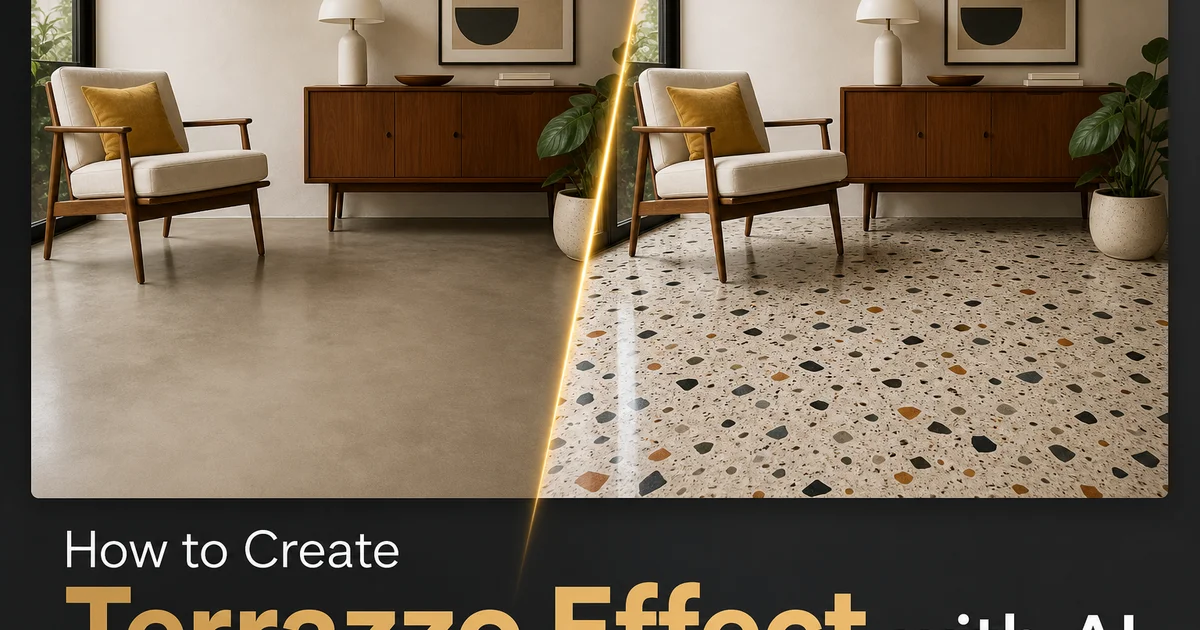
Le terrazzo est l'un de ces materiaux rares qui est passe de l'utilite antique a l'omnipresence du milieu du siecle puis a l'obsession du design moderne. Le desir d'appliquer son esthetique de pierre mouchetee caracteristique aux photographies et aux oeuvres numeriques a grandi parallelement a son renouveau architectural. Developpe a l'origine dans la Venise du quinzieme siecle par des marbriers qui incrustaient des eclats de pierre restants dans le sol en argile de leurs propres maisons, le terrazzo a evolue en une surface decorative sophistiquee qui orne les sols des grands batiments publics, des residences de luxe et des espaces commerciaux modernes dans le monde entier. L'attrait visuel reside dans le caractere aleatoire controle. Chaque eclat est unique par sa forme, sa taille et sa couleur, mais le motif d'ensemble atteint un equilibre harmonieux car la matrice de liant unifie la composition. Cette tension entre le chaos individuel et l'ordre collectif donne au terrazzo son magnetisme visuel et en fait un effet extraordinairement puissant a appliquer aux images photographiques.
Creer des effets terrazzo convaincants a partir de photographies a historiquement necessite un travail manuel minutieux dans les editeurs de photos. Decouper les images en formes polygonales irregulieres, appliquer des textures de pierre a chaque fragment, les disposer avec un espacement realiste, ajouter le liant entre les pieces, puis imiter le brillant de surface poli qui fait que le terrazzo ressemble a du terrazzo plutot qu'a une mosaique brisee. Le processus exige a la fois un jugement artistique sur la taille des eclats, la distribution des couleurs et l'equilibre compositionnel, et des competences techniques en mappage de texture, masquage et simulation d'eclairage. Une seule composition de terrazzo de haute qualite pourrait facilement necessiter des heures de gestion des calques et de creation manuelle de polygones, la rendant peu pratique pour tout ce qui depasse les projets artistiques ponctuels.
AI-powered terrazzo conversion elimine ce processus de fragmentation manuelle en comprenant les proprietes materielles du veritable terrazzo et en les appliquant intelligemment aux photographies sources. AI analyse la distribution des couleurs, les regions tonales et le contenu semantique de l'image d'entree, puis genere un motif terrazzo ou les couleurs d'eclats sont derivees de la palette de la photographie, les tailles et densites d'eclats varient naturellement dans toute la composition, la matrice de liant remplit correctement tous les espaces interstitiels, et la simulation de polissage de surface ajoute les reflets speculaires et la profondeur qui donnent au materiau un aspect solide et tridimensionnel. Ce guide vous explique comment utiliser AI Filter et AI Enhance pour creer des effets terrazzo qui ressemblent a de veritables surfaces en pierre polie, couvrant la selection du style d'eclats, la configuration du liant, les niveaux de polissage et les details de finition qui distinguent une simulation materielle convaincante d'un traitement numerique evident.
- AI analyse la palette de couleurs et les regions tonales de votre photographie source pour generer des eclats terrazzo qui preservent le caractere chromatique de l'image tout en obtenant une apparence authentique de fragment de pierre.
- Plusieurs presets terrazzo simulent differentes traditions historiques : le terrazzo en marbre venitien, le terrazzo palladien a grandes dalles et le terrazzo epoxy moderne avec eclats uniformes et options de liant translucide.
- Les controles de taille et de densite des eclats vous permettent de regler tout, du mouchete fin d'agregat aux fragments imposants, avec des formes irregulieres realistes qui evinent la repetition geometrique du decoupage manuel de polygones.
- La configuration de la matrice de liant inclut la selection de couleur, l'opacite et la micro-texture, les liants fonces creant des effets dramatiques a fort contraste et les liants clairs produisant des compositions modernes plus douces.
- La simulation de polissage de surface va de la finition mat adoucie au poli miroir haute brillance, avec des reflets speculaires et une saturation des couleurs qui repondent dynamiquement au niveau de polissage.
En quoi la conversion terrazzo par AI differe des techniques manuelles de fragmentation polygonale
La creation manuelle de terrazzo dans les editeurs de photos traditionnels suit un processus laborieux qui commence par la creation de dizaines ou de centaines de selections polygonales irregulieres sur l'image source, chacune representant un seul eclat de pierre. L'artiste applique ensuite des superpositions de texture de pierre a chaque polygone, ajuste la couleur et le motif de veimage interne pour simuler differents materiaux d'eclats, dispose les fragments avec un espacement approprié pour laisser le liant apparaitre entre eux, et ajoute enfin des effets de polissage de surface via des couches de reflets et des reglages de brillance. Le probleme fondamental de cette approche est qu'elle opere de l'exterieur vers l'interieur — en commencant par des divisions geometriques arbitraires puis en essayant de les faire ressembler a de la pierre — plutot que de l'interieur vers l'exterieur, en commencant par une comprehension de la facon dont la pierre se fracture reellement et dont le terrazzo est reellement assemble.
AI terrazzo conversion inverse completement cette approche en commencant par un modele materiel de la facon dont le terrazzo est construit. AI comprend que les veritables eclats de terrazzo sont des fragments de pierre naturelle qui ont ete brises ou coupes, donc leurs bords suivent les motifs de fracture cristalline du materiau specifique. Le marbre se brise le long des plans de clivage de la calcite, le granit se fracture irregulierement le long des limites des grains cristallins et les eclats de verre ont des surfaces de fracture conchoïdales avec des bords courbes lisses. AI genere des formes d'eclats qui suivent ces geometries de fracture adaptees au materiau plutot que des contours polygonaux aleatoires, produisant immediatement des fragments qui se lisent comme de veritables morceaux de pierre plutot que comme des decoupes numeriques. Chaque eclat recoit une texture interne conforme a son type de materiau simule : veimage dans le marbre, etincelle cristalline dans le granit, profondeur translucide dans le verre et stratification irisee dans la nacre ou la mere-perle.
L'espacement et la disposition des eclats suivent la logique de construction d'une veritable installation de terrazzo. Dans le terrazzo cementeux, les eclats sont repandus sur une surface de liant humide puis presses en place, creant un regroupement naturel ou les eclats s'appuient les uns contre les autres et les fragments plus gros accumulent naturellement plus de petits eclats dans leur ombre gravitationnelle. AI reproduit ces modeles d'agencement physique plutot que de distribuer les eclats uniformement, produisant des zones de regroupement dense et des zones de liant plus ouvert qui correspondent a l'irregularite organique du terrazzo pose a la main. La matrice de liant remplit entierement tout l'espace restant, avec une micro-texture realiste incluant la porosite fine du ciment poli ou la surface vitreuse lisse de l'epoxy durci.
- Les techniques manuelles creent des divisions polygonales arbitraires puis ajoutent la texture de pierre apres coup, produisant des fragments qui ressemblent a des decoupes numeriques plutot qu'a des fractures de pierre naturelle.
- AI genere des formes d'eclats basees sur des geometries de fracture adaptees au materiau — le marbre se clive le long des plans de calcite, le granit le long des limites cristallines et le verre avec des courbes conchoïdales.
- La disposition des eclats suit la logique de construction physique du terrazzo avec un regroupement naturel et une accumulation gravitationnelle plutot qu'une distribution numerique uniforme.
- La matrice de liant remplit les espaces interstitiels avec une micro-texture realiste incluant la porosite du ciment ou le lisse de l'epoxy, correspondant aux caracteristiques de surface reelles du terrazzo poli.
Choisir la tradition terrazzo adaptee a votre projet creatif
Le terrazzo venitien, la variante originale et la plus importante historiquement, utilise de grands eclats de marbre irreguliers — allant souvent de dix a cinquante millimetres — places dans un liant a base de chaux ou de ciment Portland, puis meules avec de lourdes polisseuses a pierre pour exposer les sections transversales des fragments incrustes. La surface resultante montre une variation spectaculaire de taille entre les eclats, un veimage interne visible et des bandes de couleur dans les pieces de marbre individuelles, ainsi qu'une quantite substantielle de liant apparaissant entre les fragments largement espaces. AI imite le terrazzo venitien en generant de grands fragments d'eclats avec une texture de marbre interne prononcee, en les espaçant suffisamment pour reveler une grande zone de liant, et en appliquant une simulation de meulage qui produit la finition plate mate a satin caracteristique du polissage traditionnel de la pierre. Ce style fonctionne mieux pour les images ou vous souhaitez un terrazzo audacieux et affirmé avec un caractere de pierre individuelle clairement visible.
Le terrazzo palladien pousse le concept plus loin en utilisant de tres grandes dalles de marbre irregulieres — depassant parfois cent millimetres — placees si pres les unes des autres que le liant est a peine visible entre les pieces. Nomme d'apres l'architecte de la Renaissance Andrea Palladio, qui favorisait cette technique dans ses villas venitiennes, le terrazzo palladien produit une surface qui se lit presque comme une dalle de marbre solide avec des joints visibles plutot que comme un materiau composite. AI rend ce style en generant moins de fragments d'eclats mais beaucoup plus grands qui se touchent presque, avec juste assez de liant pour definir les limites. Cela produit un aspect plus monolithique qui fonctionne bien pour les images sources avec de grandes zones de couleur uniforme, ou chaque eclat massif a besoin de suffisamment de surface interne pour afficher une texture de marbre convaincante.
Le terrazzo epoxy moderne, developpe au milieu du vingtieme siecle et aujourd'hui dominant dans la construction commerciale, utilise de petits eclats uniformes — souvent de trois a dix millimetres — lies avec de la resine epoxy teintee plutot que du ciment. La surface resultante a un aspect mouchete plus serre et plus uniforme avec moins de variation entre les tailles d'eclats individuels. Le liant epoxy peut etre de n'importe quelle couleur, y compris translucide, ouvrant des possibilites de conception que les systemes a base de ciment ne peuvent pas atteindre. AI imite le terrazzo epoxy moderne avec de petits fragments densement serres, un dimensionnement coherent des eclats et des remplissages de liant lisses semblables au verre. Ce style fonctionne mieux pour les images ou vous souhaitez une texture moderne sophistiquee qui ajoute un interet materiel sans le drame audacieux des traditions venitienne ou palladienne a gros eclats.
- Le terrazzo venitien utilise de grands eclats de marbre avec un veimage visible dans un liant de ciment, produisant des motifs dramatiques avec un caractere de pierre individuelle audacieux et une visibilite substantielle du liant.
- Le terrazzo palladien presente de tres grandes dalles placees etroitement avec un minimum de liant, creant une apparence de marbre monolithique adaptee aux images avec de grandes zones de couleur uniforme.
- Le terrazzo epoxy moderne utilise de petits eclats uniformes dans une resine teintee, produisant un mouchete contemporain serre avec un dimensionnement coherent et l'option d'un liant translucide ou colore.
- Chaque tradition produit un caractere visuel nettement different, et le choix doit correspondre a la fois au contenu de l'image source et a l'application creative souhaitee.
Simulation de polissage de surface et eclairage realiste des materiaux
Le niveau de polissage d'une surface en terrazzo determine non seulement sa brillance mais aussi l'ensemble de son caractere visuel. La meme composition d'eclats et de liant a un aspect tres different aux differentes etapes du processus de meulage et de polissage. Une surface en terrazzo fraichement meulee qui a ete nivelee mais non polie presente un aspect mat, presque crayeux, ou les couleurs sont attenuees et la surface absorbe la lumiere plutot que de la reflechir. Cette finition adoucie a son propre attrait esthetique — sophistiquee et discretene — et AI peut la simuler en supprimant les reflets speculaires et en desaturant legerement les couleurs des eclats pour imiter les proprietes de diffusion de la lumiere d'une surface en pierre non polie. De nombreux architectes modernes specifient en fait le terrazzo adouci parce que son aspect retenu convient mieux aux interieurs minimalistes qu'une finition miroir brillante.
Le polissage progressif avec des abrasifs de plus en plus fins transforme progressivement la surface du mat au satin puis au poli miroir haute brillance. A chaque etape, les rayures de la granulometrie precedente sont remplacees par des rayures plus fines jusqu'a ce que les rayures deviennent plus petites que la longueur d'onde de la lumiere visible, moment auquel la surface devient optiquement lisse et produit des reflexions speculaires. AI imite ces etapes de polissage intermediaires en controlant la nettetete et l'intensite des reflets. Une finition satin montre des reflets larges et doux tandis qu'une finition miroir montre des reflets brillants et serres qui refle tent clairement le cadre environnant. La saturation des couleurs augmente egalement avec le niveau de polissage car plus de lumiere penetre dans la pierre et revient vers le spectateur plutot que de se diffuser sur les irregularites de surface, rendant les couleurs plus profondes et plus vives dans le terrazzo poli.
Une simulation de polissage realiste necessite plus que l'ajout d'une simple surcouche brillante a l'image. Differents materiaux au sein d'une meme surface en terrazzo polissent a des niveaux differents. Le marbre polit a un brillant plus eleve que le liant de ciment, les eclats de verre atteignent une reflectivite quasi parfaite tandis que la pierre naturelle conserve une certaine micro-texture, et les fragments de coquille developpent leur iridescence caracteristique seulement lorsqu'ils sont polis audela d'un certain seuil. AI gere ces differences de polissage par materiau en appliquant differentes proprietes speculaires a chaque type d'eclat et au liant, creant la complexite visuelle subtile qui rend le veritable terrazzo poli si puissant a examiner de pres. La matrice de liant atteint souvent un niveau de polissage inferieur a celui des eclats incrustes, creant une le gere difference topographique qui capte la lumiere sous des angles rasants et revele les limites des eclats meme sur les surfaces hautement polies.
- La finition adoucie mate supprime les reflets speculaires et desature legerement les couleurs, produisant l'apparence retenue sophistiquee preferee dans les interieurs minimalistes contemporains.
- La simulation de polissage progressif controle la nettetete des reflets, du satin large au miroir serre, la saturation des couleurs augmentant a chaque etape de polissage a mesure que la diffusion de la lumiere diminue.
- Differents materiaux d'eclats polissent a des niveaux differents au sein d'une meme surface — le marbre atteint un brillant plus eleve que le liant de ciment, et la coquille developpe son iridescence seulement audela d'un certain seuil de polissage.
- Les proprietes speculaires par materiau creent la complexite visuelle subtile du veritable terrazzo poli, ou le liant atteint un niveau de polissage inferieur a celui des eclats incrustes et revele les limites sous des angles rasants.
Applications creatives : fonds de produits, textures de marque et visualisation architecturale
La photographie de produits beneficie enormement des fonds en terrazzo car le materiau offre un interet visuel et une texture sans entrer en competition avec le produit pour attirer l'attention. Les marques de cosmetiques, les createurs de bijoux, les entreprises de papeterie et les producteurs alimentaires utilisent frequemment les surfaces en terrazzo comme plateformes de mise en scene de produits car le fond neutre mais texturé richement eleve la valeur percue du produit tout en restant compositionnellement subordonne. AI terrazzo conversion vous permet de creer des fonds en terrazzo personnalises ou les couleurs d'eclats completent la palette de couleurs du produit : terrazzo aux tons chauds pour les bijoux en or, terrazzo bleu-gris froid pour l'electronique argentee et terrazzo multicolore vibreant pour les produits de consommation ludiques. AI peut generer des textures terrazzo seamless et carrelables a n'importe quelle resolution, facilitant la creation de fonds pour toutes les dimensions d'image.
L'identite de marque et le design d'emballage incluent de plus en plus les motifs terrazzo comme element visuel distinctif qui communique qualite, savoir-faire et sensibilite au design moderne. Convertir la palette de couleurs signature d'une marque en motif terrazzo cree une identite texturale unique qui fonctionne sur les cartes de visite, l'emballage, les fonds de sites web, les modeles de medias sociaux et le graphisme environnemental. AI peut contraindre la generation terrazzo a utiliser uniquement les couleurs d'une palette de marque specifiee, garantissant que le motif resultant est conforme a la marque tout en atteignant l'aleatoire organique qui rend le terrazzo visuellement puissant. Cette approche est devenue particulierement populaire dans les industries de la beaute, de l'alimentation et des boissons, et de l'hotellerie, ou l'association du terrazzo avec les materiaux haut de gamme s'aligne sur le positionnement de la marque.
La visualisation architecturale utilise les effets terrazzo pour presenter les options de materiaux aux clients avant le debut de la construction. Les architectes d'interieur peuvent montrer a quoi ressembleraient differentes compositions terrazzo installees dans un espace specifique en convertissant une photographie de la zone de sol en un rendu terrazzo avec les materiaux d'eclats et les couleurs de liant proposes. AI gere la correction de perspective afin que le motif terrazzo semble reculer correctement vers les points de fuite dans la photographie de la piece. La simulation du niveau de polissage inclut des reflexions realistes du cadre de la piece sur la surface terrazzo, donnant aux clients un apercu beaucoup plus precis de l'installation finalisee qu'un echantillon plat. Ils peuvent voir le materiau en contexte avec les meubles reels, l'eclairage et les proportions spatiales de leur piece.
- La photographie de produits utilise des fonds terrazzo pour ajouter un interet visuel sans entrer en competition avec le sujet — les couleurs d'eclats peuvent etre ajustees pour completer la palette du produit.
- Les applications d'identite de marque convertissent les palettes de couleurs signature en motifs terrazzo qui fonctionnent sur l'emballage, le web, les medias sociaux et le graphisme environnemental tout en maintenant l'aleatoire organique.
- La visualisation architecturale rend les options de materiau terrazzo dans des photographies de pieces corrigees en perspective avec des reflexions environnementales realistes sur la surface polie.
- Les textures terrazzo seamless et carrelables a n'importe quelle resolution facilitent la generation de fonds pour la photographie de produits, la conception de sites web et l'impression grand format.
How to do it
- 1
Upload your source photo and assess its suitability for terrazzo conversion
Open your photograph in AI Filter and evaluate whether the image has strong color regions and well-defined shapes that will translate into convincing terrazzo chip fragments. Terrazzo is at its core a composite material. Marble, quartz, granite, glass, or shell chips are suspended in a cementitious or epoxy binder and then ground and polished to a smooth surface — so the AI needs areas of distinct color and texture to map onto the chip fragments. Photographs with multiple colors, clear subject boundaries. Varied tonal regions produce the most visually interesting terrazzo effects because each color zone becomes a different chip material. Monochrome images or low-contrast photographs tend to produce flat terrazzo patterns that lack the material variety that makes real terrazzo visually rich.
- 2
Select the terrazzo style and configure chip size and density parameters
Choose from terrazzo presets that simulate different historical and modern terrazzo traditions. Venetian terrazzo uses large irregular marble chips in a lime-based binder, producing a coarse dramatic pattern with visible stone character. Palladian terrazzo features even larger slabs of marble set closely together with minimal binder showing between pieces. Modern epoxy terrazzo allows for smaller, more uniform chips with precise color control and translucent binder options. Adjust the chip size slider to control how large the individual fragments appear. From fine aggregate that reads as a uniform speckled texture to large statement chips where individual stone character is clearly visible. Chip density determines how tightly packed the fragments are, which in turn controls how much binder matrix shows between them.
- 3
Configure the binder color and surface polish level for authentic material appearance
Select the binder matrix color that surrounds and holds the terrazzo chips in place. Traditional cementitious terrazzo uses gray or white Portland cement, giving the binder a neutral concrete look. Epoxy binders can be tinted any color. The AI offers presets for white, black, warm gray, sand, and custom color matching from your source image. The binder color greatly affects the overall mood of the terrazzo effect. Dark binder makes individual chips pop with high contrast, while light binder creates a softer airy composition. Then adjust the surface polish slider from matte honed finish. Has a soft sheen and slightly visible surface texture, to high-gloss polished finish that adds specular reflections and a glass-like smoothness that makes colors appear more saturated.
- 4
Use AI Enhance to refine chip edges and add realistic surface detail
After the initial terrazzo conversion, run AI Enhance to sharpen the boundaries between individual chips and the surrounding binder matrix. Real terrazzo surfaces show crisp clean edges where the grinding and polishing process has cut through chip fragments at precise angles, exposing the internal crystal structure or color layers of the stone. The boost step adds subtle surface details including fine veining within marble chips, tiny air voids in the binder that catch light. The micro-texture differences between polished stone and polished cement that make real terrazzo visually complex at close inspection distances.
- 5
Export the finished terrazzo effect and verify material authenticity
Save the completed terrazzo image at full resolution and compare it against photographs of real terrazzo installations to check material realism. Verify that chip shapes are irregular and natural-looking rather than geometric or repeated, that the binder fills spaces between chips always without gaps or overlaps, that the polish level appears uniform across the entire surface, and that different chip materials show right internal textures. Marble chips should show veining, glass chips should show translucency, and shell chips should show iridescent layering. Adjust any parameters that produce results outside the realistic range of actual terrazzo materials.
Sources
- Terrazzo: Architecture, Design, Art — Phaidon Press
- Image Texture Synthesis and Compositing Using Neural Networks — arXiv — Neural Information Processing Systems
- Venetian Terrazzo Flooring: Historical Techniques and Modern Applications — National Terrazzo and Mosaic Association