
Comment creer un effet de boule Temari avec l'AI — Magic Eraser
Transformez des photos en art de boule temari japonais grace a l'AI. Tutoriel pas a pas pour creer des effets de sphere enroulee de fil geometrique avec lignes de division, textures de couture et affichage dimensionnel authentique.
SEO & Growth
Vérifié par Magic Eraser Editorial ·
Sommaire
- Comprendre la construction du temari pour une recreation numerique authentique
- Selectionner et preparer les images sources pour le mappage de motif spherique
- Construire la structure geometrique avec les lignes de division et les limites de panneaux
- Appliquer les textures de fil et les motifs de couture dans les panneaux geometriques
- Finition dimensionnelle : ombres, contexte d'exposition et options de presentation
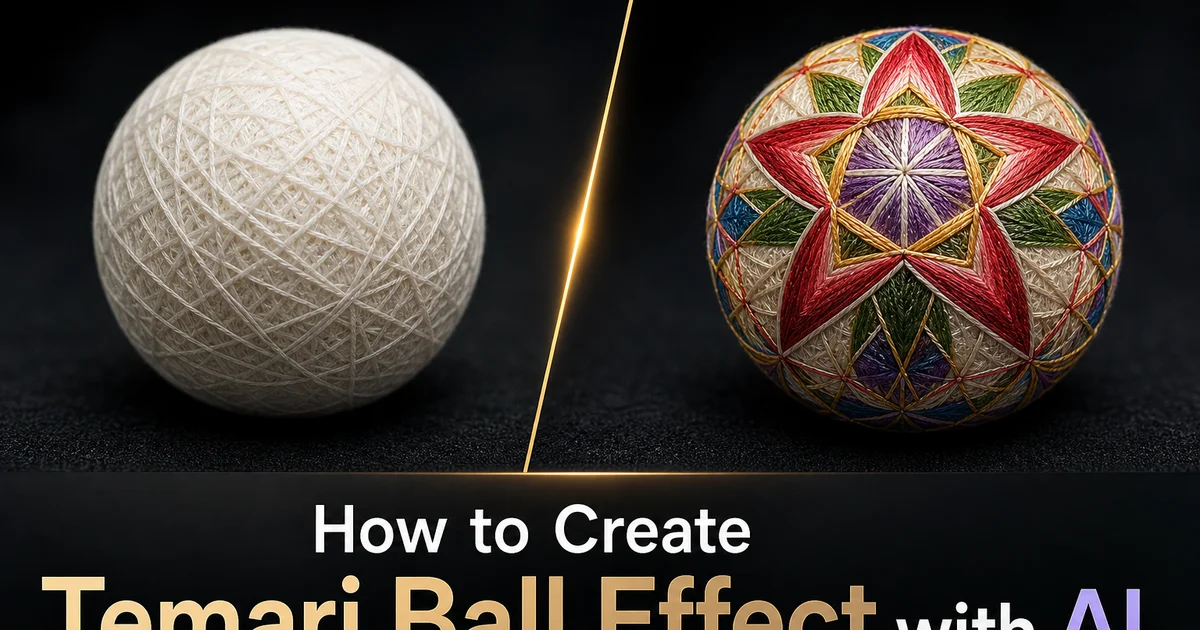
Les temari sont d'exquises boules de fil japonaises qui transforment de simples spheres en un art geometrique eclatant grace a l'enroulement et la couture precis de fil a broder colore sur un noyau rembourre. Cet artisanat est originaire de Chine et est arrive au Japon vers le septieme siecle comme jouet pour enfants. Au fil des siecles de raffinement, il a evolue en un art populaire sophistique, apprecie pour la precision mathematique de ses motifs geometriques et la complexite vibrante de ses champs de couleur entrelaces. Chaque temari commence comme une boule enroulee simple, soigneusement marquee de fils de guidage divisant la surface en sections geometriques egales, puis densement brodee de motifs remplissant ces sections de designs symetriques, creant des effets kaleidoscopiques qui se deplacent et se repetent lorsque la boule est tournee dans la main.
L'attrait visuel du temari reside a l'intersection d'une structure geometrique rigoureuse et d'une texture de fil organique. Les lignes de division qui segmentent la sphere suivent les mathematiques de la geometrie spherique — grands cercles, divisions polaires et le meme partitionnement base sur les polyedres utilise dans les domes geodesiques — tandis que les coutures a l'interieur de chaque section creent des motifs organiques fluides a partir du comportement naturel du fil enroule autour d'une surface courbee. Cette tension entre precision mathematique et chaleur artisanale, entre geometrie rigide et fibre fluide, est ce qui rend le temari si fort visuellement et ce qui rend l'esthetique temari si fascinante a recreer numeriquement avec les outils de retouche photo par AI.
Ce tutoriel vous guide tout au long du processus de transformation de photographies en images qui captent les qualites visuelles cles de l'art de la boule temari — la forme spherique tridimensionnelle, la structure de division geometrique precise, les textures de fil densement enroule et les effets de motif kaleidoscopique qui emergent de la repetition symetrique sur la surface de la boule. En utilisant une combinaison de mappage spherique, de superposition geometrique, de changement de texture et d'amelioration dimensionnelle, vous pouvez convertir une photographie plate de fleurs, de motifs geometriques ou de tout sujet visuellement riche en une image qui ressemble a une boule temari magistralement brodee, complete avec le brillant du fil caracteristique et la presence dimensionnelle qui rendent ces objets si captivants a tenir et a examiner.
- Le mappage de projection spherique enveloppe les motifs photographiques plats sur des surfaces de boule tridimensionnelles avec un raccourcissement perspectif correct qui cree une dimensionnalite temari authentique.
- La superposition de division geometrique ajoute les fils de guidage jiwari caracteristiques qui structurent les conceptions temari en sections mathematiques precises — de la configuration simple a 8 parties a la configuration complexe a 72 panneaux.
- AI Enhance transforme les surfaces photographiques en textures de fil directionnelles qui simulent le fil a broder densement enroule de la construction temari reelle a l'interieur de chaque panneau geometrique.
- Les outils de symetrie de motif reproduisent et refle tent les elements de conception a travers les divisions geometriques de la sphere, creant la repetition kaleidoscopique caracteristique de l'art temari traditionnel.
- La finition dimensionnelle avec des ombres de contact et des arriere-plans d'exposition culturellement appropries ancre le temari dans l'espace physique pour une presentation convaincante dans des contextes numeriques et imprimes.
Comprendre la construction du temari pour une recreation numerique authentique
Creer un effet de boule temari convaincant necessite de comprendre la sequence de construction qui produit les traits visuels distinctifs de ces spheres enrobees de fil. Un vrai temari commence par un noyau — autrefois un tas de chutes de tissu ou de balles de riz, aujourd'hui souvent une boule de styromousse — enroule fermement de fil pour creer une sphere lisse et ferme. Cet enroulement de base est ensuite recouvert d'une couche de fil fin dans une couleur de base unique, creant la surface de fondation sur laquelle la broderie decorative sera appliquee. La couleur de base reste visible comme arriere-plan entre les elements de motif decoratif. Son choix affecte grandement l'impression de couleur globale de la boule finie. Comprendre cette construction en couches eclaire la simulation numerique : votre effet doit montrer une couleur de base coherente visible dans les interstices du motif, et non une image photographique continue couvrant chaque surface.
La phase de marquage — la creation du jiwari ou division — est ce qui distingue le temari des simples boules decorees et ce qui donne a cette forme d'art son caractere mathematique. L'artisan utilise des epingles et du fil de mesure pour localiser les poles nord et sud de la sphere, puis place des fils de guidage le long de grands cercles qui divisent la surface en sections precisement egales. Une division simple a 8 places les fils de guidage le long de quatre grands cercles passant par les poles, creant huit triangles spheriques identiques. Une division combinee a 10 ajoute un fil de guidage equatorial qui coupe les divisions polaires pour creer des sections plus complexes. Les divisions avancees comme le 32 ou le 72 produisent des cadres geometriques de plus en plus complexes permettant des motifs correspondamment complexes. Ces fils de guidage sont generalement en or ou argent metallique, ou d'une couleur contrastante par rapport a la base. Ils restent bien visibles dans la boule finie comme le squelette structurel du design.
La phase de broderie remplit les sections creees par la division avec des motifs decoratifs travailles en fil a broder. Les motifs temari traditionnels comprennent des designs de chrysantheme qui rayonnent depuis les poles, des motifs d'etoiles entrelacees couvrant plusieurs sections, des motifs de bande suivant les fils de guidage equatoriaux et meridiens, et des designs couvrant toute la surface avec des motifs geometriques repetes. La broderie cree une surface densement emballee ou les enroulements de fil individuels sont visibles de pres mais se fondent en champs de couleur lisses a distance de bras. La direction du fil dans chaque section suit des chemins specifiques — radial pour les motifs de chrysantheme, parallele pour les motifs de bande, concentrique pour les motifs d'etoile — et cette qualite directionnelle donne a chaque type de motif sa texture visuelle distinctive. Votre simulation numerique doit recreer a la fois la geometrie du motif a grande echelle et la directionnalite du fil a petite echelle.
- La construction en couches commence par un noyau enroule dans une seule couleur de base visible entre les elements du motif — les simulations numeriques doivent montrer la couleur de base dans les interstices plutot qu'une imagerie continue.
- Les divisions de fil de guidage jiwari suivent la geometrie spherique : les divisions simples a 8 creent huit triangles, tandis que les divisions complexes a 72 produisent des cadres complexes pour un travail de motif avance.
- Les fils de guidage en or metallique, argent ou couleurs contrastantes restent visibles en permanence comme le squelette structurel definissant les limites des sections de motif.
- La direction du fil dans les sections suit des chemins specifiques au motif — radial pour le chrysantheme, parallele pour la bande, concentrique pour l'etoile — creant une texture a petite echelle distinctive pour chaque type de design.
Selectionner et preparer les images sources pour le mappage de motif spherique
L'image source que vous choisissez determine le caractere de votre effet de boule temari. Certains types de photographies produisent de bien meilleurs resultats que d'autres. Les images avec une symetrie radiale inherente — tetes de fleurs vues de dessus, rosaces de plafond architecturales, motifs kaleidoscopiques, designs de mandala, vitraux — se traduisent le plus naturellement en motifs temari car leur symetrie existante se mappe sur les divisions geometriques de la sphere sans perturbations maladroites. Une photographie de tournesol, avec sa tete de graines en spirale rayonnant depuis un point central, remplit naturellement un panneau temari a division polaire comme si la fleur avait ete concue dans ce but. Une rosace de cathedrale gothique, avec son remplage geometrique et ses segments de verre colore, se mappe sur un motif de division complexe avec sa geometrie existante renforcant la structure temari.
Les photographies sans symetrie inherente peuvent encore produire de forts effets temari, mais elles necessitent une approche differente. Un paysage, un portrait ou une image abstraite mappe sur une sphere devient un temari a image unique ou le contenu photographique enveloppe la forme de boule sans la repetition geometrique des motifs traditionnels. Cette approche cree des objets globulaires surrealistes qui sont visuellement frappants mais se lisent davantage comme des photographies spheriques que comme des temari. Pour creer une qualite temari plus authentique a partir de sources non symetriques, utilisez les outils d'AI pour extraire un element de motif de la photographie — une fleur unique, un detail geometrique, un champ de couleur avec une texture interessante — et reproduisez-le symetriquement a travers les divisions de la sphere pour construire la structure de motif repetee qui caracterise le design temari traditionnel.
La consideration de la palette de couleurs est essentielle car les temari sont renommes pour leurs combinaisons de couleurs vibrantes et harmonieuses suivant des traditions esthetiques etablies. Les palettes temari classiques incluent des paires assorties comme le rouge et le vert, le violet et l'or, ou le bleu et l'orange qui vibrent les unes contre les autres a travers les divisions geometriques. Les palettes saisonnieres refletent la sensibilite japonaise a la nature : les temari de printemps utilisent des roses doux, des verts et des blancs ; les temari d'ete arborent des bleus audacieux, des rouges et des jaunes ; les temari d'automne emploient des oranges chauds, des ors et des rouges profonds ; les temari d'hiver utilisent des blancs froids, des argents et des violets profonds. Ajuster l'etalonnage des couleurs de votre image source pour s'aligner sur ces palettes etablies ajoute un realisme culturel et assure l'impact de couleur vibrante qui est l'une des qualites visuelles les plus immediatement captivantes du temari.
- Les images a symetrie radiale — tetes de fleurs, rosaces de plafond, motifs kaleidoscopiques, vitraux — se mappent le plus naturellement sur les divisions geometriques temari sans perturbations maladroites.
- Les photographies non symetriques necessitent l'extraction d'elements et la replication symetrique a travers les divisions de la sphere pour atteindre la structure de motif repetee du design temari authentique.
- Les palettes de couleurs suivant les conventions temari traditionnelles — paires assorties ou harmonies saisonnieres japonaises — ajoutent un realisme culturel et l'impact visuel vibrant caracteristique de cette forme d'art.
- L'enveloppement spherique a image unique cree des objets globulaires surrealistes qui se lisent comme des photographies spheriques plutot que des temari, manquant de la repetition geometrique qui definit l'artisanat traditionnel.
Construire la structure geometrique avec les lignes de division et les limites de panneaux
Le cadre de division geometrique est la fondation structurelle qui fait qu'une sphere decoree se lit comme un temari plutot que comme une boule a motif generique. Implementer la division comme une superposition visible sur votre image spherique necessite de comprendre comment les differents systemes de division organisent la surface de la sphere et ou les fils de guidage apparaissent sur la forme tridimensionnelle. La division de depart la plus simple et la plus courante place les fils de guidage le long de l'equateur de la sphere et de deux meridiennes perpendiculaires entre elles, creant une division simple a 8 panneaux ou les fils de guidage marquent les bords de huit triangles spheriques identiques se rencontrant aux deux poles. Sur l'hemisphere visible de votre image, cette division apparait comme des lignes courbes convergeant au pole superieur et divergeant vers l'horizon equatorial.
Des systemes de division plus complexes creent des geometries de panneaux de plus en plus complexes qui supportent un travail de motif plus elabore. La division combinee 10 (connue sous le nom de C10) ajoute des fils de guidage qui creent des panneaux pentagonaux et triangulaires bases sur la geometrie d'un icosaedre inscrit dans la sphere. C'est la meme relation mathematique utilisee dans la construction de domes geodesiques et produit l'arrangement de panneaux caracteristique ressemblant a un ballon de football vu dans de nombreux designs temari. La division combinee 8 (C8) cree des panneaux carres et triangulaires bases sur un octaedre. Les divisions exotiques basees sur d'autres solides platoniciens et archimediens produisent des arrangements de panneaux de plus en plus inhabituels. Chaque systeme de division a des signatures visuelles caracteristiques que les artisans temari experimentes reconnaissent immediatement. Choisir une division appropriee pour votre motif prevu ajoute un realisme technique.
Rendre les fils de guidage de maniere convaincante sur votre image spherique necessite une attention a la fois a la qualite des lignes et au comportement tridimensionnel. Les vrais fils de guidage temari sont fins mais visibles, souvent un seul brin de fil metallique ou de coton perle qui cree une fine crete sur la surface de la boule. Numeriquement, les lignes de division doivent etre fines, legerement texturees pour suggerer du fil plutot que des lignes dessinees, et doivent suivre la courbure de la sphere avec un raccourcissement perspectif appropriee — apparaissant plus larges et plus espacees pres du centre de l'hemisphere visible et se comprimant vers les bords ou la surface s'eloigne du spectateur. Les fils de guidage doivent egalement sembler se situer legerement au-dessus de la surface de base, projetant de petites ombres qui leur donnent une presence physique sur la boule. Leurs intersections aux poles doivent montrer l'empilement caracteristique lorsque plusieurs fils de guidage se croisent en un seul point.
- La division simple a 8 panneaux cree des fils de guidage le long de l'equateur et de deux meridiennes perpendiculaires, convergeant aux poles comme des lignes courbes avec une geometrie spherique caracteristique.
- Les divisions complexes basees sur des polyedres inscrits — C10 de l'icosaedre, C8 de l'octaedre — creent les panneaux pentagonaux, triangulaires et carres supportant les motifs traditionnels elabores.
- Le rendu des fils de guidage necessite des lignes texturees fines suivant la courbure de la sphere avec un raccourcissement perspectif approprie — plus larges au centre, comprimees aux bords — suggerant du fil plutot que des lignes dessinees.
- Les intersections de fils aux poles montrent un empilement caracteristique ou plusieurs fils de guidage se croisent, avec de petites ombres portees donnant au cadre de division une presence physique sur la surface de la boule.
Appliquer les textures de fil et les motifs de couture dans les panneaux geometriques
Le changement de texture a l'interieur de chaque panneau geometrique est l'endroit ou votre image passe veritablement d'une sphere decoree a une boule temari. Les surfaces de temari reel ont un aspect distinctif cree par des enroulements de fil densement emballes. De pres, vous pouvez voir des brins individuels de fil a broder allonges parallelement les uns aux autres, chaque fil captant la lumiere legerement differemment pour creer un effet chatoyant subtil sur la surface. A distance de bras, ces brins individuels se fondent en champs de couleur lisses avec un lustre doux distinctement different de la peinture, du papier ou de toute surface plane. AI Enhance peut simuler cette qualite de fil en ajoutant une texture directionnelle fine qui suit les chemins de fil specifiques au type de motif tout en maintenant l'impact de couleur global de l'imagerie source.
Differents motifs de couture temari creent differentes textures de fil que votre simulation doit refleteer. Les motifs mitsubane kikkou (hexagonaux entrelaces) creent un aspect tisse ou les fils se croisent les uns sur les autres a intervalles reguliers, produisant une texture de vannerie visible de pres. Les motifs kiku (chrysantheme) rayonnent les fils depuis les poles vers l'exterieur, creant une texture de soleil rayonnant qui passe d'un emballage dense au pole a un espacement plus ouvert vers l'equateur. Les motifs masu (boite carree) enroulent les fils en carres concentriques qui creent une texture geometrique imbriquee a l'interieur de chaque panneau. Les motifs uwagake chidori (entrelaces) tissent les fils entre les panneaux de division pour creer des designs continus couvrant plusieurs sections. Chaque type de motif a sa texture caracteristique de pres et son impact visuel distinctif a distance de vision.
Les zones de transition ou la broderie de motif rencontre les fils de guidage necessitent une attention particuliere pour le realisme. Dans le temari reel, les motifs brodes interagissent avec les fils de guidage de manieres specifiques. Certains motifs brodent par-dessus les fils de guidage, les incorporant dans le motif, tandis que d'autres s'arretent a la limite du fil de guidage avec le fil range proprement en dessous. L'interaction entre le motif et la structure a ces limites cree des effets visuels subtils : une legere crete la ou les fils de motif sont ancres autour d'un fil de guidage, une transition de couleur la ou l'enroulement de base transparait au bord du motif, et l'ombre du fil de guidage creant une fine ligne sombre entre les panneaux de motif adjacents. Rendre ces effets de limite dans votre simulation numerique ajoute un niveau de detail qui distingue une recreation temari informee d'une decoration de sphere geometrique generique.
- Les textures de fil dense montrent des brins de fil a broder individuels de pres avec un chatoyant subtil, se fondant en champs de couleur lustres lisses a distance de vision — fondamentalement differents des surfaces planes.
- Textures specifiques au motif : mitsubane kikkou cree des croisements de vannerie, kiku rayonne des fils de soleil depuis les poles, masu enroule des carres concentriques, uwagake chidori tisse entre les panneaux.
- Les zones de transition ou les motifs rencontrent les fils de guidage montrent des cretes d'ancrage, la visibilite de la couleur de base aux bords et de fines lignes d'ombre entre les panneaux adjacents ajoutant de l'authenticite de construction.
- AI Enhance ajoute une qualite de fil directionnelle suivant les chemins specifiques au motif tout en preservant l'impact de couleur global de l'imagerie source a l'interieur de chaque panneau geometrique.
Finition dimensionnelle : ombres, contexte d'exposition et options de presentation
La finition dimensionnelle finale transforme votre sphere geometrique texturee en un objet qui semble exister dans l'espace physique avec du poids et de la presence — la qualite tactile qui rend les vrais temari si captivants a tenir. Le principal indice dimensionnel est le comportement des ombres et des reflets sur la forme spherique elle-meme : la transition graduelle de la surface completement eclairee faisant face a la source lumineuse a travers la bande equatoriale de tons moyens jusqu'au cote ombre qui s'eloigne de l'illumination. Cette ombre de forme doit etre douce et graduee, suivant la courbure de la sphere en douceur, avec la texture du fil restant visible partout plutot que de se perdre dans l'obscurite du cote ombre. La position de la source lumineuse doit etre coherente avec toute ombre portee que vous ajoutez sous la boule et avec les reflets de surbrillance sur les fils de guidage metalliques.
L'ombre portee sous la boule temari est un element critique qui ancre l'objet sur une surface et empeche l'apparence flottante qui compromet l'illusion tridimensionnelle. Les vrais temari exposes sur une surface plane projettent des ombres de contact douces et circulaires qui s'assombrissent directement sous la boule et s'estompent progressivement vers l'exterieur. La forme de l'ombre est legerement allongee du cote oppose a la source lumineuse. Elle doit etre suffisamment sombre pour se lire clairement mais pas assez dure pour ressembler a un projecteur plutot qu'a un eclairage ambiant. Pour les temari exposes sur un support — un support en bois laque traditionnel appele dai — l'interaction d'ombre est plus complexe, avec l'ombre de la boule tombant partiellement sur la surface du support et le support projetant sa propre ombre sur la surface en dessous. Ces comportements d'ombre specifiques a l'exposition ajoutent un contexte culturel et une qualite d'exposition a l'image finie.
La selection de l'arriere-plan et la composition generale completent la presentation de la boule temari. Les contextes d'exposition traditionnels comprennent des supports laques avec ou sans coussin de soie, des bols en ceramique peu profonds, des surfaces drapees de tissu et la paume d'une main montrant la taille reelle de la boule. L'exposition moderne utilise souvent des arriere-plans neutres simples qui laissent le motif et l'impact de couleur du temari parler d'eux-memes. Pour l'art numerique et les besoins de portfolio, un arriere-plan colore assorti qui s'harmonise avec la palette du temari cree un enonce visuel plus fort qu'un ton neutre. Pour le contenu educatif ou instructif, un arriere-plan blanc propre avec ombre dimensionnelle offre la vue la plus claire de la structure geometrique et du detail du motif. Quel que soit l'arriere-plan que vous choisissez, assurez-vous qu'il ne compete pas avec le detail complexe de la surface du temari. La boule elle-meme doit etre le point focal inconteste de la composition.
- L'ombre de forme suit la courbure de la sphere en douceur de la surface eclairee a travers les tons moyens jusqu'au cote ombre, avec la texture du fil restant visible partout plutot que de se perdre dans l'obscurite.
- L'ombre portee sous la boule est douce et circulaire, legerement allongee du cote oppose a la source lumineuse, assez sombre pour se lire clairement mais pas assez dure pour suggerer un eclairage de projecteur.
- Les contextes d'exposition traditionnels — supports laques dai, coussins de soie, bols en ceramique, paume ouverte — ajoutent une authenticite culturelle et suggerent l'intimite tactile de l'appreciation du temari.
- La selection de l'arriere-plan doit completer sans faire concurrence : couleurs harmonieuses pour l'impact du portfolio, blanc propre pour la clarte educative, tons neutres pour la presentation centree sur le motif.
How to do it
- 1
Select a source image with strong geometric or floral patterns suitable for spherical mapping
Choose a photograph containing bold geometric shapes, floral arrangements, or symmetrical patterns that will translate well into the precisely divided surface panels of a temari ball. Traditional temari designs use the sphere's surface divided into geometric sections. Triangles, pentagons, hexagons, and interlocking bands — each filled with precisely stitched patterns that create kaleidoscopic effects when viewed from any angle. Source images with natural radial symmetry like flowers, mandalas, architectural rosettes, or kaleidoscope patterns provide the strongest foundation because their inherent symmetry maps naturally onto the segmented geometry of temari division lines.
- 2
Apply spherical distortion to wrap the flat image pattern onto a three-dimensional ball surface
Transform your flat source image into a spherical projection that wraps the pattern around a virtual ball surface, creating the fundamental three-dimensional form of a temari. The key to realism is perspective-correct spherical mapping where the pattern compresses toward the edges of the visible hemisphere and disappears around the curvature. Just as thread patterns on a real temari ball are visible on the facing side but curve away from view on the far side. AI tools handle the complex mathematics of spherical projection, maintaining pattern continuity across the curved surface while creating the natural foreshortening that tells the viewer this is a three-dimensional object rather than a flat circle.
- 3
Overlay geometric division lines and marking threads that structure authentic temari designs
Add the trait division lines that define the geometric framework of a temari ball's pattern structure. Real temari begin with a base-wrapped ball marked with precisely placed guide threads that divide the sphere into equal sections. Simple divisions create 8 or 10 sections, while complex divisions produce 32, 72, or even more panels. These guide threads, called jiwari, remain visible in the finished ball as metallic or contrasting-color lines that define the boundaries between pattern panels. Adding these structural lines over your spherical image transforms a generic sphere into something recognizably temari, with the geometric precision of the division system sharing the mathematical nature of the craft.
- 4
Use AI Enhance to add thread texture, stitch density, and the characteristic wrapped-thread appearance
Apply AI Enhance to transform the photographic surfaces within each geometric panel into convincing thread textures that simulate the densely wrapped embroidery floss of real temari construction. Temari stitching creates distinctly directional surface textures. The thread follows specific paths within each panel, creating parallel lines, chevron patterns, interlocking spirals, or woven intersections depending on the stitch pattern used. Boost adds this directional thread quality while keeping the geometric precision of the panel boundaries, creating surfaces that read as fiber art rather than painted or printed spheres.
- 5
Export the finished temari ball effect with background and shadow appropriate to the presentation context
Complete the temari ball composition with an right background setting and contact shadow, then export at resolution suitable for your intended use. Traditional temari are often displayed on lacquered wooden stands, in shallow bowls, or simply resting on fabric. Selecting a matching background that evokes these display conventions adds cultural realism. A soft contact shadow beneath the ball grounds it in physical space. Export at high resolution for print applications where the fine thread textures reward close inspection. Create social media versions where the overall spherical pattern and color impact read well at smaller display sizes.
Sources
- Temari: A Traditional Japanese Art of Thread Ball Making — Japan House
- The Geometry of Temari: Mathematical Patterns in Japanese Thread Balls — American Mathematical Society
- Spherical Geometry and Digital Art: Mapping Patterns onto Three-Dimensional Surfaces — Adobe Creative Cloud Photography Guide