
Comment créer un effet Shibori avec la retouche photo par IA
Transformez des photos en art textile de teinture par réserve shibori japonaise grâce à l'IA. Guide étape par étape couvrant le kanoko tie-dye, l'arashi pole-wrap, l'itajime fold-clamp et les motifs kumo spider avec simulation d'indigo et de teintures naturelles.

Product Marketing
Vérifié par Magic Eraser Editorial ·
Sommaire
- Comment la conversion shibori par IA diffère des techniques simples de superposition de motifs
- Comprendre les quatre techniques majeures de shibori et leurs caractéristiques visuelles
- Simulation de la teinture à l'indigo et comportement des couleurs des teintures naturelles
- Applications créatives : design textile, visualisation de mode et décoration intérieure
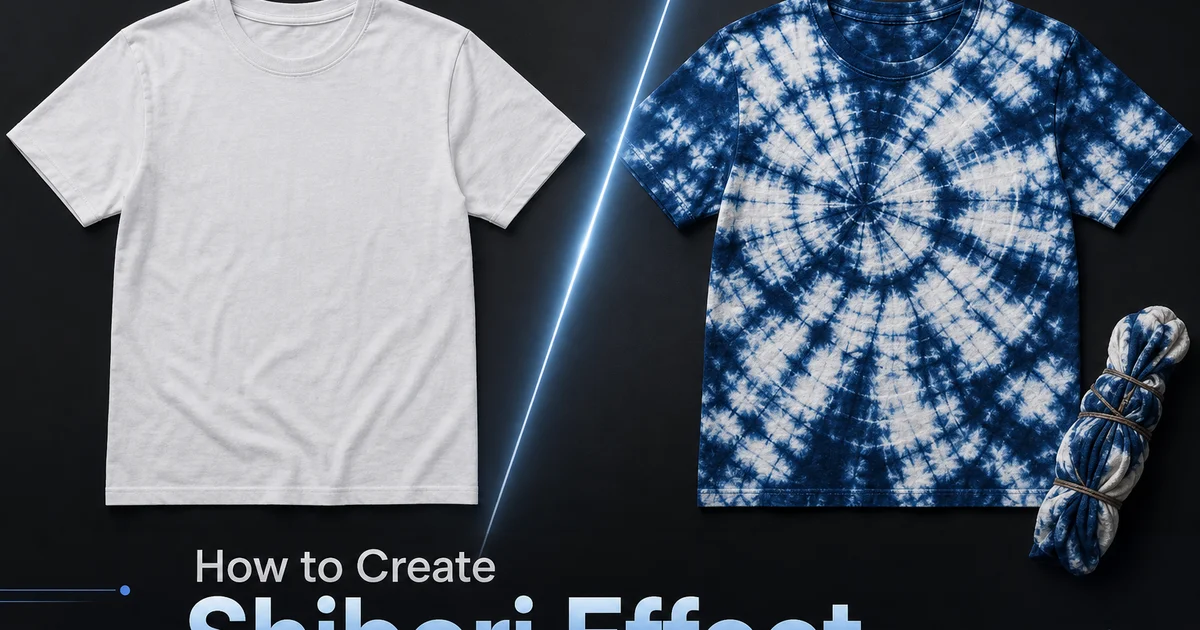
Le shibori est l'art japonais de la teinture par réserve façonnée. Une famille de techniques textiles où le tissu est manipulé physiquement par pliage, torsion, mise en boule, ligature, couture ou serrage avant d'être immergé dans la teinture. Les zones manipulées résistent à la pénétration de la teinture tandis que les zones exposées absorbent la couleur, créant des motifs qui n'apparaissent que lorsque les ligatures sont retirées et que le tissu est déplié. Contrairement aux motifs imprimés qui sont appliqués à la surface du tissu, les motifs shibori font partie intégrante du tissu lui-même. Ils résultent de l'interaction physique entre la teinture, la structure du tissu et la méthode de réserve, ce qui signifie que chaque pièce shibori est unique, même lorsque la même technique est répétée. Cette unicité inhérente, combinée à la beauté organique de motifs qui oscillent entre ordre géométrique et imprévisibilité naturelle, a fait du shibori l'une des traditions textiles les plus vénérées au monde.
Les origines du shibori au Japon remontent à plus de mille ans, bien que les techniques de teinture par réserve existent indépendamment dans des cultures du monde entier. De l'adire africain au bandhani indien en passant par l'amarrado sud-américain. Ce qui distingue le shibori japonais est le raffinement extraordinaire de la technique et l'intégration culturelle profonde avec la teinture à l'indigo. L'indigo japonais, dérivé de la plante Persicaria tinctoria, produit un bleu d'une profondeur et d'une complexité remarquables. Non pas le bleu chimique plat des teintures synthétiques mais un bleu vivant qui oscille entre des sous-tons violets, verts et noirs selon le nombre de bains de teinture, les conditions d'oxydation et le type de tissu. Ce bleu indigo associé au blanc du coton ou de la soie réservé définit l'esthétique classique du shibori : une danse de bleu et de blanc à la fois ancienne et résolument moderne.
La conversion shibori par IA applique la logique visuelle de la teinture par réserve aux photographies numériques, analysant la structure tonale de l'image et les éléments de composition avant de les mapper aux motifs caractéristiques des techniques shibori spécifiques. L'IA comprend que le kanoko shibori produit des champs de petites marques de réserve circulaires, que l'arashi crée des lignes ondulées diagonales, que l'itajime génère des formes géométriques audacieuses et que le kumo forme des anneaux concentriques rayonnants. Et elle applique ces motifs de manière à respecter à la fois le contenu de la photographie et la physique de la façon dont la teinture interagit avec le tissu réservé. Ce guide explique comment utiliser AI Filter et AI Enhance pour créer des effets shibori qui capturent la beauté organique des textiles japonais teints à la main, couvrant la sélection des techniques, la couleur de la teinture, la clarté de la réserve, la texture du tissu et les détails de finition qui rendent le shibori numérique convaincant.
- L'IA mappe les motifs de réserve shibori spécifiques — cercles kanoko, diagonales arashi, géométriques itajime, radiaux kumo — à la structure compositionnelle de la photographie plutôt que d'appliquer des surimpressions textiles arbitraires.
- La simulation de teinture reproduit la profondeur stratifiée de l'indigo naturel avec des variations de couleur subtiles, des changements d'oxydation et la différence caractéristique entre le bleu clair à un bain et le bleu marine foncé à bains multiples.
- Le rendu des limites de réserve capture l'imperfection organique des techniques de ligature à la main — bords légèrement irréguliers, marques de pression de fil variables et infiltration progressive de la teinture sous les ligatures de réserve.
- La simulation de texture de tissu montre la structure de tissage du coton, de la soie ou du lin dans les zones teintes et non teintes, empêchant l'apparence numérique plate qui nuit à l'esthétique artisanale.
- AI Enhance ajoute une variation de densité de teinture en couches et affine l'irrégularité des bords de réserve, reproduisant les différences subtiles de pénétration de la teinture causées par la variation du temps d'immersion et de la tension des ligatures.
Comment la conversion shibori par IA diffère des techniques simples de superposition de motifs
Les approches numériques pour imiter le shibori impliquent souvent de superposer une photographie de tissu shibori réel comme couche de texture, en ajustant le mode de fusion pour amalgamer le motif textile avec l'image cible. Cette méthode produit un résultat qui ressemble plus à une photographie imprimée sur du tissu shibori qu'à une photographie transformée en art shibori. Le motif superposé n'entretient aucune relation avec le contenu de l'image. Les cercles de réserve du kanoko apparaissent à la même taille et au même espacement sur un visage, un ciel et un premier plan sans aucune conscience compositionnelle. La couleur de la teinture est plate et uniforme car elle provient du textile photographié plutôt que d'être générée en réponse aux valeurs tonales de l'image cible. Et la texture du tissu entre en conflit avec l'image cible car deux textures photographiques compositées ensemble créent un bruit visuel plutôt qu'une surface cohérente.
La conversion shibori par IA génère le motif de réserve à partir de zéro en se basant sur l'analyse de la photographie cible. L'IA mappe la gamme tonale de l'image à la relation teinture-et-réserve. Les zones plus claires de la photographie deviennent des zones de réserve où la ligature virtuelle empêche la pénétration de la teinture, tandis que les zones plus sombres deviennent les régions entièrement teintes qui absorbent l'indigo profond. Ce mappage tonal signifie que le motif shibori résultant porte la structure compositionnelle de la photographie originale dans le langage de la teinture par réserve : les hautes lumières d'un portrait deviennent les zones de réserve blanches qui définissent les traits du visage tandis que les ombres deviennent les zones de teinture bleu foncé qui créent la profondeur et la forme. Le motif est généré avec le caractère géométrique spécifique de la technique sélectionnée. L'information compositionnelle est exprimée à travers les cercles kanoko, les vagues arashi ou les blocs itajime plutôt qu'à travers des détails photographiques.
La simulation de tissu est tout aussi importante pour le réalisme. Le shibori réel existe sur du tissu — la teinture sature les fibres textiles, les marques de réserve montrent la structure de tissage du tissu. La texture du matériau est visible à travers toute la pièce. L'IA génère une surface de tissu cohérente qui sous-tend l'image entière, avec le motif de tissage visible à la fois dans les zones de réserve blanches (où le tissu non teint montre sa couleur de fibre naturelle) et dans les zones teintes (où la teinture a saturé les fibres mais la structure de tissage reste visible sous la couleur). Cette surface de tissu unifiée fait ressembler le résultat à de l'art textile plutôt qu'à un filtre numérique. Elle fournit l'assise physique qui vend l'illusion d'un véritable tissu teint à la main.
- Les superpositions de motifs utilisent des photographies de tissu shibori existant qui n'ont aucune relation compositionnelle avec l'image cible — l'IA génère des motifs de réserve à partir de la propre structure tonale de l'image.
- Le mappage tonal convertit les zones claires en zones de réserve et les zones sombres en zones d'absorption de teinture, transportant l'information compositionnelle de la photographie à travers le langage de la teinture par réserve.
- La génération de motifs spécifiques à la technique exprime le contenu de l'image à travers les cercles kanoko, les vagues arashi, les blocs itajime ou les radiaux kumo plutôt que par une distorsion de filtre générique.
- La simulation de surface de tissu unifiée fournit une texture de tissage cohérente dans les zones teintes et non teintes, créant la cohérence matérielle du véritable art textile plutôt que des artefacts de composition numérique.
Comprendre les quatre techniques majeures de shibori et leurs caractéristiques visuelles
Le kanoko shibori, souvent appelé tie-dye en Occident bien qu'il soit bien plus raffiné que les connotations contre-culturelles que ce terme véhicule, consiste à lier de minuscules sections de tissu avec du fil pour créer des points de réserve. Chaque section liée devient un petit cercle ou anneau où la teinture ne peut pas pénétrer. Le tissu non lié entre les ligatures absorbe la pleine couleur de la teinture. Lorsque les ligatures sont retirées, le tissu montre un champ de cercles blancs sur un fond teint. Ou, selon la technique de ligature, des anneaux, des carrés ou des formes géométriques plus complexes. La finesse du travail kanoko dans la tradition japonaise est extraordinaire : les artisans les plus qualifiés d'Arimatsu, le centre historique de la production de shibori près de Nagoya, produisent du kanoko avec des points de réserve si petits et si régulièrement espacés que le tissu résultant ressemble davantage à un motif pointilliste délicat qu'à un design tie-dye. Le préréglage kanoko de l'IA génère ces petites marques de réserve circulaires à densité variable, les regroupant plus densément dans les zones plus claires de la photographie.
L'arashi shibori, dont le nom signifie tempête en japonais, crée des motifs de vagues diagonales spectaculaires en enroulant le tissu en diagonale autour d'un poteau cylindrique, en le liant avec du fil, puis en compressant le tissu le long du poteau avant de le teindre. La compression crée des plis en accordéon qui résistent à la teinture en lignes diagonales. Lorsque le tissu est retiré du poteau et déplié, il affiche des motifs de vagues balayantes qui évoquent la pluie poussée par le vent — d'où le nom de tempête. Le préréglage arashi de l'IA mappe le contenu de la photographie à des motifs de vagues diagonales avec la variation caractéristique de l'espacement des lignes et de la pénétration de la teinture résultant de la compression inégale du tissu sur le poteau. L'arashi fonctionne particulièrement bien avec les photographies de paysages et de nature où les motifs de vagues diagonales s'harmonisent avec les formes fluides naturelles de la composition.
L'itajime shibori et le kumo shibori représentent deux autres approches distinctes de la création de motifs. L'itajime consiste à plier le tissu en couches et à le serrer entre des blocs de bois sculptés. Les zones serrées résistent à la teinture tandis que les bords et les plis exposés l'absorbent, créant des motifs géométriques répétitifs audacieux avec la symétrie du pli et la forme des blocs de bois. Les résultats sont les plus géométriques et structurés de toutes les techniques shibori, avec des bords nets et un fort impact graphique. Le kumo shibori consiste à regrouper de petites sections de tissu en pics et à lier chaque pic avec du fil enroulé en couches spiralées, créant des motifs de réserve radiaux qui ressemblent à des toiles d'araignée ou à des formes d'étoiles filantes. Une fois déliée, chaque section montre des anneaux blancs concentriques rayonnant d'un point central sur le fond teint, créant un motif organique de formes circulaires qui se chevauchent et qui porte une énergie très différente des points précis du kanoko ou des vagues balayantes de l'arashi.
- Le kanoko shibori crée des champs de petites marques de réserve circulaires par ligature de sections individuelles de tissu. L'IA génère des motifs de points à densité variable regroupés dans les zones tonales les plus claires de la photographie.
- L'arashi shibori produit des motifs de vagues diagonales par enroulement sur poteau et compression — le préréglage mappe le contenu de l'image à des lignes de vagues de tempête balayantes adaptées aux compositions de paysages et de nature.
- L'itajime shibori génère des répétitions géométriques audacieuses par réserve par pliage-et-serrement avec le caractère visuel le plus structuré et graphique parmi les techniques shibori.
- Le kumo shibori crée des motifs radiaux en forme d'étoile à partir de pics de tissu groupés et liés, produisant des anneaux concentriques organiques qui se chevauchent avec une énergie visuelle distinctive semblable à une toile.
Simulation de la teinture à l'indigo et comportement des couleurs des teintures naturelles
L'indigo est l'âme du shibori. La relation entre la teinture à l'indigo japonaise et les techniques de réserve shibori s'est développée ensemble au fil des siècles. Les caractéristiques visuelles de la teinture à l'indigo sont profondément ancrées dans ce qui fait que le shibori ressemble au shibori. L'indigo naturel n'est pas un bleu unique. C'est un spectre de bleus qui changent selon le nombre d'immersions de teinture, l'état de fermentation de la cuve de teinture et les conditions d'oxydation. Un seul bain produit un bleu ciel pâle que les Japonais appellent kame-nozoki, ou regard dans la cuve. Des immersions multiples construisent des bleus progressivement plus profonds à travers les stades hanada, ai, noshi jusqu'à atteindre le bleu-noir le plus profond appelé nou-kon, le concentré sombre. L'IA imite cette variation de couleur dépendante du bain, vous permettant de définir le nombre d'immersions virtuelles pour contrôler si les zones teintes montrent un bleu pâle à un bain ou un bleu marine profond à bains multiples.
Le processus d'oxydation est ce qui rend l'indigo unique parmi les teintures naturelles. La teinture à l'indigo est en réalité jaune-vert en solution. Le tissu est immergé dans une cuve d'indigo réduite où il absorbe les molécules de leuco-indigo solubles, puis retiré et exposé à l'air où l'oxygène convertit les molécules en la forme pigmentaire bleue insoluble qui est définitivement liée à la fibre. Ce processus d'oxydation signifie que la couleur bleue se développe littéralement dans l'air sous vos yeux, s'assombrissant au fil des minutes à mesure que davantage de molécules s'oxydent. L'IA imite la variation subtile que ce processus crée. Une oxydation légèrement inégale produit une variation de couleur au sein d'une même zone teinte qui donne à l'indigo naturel sa qualité vivante par rapport à l'uniformité plate et morte de la teinture synthétique. Les limites de réserve montrent également un comportement caractéristique de l'indigo : la teinture se glisse progressivement sous les ligatures de réserve pendant une immersion prolongée, créant des transitions de gradient douces plutôt que des bords nets.
Bien que le shibori traditionnel soit synonyme d'indigo, l'IA offre le spectre complet des couleurs pour les applications créatives modernes. Les teintures naturelles au-delà de l'indigo — rouges de garance, jaunes de réséda, bruns de noix, roses de cochenille, noirs de fer — produisent chacune des comportements de couleur caractéristiques que l'IA imite avec la profondeur, la variation et l'interaction avec le tissu appropriées. Les artistes shibori modernes travaillent également avec des teintures réactives synthétiques dans des couleurs audacieuses que les teintures naturelles ne peuvent pas atteindre. L'IA prend en charge ces palettes modernes saturées tout en maintenant le réalisme physique du comportement de la teinture sur le tissu. Quelle que soit la couleur sélectionnée, l'IA garantit que la teinture semble saturer les fibres textiles plutôt que de recouvrir la surface, la structure de tissage restant visible à travers la couche de couleur comme dans un tissu teint réel.
- La simulation d'indigo naturel modélise l'ensemble du spectre de couleurs dépendant du bain, du bleu ciel pâle kame-nozoki à un bain au bleu-noir concentré nou-kon à bains multiples.
- La variation d'oxydation crée la qualité de couleur vivante de l'indigo naturel avec une subtile irrégularité au sein des zones teintes qui distingue la teinture à la main de l'uniformité plate de la teinture synthétique.
- Le comportement des limites de réserve montre l'infiltration caractéristique de la teinture sous les ligatures, produisant les transitions de gradient douces qui définissent le shibori authentique plutôt que des bords géométriques nets générés par ordinateur.
- La prise en charge de la palette de couleurs complète s'étend au-delà de l'indigo à la simulation de teintures naturelles (garance, réséda, noix) et aux teintures réactives synthétiques contemporaines, chacune avec un comportement de saturation des fibres approprié.
Applications créatives : design textile, visualisation de mode et décoration intérieure
Les designers textiles utilisent la conversion shibori par IA comme outil d'exploration pour développer de nouveaux motifs de tissus avant de s'engager dans le processus de teinture physique. L'expérimentation shibori traditionnelle prend du temps — chaque variation nécessite pliage, ligature, teinture et rinçage du tissu, ce qui peut prendre des heures pour un seul échantillon. En convertissant des images de référence de design à travers différents préréglages de techniques shibori, les designers peuvent rapidement prévisualiser comment un motif ou une composition serait traduit en motifs kanoko, arashi, itajime ou kumo, évaluant des dizaines d'options dans le temps qu'il faudrait pour teindre un seul échantillon physique. Cette capacité de visualisation est particulièrement précieuse lors de la conception pour la production où le motif choisi sera reproduit sur de nombreux mètres de tissu et où le coût de choix d'un design inefficace est considérable.
Les créateurs de mode et les stylistes utilisent les effets shibori pour créer des images de lookbook et de campagne avec une esthétique artisanale distinctive. Convertir la photographie de produit en œuvres d'art de style shibori donne aux supports marketing de mode un langage visuel qui communique l'artisanat, les matériaux naturels et la sensibilité du design japonais. Des associations qui résonnent fortement auprès des consommateurs intéressés par la mode durable et artisanale. L'effet peut être appliqué sélectivement aux arrière-plans tout en laissant les vêtements en photographie standard, ou il peut transformer des compositions entières en art inspiré du shibori pour du contenu éditorial et de médias sociaux qui se démarque de l'imagerie de mode conventionnelle.
Les architectes d'intérieur appliquent les effets shibori aux visualisations de pièces et aux planches d'ambiance pour explorer comment les textiles shibori rendraient dans des espaces spécifiques. Une photographie d'un salon peut être transformée pour montrer des murs ornés de panneaux arashi shibori, des coussins aux motifs kanoko ou des rideaux affichant des répétitions géométriques itajime, donnant aux clients un aperçu vivant de comment ces textiles transformeraient l'espace. La capacité de l'IA à assortir des techniques shibori et des palettes de couleurs spécifiques signifie que les designers peuvent présenter des options qui correspondent à des produits textiles réellement disponibles, passant de la visualisation à l'approvisionnement de manière transparente. La popularité actuelle du shibori dans le design d'intérieur rend ces visualisations immédiatement distinctives et attrayantes pour les clients qui n'ont peut-être pas le vocabulaire pour demander le shibori par son nom mais qui reconnaissent et répondent à son esthétique.
- Les designers textiles prévisualisent rapidement comment les compositions se traduisent en différentes techniques shibori, évaluant des dizaines d'options de motifs dans le temps qu'un seul échantillon de teinture physique nécessiterait.
- Les créateurs de mode créent des images de campagne à l'esthétique artisanale qui communiquent le savoir-faire artisanal et la sensibilité du design japonais pour l'image de marque de la mode durable.
- Les architectes d'intérieur visualisent des produits textiles shibori spécifiques dans le contexte de pièces, présentant aux clients des options adaptées à la technique qui font le pont entre la visualisation et l'approvisionnement textile réel.
- La polyvalence des effets shibori à travers le textile, la mode et l'intérieur reflète la résonance culturelle moderne de cette technique en tant que tradition artisanale ancienne et langage de design contemporain.
How to do it
- 1
Upload your photo and evaluate its suitability for shibori resist-dyeing conversion
Open your photograph in AI Filter and examine the image for tonal range and compositional balance that will translate well into shibori patterns. Shibori is a Japanese resist-dyeing technique where fabric is folded, twisted, bunched, bound, or clamped before being immersed in indigo dye. The resisted areas remain white while the exposed areas absorb the deep blue dye, creating patterns that are at once geometric and organic. Photographs with clear compositional structure and a mix of light and dark areas convert most convincingly because the shibori effect maps the image's tonal values to the dye-and-resist pattern. Very uniform images with no tonal variation produce flat results. Images with strong light-dark contrast create the most dynamic shibori patterns.
- 2
Select the shibori technique and configure pattern parameters
Choose from shibori presets that simulate the major traditional techniques. Kanoko shibori with its characteristic small circular resist marks created by binding tiny sections with thread, arashi shibori with diagonal pleated lines produced by wrapping fabric around a pole, itajime shibori with bold geometric shapes from clamping folded fabric between wooden blocks, and kumo shibori with its radiating spider-web patterns created by bunching and binding. Each technique produces at its core different visual patterns: kanoko creates fields of small circles or dots, arashi produces sweeping diagonal waves, itajime generates repeating geometric shapes with crisp edges. Kumo forms concentric rings radiating from central points. The AI analyzes the image composition and maps the selected technique's resist pattern to the photograph's content.
- 3
Adjust dye color, resist clarity, and fabric texture
Control the dye color to set the primary hue that fills the non-resisted areas of the image. Traditional shibori uses indigo — a deep blue that has been the foundation of Japanese textile dyeing for centuries — but the technique works with any dye. Modern shibori artists use a full spectrum of colors. The AI defaults to authentic indigo blue but offers the full color range for creative applications. Adjust resist clarity to control how sharp the boundary is between dyed and undyed areas: high clarity produces crisp geometric resist patterns characteristic of tightly bound shibori. Low clarity creates soft, bleeding edges where the dye seeps gradually under the binding, producing the organic unpredictability that makes hand-dyed shibori so prized. Set the fabric texture to simulate different base cloths from smooth silk to rough cotton.
- 4
Use AI Enhance to refine dye penetration detail and fabric surface quality
After the initial shibori conversion, run AI Enhance on the result to improve the realism of the dye-and-resist interaction. The boost step adds subtle variation in dye density that mimics how real indigo builds up in layers. Areas submerged longest absorb the deepest blue while areas briefly exposed show lighter shading. It refines the resist boundaries with the characteristic soft irregularity of hand-bound techniques where the thread pressure varies slightly along its length. The boost also improves the visible fabric texture, ensuring the weave structure shows through both the dyed and undyed areas as it would in real textile work, preventing the flat digital look that undermines the handcraft aesthetic.
- 5
Export the final shibori image and compare against reference photographs of real shibori textiles
Save the finished shibori effect at full resolution and compare it with photographs of real shibori textiles from textile museums and modern artisan studios. Check that the resist patterns are characteristic of the selected technique. Kanoko should show distinct small circles, arashi should display diagonal wave patterns, itajime should present geometric repeats, and kumo should form concentric radiating rings. Verify that the dye color has the depth and slight variation of real indigo or natural dye rather than flat digital color, that the resist boundaries show the organic imperfection of hand-binding rather than computer-generated precision. That the fabric texture is always visible throughout the image rather than disappearing in heavily dyed areas.
Sources
- Shibori: The Inventive Art of Japanese Shaped Resist Dyeing — World Shibori Network
- Japanese Textile Traditions: Techniques and Cultural Significance — The Metropolitan Museum of Art
- Image-Based Simulation of Fabric Dyeing Patterns — ACM Transactions on Graphics (SIGGRAPH)