
Comment creer un effet de poterie Sgrafitto avec la retouche photo AI — Magic Eraser
Transformez vos photos en art ceramique style sgrafitto grace aux filtres AI. Guide etape par etape couvrant les techniques d'engobe gratte, les traditions de poterie de la Renaissance italienne et du Pennsylvania Dutch, les couleurs d'argile et les effets de texture incisee.

Product Marketing
Vérifié par Magic Eraser Editorial ·
Sommaire
- En quoi la conversion sgrafitto par IA differe des simples filtres de seuil bicolores
- Les traditions historiques du sgrafitto et leurs caracteristiques visuelles distinctives
- Controle de la texture de gravure, de l'opacite de l'engobe et du grain du corps d'argile
- Applications creatives : portraits, motifs botaniques et compositions d'art populaire
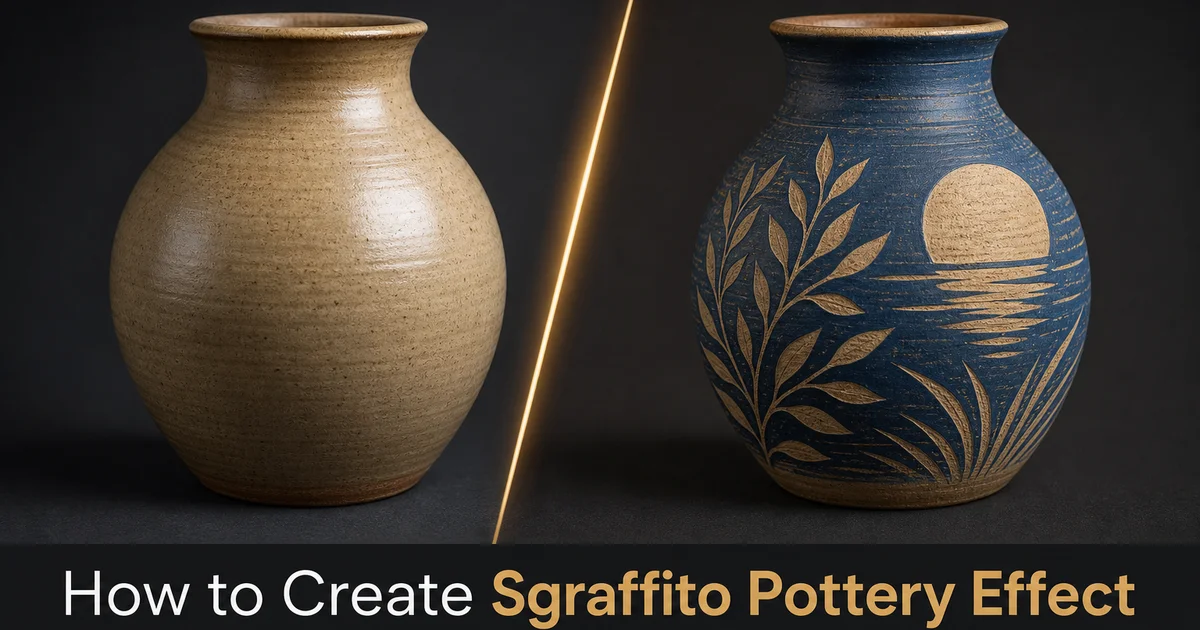
Le sgrafitto est l'une des techniques decoratives les plus anciennes et les plus frappantes de l'histoire de la ceramique, reposant sur un principe magnifiquement simple : recouvrir un corps d'argile d'une couche contrastante d'engobe, le laisser secher jusqu'a ce qu'il soit dur comme du cuir, puis gratter la surface pour reveler l'argile de couleur differente en dessous. Le mot lui-meme vient de l'italien sgraffiare, qui signifie gratter. Cette technique a ete pratiquee depuis toujours, des poteries egyptiennes et grecques antiques aux ateliers de majolique de la Renaissance italienne, en passant par le gres sale de Westerwald en Allemagne et la vibrante tradition de poterie rouge Pennsylvania Dutch qui a fleuri aux XVIIIe et XIXe siecles en Amerique. Ce qui rend le sgrafitto si puissant en tant qu'effet visuel, c'est sa physicalite inherente. Chaque ligne est un canal sculpte, chaque zone exposee est une veritable excavation a travers une couche de materiau pour en atteindre une autre, et le contraste entre la surface d'engobe et le corps d'argile cree un vocabulaire graphique bicolore a la fois simple et infiniment variable.
Recreer numeriquement l'aspect authentique du sgrafitto a toujours ete difficile car l'effet depend de proprietes materielles physiques que les filtres graphiques plats ne peuvent pas simuler. Un simple filtre de seuil bicolore produit des bords durs sans l'irregularite douce caracteristique des lignes sculptees a la main. Les textures de superposition ne peuvent pas reproduire la facon dont l'engobe gratte laisse de minuscules cretes et des materiaux deplaces le long de chaque incision. La surface de l'engobe elle-meme possede des qualites optiques specifiques : un leger brillant des fines particules d'argile, des micro-fissures dues au sechage differentiel, et de subtiles variations d'epaisseur provenant de l'application manuelle — qui la distinguent de la peinture ou de la couleur imprimee. Sans ces indices materiels, une tentative de sgrafitto numerique ressemble a un pochoir ou une serigraphie plutot qu'a une poterie decoree.
AI-powered la conversion sgrafitto change cela en comprenant a la fois le contenu visuel de l'image et les proprietes physiques de la technique ceramique simulee. L'IA identifie le sujet dans la photographie et determine quels elements doivent etre rendus comme des lignes gravees, quelles zones doivent rester comme surface d'engobe intacte, et quelles regions doivent etre entierement degagees pour exposer le corps d'argile. Prenant les memes decisions de composition qu'un potier prend lors de la planification d'un dessin sgrafitto. Elle genere ensuite chaque ligne grattee avec la bonne irregularite, variation de profondeur et texture de bord qui proviennent d'un outil metallique ou en bois se deplacant dans l'engobe d'argile partiellement seche. Ce guide parcourt le processus complet de creation d'effets de poterie sgrafitto en utilisant AI Filter et AI Enhance, de la selection des traditions ceramiques historiques a l'ajustement de la profondeur d'incision et a la verification du realisme materiel.
- L'IA analyse les contours du sujet et les traduit en lignes sgrafitto gravees qui suivent les courbes naturelles des formes, reproduisant la facon dont un potier gratte l'engobe avec des outils pointus et des couteaux a boucle.
- Les prereglages de traditions historiques simulent des styles sgrafitto specifiques, notamment la majolique de la Renaissance italienne, la poterie rouge Pennsylvania Dutch, le gres sale allemand et les combinaisons de couleurs de la poterie de studio moderne.
- Les controles de profondeur de gravure et d'epaisseur de trait vous permettent de simuler tout, des delicates incisions capillaires aux vastes zones gravees, correspondant a toute la gamme des outils sgrafitto, des aiguilles fines aux larges cotes.
- La simulation de surface d'engobe inclut des proprietes optiques authentiques comme les micro-fissures, les variations d'epaisseur d'application manuelle et le leger brillant des fines particules d'argile qui distinguent le veritable engobe de la couleur numerique plate.
- La texture de bord gravee reproduit les minuscules cretes d'engobe deplace le long de chaque ligne d'incision, la marque physique qui separe le veritable sgrafitto de la decoration ceramique imprimee ou estampee.
En quoi la conversion sgrafitto par IA differe des simples filtres de seuil bicolores
L'approche la plus basique pour creer un effet de type sgrafitto numeriquement consiste a convertir une image en noir et blanc a fort contraste a l'aide d'un reglage de seuil, puis a mapper les deux valeurs aux couleurs d'engobe et de corps d'argile. Cela produit un resultat graphique plat qui partage la structure de couleur bicolore du sgrafitto mais manque completement des qualites materielles qui definissent la technique. Chaque bord dans une conversion par seuil est mathematiquement precis — une limite de pixel dure sans variation de largeur, de profondeur ou de texture. Les vraies lignes sgrafitto varient toujours car une main humaine guide l'outil de grattage. La resistance de l'engobe dur comme du cuir cree un balancement naturel, des changements de profondeur et une irregularite de bord que l'oeil lit comme faits a la main. L'approche par seuil traite egalement l'image entiere de maniere uniforme, incapable de distinguer entre un contour de sujet qu'un potier rendrait comme une ligne principale audacieuse et un detail mineur qui recevrait un grattage plus leger ou serait omis completement.
La conversion sgrafitto par IA commence par identifier le contenu semantique de l'image — visages, objets, texte, bordures decoratives — et attribue a chaque element un traitement approprie dans le vocabulaire sgrafitto. Les grands contours recoivent des lignes gravees profondes et confiantes qu'un potier sculpterait avec un outil large. Les details interieurs comme les traits du visage, les nervures des feuilles ou les motifs textiles recoivent des marques d'incision plus fines faites avec un stylet pointu. Les zones d'arriere-plan peuvent etre laissees comme engobe intact, entierement degagees jusqu'au corps d'argile, ou remplies de motifs sgrafitto traditionnels comme les hachures croisees, le pointille ou les bordures geometriques que les potiers utilisent pour remplir les espaces negatifs. Cette approche hierarchique reflete la facon dont les artistes sgrafitto reels planifient leurs compositions, etablissant une priorite visuelle par le poids du trait et la profondeur de gravure plutot que de traiter chaque bord de maniere identique.
La couche de simulation materielle est la ou le sgrafitto par IA surpasse le plus nettement les approches basees sur le seuil. L'IA genere chaque ligne gravee comme un canal tridimensionnel a travers la surface d'engobe, avec une profondeur visible, des bords legerement surreleves ou l'engobe deplace a ete pousse sur les cotes, et une texture de surface differente dans le corps d'argile expose par rapport a l'engobe intact au-dessus. La surface d'engobe elle-meme est rendue avec les imperfections subtiles d'un revetement applique a la main : legere variation d'epaisseur, faibles marques de pinceau ou de trempage, et le reseau de micro-fissures qui se developpe lorsque l'engobe seche a un rythme different du corps d'argile en dessous. Ces details materiels operent en dessous de la perception consciente mais creent collectivement l'impression incontestable d'une veritable surface ceramique qui a ete physiquement sculptee.
- Les filtres de seuil produisent des bords mathematiquement precis sans variation, tandis que l'IA genere des lignes avec un balancement naturel, des changements de profondeur et une irregularite de gravure a la main.
- L'IA attribue differentes epaisseurs de trait a differents elements — contours audacieux pour les formes principales, incisions fines pour les details interieurs — correspondant a la facon dont les potiers reels planifient les compositions sgrafitto.
- Les zones d'arriere-plan recoivent des motifs de remplissage traditionnels comme les hachures croisees et les bordures geometriques plutot que d'etre laissees comme un ton plat uniforme.
- La simulation materielle cree des canaux graves tridimensionnels avec des bords surreleves et de l'engobe deplace, bien au-dela de ce que tout mappage de couleur plat peut accomplir.
Les traditions historiques du sgrafitto et leurs caracteristiques visuelles distinctives
Le sgrafitto de la Renaissance italienne a atteint son apogee artistique dans les ateliers d'Italie centrale aux XVe et XVIe siecles, principalement a Florence, Sienne et les villes de la region de Romagne. Ces potiers travaillaient principalement avec des corps d'argile en poterie allant du beige pale au rouge terre de Sienne riche, recouverts d'un engobe a base d'etain blanc ou creme. Les motifs grattees s'inspiraient fortement de la peinture et de la gravure contemporaines : portraits de profil, emblemes heraldiques, rinceaux floraux elabores et scenes figuratives entourees de bordures geometriques. Le caractere visuel du sgrafitto de la Renaissance italienne est defini par ses lignes confiantes et fluides, une gravure assez large qui revele des surfaces substantielles du corps d'argile, et le contraste de couleur chaud entre l'engobe creme et la poterie rouge-orange. Le prereglage Renaissance d'AI Filter reproduit cette relation chromatique specifique et cette qualite de ligne, generant les traits decoratifs audacieux et les motifs de bordure caracteristiques de la tradition.
Le sgrafitto Pennsylvania Dutch represente la contribution americaine la plus distinctive a l'art ceramique, developpee par des immigrants germanophones dans le sud-est de la Pennsylvanie du milieu du XVIIIe au XIXe siecle. Ces potiers travaillaient avec de la poterie rouge locale recouverte d'un engobe creme ou vert pale, grattant a travers pour creer des tourtes a tarte, des jarres de stockage et des pieces d'exposition ceremonielles elaborement decores. Les motifs sont incontestables — tulipes, distelfinks (oiseaux stylises), coeurs, etoiles, rosaces geometriques, inscriptions en allemand ou en anglais, incluant souvent des dates et les noms des destinataires prevus. La qualite visuelle est celle de l'art populaire plutot que des beaux-arts, avec des lignes gravees energetiques, des compositions symetriques et une esthetique horror vacui qui remplit chaque surface disponible d'incidents decoratifs. Le prereglage Pennsylvania Dutch de l'IA capture cette densite caracteristique et la palette chaude specifique de l'engobe creme sur la poterie rouge.
Le sgrafitto de studio moderne s'est largement etendu au-dela des precedents historiques, les potiers contemporains utilisant la technique sur des corps en gres et en porcelaine avec des engobes colores dans toutes les teintes imaginables. L'engobe noir sur porcelaine blanche produit des effets de haut contraste dramatiques qui photographient exceptionnellement bien. Les techniques d'engobe multicouches permettent des revelations de deux, trois ou quatre couleurs a differentes profondeurs de gravure. Certains artistes modernes utilisent le sgrafitto comme medium de dessin, creant des images illustratives detaillees qui traitent la surface du pot comme une toile. D'autres maintiennent l'approche geometrique et basee sur les motifs des traditions historiques mais avec des sensibilites de design modernes. Les prereglages modernes de l'IA offrent ces possibilites chromatiques elargies tout en maintenant les caracteristiques physiques cles — profondeur de gravure, texture de bord, contraste materiel — qui definissent le sgrafitto quelle que soit la combinaison specifique d'argile et d'engobe.
- Le sgrafitto de la Renaissance italienne presente des lignes fluides et confiantes sur poterie rouge sous engobe creme, avec des motifs inspires de la peinture contemporaine, de l'heraldique et des rinceaux floraux.
- La tradition Pennsylvania Dutch produit des compositions d'art populaire denses de tulipes, distelfinks, coeurs et inscriptions sur des tourtes a tarte en poterie rouge et des pieces ceremonielles.
- Les potiers de studio contemporains utilisent le sgrafitto sur porcelaine et gres avec des engobes colores, permettant des effets noir-sur-blanc a fort contraste et des revelations de couleurs multicouches.
- Chaque tradition historique a une qualite de ligne, une densite de composition et des relations chromatiques distinctes que les prereglages de l'IA reproduisent avec des caracteristiques materielles appropriees.
Controle de la texture de gravure, de l'opacite de l'engobe et du grain du corps d'argile
La texture d'une ligne de gravure sgrafitto depend de l'outil utilise, de la secheresse de l'engobe et de la vitesse du geste — et l'IA fournit des controles qui simulent ces trois variables. Une fine pointe d'aiguille produit des lignes minces et precises avec une perturbation de bord minimale, adaptees au dessin detaille et a la lettrine. Un outil a boucle retire de larges sections d'engobe proprement, creant des zones exposees lisses avec des limites nettes. Une cote en bois trainee dans l'engobe cree un canal plus rugueux avec une texture de bord plus visible et des marques de saut occasionnelles la ou l'outil a rebondi sur des depots d'engobe plus epais. L'IA vous permet de selectionner des profils d'outil principaux et secondaires pour differents elements du design, exactement comme un potier reel change d'outils pendant la decoration. Augmenter la secheresse simulee de l'engobe rend toutes les lignes de gravure plus nettes et plus propres. La diminuer produit les bords plus doux et legerement dechires du grattage a travers un engobe plus humide.
L'opacite de l'engobe est un parametre subtil mais critique pour le realisme du sgrafitto. Un veritable engobe n'est pas parfaitement opaque, surtout lorsqu'il est applique finement — la couleur du corps d'argile sous-jacent influence la couleur apparente de la surface d'engobe, creant un sous-ton chaud dans l'engobe blanc sur argile rouge ou un sous-ton froid dans l'engobe clair sur gres gris. L'IA imite cette translucidite en melangeant un pourcentage de la couleur du corps d'argile a travers la couche d'engobe, avec un rapport de melange ajustable d'opaque a distinctement translucide. Les zones minces pres des lignes gravees ou l'outil a partiellement aminei l'engobe montrent plus d'influence du corps d'argile que les zones centrales plus epaisses. Ce gradient de translucidite est l'un des indices visuels les plus importants que la surface est un veritable engobe plutot que de la peinture ou de la couleur numerique. Bien le regler augmente considerablement le realisme de l'effet.
Le corps d'argile expose dans les zones gravees a sa propre qualite de surface caracteristique qui differe de l'engobe au-dessus. Les corps d'argile en poterie sont plus grossiers et plus mats que l'engobe fin, avec des particules de sable et de grog visibles qui accrochent la lumiere differemment. L'IA rend les zones d'argile exposees avec cette texture granuleuse, incluant la legere variation de couleur provenant de la teneur minerale heterogene de l'argile naturelle. La ou une ligne de gravure est peu profonde, le corps d'argile apparait a travers une fine couche restante d'engobe, produisant une couleur intermediaire entre l'engobe complet et l'argile complete. La ou la gravure est profonde, l'argile brute est entierement exposee avec sa surface mate rugueuse caracteristique. Cette variation de couleur et de texture dependante de la profondeur le long des lignes gravees est ce qui rend l'effet sgrafitto de l'IA tridimensionnel plutot que plat.
- Les profils d'outil simulent les aiguilles fines pour le travail detaille, les outils a boucle pour un retrait large et propre, et les cotes en bois pour des canaux plus rugueux avec des marques de saut et une texture de bord.
- Les controles de secheresse de l'engobe affectent la nettete des lignes — un engobe plus sec produit des gravures plus propres tandis qu'un engobe plus humide cree des bords plus doux, legerement dechires avec plus de perturbation de surface.
- La translucidite de l'engobe permet a la couleur du corps d'argile d'influencer le ton de surface, creant des sous-tons chauds dans les zones minces qui distinguent le veritable engobe de la peinture opaque ou de la couleur numerique.
- La texture du corps d'argile expose inclut des particules de sable et de grog granulaires, une qualite de surface mate et une variation de couleur dependante de la profondeur qui fait que les zones gravees se lisent comme des canaux tridimensionnels.
Applications creatives : portraits, motifs botaniques et compositions d'art populaire
Les effets de portrait sgrafitto transforment les photographies de visages en images qui semblent avoir ete sculptees dans des plaques d'argile par un potier habilite. L'IA trace les contours du visage avec des lignes gravees confiantes, utilisant une gravure plus large pour les contours de la machoire et des pommettes et des incisions plus fines pour les details des sourcils, les contours des levres et le grattage delicat qui suggere l'ombre et le modele dans la tradition sgrafitto. La zone environnante peut etre remplie de motifs de bordure traditionnels — rosaces geometriques, rinceaux ou texte inscriptionnel — creant une composition de plat complete plutot qu'un simple visage filtre. Cette approche produit des oeuvres murales, du contenu pour les medias sociaux et des cadeaux personnalises qui referencent un art decoratif vieux de plusieurs siecles tout en utilisant la photographie de portrait moderne comme materiau source.
Les sujets botaniques et naturels ont des racines profondes dans la tradition sgrafitto. L'IA les traite particulierement bien car les plantes et les fleurs se traduisent naturellement dans le vocabulaire des lignes gravees. Les tulipes — le motif signature du sgrafitto Pennsylvania Dutch — peuvent etre generees a partir de photographies de vraies fleurs, maintenant la precision botanique tout en adoptant les proportions stylisees et les contours audacieux de la tradition populaire. Les sujets de feuilles deviennent des gravures sgrafitto ou les nervures sont des lignes d'incision fines et les marges des feuilles sont des contours gravees confiants revelant le corps d'argile. Les compositions de jardin avec plusieurs types de plantes produisent des motifs complexes couvrant toute la surface dans le style horror vacui, remplissant le plan image de formes botaniques superposees qui honorent la densite decorative de la poterie historique.
Les compositions d'art populaire utilisent la conversion sgrafitto pour creer des images qui referencent des traditions culturelles specifiques. Les pieces d'anniversaire de mariage peuvent combiner des elements de portrait avec des coeurs, des oiseaux et des inscriptions dans le style Pennsylvania Dutch. Les designs commemoratifs pour evenements culturels, le branding de restaurants servant une cuisine italienne ou d'Europe centrale, et les estampes decoratives celebrant le patrimoine artisanal beneficient tous de l'aspect ceramique authentique que l'IA produit. Le point cle est que l'effet sgrafitto porte une signification culturelle au-dela du simple style visuel — il refere à des communautes specifiques, des periodes historiques et des valeurs artistiques — et la precision materielle de l'IA garantit que ces references culturelles sont rendues avec respect et de maniere convaincante.
- Les effets de portrait sgrafitto creent des compositions de plat completes avec des visages sculptes entoures de motifs de bordure traditionnels, de rosaces geometriques et de texte inscriptionnel.
- Les sujets botaniques — en particulier les tulipes — se traduisent naturellement dans le vocabulaire des lignes gravees du sgrafitto, maintenant la precision botanique dans les proportions stylisees de l'art populaire.
- Les compositions d'art populaire referencent des traditions culturelles specifiques pour les pieces de mariage, les designs commemoratifs et le branding de restaurants avec un aspect ceramique authentique.
- La signification culturelle portee par le style sgrafitto s'etend au-dela de l'esthetique visuelle, referençant des communautes specifiques et des valeurs artisanales historiques que la precision materielle rend avec respect.
How to do it
- 1
Upload your photo and assess its suitability for sgrafitto pottery conversion
Open your image in AI Filter and evaluate whether the composition will translate well into the layered reveal aesthetic of sgrafitto ceramics. Sgrafitto is a decorative technique where a potter coats a clay body with a contrasting layer of slip and then scratches through that surface layer to expose the different-colored clay beneath. Images with strong outlines and distinct subject-background separation. Bold shapes convert best because the technique relies on clear carved lines rather than subtle tonal gradation. Portraits with defined features, botanical subjects with leaf and petal outlines, and folk art motifs with geometric borders all lend themselves naturally to this scratched-through pottery aesthetic.
- 2
Select the sgrafitto style preset and configure the slip and clay body colors
Choose from sgrafitto presets that simulate different historical traditions. Italian Renaissance maiolica with iron-rich red clay beneath cream slip, Pennsylvania Dutch redware with dark manganese decoration on buff ground, or modern studio pottery with contrasting stoneware bodies. The AI maps the tonal values in your photograph to the two-layer color system: light areas become exposed clay body and dark areas remain as intact slip surface. Adjust the color pair to match the ceramic tradition you want to evoke, from the warm terracotta and white of Mediterranean sgrafitto to the deep brown and tan of American folk pottery.
- 3
Adjust scratch depth, line weight, and carved texture for authentic incised appearance
Control the simulated scratch depth to determine how prominently the exposed clay layer shows through the slip. Real sgrafitto varies from delicate hairline scratches made with a fine pointed tool to broad carved areas removed with a loop tool or rib. The AI lets you set the primary line weight for outlines, a secondary weight for interior detail marks, and a fill style for large areas that should be fully cleared to the clay body. Enable the carved-edge texture that mimics the slight ridge of displaced slip along each scratch line. This physical trait is what distinguishes real sgrafitto from printed decoration and sells the handmade ceramic illusion.
- 4
Use AI Enhance to refine the incised line clarity and surface texture detail
After the initial sgrafitto conversion, apply AI Enhance to sharpen the carved lines and bring out the tactile quality of the simulated ceramic surface. The boost step adds subtle variation to the slip surface that replicates the slightly uneven thickness of hand-applied coating, with the faintest crazing texture visible in the intact slip areas. It also refines the exposed clay body to show the characteristic matte grain of raw earthenware compared to the smoother slip surface, creating the material contrast that makes sgrafitto visually interesting.
- 5
Export the finished sgrafitto effect and compare against historical pottery references
Save the completed image at full resolution and compare it with photographs of actual sgrafitto pottery from museum collections. Check that the scratched lines show the right irregularity. Real hand-carved lines waver slightly, vary in depth, and sometimes show the potter correcting a stroke. Verify that the slip surface has the right opacity and that the clay body visible in scratched areas has a distinct material quality from the coating above it. The two-layer structure should read clearly as a physical surface that has been incised rather than a flat graphic pattern applied to a surface.
Sources
- Sgraffito: History, Technique, and Contemporary Practice — Encyclopaedia Britannica
- Italian Renaissance Ceramics in the Metropolitan Museum of Art — The Metropolitan Museum of Art
- Pennsylvania German Decorated Pottery: Sgrafitto and Slip Traditions — Winterthur Museum, Garden & Library