
Comment creer un effet poterie Seto avec la retouche photo par IA
Transformez vos photos en effets de poterie japonaise Seto grace au transfert de style par IA. Guide pas a pas couvrant le glaçure jaune ki-Seto, le noir Seto-guro, le vert oribe et le blanc shino avec des textures de surface authentiques.
SEO & Growth
Vérifié par Magic Eraser Editorial ·
Sommaire
- En quoi le rendu Seto par IA differe des approches de superposition de couleurs planes
- Les quatre grandes traditions de glaçage Seto : ki-Seto, Seto-guro, oribe et shino
- Simulation d'ecoulement de glaçage : viscosite, accumulation et comportement d'amincissement sur les bords
- Applications creatives : photographie de produits, image de marque et design culturel
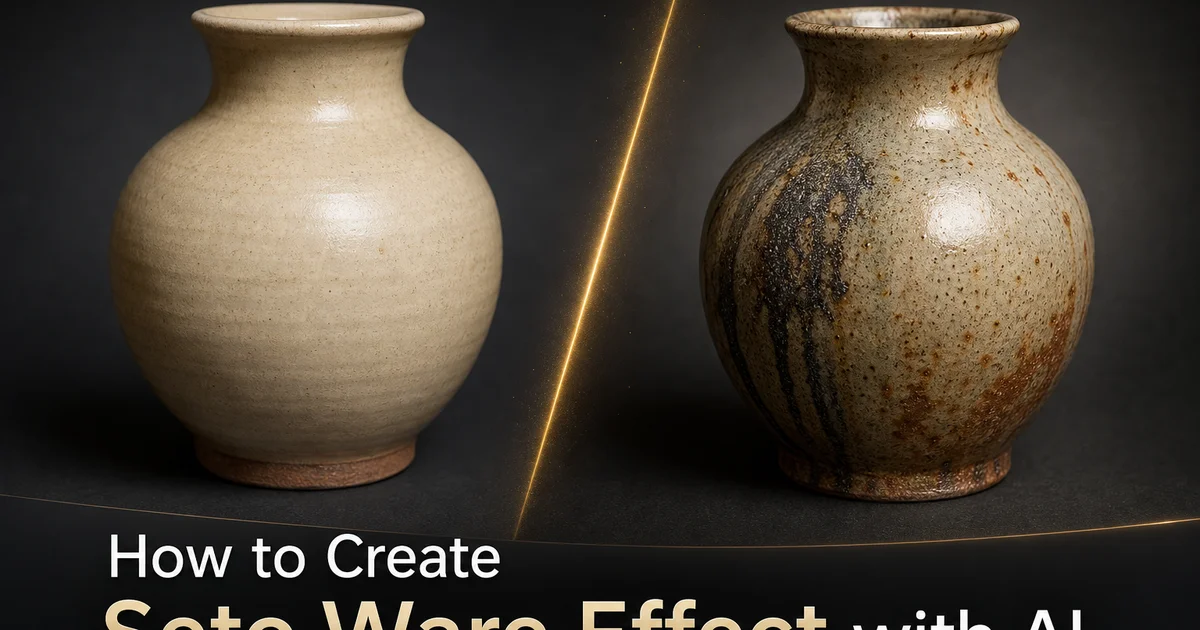
La poterie Seto — produite dans et autour de la ville de Seto dans la prefecture d'Aichi depuis plus de mille ans — occupe une place unique dans l'histoire de la ceramique japonaise en tant que l'une des seules traditions de fours medievaux a avoir developpe une poterie glaçuree alors que la plupart des fours japonais produisaient des gres non glaçures. Cette maitrise precoce de la technologie du glaçage a donne aux potiers de Seto un vocabulaire distinctif d'effets de surface qui est devenu fondamental pour l'esthetique de la ceramique japonaise : le jaune paille pale du glaçage de cendre ki-Seto, le noir lustre du glaçage de fer Seto-guro, le vert cuivre vif de l'oribe. Le blanc laiteux epais du glaçage feldspathique shino avec ses reflets orange caracteristiques la ou l'argile riche en fer transparait. Le mot setomono — litteralement les choses de Seto — est devenu le terme generique japonais pour la ceramique, refletant la domination de la production de Seto dans la culture ceramique japonaise.
La reproduction numerique de l'esthetique de Seto s'est revelee difficile car le caractere visuel de ces ceramiques depend de comportements de glaçage tridimensionnels que les filtres d'image plats ne peuvent pas capturer. Un bol de the Seto-guro n'est pas simplement un objet noir. Sa surface montre l'interaction complexe entre le glaçage sature de fer et l'extraction rapide du four, avec des zones ou le glaçage s'est fige en plein ecoulement pendant le refroidissement soudain, produisant un lustre metallique qui passe du noir au brun fonce selon l'angle de vue. Le glaçage ki-Seto s'accumule dans les zones creusees ou incisees, creant des poches d'ambre fonce sur des surfaces jaune paille. Les accents vert cuivre tanpan diffusent irregulierement dans le glaçage de cendre environnant. Ce sont des comportements materiels tridimensionnels qu'un simple mappage de couleurs ne peut pas reproduire.
Le transfert de style par IA repond a ces limitations en apprenant a partir de milliers de photographies de veritable poterie Seto a quoi ressemblent reellement les surfaces ceramiques glaçurees. Comment la lumiere interagit avec les surfaces vitrifiees de differentes epaisseurs, comment le glaçage coule et s'accumule sous la gravite pendant la cuisson, comment les craquelures se developpent lorsque le glaçage et l'argile refroidissent a des vitesses differentes, et comment l'atmosphere du four laisse des marques sur les surfaces exposees. Ce guide couvre le flux de travail complet pour creer des effets Seto en utilisant AI Filter et AI Enhance, depuis la selection de la tradition de glaçage appropriee jusqu'a la configuration du comportement de surface et le raffinement des details materiels qui distinguent une simulation ceramique convaincante d'une approximation numerique plane.
- L'IA reproduit le comportement distinctif d'ecoulement et d'accumulation du glaçage de la poterie Seto. Des accumulations epaisses dans les creux, un amincissement sur les bords revelant l'argile, et le mouvement de surface complexe qui se developpe pendant les cuissons au bois de plusieurs jours.
- Plusieurs prereglages de traditions Seto couvrent le glaçage de cendre jaune ki-Seto, le glaçage de fer noir Seto-guro, le vert cuivre oribe et le blanc feldspathique shino avec une simulation chimique des glaçages precise pour chaque epoque.
- Le rendu tridimensionnel de la surface du glaçage capture la profondeur, la refraction de la lumiere a travers les surfaces vitrifiees et la micro-texture peau d'orange caracteristique des glaçages feldspathiques.
- La simulation de craquelures ajoute le reseau de fines lignes la ou le glaçage se contracte differemment de l'argile, avec une densite et un motif ajustes pour chaque type de glaçage et tradition de cuisson.
- AI Enhance affine les effets d'atmosphere de four — marques de reduction, depots de cendre et motifs de flamme — qui authentifient la simulation comme produite au bois plutot que comme ceramique industrielle.
En quoi le rendu Seto par IA differe des approches de superposition de couleurs planes
L'effet ceramique numerique le plus courant applique une superposition de couleurs texturee a une image. Ambre-brun pour un aspect poterie generique, vert pour une approximation oribe, noir pour quelque chose de vaguement tenmoku. Cette approche traite la surface ceramique comme une palette de couleurs plutot que comme un systeme materiel avec des comportements physiques specifiques. Le resultat ressemble a une photographie avec une couche de texture coloree par-dessus, ne capturant ni la profondeur tridimensionnelle du veritable glaçage ni l'interaction complexe entre le glaçage, l'argile et l'atmosphere du four qui definit chaque tradition Seto. Le detail de l'image reste photographique plutot que d'etre transforme dans le langage visuel de la ceramique glaçuree. La surface manque de la profondeur, de la refraction et des motifs d'ecoulement qui rendent la veritable poterie Seto visuellement puissante.
Le rendu Seto par IA commence par le changement fondamental de conversion des surfaces photographiques en surfaces ceramiques glaçurees. Un glaçage vitrifie est une couche de verre fusionnee a un substrat d'argile. Elle a de la profondeur, elle refracte la lumiere, elle coule sous la gravite avant de se solidifier, et elle interagit avec l'argile sous-jacente de manieres qui varient selon l'epaisseur du glaçage. L'IA modelise ces comportements physiques plutot que de simplement appliquer de la couleur. La ou le glaçage est epais, la surface parait plus profonde et plus saturee en couleur. La ou il s'amincit sur les bords et les zones en relief, l'argile Seto riche en fer apparait en brun chaud ou orange. La ou le glaçage s'est accumule dans les creux, il developpe la couleur riche et concentree et la profondeur vitreuse que les collectionneurs prisent.
L'atmosphere du four est rendue comme un phenomene physique, non comme une superposition decorative. La poterie Seto cuite au bois montre des marques laissees par la direction de la flamme, des depots de cendre qui ont fondu pendant la cuisson pour former un glaçage naturel, et des zones de reduction ou le manque d'oxygene dans le four a modifie la chimie de l'argile et du glaçage. L'IA imite ces effets comme consequences d'un processus de cuisson physique, les placant toujours en fonction de la maniere dont le feu et l'atmosphere se deplacent reellement dans la chambre du four plutot que de les disperser aleatoirement sur la surface. Cette coherence physique est ce qui fait que la simulation est percue comme une veritable ceramique plutot que comme une fabrication numerique.
- Les superpositions de couleurs planes traitent la ceramique comme une palette de couleurs plutot que comme un systeme materiel, manquant la profondeur tridimensionnelle et la refraction de la lumiere des surfaces de glaçage vitrifie.
- L'IA modelise le glaçage comme une couche de verre avec une profondeur physique — les zones epaisses paraissent saturees, les zones minces revelent l'argile, et les zones d'accumulation developpent une profondeur vitreuse concentree.
- Les effets d'atmosphere de four sont places selon la maniere dont le feu et la cendre se deplacent reellement dans la chambre plutot que disperses aleatoirement sur la surface.
- La simulation materielle combinee — profondeur du glaçage, motifs d'ecoulement, interaction avec l'argile et atmosphere du four — cree une authenticite ceramique que les superpositions planes ne peuvent pas atteindre.
Les quatre grandes traditions de glaçage Seto : ki-Seto, Seto-guro, oribe et shino
Le Ki-Seto — Seto jaune — represente sans doute la plus subtile et la plus raffinee des traditions de glaçage Seto. Le glaçage est une formulation de cendre de bois qui cuit en un jaune paille pale, parfois teinte de vert ou d'ambre selon l'atmosphere du four et la composition de la cendre. La surface a une qualite douce, presque beurree, qui la distingue des surfaces plus dures et plus brillantes du celadon chinois ou du glaçage a l'etain europeen. Les pieces ki-Seto les plus prisees comportent des accents tanpan — de petites zones ou de l'oxyde de cuivre a ete applique avant le glaçage, produisant des taches vertes irregulieres qui diffusent doucement dans le jaune environnant. L'IA imite la qualite de surface douce specifique du glaçage de cendre ki-Seto et le comportement de diffusion caracteristique des accents de cuivre tanpan.
Le Seto-guro — Seto noir — obtient son aspect distinctif grace a une technique dramatique : la piece est retiree du four a temperature maximale et refroidie rapidement, figeant le glaçage sature de fer dans un etat qui produit un noir profond et lustre. L'extraction rapide signifie que la surface du glaçage montre des lignes d'ecoulement figees la ou le verre fondu etait encore en mouvement lorsqu'il s'est solidifie. Le lustre passe du noir metallique au brun fonce selon l'angle de vue. C'est l'une des surfaces ceramiques les plus dynamiques visuellement de toutes les traditions. L'IA capture a la fois la texture d'ecoulement fige et le changement de couleur dependant de l'angle qui rendent le Seto-guro si recherche par les praticiens de la ceremonie du the.
La poterie Oribe — nommee d'apres le maitre de the Furuta Oribe — est la plus decorative des traditions Seto, combinant un glaçage vert cuivre audacieux avec des motifs peints a l'oxyde de fer d'une liberte graphique frappante. Le glaçage vert n'est applique que sur une partie du recipient, la surface restante etant laissee blanche ou recouverte de coups de pinceau a l'oxyde de fer representant des motifs geometriques, des motifs botaniques ou des dessins abstraits avec une spontaneite qui prefigure l'esthetique expressionniste moderne de trois siecles. La poterie Shino presente un epais glaçage feldspathique blanc qui developpe des reflets orange la ou l'argile riche en fer transparait, avec une texture de surface allant du lisse au profondement craquele selon l'epaisseur du glaçage et les conditions de cuisson. Les deux traditions offrent de riches vocabulaires visuels pour la transformation par IA.
- Le glaçage de cendre ki-Seto cuit en un jaune paille doux avec des accents vert cuivre tanpan caracteristiques qui diffusent irregulierement dans la surface de glaçage environnante.
- Le Seto-guro obtient son noir lustre par extraction rapide du four qui fige le glaçage de fer en plein ecoulement, produisant une texture de surface et un changement de couleur dependant de l'angle.
- L'oribe combine un glaçage partiel vert cuivre audacieux avec des motifs a l'oxyde de fer librement peints qui prefigurent l'esthetique graphique expressionniste moderne.
- Le shino presente un epais glaçage feldspathique blanc laiteux avec des reflets orange la ou l'argile riche en fer transparait et des motifs de craquelures variables.
Simulation d'ecoulement de glaçage : viscosite, accumulation et comportement d'amincissement sur les bords
Le mouvement du glaçage pendant la cuisson est ce qui donne a la poterie Seto sa profondeur visuelle et son caractere. Lorsque le four atteint sa temperature maximale — souvent entre 1200 et 1300 degres Celsius pour le gres Seto — le glaçage fond en un liquide visqueux qui coule lentement sous la gravite. Sur les surfaces verticales, le glaçage se deplace vers le bas, s'epaississant a la base des formes et s'amincissant pres du sommet. Dans les zones creusees ou incisees, le glaçage s'accumule pour creer des depots de couleur concentres. Sur les bords tranchants et les zones en relief, le glaçage s'amincit en s'ecoulant, revelant l'argile en dessous. Ces motifs d'ecoulement ne sont pas des ajouts decoratifs. Ils sont le comportement naturel du verre fondu sur une surface d'argile, et leur absence signale immediatement qu'une surface n'est pas veritablement glaçuree.
L'IA imite l'ecoulement du glaçage comme un processus physique plutot qu'un motif visuel. Compte tenu de l'orientation des surfaces dans l'image, l'IA calcule comment un liquide visqueux du type de glaçage selectionne se deplacerait sous la gravite pendant les heures de temperature maximale du four. Le glaçage de cendre ki-Seto est assez fluide, produisant des lignes d'ecoulement plus longues et une accumulation plus prononcee. Le glaçage feldspathique shino est tres visqueux, ne coulant presque pas et conservant le revetement epais et uniforme qui donne au shino son aspect caracteristique de coussin doux. Le glaçage de fer Seto-guro a une viscosite moderee mais son ecoulement est fige en plein mouvement par l'extraction rapide du four, produisant la texture distinctive de cascade gelee sur la surface.
L'amincissement sur les bords — la ou le glaçage s'ecoule loin des zones en relief et des transitions prononcees — est d'une importance capitale pour le realisme ceramique. Sur une veritable piece Seto, chaque bord de rebord, attache de poignee, ligne gravee et irregularite de surface montre une transition entre l'epaisseur complete du glaçage et un glaçage mince ou l'argile exposee. L'IA mappe ces transitions sur les bords et les elements en relief de l'image source, creant le devoilement caracteristique de l'argile brun chaud ou orange sous la surface du glaçage. Ce comportement de bord est l'un des indicateurs visuels les plus fiables de la veritable ceramique glaçuree. Sa simulation precise est essentielle a la credibilite de l'effet.
- L'ecoulement du glaçage est simule comme un processus physique — un liquide visqueux se deplacant sous la gravite — plutot que d'etre applique comme un motif decoratif visuel.
- Les differents glaçages Seto ont des viscosites differentes : le glaçage de cendre ki-Seto fluide produit de longues lignes d'ecoulement tandis que le shino extremement visqueux ne coule presque pas, conservant son revetement doux en coussin.
- L'amincissement sur les bords revele l'argile chaude sous le glaçage sur les rebords, les elements en relief et les lignes gravees, fournissant l'un des indicateurs visuels les plus fiables de la ceramique authentique.
- La texture d'ecoulement fige sur le Seto-guro resulte de l'extraction rapide du four qui solidifie le glaçage de fer en plein mouvement, creant une surface dynamique sans equivalent parmi les ceramiques refroidies lentement.
Applications creatives : photographie de produits, image de marque et design culturel
Les photographes de produits et les vendeurs de commerce electronique specialises dans les articles japonais utilisent les effets Seto pour creer des images contextuelles qui placent leurs produits dans le monde visuel de la culture ceramique japonaise. Un fouet a the photographie avec un effet Seto-guro evoque tout l'univers esthetique de la ceremonie du the wabi-cha. Un ensemble a sake rendu dans un glaçage ki-Seto communique immediatement un gout raffine japonais. Ces images transformees performent bien sur les plateformes de medias sociaux ou les esthetiques culturellement distinctives generent de l'engagement et du partage, notamment aupres des publics interesses par l'art, l'artisanat et le design japonais.
Les designers de marque travaillant avec des themes culturels japonais utilisent les transformations Seto pour creer des identites visuelles qui portent des siecles d'heritage ceramique. L'image de marque de restaurants, le design hotelier, l'emballage alimentaire artisanal et les materiaux de tourisme culturel beneficient tous d'images qui evoquent la chaleur et le realisme des ceramiques japonaises faites a la main. L'IA permet aux designers d'appliquer ces effets a n'importe quelle image source — aliments photographies, espaces interieurs, vues paysageres ou compositions abstraites — creant un langage visuel coherent enracine dans l'une des traditions artisanales les plus celebrees du Japon.
Les artistes ceramistes modernes et les etudiants utilisent l'effet comme outil de visualisation, previsualisant comment differentes traditions de glaçage Seto apparaiteraient sur leur propre travail avant de s'engager sur une formulation de glaçage et un programme de cuisson specifiques. La conversion de photographies de pieces crues non cuites en simulations de glaçage ki-Seto, Seto-guro, oribe ou shino permet aux artistes de comparer rapidement les options et de prendre des decisions eclairees sur le traitement de surface. Cette capacite de visualisation est particulierement precieuse pour les artistes travaillant avec des processus de cuisson au bois couteux ou chaque charge de four represente un investissement majeur de temps et de materiaux.
- Les photographes de produits creent des images contextuelles plaçant les articles japonais dans le monde visuel de la culture ceramique Seto pour le commerce electronique et les medias sociaux.
- Les designers de marque appliquent l'esthetique Seto a l'image de marque de restaurants, au design hotelier et aux materiaux de tourisme culturel ancres dans des siecles d'artisanat japonais.
- Les artistes ceramistes contemporains previsualisent differentes traditions de glaçage sur leurs pieces crues avant de s'engager dans des formulations specifiques et des programmes de cuisson couteux.
- La specificite culturelle de chaque tradition Seto — ki-Seto pour la subtilite raffinee, Seto-guro pour l'impact dramatique, oribe pour le design audacieux — permet une communication esthetique ciblee.
How to do it
- 1
Upload your photo and assess its compatibility with Seto ware glaze aesthetics
Open your image in AI Filter and evaluate how well the composition translates to the visual language of Seto ware ceramics. Seto ware — one of the Six Ancient Kilns of Japan — is renowned for its richly colored ash and iron glazes, ranging from pale celadon yellows to deep amber-brown tenmoku and the distinctive oribe green. Images with warm tonal ranges, organic textures. Subjects that connect to natural or domestic themes translate most well into the Seto ceramic vocabulary.
- 2
Select a Seto ware glaze style and configure surface texture parameters
Choose from presets that simulate the major Seto glaze traditions. Ki-Seto (yellow Seto) with its pale straw-colored ash glaze and tanpan green copper accents, Seto-guro (black Seto) with its lustrous jet-black iron glaze achieved through rapid kiln extraction, oribe with its bold green copper glaze and geometric painted iron-oxide designs, and shino with its thick milky-white feldspathic glaze showing orange flashing where the clay body shows through. Each preset configures glaze thickness, surface flow patterns, and color chemistry to match the specific tradition.
- 3
Adjust glaze flow, crazing patterns, and iron-oxide brushwork details
Fine-tune the simulation of glaze behavior on the ceramic surface. Seto ware glazes are prized for their movement during firing. Flowing, pooling in recesses, thinning on edges to reveal the clay body beneath, and developing crazing networks where the glaze contracts at a different rate than the clay. The AI replicates these kiln effects with sliders for glaze viscosity, pooling intensity, edge thinning, and craze-line density. For styles featuring painted decoration like oribe, adjust the iron-oxide brushwork boldness and the characteristic freedom of the painted designs.
- 4
Use AI Enhance to sharpen glaze depth, surface micro-texture, and kiln atmosphere marks
Run AI Enhance to refine the three-dimensional quality of the glaze surface, sharpening the depth where glaze has pooled thickly and the subtle orange-peel texture of feldspathic glazes. The boost also accentuates kiln atmosphere effects. The reduction marks, ash deposits, and flame patterns that distinguish wood-fired Seto ware from gas-fired modern production. These micro-details give the surface the lived quality of pottery that has been through a multi-day firing cycle.
- 5
Export and compare against museum examples of historical Seto ware
Save the completed image at full resolution and compare it with photographs of landmark Seto ware pieces held at the Aichi Prefectural Ceramic Museum, the Seto City Museum, and the Tokyo National Museum. Verify that the glaze color falls within the range achievable with traditional Seto raw materials, that surface flow and pooling patterns are physically plausible for the selected glaze type. That any painted decoration respects the design conventions and characteristic brush freedom of the specific Seto tradition.
Sources
- Seto Ware: A Thousand Years of Japanese Ceramic Tradition — Seto City Cultural Promotion Foundation
- Japanese Ceramics: A History of Style and Innovation — The Metropolitan Museum of Art
- Neural Style Transfer for Ceramic Surface Simulation — arXiv — Computer Vision and Pattern Recognition