
Comment Créer un Effet Quilling avec l'IA — Magic Eraser
Transformez vos photos en superbes effets artistiques de papier quilling grâce à l'IA. Guide étape par étape couvrant les styles de spirales, les paramètres de bandes de papier, les ombres dimensionnelles et l'esthétique réaliste du papier quilling.

Product Marketing
Vérifié par Magic Eraser Editorial ·
Sommaire
- Comment la conversion quilling par l'IA comprend la géométrie des spirales en papier et la décomposition d'image
- Rendu de bandes de papier dimensionnelles avec des propriétés matérielles réalistes
- Techniques de quilling décodées : tight coils, loose scrolls et formes spécialisées
- Applications créatives : cartes de voeux, décoration de mariage et art de galerie
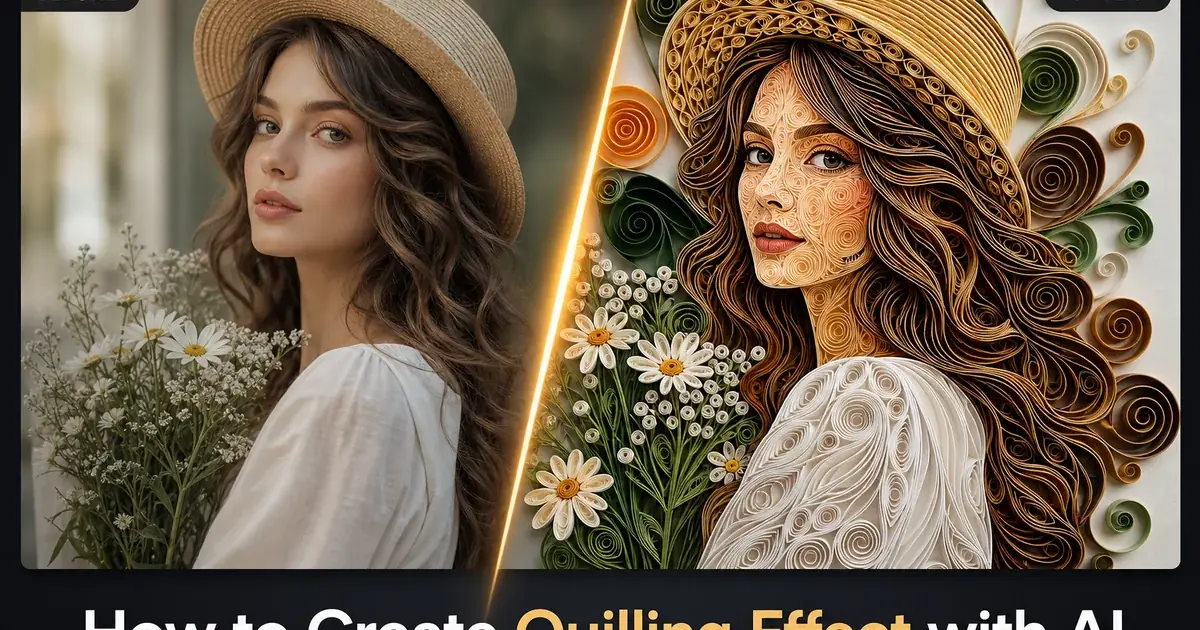
Le papier quilling est une forme d'art décorative vieille de plusieurs siècles qui transforme de simples bandes de papier en motifs tridimensionnels complexes grâce au roulage, au façonnage et à l'agencement d'éléments en spirale en motifs et en images. Originaire des monastères de la Renaissance, où les nonnes et les moines utilisaient des bandes de papier doré découpées dans des livres pour créer des oeuvres d'art religieuses, le quilling a évolué au fil des siècles pour devenir un artisanat raffiné pratiqué dans le monde entier, tant à des fins décoratives que pour les beaux-arts. L'attrait de la technique réside dans sa nature paradoxale : la matière première ne pourrait être plus humble, mais les résultats finis peuvent atteindre une complexité et une beauté remarquables. Une photographie unique transformée en oeuvre d'art de style quilling acquiert une identité matérielle entièrement nouvelle, apparaissant comme une sculpture en papier tangible plutôt qu'une image numérique plate.
Tenter de simuler numériquement les effets de papier quilling a toujours nécessité un travail manuel minutieux dans des logiciels de modélisation 3D ou d'illustration. Chaque élément en spirale doit être créé, positionné, coloré, éclairé et ombré un par un pour produire un résultat convaincant — un processus qui pourrait nécessiter de placer des centaines ou des milliers d'objets en spirale individuels pour une seule image. Même les artistes numériques expérimentés déclarent passer des dizaines d'heures à créer des simulations de quilling pour des projets commerciaux comme les cartes de voeux, les faire-part de mariage et les campagnes publicitaires. Aucun filtre simple ni effet en un clic n'a été disponible car l'esthétique du quilling est fondamentalement volumétrique : chaque bande de papier occupe un espace tridimensionnel, projette des ombres réelles et interagit avec la lumière en fonction de son orientation et de l'angle de vue.
La conversion du quilling par l'IA change considérablement cette donne en comprenant à la fois le contenu de la photographie source et les principes physiques de la construction des spirales en papier. L'IA décompose l'image en régions qui correspondent à des éléments de quilling distincts, sélectionne les formes de spirales appropriées pour chaque région en fonction de sa couleur, de sa taille et de sa position dans la composition, puis rend chaque élément comme une forme de papier tridimensionnelle complète avec des propriétés matérielles, des détails de bord et des ombres portées. Le système comprend que les tight coils remplissent les zones pleines, les loose scrolls créent des bordures décoratives fluides, les teardrops et les marquise shapes suivent les éléments directionnels comme les feuilles et les plumes, tandis que les open forms apportent transparence et légèreté dans les zones d'arrière-plan. Ce guide explique comment utiliser AI Filter pour créer des effets de quilling qui capturent la beauté tactile dimensionnelle de la véritable sculpture en papier.
- L'IA décompose les photographies en régions mappées à des éléments de quilling distincts : tight coils pour les zones pleines, loose scrolls pour les formes fluides, teardrops pour les éléments directionnels et open shapes pour les arrière-plans aérés.
- Le rendu tridimensionnel imite la profondeur physique des bandes de papier posées sur la tranche, avec des ombres portées réalistes calculées à partir d'un éclairage virtuel qui crée l'interaction de la lumière, clé de la richesse visuelle du quilling.
- La simulation du matériau papier inclut la visibilité des bords des bandes montrant le coeur blanc entre les surfaces colorées, des options de finition de surface du mat au métallisé et des palettes de couleurs adaptées aux papiers quilling disponibles dans le commerce.
- Plusieurs préréglages de techniques de quilling couvrent le tight coil filling, le loose scrollwork, les eccentric off-center coils et le geometric comb quilling, chacun adapté à différents sujets et objectifs esthétiques.
- Les largeurs de bandes de papier configurables vont des délicates bandes de 1,5 mm pour les détails fins aux bandes épaisses de 10 mm pour les effets dimensionnels, l'IA variant automatiquement la largeur selon les régions de l'image.
Comment la conversion quilling par l'IA comprend la géométrie des spirales en papier et la décomposition d'image
Le défi fondamental de la conversion d'une photographie en oeuvre d'art de style quilling est la décomposition : diviser une image à tons continus en régions distinctes pouvant chacune être représentée par une seule forme de spirale en papier. Un artiste quilling humain aborde cela intuitivement, en regardant une image de référence et en la segmentant mentalement en zones correspondant aux formes de son répertoire : tight circles pour les yeux et les points, teardrops pour les pétales et les feuilles, marquise shapes pour les éléments pointus, loose scrolls pour les embellissements décoratifs et diverses open forms pour les zones de transition. L'expérience de l'artiste avec le médium éclaire cette décomposition : il sait quelles formes sont physiquement possibles à réaliser à partir de bandes de papier et quelles tailles et densités produisent des résultats lisibles à l'échelle souhaitée.
L'IA reproduit ce processus de décomposition en analysant l'image à travers plusieurs lentilles à la fois. La color segmentation identifie les régions de teinte et de luminosité similaires qui deviendront chacune un élément en spirale unique. L'edge detection trouve les limites entre ces régions, déterminant où une spirale se termine et où la suivante commence. La semantic understanding identifie ce que chaque région représente — un pétale, un oeil, une zone d'arrière-plan — et sélectionne la forme de spirale la plus appropriée en fonction de cette reconnaissance. La size analysis garantit que la décomposition produit des éléments dans la plage physiquement plausible pour la largeur de bande de papier configurée : les éléments trop petits pour être réalistement construits à partir de bandes de papier sont fusionnés avec leurs voisins, tandis que les régions trop grandes pour une seule spirale sont subdivisées en groupes d'éléments plus petits.
La carte de décomposition résultante attribue un type de spirale, une taille, une orientation et une couleur spécifiques à chaque région de l'image. Les tight coils sont densément tassés pour remplir les zones de couleur unie comme les centres de fleurs et les arrière-plans pleins. Les loose scrolls coulent le long des limites courbes où la composition a besoin d'éléments de transition gracieux. Les teardrops alignent leurs extrémités pointues avec la direction naturelle des feuilles, des plumes et des cheveux. Les espaces entre les spirales — des intervalles intentionnels laissant apparaître la surface de support — sont soigneusement répartis pour créer un espace de respiration visuelle et suggérer la légèreté caractéristique du quilling en papier où le fond est volontairement visible comme élément de design. Cette cartographie complète garantit que chaque pixel de la photographie originale est pris en charge par un élément de quilling spécifique physiquement plausible pour le médium.
- La color segmentation identifie les régions de teinte et de luminosité similaires qui deviennent des éléments en spirale individuels, l'edge detection déterminant les limites précises entre les spirales adjacentes.
- La semantic understanding identifie ce que chaque région représente — pétales, yeux, arrière-plan — et sélectionne la forme de spirale la plus appropriée parmi tight circles, teardrops, marquise shapes et scrolls.
- La size analysis garantit des éléments physiquement plausibles : les régions trop petites pour la construction en papier fusionnent avec leurs voisines, tandis que les régions surdimensionnées se subdivisent en groupes de spirales.
- La répartition stratégique des espaces entre les spirales laisse apparaître la surface de support, reproduisant la légèreté visuelle caractéristique qui distingue le quilling de la décoration de surface pleine.
Rendu de bandes de papier dimensionnelles avec des propriétés matérielles réalistes
L'attrait visuel du papier quilling dépend entièrement de la qualité tridimensionnelle des éléments en spirale. Chaque bande de papier se tient sur sa tranche étroite, présentant une fine face colorée au spectateur tandis que sa profondeur crée des ombres, des reflets et l'aspect superposé distinctif qui rend le quilling immédiatement reconnaissable. Le moteur de rendu AI traite chaque élément en spirale comme un véritable objet tridimensionnel plutôt qu'une forme graphique plate, calculant comment la lumière interagit avec la surface de papier courbée à chaque point. La courbe extérieure d'une tight coil capte la lumière le long de son bord supérieur et tombe dans l'ombre à sa base où elle rencontre la surface de support. Les spirales adjacentes projettent des ombres les unes sur les autres en fonction de leurs hauteurs relatives et de la direction de la lumière, créant les motifs d'ombre complexes qui donnent au véritable quilling sa profondeur et sa richesse visuelle.
Le rendu du matériau papier va au-delà du simple remplissage de couleur pour simuler les propriétés optiques réelles des bandes de papier. Le véritable papier quilling possède une structure fibreuse visible qui affecte la façon dont la lumière se diffuse sur sa surface. Les papiers mats diffusent la lumière de manière diffuse pour un aspect doux et chaleureux, tandis que les papiers couchés brillants créent des reflets spéculaires qui ajoutent de l'éclat à la composition. L'IA applique les modèles de réflectance de surface appropriés pour le type de papier sélectionné, générant des reflets et des tons moyens qui correspondent au comportement physique du papier réel sous éclairage. Les bords de chaque bande — les surfaces étroites visibles entre les faces colorées — montrent la couleur de l'âme du papier, souvent blanc ou blanc cassé, créant les lignes de bord distinctives qui sont l'une des caractéristiques les plus reconnaissables du véritable papier quilling et le distinguent immédiatement de toute autre forme d'art.
La superposition de profondeur ajoute une autre dimension de réalisme en imitant la façon dont les artistes quilling empilent les spirales à différentes hauteurs au sein d'une composition. Les éléments de premier plan s'élèvent plus haut de la surface de support que les éléments d'arrière-plan, créant un véritable effet de relief qui renforce la perception de la profondeur de l'image. L'IA analyse la carte de profondeur de la photographie originale pour déterminer quels éléments doivent se projeter plus proéminemment, plaçant les sujets focaux comme les centres de fleurs et les yeux à la hauteur maximale tout en enfonçant les arrière-plans et les zones périphériques à des altitudes plus basses. Cette variation de profondeur affecte considérablement la projection des ombres : les spirales hautes du premier plan projettent des ombres plus longues sur les éléments d'arrière-plan plus bas, créant le type d'interaction complexe entre les éléments qui rend les photographies de véritable quilling si puissantes visuellement.
- Chaque élément en spirale est rendu comme un véritable objet tridimensionnel avec interaction lumineuse calculée sur des surfaces de papier courbées, et non comme une forme graphique plate avec des effets d'ombre appliqués.
- Le rendu du matériau papier simule la structure fibreuse, la réflectance de surface et les différences optiques entre les papiers mats, brillants et métallisés pour un aspect matériel précis.
- La visibilité des bords des bandes montre la couleur de l'âme du papier entre les faces colorées — une caractéristique déterminante du véritable quilling qui identifie immédiatement la forme d'art.
- La superposition de profondeur analyse la carte de profondeur de la photographie originale pour empiler les éléments de premier plan plus haut que ceux d'arrière-plan, créant des effets de relief avec des ombres portées complexes entre les éléments.
Techniques de quilling décodées : tight coils, loose scrolls et formes spécialisées
Les tight coils forment les blocs de construction fondamentaux de la plupart des compositions de quilling. Créés en enroulant fermement une bande de papier autour d'un outil de quilling et en collant l'extrémité pour éviter le déroulement, les tight coils se présentent comme des cercles parfaits vus de dessus et comme de courts cylindres vus de côté. Leur densité uniforme les rend idéaux pour remplir les zones pleines. Un groupe de tight coils aux couleurs dégradées peut créer des transitions tonales lisses sur une surface, tandis qu'une seule grande tight coil sert de point graphique audacieux ou de centre de fleur. L'IA génère les tight coils avec des proportions physiquement précises : le diamètre est déterminé par la longueur et la largeur de la bande de papier, avec la spirale caractéristique visible sur la face où chaque tour de papier est légèrement plus grand que celui en dessous. Ce détail de face spiralée est visible à l'examen attentif dans le véritable quilling et ajoute du réalisme à la simulation numérique.
Les loose scrolls et les S-curves sont créés en laissant une spirale serrée se détendre avant d'être façonnée. La bande de papier se déroule partiellement, créant des courbes fluides qui peuvent être pincées, pliées et arrangées en formes décoratives. Ces éléments apportent la qualité organique fluide qui distingue le quilling artistique du simple empilement de spirales. L'IA utilise les loose scrolls le long des courbes de composition, aux transitions entre les régions de couleur et partout où l'image a besoin de mouvement fluide plutôt que de densité statique. Les open teardrop shapes sont formés en pinçant une extrémité d'une loose coil pour créer une pointe, produisant une forme polyvalente utilisée pour les pétales, les feuilles, les flammes et tout élément à accent directionnel. L'IA oriente les teardrops pour suivre la direction naturelle des éléments photographiques qu'ils représentent : les teardrops de feuilles pointent dans la direction de la croissance, les teardrops de pétales rayonnent depuis les centres des fleurs et les teardrops de cheveux suivent la direction du flux des mèches.
Les specialty shapes étendent le vocabulaire du quilling vers un territoire plus complexe. Les marquise shapes — pincées aux deux extrémités pour créer un ovale pointu — servent d'yeux, de feuilles et d'éléments décoratifs allongés. Les squares et triangles, formés en pinçant une loose coil à quatre ou trois points également espacés respectivement, fournissent une structure géométrique dans les compositions architecturales et basées sur des motifs. Le husking, une technique où les bandes de papier sont bouclées autour de broches selon un motif spécifique plutôt qu'enroulées, crée des formes ouvertes en treillis utilisées pour les structures d'ailes délicates, les bordures décoratives et les zones où la transparence visuelle est souhaitée. L'IA sélectionne dans ce vocabulaire complet de formes en fonction du contenu sémantique de chaque région d'image, associant la forme de quilling au sujet photographique avec la même intuition qu'un artiste quilling expérimenté apporte à son matériel de référence.
- Les tight coils se présentent comme des cercles parfaits avec des faces spiralées visibles, remplissant les zones pleines avec des groupes de couleurs dégradées créant des transitions tonales lisses sur les surfaces.
- Les loose scrolls et les S-curves apportent un mouvement organique fluide aux courbes de composition et aux transitions. Les teardrops sont orientés pour suivre les éléments directionnels naturels comme la croissance des feuilles et le rayonnement des pétales.
- Les marquise shapes servent d'yeux et d'éléments allongés, les formes géométriques pincées fournissent une structure architecturale et le husking crée des formes en treillis ouvert pour les zones transparentes délicates.
- L'IA sélectionne dans le vocabulaire complet de formes en fonction de l'analyse du contenu sémantique, associant les formes de quilling aux sujets photographiques avec une intuition éclairée par l'artisanat.
Applications créatives : cartes de voeux, décoration de mariage et art de galerie
La conception de cartes de voeux représente l'une des applications les plus naturelles pour les effets photo de style quilling. Le papier quilling traditionnel est utilisé pour les cartes faites main depuis des siècles. La conversion de photographies en oeuvres d'art de style quilling crée des cartes de voeux numériques qui portent la chaleur et l'esthétique artisanale des pièces faites main. Un portrait de famille converti en style quilling pour une carte de fête, une photographie d'animal de compagnie transformée en carte d'anniversaire quilling, ou un arrangement floral rendu en carte de condoléances quilling — chaque application tire parti de l'association entre le papier quilling et l'attention personnelle qui a été culturellement renforcée à travers des générations de cartes faites main. La qualité dimensionnelle de l'effet quilling se traduit bien même sur les cartes imprimées car les ombres rendues et les indices de profondeur communiquent la tridimensionnalité sur une surface plane.
La décoration de mariage et d'événements inclut de plus en plus de graphiques de style quilling alors que les couples recherchent une esthétique qui semble artisanale et personnelle sans les contraintes de coût et de temps liées à la commande de véritables oeuvres quilling pour chaque pièce imprimée. Les faire-part, les numéros de table, les plans de table, les panneaux de bienvenue et les graphiques pour les réseaux sociaux peuvent tous inclure des photographies de style quilling qui lient l'identité visuelle de l'événement à une esthétique artisanale. La conversion de photographies de fiançailles en oeuvres d'art de style quilling crée une signature visuelle unique qui distingue les documents du couple des faire-part de mariage standard basés sur des photos. L'effet fonctionne particulièrement bien avec les compositions florales — déjà parmi les sujets les plus populaires du quilling traditionnel — créant une connexion visuelle naturelle entre l'aspect artisanal et le contenu botanique.
Les applications en beaux-arts et en galerie poussent l'effet quilling au-delà de l'usage décoratif vers une déclaration artistique. Les impressions grand format de photographies converties en style quilling créent un art mural qui se lit comme des enregistrements de sculptures en papier complexes, remettant en question les hypothèses des spectateurs sur le médium qu'ils regardent. S'agit-il d'une photographie de véritable quilling ou d'une transformation numérique ? L'ambiguïté elle-même devient partie intégrante de la conversation artistique. Les artistes travaillant en pratiques mixtes combinent les effets de quilling générés par l'IA avec de véritables éléments en papier, créant des oeuvres hybrides où la frontière entre l'artisanat physique et la simulation numérique est volontairement brouillée. L'esthétique quilling se traduit également puissamment dans les contextes d'art commercial : campagnes publicitaires pour les marques de luxe, conception d'emballages pour des produits artisanaux et pages éditoriales où la qualité tactile faite main communique authenticité et positionnement premium.
- La conception de cartes de voeux exploite l'association séculaire du quilling avec l'attention personnelle artisanale, convertissant les photographies en oeuvres d'art dimensionnelles qui communiquent la chaleur même en format imprimé.
- Les documents de mariage et d'événements utilisent la photographie de style quilling dans les faire-part, la signalétique et les réseaux sociaux pour créer une identité visuelle artisanale distinctive sans commander de véritables pièces quilling.
- Les applications en beaux-arts créent des impressions grand format qui remettent en question les hypothèses des spectateurs sur le médium, tandis que les artistes mixtes fusionnent les effets de quilling IA avec de véritables éléments en papier pour des oeuvres hybrides.
- Les contextes commerciaux, de la publicité de luxe à l'emballage artisanal, utilisent l'esthétique quilling pour communiquer authenticité, héritage artisanal et positionnement premium fait main.
How to do it
- 1
Upload your photo and evaluate its composition for paper quilling conversion
Open your photograph in AI Filter and assess whether its subject matter will translate well into a paper quilling aesthetic. Quilling works best with subjects that have flowing organic curves, circular motifs, and layered depth. Floral compositions, portraits with expressive hair, animals with feathered or furred textures, and decorative patterns all convert beautifully. The art form builds images from narrow strips of paper that are rolled, shaped. Glued into coiled forms, meaning the AI needs to decompose your photograph into regions that can be represented by distinct rolled paper elements. Images with strong color areas and clear subject boundaries produce the most convincing results because each quilled element corresponds to a defined visual region.
- 2
Select the quilling style preset and configure paper strip parameters
Choose from quilling technique presets that simulate different approaches to the craft. Tight coil filling where densely packed spirals create solid color fields, loose scroll work with flowing S-curves and open teardrops, eccentric coil designs where the center of each roll is positioned off-center to create organic shapes, and comb quilling with geometric parallel strips formed using a quilling comb tool. Adjust the paper strip width to control the apparent thickness of the strips used, from delicate 1.5mm jewelry-weight strips to bold 10mm strips that create chunky dimensional effects. The AI maps these parameters to the image content, using tighter coils for detailed areas and looser scrollwork for backgrounds and negative space.
- 3
Configure depth, shadow, and dimensional paper rendering
Paper quilling is inherently three-dimensional — each rolled strip stands on its edge, creating a relief surface with real depth and shadow. Control the apparent depth of the quilled elements to determine how far they appear to project from the backing surface, from shallow low-relief designs where strips barely rise above the base to deep sculptural pieces where coils stack several layers high. The AI generates realistic cast shadows between adjacent elements based on the configured depth and a virtual light source, creating the interplay of light and shadow that makes real quilling visually rich. Adjust the shadow softness and direction to match your intended lighting scenario. Configure the backing surface material from plain cardstock to textured handmade paper.
- 4
Refine color palette and paper material appearance
Configure the color mapping to determine how the photograph's colors translate to quilling paper strips. Real quilling paper comes in specific color ranges. Solid colors, graduated tones, metallic foils, and vellum translucents — and the AI maps the steady photographic color space to a discrete palette that matches commercially available paper stocks. Enable the paper edge visibility setting to show the cut edges of individual strips. In real quilling display the white paper core between colored surface layers. This edge detail is one of the most telling indicators of authentic quilling and greatly increases the realism of the effect. Adjust the paper surface finish from matte craft paper to glossy cardstock or shimmer metallic to match the aesthetic you want.
- 5
Export the quilling artwork and compare against traditional paper quilling photography
Save the finished quilling effect at full resolution and evaluate it against photographs of actual paper quilling artwork from established quilling artists. Verify that each coil form reads as a physically plausible rolled paper shape. Tight coils should appear uniformly round, teardrops should have a clear point at one end with smooth curves, and marquise shapes should have symmetrical points. Check that the shadows between elements are consistent with a single light direction, that the paper edge detail is visible where strips meet. That the overall color palette falls within the range of commercially available quilling papers. The effect should evoke the tactile dimensional quality of paper sculpture, not a flat graphic pattern applied to the surface of the photograph.
Sources
- The Art of Quilling Paper Jewelry — Quarto Publishing Group
- 3D Object Stylization with Learned Neural Representations — arXiv — ACM SIGGRAPH Asia
- Paper Quilling for the First Time — All Things Quilling