
Comment creer un effet Mingei avec la retouche photo par IA
Transformez vos photos en esthetique de l'artisanat populaire japonais grace au transfert de style par IA. Guide pas a pas pour appliquer la philosophie mingei. La simplicite wabi, la beaute de l'artisanat anonyme et l'imperfection chaleureuse de la poterie rurale et des textiles tisses a la main.

Product Marketing
Vérifié par Magic Eraser Editorial ·
Sommaire
- La philosophie de la beaute anonyme de Yanagi Soetsu et son expression visuelle
- Prereglages de traditions artisanales: poterie, textiles, laque et travail du bois
- La simplicite wabi et l'art de la retenue deliberee dans les effets photo
- Applications creatives: photographie, image de marque et appreciation culturelle
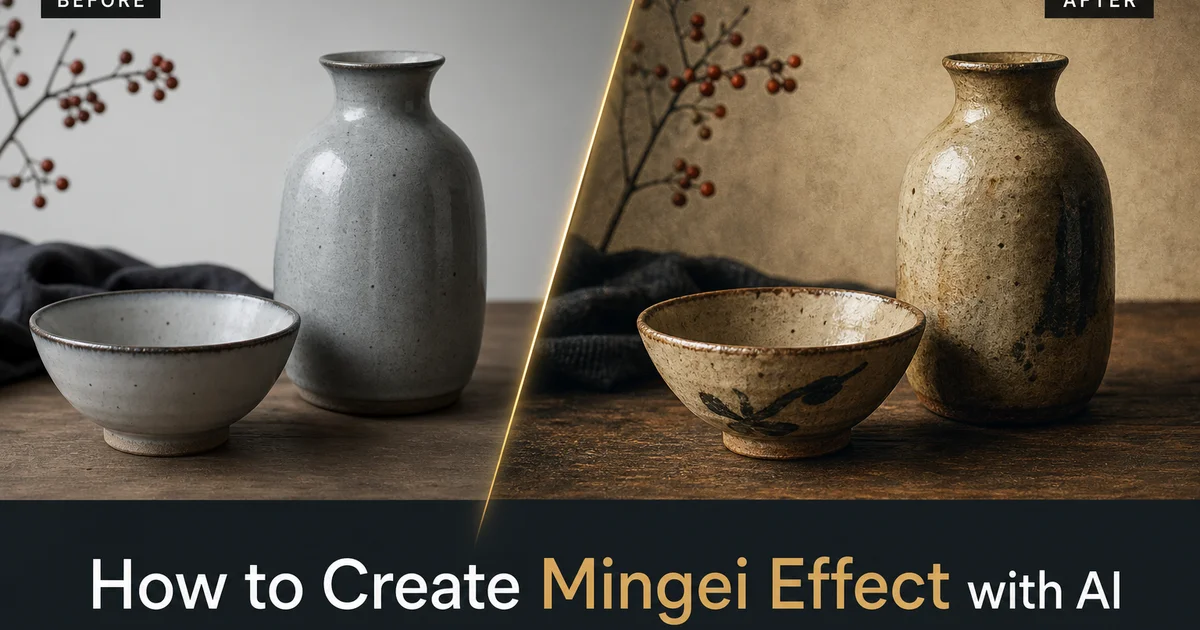
Le mingei est le mouvement de l'artisanat populaire japonais fonde par le philosophe et estheticien Yanagi Soetsu a la fin des annees 1920, bati sur la proposition radicale que les plus beaux objets du monde ne sont pas les creations raffinees d'artistes celebres mais les humbles objets fonctionnels fabriques par des artisans anonymes pour un usage quotidien. Yanagi a trouve une beaute transcendante dans les glaques irreulieres de la poterie rurale, le tissage honnete des textiles de campagne, les formes simples des ustensiles de cuisine en bois et la dignite tranquille du papier fait main. Des objets crees sans conscience artistique par des fabricants preoccupes uniquement par la fonction et la tradition. Le mot mingei lui-meme est une contraction de minshu-teki kogei, signifiant artisanat du peuple. Yanagi a passe sa vie a construire un cadre philosophique et institutionnel pour reconnaitre et preserver cette tradition de beaute inconsciente a une epoque ou l'industrialisation remplacait rapidement les produits artisanaux dans tout le Japon.
L'esthetique mingei presente un defi fascinant pour le montage d'images numeriques car ses valeurs fondamentales — la simplicite, l'imperfection, l'anonymat et les caracteristiques — sont diametralement opposees aux objectifs de la plupart des technologies d'amelioration photo. La ou le montage conventionnel accentue, le mingei adoucit. La ou les filtres ajoutent de la vivacite, le mingei attenue vers des tons terreux. La ou la retouche supprime les defauts, le mingei celebre les marques de la production manuelle comme preuve de la chaleur humaine. Creer un effet mingei convaincant necessite que l'IA comprenne non seulement a quoi ressemblent visuellement les objets artisanaux populaires, mais aussi ce qu'ils representent philosophiquement. La beaute qui surgit naturellement lorsqu'un artisan qualifie cree un objet fonctionnel sans ego, sans pretention ni desir d'impressionner. C'est une cible esthetique subtile et exigeante qui ne peut etre atteinte par une simple desaturation et un flou.
La conversion mingei par IA releve ce defi en apprenant a partir de milliers de photographies d'objets artisanaux populaires authentifies a travers de multiples traditions. Les poteries de Mashiko et d'Onta, les textiles bingata d'Okinawa, les meubles mingei de Tottori, la poterie onggi coreenne que Yanagi a egalement defendue, et les traditions artisanales populaires vivantes du monde entier. L'IA identifie les qualites visuelles que ces objets partagent — palettes de tons terre chauds, formes organiques douces, irregularites artisanales visibles, la patine de l'usage fonctionnel, et une qualite globale de dignite sans pretention — et applique ces traits pour transformer les photographies en images qui incarnent l'esprit mingei. Ce guide explique comment utiliser AI Filter et AI Enhance pour creer des effets mingei qui honorent la philosophie de Yanagi, couvrant la selection des traditions artisanales, la simplicite wabi, l'irregularite artisanale, et la ligne subtile entre la beaute humble et la negligence.
- L'IA apprend a partir de milliers de photographies d'artisanat authentifie pour appliquer les traits visuels des objets mingei reels — palettes chaudes, formes douces, marques de production manuelle visibles et patine fonctionnelle.
- De multiples prereglages de traditions artisanales simulent la poterie rurale, les textiles tisses a la main, la laque et le travail du bois, chacun avec des qualites materielles et des relations chromatiques historiquement precises.
- Les controles de simplicite wabi reduisent la complexite visuelle en adoucissant les details, en attenant les couleurs vers des tons terreux et en ajoutant la douce chaleur des objets fonctionnels vieillis et bien utilises.
- Les parametres d'irregularite artisanale introduisent des variations logiques selon le metier — les coulures de glaure suivent la gravite, l'irregularite du tissage suit le rythme de la navette et la texture du bois suit le sens du fil.
- AI Enhance affine les textures de surface pour qu'elles soient lues comme des materiaux artisanaux authentiques avec une qualite tactile plutot que comme un adoucissement numerique generique ou des effets de bruit.
La philosophie de la beaute anonyme de Yanagi Soetsu et son expression visuelle
L'intuition centrale de Yanagi Soetsu etait que la conscience artistique diminue paradoxalement la beaute plutot que de l'ameliorer. Quand un potier s'assoit au tour en pensant a creer de l'art, le desir d'impressionner introduit tension, calcul et ego dans le processus de fabrication. Mais quand un potier de campagne anonyme faconne cent bols a riz par jour pour le marche local, la repetition et le but fonctionnel liberent les mains pour travailler avec une maitrise inconsciente, produisant des formes et des glaures d'une beaute extraordinaire sans aucune intention de le faire. Yanagi a appele cela tariki, ou la beaute venue d'ailleurs. La beaute qui surgit en dehors de l'ego du createur a travers la sagesse accumulee de la tradition, les proprietes naturelles des materiaux et les exigences honnetes de la fonction. Ce concept est central pour comprendre pourquoi les objets mingei ont cette apparence et pourquoi l'esthetique ne peut etre simulee par un grossissement delibere ou un vieillissement artificiel.
Les caracteristiques visuelles de la beaute mingei sont des expressions directes de ce fondement philosophique. Les motifs de glaure irreuliers sur la poterie ne sont pas des choix decoratifs mais des resultats naturels des glaures de cendre de bois coulant sous la gravite dans un four a tirage ascendant. Les variations subtiles de couleur dans les textiles tisses a la main ne sont pas des elements de conception mais des consequences de l'absorption variable des teintures naturelles sur le fil file a la main. Les formes arrondies et douces des ustensiles en bois ne sont pas des preferences esthetiques mais des adaptations fonctionnelles faconnees par des generations d'utilisation. Chaque trait visuel definissant l'apparence mingei a une cause enracinee dans les materiaux, le processus ou la fonction. Et ce realisme causal est ce qui donne aux objets mingei leur sentiment de justesse et de chaleur que les imitations concues n'ont pas.
Traduire ces principes dans la retouche photo par IA necessite que la technologie comprenne et reproduise la logique causale derriere les qualites visuelles mingei plutot que de simplement copier les apparences de surface. Quand l'IA ajoute de l'irregularite a une image, l'irregularite doit suivre la logique d'un processus artisanal specifique. Les irregularites de la poterie suivent la physique rotationnelle d'un tour de potier, les irregularites textiles suivent le rythme mecanique d'un metier a tisser et les irregularites du bois suivent la structure du fil du bois. Un bruit aleatoire ou une distorsion arbitraire produit des resultats qui semblent endommages ou corrompus plutot que faits a la main. L'oil humain est remarquablement sensible a la difference entre une variation intentionnelle et un hasard insense. L'IA atteint une qualite mingei authentique en imitant les processus physiques reels qui produisent le caractere artisanal populaire.
- Le concept de tariki (beaute venue d'ailleurs) de Yanagi decrit la beaute qui surgit de la tradition, des materiaux et de la fonction plutot que de l'ego artistique — le noyau philosophique de l'esthetique mingei.
- Chaque trait visuel des objets mingei a une racine causale dans les materiaux, le processus ou la fonction — glaures irreulieres de la cendre de bois dans les fours a tirage ascendant, variation de couleur des teintures naturelles sur le fil file a la main.
- L'IA reproduit la logique causale derriere les qualites mingei plutot que les seules apparences de surface — l'irregularite de la poterie suit la physique du tour, la variation textile suit le rythme du metier a tisser.
- L'oil humain distingue la variation artisanale intentionnelle du bruit insense, rendant la simulation consciente du processus essentielle pour des resultats authentiques.
Prereglages de traditions artisanales: poterie, textiles, laque et travail du bois
Le prereglage poterie imite les traits visuels des ceramiques rurales japonaises. Les formes irreulieres faconnees rapidement sur un tour a bâton, les glaures epaisses et inegales qui s'accumulent dans les creux et s'amincent sur les aretes, et les palettes de couleurs chaudes et terreuses creees par les corps argileux ferrugineux cuits dans des fours a bois. Differentes traditions regionales produisent des resultats visuels distinctement differents: la poterie de Mashiko de la prefecture de Tochigi presente des glaures epaisses et coulantes dans des bruns chauds, des rouges kakis et des blancs cremeux sur un corps argileux sableux grossier. La poterie d'Onta de la prefecture d'Oita montre des techniques audacieuses de decors a l'engobe ou un engobe blanc est applique sur un corps sombre et partiellement gratte pour creer des motifs geometriques. L'IA imite ces variations regionales en ajustant l'epaisseur de la glaure, la palette de couleurs, la texture de surface et les parametres de technique decorative pour correspondre aux traditions potieres specifiques que l'utilisateur selectionne.
Le prereglage textile applique les qualites visuelles des tissus populaires japonais tisses a la main. La structure de tissage legerement irreuliere qui distingue le tissu tisse a la main de l'uniformite du tissu tisse a la machine, les couleurs chaudes et attenuées des teintures naturelles comprenant le bleu indigo, le brun tanin de kaki, le rouge carthame et le jaune gaude, et la qualite de drapé souple qui provient du fil file a la main avec des variations naturelles de fibres. Les traditions textiles specifiques incluent les motifs kasuri (ikat) ou les fils de chaîne ou de trame teints par reserve creent des motifs geometriques volontairement flous, les motifs de broderie sashiko ou des points avant en fil blanc sur tissu indigo creent des motifs de renforcement geometriques complexes, et le bingata — la tradition de teinture au pochoir d'Okinawa caracterisee par des couleurs vives et des motifs tropicaux audacieux qui se demarquent de la retenue du Japon continental.
Le prereglage laque imite la qualite de surface profonde et lumineuse de la laque urushi japonaise — une finition a base de seve d'arbre naturel utilisee depuis des milliers d'annees pour proteger et embellir les objets en bois et tresses. L'urushi produit une surface unique a la fois brillante et profonde, avec une chaleur et une qualite organique que les laques synthetiques ne peuvent reproduire. L'IA genere les proprietes visuelles caracteristiques: une surface miroitante avec une profondeur qui semble s'etendre sous le plan de surface, une coloration chaude qui passe subtilement du brun-rouge au presque noir selon l'angle de vue, et l'ondulation douce d'une finition appliquee a la main, lisse mais pas mecaniquement plate. Le prereglage travail du bois ajoute les marques d'outils visibles des rabots a main, la texture directionnelle du fil du bois soigneusement selectionne, et les bords arrondis et doux qui viennent d'annees de manipulation et d'utilisation.
- Les prereglages poterie simulent les traditions regionales, dont les glaures coulantes epaisses de Mashiko, la decoration audacieuse a l'engobe d'Onta et les palettes de tons terre chauds des fours ruraux au bois.
- Les prereglages textiles appliquent l'irregularite du tissage a la main, les palettes de couleurs de teintures naturelles et les techniques specifiques dont le flou ikat kasuri, la broderie geometrique sashiko et la teinture au pochoir bingata d'Okinawa.
- Les prereglages laque generent la qualite de surface profonde et lumineuse de l'urushi — brillante mais chaleureuse, avec une profondeur sous le plan de surface et la douce ondulation de l'application a la main.
- Les prereglages travail du bois ajoutent les marques d'outils du rabot a main, la texture directionnelle du fil du bois et les bords arrondis et doux produits par des annees de manipulation et d'utilisation fonctionnelles.
La simplicite wabi et l'art de la retenue deliberee dans les effets photo
Wabi est le principe esthetique le plus etroitement associe au mingei, bien que sa signification dans le contexte de l'artisanat populaire differe quelque peu de son utilisation dans l'esthetique de la ceremonie du the. Dans le mingei, wabi exprime la beaute de la simplicite, de la pauvrete et de la franchise rustique. La qualite qui rend un bol a riz de campagne grossier plus beau qu'une tasse en porcelaine raffinee precisement parce qu'il manque de pretention. Les controles de simplicite wabi dans AI Filter traduisent ce principe en ajustements visuels specifiques: reduction de la saturation des couleurs vers des tons terreux atténues qui suggerent des materiaux naturels, adoucissement des bords nets et des details fins qui indiqueraient une precision mecanique, et ajout d'un ton chaud global qui suggere la lumiere douce d'un interieur de ferme traditionnelle japonaise plutot que l'eclairage harsh de la photographie de studio moderne.
Le defi dans l'application de la simplicite wabi est de trouver la frontiere entre la beaute humble et l'appauvrissement visuel. Les objets mingei sont simples mais pas grossiers, imparfaits mais pas negligents, calmes mais pas ennuyeux. Pousser les controles wabi trop loin produit des images qui semblent simplement degradees — couleurs boueuses, details perdus, formes informes qui ne partagent rien. Le point ideal est un changement qui donne l'impression que l'image a ete doucement vieillie et rechauffee, comme si la photographie elle-meme etait un objet artisanal avec la patine du temps et de l'usage. L'IA aide a trouver cet equilibre en referencant ses donnees d'entrainement d'objets mingei authentifies pour limiter le changement a la gamme de qualites visuelles que les pieces artisanales populaires reelles presentent.
La retenue chromatique est peut-etre l'aspect le plus immédiatement visible de la simplicite wabi. Les objets mingei tirent leur couleur des materiaux naturels — les rouges fer et les bruns argile de la poterie non glauree ou simplement glauree, les bleus indigo des textiles teints aux plantes, l'ambre chaud du bois vieilli, le brun-rouge profond de la laque urushi. Ces couleurs sont chaudes, attenuées et harmonieuses parce qu'elles proviennent de sources naturelles apparentées plutot que d'etre choisies arbitrairement. L'IA mappe la palette de couleurs existante de l'image vers ces tons de materiaux naturels, compressant le gamut loin des teintes saturees d'apparence synthetique vers la gamme chaude et terreuse qui definit le monde chromatique mingei. Les rouges vifs se deplacent vers le kaki et la rouille, les bleus s'approfondissent vers l'indigo, les verts se rechauffent vers la mousse et le the, et les blancs vieillissent vers la creme et la paille — chaque changement referencant la couleur reelle d'un materiau naturel specifique.
- La simplicite wabi dans le contexte mingei signifie la franchise humble plutot que le raffinement de la ceremonie du the — la beaute d'un bol a riz de campagne grossier qui manque totalement de pretention.
- Le point ideal wabi transforme les images pour les faire sentir doucement vieillies et rechauffees sans franchir le seuil de la degradation visuelle — simples mais pas grossieres, imparfaites mais pas negligentes.
- La retenue chromatique mappe la palette de l'image vers des tons de materiaux naturels — rouges kaki, bleus indigo, verts mousse et blancs paille qui proviennent de sources naturelles apparentées.
- L'IA limite la transformation a la gamme visuelle des objets artisanaux populaires authentifies, empechant une degradation excessive qui nuirait a l'esthetique plutot que de l'ameliorer.
Applications creatives: photographie, image de marque et appreciation culturelle
La photographie de produits artisanaux beneficie enormement de l'effet mingei car elle partage visuellement les valeurs que les produits faits main incarnent — chaleur, authenticite, touche humaine et connexion a la tradition. Un ceramicien photographiant son travail peut appliquer un traitement mingei subtil qui met en valeur le caractere artisanal de chaque piece, donnant a la poterie l'apparence de quelque chose que l'on decouvrirait dans une boutique d'artisanat rural japonais plutot que quelque chose liste sur une plateforme de commerce electronique generique. Les artistes textiles, les boiseurs, les papetiers et tous ceux dont le travail implique l'artisanat manuel peuvent utiliser l'effet pour creer un langage visuel qui signale immediatement la qualite artisanale aux spectateurs qui defilent dans des flux remplis d'options produites en masse.
Les applications d'image de marque de l'esthetique mingei s'etendent au-dela de la photographie de produit individuelle pour englober des systemes visuels entiers. Une entreprise axee sur l'artisanat peut etablir un langage visuel coherent inspire du mingei sur son site web, ses medias sociaux, sa photographie d'emballage et ses supports marketing — communiquant ses valeurs avant meme qu'un seul mot ne soit lu. Les tons terre chauds, les bords doux, la texture visible et l'imperfection delicate de l'apparence mingei creent une impression emotionnelle immediate d'authenticite et de soin qui resonne puissamment aupres des consommateurs recherchant des alternatives a la precision froide des produits industriels. Les restaurants proposant une cuisine de la ferme a la table, les salons de the, les marques de soins naturels et les labels de mode durable trouvent tous une alignement naturel avec le vocabulaire visuel mingei.
Les considerations d'appreciation culturelle sont importantes lorsqu'on travaille avec l'esthetique mingei. Le mouvement de Yanagi Soetsu est ne d'un contexte culturel et historique specifique — l'industrialisation rapide du Japon des epoques Taisho et debut Showa et la perte consequente des traditions artisanales qui avaient soutenu les communautes rurales pendant des siecles. La philosophie mingei a une pertinence universelle — chaque culture a des traditions artisanales populaires qui incarnent des valeurs similaires de beaute fonctionnelle et d'artisanat anonyme — mais appliquer le vocabulaire visuel specifiquement japonais du mingei a un contenu culturel non apparente necessite sensibilite et conscience. L'approche la plus respectueuse utilise l'effet mingei pour celebrer les traditions artisanales reelles, les objets faits main et le contenu culturel ou l'esthetique populaire est veritablement pertinente plutot que de l'appliquer comme une superposition de style ethnique generique.
- La photographie de produits artisanaux utilise l'effet mingei pour communiquer visuellement la chaleur, l'authenticite et la touche humaine qui distinguent le travail artisanal de la production de masse.
- Les systemes d'identite de marque utilisant un langage visuel coherent inspire du mingei creent des impressions emotionnelles immediates d'authenticite pour les entreprises artisanales, les restaurants de la ferme a la table et les marques naturelles.
- La philosophie mingei a une pertinence universelle a travers toutes les traditions artisanales populaires, mais son vocabulaire visuel specifiquement japonais doit etre applique avec sensibilite culturelle et pertinence veritable.
- Les applications les plus respectueuses celebrent les traditions artisanales reelles et les objets faits main plutot que d'utiliser l'esthetique comme une superposition de style generique sur un contenu culturel non apparente.
How to do it
- 1
Upload your photo and evaluate its compatibility with the mingei folk craft aesthetic
Open your image in AI Filter and consider whether its subject matter and composition align with the mingei philosophy of finding beauty in ordinary functional objects made by anonymous craftspeople. The mingei aesthetic prizes simplicity, features, and the honest marks of hand production over refinement and polish. Photographs of everyday objects — ceramic bowls, woven textiles, wooden utensils, handmade paper — translate most naturally because these are the traditional subjects of mingei appreciation. Portraits, landscapes, and still life compositions also work well when they embody the unpretentious warmth that Yanagi Sōetsu identified as the key quality of folk craft beauty. Highly polished, glamorous, or technically perfect images may resist the mingei change because the aesthetic specifically celebrates imperfection and humble utility.
- 2
Select the mingei style preset and configure the folk craft parameters
Choose from mingei presets that simulate different Japanese folk craft traditions. Rural pottery with irregular glazes and visible throwing marks, hand-woven textiles with the subtle irregularity of handloom weaving, lacquerware with the depth and warmth of urushi finish, or woodwork with the tool marks and grain character of hand-planed surfaces. AI Filter analyzes the image content and applies the visual traits of the selected craft tradition. Muted earth-tone color palettes, soft rounded forms, visible handmade irregularity, and the warm patina of well-used functional objects. Adjust the intensity slider to control how strongly the folk craft aesthetic transforms the image, from a subtle warming and softening that suggests mingei sensibility to a full change that makes the photograph resemble a traditional folk craft object.
- 3
Adjust wabi simplicity and handmade irregularity parameters
Control the degree of deliberate imperfection and rustic simplicity that characterizes authentic mingei objects. The wabi simplicity slider reduces visual complexity by softening fine details, muting bright colors toward earth tones. Adding a gentle overall warmth that suggests the patina of age and use. The handmade irregularity parameter introduces subtle organic variations. Slightly uneven edges, gentle warping of straight lines, minor tonal inconsistencies — that replicate the natural variation produced by hand craftsmanship rather than machine precision. These two controls work together to move the image away from photographic perfection toward the humble, unpretentious beauty that Yanagi championed as the highest expression of craft aesthetics.
- 4
Use AI Enhance to refine texture quality and material authenticity
After the initial mingei conversion, apply AI Enhance to ensure that surface textures read as authentic craft materials rather than digital effects. The boost step adds tactile quality to simulated ceramic glazes, textile weaves, wood grain. Paper fiber that makes the viewer want to touch the surface. Pay special attention to the quality of simulated irregularity. Authentic handmade imperfection follows patterns that reflect the physical process of making, while random digital noise looks arbitrary and unconvincing. The AI refines irregularities to follow plausible craft logic: glaze runs follow gravity, weaving irregularities follow the rhythm of shuttle passes, and wood texture follows grain direction.
- 5
Export the finished mingei image and evaluate against folk craft references
Save the completed image at full resolution and compare it against photographs of actual mingei objects in museum collections. The Japan Folk Crafts Museum in Tokyo, the Kurashiki Folk Art Museum, and the Brooklyn Museum's mingei collection all provide excellent reference material. Authentic mingei objects share certain qualities: they feel warm rather than cold, simple rather than complex, honest rather than pretentious, and functional rather than decorative. Check that your result embodies these qualities without crossing into carelessness or crudeness. Mingei celebrates unselfconscious beauty in humble objects, not the deliberate cultivation of roughness. The best mingei-inspired images make the viewer feel the quiet satisfaction of a well-made, well-used everyday object.
Sources
- The Unknown Craftsman: A Japanese Insight into Beauty — Kodansha International — Sōetsu Yanagi
- Mingei: Japanese Folk Art from the Brooklyn Museum Collection — Brooklyn Museum
- Neural Style Transfer for Non-Photorealistic Rendering of Folk Art — arXiv — IEEE Transactions on Visualization and Computer Graphics