
Comment créer un effet Kintsugi avec l'IA — Magic Eraser
Transformez vos photos en superbes œuvres d'art de jointure dorée kintsugi grâce à l'IA. Guide étape par étape couvrant les motifs de fissures, les matériaux de remplissage en or, les effets de métal lumineux et la philosophie japonaise de la réparation embellissante.

SEO & Growth
Vérifié par Magic Eraser Editorial ·
Sommaire
- La philosophie du kintsugi et pourquoi la réparation dorée résonne à travers les cultures
- Comment la mécanique de rupture computationnelle génère des motifs de fissures physiquement plausibles
- Matériaux de remplissage métallique : or, argent, cuivre, platine et options personnalisées
- Application du kintsugi aux portraits, paysages et compositions abstraites
- Contrôle de la luminosité et l'esthétique contemporaine de la fissure lumineuse
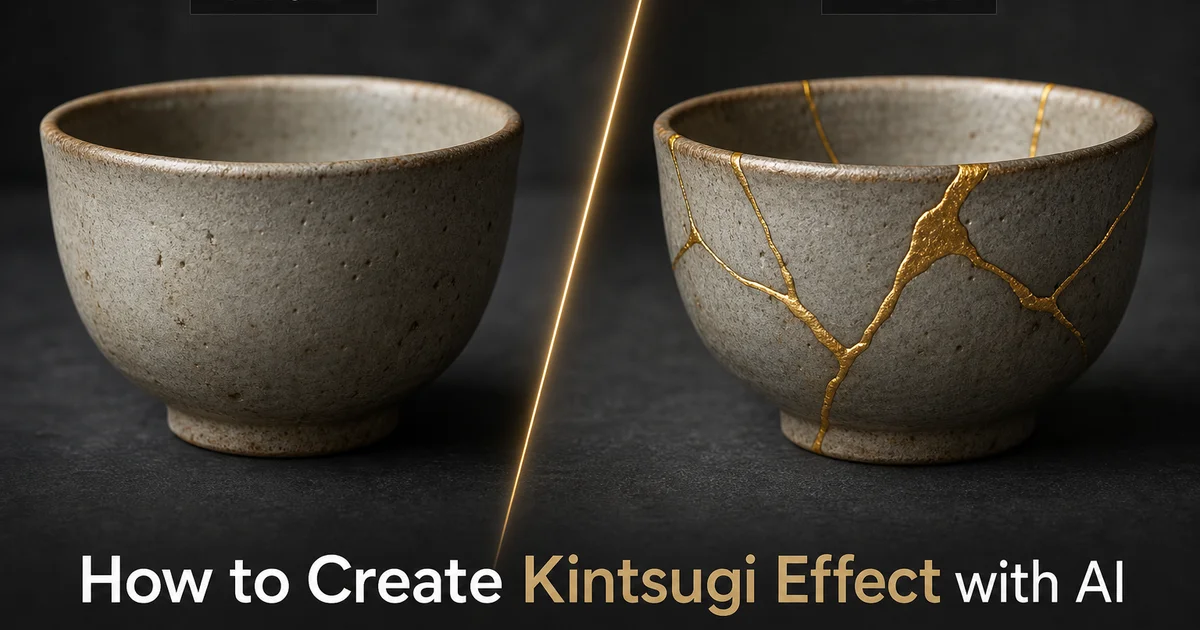
Le kintsugi — l'art japonais de réparer la poterie brisée avec de la laque dorée — est l'une des traditions artistiques les plus philosophiquement riches au monde. Plutôt que de dissimuler les dégâts lorsqu'un objet en céramique de valeur se brise, le kintsugi met en évidence chaque fissure avec de l'or lumineux, transformant l'histoire de la cassure et de la réparation en la plus belle caractéristique de l'objet. Les jointures dorées qui tracent les lignes de fracture deviennent une autobiographie visuelle qui raconte le voyage de l'objet à travers les dommages et la restauration, célébrant plutôt que cachant son histoire imparfaite. Cette philosophie s'étend bien au-delà de la céramique. Elle représente une vision du monde qui trouve la beauté dans les dommages, la valeur dans la réparation et le sens dans la preuve visible d'avoir survécu à des expériences difficiles.
Créer des effets kintsugi convaincants en photographie numérique a, par le passé, nécessité soit de travailler avec des objets réellement brisés et réparés, soit de peindre manuellement des lignes dorées le long de fissures simulées à l'aide de logiciels d'illustration. Les deux approches présentent des limitations majeures : les réparations kintsugi réelles prennent des semaines d'application de laque en couches et de saupoudrage de poudre d'or, ce qui les rend peu pratiques pour la production photographique. Les fissures dorées numériques peintes à la main semblent artificielles car elles manquent du comportement physique des motifs de fracture réels. Les vraies fissures suivent les lignes de contrainte et la structure du grain des matériaux, se ramifiant, se croisant et variant en largeur selon la physique de la mécanique de la rupture. Les lignes peintes suivent la main de l'artiste, ce qui introduit une régularité et une prévisibilité humaines que les yeux entraînés identifient immédiatement comme non physiques.
Le changement kintsugi assisté par IA génère des motifs de fracture physiquement plausibles basés sur la mécanique de rupture computationnelle avant de les remplir par une simulation de laque métallique précisément adaptée au matériau. L'IA analyse la géométrie de surface et les propriétés matérielles estimées du sujet, puis calcule les chemins de propagation des fissures qui suivent une distribution de contrainte et une structure de grain réalistes. Le remplissage doré qui trace ces fissures est rendu avec une réflectance métallique précise, une texture de surface et une épaisseur dimensionnelle qui le font ressembler à de la vraie laque dorée appliquée sur une fissure physique. Ce guide couvre le flux de travail complet, de l'évaluation des images pour leur potentiel kintsugi à la configuration des motifs de fissures, des propriétés métalliques et de la luminosité, jusqu'à l'exportation d'œuvres kintsugi expertes qui portent à la fois une beauté visuelle et une signification philosophique.
- L'IA génère des motifs de fissures physiquement plausibles en utilisant la mécanique de rupture computationnelle qui suit les lignes de contrainte et la structure du grain du matériau plutôt que des lignes peintes arbitraires.
- Plusieurs styles de fracture — radiation d'impact, fracture de contrainte et craquelure en réseau — simulent différents types de cassure avec une intensité ajustable allant de fissures capillaires minimales à une fragmentation dramatique.
- Les remplissages métalliques or, argent, cuivre et platine sont rendus avec une réflectance précise, une texture de surface et une épaisseur dimensionnelle qui donnent aux lignes de réparation l'apparence d'une laque métallique physique.
- Le contrôle de la luminosité va de l'or mat subtil affleurant la surface aux veines métalliques dramatiquement lumineuses qui semblent émettre leur propre lumière pour des effets d'art contemporain.
- Les paires d'images avant-après de la cassure à la réparation racontent le récit kintsugi du dommage transformé en beauté, créant de puissantes métaphores visuelles pour la résilience et le renouveau.
La philosophie du kintsugi et pourquoi la réparation dorée résonne à travers les cultures
Le kintsugi est apparu au Japon au XVe siècle, probablement lorsqu'un bol à thé cassé a été envoyé en Chine pour réparation et est revenu avec de vilaines agrafes métalliques qui ont inspiré les artisans japonais à développer une solution plus belle. La pratique qui en a résulté, consistant à remplir les fissures avec de la laque urushi saupoudrée de poudre d'or, a été influencée par l'esthétique wabi-sabi qui trouve la beauté dans l'imperfection et le concept mushin d'acceptation et de non-attachement. Plutôt que de traiter la cassure comme la fin de la vie utile d'un objet, le kintsugi la recadre comme un événement transformateur qui ajoute du caractère, de l'histoire et une beauté unique. Un bol réparé par kintsugi n'est pas simplement fonctionnel à nouveau. Il est plus précieux et plus beau qu'avant d'être cassé, précisément parce qu'il porte la preuve visible de son voyage à travers les dommages et la réparation.
La résonance philosophique du kintsugi s'étend bien au-delà de l'artisanat céramique japonais et est devenue une puissante métaphore dans la culture occidentale moderne pour la résilience, le rétablissement et la beauté de l'imperfection. Les psychothérapeutes utilisent le kintsugi comme cadre pour discuter du rétablissement après un traumatisme et de l'idée que nous pouvons être brisés par l'expérience puis réparés d'une manière qui nous rend plus forts et plus beaux qu'avant. Les communautés de rétablissement, les programmes de counseling de deuil et la littérature sur le développement personnel font référence au kintsugi comme métaphore visuelle pour transformer les expériences douloureuses en sources de force. Cette profondeur philosophique donne aux images traitées par kintsugi un sens qui va au-delà du simple effet visuel, les connectant aux expériences humaines universelles de dommage, de guérison et de changement.
La puissance visuelle du kintsugi découle du contraste entre la surface brisée sombre et l'or lumineux qui remplit ses fractures. L'or a été associé au pouvoir divin, à l'incorruptibilité et à la valeur la plus élevée dans pratiquement toutes les cultures humaines, et lorsqu'il apparaît aux endroits où les dommages se sont produits, il transforme ces endroits de marques d'échec en marques d'importance. Les lignes dorées attirent le regard précisément vers les endroits de plus grande vulnérabilité, les célébrant plutôt que les cachant. Cette dynamique visuelle — faire de la faiblesse la plus belle caractéristique — est ce qui rend l'imagerie kintsugi si émotionnellement puissante et explique pourquoi elle se traduit bien des objets en céramique aux portraits photographiques, paysages et compositions abstraites.
- Le kintsugi est apparu au Japon au XVe siècle, influencé par les philosophies wabi-sabi et mushin, recadrant la cassure comme un événement transformateur qui ajoute une beauté unique plutôt que de mettre fin à la valeur d'un objet.
- La culture occidentale contemporaine a adopté le kintsugi comme métaphore de la résilience et du rétablissement en psychothérapie, conseil de deuil et contextes de développement personnel.
- Les associations culturelles universelles de l'or avec le pouvoir divin et la valeur la plus élevée transforment les marques de dommage de preuves d'échec en marques d'importance lorsqu'il est utilisé pour remplir les lignes de fracture.
- La dynamique visuelle qui fait de la vulnérabilité la plus belle caractéristique donne à l'imagerie kintsugi une puissance émotionnelle qui transcende les objets en céramique, les portraits, les paysages et l'art abstrait.
Comment la mécanique de rupture computationnelle génère des motifs de fissures physiquement plausibles
Les vraies fissures dans les matériaux physiques ne sont pas aléatoires. Elles suivent des chemins déterministes régis par la microstructure du matériau, la distribution des contraintes et l'énergie de rupture. Lorsqu'un bol en céramique heurte un sol en pierre, l'impact initial crée une zone de contrainte élevée au point de contact. Les fissures se propagent vers l'extérieur à partir de cette zone le long de chemins où la contrainte dépasse la ténacité à la rupture du matériau. Le chemin de la fissure contourne les zones plus résistantes comme les grains denses et traverse les zones plus faibles comme les limites d'émail, les poches d'air et les sites de réparation antérieurs. C'est pourquoi le motif de fissure sur chaque objet brisé est unique. C'est une carte de la structure interne spécifique de cet objet révélée par le processus de fracture.
La simulation de fracture d'AI Filter commence par estimer la géométrie de surface et les propriétés matérielles du sujet dans la photographie. Un vase en céramique a un comportement de fracture différent d'une fenêtre en verre ou d'un mur en pierre. La céramique a tendance à produire des fissures courbes ramifiées avec des fragments assez gros, le verre produit des motifs de fissures radiales et concentriques autour des points d'impact, et la pierre se fracture le long des limites des grains cristallins produisant des fragments anguleux. L'IA identifie le type de matériau et applique le modèle de fracture approprié, puis calcule les chemins de propagation des fissures qui tiennent compte du champ de contrainte estimé, de la courbure de surface du sujet et de la variation de microstructure randomisée qui rend chaque motif de fracture unique.
L'intensité de fracture contrôle jusqu'où la simulation de propagation des fissures s'exécute avant de s'arrêter. À intensité minimale, seules les lignes de fissure primaires apparaissent — les fractures les plus longues et les plus proéminentes qui définissent les fragments majeurs. À intensité moyenne, des fissures secondaires se ramifient à partir des lignes primaires, créant des fragments plus petits et un motif de fracture plus détaillé. À intensité maximale, des réseaux de fissures tertiaires remplissent les surfaces restantes avec des détails de fracture fins, produisant le motif de fragmentation complet d'un objet gravement endommagé. Chaque niveau d'intensité produit un motif complet et physiquement cohérent à son échelle.
- Les chemins de fissures réels suivent la microstructure du matériau, la distribution des contraintes et l'énergie de rupture uniques à la structure interne de chaque objet, et non le hasard ou l'arbitraire.
- L'IA identifie le type de matériau et applique les modèles de fracture appropriés : ramification courbe pour la céramique, radiale-concentrique pour le verre, chemins de limite de grain cristallin pour la pierre.
- L'intensité de fracture contrôle la profondeur de propagation des fissures primaires seulement jusqu'aux réseaux tertiaires complets, chaque niveau étant physiquement cohérent à son échelle.
- La variation de microstructure randomisée garantit que chaque motif de fracture généré est unique, tout comme chaque vraie cassure crée une carte irréproductible de la structure interne de l'objet.
Matériaux de remplissage métallique : or, argent, cuivre, platine et options personnalisées
Le kintsugi traditionnel utilise trois types de laque métallique : l'or (kin) pour les réparations les plus précieuses, l'argent (gin) pour une esthétique plus froide et la laque rouge (urushi) pour les réparations subtiles où l'accent métallique n'est pas souhaité. AI Filter élargit cette palette pour inclure le cuivre, le platine et les couleurs personnalisées tout en maintenant le rendu précis du matériau qui rend chaque métal physiquement réel. Le remplissage en or est rendu avec la réflectance jaune-orange chaleureuse caractéristique de l'or 24 carats, y compris la façon spécifique dont l'or reflète les couleurs environnantes avec un biais chaud. Le remplissage en argent utilise le blanc neutre à haute réflectance de l'argent sterling poli, avec les ombres teintées de bleu et les reflets spéculaires brillants qui distinguent l'argent véritable de la peinture grise. Le cuivre montre la chaleur rougeâtre-rosée distinctive qui se situe entre l'or et l'argent en termes de température de couleur et de valeur perçue.
Les propriétés dimensionnelles du remplissage métallique déterminent si l'or affleure la surface brisée ou s'élève au-dessus d'elle comme une couture surélevée. Le kintsugi traditionnel produit un remplissage très légèrement surélevé là où la laque et la poudre d'or s'accumulent au-dessus du niveau de la fissure. Cette subtile dimensionnalité capte la lumière différemment de la surface environnante. AI Filter imite cela en rendant une fine ligne de surbrillance le long du centre de chaque fissure remplie d'or où la surface métallique est la plus élevée, avec un assombrissement progressif vers les bords où elle rencontre le matériau brisé. Ce dégradé de la surbrillance au bord crée l'illusion convaincante d'un cordon métallique arrondi remplissant une rainure — exactement le profil transversal d'une véritable réparation kintsugi. La hauteur de remplissage est réglable, de complètement affleurant à proéminemment surélevé pour un effet sculptural dramatique.
Les options de finition de surface pour le remplissage métallique vont du miroir hautement poli au mat grossièrement martelé, chacune faisant référence à différentes traditions et intentions esthétiques. L'or poli crée une luminosité maximale et un éclat réfléchissant, adapté aux images où les fissures dorées doivent dominer en tant que caractéristique visuelle principale. L'or brossé introduit une texture de surface directionnelle qui adoucit les reflets tout en maintenant le caractère métallique, produisant une finition sophistiquée courante dans la joaillerie et la métallurgie modernes. L'or martelé mat montre des marques d'outils visibles et une surface irrégulière qui font référence à la tradition artisanale de la réparation kintsugi traditionnelle. Chaque finition interagit différemment avec le calcul d'éclairage, produisant des caractères visuels distincts à partir de la même couleur de métal sous-jacente.
- L'or, l'argent, le cuivre et le platine sont rendus avec une réflectance précise au matériau, incluant les biais de couleur caractéristiques, le comportement de réflexion spéculaire et les teintes d'ombre spécifiques à chaque métal.
- La hauteur de remplissage dimensionnelle simule le profil de laque légèrement surélevé de la véritable réparation kintsugi, avec des dégradés de la surbrillance au bord créant une illusion convaincante de cordon métallique arrondi.
- La finition de surface va de l'éclat miroir poli au mat martelé avec des marques d'outils visibles, chacune faisant référence à différentes traditions artisanales et interagissant distinctement avec l'éclairage.
- Les options de couleur personnalisées permettent des remplissages non traditionnels pour des applications d'art contemporain tout en maintenant le rendu de réflectance métallique qui distingue l'effet de la peinture de couleur plate.
Application du kintsugi aux portraits, paysages et compositions abstraites
Les portraits traités par kintsugi sont parmi les applications les plus émotionnellement puissantes de l'effet, car les fissures dorées sur un visage humain créent une lecture métaphorique immédiate sur l'histoire personnelle, la vulnérabilité et la beauté d'avoir survécu à des expériences difficiles. L'IA place les fissures selon la géométrie du visage, suivant les lignes de contrainte naturelles de la structure osseuse et de l'attachement musculaire. Les fissures le long de la mâchoire suivent la ligne structurelle de la mandibule, les fissures sur le front suivent la courbure de l'os frontal, et les fissures autour des yeux suivent la géométrie orbitaire. Ce placement anatomiquement informé rend le motif de fracture structurellement plausible tandis que le remplissage doré transforme ce qui pourrait être une imagerie de dommage dérangeante en une beauté lumineuse.
Le kintsugi paysager introduit des lignes de fracture dorées à travers des scènes naturelles et urbaines, créant des images surréelles dramatiques où le cadre lui-même semble brisé et réparé. L'IA suit une logique géologique lors du placement des fissures dans les paysages. Les fractures dans les terrains montagneux suivent les lignes de faille et les plans de stratification, les fissures dans les surfaces d'eau créent des veines dorées entre des fragments semblables à de la glace, et l'architecture urbaine se fracture le long des lignes de mortier, des limites de fenêtres et des joints structurels. Les lignes de réparation dorées transforment les paysages en quelque chose entre la photographie et l'art du vitrail, les veines métalliques divisant la scène en fragments lumineux tout en les maintenant ensemble.
Les compositions abstraites offrent la plus grande liberté créative pour l'application du kintsugi car les motifs de fracture et les remplissages dorés deviennent le sujet principal plutôt qu'une superposition sur un contenu distinct. Les photographies de champs de couleur, les macro-textures, la peinture lumineuse et les images intentionnellement abstraites servent toutes de toiles où l'IA peut générer des motifs de fissures dramatiques sans la contrainte de suivre une géométrie de surface distincte. L'interaction entre le contenu abstrait original et le réseau de fracture doré superposé crée des compositions complexes en couches où la destruction et la beauté sont indiscernables.
- Le kintsugi de portrait place des fissures anatomiquement informées le long de la structure osseuse et des lignes d'attachement musculaire, créant de puissantes métaphores de résilience personnelle utilisées dans des contextes thérapeutiques et de plaidoyer.
- Les fissures paysagères suivent une logique géologique — lignes de faille dans les montagnes, motifs de fragments de glace dans l'eau, mortier et joints structurels dans l'architecture — créant des images surréales semblables à des vitraux.
- Les compositions abstraites utilisent le kintsugi comme sujet principal plutôt que comme superposition, les motifs de fissures ajoutant une structure narrative et une résonance émotionnelle à des images autrement purement décoratives.
- Le placement de fissures conscient de la surface de l'IA garantit des motifs de fracture physiquement plausibles quel que soit le type de sujet, maintenant la crédibilité visuelle à travers les portraits, les paysages et les œuvres abstraites.
Contrôle de la luminosité et l'esthétique contemporaine de la fissure lumineuse
Le kintsugi traditionnel utilise de l'or qui réfléchit la lumière ambiante. Il brille parce que l'or est intrinsèquement réfléchissant, non pas parce qu'il émet de la lumière. Cependant, la photographie d'art moderne a popularisé une variante dramatique où les fissures dorées semblent émettre leur propre luminosité, comme si de l'or fondu coulait encore à travers les fractures. Cet effet auto-lumineux transforme le kintsugi d'un traitement de surface en un effet énergétique d'un autre monde. AI Filter offre un continuum de luminosité allant de l'or réfléchissant la lumière ambiante physiquement précis à une extrémité jusqu'aux lignes d'énergie fortement auto-lumineuses à l'autre, avec toute la gamme entre les deux disponible pour un contrôle créatif.
À l'extrémité réfléchissant la lumière ambiante du spectre, le remplissage doré se comporte exactement comme l'or physique — brillant là où la lumière le frappe directement, sombre dans l'ombre, et montrant les couleurs réfléchies de l'environnement environnant. Cela produit la simulation kintsugi la plus réaliste, impossible à distinguer des photographies de céramiques réellement réparées à l'or. À mesure que la luminosité augmente, l'or commence à paraître plus brillant que l'éclairage ambiant ne le produirait, comme s'il avait une lueur interne. À luminosité modérée, cela crée une qualité surnaturelle subtile où l'or semble légèrement plus chaud et plus brillant que la physique ne le permettrait, un effet étrangement beau qui attire l'œil sans briser le réalisme global.
Les applications créatives du kintsugi à haute luminosité s'étendent à l'art fantastique, l'art conceptuel de jeux, la conception d'affiches de films et le contenu visuel des médias sociaux où l'impact visuel maximal est l'objectif. Un portrait avec des fissures dorées brillamment lumineuses se lit comme un super-héros ou une divinité s'éveillant, avec le pouvoir brillant littéralement à travers les fissures de son enveloppe mortelle. Un paysage avec des fractures dorées lumineuses suggère une énergie tectonique ou des forces magiques brisant la surface de la réalité. Le contrôle de la luminosité rend l'effet kintsugi suffisamment polyvalent pour servir l'esthétique traditionnelle contemplative à une extrémité et les effets visuels modernes dramatiques à l'autre, tout cela à partir de la même simulation de fracture sous-jacente.
- La luminosité va de l'or réfléchissant la lumière ambiante physiquement précis correspondant aux céramiques kintsugi réelles aux lignes d'énergie dramatiquement auto-lumineuses pour des effets d'art contemporain.
- La luminosité modérée crée une qualité surnaturelle subtile où l'or apparaît légèrement plus brillant que la lumière ambiante ne le permet, attirant l'œil tout en maintenant le réalisme global.
- La luminosité maximale produit des fuites de lumière visibles, des halos lumineux et des effets de rayonnement intenses adaptés à l'art fantastique, aux concepts de jeux, aux affiches de films et au contenu à fort impact sur les réseaux sociaux.
- Le spectre de luminosité complet rend le kintsugi polyvalent à travers les esthétiques traditionnelles contemplatives et les effets visuels contemporains dramatiques à partir de la même simulation de fracture sous-jacente.
How to do it
- 1
Upload your photo and evaluate its surface structure for kintsugi crack placement
Open your image in AI Filter and examine the subject for surfaces where golden crack lines would appear natural and aesthetically strong. Kintsugi originated on ceramic objects, so photographs of pottery, dishes, vases, and tiled surfaces are the most obvious candidates, but the effect extends beautifully to any subject with a definable surface. Faces, landscapes, architectural walls, still life objects, and even abstract compositions. The AI needs clear surface information to generate physically plausible crack patterns. Images with well-defined subjects against distinguishable backgrounds work best. Very busy compositions with overlapping transparent elements or heavily motion-blurred subjects may produce less convincing crack patterns because the surface geometry is ambiguous.
- 2
Select the crack pattern style and configure fracture intensity
Choose from crack pattern presets that simulate different types of breakage. Impact fracture generates radiating cracks from a central impact point with fragments getting smaller toward the center of impact, mimicking how a dropped object shatters on a hard surface. Stress fracture creates longer running cracks that follow material grain and structural weakness lines, mimicking how thermal stress or pressure causes objects to crack along natural fault lines without shattering. Network fracture produces an allover pattern of interconnected cracks that divide the surface into irregular polygonal cells, mimicking the crazing pattern that develops on aged ceramic glazes. Adjust the fracture intensity slider to control how many cracks appear and how finely the surface is divided.
- 3
Configure the gold joinery material properties including metal type, width, and luminosity
Set the properties of the metallic compound that fills the cracks. Traditional kintsugi uses gold lacquer, but the AI offers gold, silver, copper, and platinum metal fills plus custom color options. Adjust the width of the metal fill from hairline thin cracks barely visible as golden threads to wide dramatic veins that dominate the composition. Set the luminosity to control how brightly the metal glows. From subtle matte gold that sits flush with the surface to highly luminous metallic lines that appear to emit their own light, creating a dramatic glowing-crack effect popular in modern art photography. The surface texture of the metal fill can be set from smooth polished mirror finish to hammered matte with visible tool marks that reference the handcraft tradition.
- 4
Use AI Enhance to sharpen the metallic detail and refine crack edge definition
After the initial kintsugi change, run AI Enhance to sharpen the critical details that make the effect convincing. The edges where gold meets the broken surface need crisp definition to look like actual metallic lacquer filling a physical crack rather than a painted-on line. The metallic texture within the gold fill needs visible grain and reflective variation to read as real metal rather than flat color. The surface texture of the broken material adjacent to the cracks needs to show the microscopic chipping and roughness that occurs along real fracture lines. Boost brings these fine details into sharp focus, elevating the effect from obviously digital to convincingly physical.
- 5
Export the kintsugi artwork and optionally generate a before-after broken-to-repaired sequence
Save the finished kintsugi image at full resolution and optionally generate the intermediate state. The broken, unrepaired version showing the cracks without gold fill — to create a narrative before-and-after pair. This broken-to-repaired sequence tells the kintsugi story of damage transformed into beauty. Resonates powerfully in contexts ranging from therapeutic visual metaphor to marketing campaigns about resilience and renewal. The before image shows the subject fractured into pieces with visible gaps. The after image shows those same fractures filled with luminous gold, sharing the philosophical message that repair can make something more beautiful than the original. Export both images for side-by-side display or as a slide transition.
Sources
- Kintsugi: The Art of Repair — Turning Broken Pottery into Gold — Victoria and Albert Museum
- Procedural Crack Pattern Generation for Material Simulation — ACM SIGGRAPH
- Physics-Based Fracture Simulation for Brittle Materials — arXiv — ACM Transactions on Graphics