
Comment Créer un effet chinoiserie avec l'IA — Magic Eraser
Transformez vos photos en art décoratif de style chinoiserie grâce au transfert de style par IA. Guide pas à pas couvrant la porcelaine bleue et blanche, le papier peint peint à la main, les effets de laque et les palettes de couleurs authentiques de chaque époque.
SEO & Growth
Vérifié par Magic Eraser Editorial ·
Sommaire
- Comprendre la chinoiserie comme tradition décorative et comment l'IA interprète son langage visuel
- L'effet porcelaine bleue et blanche : la palette chinoiserie la plus emblématique
- Sous-styles papier peint peint à la main et laque pour des effets riches de décoration intérieure
- Applications créatives : impressions pour la décoration intérieure, design textile et collections d'art numérique
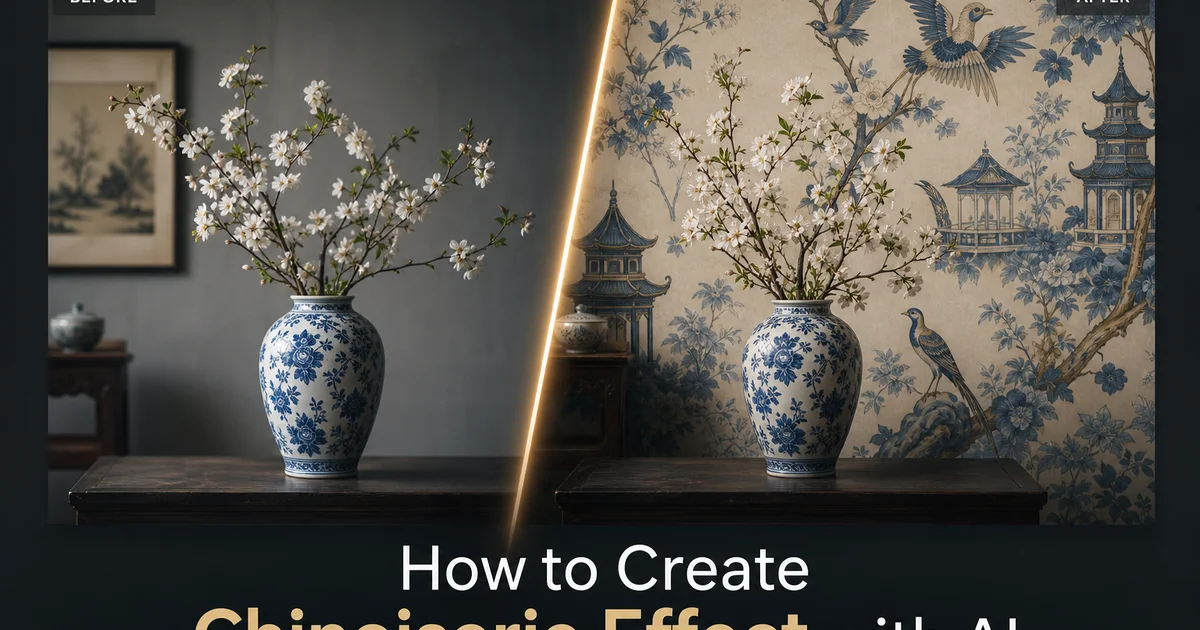
La chinoiserie est un style d'art décoratif européen né au XVIIe siècle, lorsque les routes commerciales entre l'Europe et l'Asie de l'Est ont ouvert un flot de porcelaine, de soie, de laque et de paravents peints vers les marchés occidentaux. Les artisans européens, captivés par ces objets importés mais sans accès direct aux techniques et traditions qui les sous-tendaient, ont commencé à créer leurs propres interprétations des motifs décoratifs chinois. Filtrée par une sensibilité esthétique européenne qui imaginait plutôt qu'elle ne documentait l'Extrême-Orient, il en résulta un style hybride distinctif mêlant pagodes et architecture européenne, paysages imaginaires alliant montagnes chinoises et jardins anglais, et motifs décoratifs fusionnant les conventions du pinceau chinois avec les règles de composition occidentales. Cette réinterprétation créative a produit certains des arts décoratifs les plus durablement beaux de l'histoire occidentale, de la porcelaine de Meissen aux papiers peints peints à la main des maisons de campagne anglaises.
Recréer numériquement des effets de chinoiserie nécessitait auparavant une illustration manuelle minutieuse ou un laborieux travail de composition sur Photoshop. Un artiste devait peindre à la main des motifs décoratifs, les superposer soigneusement sur des photographies ou des compositions de base, ajuster l'opacité et le mélange pour simuler des surfaces peintes, puis appliquer des textures d'incrustation pour suggérer des substrats de porcelaine, de soie ou de laque. Le processus exigeait à la fois une compétence artistique dans la tradition de la chinoiserie et une maîtrise technique de la composition numérique — une combinaison rarement trouvée en dehors des ateliers d'art décoratif spécialisés. Même avec ces compétences, produire une seule pièce de chinoiserie pouvait prendre des heures de travail minutieux.
La conversion de chinoiserie par IA transforme l'accessibilité de cette tradition décorative en comprenant à la fois les principes de composition et les qualités matérielles qui définissent le style. L'IA reconnaît que la chinoiserie n'est pas simplement un filtre de couleur ou une superposition de motifs. Il s'agit d'une transformation complète de la manière dont les sujets sont rendus, impliquant un trait de pinceau caractéristique, des relations spatiales spécifiques entre les éléments décoratifs, des harmonies colorées particulières liées aux traditions historiques de pigments, et des textures de surface évoquant des matériaux physiques spécifiques. Ce guide vous explique comment utiliser AI Filter et AI Enhance pour créer des effets de chinoiserie qui honorent la tradition historique tout en transformant des photographies modernes en pièces d'art décoratif adaptées à l'impression, à l'encadrement et à la décoration intérieure.
- L'IA analyse les sujets de l'image et recommande le sous-style de chinoiserie le plus approprié — porcelaine bleue et blanche, papier peint peint à la main, laque ou illustration narrative de type toile — en fonction du contenu.
- Les palettes de couleurs authentiques de chaque époque puisent dans les traditions historiques, notamment le bleu de cobalt et blanc, la famille rose polychrome et l'or sur laque, chacune liée à des lignées céramiques et décoratives spécifiques.
- La simulation de texture de surface reproduit le glaçage de la porcelaine, le tissu en soie, le papier vieilli et le bois laqué pour compléter l'illusion matérielle, bien au-delà d'une simple superposition de motifs.
- Les contrôles d'intensité décorative vous permettent de doser la transformation, d'une subtile influence chinoiserie sur une base photographique à des pièces d'art décoratif entièrement transformées.
- AI Enhance affine les délicats détails du trait de pinceau — fines branches, plumages d'oiseaux, treillis architecturaux et vrilles botaniques — qui définissent le trait caractéristique de la chinoiserie.
Comprendre la chinoiserie comme tradition décorative et comment l'IA interprète son langage visuel
La chinoiserie est avant tout un style de réinterprétation imaginative plutôt que de reproduction fidèle. Lorsque les artisans européens des XVIIe et XVIIIe siècles créaient des pièces de chinoiserie, ils ne cherchaient pas à reproduire avec exactitude l'art chinois. Ils créaient des versions fantasmées de la Chine telles que filtrées par le goût et l'imagination européens. Les pagodes deviennent plus hautes et plus ornées que toute structure réelle, les paysages mêlent saules pleureurs et roses anglaises, les figures humaines portent des costumes combinant des éléments chinois et européens d'une manière qui n'existait nulle part dans la réalité. Cette liberté créative est ce qui donne à la chinoiserie son charme distinctif et ce qui la distingue des copies directes de l'art décoratif chinois. L'IA doit comprendre cette distinction pour produire des résultats qui semblent authentiquement chinoiserie plutôt que génériquement asiatiques.
Le langage visuel de la chinoiserie suit des principes de composition spécifiques que l'IA a appris à partir de milliers d'exemples authentifiés dans les collections des musées. Les compositions tendent vers un équilibre asymétrique — un grand élément décoratif d'un côté contrebalancé par plusieurs éléments plus petits de l'autre, créant un intérêt visuel par la tension plutôt que par la symétrie. L'espace négatif est utilisé généreusement, principalement dans la tradition bleue et blanche où le fond de porcelaine blanche est aussi important que la décoration peinte. Les lignes s'écoulent organiquement plutôt que de suivre des motifs géométriques rigides. Il y a un trait de légèreté et de fantaisie qui distingue la chinoiserie des traditions décoratives plus formelles avec lesquelles elle coexistait dans les intérieurs européens.
L'approche de l'IA pour la conversion de chinoiserie commence par la segmentation du sujet, identifiant dans votre photographie les éléments qui correspondent aux motifs traditionnels de chinoiserie. Les oiseaux deviennent les espèces exotiques à longue queue qui peuplent les papiers peints chinoiserie. Les arbres se transforment en pins noueux et en branches fleuries des peintures sur porcelaine. L'architecture acquiert les avant-toits relevés et les détails en treillis des pagodes imaginaires. Les figures humaines reçoivent les robes flottantes et les parasols des scènes narratives chinoiserie. Chaque élément est rendu avec un trait de pinceau suivant les conventions du sous-style spécifique que vous sélectionnez, garantissant que le traitement décoratif est cohérent et approprié à l'époque sur l'ensemble de la composition.
- La chinoiserie est une réinterprétation imaginative plutôt qu'une reproduction fidèle — l'IA capture cette qualité de fantaisie créative plutôt que de produire des images asiatiques génériques.
- Les compositions suivent un équilibre asymétrique avec un espace négatif généreux, des lignes organiques fluides et un trait caractéristique de légèreté et de fantaisie.
- La segmentation du sujet identifie les éléments de la photo et les fait correspondre aux motifs traditionnels de chinoiserie — oiseaux, branches fleuries, architecture et figures narratives.
- Le rendu du trait de pinceau suit les conventions du sous-style sélectionné, maintenant une cohérence appropriée à l'époque sur l'ensemble de la composition.
L'effet porcelaine bleue et blanche : la palette chinoiserie la plus emblématique
La palette bleue et blanche est la gamme de couleurs chinoiserie la plus immédiatement reconnaissable, puisant dans une tradition qui s'étend de la porcelaine chinoise Kangxi, à la faïence de Delft (Delftware) néerlandaise, et au transferware anglais. L'effet réduit l'image à deux valeurs — une décoration bleu de cobalt sur un fond de porcelaine blanche — et rend tous les sujets avec le trait de pinceau caractéristique de la céramique peinte à la main. L'IA imite la façon dont le pigment de cobalt se comporte sur une surface glacée : s'attardant légèrement dans les zones en creux pour créer des accents plus foncés, s'amincissant en bleu pâle translucide dans les passages légèrement brossés, montrant la subtile variation de densité qui distingue la peinture à la main de l'impression mécanique. Ce comportement du pigment est ce qui rend la porcelaine peinte à la main vivante comparée aux copies imprimées par décalcomanie modernes.
Convertir une photographie en chinoiserie bleue et blanche nécessite que l'IA prenne des décisions sophistiquées sur la façon de faire correspondre les valeurs tonales photographiques à la palette limitée. Les hautes lumières deviennent un fond blanc pur. Les tons moyens se traduisent par des lavis de bleu dilué. Les ombres profondes deviennent des zones de cobalt saturé construites par plusieurs couches de pinceau. La transition entre ces zones suit les conventions picturales de la tradition : les bords sont définis par des coups de pinceau confiants plutôt que par des dégradés, les zones de ton sont construites par des coups individuels visibles plutôt que par un mélange lisse, et la technique caractéristique de réserve blanche laisse des zones stratégiques non peintes pour créer des reflets et un espace de respiration visuel.
La texture de surface de la porcelaine complète l'illusion bleue et blanche. AI Filter applique un subtil effet de glaçure qui donne à l'image l'aspect légèrement brillant et doucement courbé d'une surface céramique. De fins craquelures — le réseau de minuscules fissures dans la glaçure de porcelaine vieillie — peuvent être ajoutées à intensité variable pour suggérer un caractère ancien. La concavité subtile du bord d'une assiette ou le renflement doux de la surface d'un vase peuvent être suggérés par la distorsion de perspective et le placement des reflets, transformant l'image plate en quelque chose qui se lit comme une photographie d'un véritable objet en porcelaine plutôt que comme une simple illustration bleue et blanche.
- La simulation du pigment de cobalt reproduit comment la peinture bleue s'accumule dans les creux, s'amincit en lavis translucides et varie en densité — les caractéristiques distinctives de la véritable porcelaine peinte à la main.
- La cartographie tonale convertit les valeurs photographiques en bleu et blanc en utilisant les conventions picturales : bords de coups de pinceau, accumulation d'ombres par couches et techniques de réserve blanche stratégiques.
- La texture de glaçure porcelaine ajoute une brillance subtile et des craquelures optionnelles pour un caractère ancien, donnant l'impression d'un objet céramique plutôt que d'une illustration plate.
- La palette bleue et blanche fonctionne particulièrement bien pour les paysages, les sujets botaniques et les scènes architecturales qui correspondent au sujet traditionnel de la peinture sur porcelaine.
Sous-styles papier peint peint à la main et laque pour des effets riches de décoration intérieure
Le papier peint chinoiserie peint à la main représente l'expression la plus ambitieuse et la plus luxueuse du style. Le préréglage wallpaper de l'IA transforme les photographies en scènes décoratives panoramiques inspirées des grands ateliers de papier peint du XVIIIe siècle. Contrairement à la palette restreinte de la porcelaine, la chinoiserie sur papier peint emploie une gamme complète de couleurs — verts doux, roses, bleus ciel, jaunes dorés et bruns chauds — appliqués avec un trait de pinceau délicat sur des fonds de soie ou de papier. Le trait caractéristique de ces papiers peints est leur sens du paysage continu, où des scènes d'oiseaux parmi des branches fleuries, des pavillons dans des jardins et des figures engagées dans des activités quotidiennes s'écoulent de manière transparente sur des murs entiers sans motifs répétés. L'IA adapte votre photographie dans ce langage décoratif panoramique tout en maintenant le rythme visuel et les relations spatiales qui définissent la tradition du papier peint.
Le préréglage laque (lacquerwork) puise dans une tradition matérielle différente — le japanning européen qui imitait les panneaux laqués importés de Chine et du Japon. La chinoiserie laquée utilise une palette très restreinte de décoration dorée sur des fonds noir profond, rouge foncé ou vert forêt. L'effet est opulent et précieux, avec des figures dorées, des oiseaux et des éléments botaniques flottant sur le fond sombre comme des objets précieux émergeant de l'ombre. L'IA imite la surface dorée en relief de la véritable décoration laquée, ajoutant une subtile dimensionnalité aux motifs dorés par des reflets et des ombres qui suggèrent un relief physique. Cette simulation matérielle transforme les photographies en images qui ressemblent à de véritables panneaux laqués plutôt qu'à de simples illustrations dorées sur fond sombre.
Les deux préréglages wallpaper et lacquerwork offrent des options de texture de fond qui complètent l'illusion matérielle. Les fonds de papier peint incluent la soie tissée à la main avec une texture de tissage visible, le papier vergé lisse avec de subtils motifs de fibres, et le papier vieilli avec un léger jaunissement et des piqûres de rousseur suggérant une provenance historique. Les fonds laqués vont de la laque moderne parfaitement lisse aux surfaces vieillies avec le fin craquelure caractéristique et la patine qui se développe au fil des siècles. Ces textures de fond interagissent avec les éléments décoratifs peints par-dessus — les coups de pinceau accrochent le tissage de la soie, la feuille d'or s'installe dans les imperfections de la laque — créant un niveau de réalisme matériel qui élève le résultat bien au-delà d'un simple changement de couleur et de style.
- La chinoiserie sur papier peint emploie une gamme complète de couleurs sur des fonds de soie ou de papier, transformant les photos en scènes décoratives panoramiques avec des compositions paysagères continues.
- Les préréglages laque simulent la décoration dorée sur fonds sombres avec un relief dimensionnel subtil, reproduisant l'aspect opulent des traditions européennes de japanning.
- Les textures de fond incluent le tissage de soie, le papier vergé, le papier vieilli avec piqûres de rousseur, la laque lisse et la laque vieillie avec patine et craquelure appropriées à l'époque.
- Les éléments décoratifs interagissent de manière réaliste avec les textures de fond — les coups de pinceau accrochent le tissage de la soie et la feuille d'or s'installe dans les imperfections de la surface laquée.
Applications créatives : impressions pour la décoration intérieure, design textile et collections d'art numérique
Les photographies transformées en chinoiserie constituent un art mural saisissant qui apporte la tradition décorative dans les espaces intérieurs modernes. Une photographie d'oiseau de jardin convertie en style porcelaine bleue et blanche et imprimée sur du papier d'art de haute qualité crée une pièce qui s'associe magnifiquement avec de véritables objets chinoiserie dans une pièce. Les architectes d'intérieur utilisent ces images de chinoiserie générées par IA pour créer des œuvres d'art sur mesure qui correspondent à des schémas de couleurs et des thèmes spécifiques. Un ensemble de quatre estampes botaniques dans un style laque assorti pour une salle à manger, un paysage panoramique dans un style papier peint pour une entrée, ou une collection de portraits d'oiseaux dans un bleu porcelaine pour une salle d'eau. La capacité de créer des ensembles coordonnés à partir de n'importe quelle photographie source était auparavant réalisable uniquement en faisant appel à un artiste décorateur.
Les applications de design textile et de surface étendent l'effet chinoiserie au-delà de l'art mural vers des produits fonctionnels. Les motifs décoratifs générés par la conversion chinoiserie par IA peuvent être adaptés pour l'impression sur tissu, créant des housses de coussin sur mesure, du linge de table et des motifs de rembourrage qui s'harmonisent avec un décor chinoiserie existant. Les designers de papeterie utilisent l'effet pour créer des cartes de vœux, du papier cadeau et des couvertures de journal avec des ornements chinoiserie dérivés de photographies personnelles. Les designers de produits appliquent les traitements laque et porcelaine à l'emballage, à l'image de marque et aux supports promotionnels pour les articles de luxe où l'esthétique chinoiserie évoque l'héritage, le savoir-faire et le goût raffiné.
Les collectionneurs et créateurs d'art numérique utilisent la conversion chinoiserie comme point de départ pour des compositions plus complexes. Une photographie stylisée chinoiserie peut servir de couche de fond pour un collage numérique, de source de texture pour une œuvre d'art multimédia, ou d'élément de motif dans des conceptions décoratives plus vastes. La résonance historique de la chinoiserie — ses associations avec le luxe, l'échange culturel et la sophistication décorative — ajoute une profondeur conceptuelle à l'art numérique moderne qui référence ou réimagine la tradition. La capacité d'AI Filter à produire des résultats haute résolution adaptés à l'impression grand format permet à ces pièces de chinoiserie numériques d'exister en tant qu'objets physiques dans des contextes de galerie et domestiques.
- Les architectes d'intérieur créent des ensembles d'art chinoiserie coordonnés sur mesure — ensembles botaniques assortis, paysages panoramiques et portraits d'oiseaux — adaptés aux schémas de couleurs spécifiques des pièces.
- Les applications textiles incluent des housses de coussin sur mesure, du linge de table et des motifs de rembourrage qui s'harmonisent avec les éléments de décor chinoiserie existants.
- Les designers de papeterie et de produits appliquent les traitements porcelaine et laque à l'emballage, à l'image de marque et aux supports promotionnels pour les articles de luxe.
- Les résultats haute résolution prennent en charge l'impression grand format, permettant aux pièces de chinoiserie générées par IA d'exister en tant qu'objets d'art physiques dans des contextes de galerie et domestiques.
How to do it
- 1
Upload your photo and assess its compatibility with chinoiserie styling
Open your image in AI Filter and evaluate its composition for a chinoiserie transformation. Chinoiserie effects work best on images with clearly defined subjects. Landscapes, florals, birds, architectural scenes, and still life compositions translate most naturally into the style. The effect draws from a tradition of European artists interpreting Chinese decorative motifs, so images with organic curves, natural subjects, and balanced compositions align with the aesthetic's visual language. Avoid overly busy photographs with cluttered backgrounds, as the intricate patterning of chinoiserie demands visual breathing room around the subject.
- 2
Select the chinoiserie style preset and configure the decorative intensity
Choose from chinoiserie presets that simulate different historical substyles. Blue-and-white porcelain patterning, hand-painted wallpaper scenes, lacquerwork with gold accents, or toile-style narrative illustrations. AI Filter analyzes the image content and recommends the most appropriate style based on the subject: botanical subjects default to hand-painted wallpaper treatment, architectural scenes default to blue-and-white porcelain styling. Bird subjects default to the vivid palette of lacquerwork panels. Adjust the decorative intensity slider to control how heavily the ornamental elements overlay the original composition, from subtle influence to fully transformed artwork.
- 3
Adjust color palette and surface texture for period-authentic results
Chinoiserie encompasses several distinct color traditions, and selecting the right palette determines whether the result reads as authentic or generic. The blue-and-white palette draws from Delft and Kangxi porcelain traditions using cobalt blue on white ground. The polychrome palette includes rose, green, gold, and terracotta tones found in famille rose and famille verte porcelain. The lacquer palette uses deep black or red grounds with gold detail work. Select a paper or surface texture — silk, porcelain glaze, aged paper, or lacquered wood — to complete the material illusion.
- 4
Use AI Enhance to refine decorative details and sharpen ornamental linework
After the initial chinoiserie transformation, apply AI Enhance to sharpen the fine decorative linework that defines the style. Chinoiserie is characterized by delicate brushwork: thin branches, feathered bird details, architectural lattice patterns, and flowing botanical tendrils that require crisp definition to read as intentional decoration rather than blurred pattern. This enhancement step also improves the contrast between decorative elements and their background, ensuring that the ornamental layer sits properly atop the underlying composition.
- 5
Export and evaluate the result against historical chinoiserie references
Save the finished image at full resolution and compare it against photographs of authentic chinoiserie pieces, including porcelain plates, wallpaper panels, lacquer screens, and textile prints held in museum collections. Check that the decorative motifs follow the visual conventions of the tradition: asymmetric but balanced compositions, organic flowing lines rather than rigid geometry, a sense of imagined rather than documentary landscape, and the characteristic blend of European framing with Chinese-inspired subject matter. Adjust style parameters if the result leans too heavily toward either purely European or purely Chinese aesthetics, as chinoiserie occupies the distinctive space between both traditions.
Sources
- Chinoiserie: Commerce and Critical Ornament in Eighteenth-Century Britain — The Metropolitan Museum of Art
- The Art of Chinoiserie: East Meets West in Decorative Arts — Victoria and Albert Museum
- Neural Style Transfer for Decorative Art Patterns — arXiv — Computer Vision and Pattern Recognition