
Comment créer un effet Batik avec l'IA — Magic Eraser
Guide étape par étape pour transformer des photos en art textile batik à réserve de cire avec l'IA. Couvre la texture craquelée, la simulation des bords de cire, les palettes de couleurs traditionnelles javanaises à ouest-africaines. Résultats textiles authentiques avec Magic Eraser.
SEO & Growth
Vérifié par Magic Eraser Editorial ·
Sommaire
- Comment l'IA simule les limites de réserve de cire et la pénétration de la teinture
- Génération de texture craquelée et physique de la fracture de la cire
- Traditions batik régionales et leurs vocabulaires visuels distinctifs
- Applications des beaux-arts et de la mode à l'éducation culturelle et au design d'intérieur
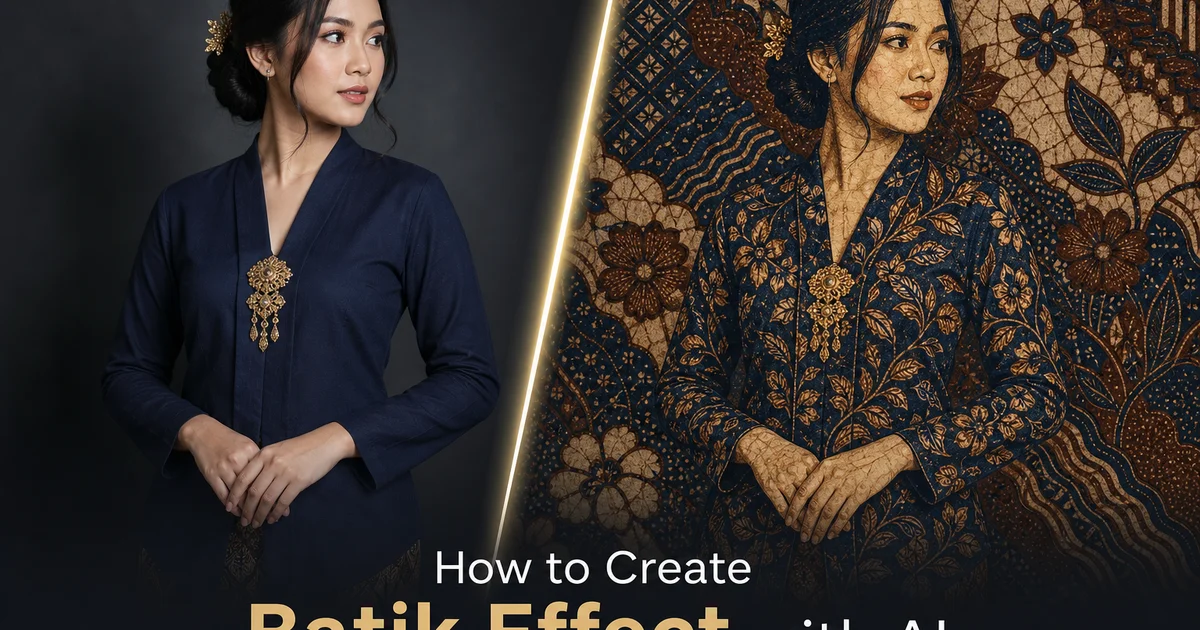
Le batik est l'une des formes d'art textile les plus anciennes et les plus sophistiquées au monde, une technique de teinture à réserve de cire pratiquée depuis des siècles en Asie du Sud-Est, en Afrique de l'Ouest, en Inde et au-delà. Le procédé consiste à appliquer de la cire fondue sur le tissu selon des motifs précis — à la main avec un outil canting ou par estampage avec un cap en cuivre — puis à immerger le tissu dans un bain de teinture. Les zones cirées résistent à la teinture et conservent leur couleur d'origine, créant des motifs par l'interaction entre les zones teintes et protégées. Lorsque la cire est retirée par ébullition, le motif apparaît comme un dessin permanent sur le tissu. L'UNESCO a reconnu le batik indonésien comme chef-d'œuvre du patrimoine oral et immatériel de l'humanité en 2009, reconnaissant sa profonde signification culturelle en tant qu'art vivant qui encode une signification symbolique, un statut social, une identité régionale et des croyances spirituelles dans ses motifs et ses couleurs.
Les traits visuels qui définissent le batik sont immédiatement distincts : des zones de couleur plates séparées par des limites définies là où la cire a rencontré la teinture, le motif craquelé caractéristique de fines lignes irrégulières là où la cire séchée a fracturé pendant la manipulation et a permis à de minces filets de teinture de pénétrer la réserve, et une palette de couleurs contrainte par le processus de teinture séquentielle où chaque couleur nécessite un cycle cire-et-teinture séparé. Ces contraintes physiques produisent une esthétique fondamentalement différente de la peinture ou de l'impression. Les motifs batik portent la preuve visuelle de leur processus de fabrication dans chaque ligne de craquelure et chaque limite de couleur. L'irrégularité organique de la cire appliquée à la main, la ramification imprévisible des motifs de craquelures et les légers bavures aux bords de la cire donnent au batik une chaleur et un réalisme qui le distinguent des textiles imprimés mécaniquement parfaits.
La conversion batik par IA transforme les photographies en images qui reproduisent le langage visuel de l'art textile à réserve de cire en imitant les processus physiques qui créent l'apparence distinctive du batik. Plutôt que de simplement superposer une texture ou d'appliquer un filtre de couleur, l'IA analyse la structure de la photographie pour déterminer où les limites de cire doivent tomber, suivant les bords naturels et les formes de l'image — puis applique la simulation de couches de teinture séquentielle, la génération de texture craquelée et les effets de bord de cire qui produisent des résultats avec la profondeur visuelle et le réalisme de la production réelle de batik. Ce guide explique comment utiliser Magic Eraser pour convertir n'importe quelle photographie en art batik avec des contrôles pour la sélection de style régional, l'intensité des craquelures, la palette de couleurs, le séquençage des couches de teinture et l'exportation pour l'affichage numérique et l'impression textile physique.
- Le batik est une technique de teinture à réserve de cire où la cire fondue protège les zones du tissu de la teinture — l'IA simule ce processus physique pour générer des motifs textiles d'apparence authentique à partir de photographies.
- La texture craquelée — les fines lignes irrégulières là où la cire séchée a fracturé pendant la manipulation — est la signature visuelle la plus distinctive du batik et est générée avec une densité et une échelle ajustables.
- La sélection de style régional applique les conventions esthétiques des traditions batik javanaises, côtières de Pekalongan, malaisiennes ou ouest-africaines, y compris le vocabulaire des motifs et les palettes de couleurs.
- La simulation des couches de teinture respecte les contraintes réelles de production du batik où chaque couleur supplémentaire nécessite un cycle cire-et-teinture séparé, produisant une stratification et une profondeur de couleur authentiques.
- L'exportation prend en charge l'affichage numérique, l'impression haute résolution et la génération de carreaux sans couture pour des applications de motifs continus sur tissu, papier peint et autres surfaces.
Comment l'IA simule les limites de réserve de cire et la pénétration de la teinture
L'opération fondamentale de la conversion batik consiste à déterminer où placer les limites de cire dans l'image. Ces limites définissent le motif en séparant les régions qui recevront différentes couleurs de teinture. Dans le batik physique, l'artisan dessine ou estampe la cire le long des lignes de conception et remplit les zones fermées, créant une barrière de réserve qui empêche la teinture d'atteindre le tissu protégé. L'IA reproduit ce processus de décision en analysant la structure de la photographie — bords, contours, limites de couleur et hiérarchies de formes — pour déterminer où un artisan batik placerait logiquement les lignes de cire. Les bords forts de la photographie deviennent des limites de cire primaires, tandis que les régions fermées entre les limites deviennent des champs de couleur plats qui reçoivent chacun une seule couleur de teinture. Le résultat est une traduction de la tonalité continue photographique en logique binaire ciré-ou-teint de la production batik.
La simulation de pénétration de la teinture détermine comment la couleur remplit les régions non cirées entre les limites. Dans le batik physique, la teinture liquide est absorbée par les fibres du tissu par immersion. La couleur sature uniformément toutes les zones exposées dans un seul bain de teinture, produisant les champs de couleur plats et uniformes caractéristiques qui distinguent le batik des techniques comme la peinture où la couleur peut varier à l'intérieur d'une seule région. L'IA applique cette contrainte physique en attribuant une couleur uniforme unique à chaque région fermée plutôt que de préserver le gradient photographique à l'intérieur des régions. Cet aplatissement de la tonalité continue en champs uniformes est ce qui donne au batik sa qualité graphique, semblable à un dessin. L'information visuelle est entièrement portée par le motif des limites et l'attribution des couleurs aux régions, et non par la variation tonale à l'intérieur des régions.
Là où les limites de cire dans la photographie ne s'alignent pas avec des bords naturels forts — dans les zones de transition graduelle ou de texture lisse — l'IA doit créer des limites visuellement harmonieuses avec le motif global tout en respectant les besoins structurels du batik. Elle le fait en analysant le contexte local du motif et en étendant les lignes du motif d'une manière cohérente avec le style régional sélectionné. Un mode javanais pourrait remplir les zones ambiguës avec de fins motifs de remplissage géométriques parang ou kawung, tandis qu'un mode floral malaisien pourrait étendre les nervures des feuilles et les bords des pétales pour créer des régions fermées. Cette génération de limites consciente du style garantit que chaque zone de l'image est résolue en la structure binaire ciré-ou-teint qui définit le batik, même là où la photographie ne fournit pas une structure de bord suffisante pour une conversion directe.
- Les bords forts de la photographie deviennent les limites de cire primaires — le squelette du motif qui sépare les régions de couleur teinte des zones protégées.
- La simulation de pénétration de la teinture applique une couleur plate uniforme à l'intérieur de chaque région fermée, reproduisant la contrainte physique de la teinture par immersion.
- Les zones ambiguës à faible bord sont remplies de motifs de remplissage adaptés au style — motifs géométriques parang pour le javanais, lignes florales étendues pour le malaisien.
- La logique binaire ciré-ou-teint produit la qualité graphique distinctive du batik où l'information visuelle est portée par le motif des limites et l'attribution des couleurs.
Génération de texture craquelée et physique de la fracture de la cire
La craquelure est la caractéristique la plus immédiatement distincte du batik fait main — un réseau de fines lignes irrégulières qui apparaît dans les zones cirées où la cire séchée a fracturé lors de la manipulation, du pliage et de la teinture du tissu. Lorsque la cire sèche sur le tissu, elle devient cassante, et toute flexion du tissu provoque la fissuration de la couche de cire le long des lignes de contrainte. La teinture s'infiltre dans ces fissures, laissant de minces filets de couleur qui pénètrent la réserve de cire et marquent le tissu fini de preuves indiscutables du processus de production artisanale. Le motif des craquelures est intrinsèquement imprévisible, suivant la physique de la fracture fragile, la distribution des contraintes dans le tissu plié, et l'épaisseur et la composition de la cire — le rendant impossible à reproduire exactement et donnant à chaque pièce de batik fait main une empreinte digitale unique.
L'IA génère la texture craquelée en imitant la physique de la fracture fragile de la cire sur un substrat textile flexible. L'algorithme de génération de craquelures produit un réseau de lignes irrégulières dont la densité, le motif de ramification et la tendance directionnelle sont contrôlés par des paramètres qui correspondent à des variables physiques : l'épaisseur de la cire détermine l'espacement des fissures (la cire épaisse produit moins de fissures plus espacées tandis que la cire fine produit des réseaux de craquelures plus denses et plus fins) ; la direction de flexion du tissu détermine l'orientation principale des lignes de fissure — les fissures se propagent perpendiculairement à la direction de la contrainte de pliage ; et la composition de la cire contrôle la netteté de la fracture (la cire dure produit des fissures nettes et précises tandis que la cire molle produit des motifs de fracture plus irréguliers et ramifiés avec une pénétration de teinture plus large).
La texture craquelée est appliquée sélectivement aux zones cirées de l'image — les zones censées avoir été protégées par la réserve de cire. La densité et le caractère des craquelures peuvent varier sur l'image, avec des craquelures plus prononcées dans les zones qui auraient été plus manipulées pendant le processus de teinture et des craquelures plus légères dans les zones centrales protégées. Cette variation spatiale de la densité des craquelures ajoute au réalisme du rendu car le vrai batik montre plus de craquelures près des bords et des lignes de pli où le tissu a subi plus de contrainte. La couleur des lignes de craquelure correspond à la couleur de teinture qui aurait traversé les fractures de cire — les craquelures dans une pièce teinte à l'indigo apparaissent comme de fines veines bleues sur un fond plus clair.
- Les craquelures se forment lorsque la cire séchée sur le tissu se fissure lors de la manipulation — la teinture s'infiltre dans les fissures laissant de fins filets colorés qui marquent la production artisanale.
- L'épaisseur de la cire contrôle l'espacement des fissures : la cire épaisse produit des fissures espacées et peu nombreuses, la cire fine produit des réseaux de craquelures denses et fins.
- La direction de propagation des fissures suit la contrainte de pliage simulée du tissu, produisant des motifs de craquelures directionnels qui correspondent au comportement physique de fracture de la cire.
- La variation spatiale de la densité des craquelures — plus prononcée près des bords et des lignes de pli, plus légère dans les zones centrales — ajoute de l'authenticité au rendu.
Traditions batik régionales et leurs vocabulaires visuels distinctifs
Le batik javanais — en particulier les traditions de cour de Yogyakarta et Solo — représente le summum de l'art batik aux lignes fines et complexes, avec des motifs dessinés avec un détail extraordinaire à l'aide du canting, un petit outil à bec en cuivre qui dépose un fin filet de cire fondue. Le batik de cour javanais utilise une palette restreinte dominée par le bleu indigo, le brun soga dérivé de l'écorce, le crème et le noir, avec des motifs spécifiques historiquement réservés aux familles royales et à l'aristocratie. Le motif kawung de cercles entrelacés, le motif parang de formes diagonales en lame et le motif truntum de fleurs en forme d'étoile sont parmi les plus culturellement significatifs. L'IA applique ces vocabulaires de motifs et ces contraintes de couleur lorsque le style javanais est sélectionné, générant des motifs complexes aux lignes fines avec la palette de couleurs terreuses sourdes et la répétition géométrique ou florale dense caractéristique de cette tradition.
Le batik côtier des villes comme Pekalongan, Cirebon et Lasem s'est développé sous des influences multiculturelles — chinoises, arabes, hollandaises et indiennes — produisant une esthétique très différente des traditions de cour restreintes. Le batik côtier utilise des palettes de couleurs vives et variées avec des roses, des verts, des jaunes et des rouges aux côtés des indigos et bruns traditionnels. Les motifs comprennent des rouleaux de nuages d'influence chinoise, des phénix et des jets floraux aux côtés de motifs locaux, créant un style de fusion exubérant qui reflète la culture portuaire cosmopolite de la côte nord de Java. Le batik malaisien a développé son propre caractère distinct avec des motifs plus grands et plus audacieux — souvent des fleurs tropicales surdimensionnées, des papillons et des oiseaux — rendus dans des couleurs vives saturées qui créent un effet visuel tropical luxuriant assez différent de la densité complexe de lignes fines du batik de cour javanais.
Le batik ouest-africain, pratiqué au Nigeria, au Ghana, au Sénégal et dans d'autres pays, emploie des motifs géométriques audacieux, des motifs symboliques tirés des traditions culturelles locales et des palettes de couleurs intensément saturées avec des indigos profonds, des jaunes vifs, des rouges riches et des verts éclatants. L'esthétique met l'accent sur l'impact graphique et la communication symbolique plutôt que sur les détails fins complexes. Les motifs sont conçus pour être lus à distance et pour transmettre une signification culturelle à travers des formes symboliques reconnues. Les symboles Adinkra du Ghana, les motifs géométriques de la tradition Yoruba et les designs abstraits audacieux apparaissent tous dans le vocabulaire du batik ouest-africain. L'IA applique ces traits régionaux — échelle des motifs, saturation des couleurs, vocabulaire des motifs et conventions de conception symbolique — pour transformer la photographie source selon la tradition sélectionnée tout en maintenant la logique structurelle de réserve de cire commune à toutes les traditions batik.
- Le batik de cour javanais utilise des palettes indigo-brun-crème restreintes avec des motifs fins complexes dessinés au canting comme les cercles kawung et les lames diagonales parang.
- Le batik côtier de Pekalongan incorpore des influences chinoises et hollandaises avec des couleurs vives variées et des motifs de fusion incluant des rouleaux de nuages et des phénix.
- Le batik malaisien présente des fleurs tropicales surdimensionnées et des papillons dans des couleurs vives saturées, créant des compositions luxuriantes audacieuses.
- Le batik ouest-africain met l'accent sur l'impact graphique avec des motifs géométriques audacieux, des motifs culturels symboliques et des palettes de couleurs intensément saturées.
Applications des beaux-arts et de la mode à l'éducation culturelle et au design d'intérieur
La conversion batik par IA ouvre des applications créatives qui font le pont entre l'artisanat textile traditionnel et la photographie numérique. Les tirages d'art de photographies rendues dans le style batik créent des œuvres qui honorent le langage visuel d'une tradition artisanale vieille de plusieurs siècles tout en l'appliquant à des sujets photographiques modernes. Un paysage urbain moderne rendu dans le style batik de cour javanais, un portrait transformé en motifs batik ouest-africains, ou une photographie de nature réinterprétée à travers la tradition batik florale malaisienne — ces combinaisons interculturelles et intertemporelles créent un art visuel qui suscite la conversation sur la tradition, la technologie et les façons dont les langages visuels culturels peuvent être appliqués à de nouveaux sujets tout en conservant leur caractère distinctif et leur puissance esthétique.
Les applications de mode et de design textile utilisent la conversion batik par IA pour générer des motifs pour la production réelle de tissu. Un designer peut photographier des sujets naturels — fleurs, feuilles, coraux, formations géologiques — et les convertir en motifs de style batik qui maintiennent la logique visuelle de réserve de cire tout en incorporant du matériel photographique source qui serait difficile à obtenir par l'application traditionnelle de cire. L'option d'exportation de carreaux sans couture permet d'appliquer ces motifs à l'impression sur tissu, créant des textiles qui portent l'esthétique authentique du batik — régions de couleur plates, limites de cire, texture craquelée — dérivée de sources photographiques plutôt que de motifs dessinés ou estampés. Ce flux de travail accélère le développement de motifs textiles tout en maintenant le caractère visuel qui distingue le batik des autres techniques d'impression.
Les applications d'éducation culturelle et muséales utilisent la conversion batik pour aider les étudiants et les visiteurs à comprendre les principes visuels de l'art textile à réserve de cire en montrant comment les images photographiques sont transformées à travers les contraintes du processus batik. Voir une photographie familière convertie en batik — avec sa tonalité continue remplacée par des régions de teinture plates, ses surfaces lisses marquées par une texture craquelée, ses détails simplifiés en motif de limites de cire — rend la logique visuelle du batik immédiatement compréhensible d'une manière que la simple visualisation du batik traditionnel peut ne pas accomplir pour un public peu familier avec la technique. Les applications de design d'intérieur utilisent des photographies converties en batik pour créer des œuvres murales personnalisées, des housses de coussin et des panneaux décoratifs qui combinent la chaleur et la richesse culturelle des motifs batik avec des sujets photographiques personnellement significatifs.
- Les tirages d'art en style batik créent des œuvres interculturelles qui appliquent le langage visuel textile traditionnel à des sujets photographiques contemporains.
- Les créateurs de mode utilisent la conversion batik par IA pour générer des motifs prêts pour le tissu à partir de sources photographiques avec une logique visuelle de réserve de cire authentique.
- L'exportation de carreaux sans couture permet une couverture de motif continue pour l'impression sur tissu, le papier peint et les applications de design de surface.
- Les applications d'éducation culturelle démontrent les principes visuels du batik en montrant comment le processus de réserve de cire transforme un contenu photographique familier.
How to do it
- 1
Upload the photo and evaluate its suitability for batik-style conversion
Open your image in Magic Eraser and assess whether the subject has clear shapes and moderate contrast that will translate well into the flat color regions and defined outlines trait of batik textile art. Batik is a wax-resist dyeing technique where areas of fabric are covered with melted wax before being dipped in dye. The waxed areas resist the dye and remain the original color, creating patterns through the contrast between dyed and undyed regions. Photographs with distinct shapes, bold outlines, and natural subjects like flowers, animals, birds, and geometric patterns convert most well because traditional batik motifs draw heavily from nature and sacred geometry. Avoid images with subtle gradients or fine detail that would be lost in the flat color regions that define batik's visual language.
- 2
Select the batik style and configure the wax-resist pattern parameters
Choose from several regional batik traditions that determine the visual character of the output. Javanese batik uses fine intricate patterns with earth tones. Deep indigo, warm brown soga, cream, and black — arranged in highly detailed repeated motifs. Coastal batik from Pekalongan and Cirebon uses brighter, more varied colors influenced by Chinese and Dutch colonial aesthetics. Malaysian batik tends toward larger, bolder floral motifs with vibrant tropical color palettes. West African batik employs geometric shapes and symbolic patterns with rich saturated colors. Each regional style applies different pattern density, color palette. Motif vocabulary to the source photograph, transforming it according to the aesthetic conventions of that tradition.
- 3
Adjust crackle texture and wax edge simulation settings
Configure the crackle effect — the fine network of irregular lines created when dried wax cracks during the dyeing process, allowing small amounts of dye to seep through and create thin veins of color across the waxed areas. This crackle texture is the most distinctive visual signature of authentic hand-made batik. Its intensity, scale, and irregularity distinguish the AI rendering from generic pattern overlay. Set the crackle density from subtle. Sparse fine lines that suggest hand production without dominating the image — to heavy, where a dense network of crackle lines creates a weathered, heavily worked textile look. Adjust the wax edge simulation to control how crisp or softly bleeding the boundaries between color regions appear, mimicking how melted wax spreads slightly on fabric before solidifying.
- 4
Refine the traditional color palette and dye layer sequence
Fine-tune the color palette to match authentic batik dyeing processes where the number of colors directly corresponds to the number of separate wax-and-dye cycles the fabric undergoes. A two-color batik — the simplest form — uses a single dye bath, producing the base fabric color and one dye color with wax-resist creating the pattern boundary between them. Each extra color requires an extra waxing and dyeing cycle, so a five-color batik represents five separate hand-processing steps. The AI mimics this layered dyeing process so the color relationships in the output follow the physical constraints of actual batik production. Colors overlap and interact in the order they would be applied, with earlier dye layers visible through later wax applications, creating the trait depth and layering of authentic multi-color batik.
- 5
Export the batik rendering with textile-appropriate resolution and format
Export the completed batik effect at a resolution right for the intended use. For digital display and social media, export as a standard web image that preserves the fine crackle texture and color detail at screen viewing distances. For print applications — art prints, greeting cards, or textile printing — export at three hundred DPI or higher to ensure the crackle lines and wax edge effects remain crisp and detailed when printed. For actual fabric printing applications, export as a seamless tile if the batik pattern is intended to repeat across a larger textile surface. The AI can generate the output with seamless edge matching so the pattern tiles without visible seams, enabling the batik design to be applied to fabric, wallpaper, or any surface requiring steady pattern coverage.
Sources
- Indonesian Batik: A Cultural Heritage Recognized by UNESCO — UNESCO Intangible Cultural Heritage
- Wax-Resist Dyeing Techniques: History, Materials, and Modern Applications — The Metropolitan Museum of Art
- Digital Textile Pattern Generation Using Neural Style Transfer — ACM SIGGRAPH