
Retouche photo IA pour entreprises de piscine et spa : portfolios, maintenance et marketing
Comment les entreprises de piscines et spas utilisent la retouche photo IA pour des portfolios d'installation experts, des registres d'entretien saisonnier et des vitrines avant/après de rénovation. Marketing qui gagne des contrats résidentiels et commerciaux.

Product Marketing
Vérifié par Magic Eraser Editorial ·
Sommaire
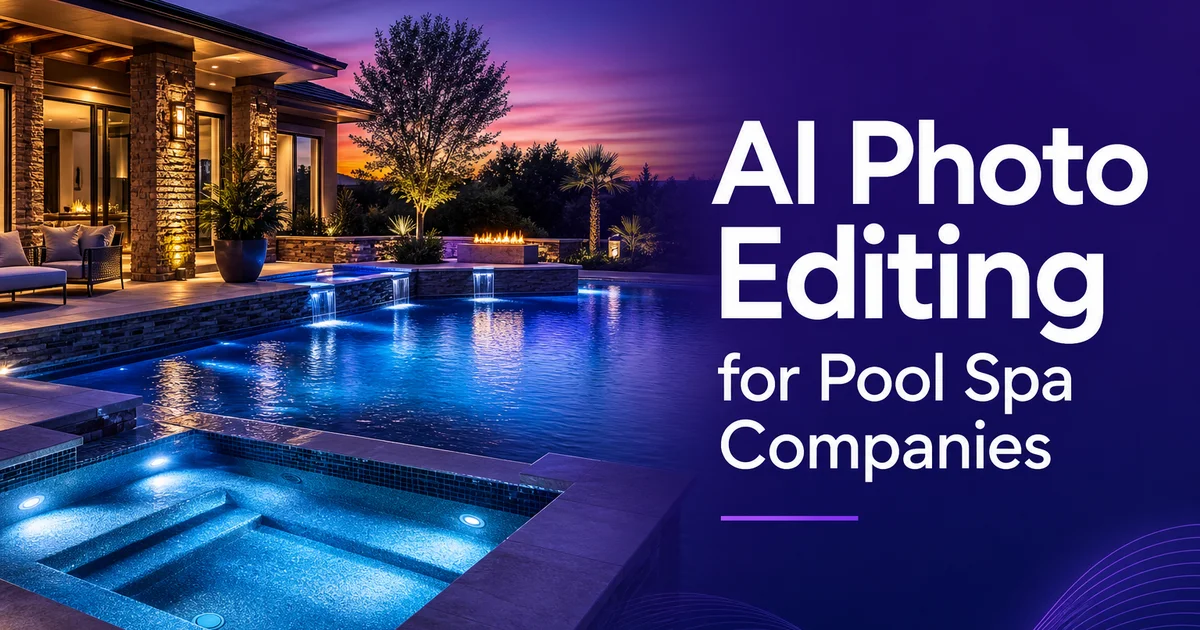
Les entreprises de piscines et spas vendent une vision. Le client debout dans son jardin nu n'achète pas un trou dans le sol et un système de filtration. Il achète des soirées d'été au bord de l'eau, des rassemblements de week-end autour du spa et l'espace de vie extérieur transformé qu'il imagine. Votre capacité à vendre cette vision dépend presque entièrement du marketing visuel. Le client a besoin de voir à quoi pourrait ressembler son jardin. La preuve la plus persuasive est ce que vous avez déjà construit pour d'autres clients. Votre portfolio d'installations est votre outil de vente le plus puissant. La qualité des photos qu'il contient détermine directement si un prospect demande une consultation ou continue de défiler vers l'entrepreneur suivant.
Le défi est que la photographie de piscines et spas se déroule dans des cadres résidentiels incontrôlés où chaque photo contient des éléments qui nuisent à la présentation professionnelle. La clôture grillagée du voisin est visible au-dessus du mur d'intimité. Les matériaux de chantier sont encore dans le jardin. Le tuyau d'arrosage du propriétaire, le seau de produits chimiques pour piscine et les jouets gonflables des enfants sont éparpillés autour de la terrasse. L'eau de la piscine paraît bleu-vert au lieu du bleu cristallin qu'elle a en personne, parce que la balance des blancs automatique de l'appareil photo du téléphone s'est décalée sous les conditions extérieures lumineuses. Chacun de ces éléments réduit l'impact de ce qui pourrait être une magnifique installation.
La retouche photo IA transforme les clichés de chantier en contenu de portfolio de qualité marketing. Magic Eraser élimine les débris de construction, le désordre du voisin et les accessoires éparpillés que les photos de téléphone captent au passage. AI Enhance fait ressortir la transparence de l'eau, la qualité de finition des surfaces et les détails de l'aménagement minéral que les appareils photo aplatissent. Background Eraser isole les spas et bains à remous portables pour des présentations de produits épurées. Le résultat est un portfolio où chaque installation paraît aussi impressionnante que le jour où vous avez fièrement montré au client son jardin terminé. Avant qu'il n'y installe ses meubles et que les enfants ne laissent leurs jouets sur la terrasse.
- Les entreprises de piscines et spas vendent une vision d'une vie extérieure transformée qui dépend d'un marketing visuel professionnel.
- Les appareils photo des téléphones faussent la couleur de l'eau, aplatissent les détails de surface et incluent le désordre résidentiel environnant.
- Magic Eraser élimine les débris de construction, les distractions du voisinage et les accessoires éparpillés des photos d'installation.
- AI Enhance restitue la vraie couleur de l'eau, les détails des zones ombragées et la texture de l'aménagement minéral que les appareils photo perdent.
- Le contenu avant/après de rénovation s'adresse directement aux propriétaires de piscine qui envisagent déjà des améliorations.
Pourquoi la photographie de piscine est plus difficile qu'il n'y paraît
L'eau est l'un des sujets les plus difficiles en photographie. Son aspect change complètement selon l'angle de vue, l'angle de la lumière, les conditions du ciel. Ce qui se reflète à sa surface. La même piscine qui paraît bleu cristallin à vos yeux debout sur la terrasse peut paraître gris-vert, réfléchissante comme un miroir ou presque noire sur une photo selon l'endroit où vous tenez le téléphone et le moment où vous prenez le cliché. Les appareils photo des téléphones aggravent cela en prenant des décisions automatiques d'exposition et de balance des blancs qui se concentrent sur la scène globale plutôt que sur l'eau. Elle est souvent l'élément le plus important de l'image. L'appareil expose pour le ciel lumineux et la surface de la terrasse. La couleur de l'eau se décale, victime du compromis.
Les reflets créent le deuxième défi majeur. L'eau de la piscine agit comme un miroir aux angles de vue bas, reflétant le ciel, les arbres environnants. Les structures plutôt que de montrer la transparence de l'eau en dessous. À des angles plus prononcés — en regardant plus directement vers le fond de l'eau — les reflets diminuent et la transparence bleue devient visible. Cela nécessite un point de vue surélevé que la plupart des cadres résidentiels n'offrent pas. Le résultat est que la plupart des photos de piscine prises à hauteur d'homme depuis la terrasse montrent une surface réfléchissante qui pourrait correspondre à n'importe quelle qualité d'eau, plutôt que la transparence cristalline qui est le désir premier de votre client et votre principal argument de vente.
Le cadre environnant ajoute la troisième couche de difficulté. Les piscines résidentielles existent dans des jardins qui contiennent tout ce qu'une famille accumule à l'extérieur. Meubles, jouets, barbecues, matériel de jardin, fournitures d'entretien et le caractère vécu général d'un espace extérieur utilisé. Les propriétés voisines apportent leur propre désordre visuel. Les chantiers de nouvelles installations contiennent des débris, du matériel et des matériaux de stockage. Aucun de ces éléments ne sert votre objectif marketing. Tous apparaissent sur les photos de téléphone parce que les appareils photo des téléphones ont des objectifs grand-angle qui captent davantage de la zone environnante que ce sur quoi vos yeux se concentrent lorsque vous admirez la piscine elle-même.
- L'aspect de l'eau change radicalement selon l'angle de vue, l'angle de la lumière et les réglages de l'appareil photo.
- L'exposition automatique et la balance des blancs du téléphone décalent la couleur de l'eau du bleu cristallin au gris-vert.
- Les reflets de surface aux angles de hauteur d'homme cachent la transparence de l'eau visible en personne.
- Les objectifs grand-angle des téléphones captent plus de désordre environnant que ce sur quoi vos yeux se concentrent en regardant la piscine.
Construire un portfolio d'installation qui gagne des contrats
Votre portfolio d'installations est l'outil qui convertit les consultations en contrats signés. Lorsqu'un client potentiel s'assoit à votre table pour regarder ce que vous avez construit pour d'autres personnes de sa région, il prend la décision émotionnelle d'acheter avant même que vous ne discutiez des prix ou des délais. Le portfolio doit montrer de la variété. Différentes formes de piscine, différents matériaux de terrasse, différentes intégrations paysagères, différentes tailles de jardin — pour que chaque prospect puisse trouver un projet qui ressemble à ce qu'il imagine pour sa propre propriété. Et chaque photo de ce portfolio doit paraître professionnelle, car la qualité visuelle signale la qualité de construction dans l'esprit du client.
Construisez le portfolio avec une norme de retouche cohérente appliquée à chaque projet. Photographiez chaque installation sous quatre à six angles standard : la vue d'ensemble du jardin depuis une position surélevée si possible, la vue d'approche depuis la porte arrière ou le patio, une perspective au niveau de l'eau qui montre le débordement ou la surface de l'eau scintillante, un gros plan de l'aménagement minéral ou du carrelage. Une prise de vue nocturne montrant la conception de l'éclairage si l'installation comprend un éclairage paysager et de piscine. Retouchez chaque photo au même niveau de qualité. Arrière-plans nettoyés, eau sublimée, exposition équilibrée — pour que le portfolio paraisse cohérent plutôt qu'une collection aléatoire de quelques beaux clichés et de quelques instantanés de téléphone.
Incluez les clichés de processus aux côtés des résultats finis. Les clients potentiels sont rassurés en voyant votre processus de construction. L'excavation, l'acier et la plomberie, l'installation en gunite ou en fibre de verre, le carrelage et la margelle, et le résultat final. Ces clichés de processus montrent un savoir-faire et une expertise qu'un portfolio uniquement de résultats finis ne peut transmettre. Retouchez les photos de la phase de construction pour éliminer le désordre qui ne fait pas partie du processus lui-même. Sublimez-les pour que les détails de votre travail soient visibles. Le passage de la terre nue à un espace de vie extérieur terminé est un récit puissant qui justifie un prix premium.
- Montrez de la variété dans les formes, les matériaux, l'aménagement paysager et les tailles de jardin pour que chaque prospect trouve un projet auquel s'identifier.
- Photographiez chaque installation sous quatre à six angles standard pour une présentation de portfolio cohérente.
- Appliquez la même norme de retouche à chaque projet pour une apparence de portfolio cohérente et professionnelle.
- Incluez la documentation du processus de construction pour démontrer le savoir-faire et justifier un prix premium.
Marketing saisonnier et documentation d'entretien
Les entreprises de piscines et spas qui proposent des services d'entretien disposent d'un moteur de contenu intégré dont les entreprises d'installation uniquement sont dépourvues. Chaque visite de service est une occasion de photographie. L'ouverture de printemps — retrait de la bâche, mise en route, équilibrage de l'eau — documente la transition de l'hivernage à l'état prêt pour la baignade. Les visites d'entretien estival montrent la transparence de l'eau toujours parfaite que votre service procure. Les clichés de fermeture d'automne montrent les mesures de protection que vous prenez. Chaque point de contact saisonnier produit du contenu avant/après qui montre la valeur d'un service continu aux clients qui se demandent si un entretien professionnel vaut le coût par rapport au fait de le faire eux-mêmes.
Les projets de rénovation produisent le contenu marketing le plus puissant du secteur des piscines. Une piscine vieillissante avec une margelle fissurée, un enduit défraîchi et un équipement inefficace transformée en un espace de vie extérieur moderne avec des surfaces actualisées, un nouveau carrelage, un éclairage LED et un équipement écoénergétique. Cette histoire avant/après s'adresse directement au propriétaire de piscine qui envisage de moderniser sa piscine de 15 ans mais ne s'est pas encore engagé. Ces prospects sont des clients à forte valeur car ils possèdent déjà l'infrastructure et investissent dans l'amélioration plutôt que dans une nouvelle construction. Montrez-leur à quoi pourrait ressembler leur piscine, et la demande de consultation suivra.
Retouchez le contenu saisonnier et de rénovation avec la même attention à l'intimité et à la présentation que celle que vous appliquez aux photos de nouvelles installations. Supprimez les objets personnels visibles dans le jardin lors des visites d'entretien. Nettoyez la zone de chantier sur les photos de mi-rénovation. Sublimez la couleur de l'eau et les détails de surface dans le résultat fini. Créez un calendrier de contenu qui publie le contenu adapté à chaque saison. Des guides d'ouverture de printemps avec vos meilleures photos d'ouverture en mars, des présentations d'entretien estival en juin, des transformations de rénovation à l'automne lorsque les prospects planifient des projets hors saison. Un contenu cohérent et bien chronométré selon les saisons maintient la visibilité de votre entreprise auprès de la clientèle qui aura besoin de vos services à l'arrivée de la prochaine saison.
- Chaque visite d'entretien produit du contenu avant/après démontrant la valeur d'un service continu.
- Le contenu avant/après de rénovation cible les propriétaires de piscine existants à forte valeur qui envisagent des améliorations.
- Appliquez les mêmes normes de nettoyage de l'intimité et d'amélioration de la qualité au contenu saisonnier.
- Un calendrier de contenu saisonnier maintient la visibilité de votre entreprise auprès des clients qui planifient des services pour la prochaine saison.
Marketing de produits de jacuzzi et spa portable
Les spas et bains à remous portables présentent un défi marketing différent des installations de piscines sur mesure. Ce sont des produits qui peuvent être présentés indépendamment de tout cadre particulier. Les clients les choisissent souvent à partir de catalogues, de sites web et de présentations en salle d'exposition avant de décider où les placer. Background Eraser vous permet d'isoler le spa de son cadre d'installation pour créer des images de produit épurées sur des arrière-plans blancs ou aux couleurs de la marque, adaptées au e-commerce, aux catalogues et aux pages de comparaison. Ceci est particulièrement précieux pour les revendeurs qui vendent plusieurs marques et ont besoin d'une photographie de produit cohérente sans les frais de séances en studio professionnel pour chaque modèle.
Les photos de présentation d'installation comptent toujours pour les spas et bains à remous portables. L'accent se déplace du produit lui-même vers l'intégration au mode de vie. Montrez le spa sur la terrasse avec la vue derrière lui, sur le patio adjacent à la cuisine extérieure, dans l'enclos grillagé avec un éclairage d'ambiance. Ces photos de mode de vie vendent l'expérience plutôt que les spécifications, et elles bénéficient énormément d'une retouche IA qui supprime les éléments nuisant à la scène aspirationnelle. Le tuyau d'arrosage enroulé à côté du spa, les matériaux de construction de l'aménagement de la terrasse, le jardin du voisin visible par-dessus la clôture.
Pour les comptes commerciaux — hôtels, complexes hôteliers, centres de bien-être. Immeubles d'appartements — votre marketing a besoin de clichés de qualité professionnelle qui montrent à la fois la qualité du produit et la compétence d'installation. Les acheteurs commerciaux ont besoin de voir votre travail dans des cadres comparables aux leurs. Organisez votre portfolio commercial séparément du travail résidentiel. Retouchez les photos d'installation commerciale selon une norme encore plus élevée, en supprimant tous les éléments qui ne font pas partie de l'installation finale. Sublimez la transparence de l'eau et l'éclairage pour montrer le spa sous son jour le plus attrayant. Les contrats commerciaux représentent des revenus récurrents majeurs, et la qualité visuelle de vos supports de proposition influence directement le choix de l'entrepreneur retenu.
- Background Eraser crée des images de produit cohérentes pour les catalogues et le e-commerce sans les coûts d'un studio professionnel.
- Les photos d'installation axées sur le mode de vie vendent l'expérience plutôt que les spécifications pour le marketing des spas et bains à remous.
- Séparez les portfolios commerciaux du travail résidentiel pour vous adresser directement aux acheteurs d'hôtels, de complexes hôteliers et de gestion immobilière.
- Des normes de retouche plus élevées pour la documentation commerciale influencent le choix de l'entrepreneur pour des contrats récurrents importants.
How to do it
- 1
Photograph pools and spas during optimal lighting conditions
Capture pool and spa installations during the golden hour. The first hour after sunrise or the last hour before sunset — when warm, directional light makes water surfaces shimmer and illuminates landscaping with depth and dimension. Midday sun creates harsh reflections on water surfaces and blown-out highlights on pool decking that no amount of editing can fully correct. If golden hour is not possible, overcast days produce even lighting that shows water clarity and surface finish quality without the extreme reflections of direct sun. Always photograph the water when it has been recently cleaned and chemically balanced, as the crystal-clear blue of properly maintained water is your strongest visual selling point.
- 2
Remove construction debris, equipment, and neighboring property distractions
Pool and spa photos taken during or shortly after installation in time contain construction debris. Leftover tile pieces, equipment staging areas, excavation marks, temporary fencing, and material pallets. Even completed installations include unwanted elements: the neighbor's fence in disrepair, a utility box on the far side of the yard, garden hoses and cleaning equipment, pool chemical containers. Children's toys scattered around the deck. Use Magic Eraser to remove these elements so the pool and its surrounding hardscape and landscaping are the sole focus. For installation showcase photos, also remove any remaining construction company signage or dumpsters visible in the background.
- 3
Enhance water color and surface clarity with AI Enhance
Pool water's crystal-clear blue look is the single most important visual element in pool company marketing, and phone cameras frequently misrepresent it. Auto white balance shifts the blue toward green or gray. Reflections on the surface hide the water clarity below. Shadow areas around the pool edge look dark and uninviting when the camera exposes for the bright water surface. Apply AI Enhance to bring out the true water color, recover detail in shaded areas around the pool deck. Balance the exposure between the bright water surface and the surrounding landscape. The enhanced image should show water that looks as inviting on screen as it does standing on the pool deck in person.
- 4
Remove or replace backgrounds for catalog and website presentation
Use Background Eraser to isolate pool and spa installations from their surroundings when you need clean catalog-style images. This is mainly useful for hot tub and portable spa marketing where the product can be shown independent of any particular installation setting. Remove the background fully for a white-background product shot suitable for e-commerce listings, or replace it with a matching setting that matches your brand aesthetic. For custom pool installations, selective background removal can eliminate neighboring properties and focus attention on the pool, decking. Immediate landscaping that your company actually designed and built.
- 5
Create before/after installation showcases and seasonal maintenance portfolios
Document every installation from empty yard to finished pool with matching-angle before and after photos. Photograph the same installation across seasons. The summer party-ready pool, the fall leaf-free maintained pool, and the spring opening after winter cover removal — to show your maintenance service value. For renovation projects, capture the dated or deteriorating pool before work begins and the transformed result after resurfacing, re-tiling, or equipment upgrades. Arrange these into side-by-side comparison sets for your website portfolio, Google Business Profile, and social media. Renovation before/after content is mainly effective because it speaks directly to pool owners who are already considering an upgrade.
Sources
- Swimming Pool Industry Market Size and Growth Report — IBISWorld
- Visual Content Marketing for Home Service Businesses — Pool & Spa News
- Before and After Photography for Contractor Portfolios — Builder Online