
Retouche photo par IA pour les parfumeurs : mettez vos parfums en valeur
Conseils de photographie produit experts pour les parfumeurs utilisant la retouche photo par IA. Apprenez à capturer les reflets des flacons, la couleur exacte du liquide, les flat-lays d'ingrédients et l'imagerie lifestyle des parfums pour l'e-commerce et les réseaux sociaux.
SEO & Growth
Vérifié par Magic Eraser Editorial ·
Sommaire
- Maîtriser la photographie de flacons en verre : reflets, transparence et couleur du liquide
- Des flat-lays d'ingrédients qui racontent visuellement l'histoire olfactive
- Une imagerie lifestyle qui communique l'ambiance et l'occasion de la fragrance
- Optimisation e-commerce : arrière-plans blancs, vues zoom et présentation des variantes
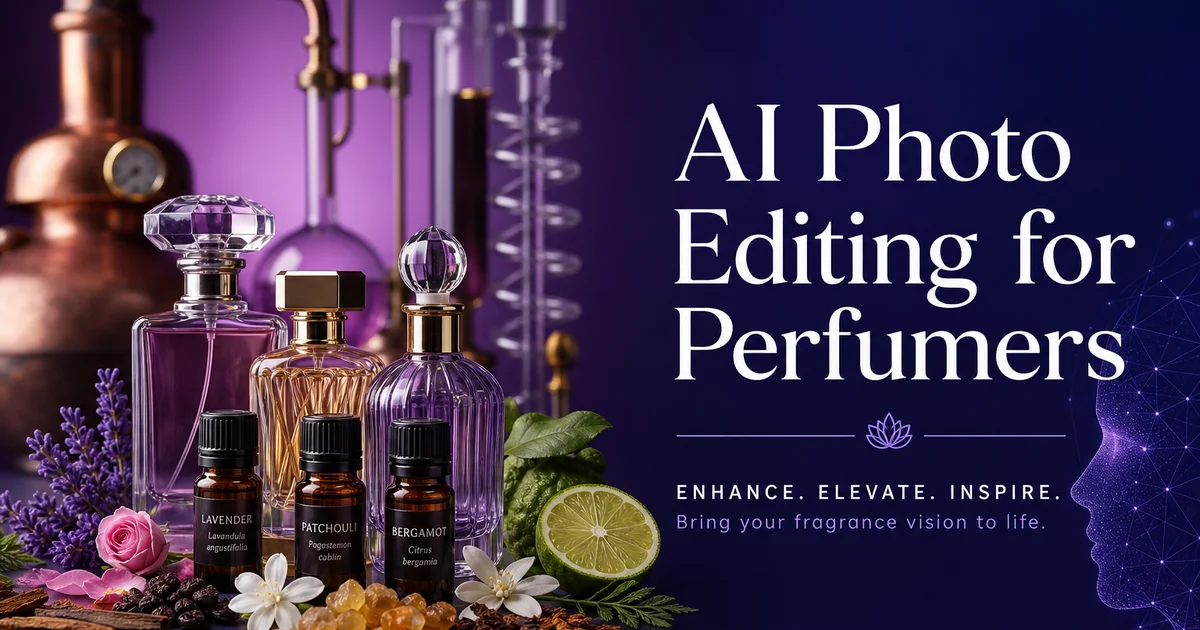
Le parfum est un produit invisible vendu par des signaux visibles. Ce paradoxe rend la photographie plus importante pour l'industrie de la parfumerie que pour presque toute autre catégorie de produits de consommation. Un client ne peut pas sentir un parfum à travers un écran, de sorte que chaque décision d'achat est influencée par l'aspect du flacon, par la façon dont la couleur du liquide traduit le caractère de la fragrance, et par la capacité de l'imagerie environnante à évoquer l'ambiance et l'expérience que le parfum promet. Un liquide ambré et chaud photographié sur un velours sombre parsemé de gousses de vanille suggère richesse et sensualité. Un flacon limpide comme du cristal sur du marbre blanc avec des tranches d'agrumes suggère fraîcheur et énergie pure. Ces récits visuels accomplissent le travail que les touches à sentir et les flacons testeurs réalisent dans la vente physique, ce qui signifie que la photographie produit n'est pas qu'une tâche marketing pour les parfumeurs. C'est le principal moyen par lequel la plupart des clients découvrent la marque avant leur premier achat.
Les défis techniques de la photographie de flacons de parfum dépassent ceux de la plupart des autres catégories de produits, car le verre est l'un des matériaux les plus complexes à capturer sur le plan optique. Chaque surface de verre transmet, réfléchit et réfracte la lumière à la fois, créant des interactions qui changent énormément même avec de petits ajustements de l'angle d'éclairage, de la position de l'appareil ou de la couleur de fond. Le liquide à l'intérieur ajoute une couche de complexité supplémentaire : sa couleur varie selon la profondeur, la concentration et la température de couleur de la source lumineuse, et il crée des motifs de lumière caustique sur les surfaces sous le flacon qui peuvent soit rehausser, soit perturber la composition. La photographie de parfum experte exigeait autrefois des dispositifs d'éclairage spécialisés, plusieurs expositions fusionnées en post-production et des heures de retouche par image. Un flux de travail au coût prohibitif pour les parfumeurs indépendants, les maisons de parfum artisanales et les marques de niche en petites séries.
Les outils de retouche photo par IA, dans leur essence, transforment l'économie de la photographie de produits de parfumerie en automatisant les aspects les plus chronophages du flux de post-production. La suppression d'arrière-plan gère la détection complexe des contours autour des flacons en verre, où des zones transparentes, semi-transparentes et opaques coexistent dans la même limite d'objet. La correction des couleurs garantit que les teintes du liquide restent exactes sous différents éclairages. Les outils d'amélioration font ressortir l'éclat du cristal taillé et la brillance des bouchons en métal précieux sans le laborieux travail manuel d'esquive et de brûlage qu'exige la retouche traditionnelle. Ce guide couvre le flux de travail complet pour les parfumeurs utilisant Magic Eraser, Background Eraser, AI Enhance et AI Filter afin de produire une photographie produit qui traduit le caractère de la fragrance avec la sophistication visuelle qu'attendent les clients de parfumerie.
- Background Eraser sépare proprement les contours complexes des flacons en verre de tout décor, gérant les zones partiellement transparentes où le verre passe de l'opaque au limpide sans introduire d'artefacts de halo.
- AI Enhance corrige les dérives de couleur du liquide causées par les variations d'éclairage et de balance des blancs, garantissant que les tons ambre, vert ou rose de chaque fragrance correspondent à l'aspect réel du produit dans des conditions neutres.
- Magic Eraser élimine les imperfections de la photographie d'ingrédients. Taches brunes sur les pétales, poussière sur l'écorce, coloration inégale des épices, pour créer des compositions flat-lay soignées qui racontent visuellement l'histoire olfactive.
- AI Filter applique un traitement de couleur homogène à travers les compositions lifestyle à plusieurs éléments, afin que flacon, ingrédients et arrière-plan partagent une température visuelle et une ambiance unifiées.
- L'export multi-format optimise chaque image pour les arrière-plans blancs de l'e-commerce, les contextes lifestyle des réseaux sociaux et les supports imprimés haute résolution, tout en maintenant une couleur de flacon et une qualité de reflets du verre constantes.
Maîtriser la photographie de flacons en verre : reflets, transparence et couleur du liquide
Les flacons de parfum en verre présentent un triple défi optique qui en fait l'un des produits de consommation les plus difficiles à bien photographier. La surface du verre réfléchit le décor du studio, transmet la lumière pour révéler le liquide à l'intérieur et réfracte cette lumière de manière à déformer tout ce qui est visible derrière le flacon. Ces trois phénomènes se produisent à la fois sur la même surface. Un simple flacon de parfum posé sur une table agit en même temps comme un miroir, une fenêtre et une lentille, et chacun de ces comportements optiques doit être géré séparément, tant lors de la prise de vue qu'en post-production. La composante de réflexion détermine ce que le spectateur voit à la surface du verre : dans un décor non maîtrisé, cela signifie le désordre de l'établi, le matériel de studio et le reflet du photographe lui-même. Les photographes experts maîtrisent les reflets en entourant le flacon de cartons blancs et noirs soigneusement positionnés qui créent des motifs de lumière et d'ombre contrôlés sur la surface du verre.
La composante de transparence révèle le liquide à l'intérieur du flacon. C'est là que la photographie de parfum diffère le plus de la photographie d'autres produits en verre, comme les bouteilles de vin ou les vases. La couleur du liquide de parfum est une décision de marque délibérée. Un maître parfumeur et un directeur de création choisissent la teinte précise ambre, rose, verte ou limpide que le liquide présentera, et cette couleur devient une partie de l'identité de la marque. Les clients apprennent à associer une teinte dorée particulière à leur fragrance préférée. Toute dérive de couleur en photographie rompt ce lien. Les capteurs d'appareil photo captent la couleur du liquide différemment de la façon dont l'œil humain la perçoit, surtout sous éclairage artificiel. Les lampes au tungstène font virer les liquides ambrés vers l'orange, les lampes fluorescentes ajoutent des dominantes vertes. La photographie au flash peut délaver des tons pastel délicats jusqu'à la quasi-transparence. AI Enhance résout ces problèmes de fidélité des couleurs en analysant la zone du liquide et en appliquant des corrections ciblées qui restaurent la couleur produit voulue.
La composante de réfraction crée les effets les plus saisissants visuellement mais les plus imprévisibles techniquement : la lumière qui se courbe en traversant les surfaces de verre incurvées produit des motifs caustiques, une séparation chromatique prismatique et des effets de grossissement qui peuvent soit rehausser l'attrait visuel du flacon, soit créer des artefacts indésirables. La base d'un flacon rond posé sur une surface blanche projette un point lumineux concentré qui ressemble à une lentille concentrant la lumière du soleil. Les flacons en cristal à facettes dispersent la lumière en motifs arc-en-ciel qui peuvent submerger le produit lui-même. Les outils d'IA aident à gérer ces effets en réduisant de façon sélective les points caustiques trop lumineux tout en conservant la qualité lumineuse séduisante qui fait la force de la photographie de verre dès le départ.
- Les surfaces de verre réfléchissent le décor, transmettent la lumière pour révéler le liquide et réfractent la lumière à travers les surfaces incurvées, le tout à la fois. Trois comportements optiques à gérer séparément lors de la prise de vue.
- La couleur du liquide de parfum est un identifiant de marque délibéré que les capteurs d'appareil photo captent différemment de la perception de l'œil, nécessitant une correction des couleurs par IA pour restaurer l'aspect produit voulu.
- La réfraction à travers le verre incurvé crée des motifs de lumière caustique et des effets prismatiques que les outils d'IA peuvent réduire de façon sélective sans éliminer la qualité lumineuse qui rend la photographie de verre séduisante.
- Background Eraser gère le contour particulièrement complexe entre le flacon en verre et l'arrière-plan, où les niveaux de transparence changent en continu sur la même limite d'objet.
Des flat-lays d'ingrédients qui racontent visuellement l'histoire olfactive
Parce que la fragrance ne peut pas être communiquée directement à travers un écran, les parfumeurs s'appuient sur la photographie d'ingrédients pour combler l'écart entre l'expérience visuelle et olfactive. Une photographie de gousses de vanille de Tahiti, de pétales de rose du Maroc, de copeaux de bois de santal d'Inde et de tranches de bergamote d'Italie disposés autour d'un flacon de parfum indique au client à quoi ressemble l'odeur de la fragrance en lui montrant les matières physiques dont elle est composée. Cette approche est particulièrement précieuse pour les parfumeurs de niche et artisanaux qui utilisent des ingrédients naturels de haute qualité comme facteur de différenciation. Montrer une véritable absolue de jasmin de Grasse ou du bois de santal de Mysore traduit à la fois le caractère olfactif et la qualité des matières qui justifient un prix premium. Le format flat-lay, où les ingrédients sont disposés sur une surface et photographiés directement du dessus, est devenu le langage visuel standard pour ce type de narration par les ingrédients.
Le défi pratique des flat-lays d'ingrédients est que les matières botaniques naturelles sont par essence imparfaites. Les pétales de rose frais se meurtrissent et brunissent en quelques heures après la coupe, les gousses de vanille développent une coloration de surface inégale, les tranches d'agrumes se dessèchent et perdent leur jutosité translucide. Les matières d'écorce comme le bois de santal et l'oud accumulent poussière et fragments de fibres qui paraissent indésirables de près. Un styliste culinaire expert peut passer une heure à sélectionner et préparer les ingrédients avant un seul cliché. Même alors, une retouche est nécessaire pour éliminer les imperfections que l'appareil révèle plus crûment que ne le perçoit l'œil. Magic Eraser simplifie ce nettoyage en supprimant intelligemment les petits défauts. Taches, poussière, décoloration, fibres égarées, à la surface des ingrédients, tout en conservant la texture naturelle qui traduit le réalisme.
AI Filter joue un rôle crucial dans l'unification de la température visuelle et de l'ambiance des compositions flat-lay qui combinent plusieurs matières disparates. Une photographie brute de pétales de rose, de copeaux de bois de santal et d'un flacon de parfum en verre présentera des températures de couleur différentes selon chaque matière, car elles interagissent différemment avec l'éclairage du studio : les pétales absorbent et réfléchissent les tons chauds, le bois tend vers une neutralité ambrée, et le verre capte n'importe quelle couleur environnante. Sans correction, le flat-lay ressemble à une collection d'éléments photographiés séparément plutôt qu'à une composition cohérente. AI Filter analyse tous les éléments du cadre et applique un traitement de couleur unifié qui harmonise les matières diverses en un seul récit visuel cohérent. Des tons dorés chauds pour une histoire de fragrance orientale, des tons vert-blanc frais pour un récit aromatique frais, ou des tons rose poudré pour une ambiance florale romantique.
- Les flat-lays d'ingrédients comblent l'écart entre l'expérience visuelle et olfactive en montrant aux clients les matières physiques qui composent chaque fragrance, de la vanille de Tahiti à la bergamote d'Italie.
- Magic Eraser élimine les imperfections naturelles des matières botaniques. Pétales meurtris, décoloration de surface, poussière sur l'écorce, tout en conservant la texture authentique qui traduit la qualité des ingrédients.
- AI Filter unifie la température de couleur entre les matières disparates des compositions flat-lay, garantissant que pétales de rose, copeaux de bois de santal et flacons en verre partagent un récit visuel cohérent.
- La photographie d'ingrédients est particulièrement précieuse pour les parfumeurs de niche qui utilisent des matières naturelles premium comme facteur de différenciation, communiquant visuellement la qualité qui justifie un prix artisanal.
Une imagerie lifestyle qui communique l'ambiance et l'occasion de la fragrance
Au-delà des photos produit et des flat-lays d'ingrédients, les parfumeurs ont besoin d'une imagerie lifestyle qui place la fragrance dans le contexte de l'expérience qu'elle promet. Une fragrance masculine à base d'oud posée sur un cuir patiné à côté d'une montre vintage traduit une sophistication masculine. Une eau de toilette florale et fraîche photographiée sur une table de jardin baignée de soleil avec une serviette en lin et un thé glacé suggère une élégance estivale insouciante. Ces compositions contextuelles ne se contentent pas de montrer le produit. Elles indiquent au spectateur quel genre de personne porte cette fragrance, quelles occasions l'appellent et quel état émotionnel elle évoque. C'est l'équivalent visuel des récits olfactifs que les parfumeurs écrivent dans leurs textes marketing. L'imagerie traduit souvent l'ambiance de manière plus immédiate et plus convaincante que les mots.
Créer une imagerie lifestyle de parfum efficace exige une sélection soignée des accessoires et une mise en scène de l'environnement que de nombreux parfumeurs indépendants trouvent difficile, car cela requiert des compétences plus proches de la scénographie que de la photographie produit. Les accessoires doivent suggérer le caractère de la fragrance sans rivaliser visuellement avec le flacon lui-même, l'éclairage doit créer une ambiance sans masquer les détails du produit. La palette de couleurs de toute la scène doit s'harmoniser avec le design du flacon et du liquide. Les outils d'IA aident les parfumeurs à combler cet écart en rehaussant la lumière naturelle dans les décors d'ambiance, en supprimant les éléments indésirables de décors par ailleurs séduisants, et en appliquant des étalonnages qui unifient les éléments disparates en une ambiance cohérente. Un parfumeur peut photographier son flacon dans un lieu réellement beau, un jardin, une bibliothèque, le rebord d'une fenêtre de cuisine, et utiliser la retouche par IA pour affiner ce décor authentique en une image lifestyle soignée.
Les réseaux sociaux sont devenus le principal canal de diffusion de l'imagerie lifestyle des parfums, et chaque plateforme récompense des approches visuelles différentes. Instagram privilégie les compositions riches aux tons chauds, avec des sujets centraux forts et un espace négatif épuré qui restent percutants en miniature. Pinterest récompense les images verticales hautes, avec un espace pour superposer du texte et de multiples éléments visuels qui invitent à un examen plus attentif. Les miniatures TikTok ont besoin d'un contraste de couleurs audacieux et d'une visibilité produit claire pour arrêter les utilisateurs dès la première fraction de seconde. Les outils d'IA aident les parfumeurs à adapter une seule photographie lifestyle en versions optimisées pour chaque format de plateforme, en ajustant le cadrage, l'intensité des couleurs et la complexité de l'arrière-plan selon le contexte de visionnage, tout en maintenant la cohérence de la marque sur tous les canaux.
- L'imagerie lifestyle place les fragrances dans des contextes expérientiels. Cuir et montres vintage pour l'oud, décors de jardin pour les floraux frais, traduisant l'ambiance et l'occasion plus immédiatement que les descriptions écrites.
- La retouche par IA rehausse les environnements en lumière naturelle, supprime les éléments distrayants et applique des étalonnages unificateurs qui transforment des lieux authentiques en compositions lifestyle soignées.
- L'optimisation propre à chaque plateforme adapte les photographies lifestyle à la chaleur et à la simplicité d'Instagram, au détail vertical de Pinterest et à la visibilité contrastée des miniatures de TikTok.
- Les accessoires et la mise en scène de l'environnement communiquent le caractère de la fragrance sans rivaliser visuellement avec le flacon lui-même, exigeant un équilibre entre contexte d'ambiance et mise en avant du produit.
Optimisation e-commerce : arrière-plans blancs, vues zoom et présentation des variantes
Les fiches produit e-commerce ont des besoins techniques spécifiques qui diffèrent grandement de l'imagerie d'ambiance utilisée sur les réseaux sociaux et les sites de marque. Amazon, les boutiques Shopify et la plupart des places de marché en ligne exigent un arrière-plan blanc pur comme image produit principale, avec le flacon occupant au moins 85 pour cent du cadre pour maximiser la visibilité de la miniature. Cet affichage clinique élimine le contexte lifestyle qui aide à vendre le parfum, mais il remplit la fonction utile de montrer au client exactement ce qu'il recevra. La forme du flacon, le design du bouchon, le placement de l'étiquette et le niveau de remplissage du liquide doivent tous être clairement visibles. Background Eraser produit des détourages sur fond blanc nets qui satisfont les exigences des places de marché tout en conservant les subtils reflets du verre et les effets de transparence qui donnent aux flacons de parfum un aspect tridimensionnel plutôt que celui d'illustrations graphiques plates.
Les images de détail au niveau du zoom répondent à la curiosité tactile que les clients ne peuvent pas satisfaire en ligne. Les gros plans du mécanisme du bouchon, de la qualité de la buse de spray, de la typographie de l'étiquette et de l'inscription sur la base du flacon traduisent le niveau de savoir-faire et de qualité des matières qui distingue les fragrances premium des options de grande consommation. AI Enhance affine ces clichés de détail pour révéler des textures que les limites de l'appareil ont pu adoucir : le grain du métal brossé d'un bouchon, le texte en relief sur une base en verre, le motif tissé d'un cordon décoratif. Pour les parfumeurs de niche dont l'emballage est un élément majeur de la proposition de valeur, ces images de détail améliorées peuvent faire la différence entre un client percevant le produit comme artisanal ou comme générique.
Les images de présentation des variantes montrent toute la gamme des tailles, des concentrations et des éditions limitées au sein d'une ligne de parfum, et la cohérence entre ces variantes est essentielle pour une présentation de marque experte. Un flacon de 30 ml, 50 ml et 100 ml de la même fragrance devrait apparaître dans des conditions d'éclairage identiques, avec des arrière-plans assortis et une couleur de liquide constante, même s'ils ont été photographiés à des moments différents avec un matériel différent. Les outils d'IA normalisent ces variations en accordant la balance des blancs, l'exposition et la saturation des couleurs sur l'ensemble des variantes, puis en plaçant tous les flacons sur des arrière-plans identiques avec un positionnement d'ombre cohérent. Le résultat est une présentation de variantes cohérente, aussi soignée que l'imagerie des grandes maisons de parfum dotées d'équipes de studio dédiées.
- Background Eraser produit des arrière-plans blancs conformes aux exigences des places de marché tout en préservant les reflets du verre et les effets de transparence qui donnent aux flacons de parfum un aspect tridimensionnel en miniature.
- AI Enhance affine les clichés de détail en gros plan pour révéler la texture du bouchon, la typographie de l'étiquette et les inscriptions de la base qui communiquent la qualité du savoir-faire distinguant les fragrances premium de celles de grande consommation.
- La normalisation de la présentation des variantes accorde la balance des blancs, l'exposition et la couleur du liquide entre des flacons photographiés à des moments différents, créant des présentations cohérentes de gammes de tailles et de concentrations.
- Les images principales d'e-commerce exigent que le flacon occupe au moins 85 pour cent du cadre sur fond blanc pur, privilégiant la clarté du produit à la mise en scène d'ambiance.
How to do it
- 1
Photograph your fragrance bottles with attention to glass reflections and liquid color
Set up your perfume bottles on a clean surface with controlled lighting that minimizes unwanted reflections while keeping the luminous quality of glass and liquid. Perfume bottles are among the most challenging products to photograph because glass is at once transparent, reflective, and refractive. It bends light passing through it, mirrors the setting around it, and reveals the color of the liquid inside through complex optical interactions. Use diffused lighting from the sides to reduce hard reflections on flat glass panels. Position a white card behind the bottle to create a clean bright area that shows through transparent sections. The AI editing tools work best when the raw photograph captures accurate liquid color and minimal environmental reflection clutter.
- 2
Remove background distractions and replace with brand-consistent settings
Use Background Eraser to isolate the perfume bottle from its photographed setting, then place it against a background that shares your brand positioning. Luxury fragrances benefit from rich dark backgrounds. Deep navy, burgundy, or black — that make gold caps and amber liquids glow by contrast. Fresh and clean fragrances suit light neutral backgrounds with subtle gradient or marble texture. Artisanal and niche perfumers often pair their bottles with natural material backgrounds like raw wood, stone, or dried botanicals that reference the ingredient palette. The AI cleanly separates complex glass bottle edges from the background, handling the partially transparent areas where the glass transitions from opaque to clear.
- 3
Enhance liquid color accuracy and glass clarity with AI processing
Run AI Enhance on the isolated bottle to correct any color shifts in the liquid caused by lighting conditions or camera white balance. Perfume liquid color is a critical brand identifier. Customers expect the golden amber of a specific eau de toilette or the pale green of a particular cologne to match exactly what they see online. The boost tool analyzes the liquid and adjusts hue, saturation, and luminosity to match the true product color under neutral lighting conditions. It also improves glass clarity by increasing the contrast between reflective highlights and transparent areas, making the bottle look crisp and dimensional rather than flat and muddy.
- 4
Create ingredient flat-lay compositions and lifestyle context images
Photograph the raw ingredients that define your fragrance. Vanilla pods, rose petals, sandalwood chips, bergamot slices, oud wood — and use AI tools to compose them into polished flat-lay arrangements around the bottle. Magic Eraser removes any imperfections from the ingredients: brown spots on petals, uneven coloring on spices, dust on bark surfaces. AI Filter can apply a consistent color treatment across the entire flat-lay so that every element shares a unified visual temperature and mood. These ingredient compositions tell the scent story visually, helping customers understand what a fragrance smells like by showing them the physical materials that compose it.
- 5
Optimize final images for e-commerce listings, social media, and print collateral
Export your edited perfume photographs at multiple resolutions and aspect ratios tailored to their destination platforms. E-commerce product listings need pure white or transparent backgrounds with the bottle centered and filling most of the frame for thumbnail visibility. Instagram and Pinterest content benefits from styled lifestyle shots with warm lighting and mood context. Print catalog images require high resolution with CMYK-safe colors that reproduce accurately on paper. AI tools handle the reformatting and background adaptation for each platform, ensuring the bottle color and glass reflections remain consistent across every output size and color space.
Sources
- Product Photography for Luxury Brands: Lighting, Styling, and Post-Production — Shopify
- The Role of Visual Cues in Fragrance Perception and Consumer Behavior — Frontiers in Psychology
- Image Quality Assessment for E-Commerce Product Photography — arXiv — IEEE/CVF Conference on Computer Vision