
Retouche Photo IA pour Chiropracteurs — Magic Eraser
Découvrez comment les chiropracteurs et les physiothérapeutes utilisent la retouche photo IA pour la documentation posturale, les photos de suivi de traitement, le marketing des établissements et l'éducation des patients. Stratégies visuelles conformes à la HIPAA.

Product Marketing
Vérifié par Magic Eraser Editorial ·
Sommaire
- Documentation posturale montrant les véritables progrès du traitement
- Nettoyage des arrière-plans cliniques pour des images prêtes pour le marketing
- Photographie patient conforme à la HIPAA pour le marketing du cabinet
- Photographie professionnelle d'établissement et d'équipe pour la présence en ligne
- Contenu éducatif qui construit l'autorité et l'observance des patients
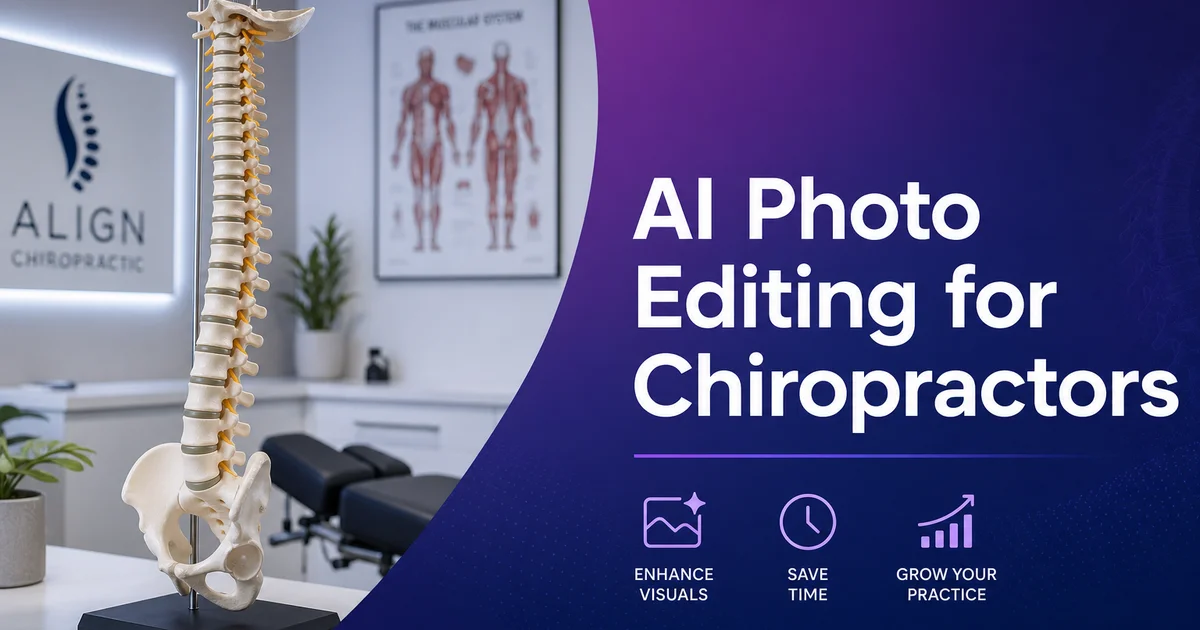
Les cabinets de chiropractie et les cliniques de physiothérapie sont intrinsèquement des entreprises visuelles. Le service principal — corriger la posture, restaurer l'alignement, améliorer l'amplitude des mouvements — produit des résultats qui sont mieux montrés par des images que décrits par des mots. Une paire avant-après montrant une amélioration de l'alignement des épaules ou une réduction de la posture de la tête en avant communique l'efficacité du traitement plus immédiatement que toute explication écrite. L'American Chiropractic Association souligne que le contenu visuel dans les supports marketing a un impact significatif sur l'acquisition de patients, car les patients potentiels peuvent voir le type de résultats qu'ils pourraient attendre.
Le défi est que les environnements cliniques ne sont pas conçus pour la photographie. Les salles de traitement ont des arrière-plans encombrés avec des tables d'ajustement, des bandes de résistance, des modèles anatomiques et des équipements médicaux. L'éclairage est souvent constitué de panneaux fluorescents ou LED au plafond qui créent des images plates et peu flatteuses avec des ombres dures. Le personnel qui capture les photos sont des experts en santé qui doivent prendre une photo rapide entre les rendez-vous sans avoir le temps de soigner l'éclairage ou la composition. Et sous-jacent à tout cela se trouve le besoin critique de conformité HIPAA. Toute image identifiable d'un patient utilisée dans le marketing nécessite un consentement écrit explicite.
Les outils de retouche photo IA répondent directement à ces défis de la photographie clinique. Magic Eraser supprime le désordre de la salle de traitement qui donne aux photos cliniques un aspect non professionnel à des fins marketing. AI Enhance corrige l'éclairage plafonnier agressif et améliore le contraste nécessaire pour voir les changements posturaux subtils dans les dossiers de suivi. Background Eraser crée des arrière-plans propres et cohérents pour les portraits d'équipe et les photos d'établissement. Ce guide couvre les flux de travail pratiques pour les cabinets de chiropractie et de physiothérapie, y compris les approches conformes à la HIPAA pour la photographie des patients à des fins de dossiers et de marketing.
- Magic Eraser supprime les tables de traitement, les équipements d'exercice et les planches anatomiques des arrière-plans cliniques pour créer des photos prêtes pour le marketing à partir de la photographie quotidienne du cabinet.
- AI Enhance corrige l'éclairage fluorescent plafonnier et améliore le contraste afin que les améliorations posturales subtiles soient visuellement claires dans la documentation avant-après des traitements.
- Background Eraser crée des arrière-plans cohérents et professionnels pour les portraits d'équipe sur la page de présentation de votre site web et les annuaires professionnels.
- La documentation posturale standardisée avec une position de caméra et un arrière-plan cohérents garantit que les comparaisons avant-après montrent de véritables progrès plutôt que des variations d'angle.
- Les bibliothèques de contenu éducatif avec des images d'exercices et de posture éditées positionnent votre cabinet comme une autorité tout en améliorant l'observance des patients pour les programmes à domicile.
Documentation posturale montrant les véritables progrès du traitement
La photographie de documentation posturale sert deux objectifs dans un cabinet de chiropractie ou de physiothérapie — les dossiers cliniques et le contenu marketing. Pour les dossiers cliniques, les photos doivent montrer avec précision la posture du patient à des moments spécifiques du calendrier de traitement, avec un cadrage cohérent permettant une comparaison visuelle valide. Pour le marketing, les mêmes photos doivent avoir un aspect suffisamment professionnel pour instaurer la confiance sur un site web ou les réseaux sociaux. Atteindre les deux objectifs nécessite un dispositif photographique standardisé qui produit des images toujours correctement cadrées et bien éclairées à chaque rendez-vous.
Installez un poste de documentation dédié avec un arrière-plan uni, des marquages au sol fixes pour le positionnement du patient. Un support de caméra fixe ou une position marquée. L'arrière-plan doit être d'une seule couleur unie. Le gris clair ou le bleu clair fonctionne le mieux car ces couleurs offrent un contraste avec la plupart des vêtements sans être distrayantes. Le patient doit se tenir au même endroit marqué à chaque fois. La caméra doit être positionnée à la même hauteur et distance. Cela élimine les variables qui peuvent rendre les comparaisons posturales trompeuses. Un angle de caméra légèrement différent peut faire paraître des épaules alignées comme inégales ou vice versa.
Prenez un ensemble standard de quatre photos à chaque séance de documentation : vue de face, vue de dos et les deux vues latérales. L'American Physical Therapy Association recommande ce standard à quatre vues pour une documentation complète de l'évaluation posturale. Les vues latérales sont particulièrement importantes pour les cabinets de chiropractie car elles montrent clairement la posture de la tête en avant, la cyphose thoracique et la lordose lombaire. Les conditions les plus couramment traitées et les plus visuellement frappantes dans les comparaisons avant-après. Une documentation cohérente à quatre vues de l'admission jusqu'à la sortie crée un récit visuel puissant des progrès du traitement.
- Utilisez un poste de documentation dédié avec des marquages au sol fixes, un arrière-plan uni gris clair ou bleu, et une position de caméra cohérente pour chaque séance.
- Standardisez le protocole à quatre vues — face, dos et les deux vues latérales — pour une documentation posturale complète à chaque rendez-vous.
- Les vues latérales sont les plus précieuses pour le marketing avant-après car elles montrent clairement les corrections de la posture de la tête en avant, de la cyphose et de la lordose.
- Un cadrage cohérent élimine les variables qui rendent les comparaisons posturales trompeuses — des angles différents peuvent faire paraître des épaules alignées comme inégales.
Nettoyage des arrière-plans cliniques pour des images prêtes pour le marketing
Une photo de documentation posturale prise dans une salle de traitement raconte bien l'histoire clinique mais paraît encombrée à des fins marketing. Derrière le patient, vous pourriez voir une table d'ajustement, un support de bandes de résistance, un modèle de colonne vertébrale anatomique, des tableaux d'exercices muraux. Le bord d'un écran d'ordinateur affichant des dossiers patients. Ces éléments conviennent pour les dossiers cliniques où le contexte est approprié. Pour une galerie avant-après sur un site web ou une publication sur les réseaux sociaux concernant les résultats de traitement, le désordre clinique réduit l'impact professionnel et peut même soulever des préoccupations en matière de confidentialité des patients si d'autres informations patient sont visibles en arrière-plan.
Magic Eraser supprime sélectivement ces éléments d'arrière-plan tout en conservant le patient (ou le modèle consentant) et les informations posturales pertinentes. Commencez par supprimer tout élément susceptible de contenir des informations patient — écrans d'ordinateur, porte-documents, dossiers et plannings de rendez-vous. Ensuite, supprimez les éléments les plus visuellement distrayants. Les bandes de résistance aux couleurs vives, le modèle squelettique et toute décoration murale ou signalétique. Laissez le mur et le sol unis visibles pour que l'image conserve sa qualité documentaire plutôt que de ressembler à un composite de studio.
Pour les photos d'équipe avec patient utilisées en marketing — un chiropracteur effectuant une démonstration de technique d'ajustement, un physiothérapeute guidant un patient dans un exercice — la même approche de nettoyage sélectif s'applique. Supprimez le désordre derrière l'interaction tout en conservant suffisamment de contexte clinique pour communiquer qu'il s'agit d'un véritable établissement de santé. Les patients qui parcourent votre site web veulent voir que votre cabinet est propre, moderne et professionnel. Ils n'ont pas besoin de voir le contenu des armoires de rangement ou l'enchevêtrement de câbles d'appareil TENS sur le comptoir derrière la table de traitement.
- Priorisez la suppression de tout élément d'arrière-plan susceptible de contenir des informations patient — écrans, porte-documents et plannings de rendez-vous.
- Supprimez les équipements aux couleurs vives comme les bandes de résistance et les modèles anatomiques qui rivalisent visuellement avec le sujet de la documentation posturale.
- Préservez suffisamment de l'environnement clinique pour communiquer le professionnalisme — un mur et un sol propres maintiennent l'authenticité documentaire.
- Pour les photos de démonstration de traitement, nettoyez l'arrière-plan tout en conservant suffisamment de contexte clinique pour montrer un véritable établissement de santé.
Photographie patient conforme à la HIPAA pour le marketing du cabinet
Tout cabinet de chiropractie ou de physiothérapie utilisant des images de patients dans son marketing doit naviguer soigneusement dans les exigences HIPAA. Les photos identifiables de patients — y compris les documents posturaux montrant le visage d'un patient, des tatouages distinctifs ou d'autres caractéristiques identifiantes — nécessitent une autorisation écrite explicite pour une utilisation marketing en vertu de la règle de confidentialité HIPAA. Cette autorisation doit préciser comment les images seront utilisées, où elles apparaîtront et pendant combien de temps. Elle doit être distincte du consentement général au traitement et ne peut pas être une condition de réception des soins. Le Département américain de la Santé et des Services sociaux fournit des directives détaillées sur l'intersection de la photographie des patients et de la conformité HIPAA.
De nombreux cabinets de chiropractie trouvent plus pratique d'utiliser des membres du personnel, des proches ou des modèles engagés pour les démonstrations posturales marketing plutôt que de véritables photos de patients. Ces personnes ne sont pas des patients dans le contexte des photos, donc la HIPAA ne s'applique pas. Bien que vous devriez tout de même obtenir des formulaires standards de cession de droits à l'image. Pour les véritables résultats avant-après de patients, envisagez de recadrer ou d'utiliser Background Eraser pour supprimer les caractéristiques identifiantes tout en conservant les informations posturales. Une vue latérale montrant l'amélioration de la position de la tête et de l'alignement de la colonne vertébrale peut être recadrée pour ne montrer que le torse et la tête de dos, rendant le patient non identifiable tout en montrant le résultat du traitement.
Pour les témoignages sur les réseaux sociaux où un patient souhaite partager son histoire, demandez-lui de publier sur son propre compte et de taguer votre cabinet. Cela modifie la dynamique du consentement car le patient choisit de partager publiquement ses propres informations de santé. Vous pouvez ensuite partager ou republier leur contenu. Cette approche est à la fois conforme à la HIPAA et plus authentique que les témoignages initiés par le cabinet. Les patients potentiels font davantage confiance aux avis de pairs qu'aux histoires de succès organisées par le cabinet. Conservez toujours les formulaires d'autorisation signés même pour les patients enthousiastes qui consentent verbalement. Le consentement verbal est insuffisant en vertu de la HIPAA.
- Les photos identifiables de patients nécessitent une autorisation HIPAA écrite spécifique pour une utilisation marketing — distincte des formulaires de consentement général au traitement.
- L'utilisation de personnel ou de modèles pour les démonstrations posturales évite la complexité HIPAA tout en produisant du contenu marketing efficace.
- Recadrez ou utilisez Background Eraser pour supprimer les caractéristiques identifiantes des photos de suivi de patients tout en préservant les informations posturales pour le marketing.
- Les témoignages sur les réseaux sociaux initiés par les patients qui taguent votre cabinet sont conformes à la HIPAA et plus fiables aux yeux des patients potentiels que le contenu créé par le cabinet.
Photographie professionnelle d'établissement et d'équipe pour la présence en ligne
Au-delà des dossiers patients, les cabinets de chiropractie et de physiothérapie ont besoin de photos professionnelles de l'établissement et de l'équipe pour leur site web, leur Google Business Profile, les annuaires professionnels et les réseaux sociaux. Lorsqu'un patient potentiel recherche un chiropracteur et trouve votre fiche Google, les photos de votre profil influencent considérablement sa décision de prendre rendez-vous. Un cabinet avec des photos d'établissement lumineuses, propres et d'aspect moderne et des portraits d'équipe professionnels établit une crédibilité immédiate par rapport à un cabinet sans photos ou avec des images cliniques sombres et encombrées.
Pour les photos d'établissement, photographiez chaque salle de traitement, la zone d'accueil, l'espace d'exercice ou de rééducation, et l'extérieur de votre bâtiment. AI Enhance corrige l'éclairage plafonnier qui donne aux espaces cliniques un aspect institutionnel, apportant chaleur et luminosité aux images. Magic Eraser supprime tout désordre, objets personnels ou équipements obsolètes qui nuisent à l'impression moderne et propre que vous souhaitez transmettre. Concentrez-vous sur les éléments qui importent aux patients. La propreté de l'espace, la qualité de l'équipement et l'atmosphère générale du cabinet.
Pour les portraits d'équipe, la cohérence importe plus que la perfection individuelle. Toutes les photos du personnel sur votre site web devraient avoir le même arrière-plan, un éclairage similaire et un recadrage cohérent. Background Eraser rend cela facile — photographiez chaque membre de l'équipe au même endroit avec n'importe quel arrière-plan, puis remplacez tous les arrière-plans par une couleur ou un dégradé cohérent. Harmonisez l'arrière-plan avec les couleurs de marque de votre cabinet pour un design de site web cohésif. Incluez ces portraits cohérents sur votre page de présentation, les annuaires comme Healthgrades et Zocdoc. Google Business Profile pour présenter une image d'équipe unifiée et professionnelle sur chaque plateforme.
- Les photos Google Business Profile influencent considérablement la décision des patients potentiels de prendre rendez-vous — des photos d'établissement lumineuses et propres établissent une crédibilité immédiate.
- AI Enhance corrige l'éclairage plafonnier institutionnel dans les espaces cliniques, donnant aux salles de traitement un aspect chaleureux et accueillant dans les photos du site web.
- Background Eraser crée des portraits d'équipe cohérents avec des arrière-plans assortis pour toutes les photos du personnel, assurant une présence cohésive sur le site web et les annuaires.
- Photographiez la zone d'accueil, les salles de traitement, l'espace d'exercice et l'extérieur — ce sont les images que les patients utilisent pour évaluer votre cabinet avant leur visite.
Contenu éducatif qui construit l'autorité et l'observance des patients
Les cabinets de chiropractie et de physiothérapie possèdent un avantage de contenu intégré que la plupart des petites entreprises n'ont pas. Un réservoir profond de matériel éducatif que leurs patients recherchent activement. Routines d'étirements, exercices de correction posturale, guides d'installation ergonomique du bureau, démonstrations de techniques de levage correctes. Le contenu éducatif spécifique aux pathologies sert le double objectif d'aider les patients existants à suivre leurs plans de traitement et de positionner votre cabinet comme une autorité pour les patients potentiels qui vous découvrent via la recherche ou les réseaux sociaux.
Créez une bibliothèque de photos de démonstration d'exercices et d'étirements avec un montage propre et professionnel. Photographiez un membre de l'équipe ou un modèle effectuant chaque exercice sur un arrière-plan propre, utilisez AI Enhance pour assurer un détail net et un bon éclairage. Utilisez Background Eraser si l'arrière-plan original est une salle de traitement encombrée. Annotez les images avec les noms des exercices, le nombre de répétitions et les points clés de forme. Ces images deviennent du contenu polyvalent — elles vont dans les PDF de fiches patients, les newsletters par email, les publications éducatives Instagram et les pages de ressources du site web. Une seule séance photo de vingt exercices courants, éditée en lot, fournit des mois de contenu.
Les publications éducatives sur les réseaux sociaux surpassent systématiquement le contenu promotionnel pour les cabinets de santé. Une publication carousel montrant cinq étirements de bureau pour les travailleurs de bureau touche au-delà de votre base de patients existante un public plus large de personnes souffrant de douleurs dorsales et cervicales. Une infographie montrant la posture correcte versus incorrecte de levage est sauvegardée et partagée par les abonnés qui la trouvent véritablement utile. Ce contenu éducatif construit une communauté sur les réseaux sociaux de personnes qui font confiance à votre expertise. Lorsqu'elles auront finalement besoin de soins chiropractiques ou de physiothérapie, votre cabinet est le premier auquel elles pensent car vous leur avez apporté de la valeur via leur fil d'actualité pendant des semaines ou des mois avant même qu'elles ne prennent rendez-vous.
- Les photos de démonstration d'exercices servent un double objectif — fiches d'observance pour les patients et contenu de construction d'autorité sur les réseaux sociaux à partir des mêmes images éditées.
- Photographiez en lot vingt exercices courants en une seule séance, éditez avec AI Enhance et Background Eraser, et générez des mois de contenu multiplateforme.
- Les publications carousel éducatives sur les étirements, la posture et l'ergonomie touchent au-delà de votre base de patients et surpassent le contenu promotionnel sur les réseaux sociaux.
- Un contenu éducatif régulier construit une communauté d'abonnés qui font confiance à votre expertise et choisissent votre cabinet en premier lorsqu'ils ont besoin de soins.
How to do it
- 1
Set up a consistent posture documentation station in your practice
Designate a specific wall or area in your practice for all posture and progress photography. Use a plain background — a solid-colored wall or a retractable backdrop — with floor markings where the patient stands for consistent framing. Mark the camera position as well so every photo is taken from the same distance and height. This standardization ensures that before-and-after comparisons show real postural changes rather than variations in camera angle or distance. Natural light from a nearby window is ideal. Consistent overhead LED lighting works well if you position the patient to avoid harsh shadows.
- 2
Remove clinical background distractions with Magic Eraser
Even a dedicated photo area may have visible treatment tables, exercise equipment, anatomy charts, or other clinical elements in the background. Magic Eraser removes these distractions from photos intended for marketing and social media. For patient progress photos used in treatment records, keep the clinical context. For website and social media content, clean backgrounds focus attention on the posture correction results and create a more polished, expert impression that builds patient trust.
- 3
Enhance posture documentation photos with AI Enhance
Clinical lighting often creates flat, low-contrast images that make it difficult to see subtle postural changes. AI Enhance improves contrast and sharpness so that improvements in shoulder alignment, spinal curvature. Head position are visually clear in before-and-after comparisons. The boost is mainly important for records that will be shared with patients to show their progress. Clearer images build confidence in the treatment plan and improve patient compliance with home exercise programs.
- 4
Create professional facility photos with Background Eraser
For website hero images and directory listings, photograph your treatment rooms, adjustment tables. Equipment, then use Background Eraser to isolate specific elements or create clean compositions. A well-lit photo of your adjustment table against a clean background shares professionalism and modern equipment. For team headshots, Background Eraser creates consistent, expert backgrounds across all staff photos for your website's about page and directory profiles.
- 5
Build an educational content library for patient engagement
Create a library of annotated posture photos, exercise demonstration images, and treatment explanation visuals. Photograph common exercises and stretches your practice recommends, edit them for clarity and clean backgrounds. Use them in patient handouts, email newsletters, and social media educational posts. This content positions your practice as an authority, improves patient compliance with prescribed exercises. Generates organic social media engagement from followers who find the educational content valuable enough to save and share.
Sources
- Digital Marketing for Chiropractic Practices — American Chiropractic Association
- Visual Documentation Standards in Physical Therapy — American Physical Therapy Association
- Patient Photography and HIPAA Compliance in Healthcare Marketing — U.S. Department of Health and Human Services