
Removing Clutter from Interior Shots
Digitally declutter rooms by removing personal items, excess furniture, and visual distractions.
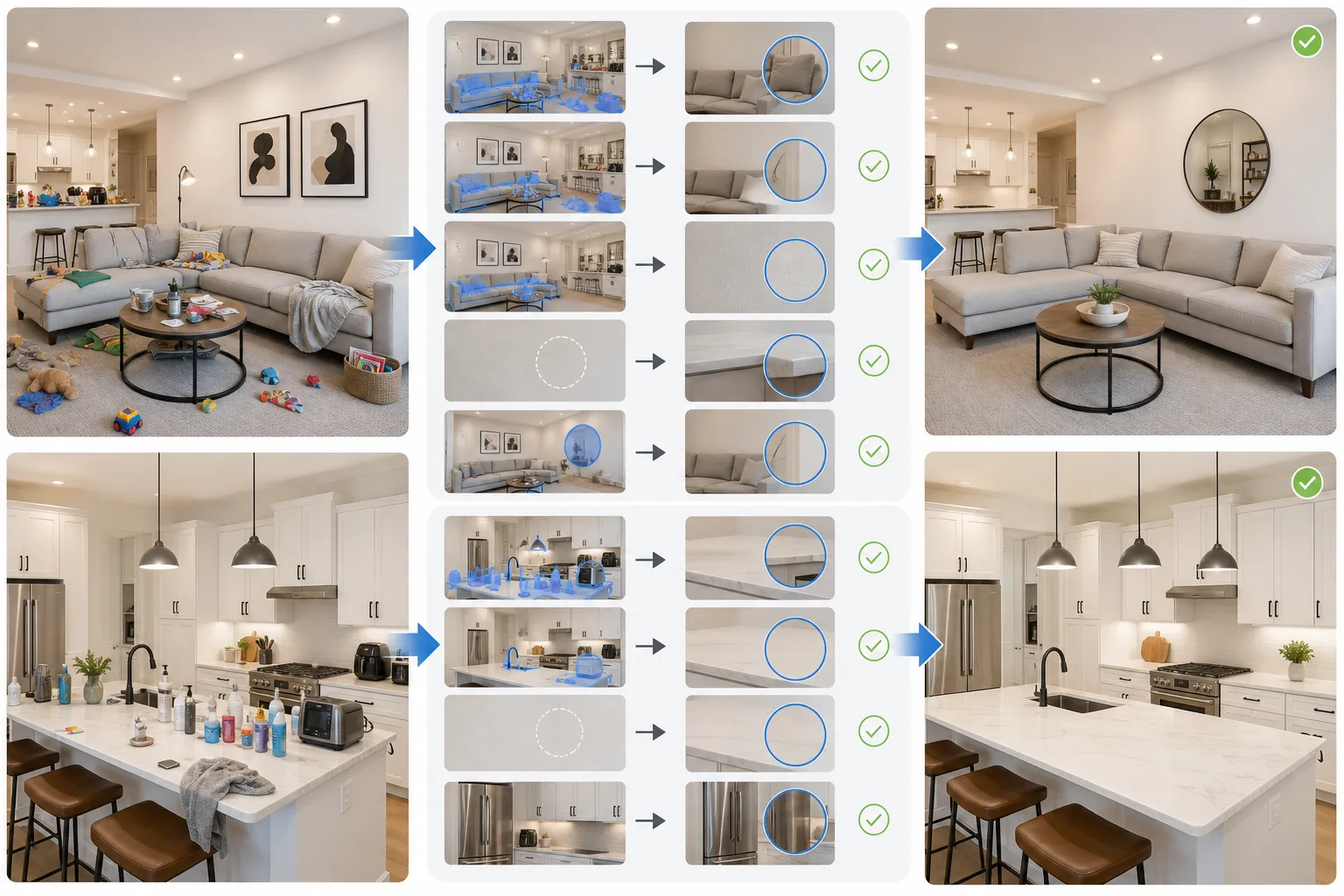
Lesson context before the long read
Review the result preview above, then scan the learning objectives below before reading the full lesson. Updated 2026-05-17.
Example visual uses an existing public asset: /content-images/real-estate-decluttering-interiors-academy.webp.
Learning Objectives
- 1Identify which items to remove for maximum visual impact without misrepresenting the space
- 2Remove personal items like family photos, toiletries, and refrigerator magnets cleanly
- 3Handle reflective surfaces and mirrors that complicate object removal
Identifying what to remove from room photos
Buyers need to envision themselves living in a space, and personal belongings make that difficult. The priority removal list includes family photos, religious items, children's artwork on refrigerators, toiletries on bathroom counters, excessive small appliances on kitchen surfaces, and any collecting displays that dominate a shelf or mantel. These items are emotionally meaningful to the seller but visually distracting to a buyer scanning listings. Removing them creates a neutral canvas that appeals to the broadest possible audience without misrepresenting the physical space.
Preserving room scale during digital cleanup
Use Magic Eraser's AI object removal to select and erase each item. For countertop items, the AI fills the cleared area with the counter surface texture, which is typically straightforward. Wall-mounted items like picture frames require the AI to reconstruct the wall color and texture behind them, including any shadow patterns. If the wall has a distinct texture like exposed brick or wallpaper with a pattern, zoom in after removal to verify the pattern continuity. Multiple small removals on the same wall are best done one at a time from largest to smallest to give the AI the most intact reference data for each subsequent fill.
Ethical guidelines for virtual decluttering
Mirrors and glossy surfaces add a layer of complexity because they reflect the room, and removing an object near a mirror means the AI must also handle the reflected image of that object. If the reflected object is small or partially visible, Magic Eraser usually handles it automatically. For large reflections, you may need to make a separate removal pass on the mirror surface after cleaning the real object. Glass-front cabinets and polished granite countertops present similar challenges. Work on the primary surface first, then address any reflections in a second, targeted pass.
Key Takeaways
- ✓Remove personal items, excess decor, and countertop clutter to create a neutral buyer canvas
- ✓Process multiple wall removals from largest to smallest to preserve pattern continuity
- ✓Handle mirror and reflective-surface removals in a separate pass after cleaning the primary object