
사진에서 워터마크를 제거하는 방법
워터마크는 지적 재산을 보호하지만 나중에 구입한 스톡 사진 미리 보기, 최종 배송을 받은 고객 교정본, 실수로 카메라 날짜 스탬프 등 자신의 사진에 워터마크가 나타날 경우 깨끗하게 제거되어야 합니다. Magic Eraser은 텍스트 오버레이, 로고 스탬프 및 반투명 워터마크를 제거하는 동시에 그 아래의 이미지 세부 사항을 재구성합니다.
Last updated
지금 워터마크 제거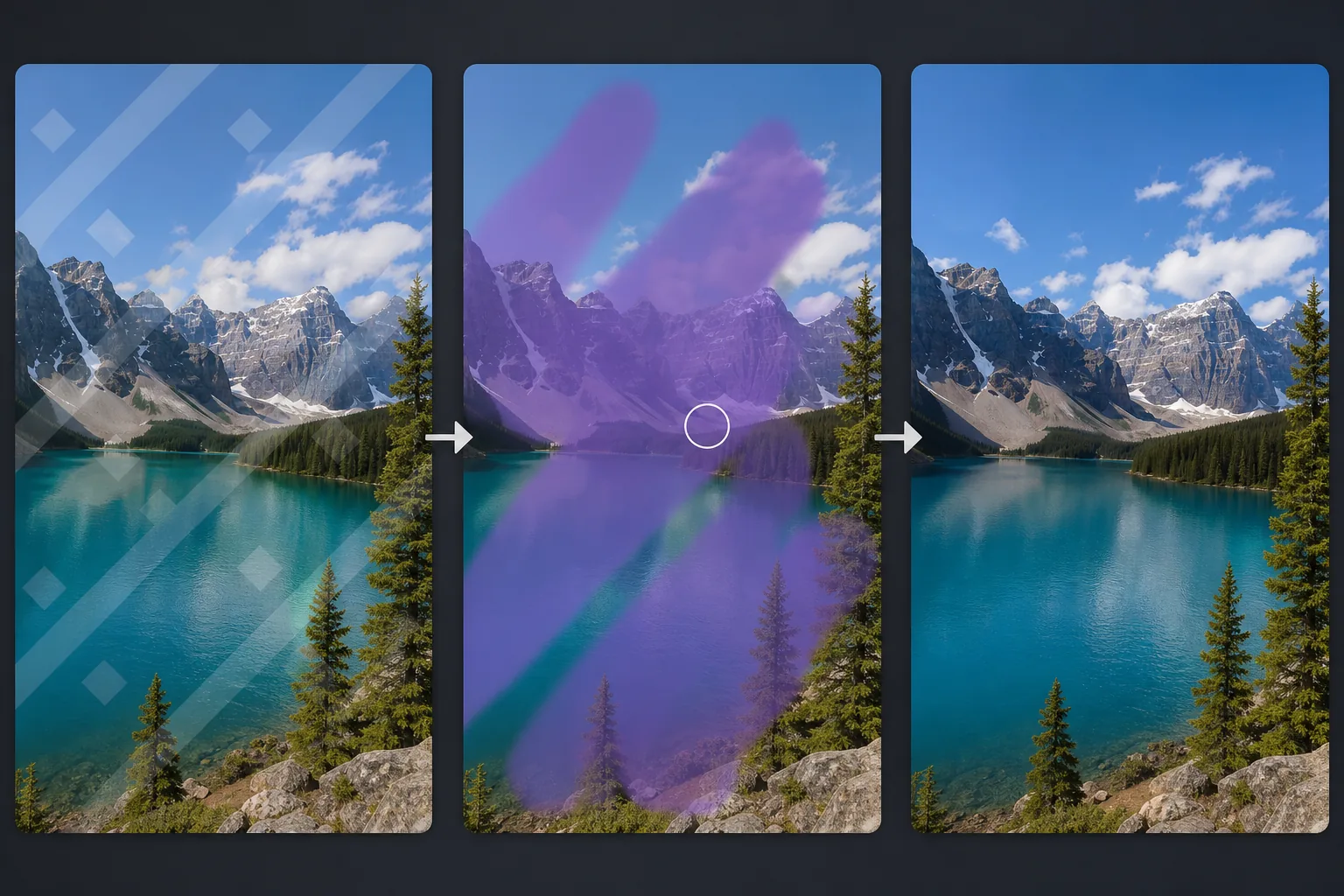
워터마크 제거가 적절한 경우
사진에서 워터마크를 제거하려면 웹, iOS 또는 Android에서 Magic Eraser를 열고 이미지를 업로드한 다음, 워터마크 전체 — 텍스트, 로고, 대각선으로 반복되는 패턴 — 위를 브러시로 칠하고 Erase를 탭하세요. AI가 워터마크 아래의 이미지 디테일을 주변 콘텐츠를 바탕으로 복원하므로, 해당 영역이 뭉개지지 않고 깔끔하게 보입니다. 무료이며 회원 가입도 필요 없습니다. 본인이 소유했거나 사용 권한이 있는 이미지에만 사용하세요 — 워터마크를 제거해 타인의 저작권이 있는 사진을 재사용하는 것은 저작권 침해이며, 이 도구는 원래 없던 권리를 부여해 주지 않습니다. 워터마크 제거는 귀하가 이미지를 소유하고 있거나 라이센스를 구매한 경우 합법적입니다. 일반적인 시나리오에는 정식 라이센스를 구입한 후 스톡 사진에서 미리 보기 워터마크 제거(워터마크가 없는 버전을 사용할 수 없거나 분실된 경우), 비활성화하는 것을 잊은 카메라 설정에서 날짜 스탬프 정리, 용도를 변경하려는 사진에서 자신의 브랜드 제거, 최종 배송이 승인된 후 클라이언트 교정본 정리 등이 포함됩니다. Magic Eraser의 AI는 텍스트, 로고 또는 반투명 오버레이 등 워터마크 패턴을 분석하고 주변 컨텍스트를 사용하여 그 아래의 이미지 콘텐츠를 재구성합니다. 이 도구는 불투명 워터마크(이미지 위의 단색 텍스트)와 반투명 워터마크(아래 이미지와 혼합되는 반투명 오버레이)를 모두 처리하지만 반투명 워터마크는 일반적으로 더 많은 원본 이미지 데이터가 보존되기 때문에 더 깔끔한 결과를 생성합니다.
Before you start
4단계로 워터마크 제거
Start with 워터마크가 있는 이미지 업로드. The result preview above and tips below use this guide's existing content; no separate before-and-after proof is assumed.
- 1
워터마크가 있는 이미지 업로드
웹, iOS 또는 Android에서 Magic Eraser을 열고 워터마크가 포함된 사진을 업로드하세요. 사용 가능한 최고 해상도 버전을 사용하세요. 픽셀 데이터가 많을수록 AI가 워터마크 아래 영역을 재구성하기 위한 더 나은 컨텍스트를 제공합니다.
- 2
워터마크를 브러시로 칠하세요.
테두리 또는 그림자 효과를 포함하여 전체 워터마크 위에 페인트합니다. 텍스트 워터마크의 경우 각 텍스트 줄을 완전히 덮습니다. 로고 워터마크의 경우 배경 패딩을 포함하여 전체 로고를 덮습니다. 이미지 전체에 걸쳐 반복되는 대각선 워터마크의 경우 각 인스턴스를 브러시로 칠하거나 넓은 스트로크를 사용하여 전체 패턴을 덮습니다.
- 3
지우기를 탭하세요
Magic Eraser은 워터마크를 제거하고 기본 이미지를 재구성합니다. 복잡한 콘텐츠(얼굴, 세부 질감) 위의 불투명 워터마크의 경우 AI는 주변 상황을 기반으로 아래에 무엇이 있는지 추론합니다. 반투명 워터마크의 경우 AI는 원본 이미지 데이터에서 오버레이를 분리합니다. 100% 확대/축소로 결과를 확인하세요. 워터마크가 고해상도 콘텐츠와 교차하는 영역에는 두 번째 패스가 필요할 수 있습니다.
- 4
검토 및 내보내기
워터마크가 있는 원본과 깨끗한 이미지를 비교하세요. 이전에 워터마킹된 영역의 얼굴, 텍스트 및 미세한 세부 사항이 자연스럽고 주변 이미지와 일치하는지 확인합니다. 워터마크 흔적이 남아 있는 경우(희미한 윤곽선, 약간의 색상 변화) 해당 특정 영역에 대상으로 두 번째 패스를 실행합니다. 전체 해상도로 내보냅니다.
다음에 가장 적합
- 워터마크가 없는 버전을 사용할 수 없거나 분실된 구매한 스톡 사진
- 촬영 중에 실수로 활성화된 설정의 카메라 날짜 스탬프
- 최종 납품 및 라이센스 완료 후 고객 증명사진
- 다른 맥락에 맞게 용도 변경이 필요한 나만의 브랜드 사진
- 처리 실험실 스탬프 또는 프레임 표시가 있는 스캔 사진
- 내장된 UI 워터마크가 포함된 스크린샷 및 화면 캡처
깨끗한 워터마크 제거를 위한 팁
워터마크 제거 품질은 워터마크 유형과 적용 대상에 따라 다릅니다. 균일한 영역(하늘, 벽, 단색 배경) 위의 텍스트 워터마크는 주변 콘텐츠를 예측할 수 있기 때문에 탁월한 결과를 생성합니다. 복잡한 콘텐츠(얼굴, 세부 패턴)에 대한 텍스트 워터마크는 AI가 더 많은 것을 추론해야 하며 결과에는 수정 과정이 필요할 수 있습니다. 기본 이미지와 혼합되는 반투명 워터마크는 아래 내용을 완전히 가리는 완전 불투명 워터마크보다 더 쉽습니다. 대각선 반복 워터마크(스톡 미리보기 이미지에서 흔히 발생)의 경우 각 워터마크 인스턴스를 개별적으로 처리하는 대신 전체 이미지를 한 번에 처리합니다. 이는 AI가 재구성 전반에 걸쳐 일관성을 유지하는 데 도움이 됩니다. 사진 모서리에 있는 날짜 스탬프의 경우 모서리 내용이 일반적으로 단순하기 때문에(하늘, 땅, 배경) 제거가 일반적으로 간단합니다. 워터마크를 제거하기 전에 워터마크 없이 이미지를 사용할 수 있는 법적 권리가 있는지 항상 확인하세요.
자주 묻는 질문
- 사진에서 워터마크를 제거하는 것이 합법적인가요?
- 이는 이미지에 대한 귀하의 권리에 따라 다릅니다. 귀하가 소유한 사진, 라이선스를 구매한 사진 또는 귀하의 브랜드 콘텐츠에서 워터마크를 제거하는 것은 합법적입니다. 저작권이 있는 이미지를 라이센스 없이 사용하기 위해 워터마크를 제거하는 것은 저작권 침해입니다. Magic Eraser은 도구입니다. 사용자는 워터마크가 없는 이미지를 사용할 권리가 있는지 확인할 책임이 있습니다.
- 반투명 워터마크를 제거할 수 있나요?
- 예. 반투명 워터마크는 오버레이 아래에 더 많은 원본 이미지 데이터가 표시되기 때문에 실제로 불투명 워터마크보다 더 나은 결과를 생성합니다. AI는 워터마크 레이어를 이미지 콘텐츠에서 분리하고 깨끗한 이미지를 재구성합니다.
- 얼굴 위의 워터마크는 어떻습니까?
- AI는 워터마크 주변에 보이는 얼굴 부분을 기반으로 얼굴 특징을 재구성합니다. 워터마크가 얼굴의 제한된 영역을 덮고 충분한 얼굴 맥락이 표시될 때 결과가 가장 좋습니다. 얼굴 대부분을 덮는 워터마크의 경우 재구성 정확도가 다를 수 있습니다.
- 무료인가요?
- 예. Magic Eraser의 무료 등급은 일일 사용량 한도에 따라 워터마크 제거를 처리합니다. 프리미엄(연간 $29.99)은 제한을 제거하고 고해상도 내보내기를 제공합니다.
- Android나 iPhone에서 사진의 워터마크를 어떻게 제거하나요?
- 모바일 브라우저나 iOS 또는 Android 앱에서 Magic Eraser를 열고, 카메라 롤에서 사진을 불러온 다음, 손가락으로 핀치 줌해 워터마크를 정확하게 따라갈 수 있게 하세요. 워터마크 전체 — 모든 텍스트 줄, 로고 전체, 또는 반복되는 패턴의 각 부분 — 위를 손가락으로 브러시질하고 Erase를 탭하세요. AI가 폰에서 바로 그 아래 영역을 복원하고 깔끔해진 이미지를 카메라 롤에 다시 저장합니다. 데스크톱 버전과 동일하게 작동하며, 브라우저를 사용하면 앱 설치도 필요 없습니다. 늘 그렇듯, 사용 권한이 있는 이미지에만 이 작업을 하세요.