
Completar Escenas Parciales
Rellena las áreas faltantes de las fotos, incluidos los huecos de los panoramas, las regiones dañadas y las composiciones recortadas, utilizando la generación de escenas impulsada por IA.
Lesson context before the long read
Review the result preview above, then scan the learning objectives below before reading the full lesson. Updated 2026-05-17.
Example visual uses an existing public asset: /content-images/generative-fill-scene-completion-academy.webp.
Learning Objectives
- 1Usar el relleno generativo para reparar huecos y costuras en el cosido panorámico
- 2Restaurar secciones faltantes de fotografías históricas dañadas o incompletas
- 3Expandir composiciones muy ajustadas para añadir espacio y mejorar el equilibrio visual
Cómo el completado de escenas rellena las áreas faltantes
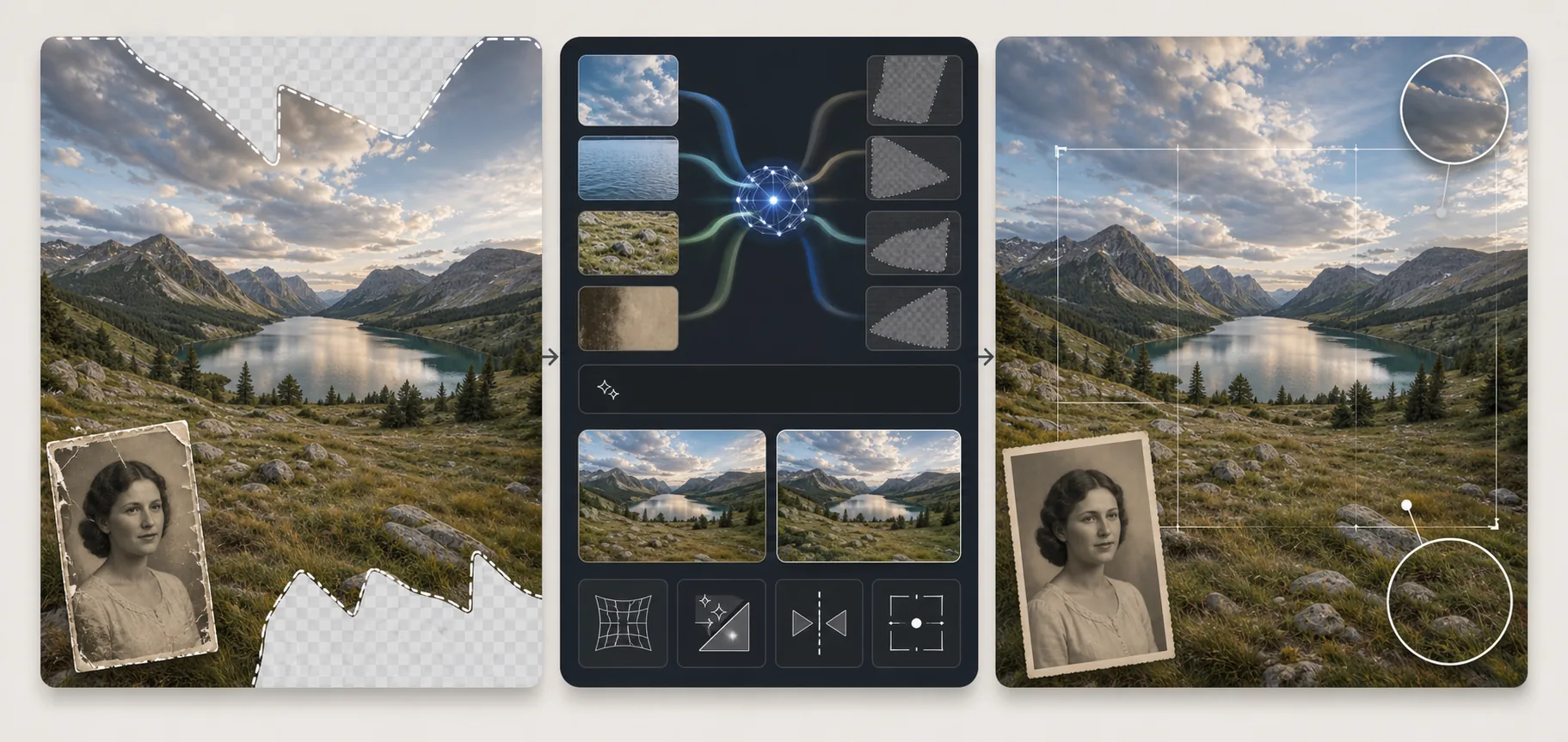
Las fotos panorámicas suelen tener bordes irregulares y huecos donde el algoritmo de cosido no pudo encontrar una superposición coincidente entre fotogramas. Estos vacíos triangulares en la parte superior e inferior de un panorama se recortan tradicionalmente, lo que sacrifica área de imagen y puede eliminar detalles interesantes del primer plano o del cielo. El relleno generativo puede completar estos huecos analizando el contenido cosido adyacente y generando una continuación coherente de la escena. Para los panoramas de paisajes, el modelo destaca rellenando cielo, agua y texturas de suelo natural porque estos patrones están bien representados en sus datos de entrenamiento.
Trabajar con grandes regiones de eliminación
La restauración de fotos es otra potente aplicación del completado de escenas. Las fotografías antiguas pueden tener esquinas rasgadas, daños por agua o secciones oscurecidas por cinta o residuos de adhesivo. Después de limpiar y escanear cuidadosamente el original dañado, selecciona las áreas dañadas y usa el relleno generativo para reconstruir lo que probablemente había allí según el contexto visual circundante. Para los retratos con áreas de fondo faltantes, el modelo puede generar interiores de habitaciones plausibles, entornos exteriores o fondos de estudio. Para las porciones faltantes de un sujeto, como una esquina dañada que eliminó parte de una mano o de la ropa, el modelo usa pistas de simetría e información contextual para reconstruir la anatomía o el tejido faltante.
Mantener la coherencia visual entre los rellenos
La mejora de la composición mediante la ampliación del lienzo es una técnica sutil pero eficaz. Un retrato recortado demasiado ajustado en la parte superior de la cabeza puede ampliarse hacia arriba para añadir espacio. Un paisaje en el que un elemento importante del primer plano queda cortado en la parte inferior puede ampliarse hacia abajo. Al completar composiciones, piensa en la regla de los tercios y el equilibrio visual. Genera espacio adicional en el lado que lo necesite para mover el sujeto a una posición más dinámica dentro del marco. Evalúa el resultado de forma holística en lugar de solo comprobar la costura generada, porque el objetivo es una mejor composición general.
Key Takeaways
- ✓El relleno generativo elimina la necesidad de recortar los bordes del panorama al generar rellenos de huecos perfectos
- ✓La restauración de fotos se beneficia del relleno generativo para reconstruir áreas dañadas utilizando pistas contextuales
- ✓Amplía estratégicamente las composiciones muy ajustadas para mejorar la colocación del sujeto y el equilibrio visual