
İknologlar için AI Fotoğraf Düzenleme: İz Fosilleri ve İknofabrikleri Belgeleyin — Magic Eraser
İknologlar ve sedimanter jeologlar için uzman iz fosili fotoğrafçılığı düzenleme. Yuva kabartma güçlendirme, iknotakson izolasyonu, tabaka düzlemi kayıtları ve yayına hazır örnek levhaları için AI araçları.

Content Lead
İnceleyen Magic Eraser Editorial ·
İçindekiler
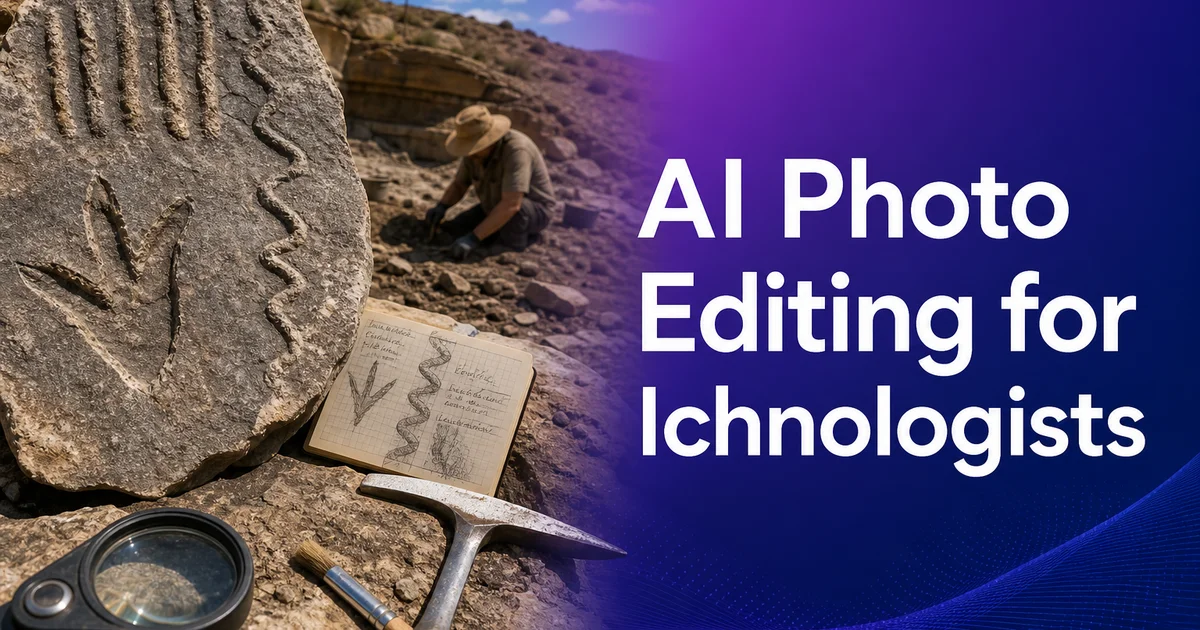
İknoloji — yuvalar, izler, patikalar ve oyuklar dahil iz fosillerinin incelenmesi. Tortul kayaçta korunan organizma davranışına dair diğer kanıtlar — neredeyse paleontolojinin diğer tüm dallarından daha kritik biçimde fotoğrafçılığa dayanır. Gövde fosilleri genellikle elde tutulan örnekte üç boyutlu nesneler olarak incelenebilirken, iz fosilleri çoğunlukla tabakalanma düzlemleri üzerinde ince kabartma özellikleri olarak ya da tam morfolojisinin yalnızca farklı açılardan ve aydınlatma koşullarından dikkatli fotoğrafik kayıtlarla anlaşılabildiği kaya hacimleri içinde korunur. Bir taş ocağı yüzeyinde açığa çıkmış bir Thalassinoides yuva ağı, bir kumtaşı tabakalanma düzlemini geçen bir dinozor iz hattı veya bir sondaj karotu kesitindeki yoğun bir Zoophycos spreite yapıları topluluğu, çevreleyen kaya yüzeyinin yalnızca milimetreler üstüne ya da altına çıkıntı yapabilen yapıların üç boyutlu kabartmasını yakalayan fotoğrafik kayıtlar gerektirir.
İz fosili fotoğrafçılığının kalıcı zorluğu, morfolojik bilginin renk veya bileşimsel karşıtlıktan ziyade yüzey kabartmasında kodlanmış olmasıdır. Çevreleyen matriksiyle aynı tortu türüyle dolmuş bir yuva, önden aydınlatmayla çekilen bir fotoğrafta görünmez olabilir, çünkü dolgu ve matriks aynı renk ve tondadır. Yuva yalnızca eğik aydınlatma, izin ana kayayla buluştuğu hafif topografik çöküntü veya yükseltide gölgeler oluşturduğunda saptanabilir. Kontrolsüz doğal aydınlatma altında saha fotoğrafçılığı çoğunlukla bu ince kabartma özelliklerini yakalayamaz ve mostrada gözle açıkça görülen iz fosillerinin fotoğrafta özelliksiz kaya yüzeyleri olarak göründüğü görüntüler üretir. Bu aydınlatma bağımlılığı, iknolojik fotoğrafçılığı özünde diğer çoğu jeolojik ve paleontolojik görüntüleme uygulamasından farklı kılar.
Yapay zeka fotoğraf düzenleme araçları, iz fosili fotoğrafçılığının özel zorluklarını kayıt iş akışının her aşamasında ele alır. AI Enhance, saha aydınlatma koşullarının düzleştirdiği yüzey kabartma ayrıntısını geri kazandırır, yuva hatlarını, duvar dokularını tanımlayan gölgeleri ve vurguları keskinleştirir. Farklı iz türleri arasındaki kesişen ilişkiler. Magic Eraser modern yüzey kirliliğini kaldırır. Liken, mineral lekelenmesi, erozyon kanalları — mostra fotoğraflarında iz fosili morfolojisini gizleyen şeyler. Background Eraser, sistematik tanımlama ve taksonomik karşılaştırma için karmaşık tabakalanma düzlemi topluluklarından bireysel iknotaksonları izole eder. Bu kılavuz, mostra jeolojisi, sondaj karotu analizi, neoiknoloji ve iknotaksonomik sistematik alanında çalışan iknologların özel kayıt ihtiyaçlarını ele alarak saha yakalamadan düzenlemeye ve yayına hazır çıktıya kadar tüm iş akışını kapsar.
- AI Enhance, iz fosili morfolojisini tanımlayan yüzey kabartma ayrıntısını geri kazandırır. Yuva hatları, duvar dokuları, dolgu yapıları ve kesişen ilişkiler — aydınlatma koşullarının ince topografik özellikleri sıkıştırdığı saha fotoğraflarından.
- Magic Eraser, mostra belgeleme fotoğraflarında iz fosili yapılarını gizleyen liken büyümesini, mineral lekelenmesini, modern erozyon kanallarını ve saha ekipmanı gölgelerini kaldırır.
- Background Eraser, birden çok iz türünün üst üste bindiği yoğun tabakalanma düzlemi topluluklarından bireysel iknotaksonları izole ederek sistematik tanımlamayı ve lokaliteler arası morfolojik karşılaştırmayı mümkün kılar.
- İz fosili topluluk serileri genelinde tutarlı iyileştirme, çökelme ortamının ve organizma topluluğu davranışının eksiksiz iknofabrik kaydını yakalayan tek tip kayıt kalitesi sağlar.
- Toplu dışa aktarma, tek bir düzenlenmiş ana fotoğraftan hakemli dergiler, iknolojik veri tabanları, saha tanımlama kılavuzları ve tortul jeoloji ders materyalleri için görüntüler üretir.
İz fosili belgelemesine özgü saha fotoğrafçılığı zorlukları
Mostra ortamlarında iz fosili fotoğrafçılığı, özünde gövde fosili kaydınınkinden farklı zorluklar ortaya koyar. Gövde fosilleri çoğunlukla en az bir görsel boyutta çevreleyen matriksleriyle karşıtlık oluşturur. Renk, doku, yansıtıcılık veya bileşimsel farklılık — onları çeşitli aydınlatma koşullarında fotoğrafik olarak saptanabilir kılan içsel görsel ayrımı sağlar. Buna karşılık iz fosilleri, çoğunlukla ana kayalarıyla aynı tortudan oluşur; çünkü ortam tortusunu farklı bir malzemeyle değiştirmek yerine yerinden oynatan, yeniden düzenleyen veya içinden geçen organizmalar tarafından oluşturulmuşlardır. Bir yuvayı çevreleyen matriksinden ayıran tek görsel sinyal, tane sıkışma yoğunluğundaki hafif bir fark, yığın tortudan farklı aşınmış mukus-keçe ince bir duvar astarı veya farklı sıkışma ya da aşınmanın izin tabakalanma yüzeyinden biraz çıkıntı yapmasına ya da altına gömülmesine neden olduğu topografik kabartma olabilir.
Sahada aydınlatma kontrolü, laboratuvar veya stüdyo koşullarına kıyasla ciddi şekilde sınırlıdır. İz fosili fotoğrafçılığı için ideal aydınlatma kuvvetle eğiktir. Kaya yüzeyinin on beş ila yirmi beş derece üzerinde konumlandırılmış bir ışık kaynağı — hafif topografik değişimlerde bile abartılı gölgeler oluşturur ve iz fosili kabartmasını büyük ölçüde görünür kılar. Sahada bu aydınlatma koşulu, güneşin açısının yatay ya da hafif eğimli tabakalanma yüzeylerini tırmıklayacak kadar alçak olduğu şafak ve alacakaranlıktaki dar zaman aralıklarında doğal olarak oluşur. Öğle vakti, güneş tepedeyken, dik aydınlatma kabartmalarını tanımlayan gölgeleri ortadan kaldırdığından yatay yüzeylerdeki iz fosilleri fotoğraflarda neredeyse görünmez hale gelir. Dik mostra yüzeyleri, yönelimlerine bağlı olarak farklı zamanlarda yeterli eğik aydınlatma alır. İknolog, fotoğraf programlarını her mostranın geometrisine göre planlamalıdır.
Ölçek ve erişilebilirlik, saha iz fosili fotoğrafçılığına başka karmaşıklıklar ekler. İknolojik özellikler, ince taneli tortulardaki milimetre ölçekli nematod izlerinden kumtaşı oluşumlarındaki metre ölçekli dinozor iz hatlarına kadar uzanır ve farklı fotoğrafik yaklaşımlar gerektiren üç büyüklük mertebesinden fazla boyut aralığını kapsar. Küçük izler hassas odak kontrolüyle makro fotoğraf yetenekleri gerektirirken, büyük iz hatları yükseltilmiş konumlardan geniş açılı kapsama gerektirir. Bazen tüm tabakalanma düzlemlerini kaplayan iz hattı haritaları için drone fotoğrafçılığı gerektirir. Mostra yüzeyleri dik kayalıklar, çıkıntılı çıkmalar veya su altındaki gelgit platformları olabilir; her biri kamera konumlandırma, aydınlatma kontrolü için farklı zorluklar sunar. Ortaya çıkan kayıt fotoğraflarının kalitesini etkileyen ölçek çubuğu yerleşimi.
- İz fosilleri çoğunlukla çevreleyen matriksle aynı bileşimi paylaşır ve bu da onları yalnızca eğik aydınlatma altında ince kabartma, farklı aşınma veya ince duvar astarı karşıtlığı yoluyla fotoğrafik olarak saptanabilir kılar.
- İdeal on beş ila yirmi beş derecelik aydınlatma açıları yalnızca şafak ve alacakaranlıkta doğal olarak oluşur ve güneş konumu ile mostra yüzü yönelimine göre planlanmış fotoğraf programları gerektirir.
- Özellik ölçekleri, milimetrelik nematod izlerinden metre ölçekli dinozor iz hatlarına kadar üç büyüklük mertebesini kapsar ve makrodan drone tabanlı belgelemeye kadar farklı fotoğrafik yaklaşımlar gerektirir.
- Dik kayalık yüzleri, çıkıntılı çıkmalar ve su altındaki gelgit platformlarının her biri, saha koşullarında kamera konumlandırma, aydınlatma kontrolü ve ölçek çubuğu yerleşimi için belirgin zorluklar sunar.
İz fosili kabartmasını ve tanısal morfolojik özellikleri geliştirme
İknotaksonları tanımlayan ve sistematik tespiti mümkün kılan morfolojik özellikler, izin üç boyutlu yapısında kodlanmıştır. Genel biçimi, kesit geometrisi, duvar özellikleri, dolgu yapısı ve çevreleyen tortuyla ve aynı topluluktaki diğer izlerle ilişkisi. AI Enhance, saha fotoğraflarının ideal olmayan aydınlatma koşulları nedeniyle bu morfolojik bilginin çoğunlukla yalnızca bir kısmını yakaladığı temel sorunu ele alır. Görüntüdeki bitişik tonal bölgeler arasındaki mikro-karşıtlığı seçici olarak artırarak, iyileştirme, orijinal aydınlatma onu yeterince yakalamak için fazla düz ya da fazla sert olduğunda bile iz morfolojisini tanımlayan gölge ve vurgu ayrıntısını geri kazandırır.
Duvar özellikleri iknolojideki en tanısal açıdan önemli özellikler arasındadır ve fotoğrafik olarak yakalanması en zor olanlar arasındadır. Bir Thalassinoides yuva sisteminin duvar astarı, onu kazan kabuklunun uzantılarından kalan, kabaca yuva eksenine paralel yönelimli ve iz yapıcının kazma uzuvlarının anatomisini yansıtan aralıklarla yerleşmiş çizik izlerini gösterir. Ophiomorpha yuva duvarları, yapımcının yapısal pekiştirme olarak yuva kenarına paketlediği, açığa çıkmış kesitlerde görülebilen pürüzlü topaklı bir doku oluşturan belirgin fekal peletlerle astarlanmıştır. Bu duvar dokuları çoğunlukla bir ila üç milimetre ölçeğinde korunur ve fotoğraflarda çözünmek için hem yeterli büyütme hem de eğik aydınlatma gerektirir. AI Enhance, saha koşullarının ulaşılabilir çözünürlüğü ve karşıtlığı sınırladığı görüntülerde bu dokuların görünürlüğünü geri kazandırır.
İzlerin içindeki dolgu yapıları, iz yapan organizmanın davranışı ve iz oluşumu sırasındaki çökelme ortamı hakkında kritik bilgi sağlar. Menisküslü geri dolgu — Taenidium ve Beaconites gibi izlerin içinde görülen üst üste yığılmış içbükey yukarı veya içbükey aşağı laminalar — organizma tortunun içinde hareket ettikçe yuvanın sıralı dolumunu kaydeder. Bireysel menisküslerin aralığı ve eğriliği tanısal açıdan başlıca önemdedir. Zoophycos ve Rhizocorallium gibi izlerdeki spreite yapıları, organizmanın beslenme veya barınma yuvasının ilerleyici yanal ya da dikey göçünü kaydeden U biçimli laminalardan oluşur ve geometrisi farklı iknotaksonları ayırt eden katmanlı yapılar yaratır. İyileştirme, bu dolgu yapıları içindeki bitişik laminalar arasındaki karşıtlığı keskinleştirerek bireysel menisküsleri ve spreite katmanlarını fotoğrafta sayılabilir ve ölçülebilir kılar.
- Mikro-karşıtlık iyileştirmesi, ideal olmayan aydınlatmanın ince topografik bilgiyi sıkıştırdığı saha fotoğraflarından iz morfolojisini tanımlayan gölge ve vurgu ayrıntısını geri kazandırır.
- Bir ila üç milimetre ölçeğindeki Thalassinoides duvar çizik izleri ve Ophiomorpha fekal pelet astarları, iyileştirme saha çözünürlüğü ve karşıtlık sınırlamalarına kaybedilen dokuları geri kazandırdığında görünür hale gelir.
- Taenidium ve Beaconites'teki menisküslü geri dolgu laminaları, iyileştirme sıralı dolgu katmanları arasındaki karşıtlığı keskinleştirdiğinde tek tek sayılabilir ve ölçülebilir hale gelir.
- Zoophycos ve Rhizocorallium izlerindeki spreite yapıları görünür bireysel laminalar kazanarak araştırma fotoğraflarında farklı iknotaksonları ayırt eden geometrik analizi mümkün kılar.
Tabaka düzlemi topluluk belgelemesi ve iknofabrik analizi
İknolojik tabakalanma düzlemleri sıklıkla aynı tortul ortamda aynı anda veya sırayla çalışan birden çok organizmadan gelen yoğun iz topluluklarını korur. Bu iknofabrik kayıtları — organizma topluluğunun kümülatif biyotürbasyon imzası — iknolojideki en değerli veri kaynakları arasındadır, çünkü bireysel organizmalardan ziyade tüm ekolojik toplulukların davranışını yakalarlar. İknofabrikleri belgelemek, tabakalanma yüzeyi boyunca üst üste binen, kesişen yapıların tüm karmaşıklığını yakalayan fotoğrafçılık gerektirir. Tabakalanma yüzeyi boyunca üst üste binmiş izler, çoğunlukla eksiksiz bir topluluk haritası oluşturmak için birden çok üst üste binen fotoğraftan birleştirilmesi gereken birkaç metrekarelik alanları kaplar.
İzler arasındaki kesişen ilişkiler, tabakalanma yüzeyinde kaydedilen biyolojik etkinliğin zamansal dizisi hakkında kritik bilgi sağlar. Daha sonraki bir Planolites yatay yuvası tarafından kesilen bir Skolithos dikey yuvası, Planolites yapan organizmanın Skolithos yapıcısından sonra etkin olduğunu ortaya koyar. Topluluk genelindeki tüm bu kesişen ilişkilerin sistematik kaydı, topluluğun davranışsal stratigrafisini oluşturur. AI Enhance, bir izin diğerinin duvar veya dolgu yapısını bozduğu iz kesişimlerinde karşıtlığı keskinleştirerek bu kesişen ilişkileri fotoğraflarda görünür kılar. Sahada elle büyüteçle açıkça görülen ancak kesişen izler arasındaki tonal farkın kamera tarafından üretilemeyecek kadar yetersiz olduğu fotoğraflarda sıklıkla kaybolan ayrıntılar.
Background Eraser, sistematik tanımlama için karmaşık topluluk fotoğraflarından bireysel iz türlerinin izole edilmesine olanak tanıyarak iknofabrik kaydında özel bir işlev görür. Bir iknolojik tabakalanma düzlemi, tek bir metrekarede altı veya sekiz farklı iknotaksonun örneklerini koruyabilir. Her türün taksonomik tanımı, diğer taksonlardan üst üste binen izlerin görsel müdahalesi olmadan morfolojisini gösteren net fotoğraflar gerektirir. Her iknotaksonu topluluk arka planından seçici olarak izole ederek Background Eraser, sistematik yayın için gereken temiz örnek görüntüleri oluştururken, orijinal düzenlenmemiş topluluk fotoğrafları iknofabrik analizi için eksiksiz ekolojik bağlamı korur. Aynı saha kayıtlarından hem sistematik hem de ekolojik araştırma ihtiyaçlarını karşılayan ikili bir yaklaşım.
- İknofabrik kayıtları, birden çok organizmadan gelen üst üste binen izler aracılığıyla tüm ekolojik topluluk davranışını yakalar ve çok metrekarelik tabakalanma yüzeyleri boyunca topluluk belgelemesi gerektirir.
- İzler arasındaki kesişen ilişkiler, biyolojik etkinliğin zamansal dizilerini ortaya koyar. AI Enhance, bir izin diğerinin duvar veya dolgu yapısını bozduğu kesişimlerde karşıtlığı keskinleştirir.
- Background Eraser, ekolojik iknofabrik analizi için eksiksiz topluluk fotoğraflarını korurken, sistematik tanımlama için yoğun topluluklardan bireysel iknotaksonları izole eder.
- Birden çok üst üste binen saha görüntüsünün fotomozaik birleştirmesi, eksiksiz tabakalanma düzlemi haritaları oluşturur; tutarlı yapay zeka iyileştirmesi, birleştirilmiş belgeleme genelinde tek tip kalite sağlar.
Sondaj karotı iknolojisi, neoiknoloji ve karşılaştırmalı iz fosili analizi
Sondaj karotu iknolojisi — sondaj kuyularından çıkarılan tortu karotlarındaki iz fosillerinin incelenmesi — yapay zeka iyileştirmesinden sistematik olarak yararlanan standartlaştırılmış laboratuvar koşulları altında muazzam hacimde fotoğrafik kayıt üretir. Karotlar çoğunlukla boylamasına bölünür, kontrollü aydınlatma altında fotoğraflanır. Her aralığın iz fosili içeriği, sedimantolojik loglama sürecinin bir parçası olarak tanımlanır ve belgelenir. Kontrollü koşullar güneş açısı ve hava durumunun saha fotoğrafçılığı değişkenlerini ortadan kaldırır, ancak karotlar kendi zorluklarını sunar: silindirik geometri, tek tip aydınlatması zor eğri yüzeyler oluşturur, testereyle kesilmiş yüzey ince iz ayrıntısını kesim artefaktlarıyla gizleyebilir. Çoğu karotun küçük çapı, izlerin karot kenarının ötesine uzandığı, tam üç boyutlu geometrisi görünür kısımdan çıkarsanması gereken yuva sistemlerinin yalnızca kısmi kesitlerini gösterdiği anlamına gelir.
Neoiknoloji — modern iz yapan organizmaların ve izlerinin incelenmesi — fosil iz fosillerini onları üreten organizmalara ve davranışlara bağlayan aktüalistik çerçeveyi sağlar. Neoiknolojik fotoğrafçılık, modern tortul ortamlarda iz oluşturma eylemi içindeki canlı organizmaları belgeler. Gelgit düzlüklerinde yuva kazan yengeçler, deniz çamurlarında beslenme izleri oluşturan solucanlar ve toprakta yuvalanma yapıları üreten böcekler — organizmalar ayrıldıktan sonra fotoğraflanan ortaya çıkan izlerle birlikte. Yapay zeka düzenleme araçları, su yüzeyi yansımalarının, tortu bulanıklığının görüntü kalitesini bozduğu yarı sucul saha koşullarının çoğunlukla zor fotoğrafçılığını iyileştirerek neoiknolojik kayda hizmet eder. Birçok modern iz yapıcının küçük boyutu görüntü kalitesini bozar.
Lokaliteler, oluşumlar ve jeolojik dönemler genelinde karşılaştırmalı analiz, iknotaksonomik araştırmanın temelidir ve binlerce kilometre ile milyonlarca yılla ayrılmış olabilecek örnekler arasında morfolojik karşılaştırmaya olanak tanıyan her zaman net fotoğraflara sahip olmaya tamamen bağlıdır. İngiltere'deki bir Jura kireçtaşından bir Thalassinoides yuvası, iknotaksonomik tutarlılığın korunması için Montana'daki bir Kretase kumtaşından bir Thalassinoides ile doğrudan karşılaştırılabilir olmalıdır. Yapay zeka düzenleme araçları, son derece farklı koşullarda çekilen fotoğrafların görsel kalitesini normalleştirerek bu karşılaştırılabilirliği sağlar. Farklı aydınlatma, farklı kaya renkleri, farklı korunma kaliteleri — böylece örnekler arasındaki gerçek morfolojik benzerlikler ve farklılıklar, fotoğrafik artefaktlar ve çevresel değişkenler tarafından gizlenmeden görünür olur.
- Sondaj karotu iknolojisi, kesim artefaktlarının ve kısmi yuva kesitlerinin üç boyutlu iz geometrisinin belgelenmesini zorlaştırdığı eğri bölünmüş karot yüzeylerinin iyileştirilmesini gerektirir.
- Neoiknoloji, modern ortamlarda iz oluşturan canlı organizmaları belgeler; yapay zeka iyileştirmesi, su yansımaları ve tortu bulanıklığıyla bozulan yarı sucul saha fotoğrafçılığını geliştirir.
- Lokaliteler arası iknotaksonomik karşılaştırma, farklı oluşumlardan ve jeolojik dönemlerden örnekler genelinde gerçek morfolojik benzerlikleri ve farklılıkları ortaya koyan normalleştirilmiş fotoğraf kalitesine bağlıdır.
- Birden çok sondaj kuyusu, mostra veya saha sezonunu kapsayan belgeleme setleri genelinde tutarlı yapay zeka iyileştirmesi, sistematik iknolojik araştırma için elzem olan görsel tek tipliği sağlar.
How to do it
- 1
Photograph trace fossils in the field with controlled raking light to reveal surface relief
Capture trace fossil images using oblique low-angle lighting that creates shadows within the surface relief of burrows, tracks, trails, and borings. Trace fossils are three-dimensional structures preserved in sedimentary rock, and their morphological details. Burrow diameter, wall lining texture, branching patterns, and the infill sediment that distinguishes them from the surrounding rock matrix — are only visible when light rakes across the surface at a shallow angle. In field conditions, photograph during early morning or late afternoon when natural sunlight provides the oblique illumination that reveals topographic detail, or use a portable LED panel held at about twenty degrees above the rock surface to create controlled directional shadows.
- 2
Remove modern surface contamination and weathering distractions with Magic Eraser
Use Magic Eraser to eliminate the visual elements that compromise trace fossil records in outcrop photographs. Lichen growth and biological crusts that obscure the rock surface, modern erosion channels that cross and disrupt fossil traces, mineral staining from groundwater seepage that masks the contrast between trace fill and host rock, and field equipment shadows that fall across the specimen. For laboratory specimens, remove numbering labels, consolidant drips, adhesive residue from previous mounting. The background clutter of preparation surfaces that distract from the fossil structure itself.
- 3
Enhance trace fossil relief, burrow wall texture, and sediment fill contrast with AI Enhance
Apply AI Enhance to sharpen the morphological features that ichnologists use for ichnotaxonomic spotting. The trait wall scratches of Thalassinoides burrow systems, the meniscate backfill structures within Taenidium, the spreite laminae of Zoophycos, and the delicate surface ornamentation of arthropod trackways. Boost recovers the micro-contrast between trace fill sediment and the surrounding rock matrix that defines burrow outlines, making cross-cutting relationships between different ichnotaxa visible in photographs where field lighting conditions compressed the subtle tonal differences.
- 4
Isolate individual trace fossils and create standardized specimen plates with Background Eraser
Use Background Eraser to isolate individual trace fossil specimens from complex bedding plane surfaces where multiple ichnotaxa overlap and intersect. Ichnological bedding planes often preserve dense assemblages of traces. The ichnofabric — where dozens of different organism behaviors are recorded in a single surface, and isolating individual ichnospecies for taxonomic description requires separating each trace from its visual context. Create standardized specimen plates with uniform backgrounds for systematic publication where consistent display enables direct morphological comparison across localities and formations.
- 5
Export documentation images for ichnological publications, databases, and field guides
Save enhanced trace fossil photographs at maximum resolution with preserved scale bar accuracy, then create versions right for each publication context. Peer-reviewed ichnology journals require high-resolution plates with detailed figure captions that reference specific morphological features visible in the image. Ichnological databases need standardized specimen photographs with consistent quality for digital reference collections. Field guides for sedimentary geology courses need images where diagnostic features are visible at reduced reproduction sizes. Batch process trace fossil assemblage photographs to ensure consistent boost across the entire records set for a single outcrop or core section.
Kaynaklar
- Trace Fossils: Concepts, Problems, Prospects — Elsevier — William Miller III
- Principles of Ichnology: Trace Fossil Analysis and Interpretation — Springer — Dirk Knaust
- Digital Imaging Standards for Palaeontological Specimens — Palaeontology — Cambridge University Press