
Herpetologlar için AI Fotoğraf Düzenleme — Magic Eraser
Herpetologların sürüngen ve amfibi kayıtları, taksonomik fotoğrafçılık ve biyoçeşitlilik araştırmaları için AI fotoğraf düzenlemeyi nasıl kullandığını öğrenin. Pul desenlerini geliştirin, arka planları kaldırın ve yayına hazır şekil levhaları oluşturun.

Content Lead
İnceleyen Magic Eraser Editorial ·
İçindekiler
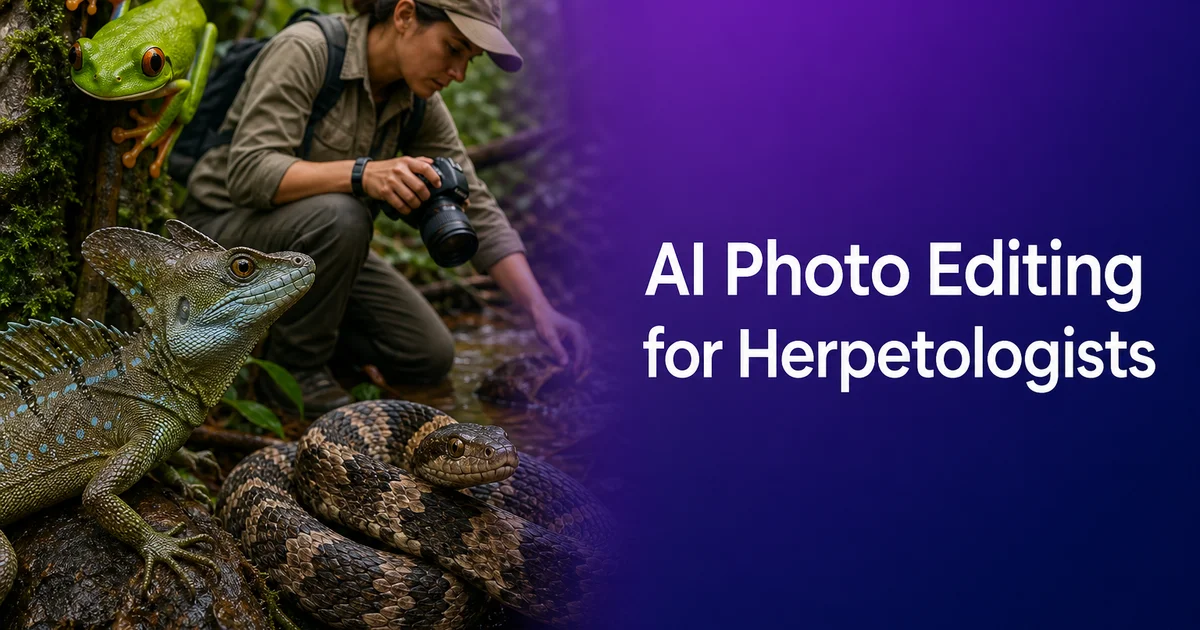
Herpetoloji — sürüngenler ve iki yaşamlıların bilimsel incelemesi — tür tanımlama, taksonomik betimleme, popülasyon izleme ve koruma değerlendirmesi için fotoğraf kayıtlarına büyük ölçüde dayanır. Yaklaşık 12.000 bilinen sürüngen türü ve 8.500'den fazla iki yaşamlı türüyle. Her yıl yüzlerce yeni türün betimlenmesiyle, yüksek kaliteli örnek fotoğrafçılığına olan talep, çoğu araştırmacının ve saha ekibinin geleneksel manuel son işleme yöntemleriyle üretebileceğinin çok ötesindedir. Her tür betimlemesi ayrıntılı şekil levhaları gerektirir, her popülasyon çalışması renk deseni eşleştirmesi yoluyla bireysel tanımlamaya dayanır. Her koruma değerlendirmesi, habitat koşullarının ve popülasyon sağlığının görsel kayıtlarından yararlanır.
Herpetolojideki fotoğrafçılık zorlukları çoğunlukla karmaşıktır. Sürüngenler, desen ayrıntılarını gizleyen aynasal parlamalar yaratan yansıtıcı, parlak pullara sahiptir. İki yaşamlılar, ışığı öngörülemez biçimde yansıtan ve canlı ile korunmuş durumlar arasında görünümünü büyük ölçüde değiştiren ıslak, mukus kaplı bir deriye sahiptir. Birçok tür, doğal alt katmanlarına karşı görülmesi zor olacak şekilde özellikle evrimleşmiş kriptik renklere sahiptir. Yaprak döküntüsü, ağaç kabuğu, kaya yüzeyleri ve sucul bitki örtüsü. Saha koşulları yağmur, çamur, düşük ışıklı orman alt katmanı ekler. Temel zorluk, konuların hareket eden, kaçan, ısıran ve bazı durumlarda fotoğrafçı için gerçek bir tehlike oluşturan canlı hayvanlar olmasıdır.
Yapay zeka fotoğraf düzenleme araçları, ham saha çekimleri ile yayın kalitesindeki görüntüler arasında duran emek yoğun son işleme adımlarını otomatikleştirerek bu herpetolojik kayıt zorluklarını ele alır. Arka plan kaldırma, doğal alt katmanlara karşı zar zor görünen kriptik renkli hayvanları ortaya çıkarır. Ayrıntı geliştirme, tanımlamayı yönlendiren pul desenlerini, deri dokularını ve renk geçişlerini geri kazanır. Toplu işleme, değişken koşullar altında haftalarca süren saha çalışması boyunca çekilen görüntüleri standartlaştırır. Öğretim ve hibe yazımının yanı sıra sezon başına binlerce saha fotoğrafını yöneten herpetologlar için. Örnek küratörlüğü, verimli görüntü işleme üretken araştırma için kilit bir altyapıdır.
- Arka plan kaldırma, kamuflajın vücut hatlarını ve desen ayrıntılarını gizlediği doğal alt katmanlardan kriptik renkli sürüngenleri ve iki yaşamlıları izole eder.
- Yapay zeka geliştirme, güvenilir tür tanımlaması için tanısal açıdan kritik özellikleri — baş pullanması, sırt bantları, ayak parmağı yastığı lamelleri ve karın renk geçişleri — keskinleştirir.
- Magic Eraser, örneğin morfolojisini değiştirmeden saha artefaktlarını — çamur, su damlaları, taşıma ekipmanı ve lens kalıntısı — kaldırır.
- Toplu işleme, aydınlatma, ekipman ve hava koşullarının çekim oturumları arasında değiştiği çok haftalık saha araştırmalarından gelen görüntü setlerini standartlaştırır.
- 300 DPI'de yayına hazır dışa aktarımlar, taksonomik betimlemeler, revizyon monografileri ve tanımlama kılavuzu levhaları için dergi standartlarını karşılar.
Sürüngen pul ve amfibi deri fotoğrafçılığının zorluklarını aşma
Sürüngen pulları, aynı anda hem en önemli tanısal özellik hem de teknik olarak net biçimde yakalanması en zor olan fotoğraf yüzeyini sunar. Engereklerdeki ve birçok kertenkeledeki karinalı pullar, her pulun şeklini görünür biçimde aktarmak için kontrollü yönlü aydınlatma gerektiren karmaşık üç boyutlu dokular yaratır. Kolubridlerdeki ve skinklerdeki düz pullar ışığı küçük aynalar gibi yansıtarak, altta yatan rengi ve deseni silen aynasal parlamalar üretir. Bazı yılan ve kertenkelelerin yanardöner yapısal renklenmesi. Gökkuşağı boaları, gün ışını yılanları ve birçok Anolis türü — bakış açısı ve aydınlatma yönüyle değişir ve tam olarak belgelemek için birden çok pozlama gerektirir. AI boost, parlamayla yanmış alanlardan desen ayrıntılarını geri kazanarak ve pul alanları boyunca yerel kontrastı artırarak her pulun şeklini ve sınırlarını görünür kılarak yardımcı olur.
İki yaşamlı derisi tamamen farklı ancak eşit derecede zorlu özellikler sunar. Kurbağalar ve semenderler, tüm vücut yüzeyinde dağınık yansımalar ve ıslak parlamalar yaratan nemli, mukus kaplı bir deriye sahiptir. Bu nem tabakası biyolojik açıdan kilit önemdedir. İki yaşamlılar kısmen derileri yoluyla solunum yapar — bu nedenle fotoğraf için hayvana zarar vermeden kaldırılamaz. Korunmuş örneklerde nem yok olmuştur ancak deri çoğu kez canlı durumdan renk ve doku açısından değişmiştir, bu da korunmuş örnek fotoğrafçılığını canlı kayıtların zayıf bir ikamesi yapar. Yapay zeka renk düzeltme, farklı hidrasyon durumlarında fotoğraflanan örneklerin görünümünü standartlaştırmaya yardımcı olur ve formalin veya etanolde saklama sırasında oluşan renk kaymalarını kısmen telafi edebilir.
Saha fotoğrafçılığı bu yüzey zorluklarına çevresel etmenler ekler. Herpetolojik saha çalışması çoğu kez, sert ve düzensiz aydınlatma yaratan yoğun kanopi gölgesi ve benekli güneş ışığıyla tropik ormanlarda gerçekleşir. Gece araştırmaları — birçok kurbağa türünün en etkin ve görünür olduğu zaman — konunun arkasında sert gölgelerle düz, önden aydınlatılmış görüntüler üreten flaşlı fotoğrafçılık gerektirir. Yağmur ormanı nemi lensleri ve muhafazaları buğulandırır ve ıslak ortamlardan gelen alt katman sıçramaları görüntülere artefakt ekler. Yapay zeka son işleme, düzensiz saha aydınlatmasını telafi eder, çevresel artefaktları kaldırır. Çok farklı koşullarda çekilen görüntüleri karşılaştırmalı analiz ve yayın için uygun tutarlı bir görsel standarda standartlaştırır.
- Karinalı sürüngen pulları üç boyutlu aktarım için yönlü aydınlatma gerektirir; düz pullar aynalar gibi yansıyarak tanısal desenleri siler.
- İki yaşamlıların mukus kaplaması, hayvana zarar vermeden kaldırılamayan dağınık yansımalar yaratır — yapay zeka geliştirme, ıslak parlamaların altındaki ayrıntıyı geri kazanır.
- Gece flaşlı fotoğrafçılık, yapay zeka aydınlatma düzeltmesinin doğal görünümlü belgeleme için standartlaştırdığı sert gölgelerle düz, önden aydınlatılmış görüntüler üretir.
- Tropik saha koşulları, yapay zeka toplu işlemenin araştırma görüntü setleri boyunca standartlaştırdığı nem sisi, yağmur sıçraması ve benekli kanopi ışığı getirir.
Tür tanımlama ve betimleme için tanısal morfolojiyi geliştirme
Baş pullanması, birçok sürüngen grubu için birincil tanımlama aracıdır. Yılan tanımlaması sıklıkla baştaki pulların düzeninin sayılmasına ve betimlenmesine dayanır. Üst dudak ve alt dudak pullarının sayısı, rostral ve mental pulların şekli, anal plağın varlığı veya bölünmesi ve göz çevresindeki pulların düzeni — preokular, postokular ve temporal pullar dahil. Bu karakterler tek pul düzeyinde ölçülür. Türler arasındaki fark tek bir bölünmüş veya bölünmemiş pul olabilir. Fotoğrafların güvenilir sayım için bireysel pulları yeterince keskin çözmesi gerekir. AI boost, pul alanı boyunca yerel kontrastı artırarak, aydınlatma veya çözünürlüğün belirsiz kıldığı görüntülerde bireysel pul sınırlarını görünür kılar.
Herpetolojide renk deseni kaydı hem taksonomik hem de ekolojik işlevler görür. Sırt bant desenleri, yanal şerit yapılandırmaları, karın renklenmesi. Anolis kertenkelelerindeki boğaz yelpazelerinin ve gerdanların özel pigmentasyonu, türler arasında ve bazen aynı türün popülasyonları arasında değişen tanısal karakterlerdir. Renk deseni eşleştirmesi, işaretle-yeniden yakala popülasyon çalışmalarında bireysel tanımlama için de kullanılır. Birçok semender, kaplumbağa ve kertenkele, doğal tanımlama işaretleri olarak hizmet eden bireysel olarak benzersiz karın desenlerine sahiptir. AI boost ve renk normalleştirme, desen özelliklerinin farklı aydınlatma koşullarında çekilen görüntüler boyunca her zaman aktarılmasını sağlayarak, farklı günlerde veya farklı saha ekiplerince fotoğraflanan bireyler arasında güvenilir karşılaştırmaya olanak tanır.
Ayak parmağı yastığı morfolojisi, birçok geko ve ağaç kurbağası cinsini tanımlamak için kritik öneme sahiptir. Lameller — parmakların alt yüzeyindeki ince, üst üste binen plakalar — sayı, genişlik bakımından değişir. Türler arasındaki düzen ve birincil bir tanısal karakterdir. Bu minik yapıları canlı hayvanlarda fotoğraflamak çok zordur çünkü hayvanın ayağı saydam bir yüzeye bastırılarak tutulmalıdır. Lamellerin tüm ayak parmağı yastığı boyunca odakta olması gerekir. AI detail boost, iki yaşamlı ayak yastığının ıslak yüzeyi veya geko ayak parmağı yastıklarının mikroskobik pul dokusu tarafından kısmen bulanıklaşan veya gizlenen lamel yapısını geri kazanarak, fotoğraf kayıtlarından sayımları daha güvenilir kılar.
- Yılan baş pullanması tanımlaması çoğu kez tek pul farklarına dayanır — yapay zeka geliştirme, güvenilir sayım için her pulun sınırlarını yeterince net kılar.
- Aydınlatma koşulları boyunca renk deseni normalleştirmesi, işaretle-yeniden yakala popülasyon çalışmalarında güvenilir bireysel tanımlamaya olanak tanır.
- Gekolardaki ve ağaç kurbağalarındaki ayak parmağı yastığı lamelleri, yapay zeka ayrıntı geliştirmenin kısmen bulanık makro çekimlerden geri kazandığı birincil tanısal karakterlerdir.
- Anolis kertenkelelerindeki gerdan ve boğaz yelpazesi renklenmesi, yapay zeka beyaz dengesi ve kalibrasyon araçlarının sağladığı doğru renk üretimini gerektirir.
Korunmuş örneklerin işlenmesi ve müze koleksiyonu dijitalleştirme
Dünya genelindeki doğa tarihi müzesi koleksiyonları, etanol veya formalinde korunmuş milyonlarca sürüngen ve iki yaşamlı örneği barındırır. Bu koleksiyonların dijitalleştirilmesi, biyoçeşitlilik bilişiminde devam eden büyük bir girişimdir. Koleksiyon dijitalleştirmesi için örnek fotoğrafçılığı, çoğu kez sınırlı ekipmanla zaman baskısı altında, koleksiyon ziyareti başına yüzlerce veya binlerce görüntünün işlenmesini içerir. Aydınlatma kurumlar arasında değişir, örnek durumu mükemmelden ağır bozulmuşa kadar uzanır. Malzemenin muazzam hacmi, otomatik araçlar olmadan bireysel görüntü iyileştirmesini pratik olmaktan çıkarır. Yapay zeka toplu işleme — arka plan normalleştirme, renk düzeltme, artefakt kaldırma. Tüm görüntü setlerine tutarlı biçimde uygulanan ayrıntı geliştirme — koleksiyon dijitalleştirmesini, küresel biyoçeşitlilik kaydının gerektirdiği ölçekte pratik kılar.
Korunmuş iki yaşamlı örnekleri çoğunlukla akut renk kayıt zorlukları sunar. Formalin sabitlemesi ve ardından gelen etanol depolaması, çoğu iki yaşamlı türünde ilerleyici renk kaybına neden olur. Canlı ağaç kurbağalarının, zehirli ok kurbağalarının ve su semenderlerinin parlak yeşil, mavi ve kırmızıları, saklamanın aylar ila yılları içinde kahverengiye veya griye solar. Orijinal renkler örnekten geri kazanılamasa da, toplama anında çekilen fotoğraflar. Çoğu kez sahada, ideal olmayan koşullarda — tek renk kaydı olabilir. AI boost, kalan pigment aralıklarında doygunluğu ve yerel kontrastı artırarak bu saha fotoğraflarındaki renk bilgisini en üst düzeye çıkarır. Renk normalleştirme araçları, farklı kameralar ve aydınlatma düzenekleriyle çekilen görüntüler boyunca renk gösterimini standartlaştırmaya yardımcı olur.
Tip örnekler — tür adlarının resmen dayandığı bireysel hayvanlar — en yüksek kayıt standartlarını gerektirir. Birçok herpetolojik tip örnek, modern saklama tekniklerinden ve fotoğraf kaydından önce, onlarca yıl veya yüzyıllar önce toplanmış ve korunmuştur. Tarihsel açıdan önemli bu örneklerin modern, yüksek çözünürlüklü fotoğraf setlerini üretmek, taksonomi topluluğu için bir önceliktir. AI boost, solmuş, suyu çekilmiş veya fiziksel olarak hasar görmüş olabilecek örneklerdeki morfolojik özelliklerin görünürlüğünü en üst düzeye çıkarırken, Magic Eraser saklama artefaktlarını kaldırır. İğne izleri, etiket yapışkanı kalıntısı ve sıvı yüzeyi bozulmaları — örneğin kalan tanısal karakterlerinin net kaydına engel olan şeyler.
- Müze koleksiyonu dijitalleştirmesi, ziyaret başına yüzlerce örneğin toplu işlenmesini gerektirir — yapay zeka otomasyonu bunu küresel biyoçeşitlilik belgeleme ölçeğinde pratik kılar.
- Formalin ve etanol iki yaşamlı renklenmesini ilerleyici biçimde yok eder; yapay zeka geliştirme, erken saha fotoğraflarında kalan renk bilgisini en üst düzeye çıkarır.
- Tip örnek fotoğrafçılığı, solmuş veya hasar görmüş olabilecek tarihsel olarak korunmuş örneklerdeki özellik görünürlüğünü en üst düzeye çıkaran yapay zeka geliştirmesinden yararlanır.
- Kurumlar arası tutarlı arka plan normalleştirme ve renk düzeltme, dağıtık koleksiyon veritabanları için birleşik görsel standartlar yaratır.
Koruma izleme, vatandaş bilimi ve halkla etkileşim
Dünya genelinde iki yaşamlı popülasyonları ciddi düşüş içindedir. IUCN, iki yaşamlı türlerinin yüzde kırktan fazlasının soyu tükenme tehdidi altında olduğunu, bu da onları en tehdit altındaki omurgalı sınıfı yaptığını bildiriyor. Fotoğraf kayıtları aracılığıyla görsel izleme, popülasyon durumunu takip etmek, kitrit mantarı enfeksiyonları gibi hastalık belirtilerini belgelemek için kritik bir araçtır. İklim kaymalarına ve habitat kaybına yanıt olarak yayılım değişikliklerini kaydetmek. İki yaşamlı popülasyonlarını izleyen herpetologlar, bolluğu, vücut durumunu ve hastalık yaygınlığını takip etmek için araştırma başına yüzlerce bireyi fotoğraflar. Yapay zeka toplu işleme bu araştırma görüntülerini nicel analiz için standartlaştırırken, ayrıntı geliştirme kitrit enfeksiyonunun erken belirtilerini ortaya çıkarır. Deri renk değişimi, aşırı deri değiştirme ve duruş anormallikleri — işlenmemiş saha fotoğraflarında belirgin olmayabilecek şeyler.
iNaturalist, HerpMapper ve bölgesel atlas projeleri dahil yurttaş bilimi platformları, herhangi bir araştırma ekibinin araştırabileceğinden çok daha geniş coğrafi aralıklarda tür kayıtlarını belgeleyerek herpetolojik bilgiye muazzam katkıda bulunur. Yurttaş bilimi fotoğraflarının kalitesi büyük ölçüde değişir. Kaçan yılanların akıllı telefon enstantanelerinden, deneyimli doğa bilimcilerin özenle kurguladığı makro portrelere kadar. Yapay zeka fotoğraf düzenleme araçları hem katkıda bulunanlara hem de tanımlamaları onaylayan uzman doğrulayıcılara yardımcı olur. Arka plan kaldırma hayvanı dağınık ortamlardan izole eder, ayrıntı geliştirme tanımlama için gereken pul desenlerini ve renk özelliklerini ortaya çıkarır. Renk normalleştirme, yurttaş bilimi fotoğrafçılığının son derece değişken aydınlatma koşullarını telafi eder.
Herpetolojik korumaya kamu katılımı temel bir zorlukla karşı karşıyadır: birçok insan sürüngenlerden ve iki yaşamlılardan korkar ya da hoşlanmaz. Yılanlar ağırlıklı olarak, koruma iletişimini zorlaştıran korku tepkilerini tetikler. Sürüngen pullanmasının güzelliğini, tropik kurbağaların canlı renklerini ortaya çıkaran yüksek kaliteli fotoğrafçılık. Yaprak kuyruklu gekolar ve cam kurbağaları gibi türlerin şaşırtıcı çekiciliği, kamu algısını değiştirmek için en etkili araçlar arasındadır. Yanardöner pul renklerini ortaya çıkaran, baş pul desenlerinin karmaşık geometrisini keskinleştiren yapay zeka ile geliştirilmiş görüntüler. Hayvanları temiz arka planlara karşı sunmak, müze sergileri, koruma bağış toplama, çevre eğitimi ve sosyal medya erişim programları için güçlü görsel içerik yaratır.
- İki yaşamlı koruma izlemesi, kitrit mantarı belirtileri dahil popülasyon bolluğunu, vücut durumunu ve hastalık yaygınlığını takip etmek için fotoğraf araştırmaları kullanır.
- Yurttaş bilimi platformları milyonlarca herpetolojik gözlem üretir — yapay zeka geliştirme ve arka plan kaldırma, uzman doğrulama doğruluğunu iyileştirir.
- Kamu katılımı, bu hayvanlardan korkmaya veya hoşlanmamaya yatkın kitlelere sürüngenlerin ve iki yaşamlıların güzelliğini ortaya çıkaran yüksek kaliteli fotoğrafçılıktan yararlanır.
- Yapay zeka ile işlenmiş görüntüler ikili işlev görür — titiz bilimsel belgeleme ve koruma iletişimi ile bağış toplama için ikna edici görsel içerik.
How to do it
- 1
Photograph reptile and amphibian specimens with standardized field and lab protocols
Set up consistent lighting with diffused flash or LED panels to minimize specular reflections on glossy scales and wet amphibian skin. Include a color calibration card and millimeter scale bar in every frame. For live specimens, photograph dorsal, lateral, and ventral views at minimum. Capture close-ups of diagnostically important features. Head scalation patterns, toe pad morphology, ventral coloration, iris color, and any distinctive markings like temporal stripes or dorsolateral folds. Use fast shutter speeds for live animals that may move unpredictably.
- 2
Remove distracting backgrounds and isolate specimens for scientific documentation
Use Background Eraser to separate reptiles and amphibians from field substrates. Leaf litter, rock faces, pond margins, and terrarium setups — that camouflage the animals and obscure body outlines. Many herpetological species rely on cryptic coloration that makes them nearly invisible against their natural substrate. Is precisely why background removal is key for clear records. Clean background removal reveals the full body outline, limb proportions. Color pattern that field photographs against natural substrates partially conceal.
- 3
Enhance scale patterns, skin textures, and color details for identification
Use AI Enhance to sharpen the fine morphological structures that drive reptile and amphibian spotting. Individual scale counts and shapes on the head, dorsal patterning and banding, ventral coloration gradients, toe pad lamellae in geckos, skin texture differences between granular and smooth regions on amphibians, and the subtle color variations in throat fans and dewlaps. Many species pairs are distinguished only by differences in scale counts or slight color pattern variations that require maximum image clarity to document reliably.
- 4
Remove field artifacts and handling marks from specimen images
Use Magic Eraser to clean up mud, substrate debris, water droplets on lenses, handling glove reflections, and field equipment visible in the frame. Snake hooks, tongs, headlamps, and measuring equipment — without altering the specimen's morphological features. For preserved specimens, remove pin marks, label shadows, fluid surface reflections. Jar edge distortions that interfere with clear records of the animal's form and coloration.
- 5
Prepare figure plates and identification resources for publication
Compile standardized multi-view image sets into publication-ready figure plates with consistent background color, magnification ratios, and labeling. Export at 300 DPI for journal submissions to herpetological journals. For field spotting guides and citizen science platforms, prepare web-optimized versions with key diagnostic features annotated. Head scale patterns, color morph variants, and distinguishing marks between frequently confused species pairs.
Kaynaklar
- Standards for Photographic Documentation in Herpetological Research — Society for the Study of Amphibians and Reptiles
- Photography Protocols for Reptile and Amphibian Biodiversity Surveys — IUCN Amphibian Specialist Group
- Colour Pattern Analysis in Herpetology: Methods and Applications — Biological Reviews