
Refinar bordes para resultados profesionales
Pule los bordes del recorte alrededor de sujetos difíciles como el cabello, el pelaje y los materiales translúcidos.
Lesson context before the long read
Review the result preview above, then scan the learning objectives below before reading the full lesson. Updated 2026-05-17.
Example visual uses an existing public asset: /content-images/background-edge-refinement-academy.webp.
Learning Objectives
- 1Usar el pincel de refinado de bordes para recuperar cabellos y pelos finos perdidos durante la eliminación automática
- 2Aplicar suavizado y descontaminación para eliminar el halo de color a lo largo de los bordes del recorte
- 3Manejar materiales semitransparentes como el vidrio, el humo y las telas transparentes
Por qué importan los bordes en la eliminación de fondos
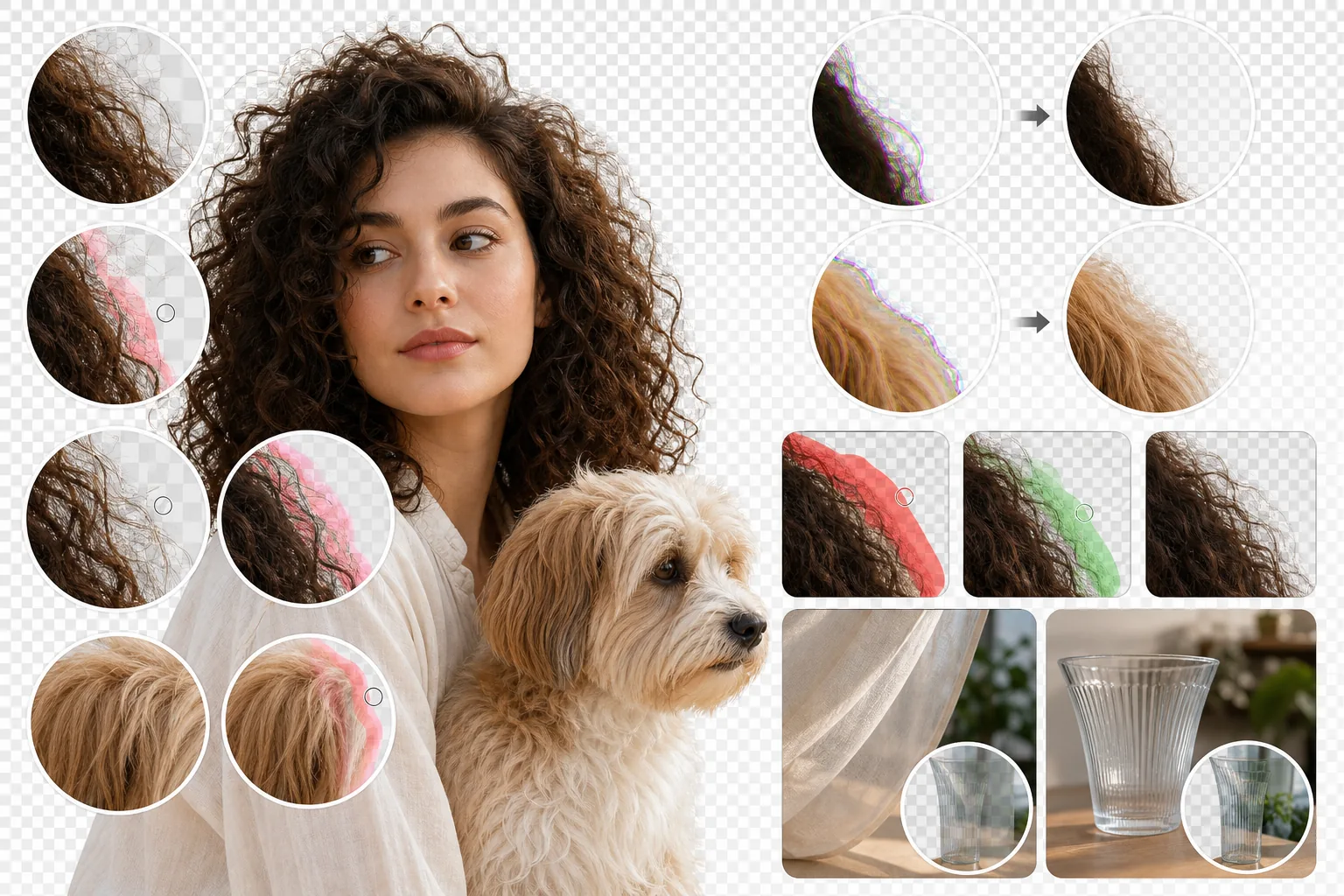
El cabello y el pelaje son el desafío más común en la eliminación de fondos porque los mechones individuales son demasiado finos para que una máscara dura los capture con precisión. El pincel de refinado de bordes de Magic Eraser vuelve a analizar una banda estrecha alrededor del sujeto, detectando hebras y cabellos sueltos que la pasada inicial de un clic no captó. Pinta el pincel de refinado a lo largo de la línea del cabello y la herramienta recalcula la transparencia píxel a píxel. Para mejores resultados, usa un tamaño de pincel ligeramente mayor que el área de detalle perdido para que el algoritmo tenga suficiente contexto para separar las hebras del color del fondo.
Ajuste fino de bordes de cabello, pelaje y semitransparentes
El halo de color aparece cuando restos del fondo original tiñen los píxeles del borde de tu recorte. Esto es especialmente visible cuando colocas el sujeto sobre un nuevo fondo de un color muy diferente. La opción de descontaminar colores reemplaza los píxeles del halo con tonos tomados del interior del sujeto, produciendo un borde neutro que se adapta a cualquier fondo. Combina la descontaminación con un pequeño radio de suavizado de uno a dos píxeles para suavizar la transición sin crear un halo visible alrededor del sujeto.
Suavizado y difuminado para resultados naturales
Los objetos semitransparentes como la cristalería, el humo y las cortinas transparentes requieren una opacidad parcial en la máscara en lugar de un corte binario. La detección automática de Magic Eraser conserva la transparencia alfa para los materiales transparentes reconocidos, pero es posible que necesites reducir manualmente la opacidad de la máscara en zonas específicas. Baja la opacidad del pincel a alrededor del 50% y pinta sobre las áreas que deberían ser translúcidas. Esto permite que el nuevo fondo se transparente de forma natural a través de las regiones translúcidas, produciendo un montaje que parece físicamente preciso en lugar de pegado de forma artificial.
Key Takeaways
- ✓El pincel de refinado de bordes recupera cabello y pelaje recalculando la transparencia píxel a píxel
- ✓Descontaminar colores y un suavizado ligero eliminan el halo de color del fondo
- ✓Los objetos semitransparentes necesitan opacidad parcial en la máscara, no un recorte binario duro