
Optimiser les images de produits pour de meilleures conversions
Utilisez des stratégies fondées sur des preuves pour que vos images de produits génèrent plus de clics et de ventes.
Lesson context before the long read
Review the result preview above, then scan the learning objectives below before reading the full lesson. Updated 2026-05-17.
Example visual uses an existing public asset: /content-images/product-image-conversion-optimization-academy.webp.
Learning Objectives
- 1Structurer un ensemble d'images qui répond à chaque étape du processus de décision de l'acheteur
- 2Appliquer les principes de hiérarchie visuelle pour diriger le regard du spectateur vers les principales caractéristiques de vente
- 3Faire des tests A/B des variantes d'images pour identifier la prise principale qui convertit le mieux
Les caractéristiques d'image qui déclenchent les achats
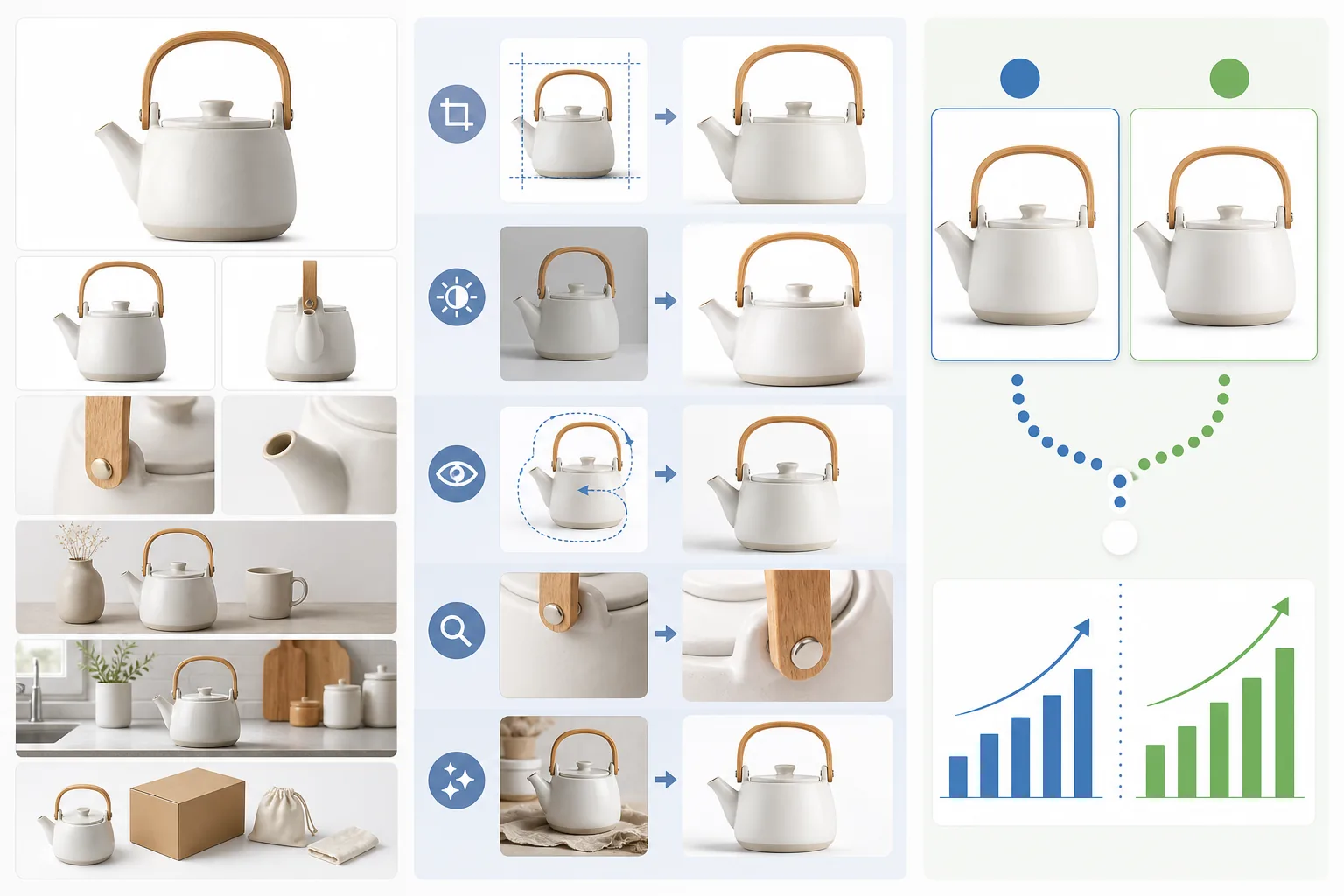
Une fiche produit à fort taux de conversion raconte une histoire visuelle à travers son ensemble d'images. L'image principale attire l'attention dans les résultats de recherche, elle doit donc montrer clairement le produit avec un remplissage maximal et un fond épuré. La deuxième image devrait présenter un angle alternatif ou un gros plan d'une caractéristique clé. Les images suivantes peuvent inclure un contexte lifestyle, une référence de taille, le contenu de l'emballage et des infographies qui répondent aux questions courantes des acheteurs. Associez chaque emplacement d'image à une préoccupation précise de l'acheteur : à quoi ressemble-t-il, quelle est sa taille, qu'est-ce qui est inclus et comment s'intégrera-t-il dans ma vie.
Optimisation des vignettes pour les résultats de recherche
La hiérarchie visuelle au sein de chaque image guide le regard du spectateur vers les informations les plus importantes. Utilisez le contraste, l'échelle et le placement pour attirer l'attention sur les points de vente uniques de votre produit. Par exemple, si votre blender possède une conception de lame brevetée, photographiez-la sous un angle où la lame est bien visible et nette tandis que le corps tombe doucement hors du champ de netteté. Dans les images infographiques, placez la légende de la caractéristique la plus importante en haut à gauche, là où les lecteurs des langues occidentales commencent à parcourir. Évitez l'encombrement visuel qui se dispute l'attention.
Faire des tests A/B d'images de produits efficacement
Les données devraient guider vos choix d'images finaux, pas les suppositions. La plupart des tableaux de bord vendeurs des places de marché fournissent des métriques de taux de conversion par session que vous pouvez suivre avant et après les changements d'images. Pour des tests plus rigoureux, utilisez un outil de test A/B qui fait alterner deux images principales de façon équilibrée et indique quelle variante produit le plus de clics. Testez une variable à la fois : la teinte du fond, l'angle du produit ou la présence d'un élément lifestyle. Même une amélioration de 5 % du taux de clics se cumule de façon significative sur des milliers d'impressions quotidiennes, faisant des tests d'images l'une des activités au meilleur retour sur investissement pour tout vendeur en ligne.
Key Takeaways
- ✓Associez chaque emplacement d'image à une question précise de l'acheteur pour une histoire visuelle complète
- ✓Utilisez le contraste, l'échelle et le placement pour diriger l'attention vers les principales caractéristiques de vente
- ✓Faites des tests A/B des variantes d'image principale et mesurez le taux de clics pour optimiser avec des données