
Como Corrigir Fotos Subexpostas com AI — Magic Eraser
Guia passo a passo para recuperar detalhes de fotografias escuras e subexpostas usando AI boost. Abrange recuperação de sombras, redução de ruído, correção de cor, edição seletiva e exportação para retratos contraluz, eventos internos e cenas com pouca luz.

Product Marketing
Revisado por Magic Eraser Editorial ·
Índice
- A física da subexposição e por que a recuperação é possível
- Como o realce com AI difere do ajuste tradicional de brilho
- Recuperando retratos contraluz e assuntos silhuetados
- Recuperação de fotografia de eventos internos e correção de iluminação mista
- Entendendo os limites de recuperação e definindo expectativas realistas
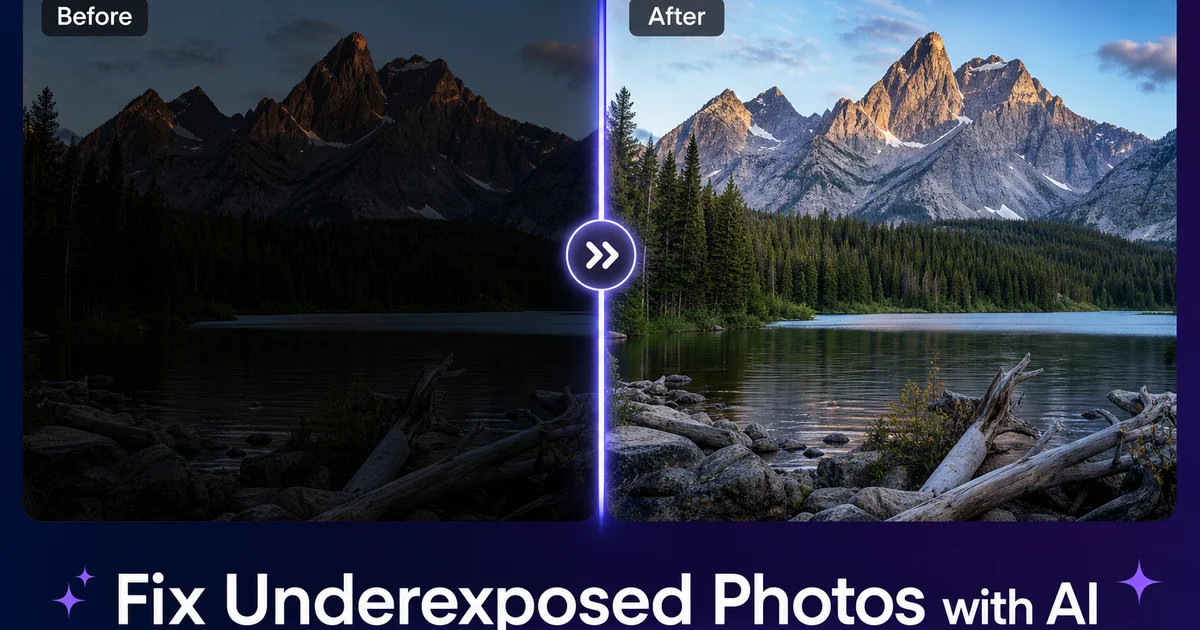
A subexposição é o problema técnico mais comum na fotografia, afetando amadores e especialistas em todos os contextos de captura. O sistema de medição da câmera julga mal o brilho da cena, o flash não dispara em um evento interno, o assunto está contraluz contra uma janela brilhante ou pôr do sol, a autoexposição do smartphone trava numa região clara e deixa o assunto na sombra. As causas são muitas e frequentemente imprevisíveis. O resultado é sempre o mesmo: uma imagem onde o assunto está escuro demais, o detalhe das sombras se perde e a fotografia parece inutilizável. Antes das ferramentas de recuperação com AI, as opções se limitavam a ajustes básicos de brilho que produziam resultados ruidosos e com desvio de cor, ou edição manual tediosa em softwares especializados que a maioria das pessoas não possuía e poucas sabiam usar.
O AI boost em sua essência muda o processo de recuperação ao abordar a correção de subexposição como um problema de predição em vez de um simples ajuste de brilho de pixel. Modelos treinados em milhões de pares de imagens — a mesma cena capturada na exposição correta e em vários níveis de subexposição — aprendem as relações estatísticas entre o que os pixels escuros contêm e como devem parecer quando devidamente iluminados. A AI não simplesmente multiplica os valores dos pixels para torná-los mais brilhantes. Ela infere qual deveriam ser a cor, o detalhe e a textura das regiões escuras com base no contexto das partes visíveis da imagem e em seu conhecimento aprendido sobre como luz, sombra e cor interagem em cenas do mundo real.
Este guia aborda o fluxo de trabalho completo para recuperar fotografias subexpostas usando a ferramenta AI Enhance do Magic Eraser, desde a avaliação inicial de quanto detalhe recuperável existe nas sombras até o processo de boost em si e a avaliação pós-recuperação de ruído, precisão de cor e qualidade geral da imagem. Abordamos os desafios específicos dos cenários de subexposição mais comuns — retratos contraluz, eventos internos sem flash, fotografia de rua com pouca luz e capturas de smartphone em ambientes escuros — e explicamos os fatores técnicos que determinam quanto de recuperação é possível a partir de qualquer imagem.
- O AI boost recupera fotos subexpostas ao predizer brilho, cor e textura corretos em vez de simplesmente amplificar valores de pixels escuros, produzindo resultados que parecem naturalmente iluminados em vez de artificialmente clareados.
- A faixa de recuperação típica é de dois a três stops a partir de arquivos JPEG e de até quatro a cinco stops a partir de arquivos RAW. Equivalente a tornar a imagem de quatro a trinta e duas vezes mais brilhante mantendo a aparência natural.
- A recuperação de sombras corrige simultaneamente os desvios de cor ocultos nos pixels subexpostos — tons esverdeados, desvios azulados e laranja de tungstênio que se tornam visíveis quando regiões escuras são clareadas.
- A redução de ruído com AI distingue o detalhe genuíno da imagem do ruído do sensor amplificado durante a recuperação de sombras, preservando texturas e bordas enquanto remove granulação.
- O realce seletivo permite diferentes níveis de recuperação em toda a imagem, evitando o aspecto desbotado que o clareamento uniforme produz em fotos com regiões de exposição mista.
A física da subexposição e por que a recuperação é possível
Os sensores de câmeras digitais são dispositivos analógicos de medição de luz que convertem fótons que atingem cada ponto de pixel em carga elétrica, que é então digitalizada nos valores numéricos armazenados em seu arquivo de imagem. Quando uma cena é devidamente exposta, cada pixel recebe fótons suficientes para produzir um sinal que representa com precisão o brilho e a cor daquele ponto na cena. Quando uma cena está subexposta, cada pixel recebe menos fótons, mas o ponto crítico é que ainda recebe alguns. O sensor ainda registrou informação, apenas menos dela. Essa informação parcial é o que torna a recuperação possível.
A signal-to-noise ratio é a restrição fundamental. Cada pixel do sensor gera uma pequena quantidade de ruído elétrico aleatório independentemente de a luz atingi-lo. Em um pixel devidamente exposto, o sinal de luz é muito mais forte que esse ruído, então o ruído é invisível. Em um pixel subexposto, o sinal de luz pode ser apenas ligeiramente mais forte que o ruído, ou nas sombras mais profundas, aproximadamente igual a ele. A recuperação amplifica tanto o sinal quanto o ruído juntos. O trabalho da AI é separá-los — amplificar a informação real da imagem enquanto suprime o ruído, usando seu conhecimento treinado de como o detalhe da imagem se parece versus como o ruído se parece.
A compressão JPEG adiciona outra camada de complexidade. Quando uma câmera salva um JPEG, ela quantiza os dados tonais em menos níveis e descarta informações que o algoritmo de compressão considera redundantes. Em regiões de sombra onde o sinal original já era fraco, essa compressão pode descartar as variações tonais sutis que constituem o detalhe recuperável. Arquivos RAW preservam todos os dados do sensor sem compressão, razão pela qual oferecem mais margem de recuperação — frequentemente um a dois stops extras em comparação com JPEG da mesma captura. No entanto, modelos de AI treinados especificamente para recuperação de JPEG aprenderam a trabalhar dentro dessas restrições e produzem resultados surpreendentemente eficazes mesmo a partir de JPEGs de smartphone fortemente comprimidos.
- Pixels subexpostos ainda contêm dados de sinal — a recuperação é possível porque o sensor registrou informação, apenas menos do que uma exposição ideal forneceria.
- A signal-to-noise ratio determina os limites de recuperação — quanto mais profunda a subexposição, mais próximo o sinal da imagem está do piso de ruído do sensor.
- A compressão JPEG descarta detalhes de sombra que arquivos RAW preservam, custando tipicamente um a dois stops de margem de recuperação.
- Modelos de AI treinados em padrões de recuperação JPEG-specific produzem resultados eficazes mesmo a partir de capturas de smartphone fortemente comprimidas.
Como o realce com AI difere do ajuste tradicional de brilho
A correção tradicional de exposição em softwares de edição opera com matemática de pixel. Aumente a exposição em um stop e o software multiplica cada valor de pixel por dois. Aumente em dois stops e multiplica por quatro. Esta é uma operação determinística e independente do conteúdo. O software aplica a mesma mudança matemática independentemente de o pixel representar um rosto, uma parede, folhagem ou céu vazio. O ruído em cada pixel é multiplicado pelo mesmo fator que o sinal, e é por isso que no passado imagens clareadas pareciam ruidosas. Os valores de cor também se deslocam uniformemente, e é por isso que no passado imagens clareadas mostravam desvios de cor que exigiam correção separada.
O AI boost opera por predição aprendida em vez de matemática de pixel. O modelo foi treinado em milhões de pares de imagens mostrando como cenas subexpostas deveriam parecer quando corretamente expostas. Dada uma imagem escura, a AI não pergunta o que acontece quando multiplico estes pixels por quatro. Ela pergunta como esta cena pareceria se estivesse devidamente iluminada. Esta é uma questão fundamentalmente diferente que produz resultados fundamentalmente diferentes. A AI prediz que uma região escura contendo um rosto deve mostrar textura de pele com tons quentes, que uma região escura contendo folhagem deve mostrar detalhe de folha com matizes verdes, e que uma região escura contendo céu deve mostrar gradiente suave com coloração azul. Cada predição é consciente do conteúdo e específica ao contexto.
A diferença prática é visível imediatamente na saída. O aumento tradicional de brilho produz uma imagem que parece uma foto escura tornada mais clara. A direção da iluminação não muda, a distribuição tonal permanece comprimida e cada artefato da subexposição é amplificado junto com o conteúdo. O AI boost produz uma imagem que parece ter sido melhor exposta desde o início. A distribuição tonal é expandida para usar toda a faixa, as cores são corrigidas para corresponder à sua aparência real e o ruído é suprimido em vez de amplificado. A diferença é principalmente dramática nos tons de pele, que são muito sensíveis a mudanças de brilho e cor que a visão humana detecta instantaneamente.
- A correção tradicional multiplica todos os valores de pixel uniformemente — amplificando ruído e sinal igualmente e exigindo correção de cor separada.
- O realce com AI prediz como a cena corretamente exposta deveria parecer, produzindo correções conscientes do conteúdo que variam entre diferentes regiões da imagem.
- Imagens recuperadas por AI mostram faixa tonal expandida e cores corrigidas em vez da aparência comprimida e com desvio de cor do simples aumento de brilho.
- Os tons de pele se beneficiam mais dramaticamente da recuperação por AI porque a visão humana é excepcionalmente sensível a mudanças de brilho e cor em rostos.
Recuperando retratos contraluz e assuntos silhuetados
A contraluz é a forma mais dramática de subexposição porque a diferença entre o fundo brilhante e o assunto escuro pode abranger cinco ou mais stops de faixa dinâmica. Uma pessoa em pé diante de uma janela em um dia ensolarado enfrenta a câmera com talvez um centésimo da luz que a janela transmite. A câmera não pode expor ambos adequadamente. Se expõe para o fundo, o assunto se torna uma silhueta; se expõe para o assunto, o fundo estoura para branco sem características. Na maioria dos modos automáticos de disparo, a câmera divide a diferença ou tende para a área clara, deixando o assunto subexposto por dois a quatro stops.
A recuperação por AI de assuntos contraluz funciona notavelmente bem porque a AI pode tratar as regiões claras e escuras da imagem independentemente. Ela eleva o rosto e o corpo do assunto para fora da sombra, recuperando textura da pele, detalhe de roupa, definição de cabelo e visibilidade dos olhos — sem superexpor o fundo já brilhante. O resultado imita o fill flash, uma técnica que fotógrafos especializados usam onde um flash ilumina o assunto para equilibrar contra o fundo brilhante. A AI alcança esse equilíbrio após a captura, em vez de exigir equipamento durante a sessão. Assuntos contraluz com algum detalhe de sombra visível — onde se pode ver o contorno das características mesmo que muito escuros — se recuperam quase completamente.
As limitações da recuperação contraluz se tornam aparentes apenas em casos extremos. Se o assunto for uma silhueta preta pura sem detalhe visível — pixels lendo no valor digital mínimo ou próximo dele — a AI não tem dados com que trabalhar nessas regiões e não pode fabricar conteúdo. Entre os extremos de bem recuperado e irrecuperável, há um gradiente de qualidade que depende de quanto sinal de sombra original existe. Um assunto subexposto em dois stops recupera-se lindamente. Três stops recupera bem com algum ruído visível no zoom total. Quatro stops pode mostrar degradação visível de qualidade, mas permanece utilizável para tamanhos de redes sociais. Além de quatro stops a partir de JPEG, espere artefatos visíveis.
- Cenas contraluz abrangem cinco ou mais stops de faixa dinâmica — a AI lida com fundo brilhante e assunto escuro independentemente, imitando fill flash profissional após a captura.
- Assuntos subexpostos em dois stops recuperam-se lindamente — três stops recuperam bem com ruído menor — quatro stops permanecem utilizáveis para redes sociais com alguma degradação visível.
- Silhuetas pretas puras sem detalhe de sombra não podem ser recuperadas porque não existem dados de sensor para a AI trabalhar.
- Cabelo, detalhe dos olhos e textura de roupa são tipicamente os primeiros elementos a se recuperar quando a elevação de sombra revela o assunto.
Recuperação de fotografia de eventos internos e correção de iluminação mista
Eventos internos — aniversários, casamentos, conferências, jantares em restaurantes, confraternizações — produzem o maior volume de fotos subexpostas porque a luz ambiente interna é frequentemente dois a quatro stops mais escura do que as câmeras precisam para captura limpa em mãos livres. Smartphones compensam aumentando a sensibilidade ISO, o que introduz ruído, e estendendo a velocidade do obturador, o que introduz borrão de movimento quando os assuntos se movem. As fotos resultantes combinam subexposição com ruído e às vezes borrão — um triplo desafio que a edição tradicional aborda mal, mas a AI trata como um problema integrado.
A iluminação mista é o desafio de cor específico de ambientes internos. Uma única sala pode conter luminárias de teto quentes de tungstênio, luz fria de janelas, iluminação de trabalho fluorescente de tom esverdeado e luzes LED azuladas. A câmera escolhe um balanço de branco para todo o quadro, o que significa que algumas fontes de luz são renderizadas corretamente enquanto outras produzem fortes desvios de cor. O AI boost corrige esses desvios mistos analisando cada região da imagem e ajustando o balanço de cor localmente em vez de globalmente. O rosto iluminado pela luz de teto quente recebe correção de cor diferente da parede iluminada pela janela de luz natural, e ambos parecem naturais em vez de um ou outro apresentar desvio de cor.
A evitação do flash é um grande contribuinte para a subexposição em ambientes internos. Muitas pessoas desativam o flash porque o associam a iluminação dura, plana e olhos vermelhos. Embora essas associações sejam válidas para flash direto na câmera, a alternativa — sem flash nenhum em iluminação interna fraca — produz resultados piores. A recuperação por AI de uma foto escura sem flash pode produzir um resultado de aparência natural. Uma foto com flash de smartphone realçada com AI para suavizar a dureza do flash teria começado com dados brutos muito melhores. Ao fotografar eventos internos, use flash quando disponível e confie na AI para refinar a estética do flash, em vez de recuperar sua ausência completa.
- A luz ambiente interna é tipicamente dois a quatro stops abaixo do que as câmeras precisam para captura limpa, tornando fotos de eventos o cenário de recuperação mais comum.
- A iluminação interna mista produz desvios de cor específicos por região que a AI corrige localmente em vez de globalmente para resultados de aparência natural em todo o quadro.
- A AI lida com o desafio combinado de subexposição, ruído e borrão de movimento como um problema integrado em vez de três correções separadas.
- Capturas assistidas por flash realçadas com AI para suavizar a dureza produzem melhores resultados do que capturas sem flash que exigem recuperação pesada de sombras.
Entendendo os limites de recuperação e definindo expectativas realistas
Toda foto subexposta tem um teto de recuperação determinado pela quantidade de sinal que o sensor realmente capturou. O AI boost não pode criar informação que não existe no arquivo original. Ele só pode revelar e refinar informação que está presente mas oculta nos valores de pixel escuros. Compreender essa limitação ajuda a definir expectativas realistas e evita decepção quando uma imagem severamente subexposta não se recupera com a mesma qualidade de uma captura devidamente exposta.
A faixa prática de recuperação segue um gradiente de qualidade previsível. Fotos subexpostas em um stop — ligeiramente mais escuras que o ideal, mas com todos os detalhes visíveis — recuperam-se praticamente indistinguíveis de um original devidamente exposto. Dois stops de subexposição — visivelmente escuras, mas com detalhe de sombra visível — recuperam-se com perda de qualidade muito menor visível apenas ao examinar pixels em resolução total. Três stops — muito escuras com sombras que exigem ajuste de brilho da tela para ver — recuperam-se com algum ruído visível e leve perda de detalhe nas áreas de sombra mais profundas. Quatro stops — muito escuras com detalhe de sombra mal perceptível — recuperam-se para qualidade utilizável na web e redes sociais, mas com degradação óbvia de qualidade em resolução total. Além de quatro stops a partir de JPEG, a recuperação produz imagens com artefatos maiores e é adequada apenas para casos onde qualquer versão da foto é melhor que nenhuma.
O formato de arquivo é a outra variável crítica. Arquivos RAW de câmeras dedicadas preservam doze a catorze bits de dados tonais por canal de cor em comparação com os oito bits do JPEG, fornecendo cerca de dois stops extras de recuperação utilizável de sombras. Se você fotografa com uma câmera que suporta RAW e sabe que estará em iluminação desafiadora — um evento interno, uma situação contraluz, retratos ao pôr do sol — fotografe em RAW. O AI boost extrairá notavelmente mais detalhes e produzirá resultados mais limpos a partir do arquivo RAW do que a partir do JPEG da mesma captura. Para usuários de smartphone, modos RAW como Apple ProRAW e Android DNG fornecem a mesma vantagem quando ativados.
- Um stop subexposto: recupera-se indistinguível da exposição adequada. Dois stops: perda de qualidade muito menor. Três stops: algum ruído e perda de detalhe. Quatro stops: utilizável para web com degradação visível.
- Arquivos RAW fornecem aproximadamente dois stops adicionais de margem de recuperação em comparação com JPEG da mesma captura.
- Modos RAW de smartphone como Apple ProRAW e Android DNG estendem significativamente a faixa de recuperação em comparação com capturas JPEG padrão.
- A AI não pode criar informação que não existe no arquivo original — o teto de recuperação é determinado pelos dados de sensor realmente capturados.
How to do it
- 1
Upload the underexposed photo and assess how much detail survives in the shadows
Open the dark image in Magic Eraser and examine it at full brightness on your screen. Tilt your monitor or increase your display brightness temporarily to see what detail exists in the shadow regions. If you can make out shapes, textures, and some color variation in the dark areas, the photo contains recoverable data. If large regions are completely featureless black with no visible variation, those areas contain little or no sensor signal and represent the limits of what any recovery, AI or manual, can reconstruct.
- 2
Run AI Enhance to perform automatic exposure recovery and shadow lifting
Apply AI Enhance to the image. The AI analyzes the histogram distribution, identifies underexposed regions, and lifts shadows while protecting any highlight areas that are already properly or slightly overexposed. A single pass often recovers two to three stops of exposure from JPEG files, equivalent to making the image four to eight times brighter. The boost also corrects the color shifts hiding in underexposed pixels: Green casts in shadow regions, blue shifts in dark skies, and yellow-orange shifts from tungsten indoor lighting.
- 3
Evaluate the recovered image for noise and color accuracy
Zoom to one hundred percent and examine the recovered shadow areas for noise artifacts. Shadow recovery amplifies sensor noise that was invisible when the pixels were dark, producing visible grain in smooth areas like skin, walls, and sky. Check that skin tones look natural and that colors across the image appear balanced. If noise is excessive in critical areas, apply a second targeted boost pass focused on noise reduction. If color appears shifted in recovered regions, the color correction tool can fine-tune individual channel balance.
- 4
Use selective editing to balance recovery across different image regions
Not all regions of an underexposed photo need the same amount of recovery. A backlit portrait may need heavy shadow lifting on the subject's face but no adjustment to the already-bright background. Use the selective boost brush to apply extra recovery to the darkest regions without overbrightening areas that were already close to correct exposure. This targeted approach prevents the washed-out, flat look that results from lifting the entire image uniformly when only certain areas were genuinely underexposed.
- 5
Export the recovered photo at appropriate quality for its intended use
Save the corrected image at full resolution for archival purposes. For social media sharing, export at platform-optimized dimensions where the slight quality reduction from shadow recovery is invisible at typical viewing sizes. For printing, evaluate the recovered image at the intended print size. Photos recovered from severe underexposure of three or more stops may show visible noise or quality degradation in large prints even after AI boost, though they often look excellent at standard print sizes up to eight by ten inches.