
Como Criar o Efeito de Azulejo Zellige com AI — Magic Eraser
Transforme fotos em mosaicos de azulejos zellige Moroccan usando AI. Guia passo a passo abordando seleção de padrões geométricos, paletas de esmaltes tradicionais, renderização de juntas de argamassa e texturas de superfície autênticas.

SEO & Growth
Revisado por Magic Eraser Editorial ·
Índice
- Como a conversão zellige com AI difere de filtros padrão de mosaico e pixelização
- A geometria do zellige: compreendendo padrões de estrelas, rosetas e famílias de tesselação
- Cores tradicionais de esmalte e a qualidade material dos azulejos feitos à mão
- Usos práticos: arte de parede, ativos de marca, design têxtil e visualização arquitetônica
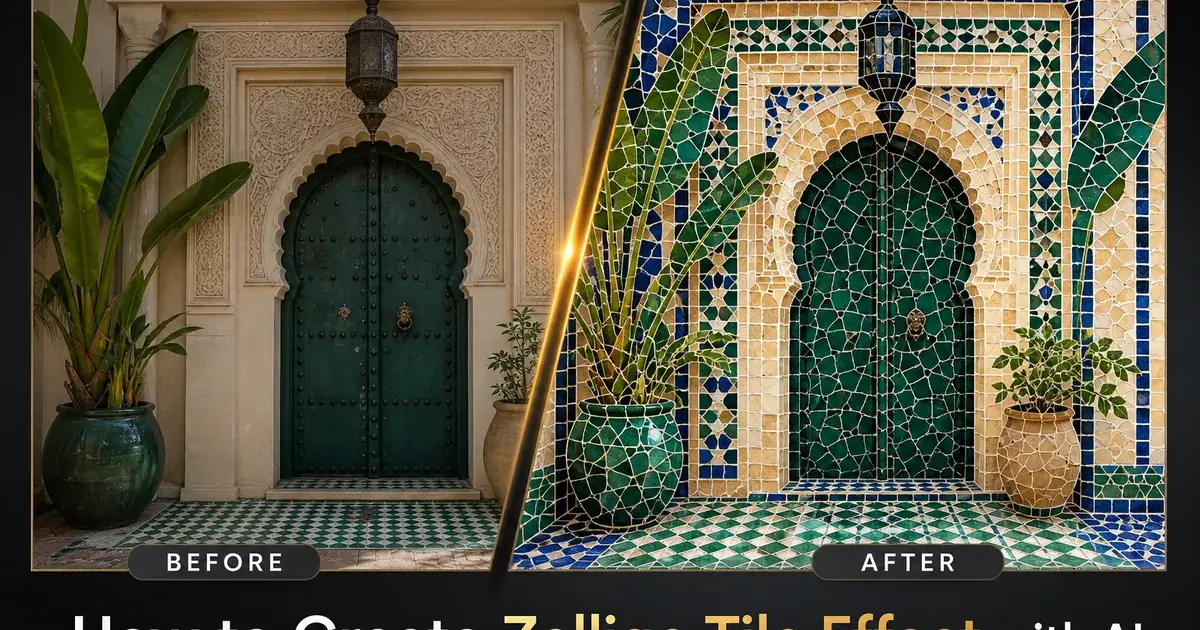
Zellige é a arte Moroccan centenária de criar padrões de mosaico geométrico a partir de azulejos de terracota esmaltados cortados à mão, um por um. Sua precisão matemática e paletas de cores em tons de joia adornam as paredes, pisos e fontes da arquitetura norte-africana desde pelo menos o século X. Cada peça de azulejo é moldada à mão usando um cinzel afiado, sua superfície revestida em uma única cor de esmalte vitrificado, e então encaixada com centenas ou milhares de outras peças para formar padrões de extraordinária complexidade geométrica. Estrelas de oito pontas, hexágonos entrelaçados, rosetas aninhadas e tesselações que se repetem infinitamente em todas as direções. O artesanato representa uma das mais altas expressões da arte geométrica Islâmica. As relações matemáticas entre as formas carregam significado espiritual e a repetição infinita do padrão simboliza a natureza ilimitada da criação.
Criar um efeito de mosaico zellige digitalmente no passado se limitava a ladrilhar uma imagem com uma grade uniforme de quadrados coloridos. Em sua essência, um filtro de pixelização com moldura decorativa. Esta abordagem não captura nenhuma da sofisticação geométrica que define o verdadeiro zellige. Os azulejos têm todos a mesma forma, em vez dos polígonos variados que se entrelaçam nos padrões tradicionais, as juntas de argamassa são perfeitamente uniformes em vez de mostrar a ligeira irregularidade do gesso aplicado à mão. As cores do esmalte são matizes digitais planas em vez dos tons ricos e ligeiramente variáveis produzidos por fornos a lenha. O resultado parece um filtro de mosaico, e não uma homenagem a uma tradição de arte decorativa específica e reverenciada.
A conversão zellige com AI transforma o processo ao aplicar princípios genuínos de construção de padrões geométricos aprendidos de centenas de instalações zellige documentadas em todo o Morocco. A AI gera formas autênticas de azulejos entrelaçados com base nas mesmas regras matemáticas que os artesãos mestres (maalemim) usam para construir padrões. Simetria radial em torno de centros de estrelas, relações precisas de ângulo entre azulejos adjacentes e lógica de tesselação que permite que os padrões se repitam infinitamente sem lacunas ou sobreposições. Este guia explica como usar o AI Filter para converter fotografias em mosaicos estilo zellige que honram as tradições matemáticas e estéticas do artesanato, abordando seleção de padrões, paletas de cores tradicionais, tratamento de juntas, textura de superfície e os efeitos de envelhecimento que evocam instalações históricas.
- A AI aplica regras genuínas de construção geométrica de instalações zellige documentadas. Simetria radial, relações precisas de ângulo e lógica de tesselação infinita — em vez de simples pixelização de grade.
- Predefinições de padrão referenciam tradições regionais específicas, incluindo estrelas de oito pontas de Fez, rosetas hexagonais de Marrakech, entrelaçamentos chevron de Meknes e designs mais simples de losango e quadrado para bacias de fontes.
- O mapeamento de cores limita a saída a cores de esmalte historicamente precisas — azul cobalto, verde esmeralda, âmbar mel, vermelho sangue-de-boi, preto e branco — com variação de superfície aplicada à mão.
- A renderização de juntas simula o rejuntamento de gesso ligeiramente irregular de instalações reais, com bordas de sombra indicando relevo dimensional da variação natural da espessura dos azulejos.
- Efeitos de envelhecimento opcionais adicionam séculos de desgaste simulado, incluindo embaçamento do esmalte, trincas finas e pátina nas juntas, para produzir resultados que se assemelham a instalações históricas de palácios e mesquitas.
Como a conversão zellige com AI difere de filtros padrão de mosaico e pixelização
Filtros de mosaico padrão em softwares de edição de foto funcionam dividindo a imagem em uma grade uniforme de quadrados ou hexágonos e substituindo cada célula pela cor média dos pixels que ela contém. Isso é, em sua essência, uma técnica de redução de resolução. Torna a imagem mais blocada — e embora o resultado se assemelhe vagamente a um trabalho de azulejos, não tem relação com a complexidade geométrica do verdadeiro zellige. Cada célula tem a mesma forma e tamanho, o alinhamento da grade é perfeitamente regular. A atribuição de cores é puramente uma média matemática, sem considerar como os esmaltes reais se comportam ou quais relações de cores são estética ou historicamente corretas.
A conversão zellige com AI começa com a estrutura matemática que fundamenta a construção autêntica de padrões. Padrões tradicionais zellige são gerados a partir de um pequeno conjunto de primitivas geométricas. Estrelas, cruzes, pétalas e polígonos irregulares — organizados de acordo com regras estritas de simetria que produzem diferentes famílias de padrões. A AI seleciona uma família de padrões adequada ao conteúdo da imagem, dimensiona o padrão para um tamanho que preserva a legibilidade do assunto e então mapeia a estrutura geométrica sobre a fotografia. Cada peça de azulejo dentro do padrão recebe uma única cor extraída da paleta tradicional de esmaltes, escolhida com base no conteúdo subjacente da imagem, mas restrita a opções historicamente plausíveis.
A diferença fica imediatamente visível ao comparar as saídas lado a lado. O filtro de mosaico padrão produz uma grade de quadrados coloridos uniformes que poderiam representar qualquer forma de ladrilhamento, de azulejos de banheiro a arte pixelada. A conversão zellige com AI produz padrões geométricos distintos com formas entrelaçadas de diferentes tamanhos e tipos. Estrelas de oito pontas cercadas por peças em forma de cruz e pentágonos irregulares, rosetas hexagonais com elementos em forma de pétala irradiando de pontos centrais, ou treliças de losango com pequenos preenchimentos quadrados nas interseções. O padrão em si carrega significado visual e especificidade cultural que transforma a imagem de um mosaico genérico em uma obra de arte enraizada em uma tradição decorativa particular.
- Filtros de mosaico padrão dividem imagens em grades uniformes de formas idênticas — essencialmente uma técnica de redução de resolução sem relação com a geometria genuína de trabalhos em azulejo.
- A conversão zellige com AI aplica estruturas matemáticas da construção tradicional de padrões, usando primitivas geométricas organizadas de acordo com regras estritas de simetria.
- Cada peça de azulejo recebe uma única cor da paleta tradicional de esmaltes, restrita a opções historicamente plausíveis em vez de média arbitrária de pixels.
- Os padrões resultantes apresentam formas entrelaçadas reconhecíveis — estrelas, cruzes, pétalas e polígonos — que carregam especificidade cultural ausente em filtros de mosaico genéricos.
A geometria do zellige: compreendendo padrões de estrelas, rosetas e famílias de tesselação
Os padrões zellige são construídos a partir de um vocabulário geométrico refinado ao longo de séculos e que segue regras matemáticas precisas. A família de padrões mais comum é baseada na estrela de oito pontas (khatam), formada pela sobreposição de dois quadrados rotacionados quarenta e cinco graus um em relação ao outro. Os espaços entre as pontas da estrela criam peças em forma de cruz e polígonos irregulares que preenchem o plano completamente, sem deixar lacunas. Esta construção fundamental pode ser elaborada subdividindo as formas básicas em componentes menores, adicionando padrões secundários de estrelas dentro das peças em cruz ou estendendo a geometria para criar faixas e bordas que emolduram composições centrais de medalhão.
Padrões de roseta hexagonal representam uma família geométrica diferente baseada em simetria séxtupla. Estes padrões irradiam de hexágonos centrais com peças em forma de pétala se estendendo para fora, cercados por losangos e triângulos que completam a tesselação. A geometria séxtupla produz um ritmo visual mais suave e orgânico em comparação com a qualidade angular nítida dos padrões de estrela de oito pontas. Era historicamente favorecida para bacias de fontes e instalações de jardim, onde a qualidade fluida complementava elementos aquáticos. O AI Filter oferece ambas as famílias e várias construções híbridas que combinam elementos de diferentes sistemas geométricos na mesma composição.
A AI lida com o desafio crítico de mapear estes padrões geométricos rígidos sobre conteúdo fotográfico que não possui estrutura geométrica inerente. O padrão deve ser dimensionado e posicionado de modo que as áreas visualmente importantes da fotografia — rostos, pontos focais, áreas de alto detalhe — se alinhem com os centros dos elementos principais do padrão, como estrelas e rosetas, em vez de cair sobre juntas onde seriam prejudicados. A AI analisa a imagem para identificar regiões-chave e então ajusta o posicionamento, a escala e a orientação do padrão para otimizar a legibilidade do assunto dentro da estrutura geométrica. Este mapeamento de padrão sensível ao conteúdo é o que permite que a conversão zellige funcione com diversos assuntos fotográficos, em vez de apenas com imagens que por acaso tenham geometria compatível.
- Padrões de estrela de oito pontas (khatam) formam-se pela sobreposição de quadrados rotacionados, criando peças em cruz e polígonos irregulares que tesselam o plano sem lacunas.
- Padrões de roseta hexagonal usam simetria séxtupla com formas de pétala e losangos, produzindo um ritmo orgânico mais suave historicamente favorecido para instalações de fontes e jardins.
- A elaboração de padrões subdivide formas básicas em componentes menores, adiciona padrões secundários de estrelas e cria bordas de moldura em torno de composições centrais de medalhão.
- O mapeamento de padrão sensível ao conteúdo alinha elementos geométricos principais com regiões visualmente importantes da imagem, garantindo a legibilidade do assunto dentro da estrutura matemática rígida.
Cores tradicionais de esmalte e a qualidade material dos azulejos feitos à mão
A paleta de cores do trabalho em azulejo zellige é definida pela química dos esmaltes que podiam ser produzidos de forma confiável em oficinas de cerâmica tradicionais norte-africanas. O óxido de cobalto produz o azul profundo que domina muitas instalações, desde os azuis-céu pálidos de esmaltes aplicados levemente até o intenso quase-anil do cobalto altamente concentrado. O óxido de cobre cria a gama de verdes, do sálvia suave ao verde-esmeralda vívido. O óxido de ferro produz os tons quentes de âmbar, mel e marrom. O manganês produz os vermelhos sangue-de-boi e púrpuras profundos. Os azulejos brancos geralmente não são esmaltados ou são revestidos com um branco opaco à base de estanho. Os azulejos pretos usam uma combinação de manganês e ferro. Estas seis famílias de cores — azul, verde, âmbar, vermelho, branco e preto — constituem a paleta tradicional zellige.
O AI Filter mapeia o espectro de cores completo da fotografia nesta paleta restrita. A redução é por si só uma grande mudança estética. Uma fotografia com centenas de matizes distintos torna-se uma composição de talvez seis a dez cores extraídas destas famílias tradicionais, produzindo a clareza gráfica e a harmonia cromática características do verdadeiro zellige. A AI atribui cores de forma inteligente, em vez de simplesmente ajustar cada azulejo à entrada de paleta mais próxima. Ela considera o equilíbrio geral de cores da composição, as relações de contraste entre azulejos adjacentes e as convenções históricas sobre quais cores frequentemente aparecem juntas em programas decorativos Moroccan.
A qualidade material dos azulejos feitos à mão é tão importante quanto sua cor para o realismo visual. Cada azulejo zellige é moldado e esmaltado à mão, um por um, o que significa que não há dois azulejos exatamente iguais. A espessura do esmalte varia ligeiramente pela superfície, produzindo diferenças sutis na intensidade da cor e na refletividade. Pequenas bolhas e imperfeições no esmalte criam textura visível de perto. A superfície queimada tem uma ligeira ondulação, em vez da perfeita planicidade dos azulejos feitos à máquina. O AI Filter replica estas qualidades materiais adicionando variação controlada à cor, brilho e textura de superfície de cada azulejo, garantindo que não haja dois azulejos idênticos no mosaico gerado, mesmo quando representam nominalmente a mesma cor de esmalte.
- A paleta tradicional zellige deriva de esmaltes de óxido específicos — azul cobalto, verde cobre, âmbar ferro, vermelho manganês, branco estanho e preto combinado — cada um com sua faixa de cores característica.
- A AI mapeia fotografias para esta paleta restrita considerando o equilíbrio geral da composição e convenções históricas, em vez de simples correspondência de cor mais próxima.
- Esmaltes aplicados à mão produzem variação natural na espessura, intensidade da cor e refletividade que distingue o zellige genuíno dos azulejos feitos à máquina.
- A AI adiciona variação controlada por azulejo na cor, brilho e textura de superfície para que não haja dois azulejos idênticos, replicando a qualidade material do trabalho artesanal.
Usos práticos: arte de parede, ativos de marca, design têxtil e visualização arquitetônica
A conversão de imagem estilo zellige atende designers de interiores e arquitetos que desejam visualizar como assuntos fotográficos apareceriam como instalações de azulejos sob encomenda. Converter a fotografia de família de um cliente, logotipo de empresa ou imagem de paisagem em um mosaico zellige fornece uma visualização realista de como seria uma instalação personalizada de azulejos. Completa com padrões geométricos precisos, paletas de cores tradicionais e a qualidade dimensional de verdadeiros trabalhos em azulejo. Esta capacidade de visualização economiza tempo e custos significativos em comparação com a encomenda de amostras físicas de azulejos. Permite iteração rápida através de diferentes famílias de padrões e esquemas de cores antes de se comprometer com um design final.
Designers de marca usam a conversão zellige para criar ativos visuais distintos que referenciam tradições decorativas Moroccan para marcas de hospitalidade, spa e estilo de vida com posicionamento norte-africano ou mediterrâneo. Uma marca hoteleira pode converter suas fotografias de propriedades em obras de arte estilo zellige para materiais de marketing, fundos de site e conteúdo de mídia social que reforçam a conexão da marca com a herança estética Moroccan. A precisão geométrica e a paleta de tons de joia do zellige fornecem um vocabulário visual que transmite luxo, artesanato e autenticidade cultural — qualidades que marcas de hospitalidade neste segmento de mercado buscam ativamente transmitir.
Designers de padrões têxteis e de superfície usam a conversão zellige como ponto de partida para criar padrões repetitivos para tecido, papel de parede e aplicações cerâmicas. O rigor geométrico dos padrões zellige — suas propriedades matemáticas de tesselação garantem que podem se repetir infinitamente em qualquer direção — os torna diretamente aplicáveis a fluxos de trabalho de design de superfície. Converter uma fotografia floral em um padrão zellige, por exemplo, produz uma interpretação geométrica do assunto botânico que se ladrilha perfeitamente e se traduz bem para serigrafia, impressão têxtil digital ou aplicações de transferência cerâmica. A paleta de cores tradicional se traduz naturalmente para estes métodos de produção. A estrutura geométrica fornece a regularidade que os processos de fabricação exigem.
- Designers de interiores visualizam instalações personalizadas de azulejos convertendo fotografias de clientes em mosaicos zellige com padrões, cores e qualidade dimensional precisos.
- Marcas de hospitalidade e estilo de vida criam ativos de marketing distintos usando a conversão zellige para referenciar a herança decorativa Moroccan e comunicar artesanato de luxo.
- Designers de padrões de superfície usam imagens convertidas em zellige como pontos de partida para ladrilhar perfeitamente padrões têxteis, de papel de parede e cerâmicos com tesselação matemática garantida.
- A paleta tradicional de esmaltes se traduz naturalmente para métodos de produção, incluindo serigrafia, impressão têxtil digital e aplicações de transferência cerâmica.
How to do it
- 1
Upload your photo and evaluate its suitability for zellige tile conversion
Open your photograph in AI Filter and assess how the image content will translate into the geometric, mosaic vocabulary of Moroccan zellige tilework. Zellige is characterized by hand-cut geometric tile pieces arranged into intricate mathematical patterns with visible grout lines between each piece. The effect works best with images that have clear regions of contrasting color or tone that can be mapped to distinct tile areas. Portraits with clear facial features, landscapes with defined horizon lines, and architectural photographs with strong geometric structures convert most well. Images with uniform flat tones or very busy textures may produce muddy mosaics where the pattern overwhelms the underlying subject.
- 2
Select the zellige pattern type and configure tile geometry
Choose from pattern families based on the traditional geometric constructions used in Moroccan architecture. Eight-pointed star patterns found in Fez medersas, hexagonal rosette designs from Marrakech riads, interlocking chevron patterns from Meknes palaces, or the simpler diamond and square arrangements used in fountain basins and floor treatments. AI Filter maps these geometric grids onto the image content, sizing the tiles relative to the subject matter so that important features like faces or architectural details align with tile intersections rather than falling awkwardly across grout lines. Adjust the tile scale slider to control how large or small each individual piece appears relative to the overall composition.
- 3
Apply the traditional glaze color palette and surface variation
Configure the color mapping to use the glaze colors historically available to Moroccan zellige craftsmen. Cobalt blue, emerald green, honey amber, oxblood red, black, and white, all with the slightly irregular surface finish that results from hand-applied glazes fired in wood-burning kilns. The AI constrains the photograph's colors to this traditional palette, assigning each tile piece a single flat glaze color that represents the average tone of the image region it covers. Enable surface variation to add the subtle differences in glaze thickness, color intensity. Reflective quality that make each handmade tile unique, preventing the uniform perfection that would mark the result as digitally generated.
- 4
Add grout lines, dimensional relief, and aging effects
Configure the grout line look to match the plaster-based jointing used in traditional zellige installations. Slightly irregular width, off-white to pale gray color, and subtle shadow edges that indicate each tile sits slightly proud of the grout surface. The dimensional relief simulation adds the subtle play of light and shadow across the tilework that results from the natural variation in tile thickness trait of hand-cut pieces. Optionally apply aging effects that simulate centuries of wear. Slight dulling of glaze surfaces, hairline cracks in individual tiles, and patina accumulation in grout lines — to produce results that resemble historic installations in Moroccan palaces and mosques.
- 5
Export the final mosaic and verify geometric accuracy
Save the completed zellige image at full resolution and examine the geometric pattern for mathematical consistency. Authentic zellige patterns follow strict rules of rotational and reflective symmetry. Each star, rosette, or interlocking shape must repeat with precise regularity across the composition. Verify that the pattern tiles correctly without visible breaks or misaligned seams, that the grout line network forms a steady grid without dead ends or impossible intersections. That the color distribution across the mosaic produces a balanced composition that honors the aesthetic principles of Islamic geometric art. Adjust any parameters that produce geometrically incorrect or visually unbalanced results.
Fontes
- Islamic Geometric Patterns: Their Historical Development and Traditional Methods of Construction — Springer — Jay Bonner
- Zellige: The Art of Moroccan Ceramics — The Metropolitan Museum of Art
- Automatic Generation of Islamic Geometric Patterns — ACM SIGGRAPH